Priory of Anzy-le-Duc
Anziacum / Anzeio / Sainte-Trinité d’Anzy / Notre-Dame-de-l'Assomption
(Anzy-le-Duc, Saône-et-Loire)
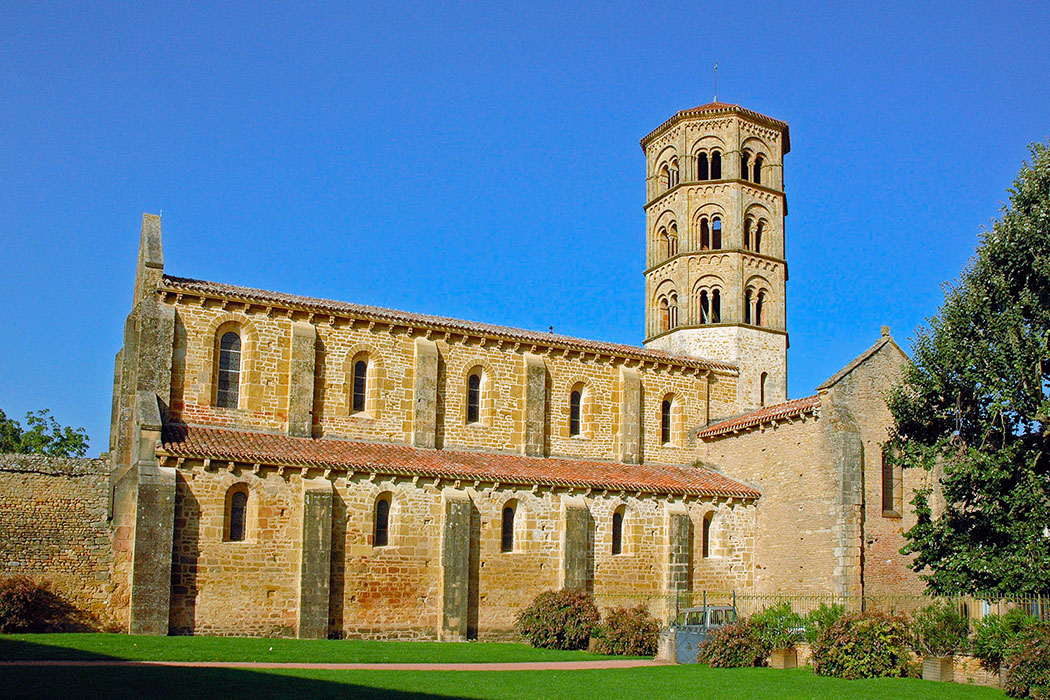

The priory of Anzy-le-Duc is associated with the former abbey of Saint-Martin d’Autun (Saône-et-Loire). In 876, the nobleman Letbald and his wife donated to this abbey some land they owned at Anzy. Shortly afterwards, around 910, the abbot of Saint-Martin sent the monk Hugh of Anzy (or Hugh of Poitiers, † c. 928) there to establish a new community.
Hugh was a native of Poitou. He had been trained as a monk at the abbey of Saint-Savin (Vienne) and later moved to Saint-Martin d’Autun. He became associated with Berno (c. 850–927), the first abbot of Cluny (Saône-et-Loire), and took part with him in the foundation of that house and in the restoration of the abbey of Baume-les-Messieurs (Jura), among other initiatives. Hugh remained at the head of the priory of Anzy until his death. He was buried at the priory itself, where he was venerated as a saint. The preservation of his relics encouraged the arrival of pilgrims, as he enjoyed a reputation as a miracle worker.
In 949, the priory is mentioned as a cell in a charter of Louis IV of France, known as Louis d’Outremer (c. 920–954), in favour of Saint-Martin d’Autun. Its prosperity and the influx of devotees led to the construction, at the end of the 11th century, of a new church over the burial place of Hugh of Anzy, a building that still survives. The priory was not spared the conflicts that later affected the region and, in 1368, it suffered damage during the passage of English troops.
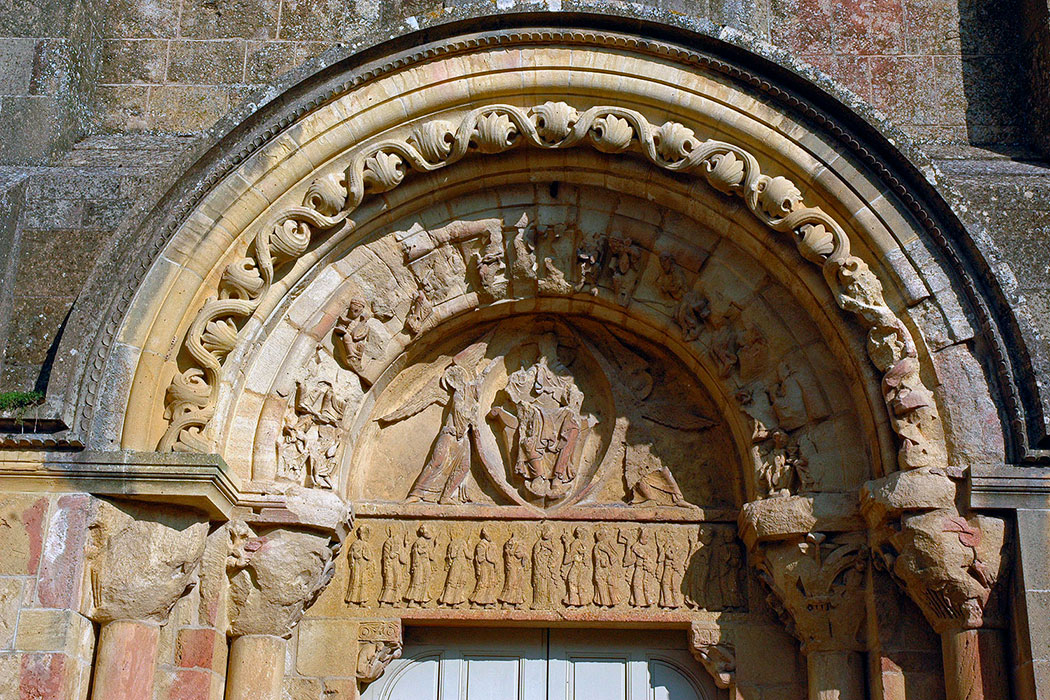
Church portal
A similar situation occurred during the second half of the 16th century, in the context of the Wars of Religion. In 1576 the relics of Saint Hugh were desecrated and lost. The attacks resumed towards the end of the century and, in the middle of the following century, lightning struck the bell tower. Despite these vicissitudes, the priory survived until the Revolution. In 1791 the religious left the house, which was sold. The church was converted into a warehouse and the other buildings were used as a residence.
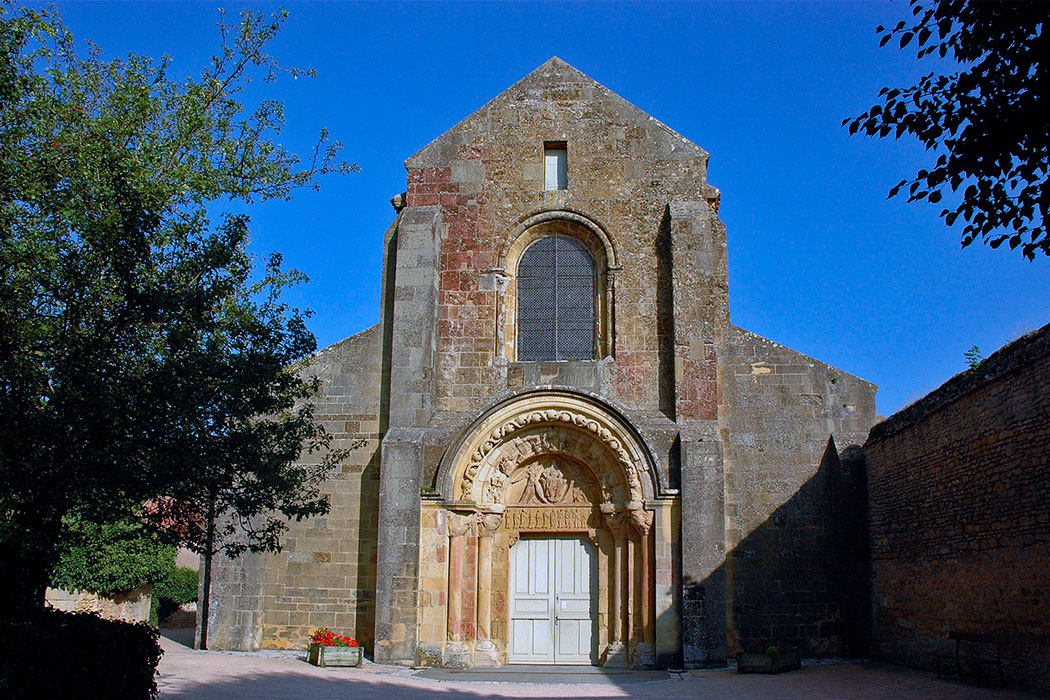
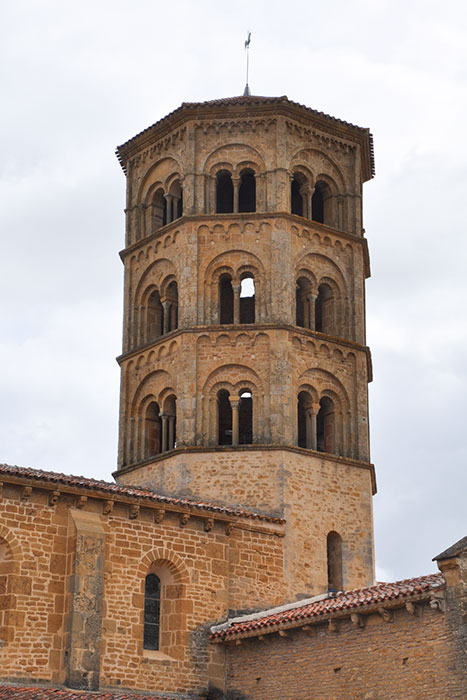
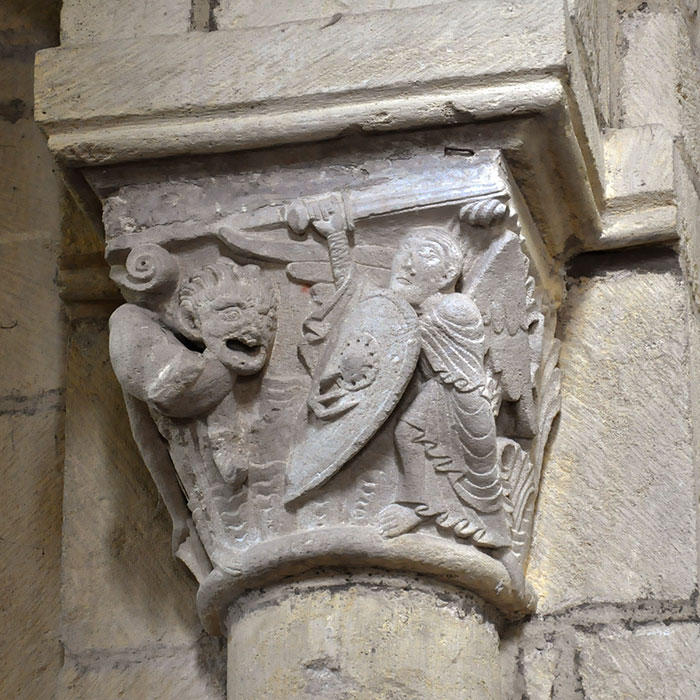
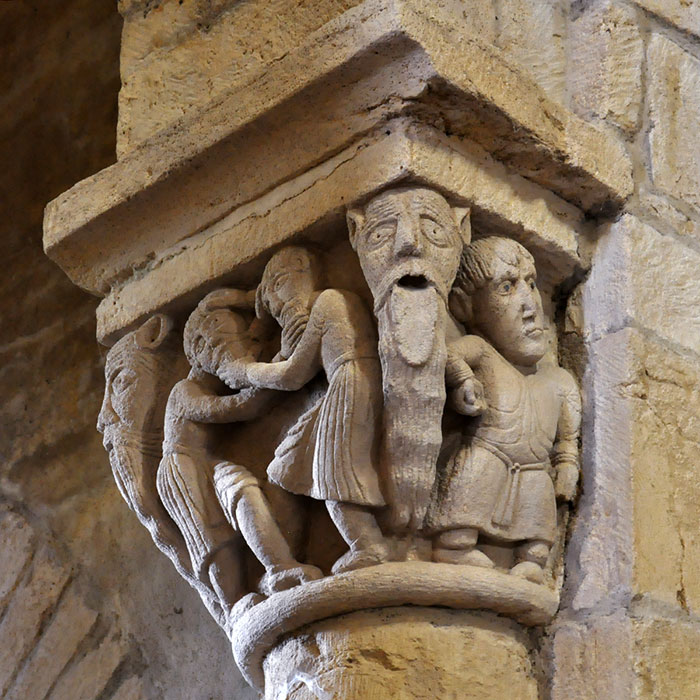
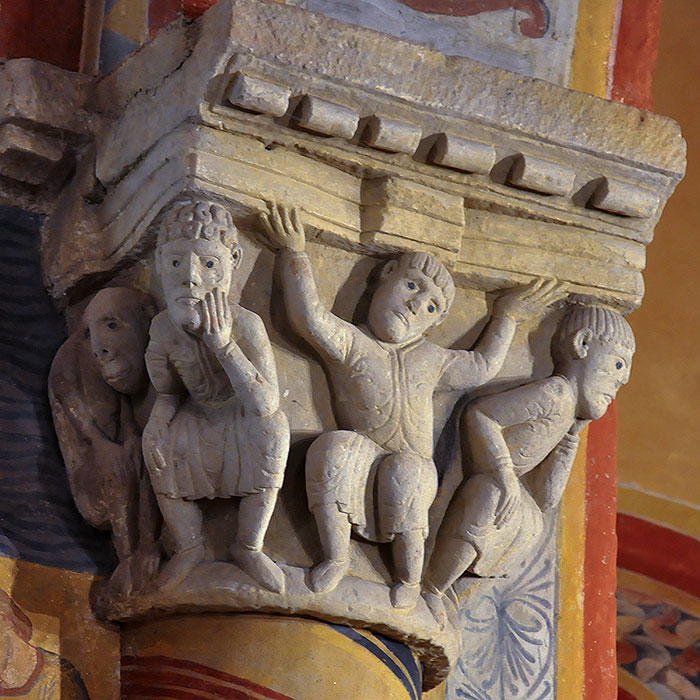
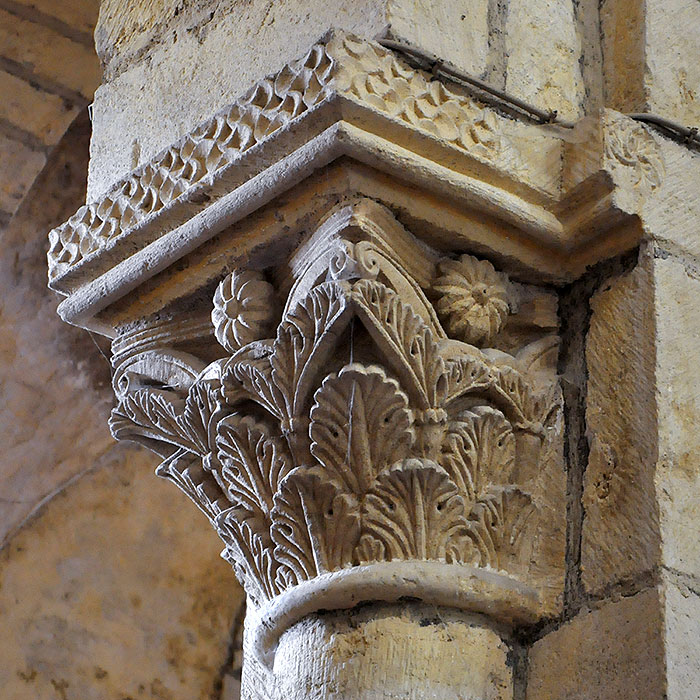
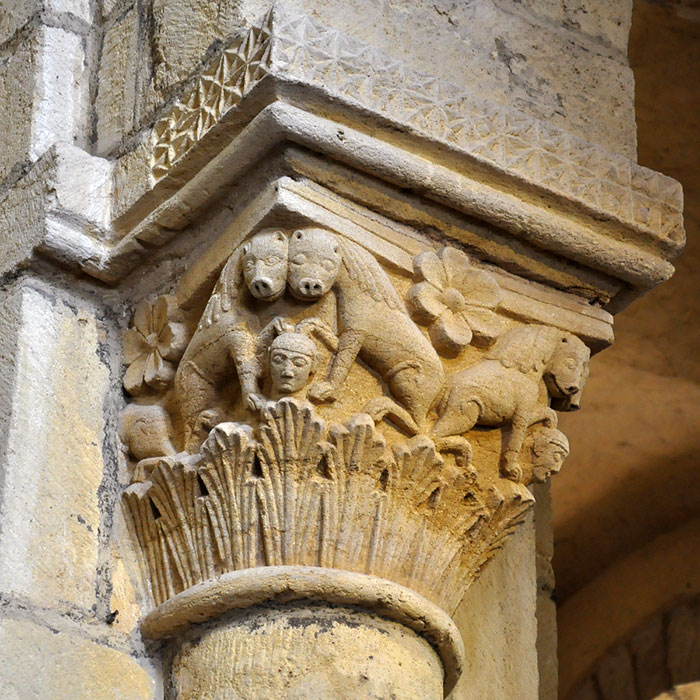
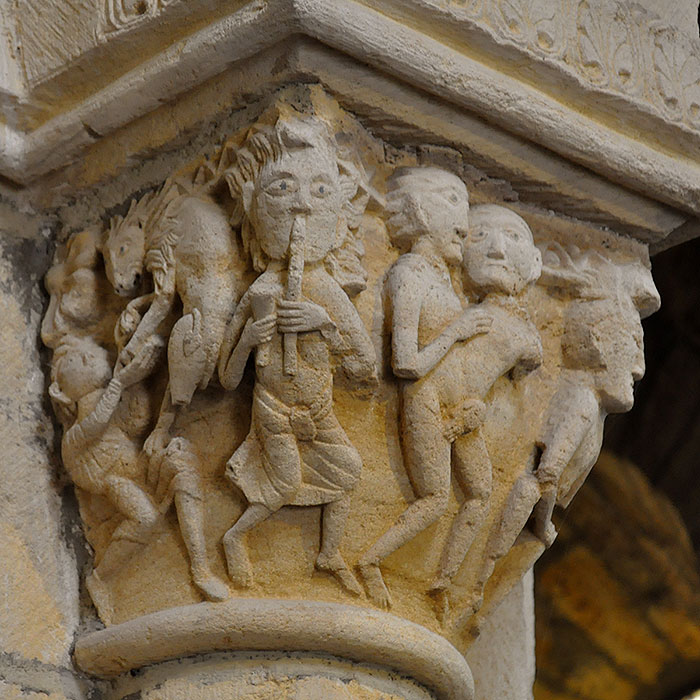
In 1818 the church resumed worship, now as a parish church, and in 1852 it was designated a Monument Historique and restored. It is a three-aisled building, with a transept and an eastern end with five apses, and also has a crypt where the remains of Saint Hugh were venerated. The bell tower, octagonal in plan, has three storeys with openings. Most of the building dates from the 11th century, with elements from the 12th, and it preserves extensive and notable sculptural decoration, particularly on the portals and the capitals. Remains of the Romanesque mural decoration also survive and have undergone several restorations.
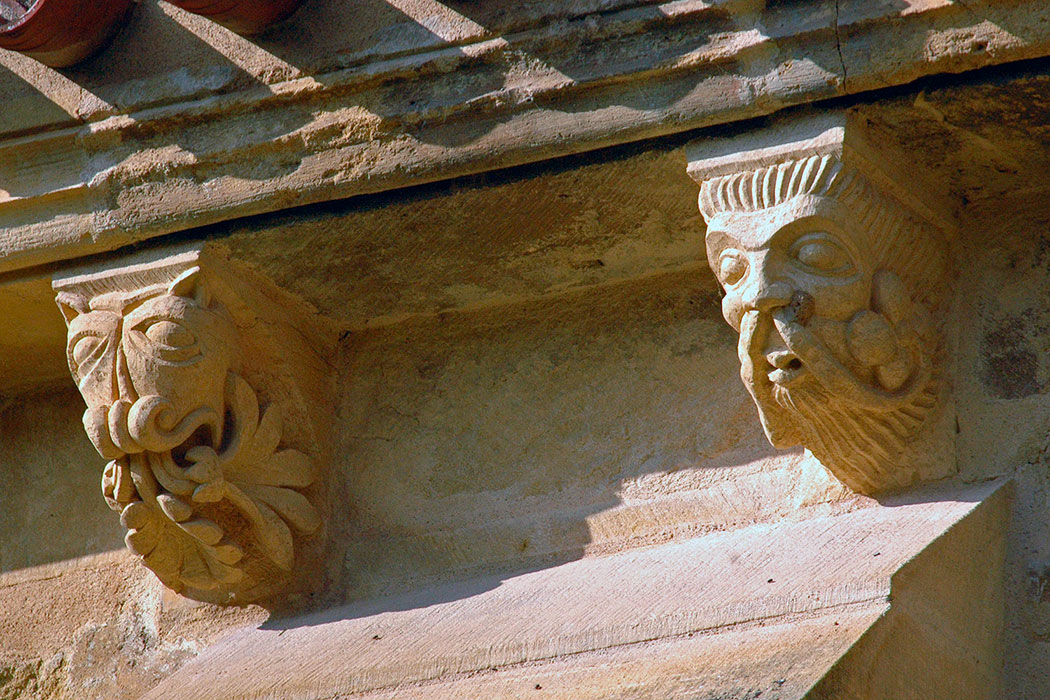


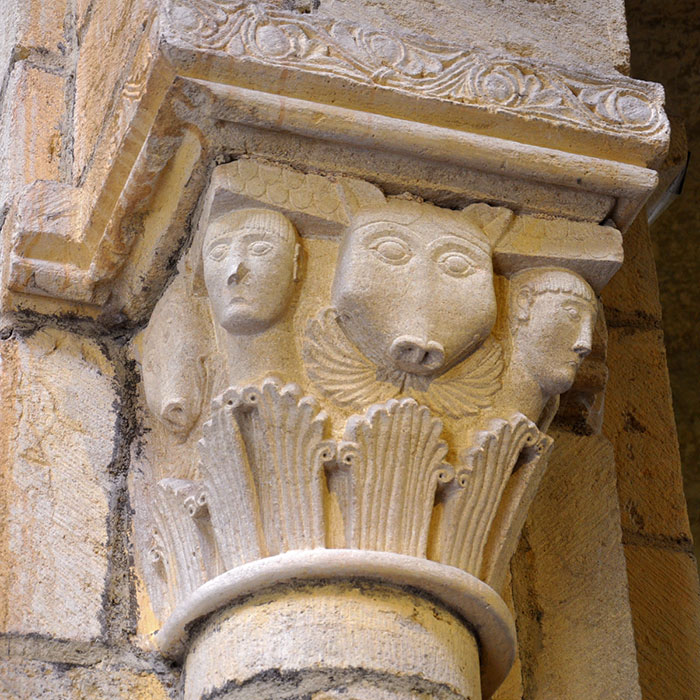
Capital

Capital
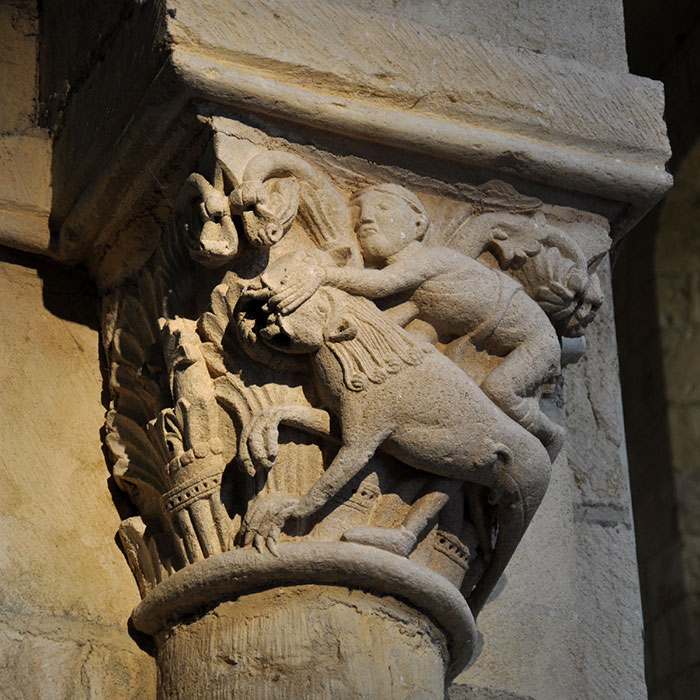
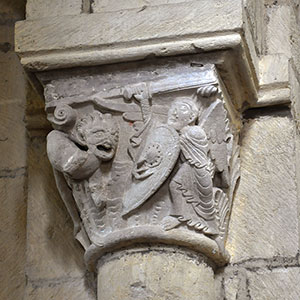
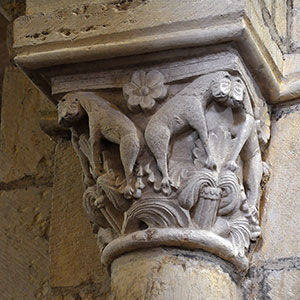
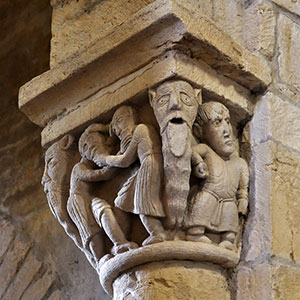
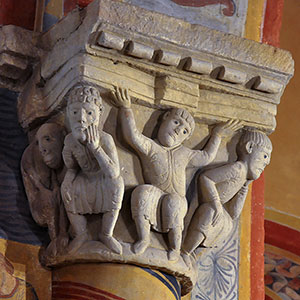
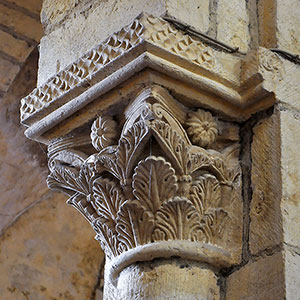
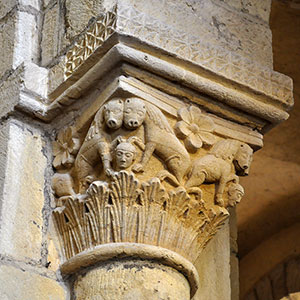
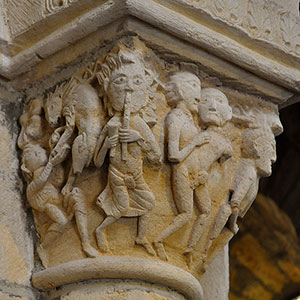
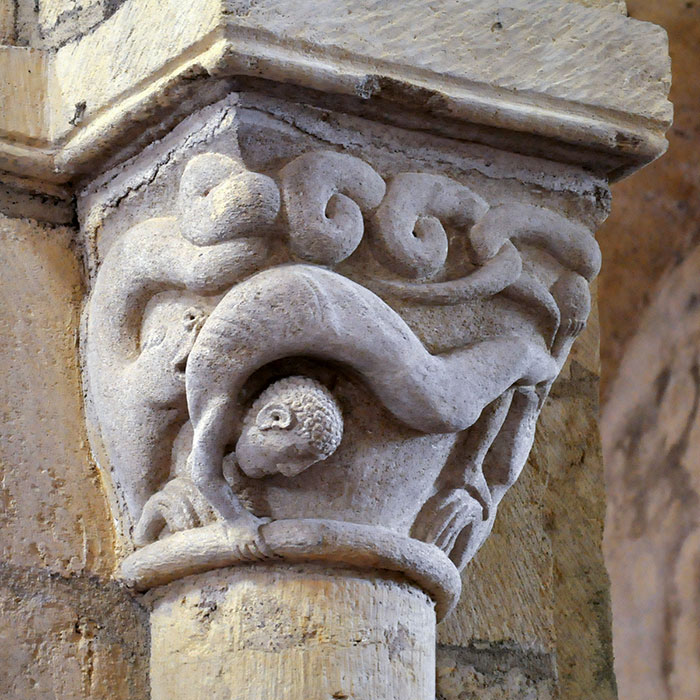

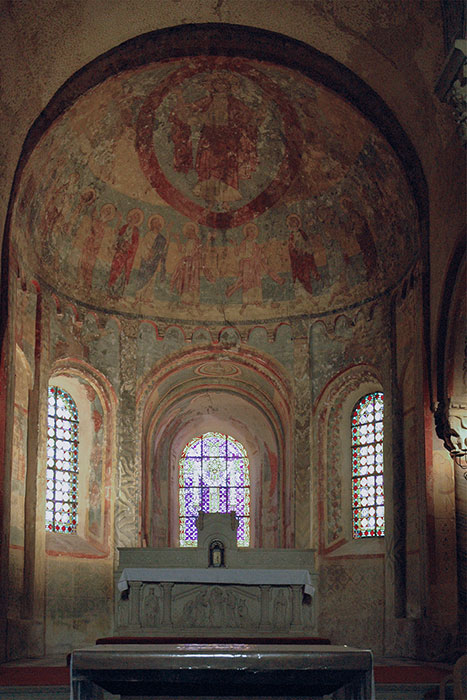
Mural paintings (2008)
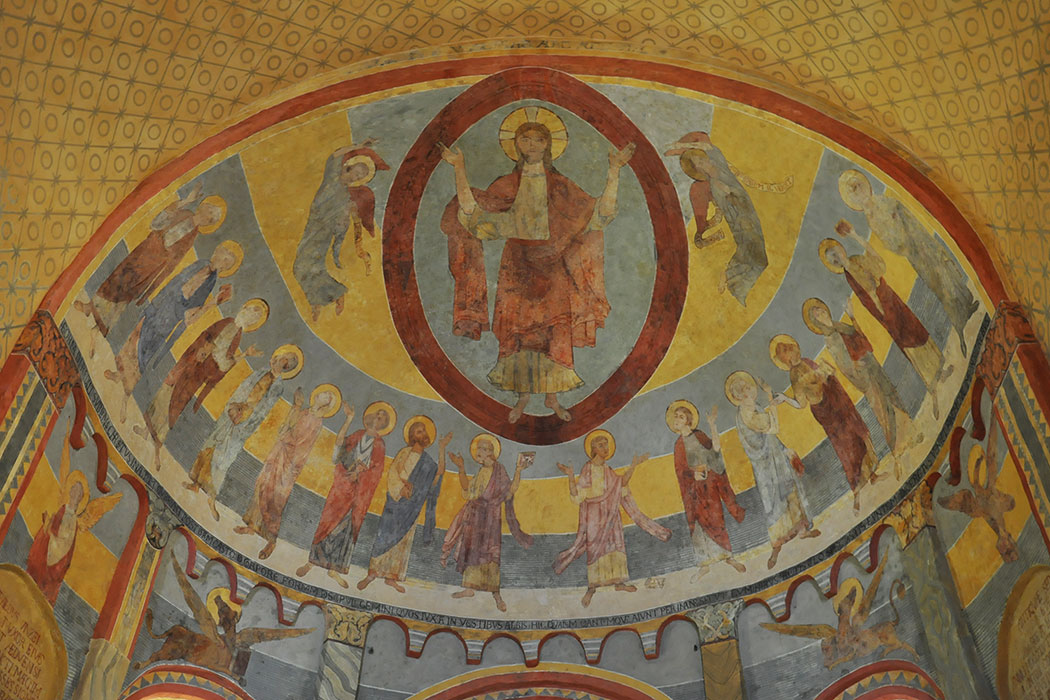
Mural paintings

Mural paintings
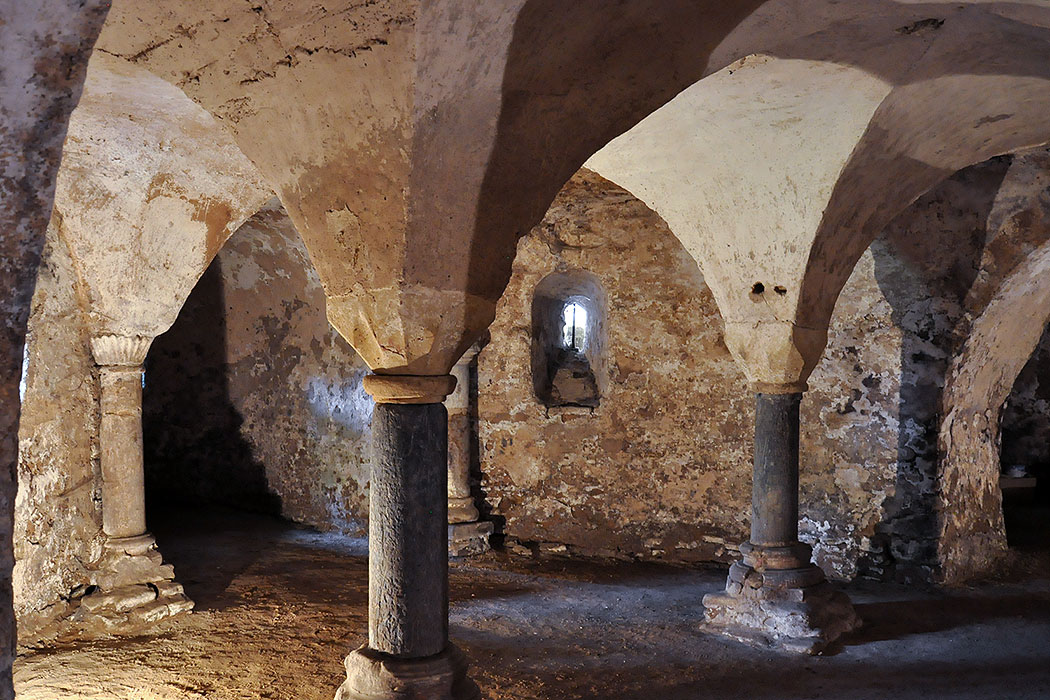
Crypt
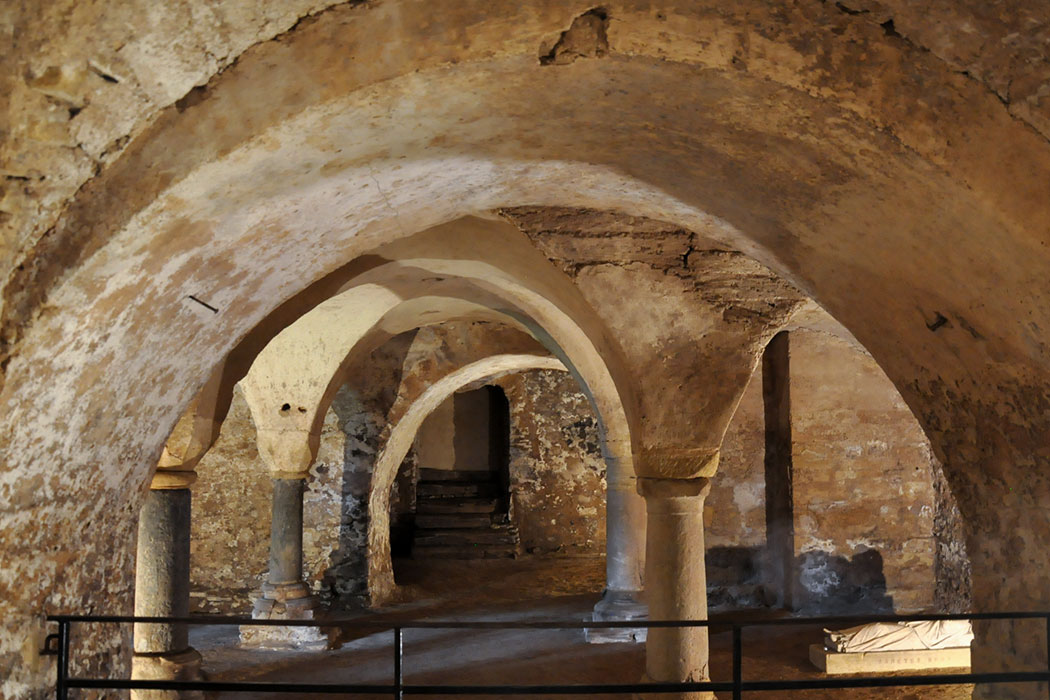
Crypt
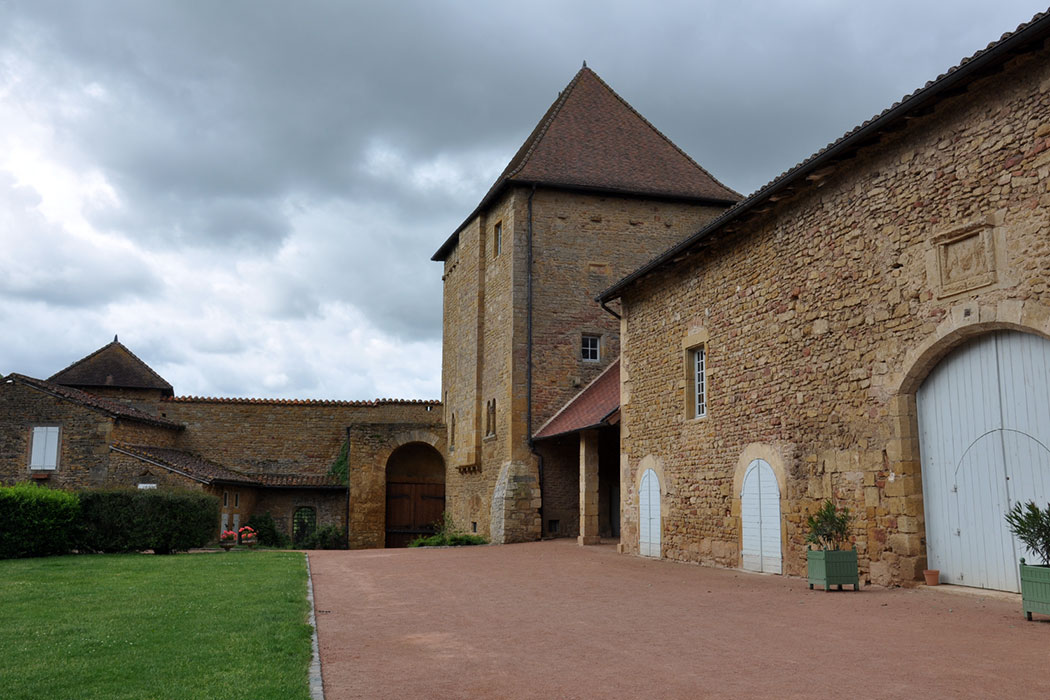
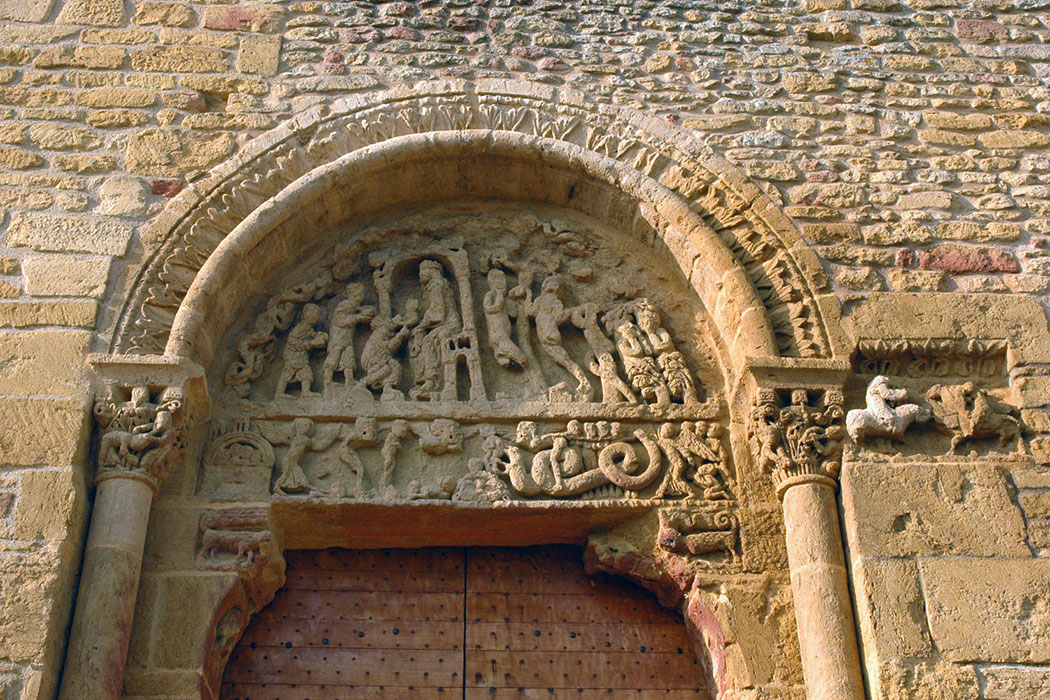
Priory portal

Priory portal
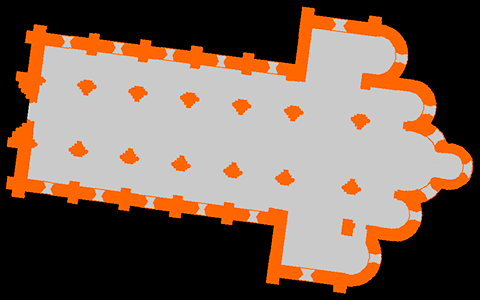
Schematic plan of the church
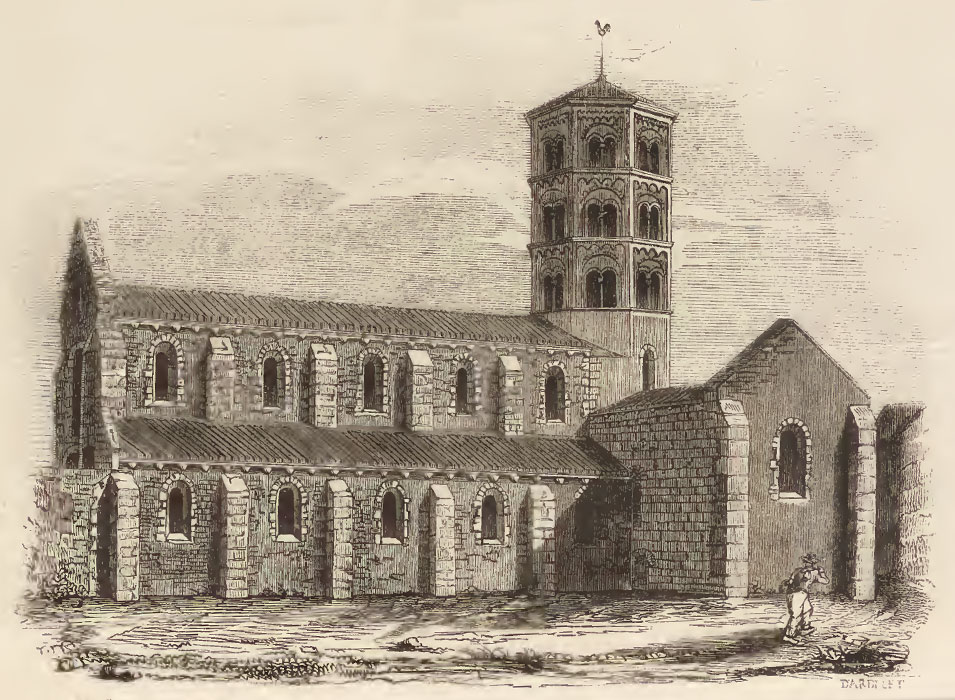
Essai historique sur l'abbaye de Saint-Martin d'Autun (1849)
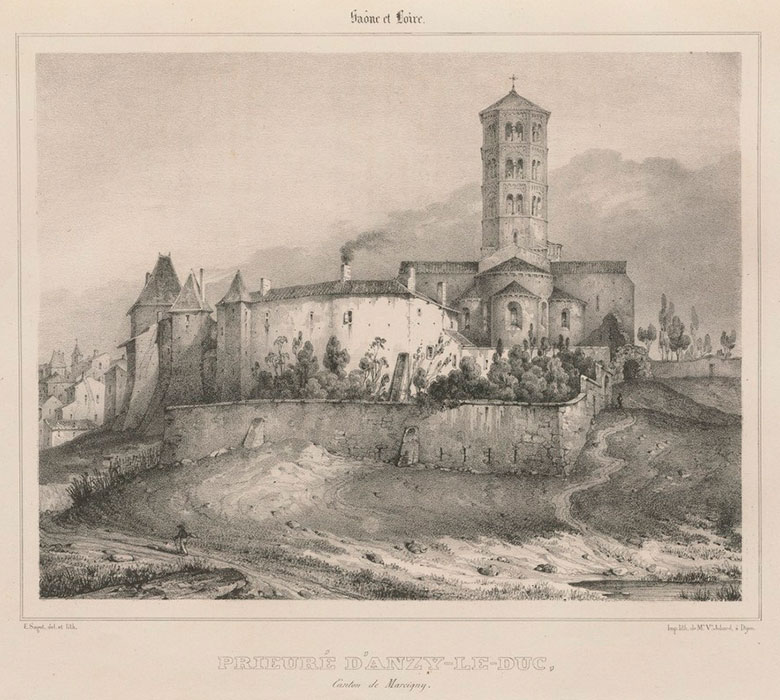
Illustration from Voyage pittoresque en Bourgogne... (1835)
- BAUDRILLART, Alfred (1924). Dictionnaire d'histoire et de géographie ecclésiastiques. Vol. 3. París: Letouzey et Ané
- BULLIOT, Gabriel (1849). Essai historique sur l'abbaye de Saint-Martin d'Autun. Autun: Dejussieu
- CUCHERAT, François (1862). Le B. Hugues de Poitiers, le prieuré, l’église d’Anzy-le-Duc. Mâcon: E. Protat
- GRIVOT, Denis (1981). Anzy-le-Duc. Monceaux-l’Étoile. Lió: Lescuyer
- GUÉRIN, Paul (1888). Les Petits Bollandistes. Vies des saints. Vol. 4. París: Bloud et Barral
- MAILLARD DE CHAMBURE, Charles-Hippolyte; dir. (1835). Voyage pittoresque en Bourgogne. 2e partie, Département de Saône-et-Loire. Dijon: Jobard
- OURSEL, Raymond (1966). Églises de France II. Laffont
- OURSEL, Raymond (1974). Bourgogne romane. La nuit des temps, 1. Zodiaque
- RHEIN. André (1916). Anzy-le-Duc. Congrès archéologique de France. 80e ss. Société française d'archéologie
- ROLLIER-HANSELMANN, Juliette (2010). Ecclésiologie clunisienne et parcours liturgique: Berzé-la-Ville, Civate et Anzy-le-Duc. Espace ecclésial et liturgique au Moyen Âge. Lyon
Anzy-le-Duc lies west of Mâcon