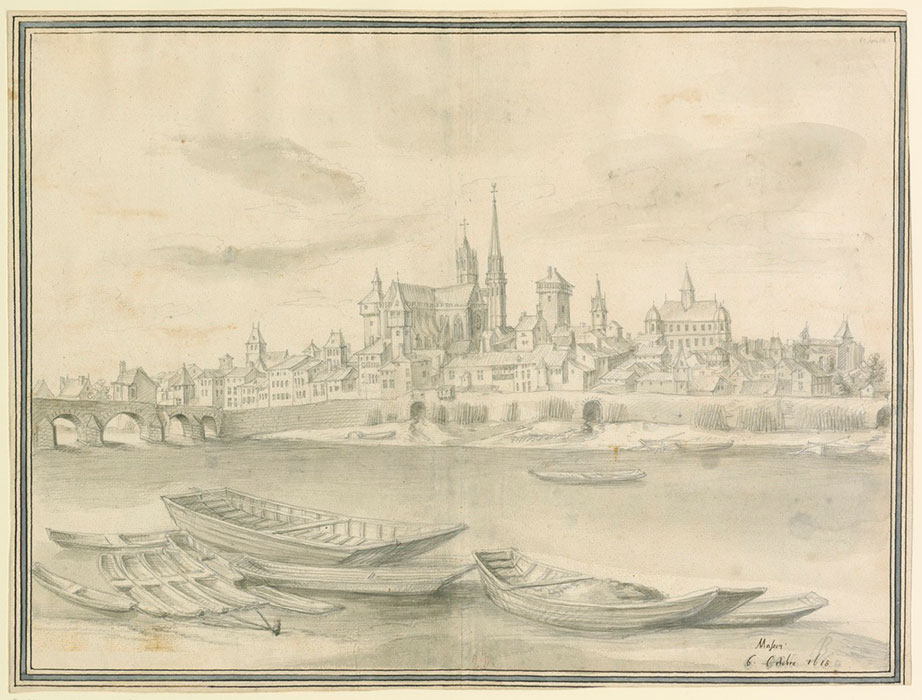
(Étienne Martellange, 1618)
Bibliothèque nationale de France
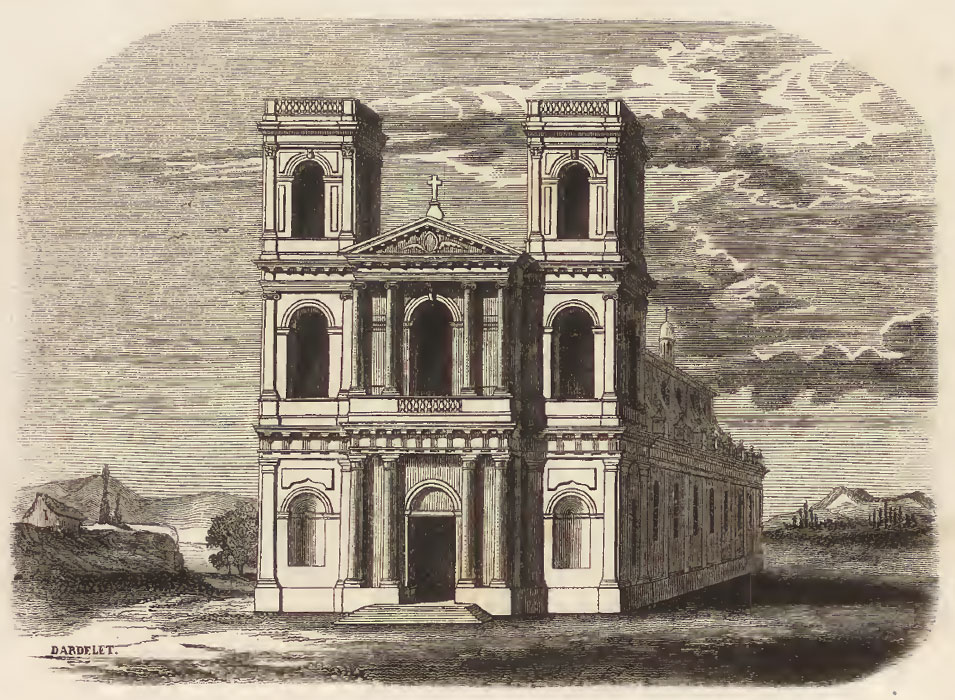
Illustration by Dardelet
Published in Essai historique sur l'abbaye de Saint-Martin d'Autun (1849)

Saint-Martin Abbey of Autun was founded around 589 by Queen Brunhilda (c. 547–613), on a site where, according to tradition, there had previously been a pagan temple destroyed by Saint Martin. In 731 it was devastated by the Saracens. The nobleman Badilon restored it, and a new church was consecrated there in 870. The monastery was partly repopulated by monks from Saint-Savin-sur-Gartempe Abbey (Vienne) and placed under the Rule of Saint Benedict. In 879 it was destroyed again, and Charles III the Fat (839–888) took charge of promoting its reconstruction. In the mid-17th century, the abbey joined the Congregation of Saint-Maur. It was suppressed during the Revolution and subsequently almost entirely disappeared.
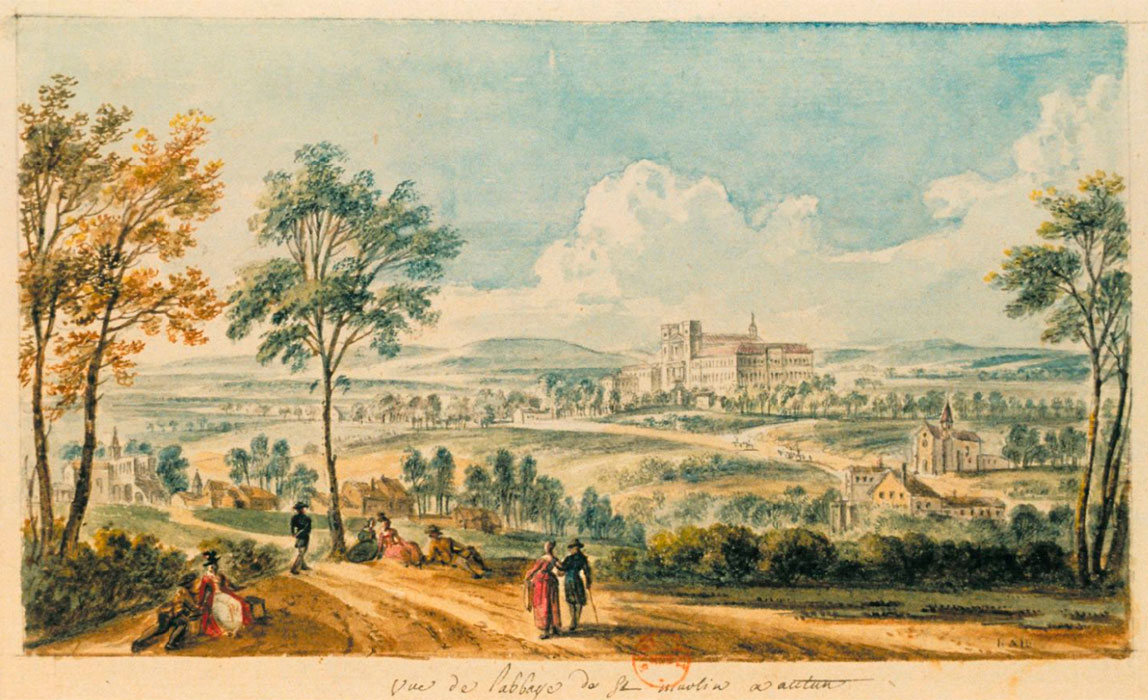
Jean-Baptiste Lallemand (c. 1780)
Bibliothèque nationale de France
- BAUDRILLART, Alfred (1931). Dictionnaire d'histoire et de géographie ecclésiastiques. Vol. 5. París: Letouzey et Ané
- BULLIOT, Gabriel (1849). Essai historique sur l'abbaye de Saint-Martin d'Autun de l'ordre de Saint-Benoît. Autun: Dejussieu
- COTTINEAU, Laurent-Henri (1936). Répertoire topo-bibliographique des abbayes et prieurés. Vol. 1. Mâcon: Protat
- SAINT-MAUR, Congregació de (1725). Gallia Christiana in provincias ecclesiasticas distributa. Vol. 4. París: Typographia Regia
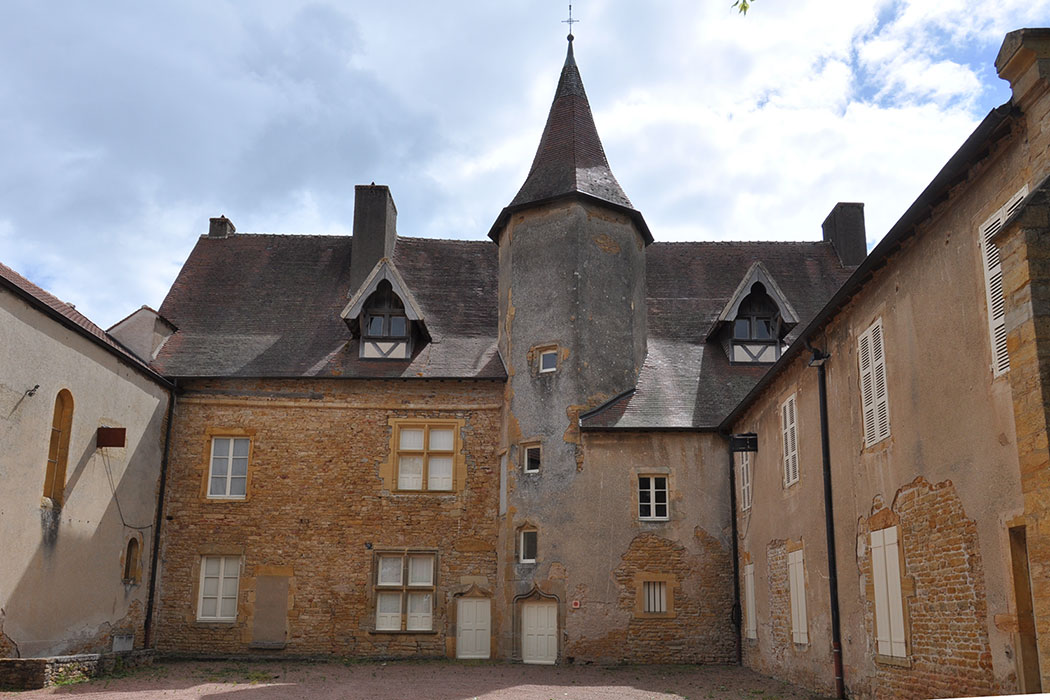

At the end of the 10th century, a chapel dedicated to Saint Mary Magdalene is mentioned at Charolles, and a church is recorded in the mid-11th century. Around 1104, the existence of the Cluniac priory of Sainte-Marie-Madeleine de Charolles is confirmed; it is thought to have been founded at that time. The medieval church was already in ruins by the 18th century and was demolished during the first half of the 19th century. Only some 15th-century structures survive, resulting from extensive restoration prompted by the damage caused by the Hundred Years’ War.
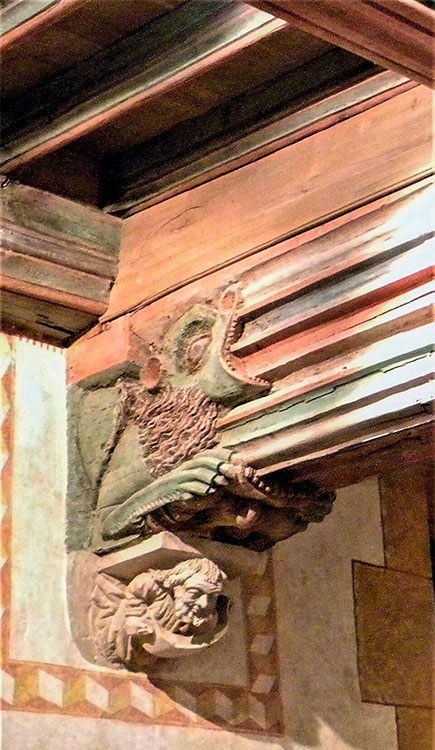
Ceiling of the chapter house
Photo by Jackydarne, on Wikimedia
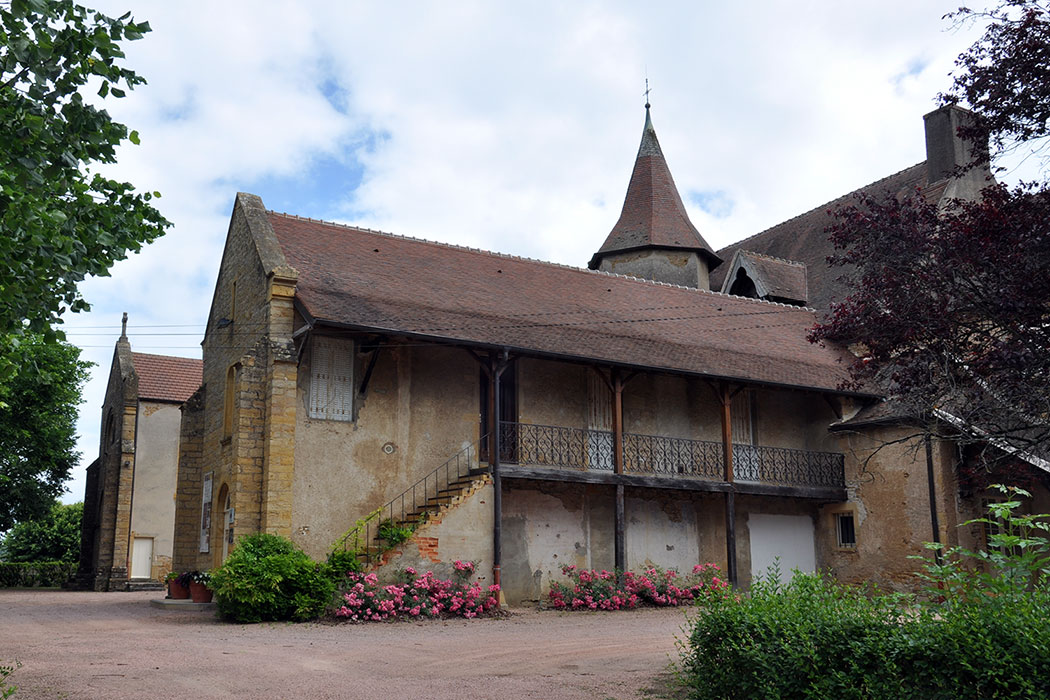
The priory was suppressed in the early 18th century, but new buildings were subsequently erected. The priory buildings were sold in 1791, during the Revolution. In 1985, the site became publicly owned and is now home to a local history museum. The chapter house also survives, with a 16th-century ceiling.
- BOCQUET, Sylvie (2000). Charolles (Saône-et-Loire). Prieuré de la Madeleine, salle capitulaire. Archéologie médiévale, vol. 30-31
- CHALÉAT, Franck (2010). Autour de quelques châteaux en Charolais-Brionnais: Les bourgs de Semur-en-Brionnais et Charolles. Chagny: Centre de Castellologie de Bourgogne
- DE VAIVRE, J.-B. (1986). Saône-et-Loire. Charolles, le prieuré de la Madeleine. Bulletin Monumental, vol. 144/1
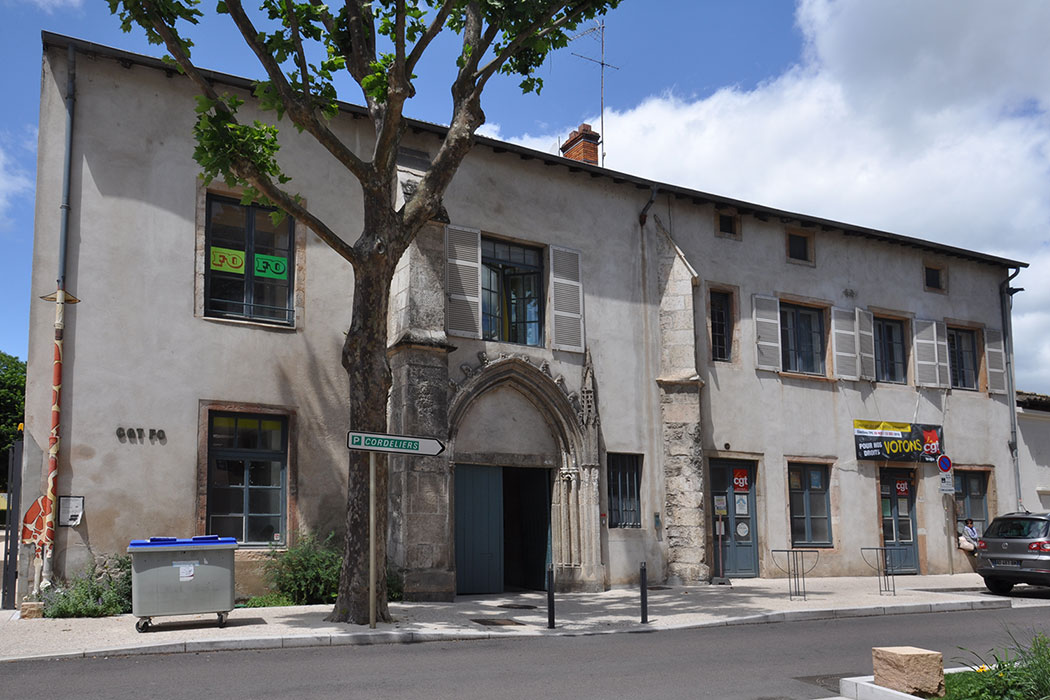

The Franciscan convent at Mâcon was probably founded in the mid-13th century, although neither the date of their arrival nor their patron is known. Some authors associate this Franciscan settlement with the lords of Feurs, who are said to have provided them with a site within the town walls. There is also evidence of several donations made to the community during the second half of that century. In 1503, the Conventual Friars Minor left the convent and were replaced by an Observant community.
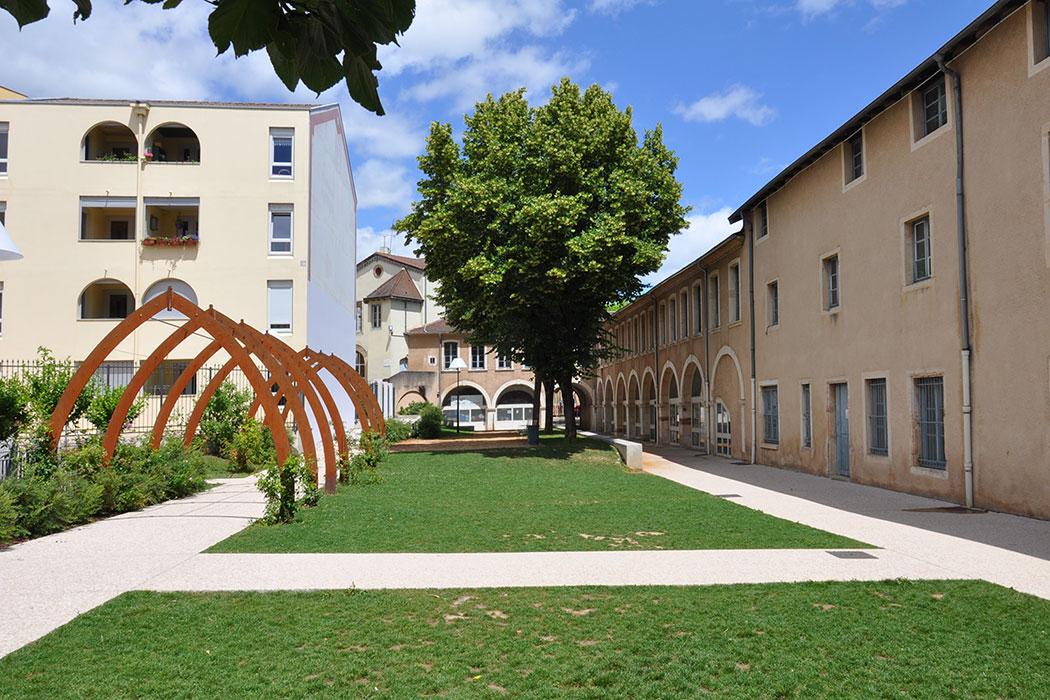
In 1562 and, above all, in 1567, the convent was almost completely destroyed during the Wars of Religion, while its stonework was reused to repair other buildings. It was subsequently rebuilt, and in 1608 the new church, dedicated to Saint-Bonaventure, was consecrated. The community remained there until the Revolution, when it was suppressed. In 1802, the church was restored to parish use, with its patronage changed to Saint-Pierre. The building was demolished at the end of the 19th century. Some elements of the former conventual buildings still survive.
- AGUT, Louis (1760). Histoire des revolutions de Mâcon, sur le fait de la religion. Avinyó: Domergue
- FODÉRÉ, Jacques (1619). Narration historique, et topographique des convens de l'ordre de S. François et monastères S. Claire. Lió: P. Rigaud
- GUERREAU, Alain (1970). Rentes des ordres mendiants à Mâcon au XIVe siècle. Annales. Economies, sociétés, civilisations
- JEANTON. Gabriel (1934). Le vieux Mâcon, histoire des rues et des quartiers de la ville. Mâcon: Reaudier
- RAMEAU, Abbé (1883). Les anciens couvents des Dominicains et des Cordeliers à Mâcon. Revue de la Société littéraire, historique et archéologique du département de l'Ain
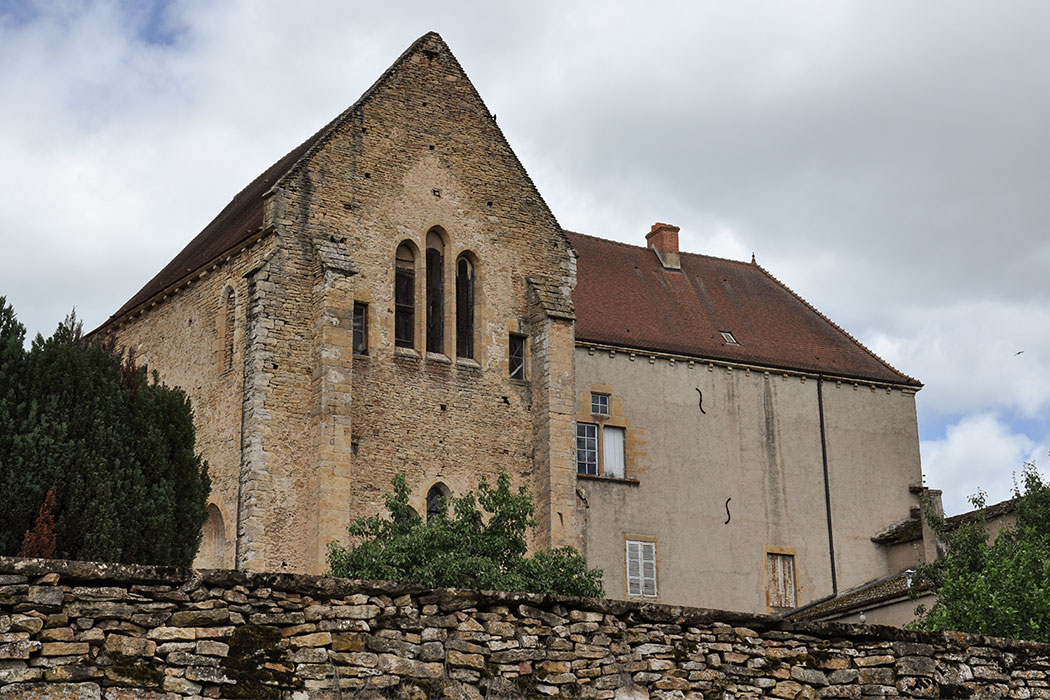
The site of Mazille is known from 893, thanks to a deed of sale. From the 930s it was owned by Gislebert of Chalon (d. 956), who, around 950, gave it to Aquine, who at that time took the habit at Cluny. In 962, when it was already in Cluny's possession, Bishop Adon of Mâcon confirmed the possession and added, among other properties, the church of Saint-Julien of Mazille. The house was administered by a dean, a provost or a prior.
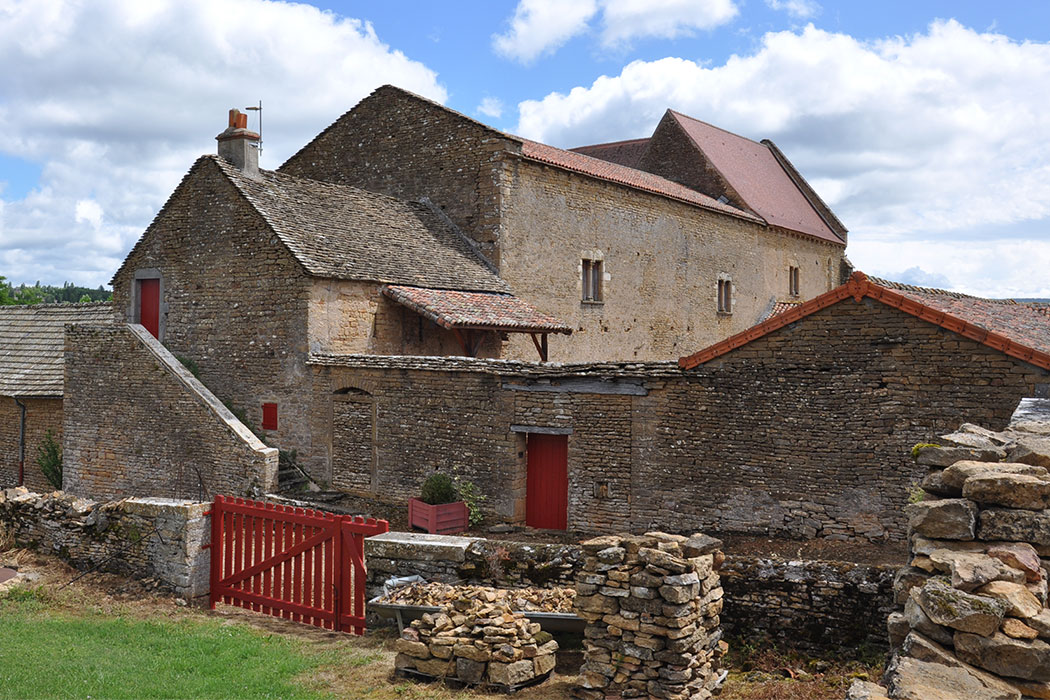
In 1103, a synod was held there, bringing together, among others, the bishops of Autun, Mâcon and Belley, as well as three English prelates. This suggests that it had sufficient buildings to accommodate the gathering and its participants. During the Hundred Years' War it was fortified, but this did not prevent it from being occupied in 1430 and 1443. In 1570 it was affected by the Wars of Religion. Nevertheless, the site retained an essentially agricultural character. Following the French Revolution, it passed into private hands in 1791. Notable structures survive, including the chapel of Saint-Julien.
- DÉFONTAINE, Patrick (2009). Les prieurés-châteaux de la région mâconnaise au Moyen Âge. Bulletin du centre d’études médiévales d’Auxerre, núm. 13
- DEFONTAINE, Patrick (2013). Recherches sur les prieurés réguliers, monastiques et canoniaux des anciens diocèses de Chalon et Mâcon (Xe - XIVe siècles). Université de Bourgogne
- GARRIGOU GRANDCHAMP, Pierre; I altres (1999). Doyennés et granges de l'abbaye de Cluny. Exploitations domaniales et résidences seigneuriales monastiques en Clunisois du XIe au XIVe siècles. Bulletin Monumental, vol. 157/1


The Cistercian monastery of Notre-Dame de Le Miroir was founded in 1131 by Humbert de Coligny. Shortly afterwards, between 1135 and 1155, a serious conflict broke out between this house and the Cluniac abbey of Saint-Pierre de Gigny (Jura), a dispute that required the intervention of important figures and institutions of the Church. The monastery became a burial place for members of the Coligny family. The last regular abbot was Jean de Ciry, who was succeeded by Guillaume de Vautravers, who took office under the commendatory system.
Affiliation of Le Miroir
According to Originum Cisterciensium (L. Janauschek, 1877)
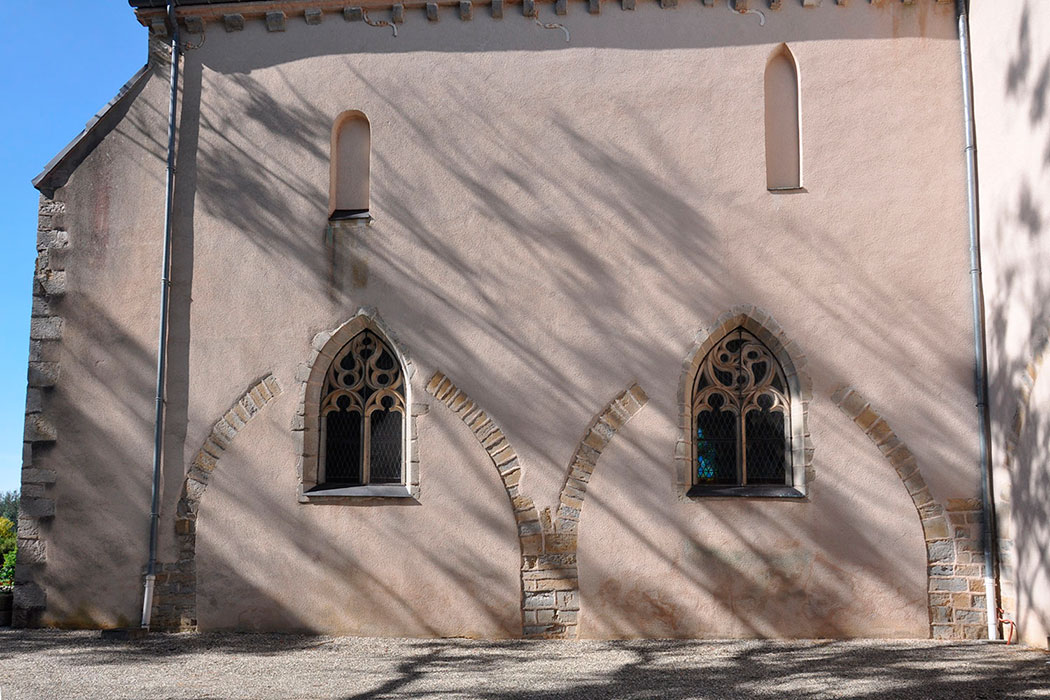
In 1619, Le Miroir was united with the abbey of Notre-Dame de Cîteaux (Côte-d’Or), which affected its development. In its final period, it had a very small community, responsible for parish services. In 1793, after the Revolution, the monastery was sold and all the monastic buildings were subsequently demolished. Today, only the church remains, although mutilated and extensively altered.
- COTTINEAU, Laurent-Henri (1939). Répertoire topo-bibliographique des abbayes et prieurés. Vol. 2. Mâcon: Protat
- FISQUET, Honoré (1867). La France pontificale (Gallia christiana). Vol. 8. Lyon. París: E. Repos
- JANAUSCHEK, Leopoldus (1877). Originum Cisterciensium. Vol. 1. Viena
- MARTIN, Jean (1911). Église de l'ancienne abbaye du Miroir. Réunion des Sociétés des Beaux-Arts. 35 ss. París: Plon-Nourrit
- SAINT-MAUR, Congregació de (1725). Gallia Christiana in provincias ecclesiasticas distributa. Vol. 4. París: Typographia Regia