Abbey of Notre-Dame d’Aiguevive
Aquaviva / Aiguevives / Aigues-Vives / Bella Valle
(Faverolles-sur-Cher, Loir-et-Cher)
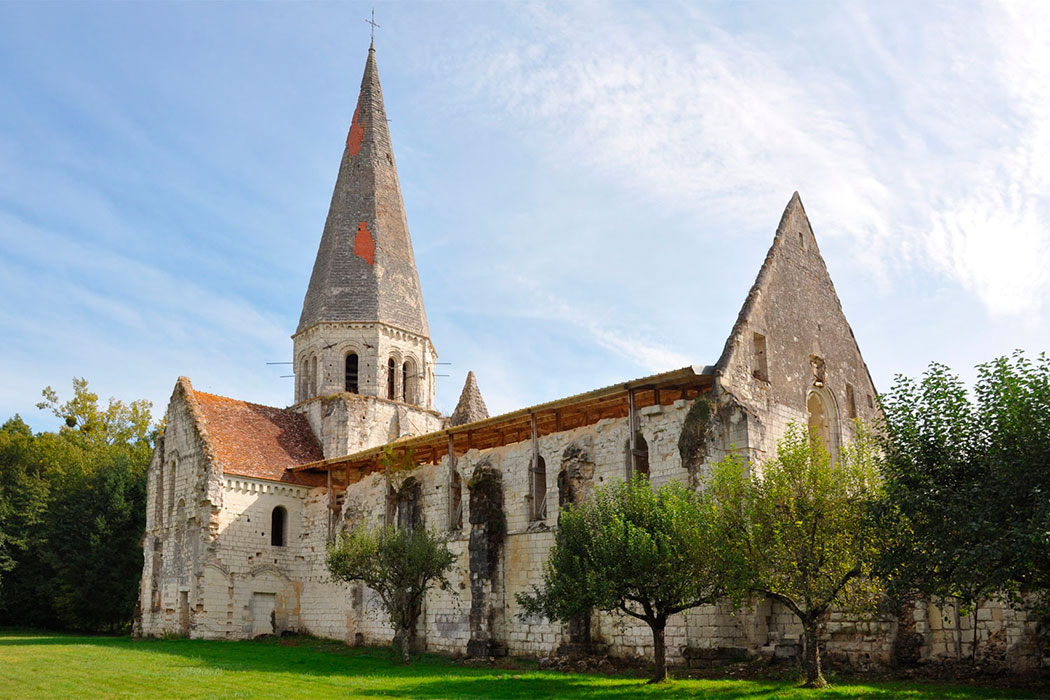


The Augustinian Abbey of Notre-Dame d’Aiguevive is linked to a community of hermits that gathered at Fontaines-les-Blanches (Indre-et-Loire) around 1125. In 1134, that settlement regularised its status by joining the Congregation, or Order, of Savigny. In 1147, the Abbey of La Trinité de Savigny (Manche), the mother house of this Benedictine branch, requested incorporation into the Cistercian Order. The adoption of Cistercian customs was then extended to the other monasteries of the order.
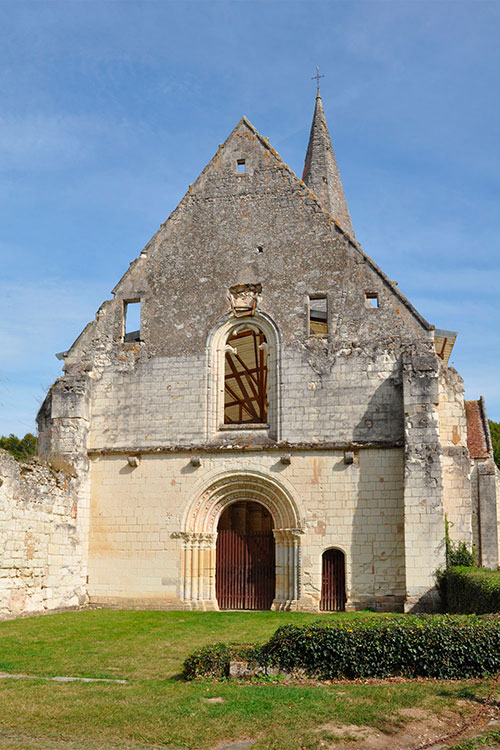
Not all the hermits of Fontaines-les-Blanches accepted this regularisation, and some members of the community did not adapt to the change. Among them was Géoffroy, one of the founders, who settled near Aiguevive. He died shortly afterwards and was buried there. Meanwhile, at nearby Notre-Dame-de-Belvaut (Bella Valle), a community of Augustinian canons had already become established and, in 1147, received the site of Aiguevive from Garlet, lord of Montrichard.
With Garlet's support and the approval of Engebaud de Preuilly, Bishop of Tours from 1147 to 1156, construction of the new monastery of Aiguevive began on its present site in 1154. At that time, the place still retained the old name of Belvaut. During this early period, the canons acquired considerable possessions thanks to the support of the local lords. In 1185, a bull of Pope Lucius III confirmed these possessions. During the thirteenth century, an attempt was made to establish a female community on the former site of Belvaut, but it was unsuccessful.
In the mid-fourteenth century, Aiguevive fell victim to the mercenary bands known as the routiers, who set the monastery on fire. Although documentary evidence is scarce, it is likely that the buildings were rebuilt once the canons were able to return. However, by the middle of the fifteenth century, the complex had once again fallen into ruin as a result of continuing conflicts. In 1552, during the time of the last regular abbot, the community numbered four canons. His successor, as commendatory abbot, administered the house, which gradually declined, a situation worsened by the Wars of Religion and the arrival of the Huguenots.
In 1676, when the abbey was already in serious decline, it joined the Congregation of Sainte-Geneviève, which sent several canons to restore the community. They gradually revived both the religious life and the monastic buildings, despite the interference of the commendatory abbots. In 1708, during his visit, Edmond Martène noted the precarious state of the abbey, then occupied by only two canons. Nevertheless, it survived until its suppression in 1790 and its subsequent sale. Its movable furnishings were dispersed, while the buildings gradually fell into ruin and many of them, including the cloister, were demolished.
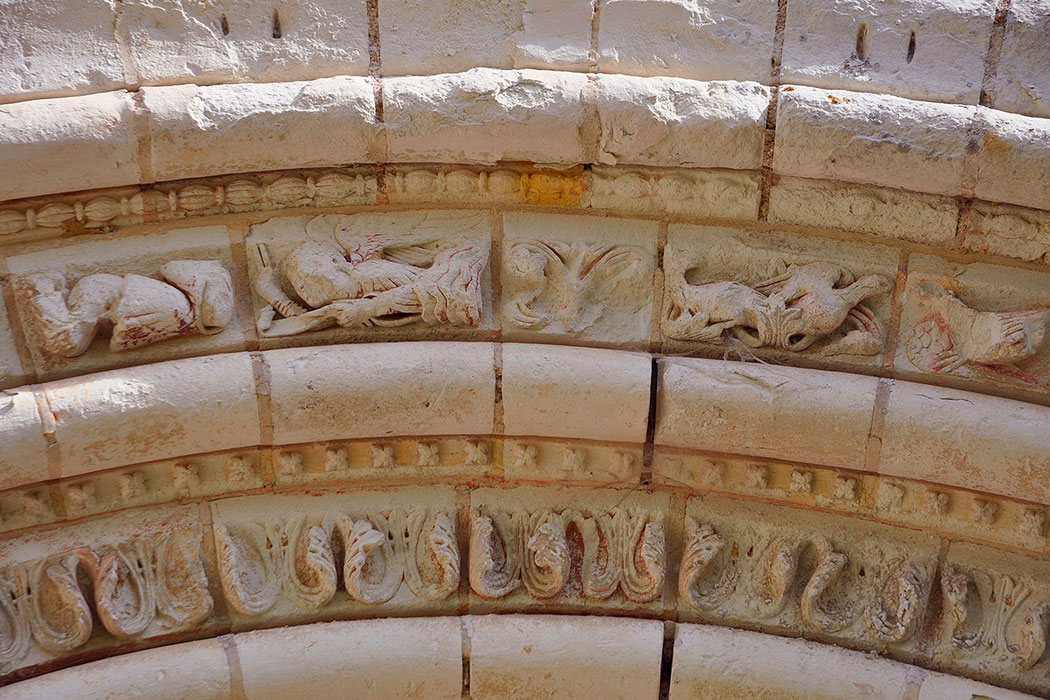
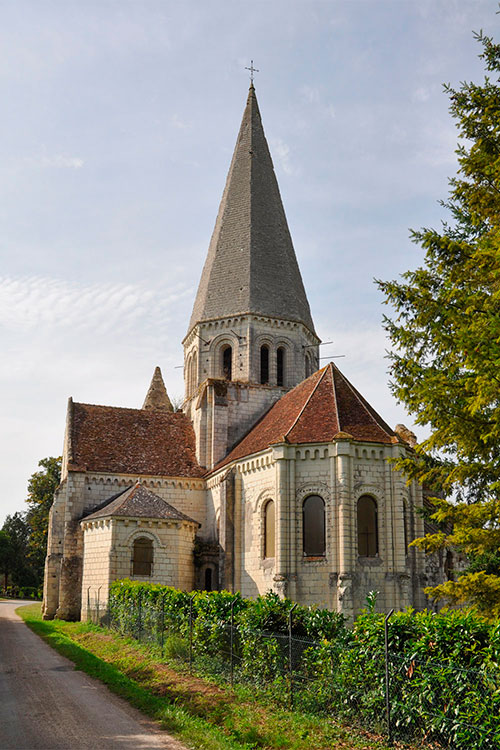
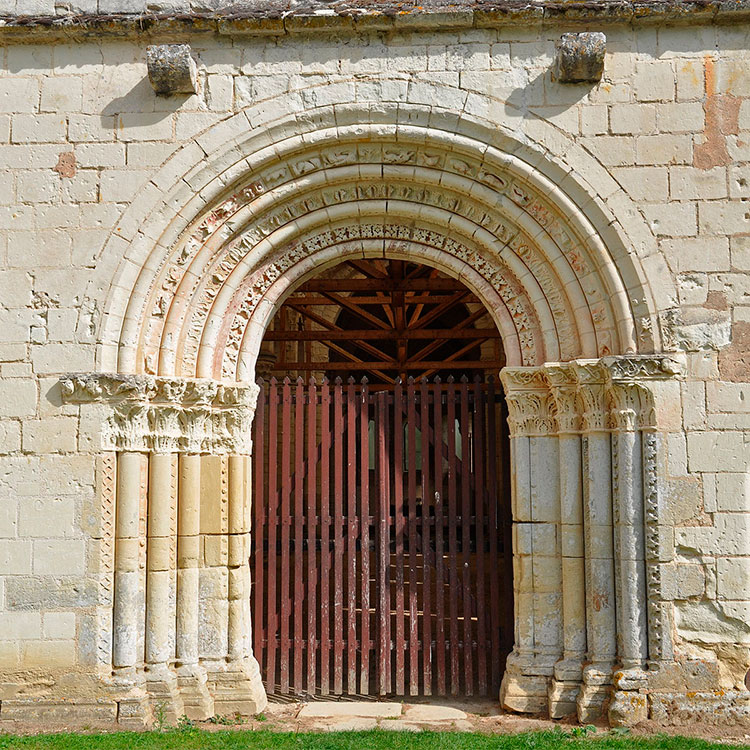
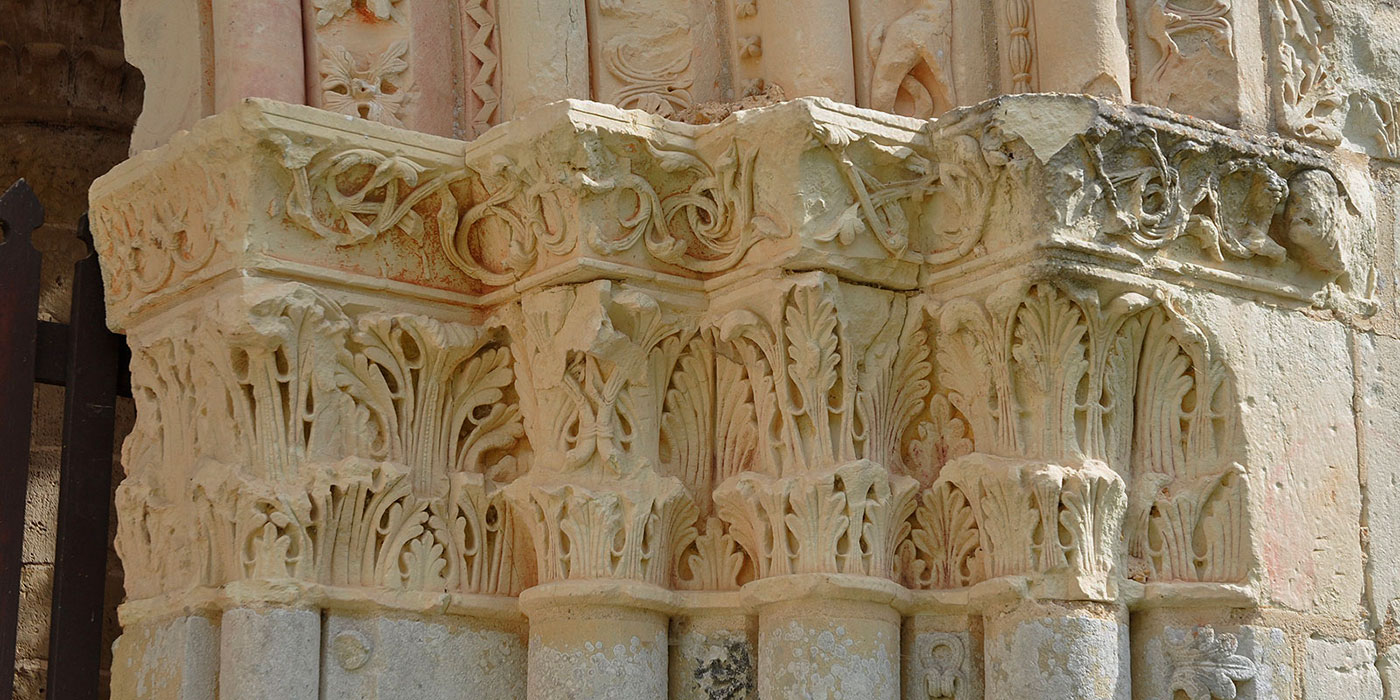
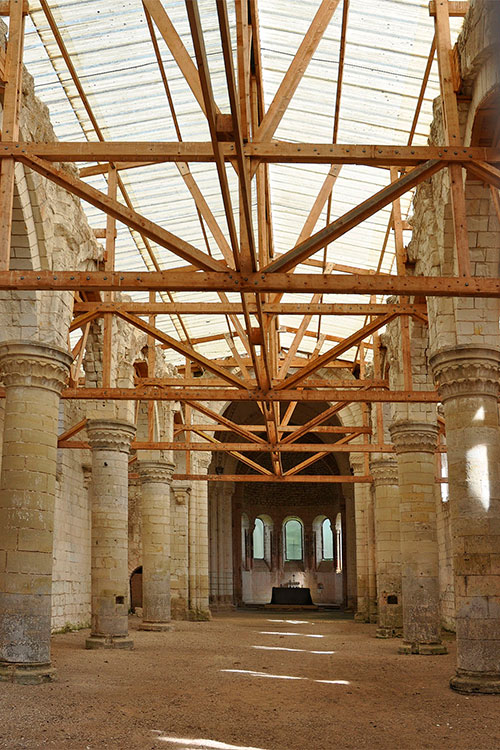
During the second half of the nineteenth century and the last quarter of the twentieth century, restoration work was carried out on the surviving remains. The abbey church is the principal surviving structure. It is a Romanesque building with three aisles, now deprived of their vaults, followed by a transept and an eastern end formed by three semicircular apses; the lateral apses open onto the transept arms. An octagonal bell tower rises above the crossing. The western portal preserves its Romanesque sculptural decoration. Several ancillary buildings dating from the seventeenth and eighteenth centuries also survive.
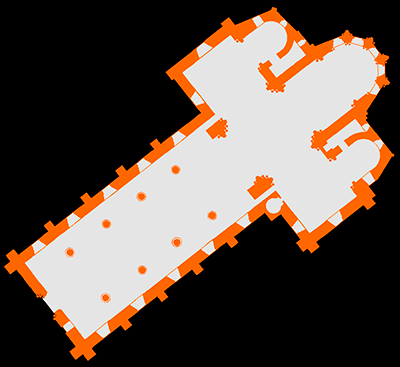
Schematic plan of the church
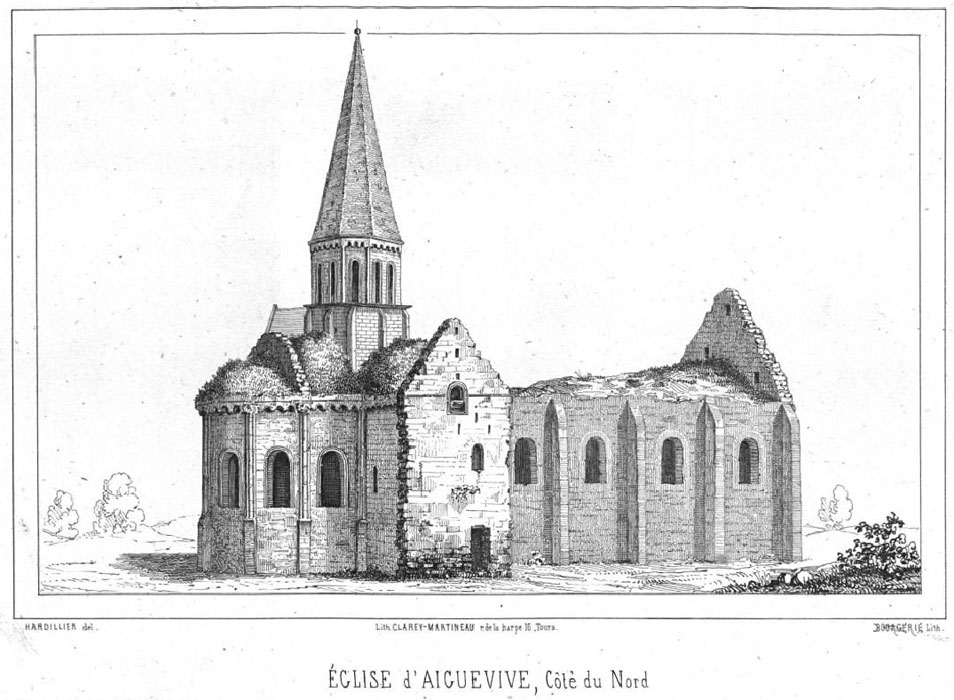
Illustration from Excursion de Saint-Aignen à Aiguevive (1842)
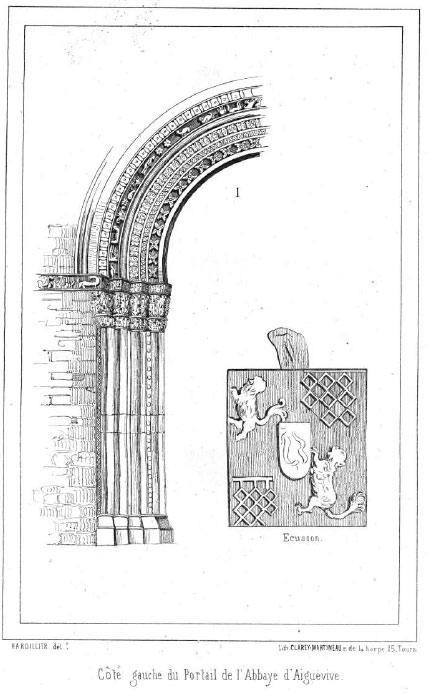
Illustration from Excursion de Saint-Aignen à Aiguevive (1842)
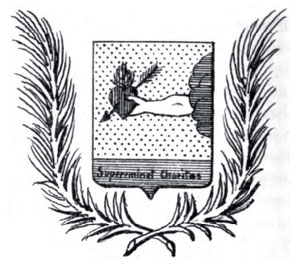
Illustration from Notice sur l'Abbaye Royale d'Aiguevive (1853)
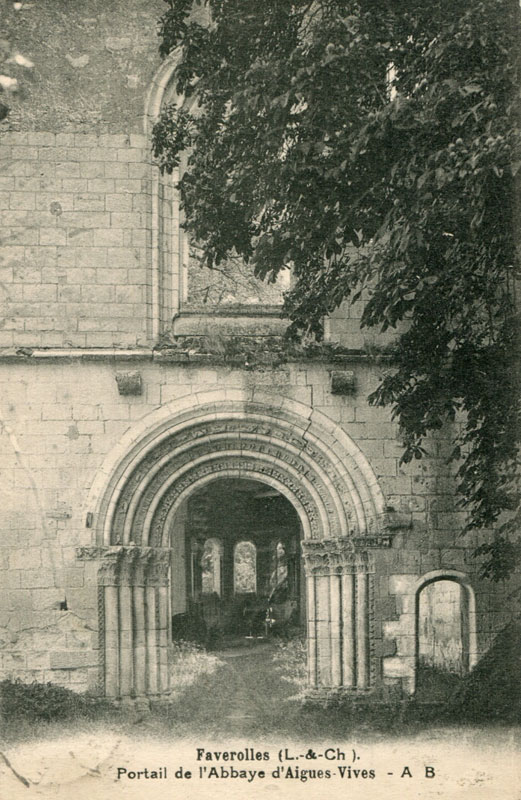
Old postcard, private collection
- BAUDRILLART, Alfred (1909). Dictionnaire d'histoire et de géographie ecclésiastiques. Vol. 1. París: Letouzey et Ané
- BESSE, Jean-Martial (1920). Abbayes et prieurés de l'ancienne France, vol. 8, Tours. París : Picard
- DESHOULIÈRES, François. (1926). Aigue-Vive. Congrès archéologique de France. 88ss. Blois. Société française d'archéologie
- DUPRÉ, A. (1873). Notes historiques sur l'abbaye d'Aiguevive (de l'ancien diocèse de Tours). Bulletin de la Société Archéologique de Touraine, vol. 2. Tours
- LAMBRON DE LIGNIM, H. (1856). Notice sur l'Abbaye Royale d'Aiguevive ou Aiguevives, Aqua viva, du diocèse de Tours. Mémoires de la Société Archéologique de Touraine. Tours/París
- MARTÈNE, Edmond; i altres (1717). Voyage littéraire de deux religieux bénédictins de la congrégation de Saint-Maur. 1ª part. París: Delaulne
- PÉAN, A.; CHARLOT (1842). Excursion de Saint-Aignen à Aiguevive, par la rive méridionale du Cher. Mémoires de la Société Archéologique de Touraine. Tours: De Mame
- PRUDHOMME, André (1988). Nouveaux documents sur l'abbaye d'Aiguevive (Logis conventuel et logis abbatial). Mémoires de la Société des Sciences et Lettres de Loir-et-Cher. Vol. 43
- SAINT-MAUR, Congregació de (1856). Gallia Christiana in provincias ecclesiasticas distributa. Vol. 14. París: Typographia Regia
- SALMON, André; ed. (1854). Recueil de chroniques de Touraine. Tours: Ladevèze
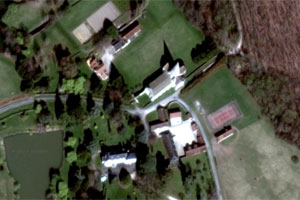
The substantial remains of the abbey belong to the commune of Faverolles-sur-Cher and are situated south of the village, between Tours and Vierzon