Priory of Marcigny
Marciniacum / Sainte-Trinité de Marcigny / Saint-Nicolas
(Marcigny, Saône-et-Loire)

Church of Saint-Nicolas

The priory of Sainte-Trinité at Marcigny, Cluny’s first female foundation, was established around 1055 at the initiative of Hugh of Semur, abbot of the mother house of Cluny (1049–1109), and his brother Geoffrey III, lord of Semur, who provided the land required for the new foundation. The first altars of the priory church of Sainte-Trinité were consecrated in 1055 and, in 1082, the church was blessed again, probably when its construction had already been completed.

Church of Saint-Nicolas
Among other women connected with figures associated with Cluny, the monastery received Hermengarde, sister of the founders and Marcigny’s first prioress. Three daughters of Geoffrey also took their vows there, as did Raingarde of Semur (d. 1135), mother of Peter the Venerable (1122–1156). Women from the nobility also entered the community, including Adela of England (d. 1137), daughter of William I the Conqueror (c. 1028–1087). The same monastic complex also included a male community, responsible for providing religious services for the nuns and carrying out administrative duties. It had its own prior, a church dedicated to Saint-Nicolas, and quarters separate from those of the female community.
The only building shared by both communities was the great priory church of Sainte-Trinité, arranged so as to allow the monks access without interfering with the spaces belonging to the female community. Attached to the church was a chapel dedicated to Notre-Dame, entered from the north arm of the transept and serving as a private place of prayer for the nuns. The construction of the priory complex probably took place during the second half of the 11th century and the first half of the 12th, a period during which the church of Saint-Nicolas was also built. Conflicts between the two communities were frequent and, in 1336, they became separated; from then on, the monks occupied the church of Saint-Nicolas exclusively.
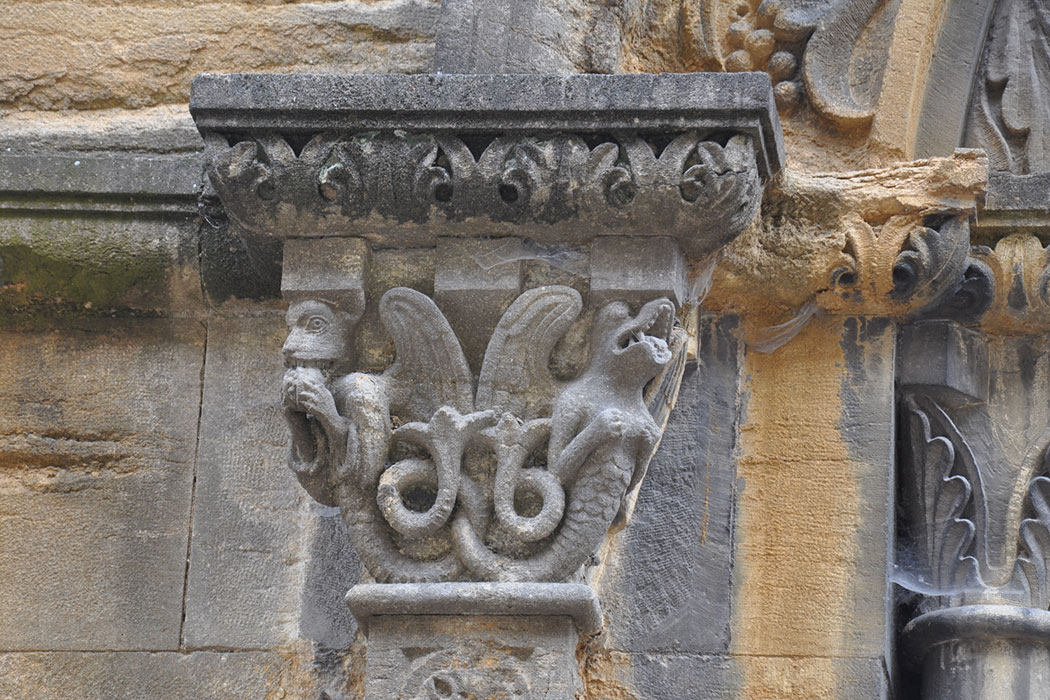
Church of Saint-Nicolas
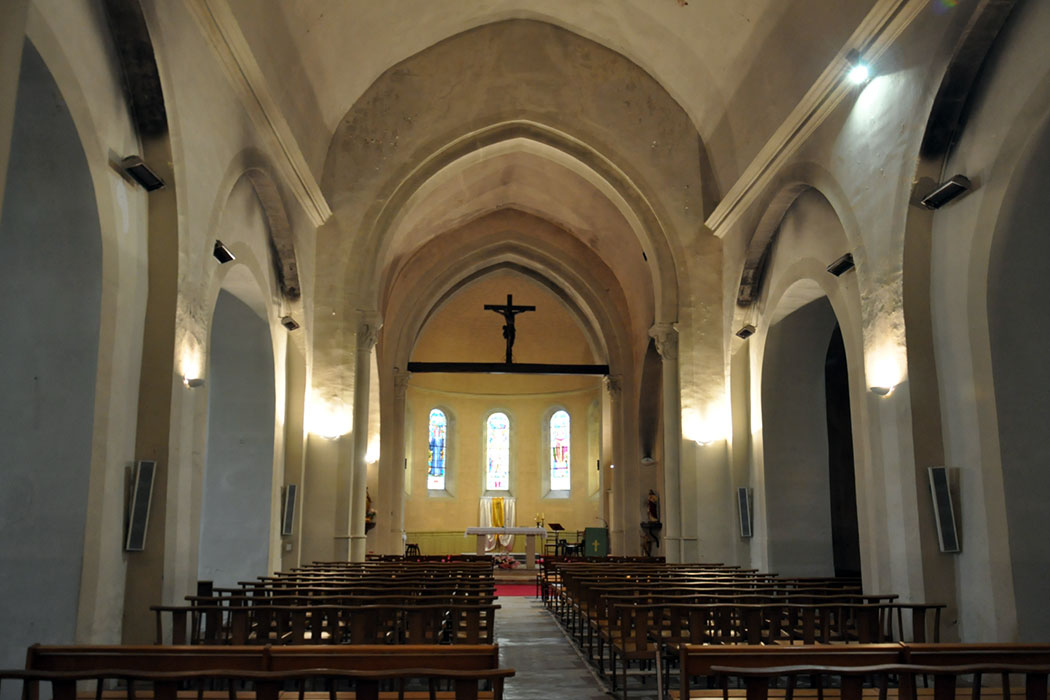
Church of Saint-Nicolas
In 1362, Marcigny suffered from the passage of mercenaries (routiers) and was subsequently fortified. The most serious damage, however, occurred in 1562, when the Huguenots occupied the site and severely damaged its buildings. Restoration work was undertaken in the following years. In 1777, the priory palace, built over the narthex of the church of Sainte-Trinité, was inaugurated. With the outbreak of the Revolution, the priory was suppressed in 1791 and, deprived of its monastic community, the site passed into private hands. The church was demolished before the end of that century, while the chapel of Notre-Dame was converted into a dwelling until it too was demolished in 1810.
Only a few remains survive of the church of Sainte-Trinité. It was a large building and one of the largest monastic churches in the region. It had three aisles and a transept, with three apses and the chapel of Notre-Dame opening from it. The church of Saint-Nicolas survives from the former group of buildings belonging to the male priory, although its structure has been extensively altered. Also worthy of mention are the prioress’s palace, dating from the 18th century, and the Moulin tower, a heavily altered defensive structure dating from the early 15th century.
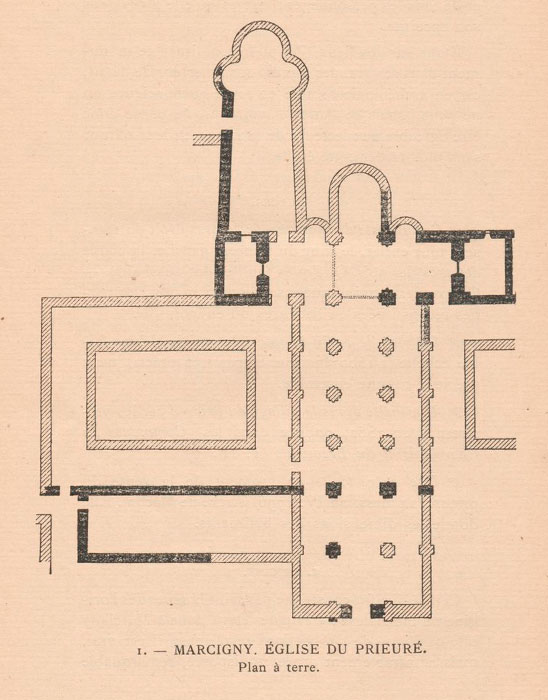
Church of Sainte-Trinité and chapel of Notre-Dame
Illustration from L'église du prieuré de Marcigny (1913)
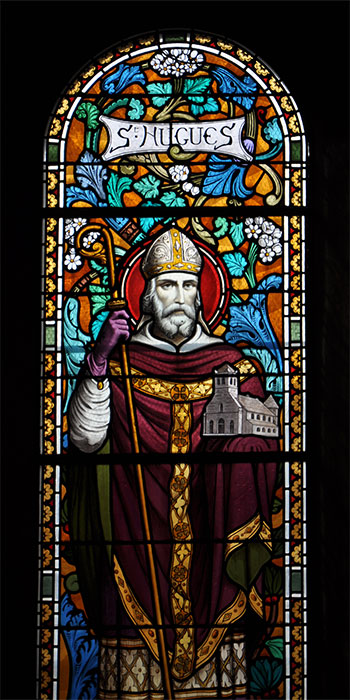
Modern stained glass. Hugh of Semur, the founder
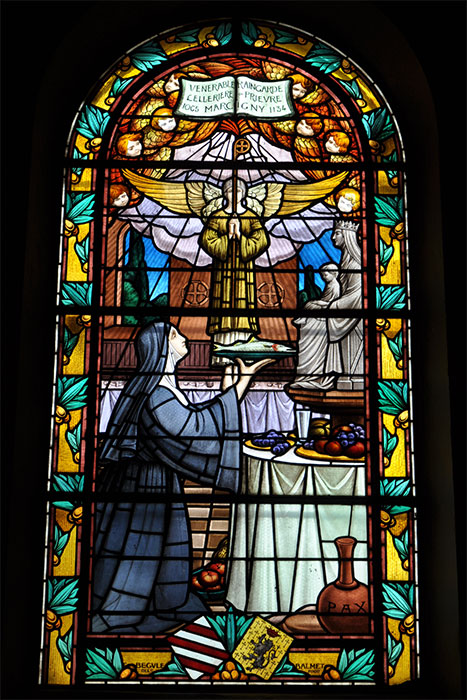
Modern stained glass window. Hermengarde, first prioress
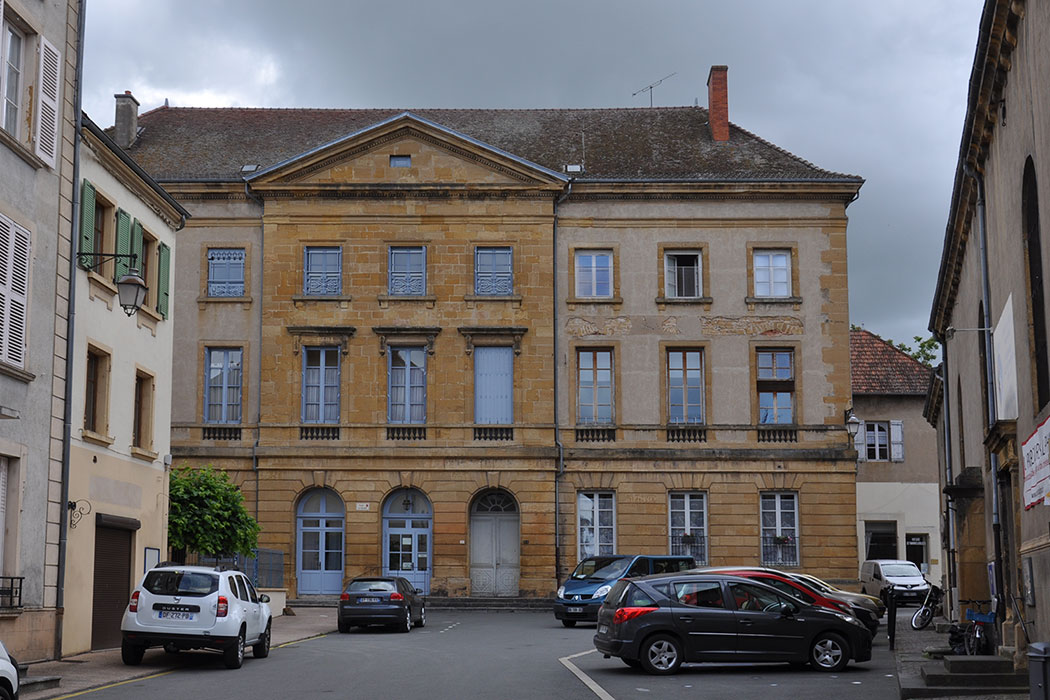
Priory Palace
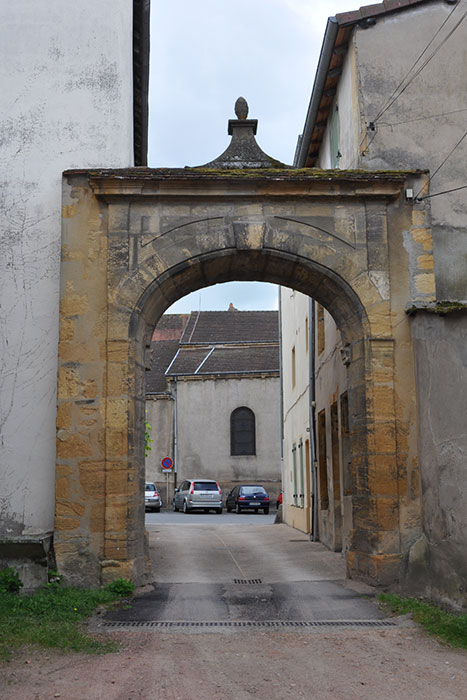
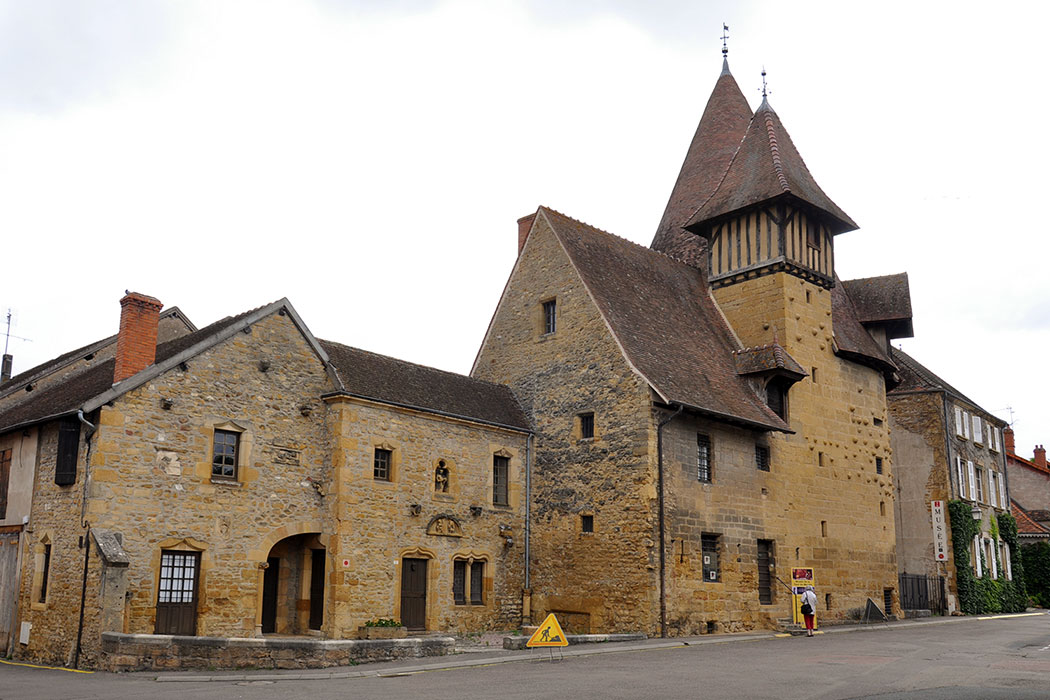
Moulin Tower
- CUCHERAT, François (1851). Cluny au onzième siècle. Académie de Mâcon
- DUBOIS, Maxime (1904). Monographie des communes du Charollais et du Brionnais, département de Saône-et-Loire. Vol. 2. Charlieu: Micolon
- MOUTERDE, Abbé (1913). L'église du prieuré de Marcigny (Saône-et-Loire). Bulletin de La Diana. Montbrison: Brassart
- REVEYRON, Nicolas (2012). Aménagements et décors tardo-médiévaux dans la priorale clunisienne de Marcigny. Revue Mabillon. T. 84. Brepols
- ROUX-PERINO, Julie (2008). Cluny. Vic-en-Bigorre: MSM
- SAINT-MAUR, Congregació de (1725). Gallia Christiana in provincias ecclesiasticas distributa. Vol. 4. París: Typographia Regia
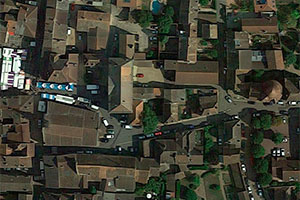
The remains of the priory are located at Marcigny, between Paray-le-Monial and Roanne, west of Mâcon