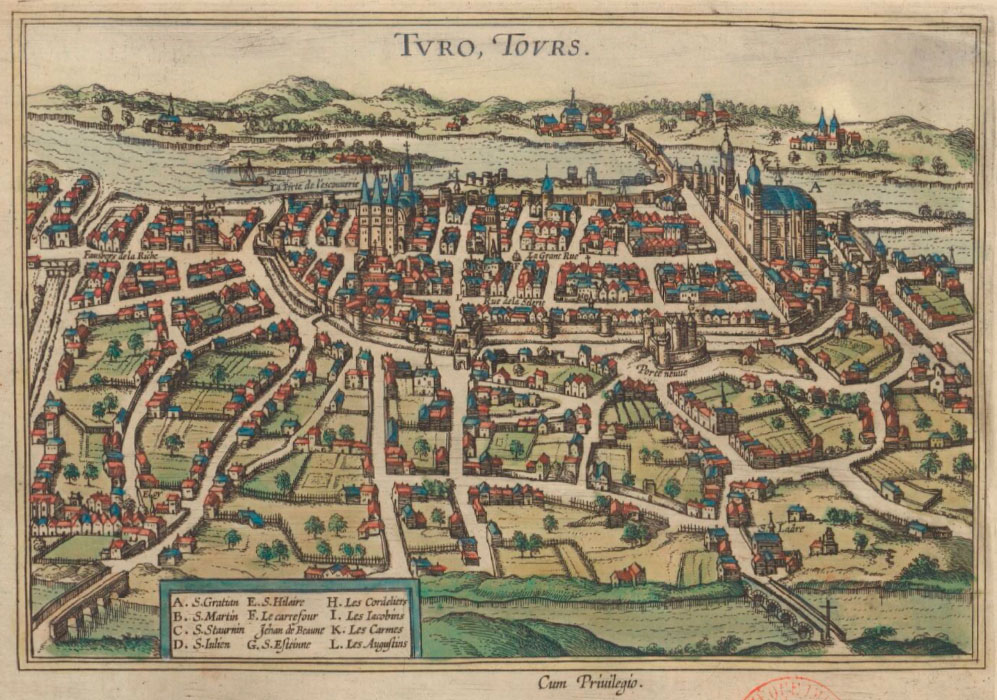
Frans Hogenberg (1645)
Bibliothèque nationale de France
S Michaelis Lucizensis / Luzé / Boscus Alberici
(Luzé, Indre-et-Loire)
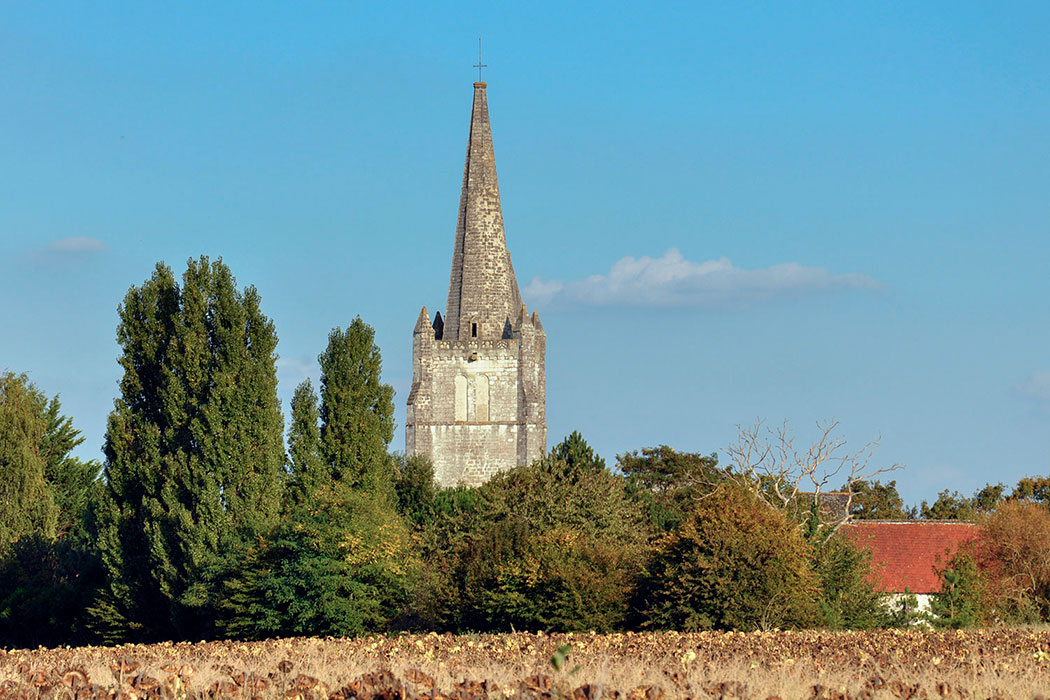

The Abbey of Saint-Michel de Bois-Aubry originated from a small community inspired by the eremitic tradition that occupied the site of Luzé around 1130, although it may have existed as early as 1118. This community had a chapel dedicated to Saint Michael. Robert, who led this initiative, regularized its status and, around 1135, granted these possessions to the Abbey of Sainte-Trinité de Tiron (Eure-et-Loir), which established a priory there. In 1138, Saint-Michel was elevated to the status of an abbey and remained affiliated with Tiron, becoming part of the Order of Tiron, of Benedictine origin.
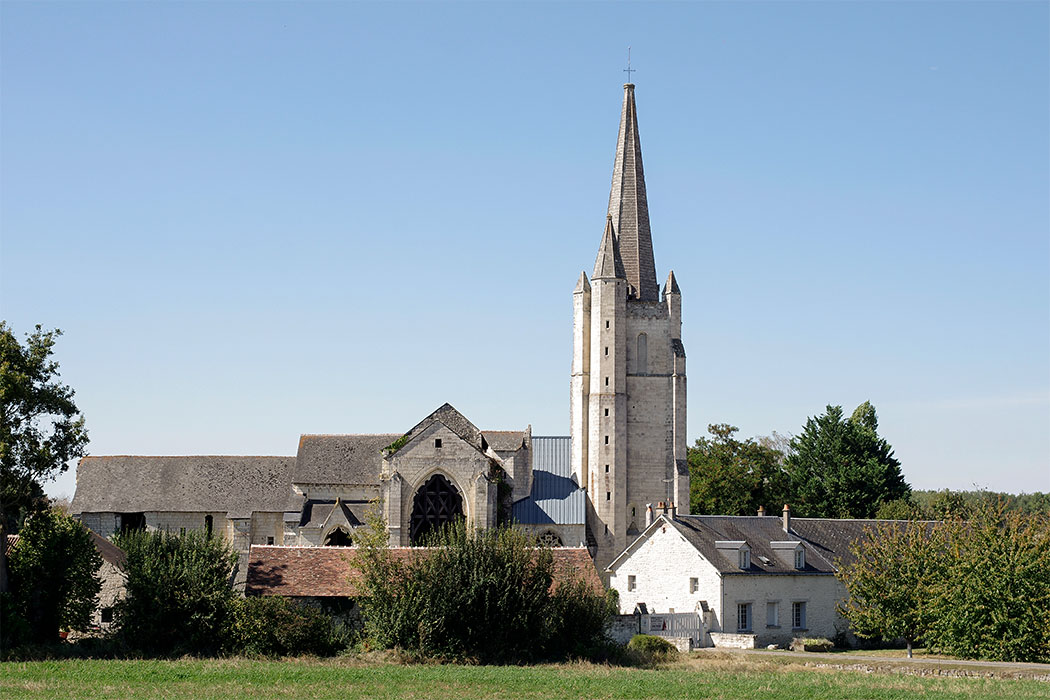
Photo by Daniel Jolivet, on Wikimedia
Initially, the site was known as Saint-Michel de Luzé, but this name was gradually replaced by Bois-Aubry, which became firmly established by the fifteenth century. During the sixteenth century, the abbey came under the commendatory system. At the same time, it may also have suffered the effects of the French Wars of Religion and entered a prolonged period of decline that lasted until its suppression during the French Revolution. Sold in 1792, the former abbey fell into ruin. In 1978, a community of the Orthodox Church settled there and began restoring the site. Since 2006, it has been privately owned. Despite years of neglect, some medieval structures have been partially recovered.
- BESSE, Jean-Martial (1920). Abbayes et prieurés de l'ancienne France, vol. 8, Tours. París : Picard
- BOSSEBOEUF, Louis-Auguste (1900). L'abbaye bénédictine de Bois-Aubry. Bulletin de la Société archéologique de Touraine, vol. 12. Tours: Péricat
- CARRÉ DE BUSSEROLLE, Jacques-Xavier (1878). Dictionnaire géographique, historique et biographique d'Indre-et-Loire et de l'ancienne province de Touraine. Vol. I. Tours: Rouillé-Ladevèze
- GILBERT, Christian (1987). L'abbaye Saint-Michel de Bois-Aubry. Bulletin archéologique du Comité des travaux historiques et scientifiques, núm. 19
- GILBERT, Christian (1993). Une abbaye tironienne en Touraine : Saint-Michel de Bois-Aubry au XIIe siècle. Bulletin Monumental, vol. 151/1
- MERLET, Lucien; ed. (1883). Cartulaire de l'abbaye de la Sainte-Trinité de Tiron. Vol. 1. Chartres: Garnier
- SAINT-MAUR, Congregació de (1856). Gallia Christiana in provincias ecclesiasticas distributa. Vol. 14. París: Typographia Regia
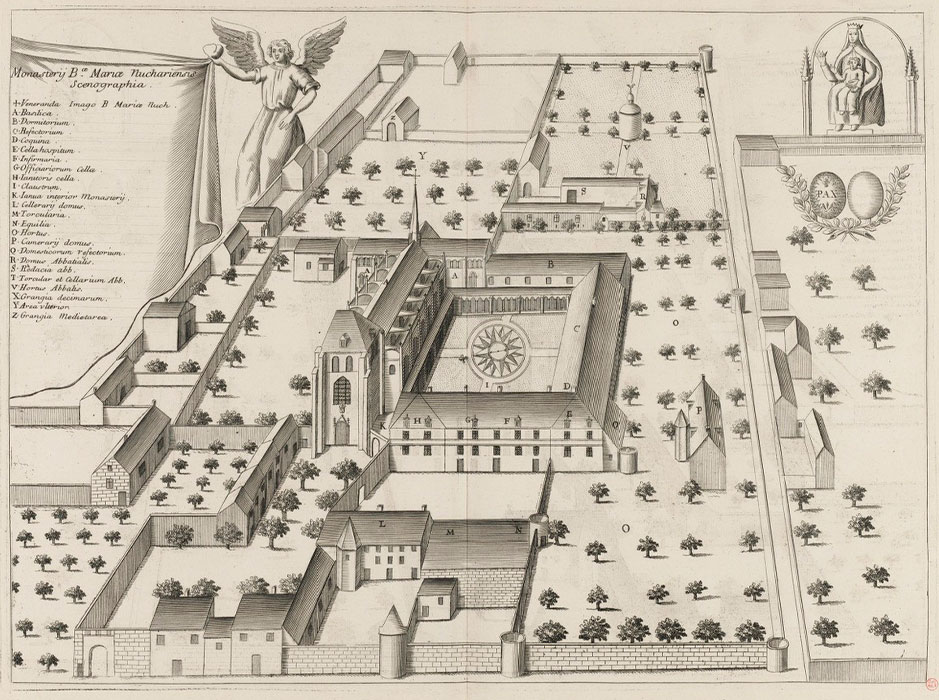
Monasticon Gallicanum
Bibliothèque nationale de France


The Abbey of Notre-Dame de Noyers was founded and endowed around 1031 by Hubert de Noyant, with the approval of Fulk III Nerra (c. 970-1040), Count of Anjou, and through the intervention of Évrard of Marmoutier (Tours), who sent the first monks there and became its first abbot. In 1031, Robert II (c. 972-1031), King of the Franks, confirmed the foundation. Financial support from other benefactors gave a strong impetus to the abbey, and Arnoul, Archbishop of Tours from 1023 to 1052, consecrated the abbey church. In 1120, it was consecrated again following repairs to damage caused by military action.
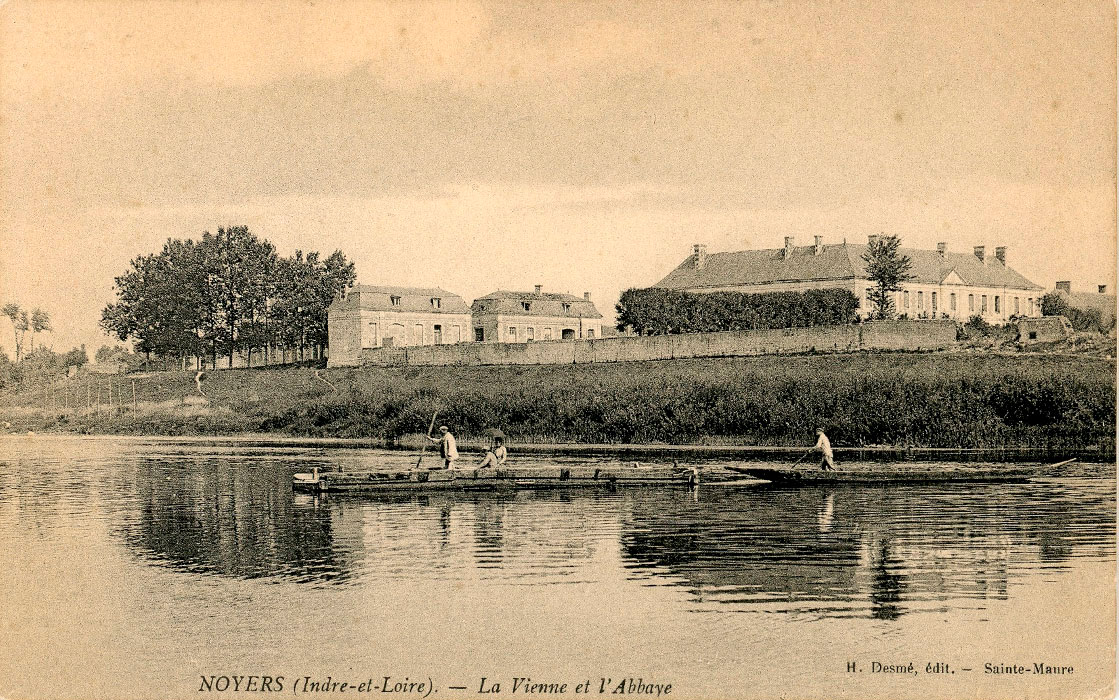
Old postcard, private collection
The abbey also suffered the effects of the Hundred Years' War. The cloister was built during the last quarter of the fifteenth century. The last regular abbot was Jacques de Mauny († 1542), while his brother François († 1558) became the first commendatory abbot and governed Noyers between 1544 and 1554. Later, during the Wars of Religion, a large part of the monastery was damaged in 1589. In 1659, the Maurist reform was introduced, promoting new building works, although by the mid-eighteenth century the community was already in decline. The church and most of the monastic buildings were lost during the Revolution, although several eighteenth-century structures still survive.
- BESSE, Jean-Martial (1920). Abbayes et prieurés de l'ancienne France, vol. 8, Tours. París : Picard
- CARRÉ DE BUSSEROLLE, Jacques-Xavier (1882). Dictionnaire géographique, historique et biographique d'Indre-et-Loire et de l'ancienne province de Touraine. Vol. IV. Tours: Rouillé-Ladevèze
- CHAPU, Philippe (1989). Les prieurés de l'abbaye tourangelle de Noyers. Bulletin de la Société Nationale des Antiquaires de France
- CHEVALIER, Casimir (1872). Cartulaire de l'abbaye de Noyers. Mémoires de la Société archéologique de Touraine, vol. XXII
- CHEVALIER, Casimir (1873). Histoire de l'abbaye de Noyers au XIe et au XIIe siècle d'après les chartes. Mémoires de la Société archéologique de Touraine, vol. XXIII
- PEIGNÉ-DELACOURT, Achille (1877). Monasticon Gallicanum. Paris: G. Chamerot
- SAINT-MAUR, Congregació de (1856). Gallia Christiana in provincias ecclesiasticas distributa. Vol. 14. París: Typographia Regia
- SEMUR, François-Christian (2011). Abbayes de Touraine. La Crèche: Geste Ed.
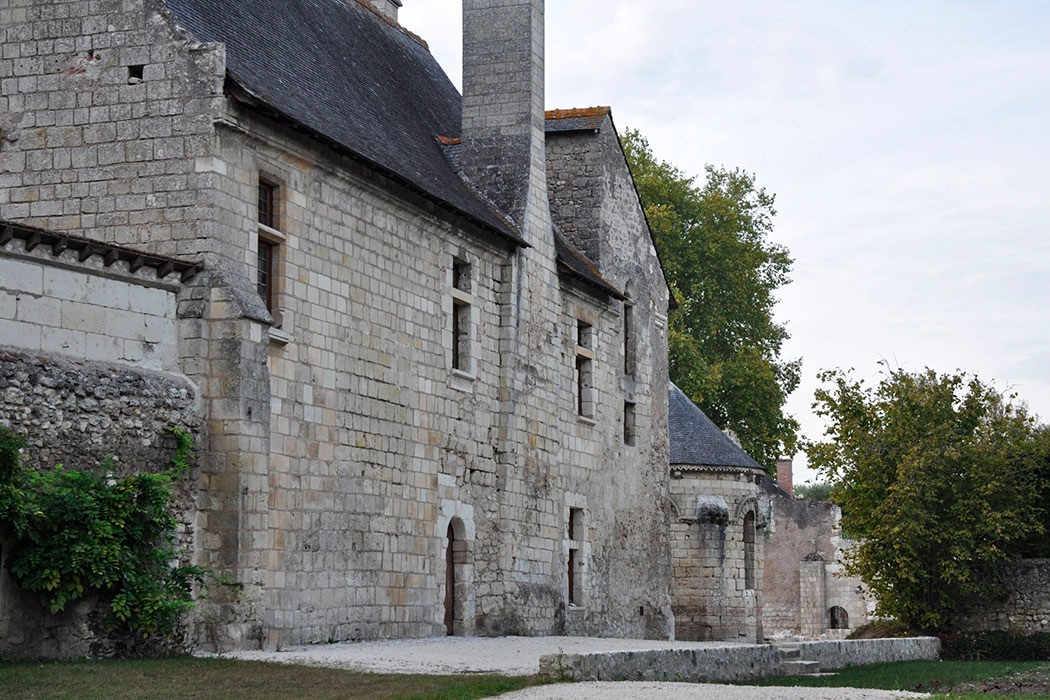

In the 10th century, this site was an island belonging to the collegiate church of Saint-Martin de Tours. At the beginning of the 11th century, a church dedicated to Saints Cosmas and Damian was erected there and used as a place of retreat with an eremitic character. In 1022, the site was granted to the Abbey of Marmoutier, but, owing to the failure to comply with the conditions of the grant, it reverted to Saint-Martin.
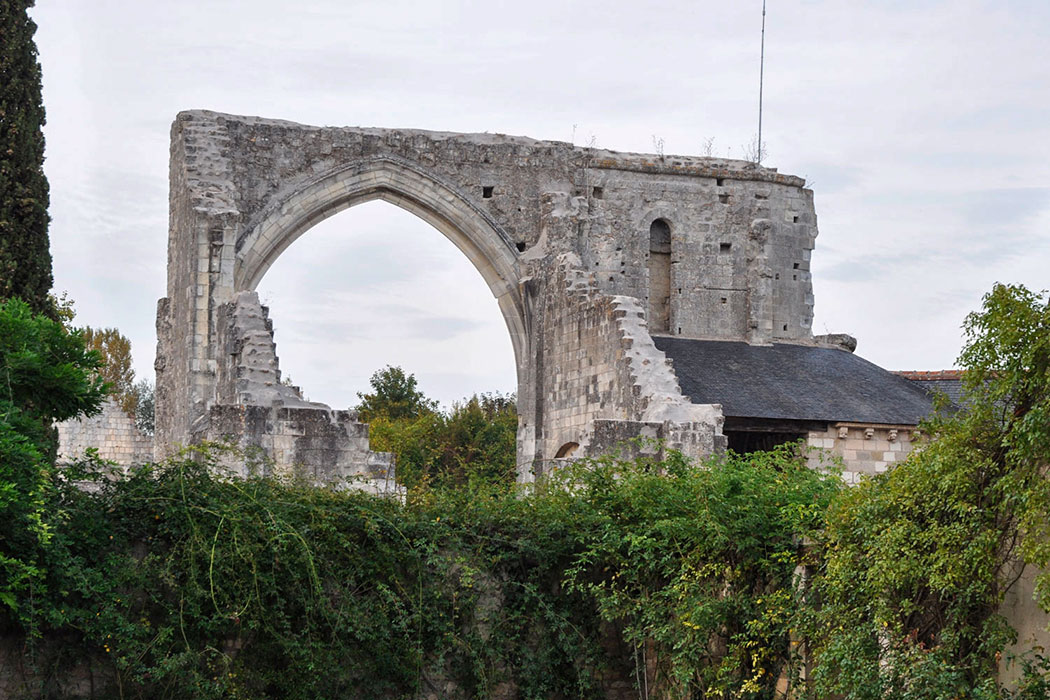
The site continued to accommodate hermits until Saint-Martin founded an Augustinian house of regular canons there in 1092. This community remained active as a priory, under the protection of its influential parent house, until 1742. After the cessation of its activity, the complex was partially demolished. It was subsequently sold following the Revolution. Today, only the well-preserved ruins survive. The poet Pierre de Ronsard (1524-1585) was appointed prior of this house, where he died and was buried.
- BESSE, Jean-Martial (1920). Abbayes et prieurés de l'ancienne France, vol. 8, Tours. París : Picard
- DURET-MOLINES, Patricia (2003). L'ancienne église prieurale de Saint-Cosme (commune de La Riche). Congrès archéologique de France, 155 ss. Société française d'archéologie
- NOIZET, Hélène (2019). La fabrique de la ville. Espace et sociétés à Tours (IXe-XIIIe siècle). París: Éditions de la Sorbonne
- PLAILLY (1845). Notice sur le prieuré de Saint-Cosme près Tours. Mémoires de la Société archéologique de Touraine. Vol. 2. Tours
Bellus Mons / Notre-Dame-de-l’Écrignole
(Tours, Indre-et-Loire)
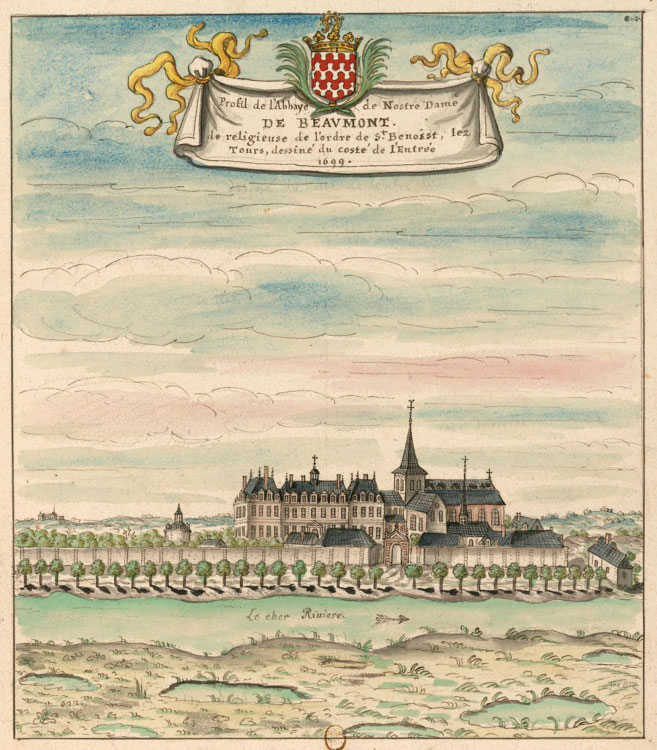
Louis Boudan (1699)
Bibliothèque nationale de France
The Benedictine nunnery of Notre-Dame de Beaumont-lès-Tours was founded around the year 1002 by Hervé de Buzançais († 1018), treasurer of Saint-Martin de Tours. He transferred there the community from the monastery of Notre-Dame-de-l’Écrignole, an ancient cell, possibly dating from the 6th century, one of the establishments located near the burial place of Saint Martin. The relocation of the nuns was probably prompted by the fire that affected Saint-Martin and its surroundings in 994 and led to the reconstruction of that collegiate church.
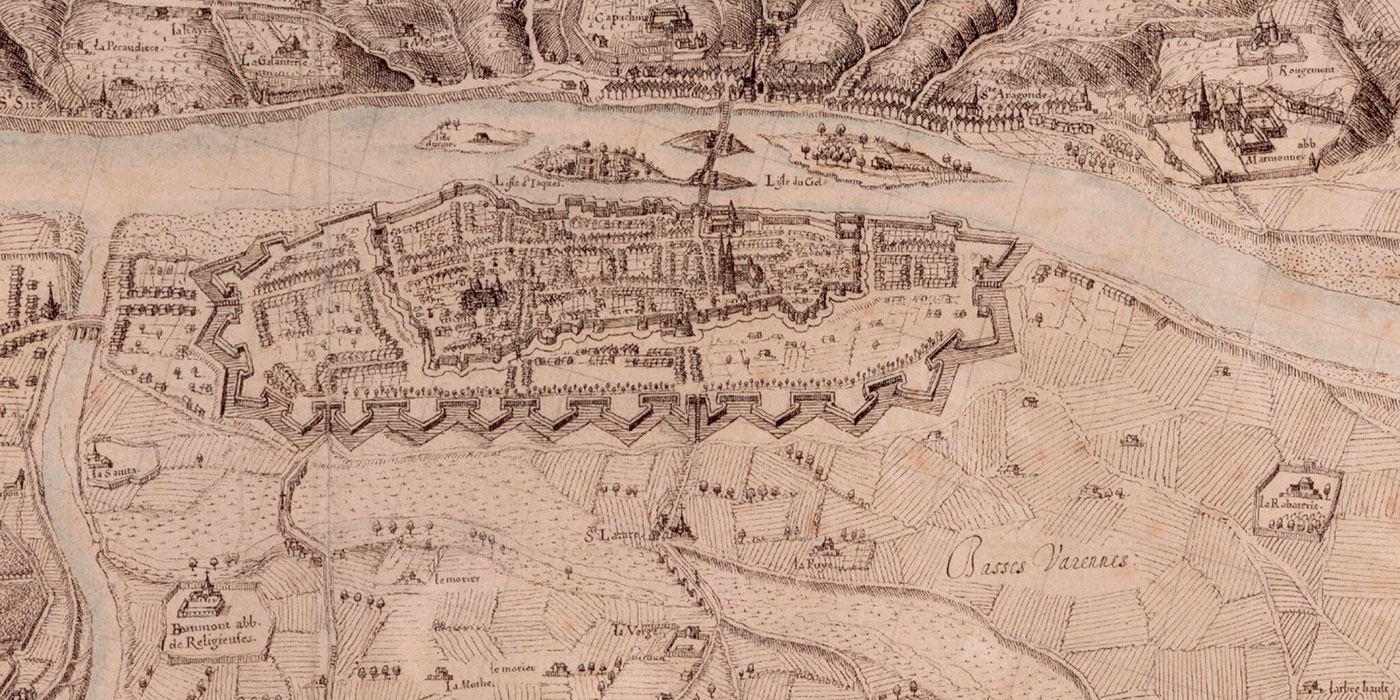
Detail of Carte particulière de Tours avecq le paisage mis en relief
René Siette (1619)
Bibliothèque nationale de France
The new Benedictine monastery was established at a more distant site. Nevertheless, the church of Notre-Dame-de-l’Écrignole was preserved and became dependent on Beaumont as a parish church. The monastery remained linked to Saint-Martin, and the nuns continued to be subject to its authority, giving rise to disputes between the two institutions. The abbey had several dependent priories, including Notre-Dame de Moncé (Indre-et-Loire), which was later raised to the status of an abbey. The community remained active until the Revolution, although a major fire severely affected the monastic complex in 1784. Today, only a few remains survive.
- BESSE, Jean-Martial (1920). Abbayes et prieurés de l'ancienne France, vol. 8, Tours. París : Picard
- CARRÉ DE BUSSEROLLE, Jacques-Xavier (1878). Dictionnaire géographique, historique et biographique d'Indre-et-Loire et de l'ancienne province de Touraine. Vol. I. Tours: Rouillé-Ladevèze
- GRANDMAISON, Charles de (1877). Chronique de l’abbaye de Beaumont-lez-Tours. Mémoires de la Société archéologique de Touraine, vol. 26
- MABILLON, Johanne (1707). Annales ordinis S. Benedicti occidentalium monachorum patriarchae. Vol 4. París: Robustel
- SAINT-MAUR, Congregació de (1856). Gallia Christiana in provincias ecclesiasticas distributa. Vol. 14. París: Typographia Regia
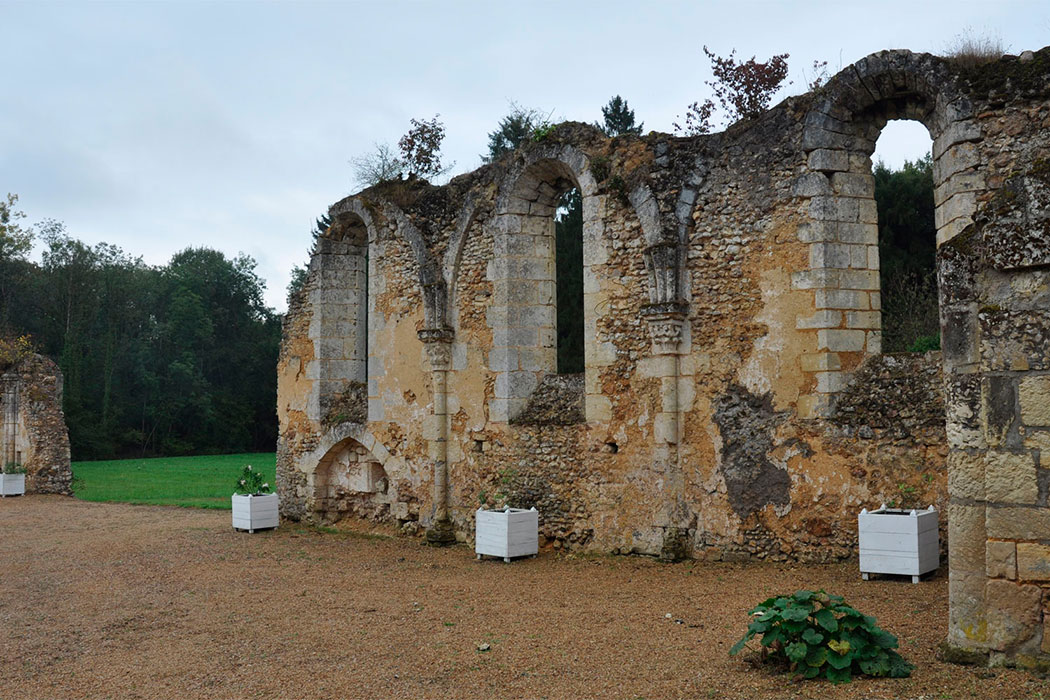
The Augustinian abbey of Sainte-Marie de Gastines was founded in 1138 by the Archbishop of Tours, Hugues d'Étampes (1134–1146), on the basis of an eremitical community that had previously occupied the site. The new community incorporated these hermits, who thereafter followed the Rule of Saint Augustine as canons regular. Around 1200, the establishment was destroyed by fire and rebuilt shortly afterwards with the support of Thibaut de Champagne. The new church was consecrated in 1207 by Archbishop Geoffroy de la Lande (1207–1208).
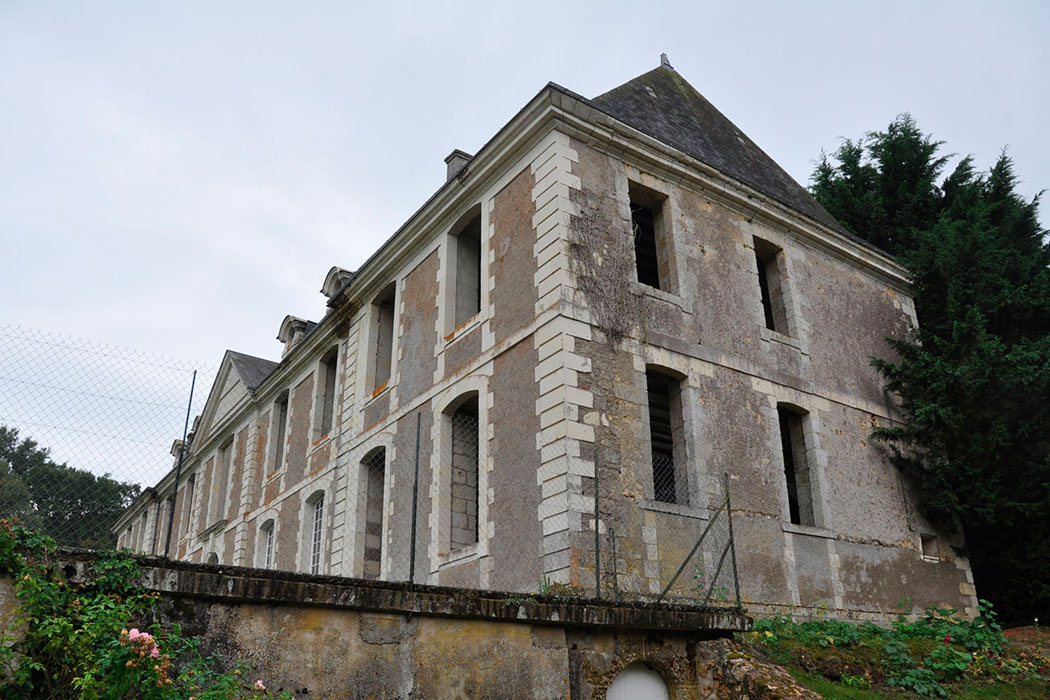
At the beginning of the fifteenth century, during the Hundred Years' War, the abbey suffered from pillaging, a situation that recurred in 1562 during the Wars of Religion. In 1668, it joined the Congregation of France, and major renovation works were carried out during the eighteenth century. Shortly afterwards, in 1791, the Revolution brought monastic life at Gastines to an end, and the dismantling of the complex began. Today, some early remains and several eighteenth-century buildings have survived.
- BESSE, Jean-Martial (1920). Abbayes et prieurés de l'ancienne France, vol. 8, Tours. París : Picard
- CARRÉ DE BUSSEROLLE, Jacques-Xavier (1880). Dictionnaire géographique, historique et biographique d'Indre-et-Loire et de l'ancienne province de Touraine. Vol. III. Tours: Rouillé-Ladevèze
- LEVEEL, Pierre (1993). Chronologie de l'abbaye Sainte-Marie de Gastines à Villedômer près Château-Renault. Bulletin de la Société archéologique de Touraine, núm. 43
- SAINT-MAUR, Congregació de (1856). Gallia Christiana in provincias ecclesiasticas distributa. Vol. 14. París: Typographia Regia