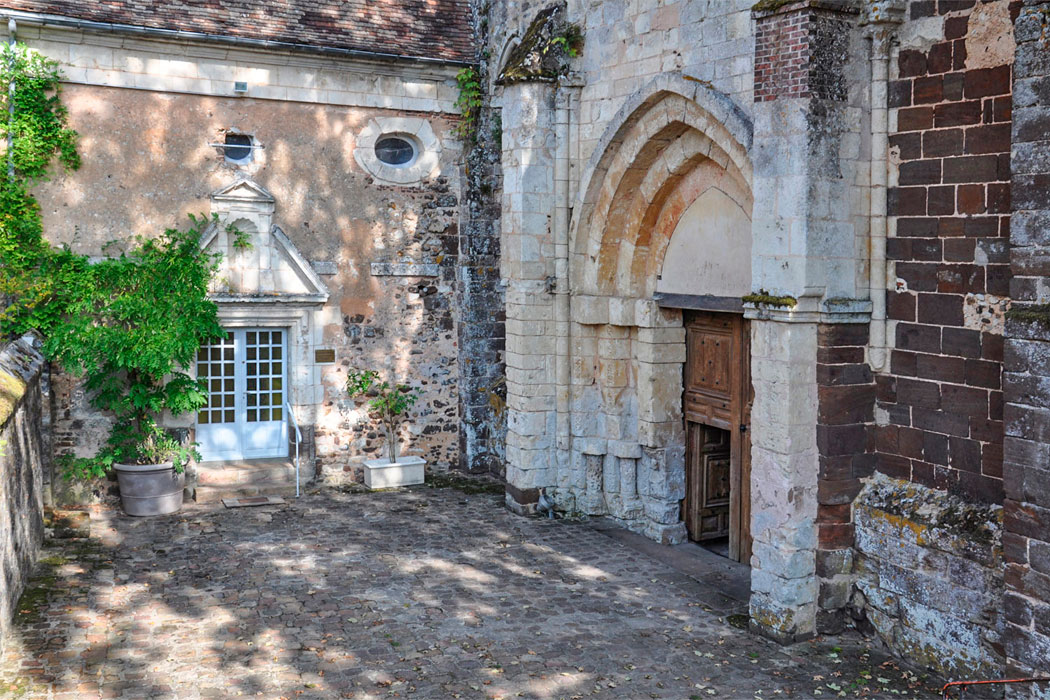


The Abbey of the Holy Trinity of Tiron was founded by Bernard of Abbeville (or Bernard of Tiron, c. 1050–1117), a monk of Saint-Cyprien de Poitiers (Vienne). After several experiences as a hermit, Bernard arrived at Tiron in 1109, in the Perche region, where Count Rotrou III (1099–1144) provided him with land for his settlement. In the same year, the first chapel was consecrated in the presence of Yves, Bishop of Chartres.
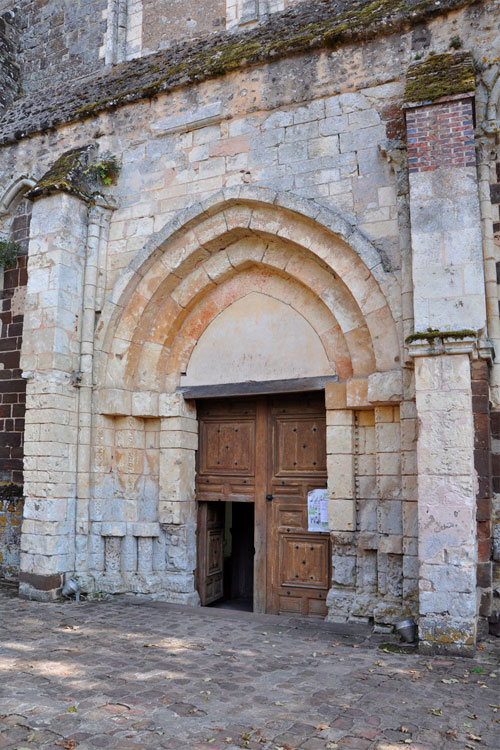
In 1114, Rotrou III and the chapter of Chartres donated a more suitable site to him, to the east, where the new Abbey of Tiron was permanently established. There Bernard was able to put into practice a form of monastic life based on a stricter observance of the Rule of Saint Benedict, as was also happening elsewhere at the same time: Cîteaux, Savigny, Fontevraud, Charterhouse, Grandmont and others. Bernard, the founder and first abbot, died in 1117 and was buried in the abbey. Tiron benefited from the protection and material assistance of Henry I of England (c. 1068–1135) and, subsequently, from other monarchs, nobles and lords, who also contributed to the development of the monastery.
The particular rules of the Tiron community required manual labour and a close relationship between the mother abbey, its daughter abbeys and the priories. In 1119, Pope Callixtus II placed the house under his protection. A congregation of monasteries was soon formed, known as the Order of Tiron, with its own organisation based on annual general chapters, at which the abbeys and priories were represented. L. Merlet lists fourteen abbeys belonging to it, in addition to 86 priories. Among them were the abbeys of Notre-Dame d’Asnières (Maine-et-Loire) and Saint-Michel de Bois-Aubry (Indre-et-Loire). The order also had several houses in England.
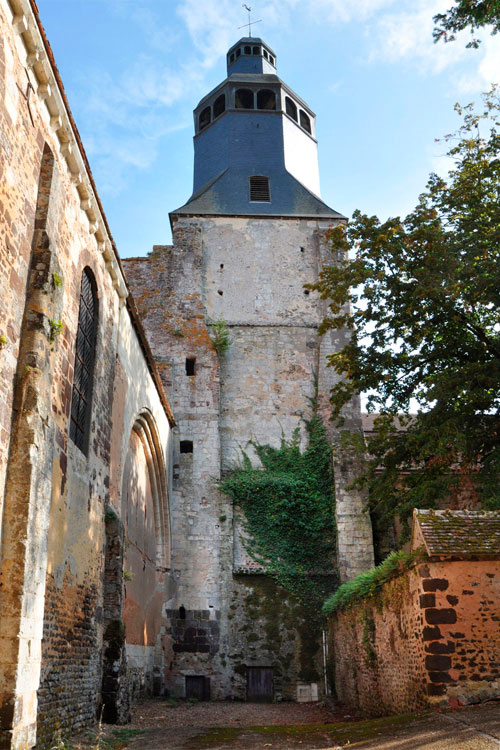
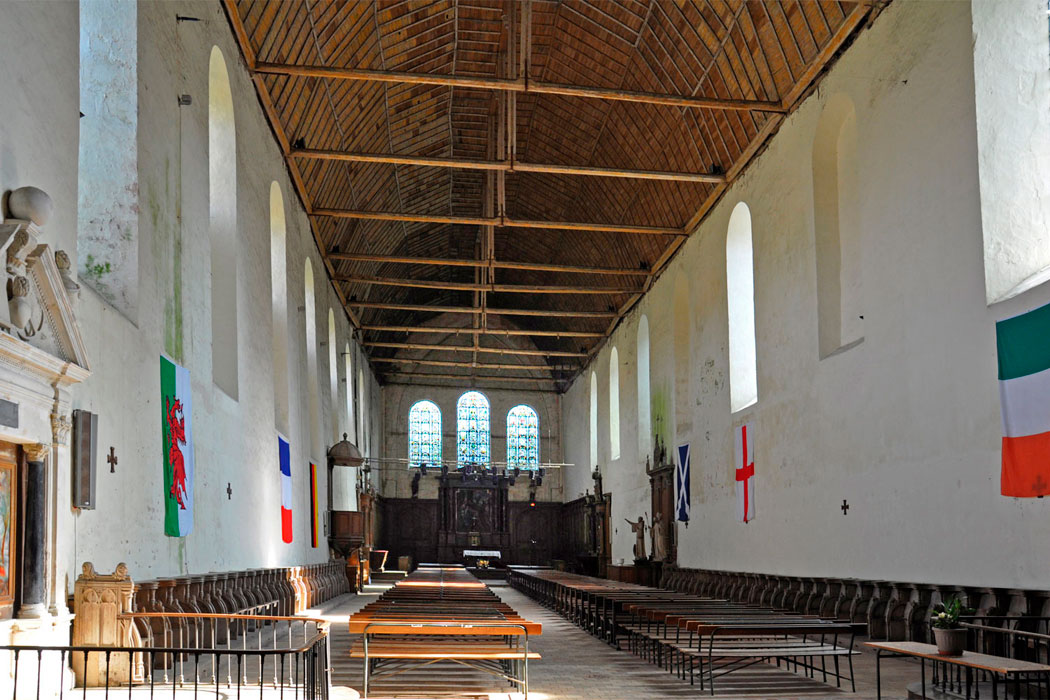
This territory was also affected by the wars of the later Middle Ages and, in 1428, the monastery and its priories suffered serious consequences: Tiron was damaged by fire and was severely affected. In the second half of that century, owing to a lack of financial resources, the monks forged numerous documents in an attempt to establish financial rights to which they were not entitled. This situation led to lengthy legal proceedings between the monastery and the chapter of Chartres. In 1562, the monastery was once again occupied by the military, this time during the French Wars of Religion. There were casualties, looting and the ruin of parts of the monastery. In 1591, in the same wartime context, the monastery was looted again.
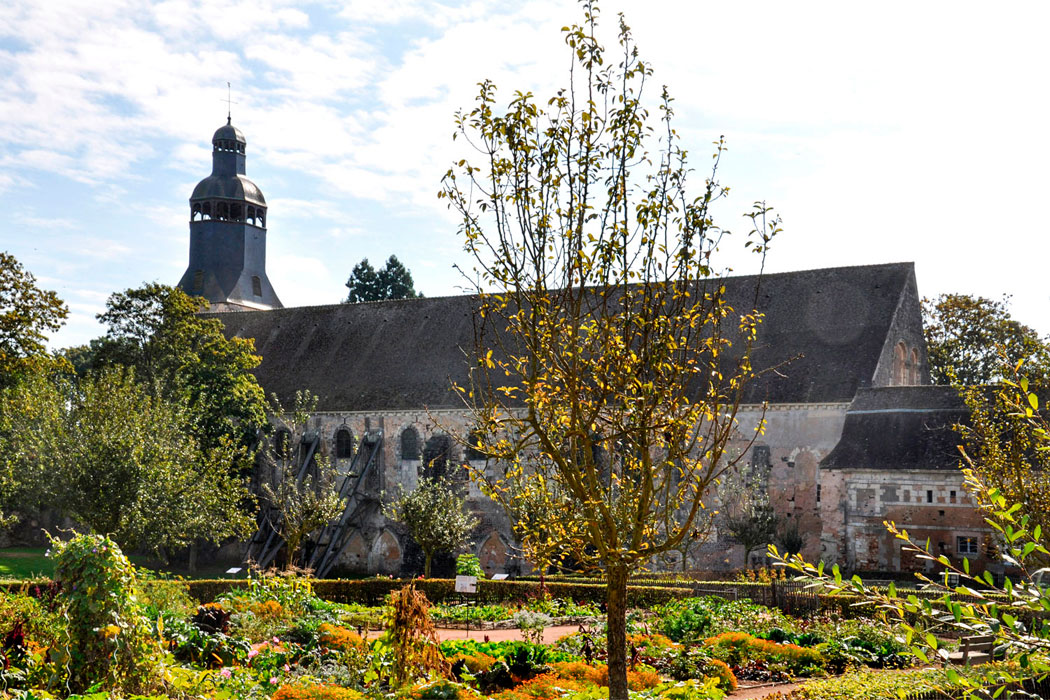
In 1629, amid a period of decline caused by military conflicts and the relaxation of monastic observance, Tiron joined the Benedictine Congregation of Saint-Maur. The Maurists established a school there, and academic activity gradually acquired considerable importance. In 1776 it was granted the status of a royal military school. In 1782, as a result of this activity, it lost its status as an abbey and, in 1792, the monastery was suppressed during the Revolution. The church was converted into a Temple of Reason, but worship was restored in 1795, when it became a parish church. At the end of the twentieth century, it became public property. Today, the monastic complex consists mainly of part of the church, which has been severely affected by the passage of time, together with other, later buildings belonging to secondary monastic dependencies.
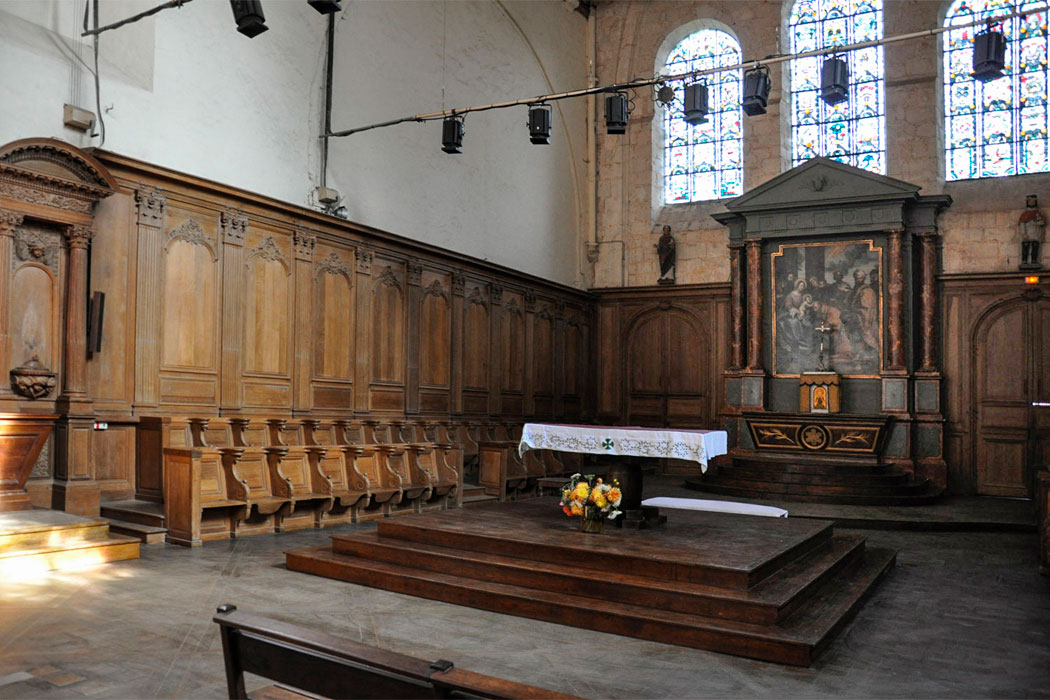
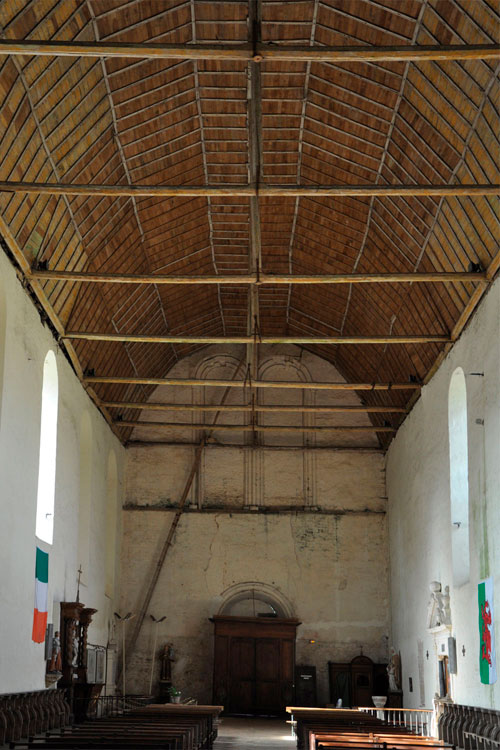
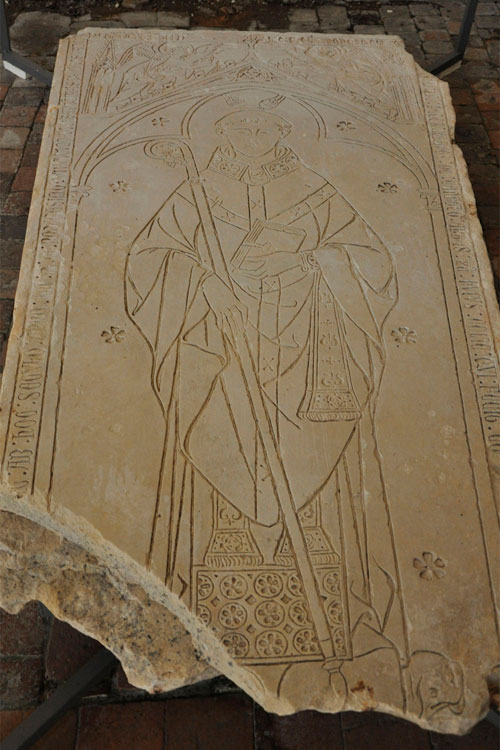
Tombstone of Abbot Jean de Chartres (1273-1297)
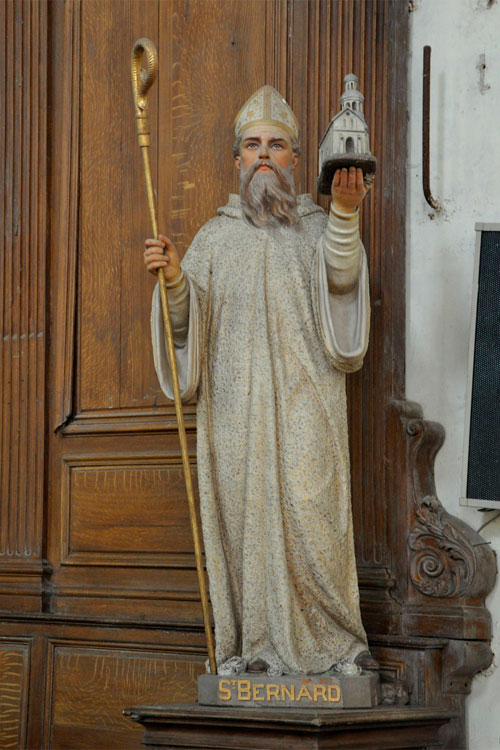
Saint Bernard of Abbeville
Bernard of Abbeville was born around 1050 in the region of Picardy. At the age of twenty he entered the Abbey of Saint-Cyprien de Poitiers (Vienne), from where he was sent to the Abbey of Saint-Savin (Vienne) to restore it, but he was not well received because of his very strict practices. He returned to Saint-Cyprien, where he was appointed abbot. Because of his differences with Cluny, he resigned his office in 1101 and moved to the region of Maine, where he came into contact with the eremitical life. Until 1109 he travelled through many places; among others, he settled at the hermitage of Fontaine-Géhard (Mayenne) and at Savigny (Manche), where he met Vitalis of Mortain. He also stayed in the Chausey Islands before moving to the Perche region. In 1109 he founded the monastery of Tiron, abandoning the eremitical life in favour of cenobitic monasticism. He died in 1117 at Tiron Abbey, where he was buried.
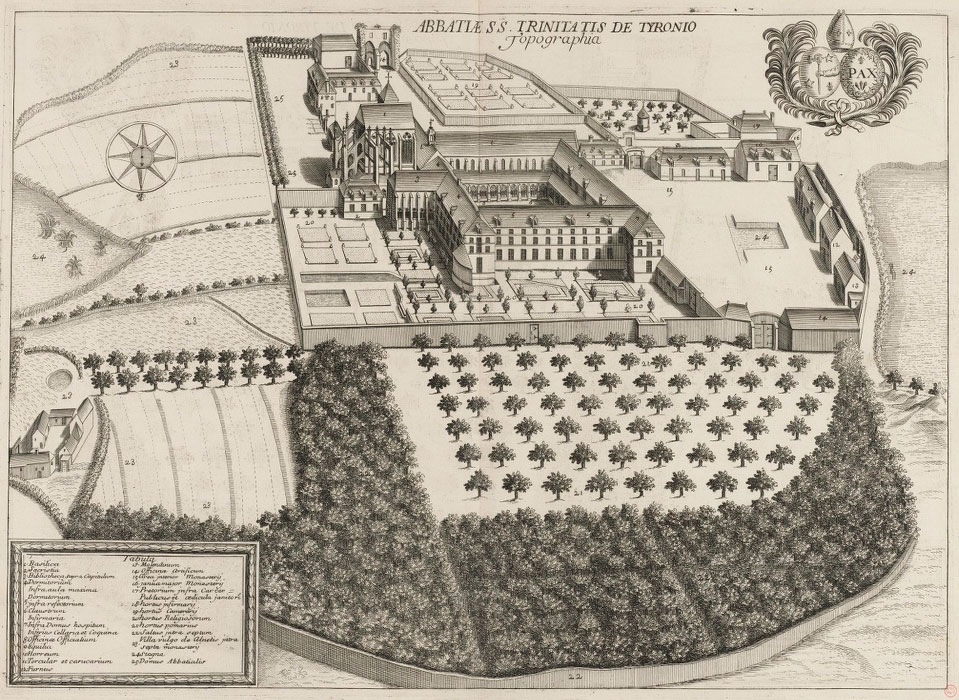
Monasticon Gallicanum
Bibliothèque nationale de France
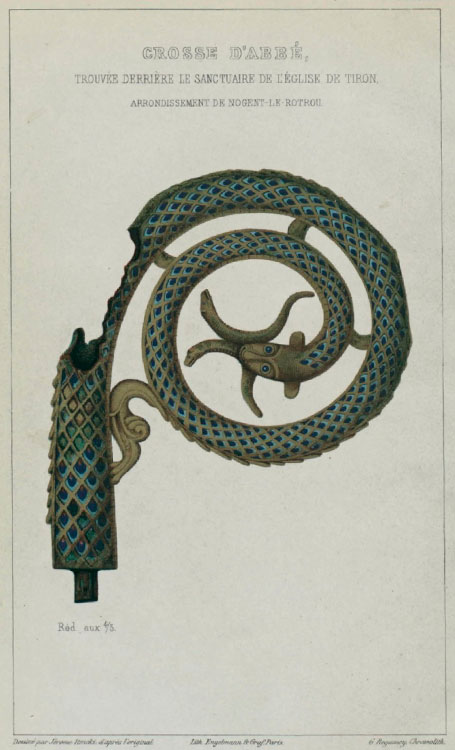
Crozier found in the monastery
Illustration from Bulletin du Comité de la langue,
de l'histoire et des arts de la France (1857)
- BEAUNIER, Dom (1905). Recueil historique des Archêvechés, Évêchés, Abbayes et Prieurés de France. Vol. 1. Province ecclésiastique de Paris. París: Poussielgue
- BONDE, Sheila; i altres (2019). Thiron-Gardais (Eure-et-Loire). Abbaye de Tiron. Archéologie médiévale, 49
- GUÉRIN, Paul (1888). Les Petits Bollandistes. Vies des saints de l’Ancien et du Nouveau Testament... Vol. 4. París: Bloud et Barral
- HÉLYOT, Hippolyte (1718). Histoire des ordres monastiques religieux et militaires. Vol. 6. París: Coignard
- HÉLYOT, Hippolyte (1850). Dictionnaire des ordres religieux ou histoire des ordres monastiques, religieux et militaires, vol. 3. París: Migne
- LE GROS, Geoffroy (1649). Beati Bernardi fundatoris et I. abbatis SS. Trinitatis de Tironio. París: Billaine
- MERLET, Lucien; ed. (1883). Cartulaire de l'abbaye de la Sainte-Trinité de Tiron. Vol. 1. Chartres: Garnier
- PEIGNÉ-DELACOURT, Achille (1877). Monasticon Gallicanum. Paris: G. Chamerot
- PELLICCIA, Guerrino; dir. i altres (1997). Dizionario degli istituti di perfezione. Vol. 9. Roma: Ed. Paoline
- SAINT-MAUR, Congregació de (1744). Gallia Christiana in provincias ecclesiasticas distributa. Vol. 8. París: Typographia Regia
- THOMASSU, J.L.F.M. (1832). Recherches historiques sur Nogent-le-Rotrou, l'abbaye de Thiron, le château de Villebon... Chartres: Garnier
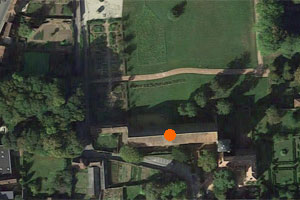
Tiron Abbey is located in the commune of Thiron-Gardais, east of Nogent-le-Rotrou