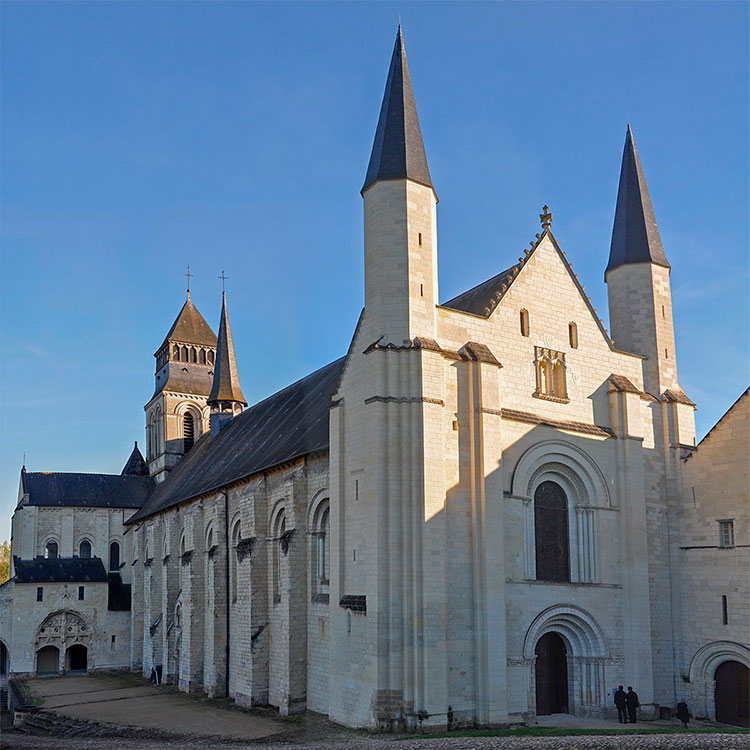

Fontevraud is one of several monastic foundations promoted by Robert of Arbrissel (c. 1045–c. 1117), one of the key figures in the monastic renewal associated with the Gregorian Reform. Before Fontevraud, Robert had already founded the monastery of La Roë (Mayenne), which he placed under the Rule of Saint Augustine. Later, he gathered a large group of followers who, around 1101, settled near Saumur, where they adapted the site with suitable buildings to accommodate both a female and a male community, thus giving rise to the monastery and the Order of Fontevraud.
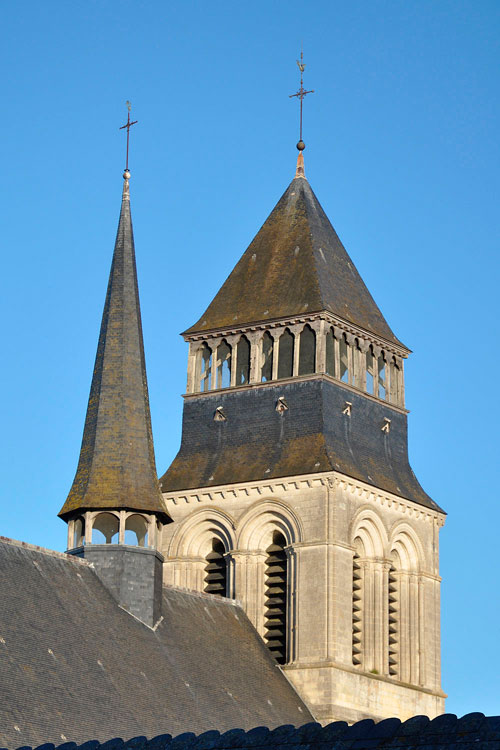
Church tower
Robert continued his evangelical activity and left the construction of the new establishment under the direction of a prioress, Hersenda of Champagne (1060–1114). The Order of Fontevraud is characterised by the coexistence of double communities within its monasteries; they followed their own rule, inspired by the Rule of Saint Benedict. In 1106, the experiment received approval from the Holy See, which in 1113 granted the house the privilege of exemption. In 1115, Petronilla of Chemillé was appointed as the first abbess of Fontevraud, shortly before the death of the founder, who was buried here.
The monastery of Fontevraud, as well as the priories founded under its influence throughout France over time, had the distinctive feature of being governed by an abbess, to whom the male community was also subject, although it had its own separate quarters. These male communities were devoted to manual labour and to the religious service of the nuns.
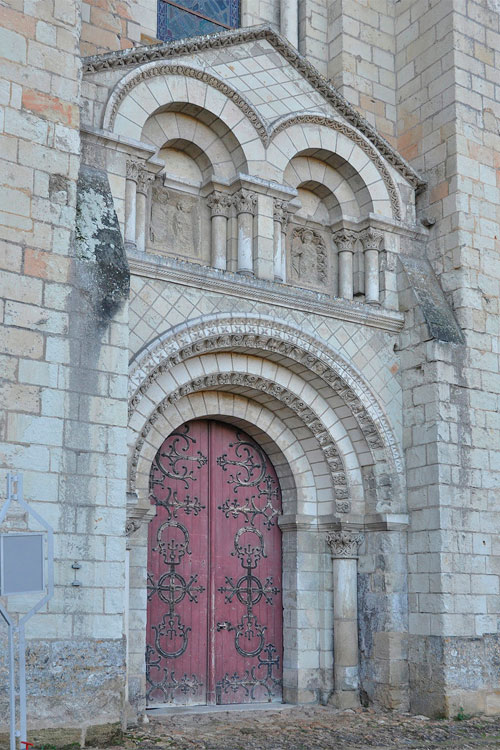
North portal of the church
West portal of the church
In its early days, the monastery consisted of a group of rudimentary huts, which did not prevent it from soon developing a complex organisation comprising the Grand-Moûtier for the female community; a second monastery (Saint-Jean de l’Habit) for the male community; a house for reformed women (Sainte-Marie-Madeleine); and another serving as a leper hospital (Saint-Lazare). The abbey church of Fontevraud began to be built very early, around 1105, thanks to the financial support of the comital house of Anjou. Pope Calixtus II consecrated its altar in 1119; the nave, covered with domes, was built later.
The whole complex underwent various modifications over time. The abbey church also served as the burial place of the Plantagenet dynasty and still preserves the effigies of Henry II (1133–1189), his wife Eleanor of Aquitaine (1122–1204), and their son Richard the Lionheart (1157–1199), as well as Isabella of Angoulême (c. 1188–1246), wife of John Lackland. After a period of decline caused by the Hundred Years’ War, which also affected its priories, the Order of Fontevraud was reformed with a new rule and a reorganisation of its houses, in a long process carried out between 1474 and 1533. Fontevraud itself was reformed in 1503.
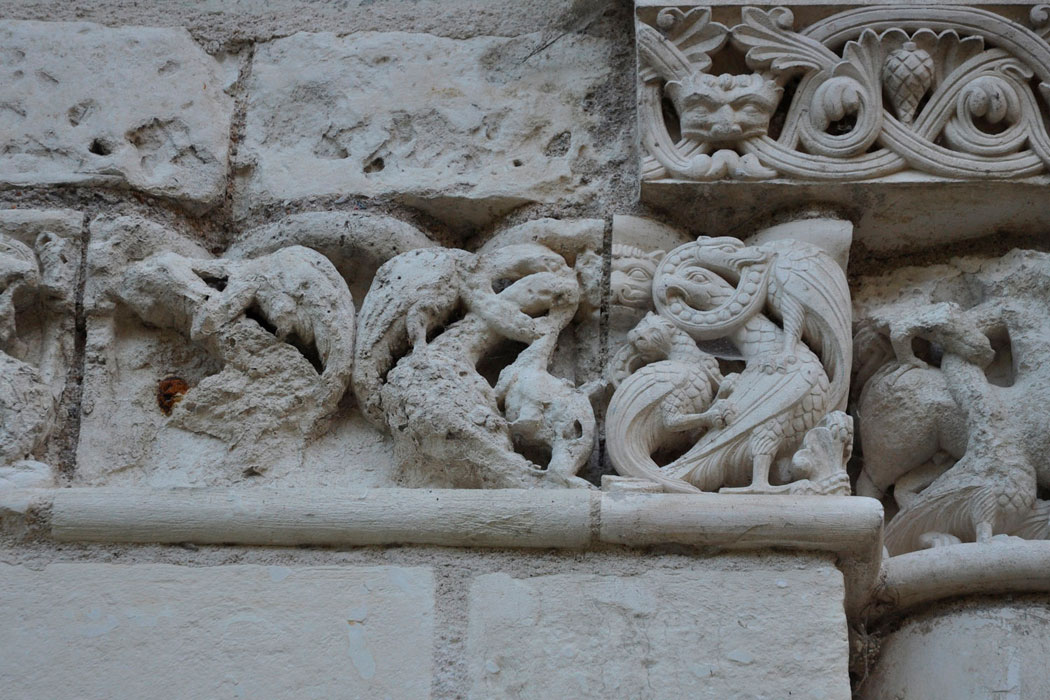
West portal of the church
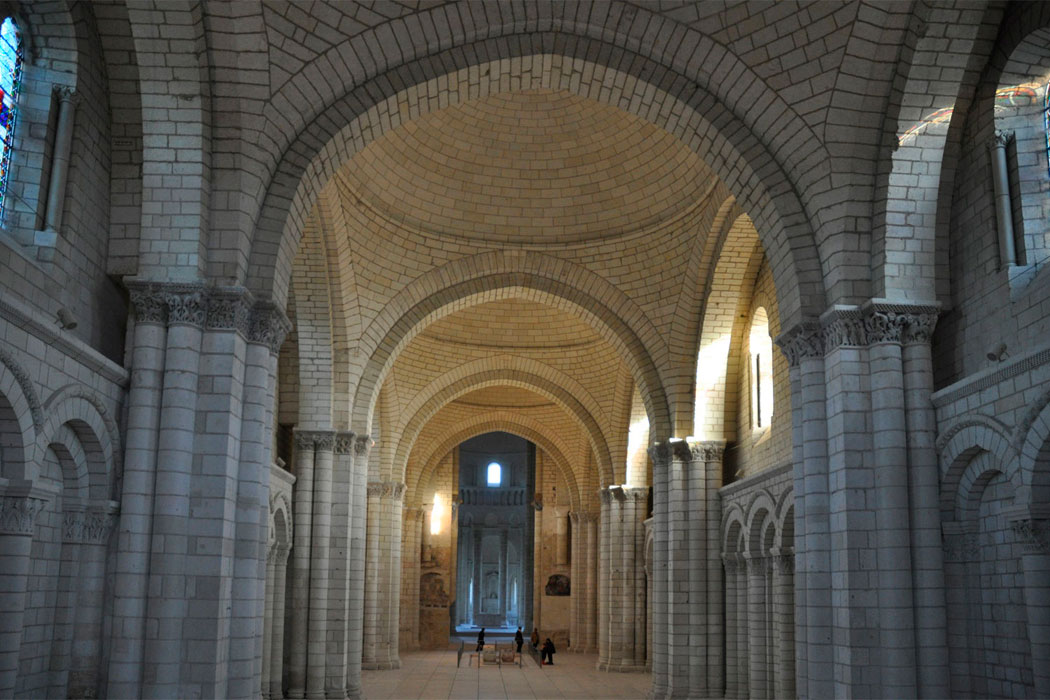
Church nave
During the 16th and 17th centuries, an extensive building programme profoundly transformed most of the monastic complex. Between 1670 and 1704, Gabrielle de Rochechouart held the office of abbess, in a period of notable prosperity and influence. In the following years, the daughters of Louis XV were educated at the monastery. Between 1789 and 1791, the abbey was directly affected by the Revolution, resulting in the suppression of the Order, the abandonment of the monastery, and the looting of its buildings, at which time almost all its movable goods were lost.
In 1804, the site was converted into a prison, which required major alterations to the buildings but also prevented their destruction. This situation lasted until 1963, when restoration began, although the site had already been protected earlier as a historic monument. The surviving buildings of the main monastic complex, the Grand-Moûtier, were constructed in different periods.
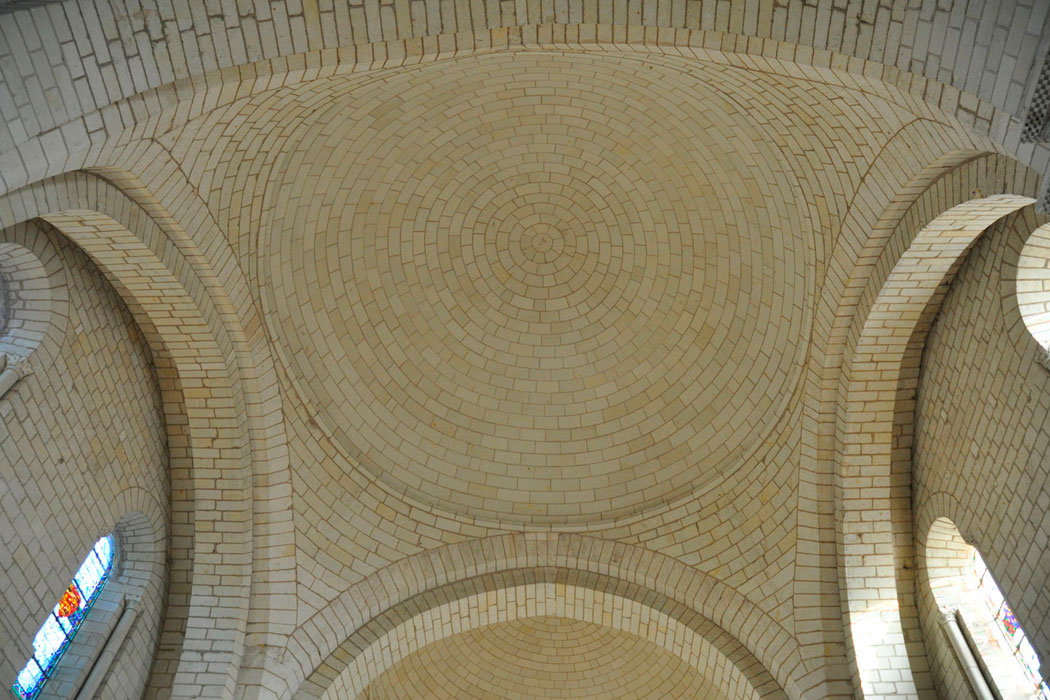
Dome of the nave
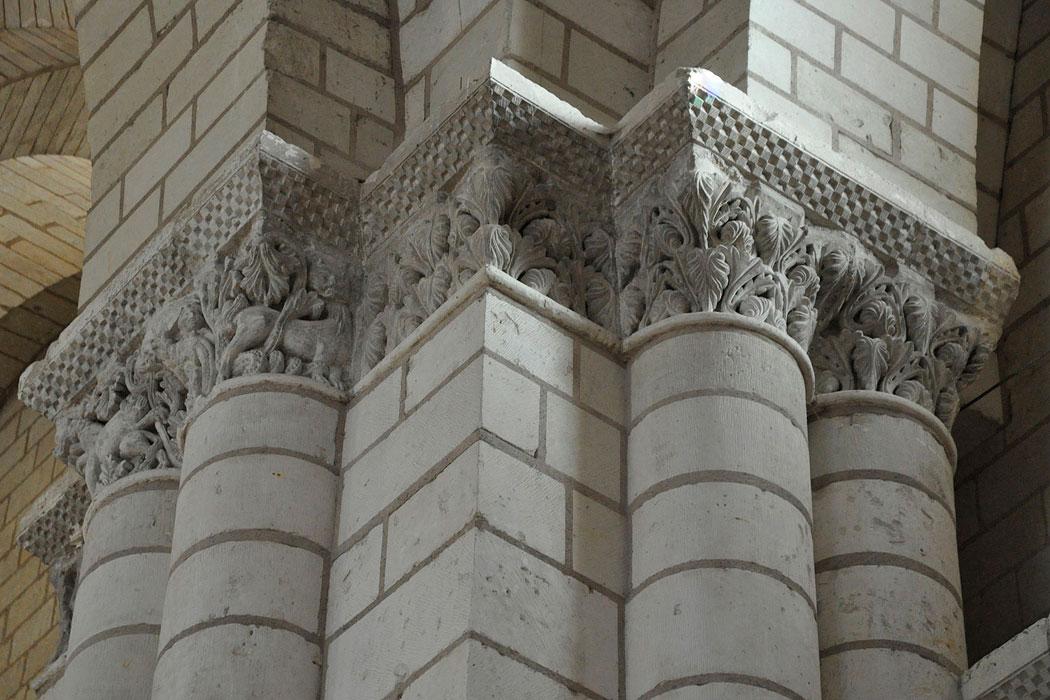
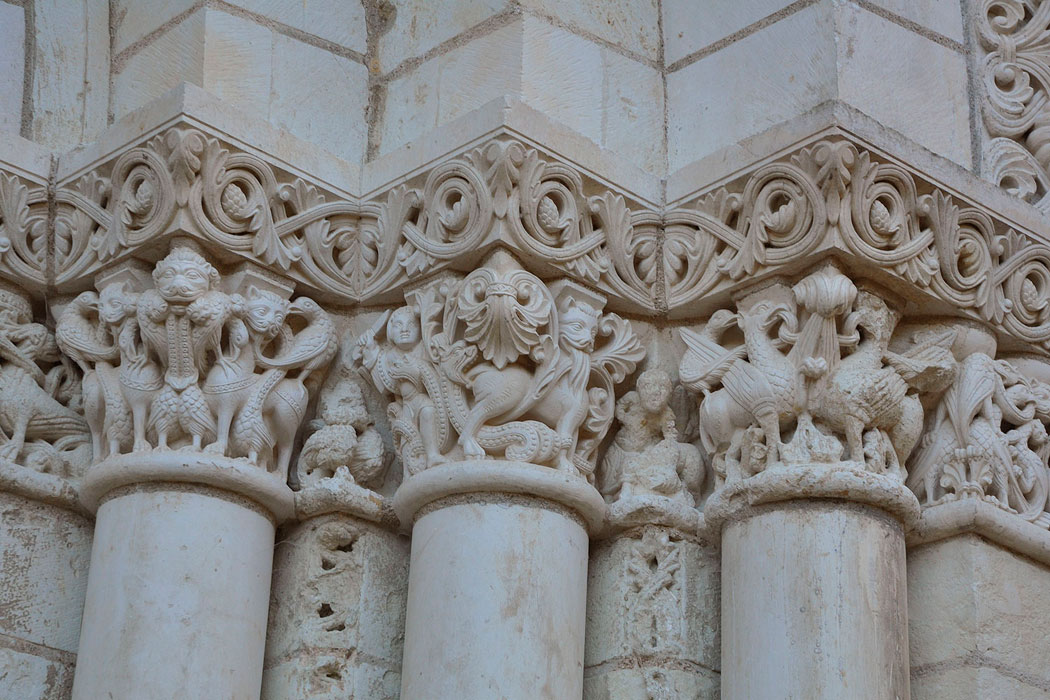
Nave capitals
The oldest part is the church, dating from the 12th century, a single-nave structure with a transept containing two apses. The chancel is surrounded by an ambulatory with three radiating chapels. On the south side stands the cloister, surrounded by the other monastic buildings, such as the chapter house and the refectory. These structures date from the 16th and 17th centuries. During the restoration, the medieval kitchen was recovered, a remarkable octagonal structure with small apses and a conical-shaped roof decorated with scale-like patterns.
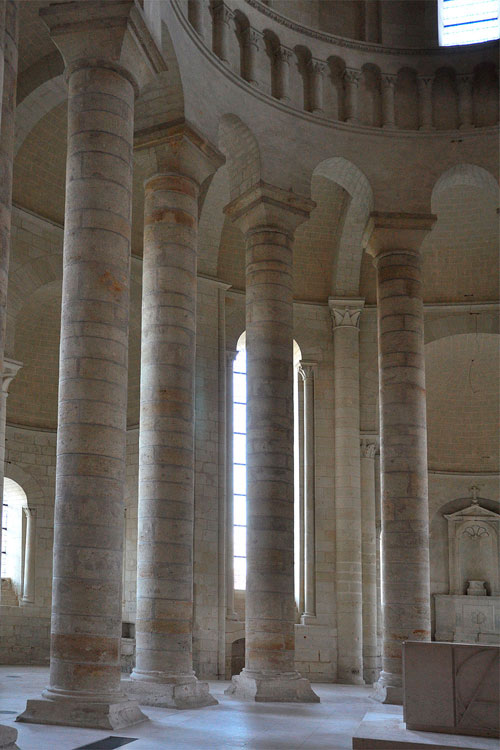
Ambulatory
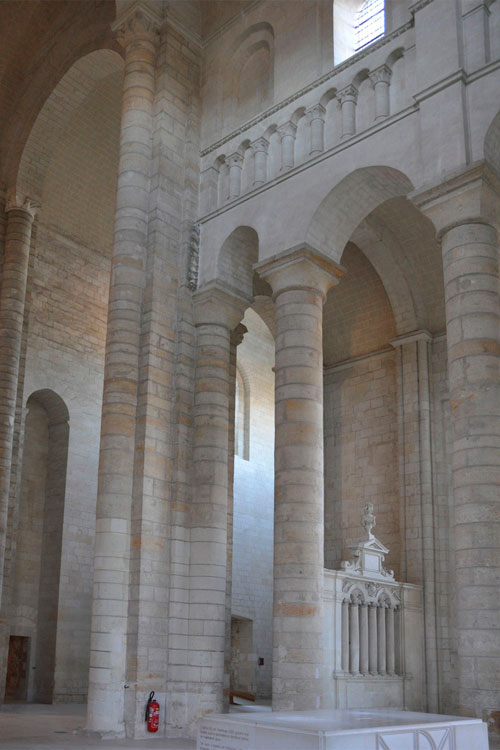
The transept from the chancel
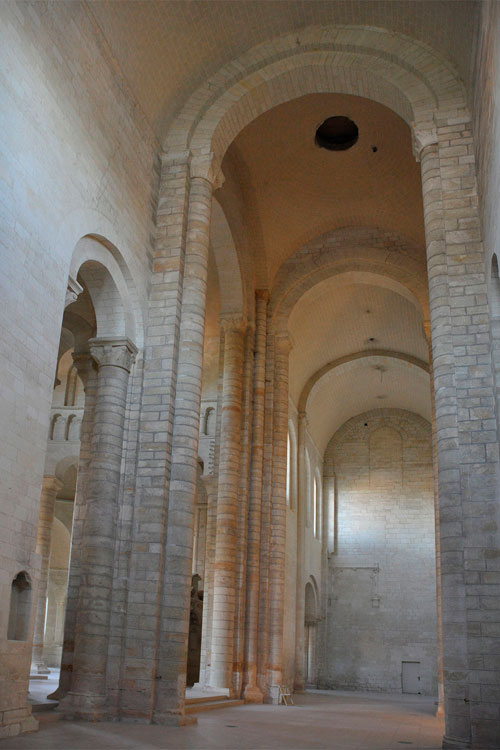
Transept
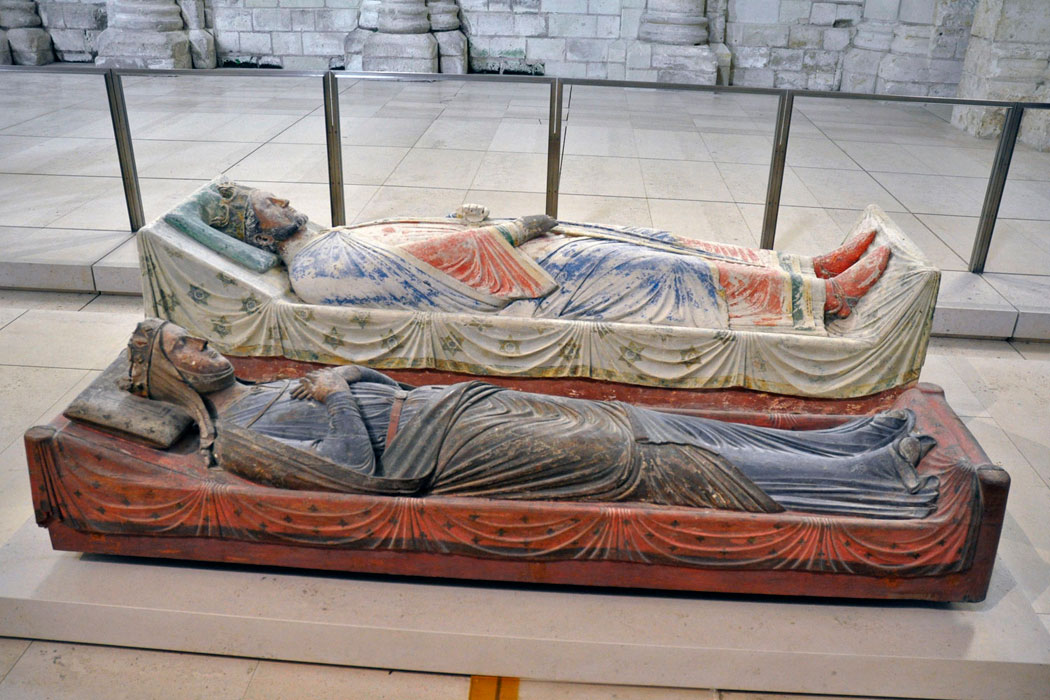
Tombs of Richard the Lionheart and Isabella of Angoulême
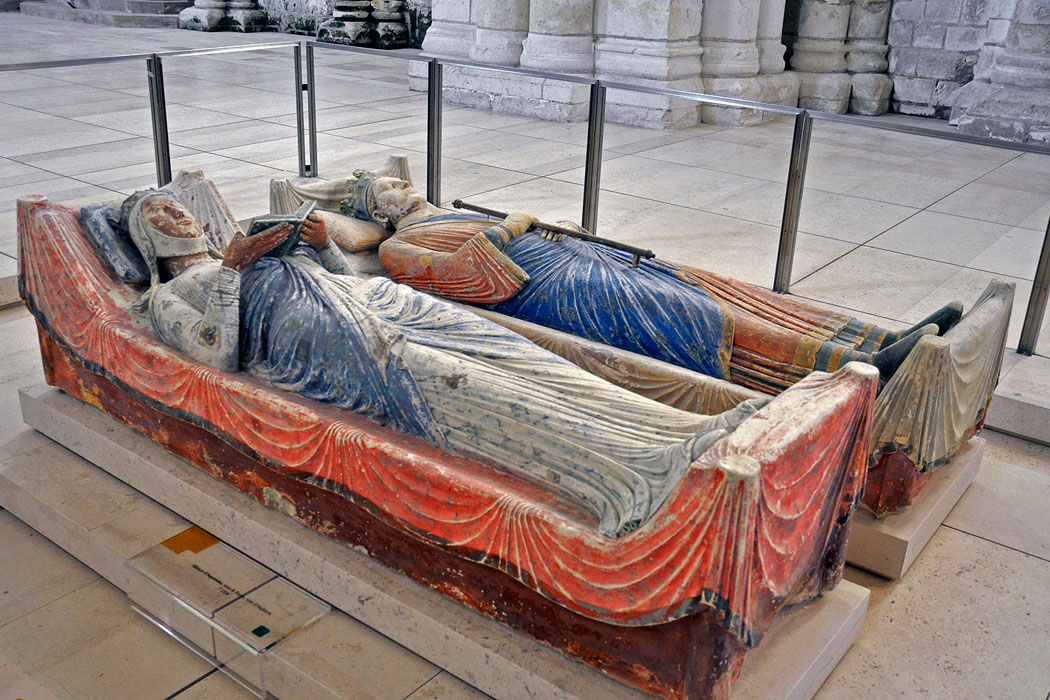
Tombs of Henry II and his wife Eleanor of Aquitaine
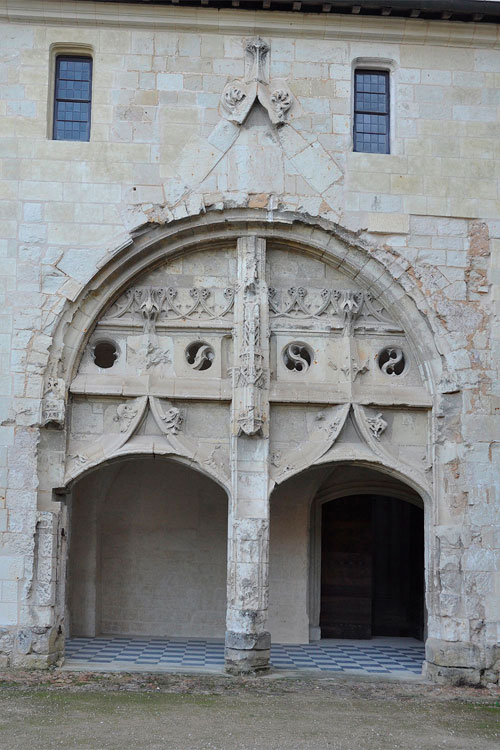
Portal of the north gallery of the transept
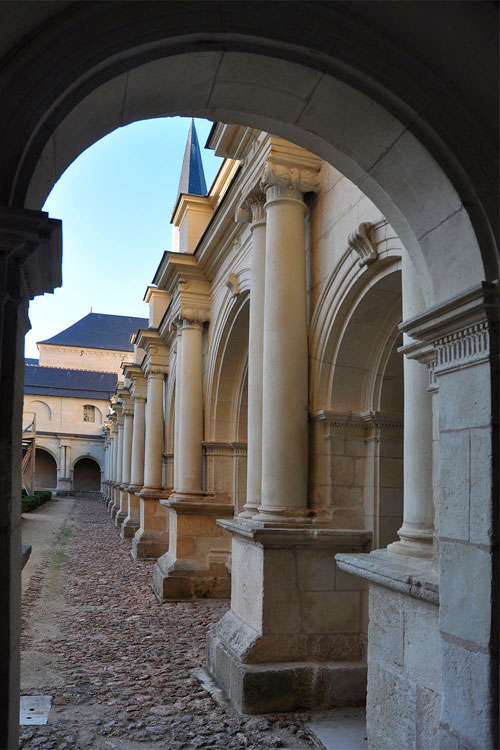
Cloister
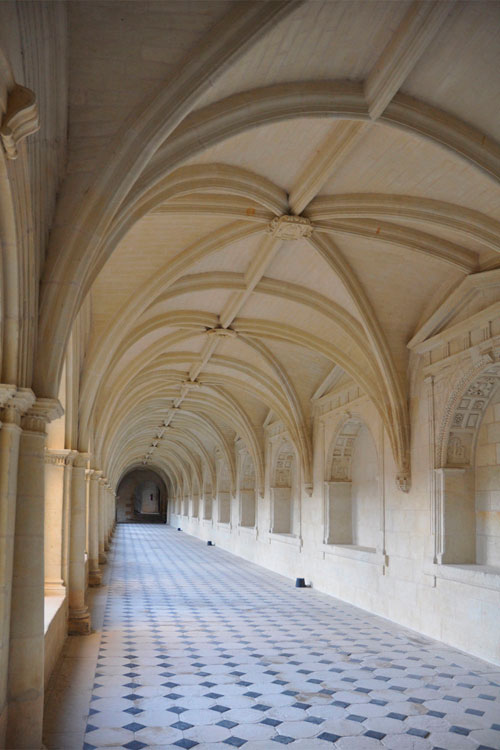
Cloister
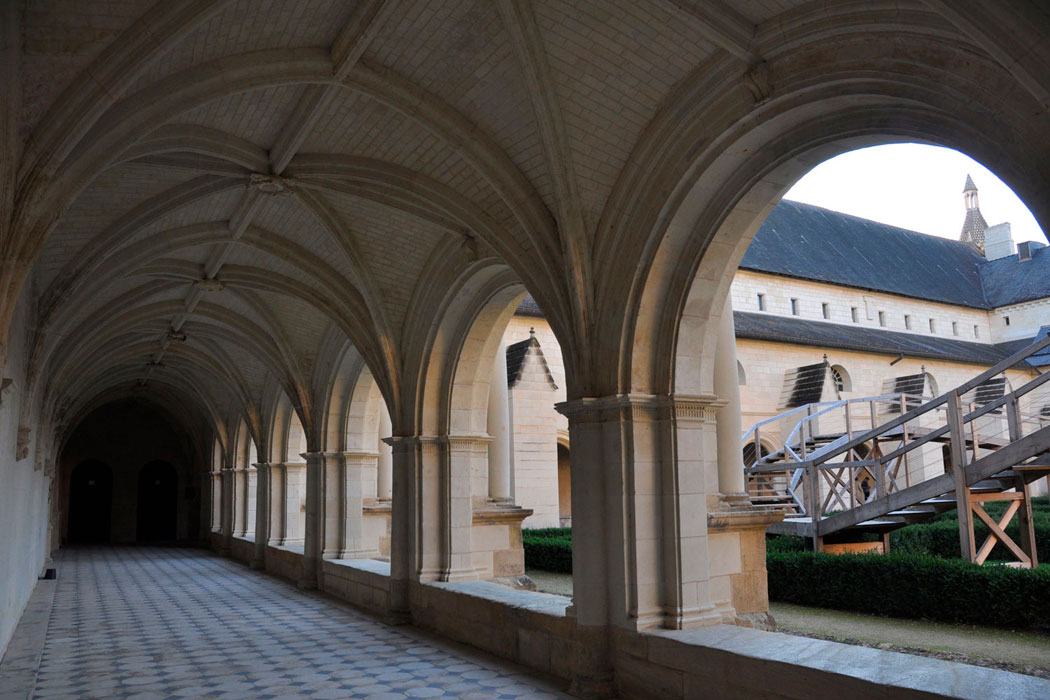
Cloister
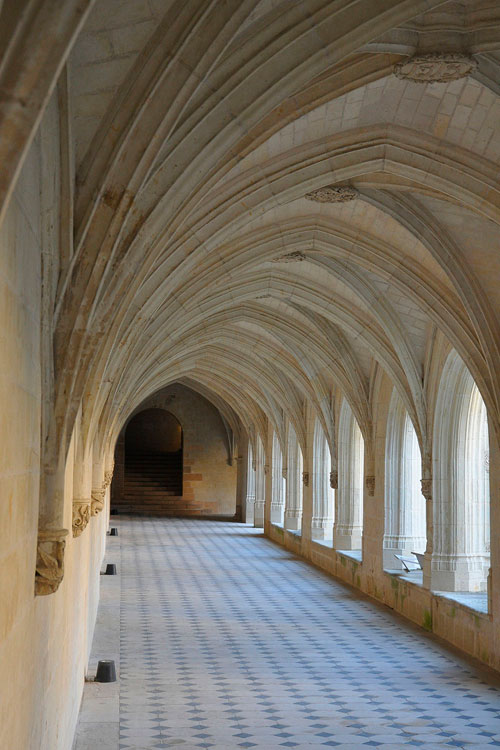
Cloister
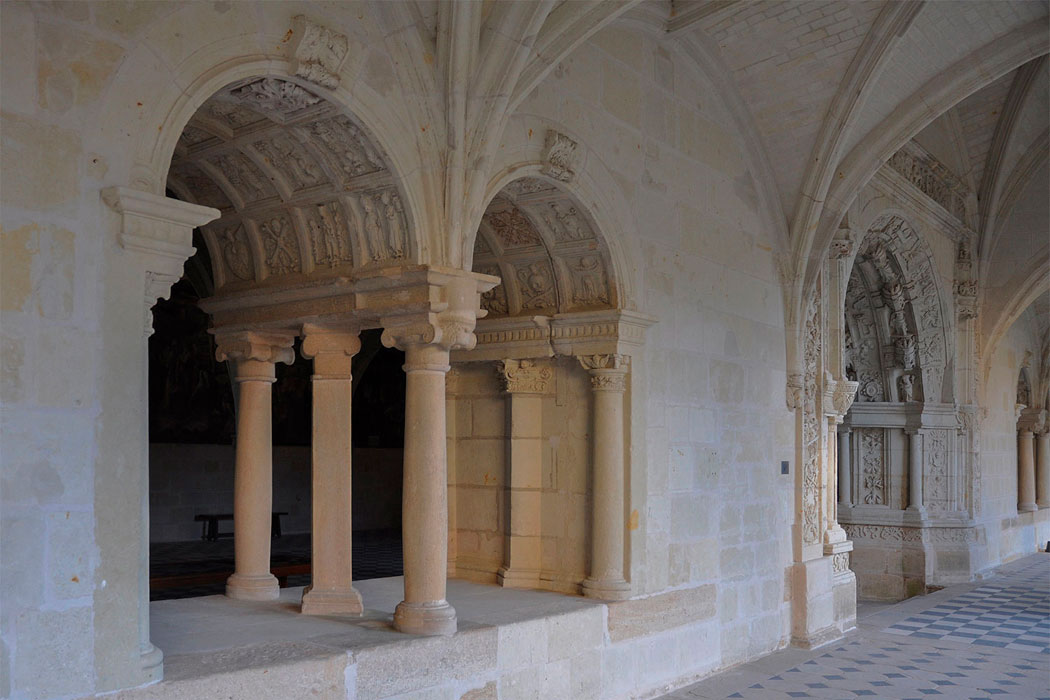
Facade of the chapter house
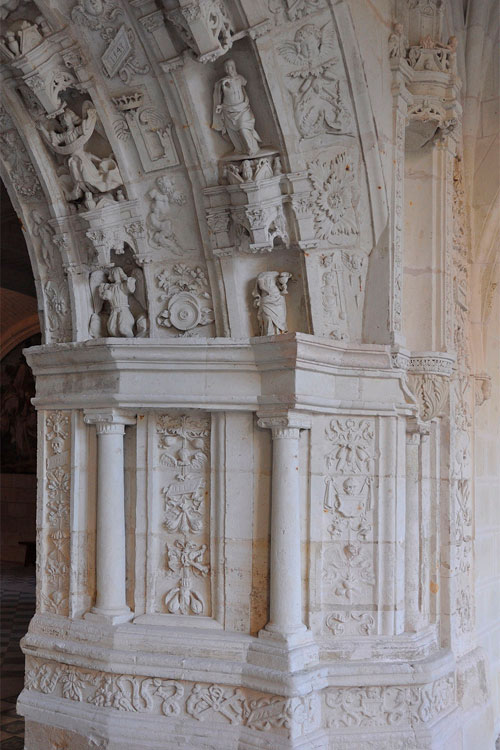
Portal of the chapter house
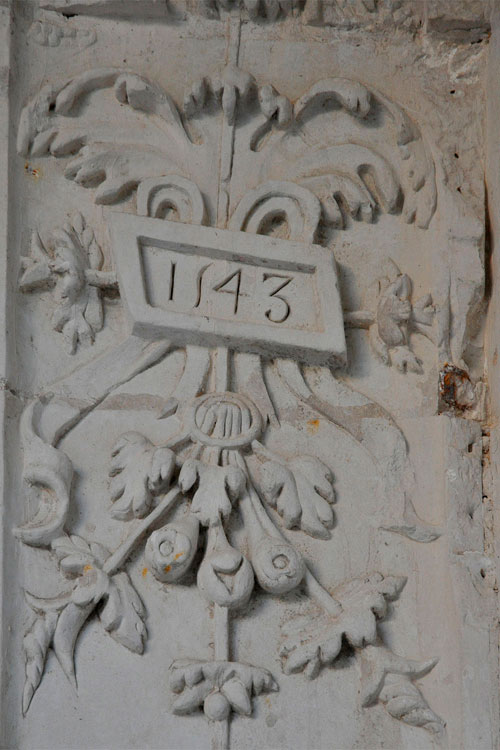
Portal of the chapter house
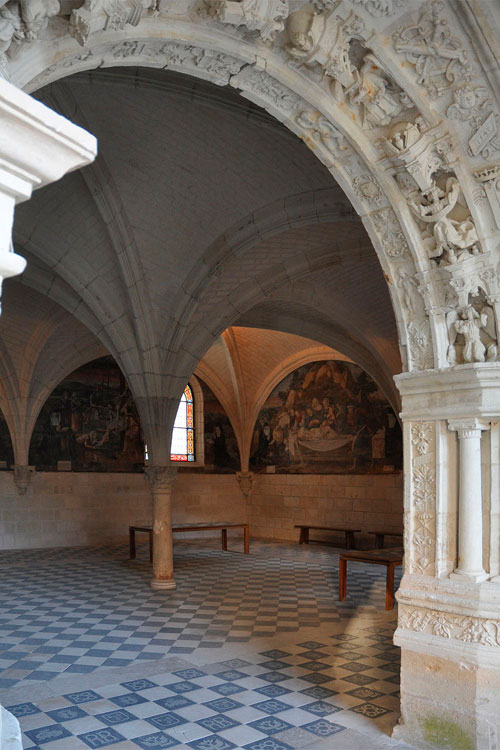
Chapter house
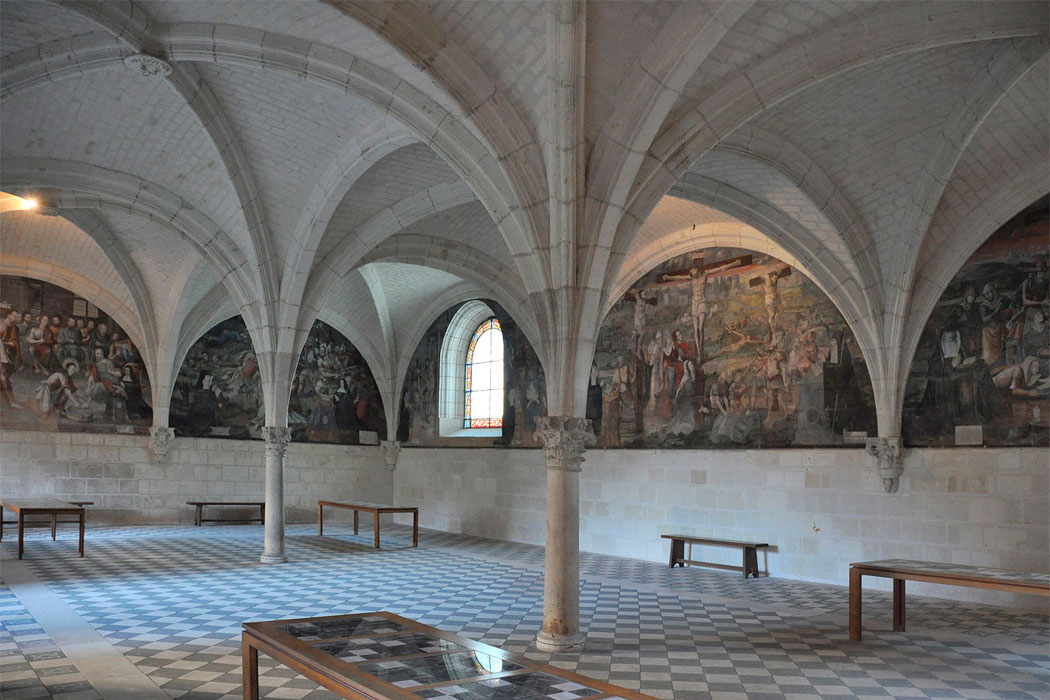
Chapter house
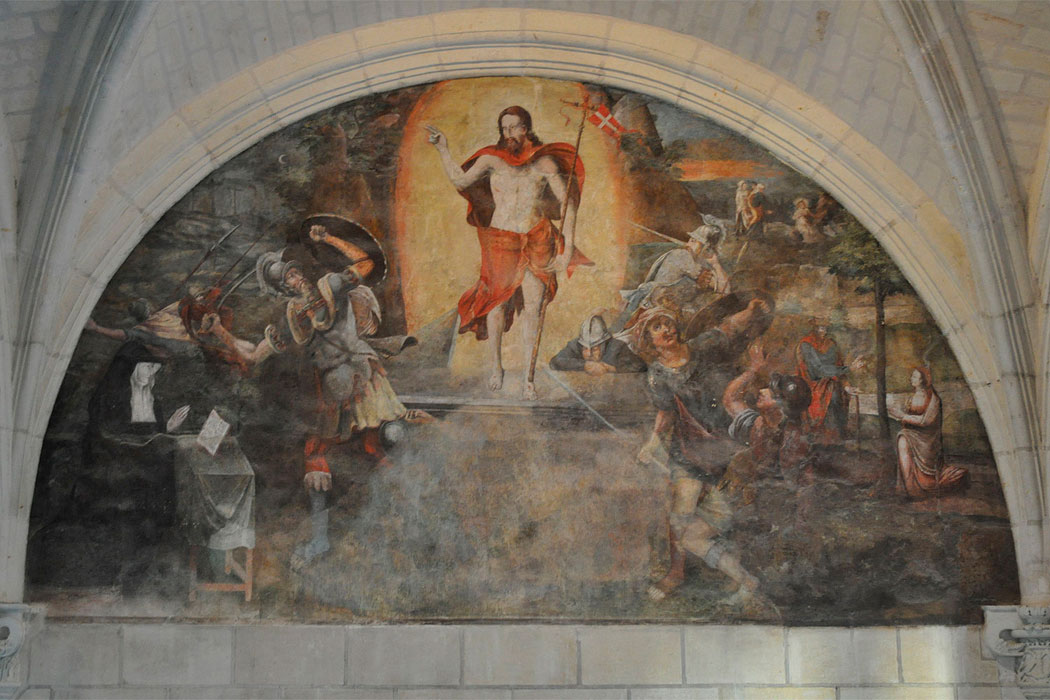
Chapter house
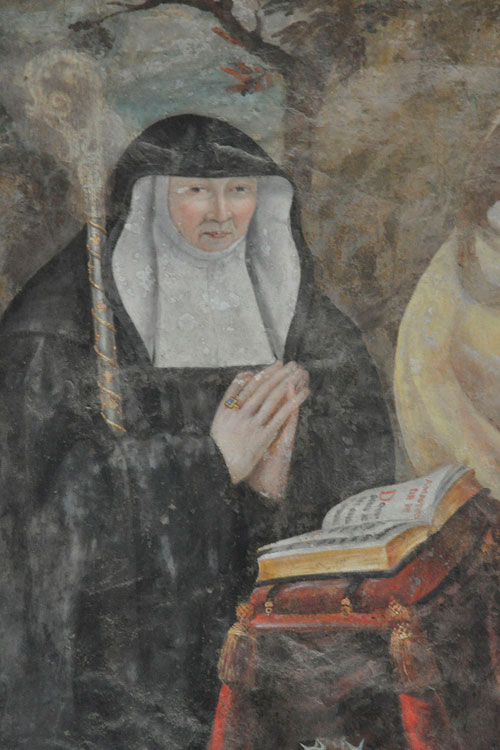
Chapter house
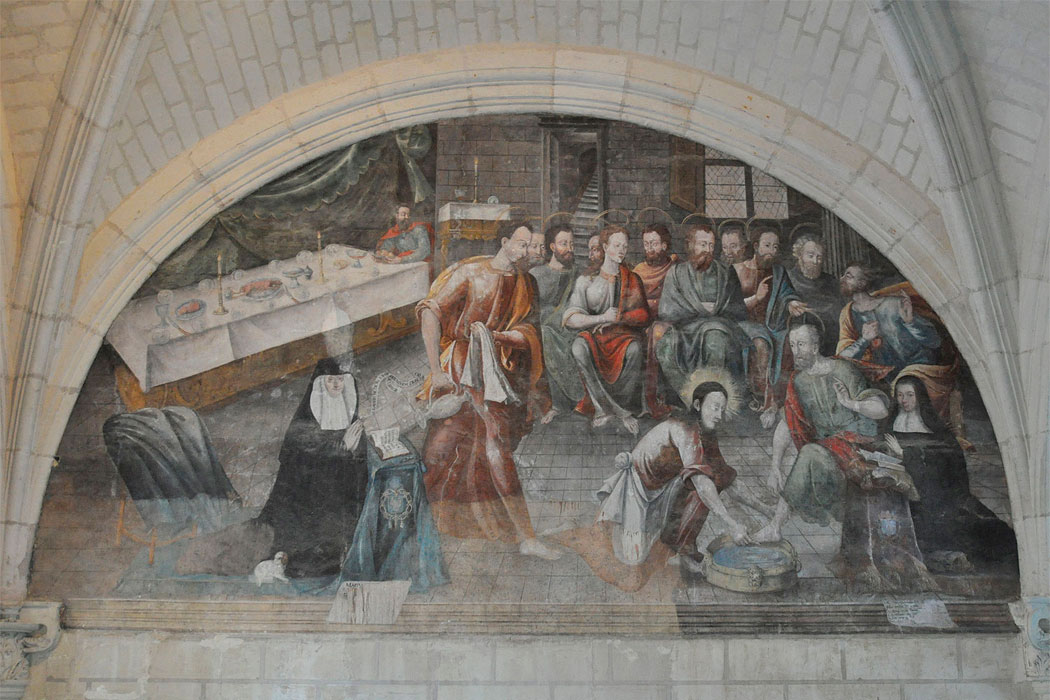
Chapter house
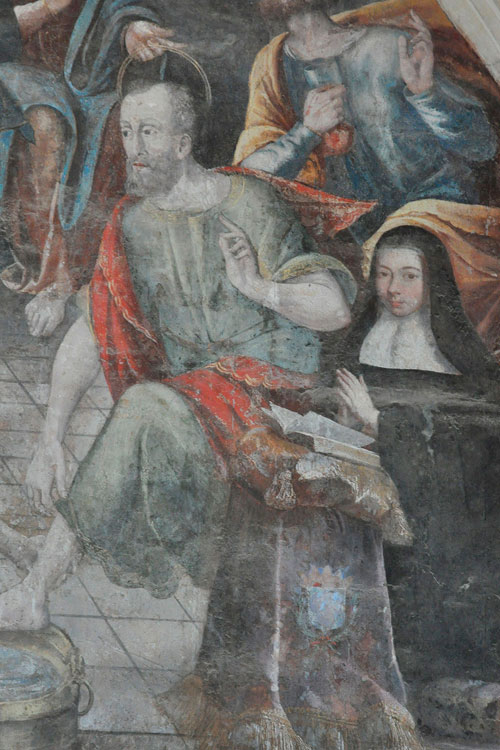
Chapter house
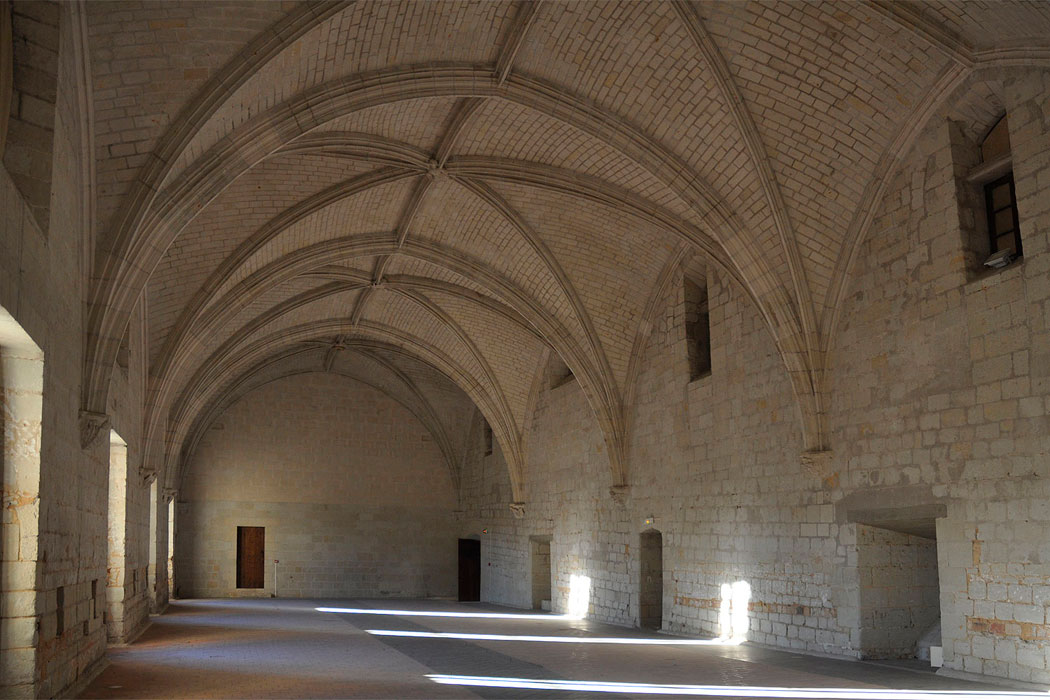
Refectory
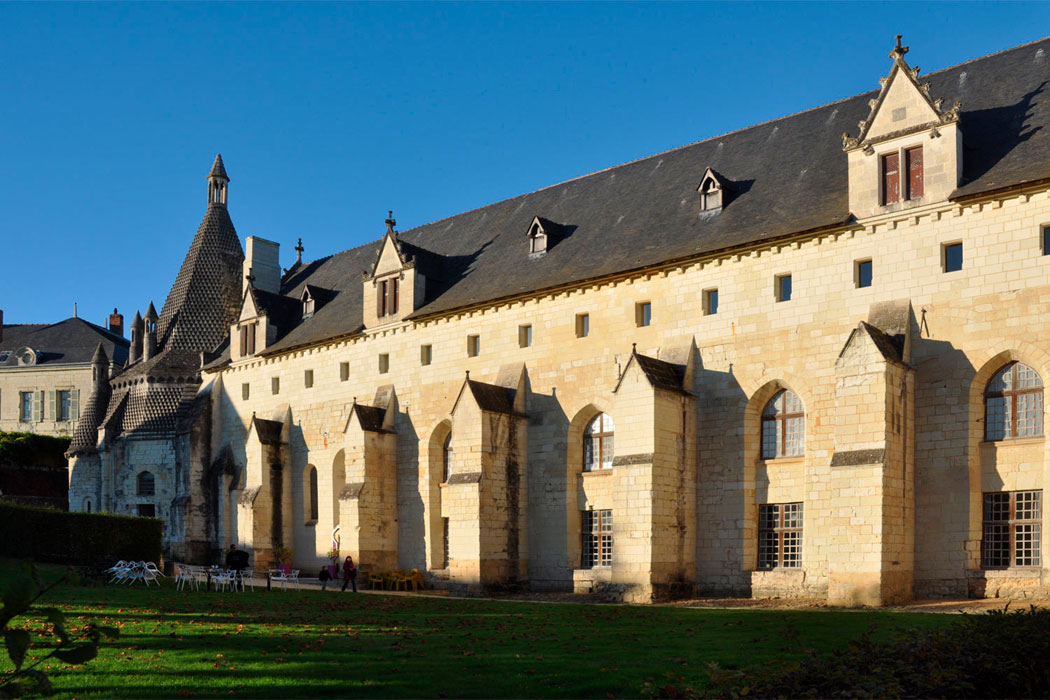
South wing of the complex, with the refectory and kitchen
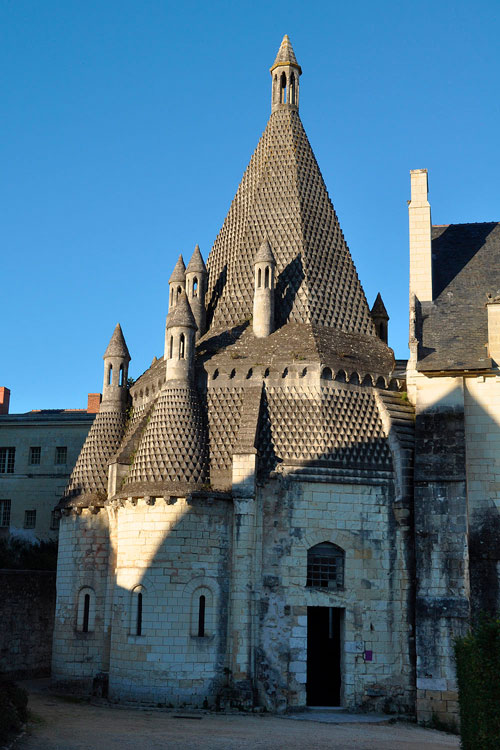
Medieval kitchen
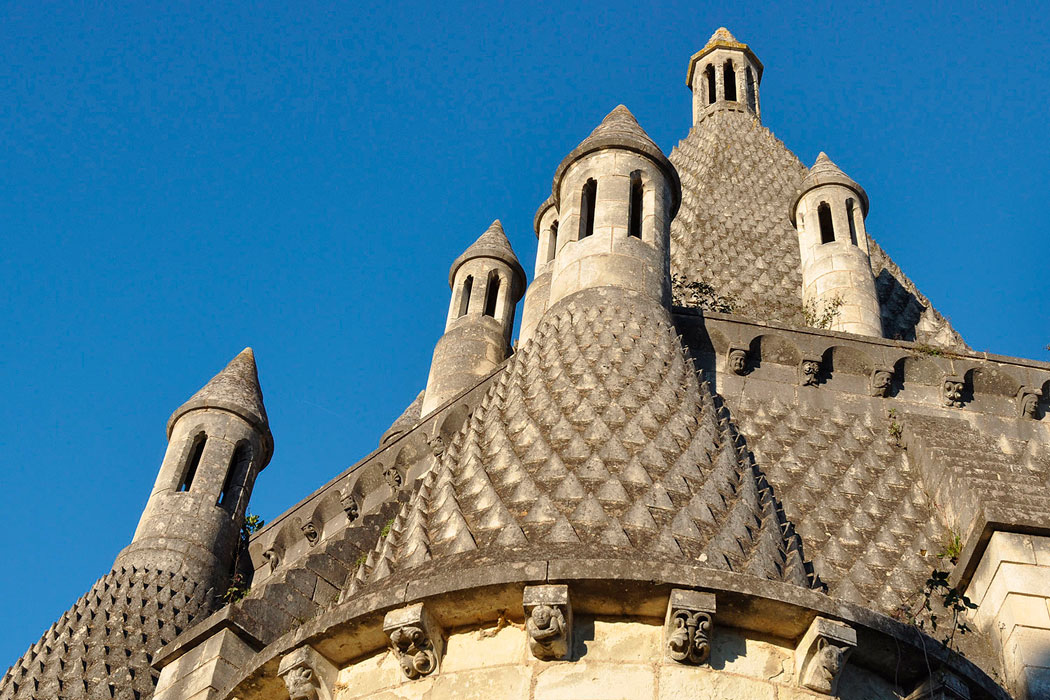
Medieval kitchen
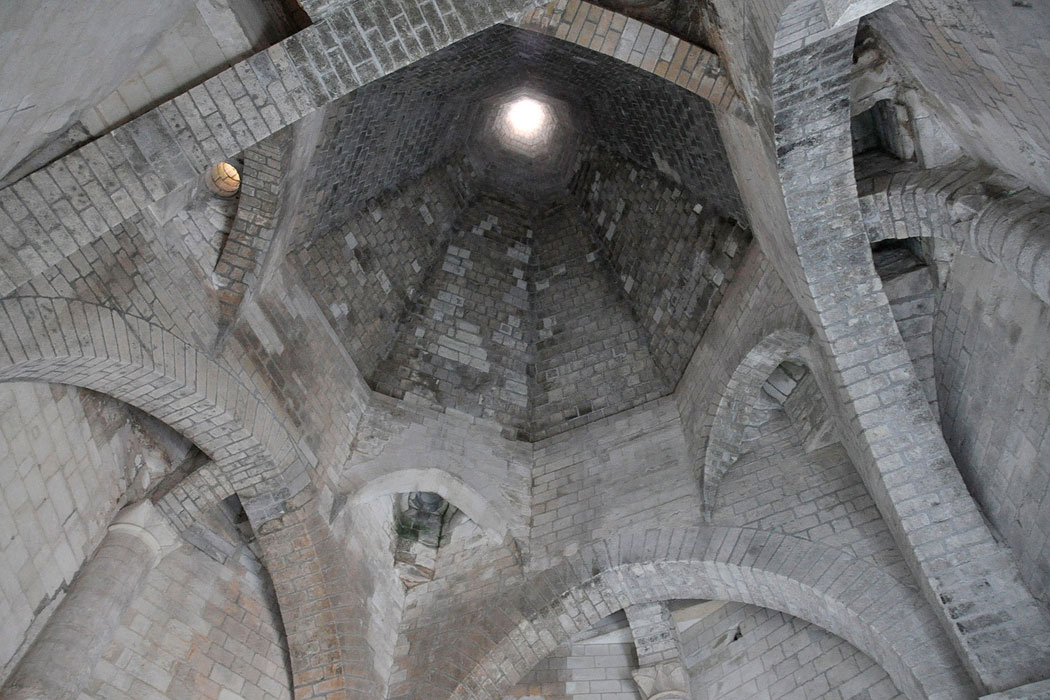
Medieval kitchen
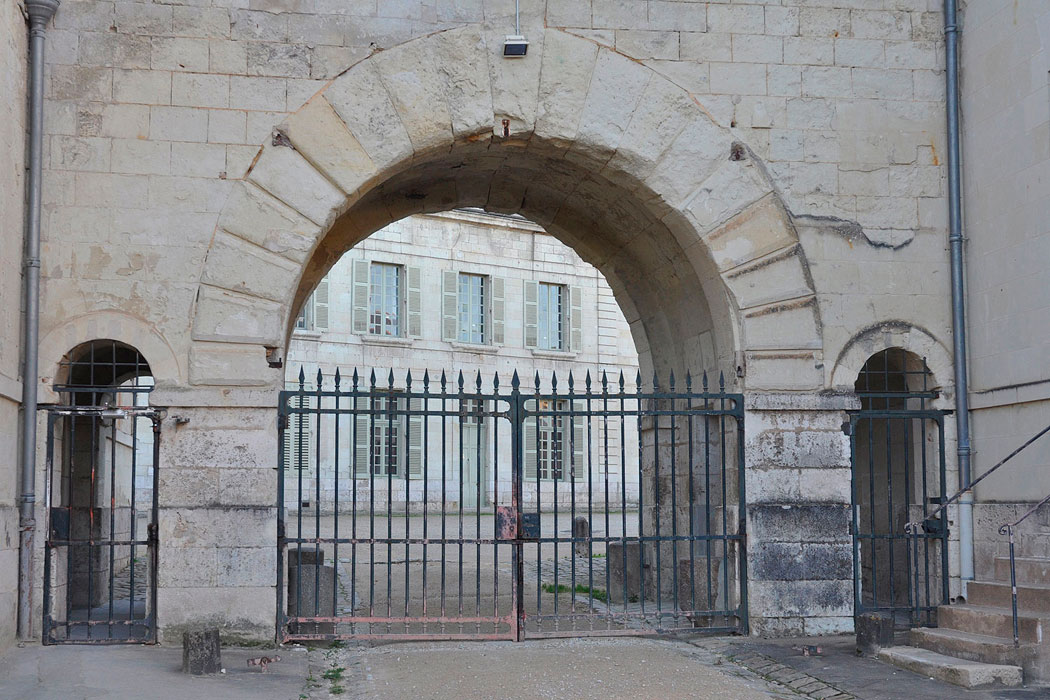
West portal of the complex
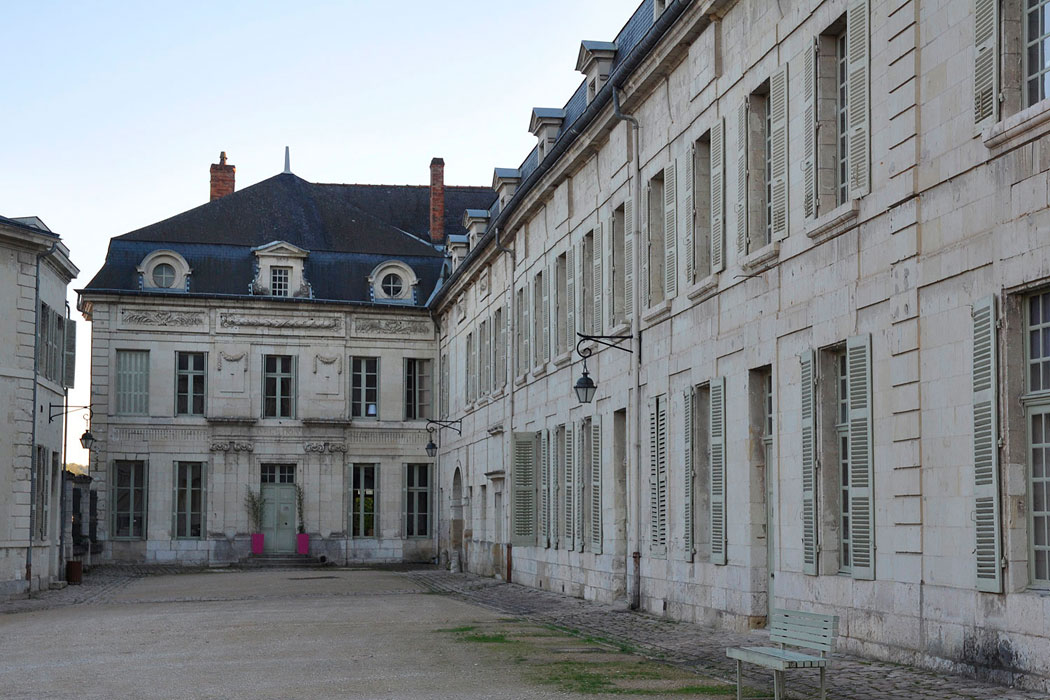
Cour d'Honneur
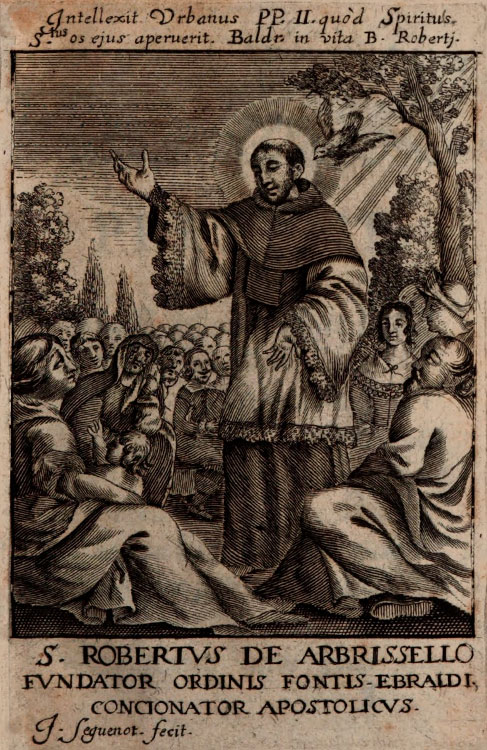
Robert of Arbrissel
Illustration from La vie du bien-heureux Robert d'Arbrissel (1648)
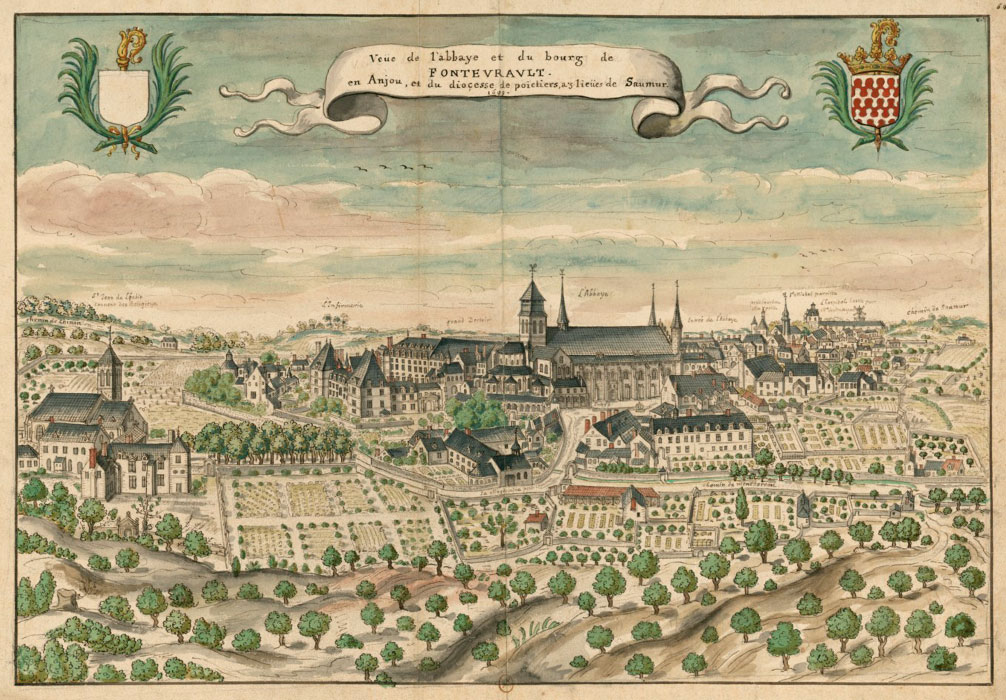
Detail of Veüe de l'Abbaye et du bourg de Fontevrault. Louis Boudan (1699)
Bibliothèque nationale de France
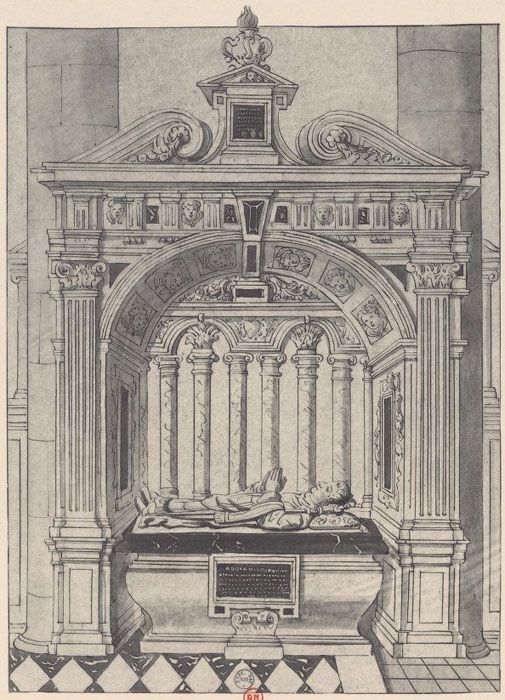
Robert of Arbrissel tomb, now destroyed
Bibliothèque nationale de France
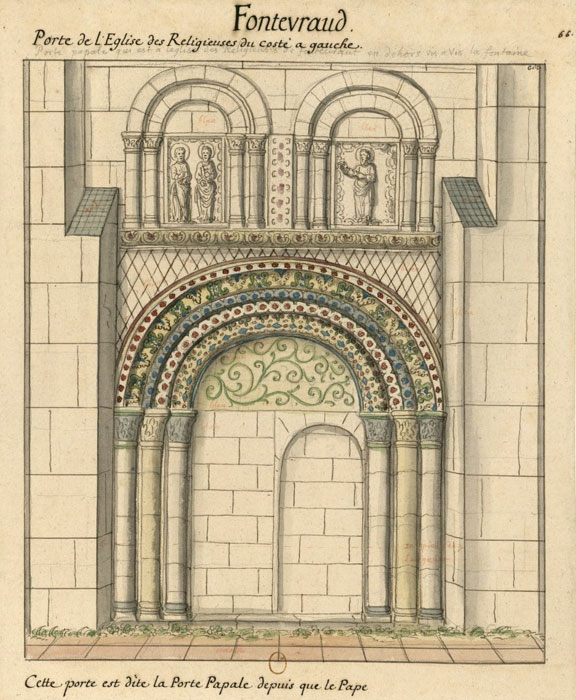
Veüe de l'Abbaye et du bourg de Fontevrault. Louis Boudan (1699)
Bibliothèque nationale de France
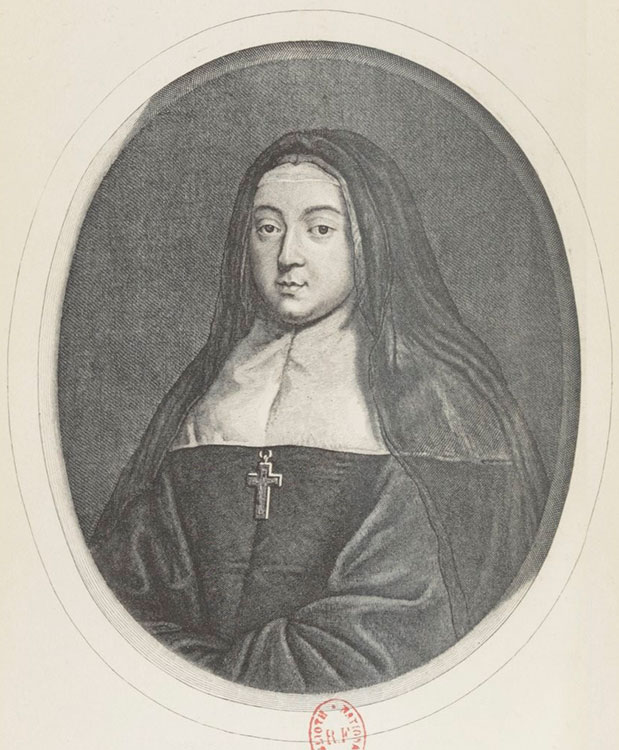
Gabrielle de Rochechouart
Abbess of Fontevraud between 1670 and 1704
Illustration published in Gabrielle de Rochechouart de Mortemart (1871)
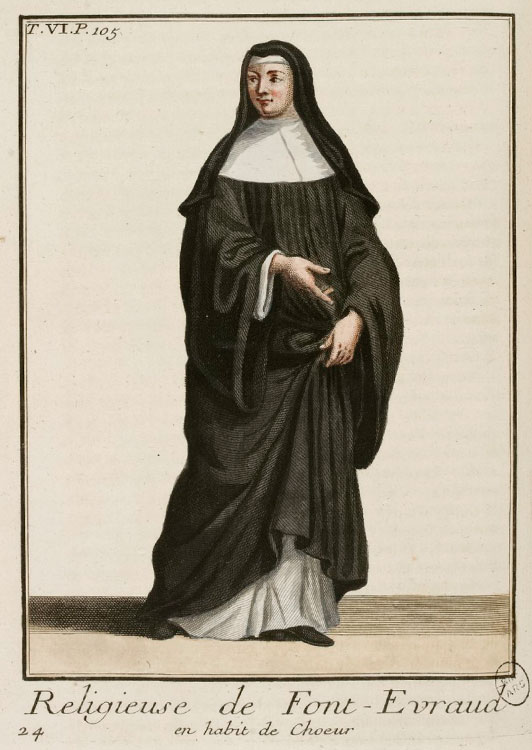
Nun of Fontedraud
Illustration from Histoire des ordres monastiques religieux et militaires (1718)
Bibliothèque nationale de France

Monk of Fontedraud
Illustration from Histoire des ordres monastiques religieux et militaires (1718)
Bibliothèque nationale de France
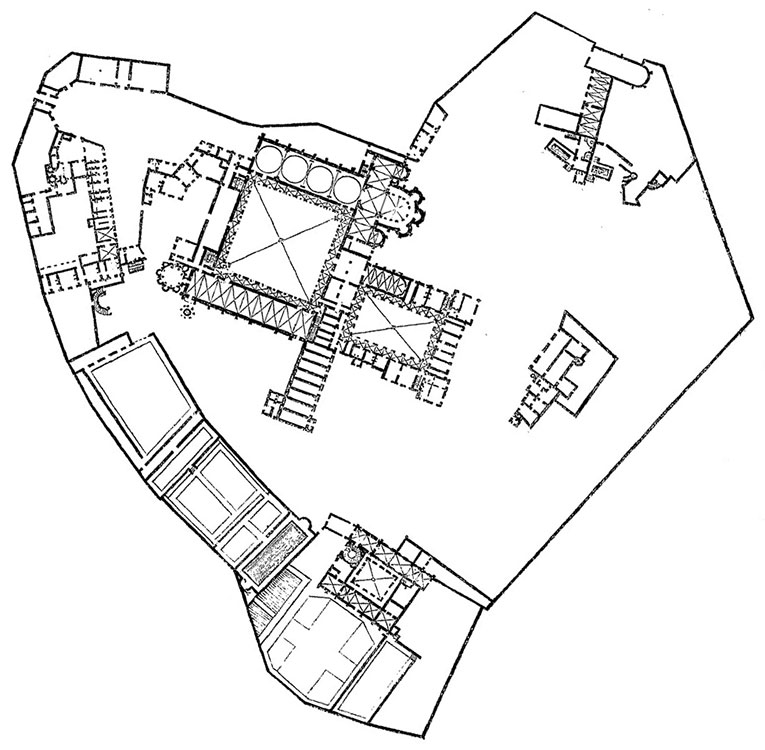
Fontevraud plant, published by Albert Lenoir in
Architecture monastique (1856)
A - Grand Moûtier
B - Sainte-Marie-Madeleine
C - Saint-Lazare
D - Saint-Jean de l’Habit
Saint-Jean de l'Habit, the male abbey
Detail of Veüe de l'Abbaye et du bourg de Fontevrault. Louis Boudan, 1699
Bibliothèque nationale de France
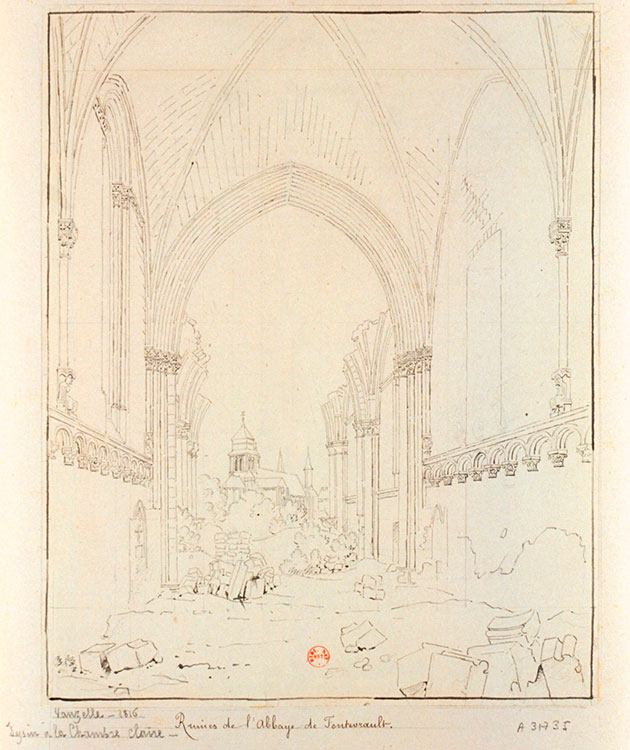
Ruins of Saint-Jean de l'Habit
Jean-Lubin Vauzelle (19th century)
Bibliothèque nationale de France
- AUBERT, R. (1971). Dictionnaire d'histoire et de géographie ecclésiastiques. Vol. 17. París: Letouzey et Ané
- AUSSIBAL, Amans (1987). Fontevraud et ses prieurés. La Pierre-qui-Vire: Zodiaque
- BALDRIC (1648). La vie du bien-heureux Robert d'Arbrissel, fondateur de l'ordre de Fontevrauld. La Fleche: Griveau
- BEAUNIER, Dom (1910). Abbayes et prieurés de l'ancienne France. Vol. 3: Auch, Bordeaux. Abbaye de Ligugé
- CLÉMENT, Pierre (1871). Gabrielle de Rochechouart de Mortemart : étude historique. París: Didier
- CROZET, René (1964). Fontevrault. Congrès archéologique de France, 122 ss. Société française d'archéologie
- ÉDOUARD (1873-7a). Fontevrault et ses monuments. Vol. 1/2. París: L. Catholique/Aubry
- DALARUM, Jacques (1986). Robert d'Arbrissel fondateur de Fontevraud. París: Albin Michel
- HÉLYOT, Pierre (1718). Histoire des ordres monastiques religieux et militaires. Vol. 6. París: Coignard
- LENOIR, Albert (1856). Architecture monastique, II et III partie. París: I. Impériale
- MALIFAUD, G. (1868). L'abbaye de Fontevrault. Notice historique et archéologique. Tours: Bouserez
- MELOT, Michel (2022). Histoire de l’abbaye de Fontevraud. Notre-Dame-des-Pleurs (1101-1793). París. CNRS
- NICQUET, Honorat (1642). Histoire de l'ordre de Font-Evraud. París: Soly
- NIDERST, René (1952). Robert d'Arbrissel et les origines de l'Ordre de Fontevrault. Rodez: Subervie
- PARROT, Armand (1880). Mémorial des abbesses de Fontevrault issues de la maison royale de France. Angers: Lachèse et Dolbeau
- PICARD, Louis-Auguste (1904). L'Ordre de Fontevrault de 1115 à 1207. Saumur
- PRIGENT, Daniel (2010). L’abbaye de Fontevraud. Fontevraud l’Abbaye: Abbaye de Fontevraud
- SAINT-MAUR, Congregació de (1720). Gallia Christiana in provincias ecclesiasticas distributa. Vol. 2. París: Typographia Regia
- VIGUERIE, Jean (1979). La réforme de Fontevraud, de la fin du XVe siècle à la fin des guerres de Religion. Revue d'histoire de l'Église de France. Núm. 174
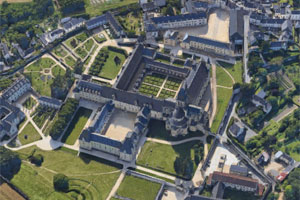
Fontevraud is located to the southeast of Angers, in the direction of Poitiers