Abbey of Saint-Maur de Glanfeuil
Sancti Mauri / Saint-Maur-sur-Loire / Glanna Foliensis
(Gennes-Val-de-Loire, Maine-et-Loire)
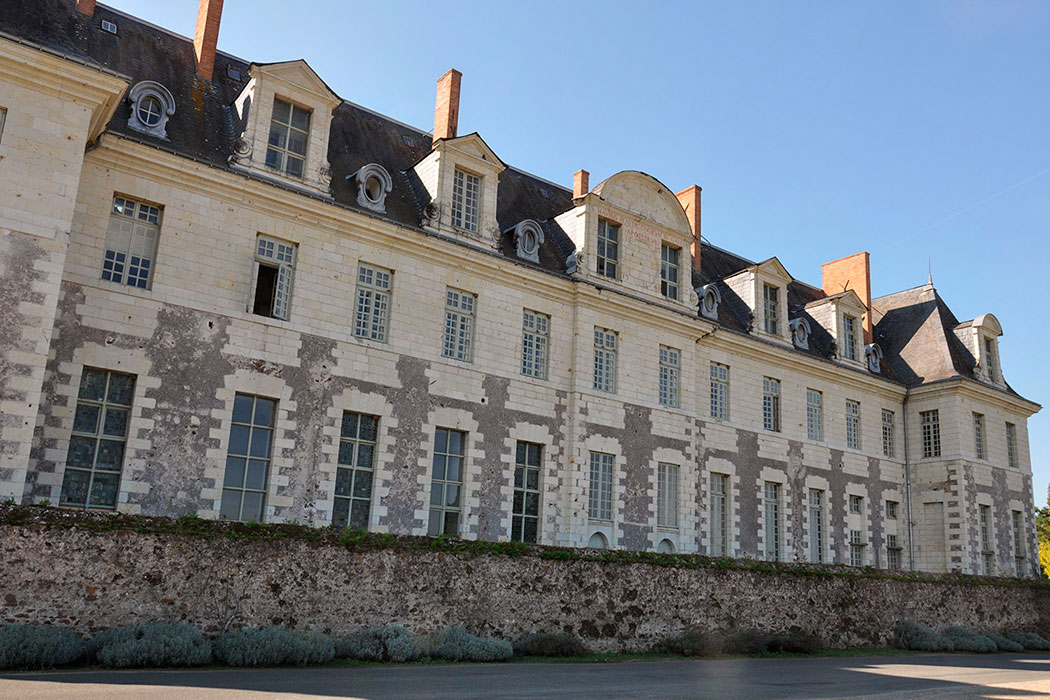


According to a tradition developed by the monastery itself, the abbey of Saint-Maur de Glanfeuil was supposedly founded by Saint Maur (c. 500–584), a disciple of Saint Benedict, with whom he is said to have collaborated in the foundation of the monastery of Montecassino (Lazio) in 529. The legend relates that he was sent to what is now France, where he settled at Glanfeuil and, presumably, founded the first Benedictine monastery in this region. His relics are said to have been venerated there.
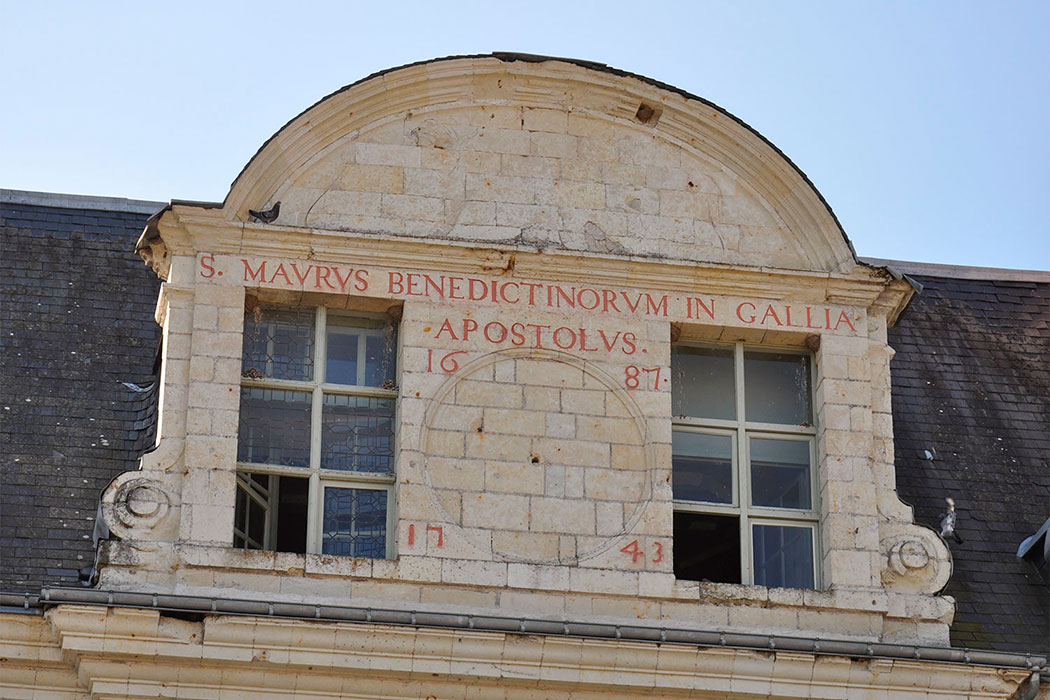
The monastery was restored in 824 by Count Rorgon I of Maine (d. c. 840), with monks from the monastery of Saint-Pierre-des-Fossés (Val-de-Marne). It also benefited from donations made by the Carolingian emperor Charles the Bald (823–877). Because of the threat of Norman invasions, the relics of Saint Maur were transferred in 868 to Fossés, which consequently adopted the dedication and name of Saint-Maur-des-Fossés. Once the situation had stabilised, the monks of Glanfeuil were unable to recover the relics, which remained at Fossés, where the community also stayed, while Glanfeuil became a dependent priory of that monastery.
At the beginning of the 11th century, Bishop Renaud II of Angers (973–1005) promoted the reconstruction of Glanfeuil with the support of Fulk III Nerra (c. 970–1040), Count of Anjou, and his son Geoffrey II Martel (1006–1060). In 1095, it regained its status as an abbey and its independence from Fossés. During the 14th century, it suffered the effects of the Hundred Years’ War, which left the monastery in ruins despite having been fortified. In 1544, Glanfeuil came under the commendatory regime.
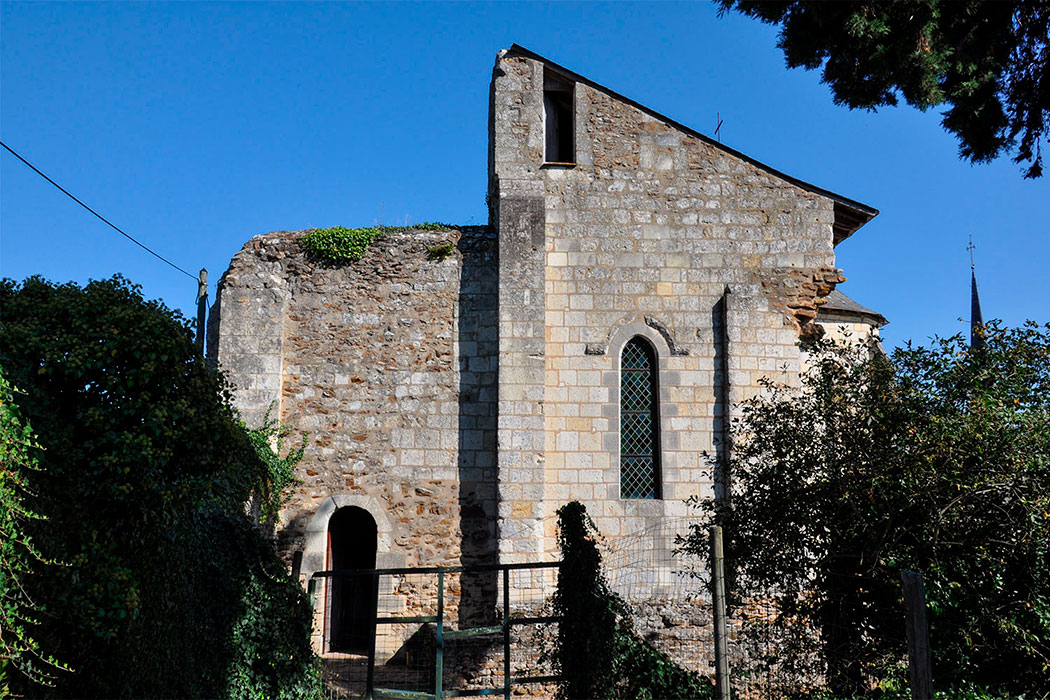
Chapel of Saint Martin
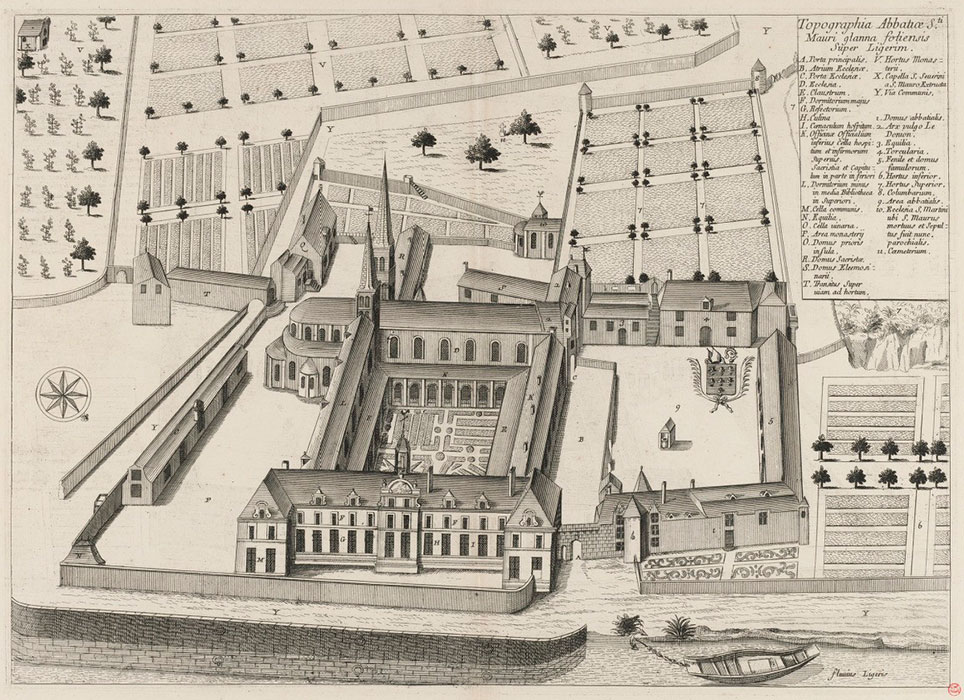
Monasticon Gallicanum
Bibliothèque nationale de France
In the 16th century, it once again became a victim of warfare, this time due to the Calvinists, who occupied the monastery on several occasions between 1568 and 1589. It should be noted that it stood in a very exposed location, on the banks of the Loire. The site was abandoned for some years. In 1668, the Congregation of Saint-Maur arrived and restored the situation of the house, both in terms of observance and the reconstruction of the monastic buildings. Following the Revolution, in 1790, Saint-Maur de Glanfeuil was suppressed and the monks expelled.
A large part of the Maurist-period monastic buildings (17th–18th centuries) has been preserved. The church, dedicated to Saint-Pierre, retains its overall structure but is now heavily altered. Remains of the cloister are also visible. On the southern side, the church of Saint-Martin is partially preserved and is regarded as the retreat of Saint Maur. It is older, had parochial functions, and remained in use for some years after the Revolution.
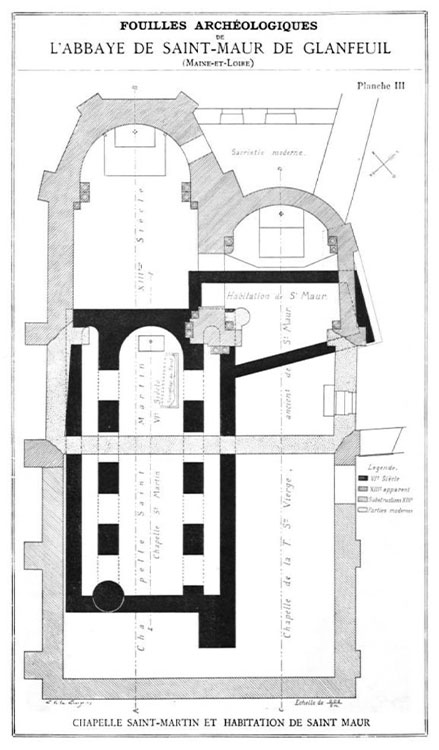
Floor plan of the Saint-Martin chapel
Fouilles archéologiques de l'abbaye de St-Maur de Glanfeuil (1899)
- ANÒNIM (1868). Saint Maur et le sanctuaire de Glanfeuil en Anjou. Angers: Lachèse
- BESSE, Jean-Martial (1920). Abbayes et prieurés de l'ancienne France, vol. 8, Tours. París : Picard
- DE LA CROIX, Camille (1899). Fouilles archéologiques de l'abbaye de St-Maur de Glanfeuil (Maine-et-Loire). París: Picard
- MARCHEGAY, Paul (1860). Le cartulaire de Saint-Maur-sur-Loire. Archives d’Anjou. Angers: Labussière
- PEIGNÉ-DELACOURT, Achille (1877). Monasticon Gallicanum. Paris: G. Chamerot
- SAINT-MAUR, Congregació de (1856). Gallia Christiana in provincias ecclesiasticas distributa. Vol. 14. París: Typographia Regia
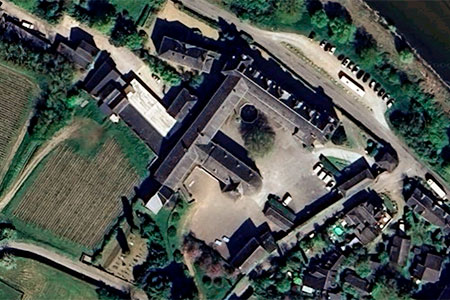
The Abbey of Saint-Maur de Glanfeuil is located on the banks of the Loire, southeast of Angers