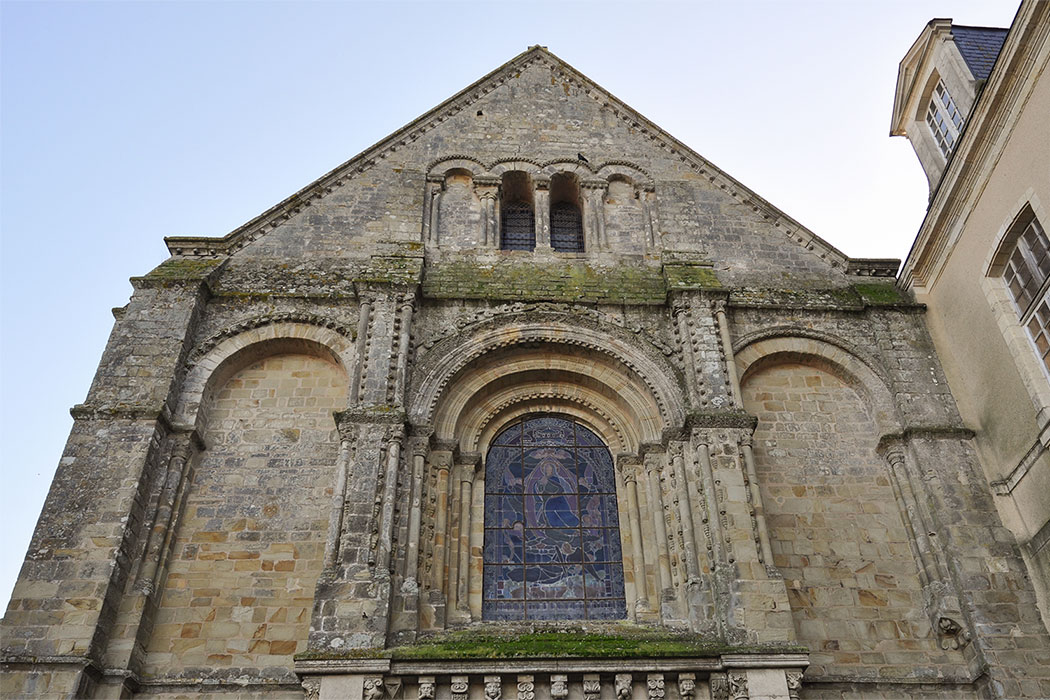

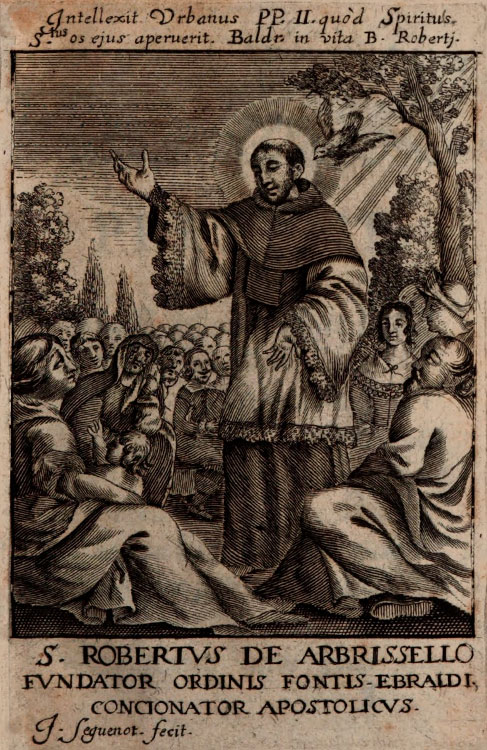
The origin of this house is linked to the figure of Robert of Arbrissel (c. 1045–c. 1117), its founder, who, drawn to an eremitic form of religious life, left Angers in 1095—where he taught theology—and withdrew to the forest of Craon (Mayenne), where a number of followers gathered around him. The initiative received the support of Renaud le Bourguignon (c. 1060–1101), lord of Craon, and of the bishop of Angers, Geoffroy de Mayenne, which facilitated the establishment of a cenobitic community that adopted the canonical way of life, following the Rule of Saint Augustine. This community would later become the Notre-Dame de La Roë.
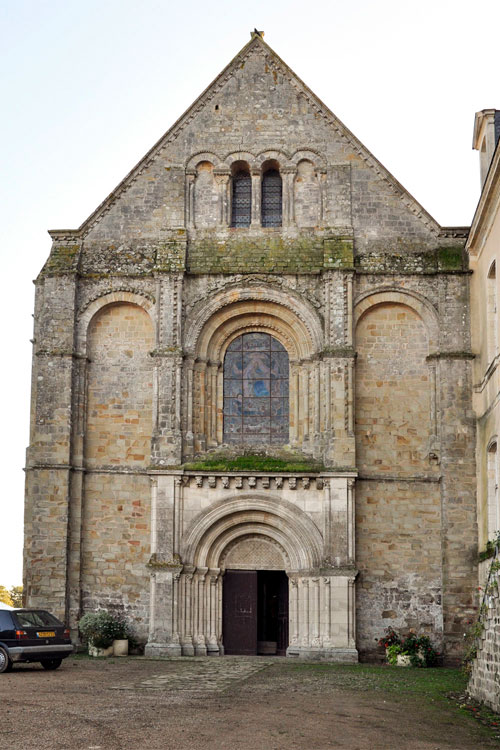
In 1096, Pope Urban II was in Angers and met Robert, to whom he also expressed his support. Robert would later go on to found the Abbey of Fontevraud (Maine-et-Loire), with its own rule. In 1098, Bishop Geoffroy consecrated an altar at the monastery, while the lord of Craon confirmed the grant of lands for the new establishment. La Roë developed rapidly, and in 1140 the church could be consecrated, although the works had not yet been completed. Meanwhile, the house expanded with new priories and churches dependent on it.
This period of prosperity was interrupted in the 14th century as a result of the Hundred Years’ War; even more severe were the effects of the Wars of Religion, especially in 1562 and 1572. By that time, the house was already governed by commendatory abbots: Michel Richer was the last regular abbot and, in 1530, Étienne du Poncher was appointed as the first commendatory abbot. In 1664, the canonical community was reformed and became part of the Congregation of Sainte-Geneviève. This new situation ushered in a renewed phase of prosperity, allowing the restoration and rebuilding of the abbey’s buildings.
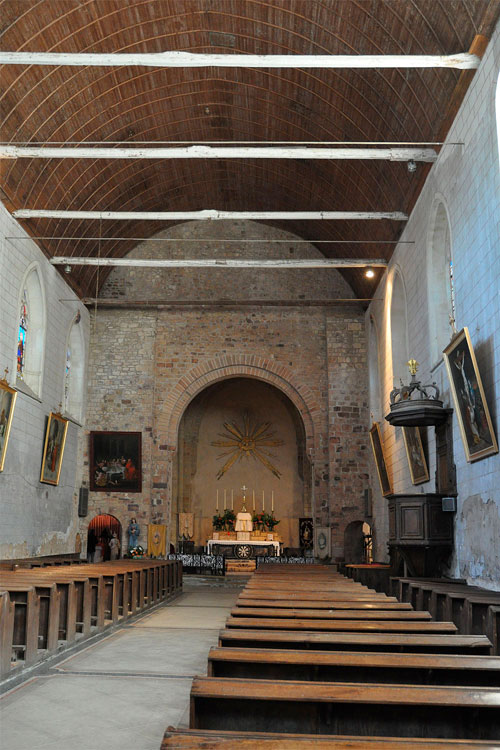
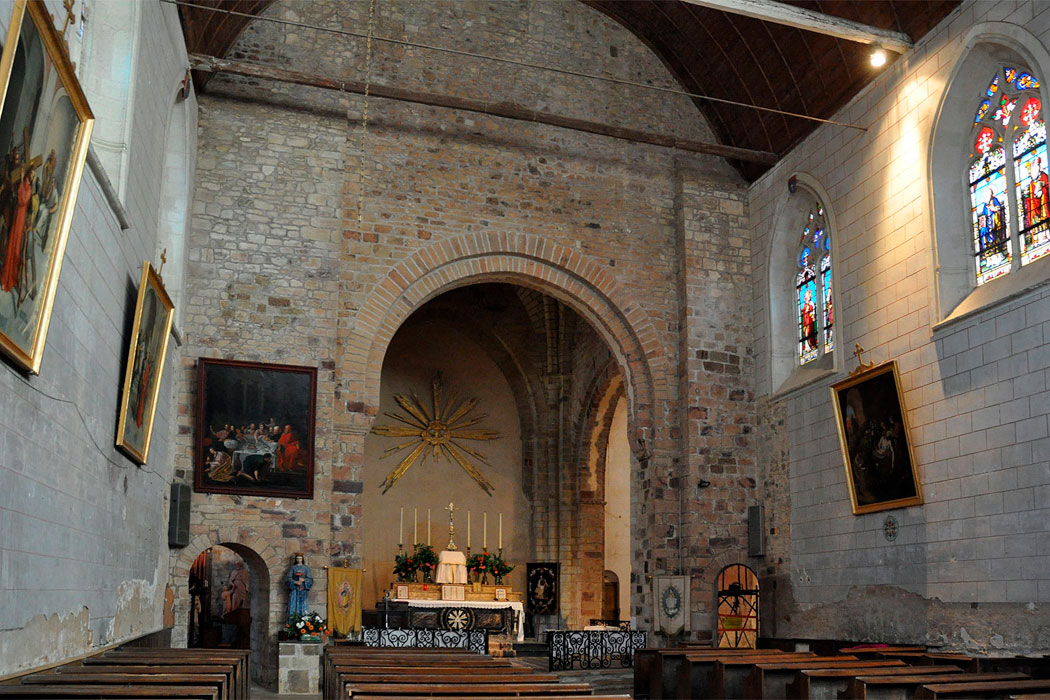
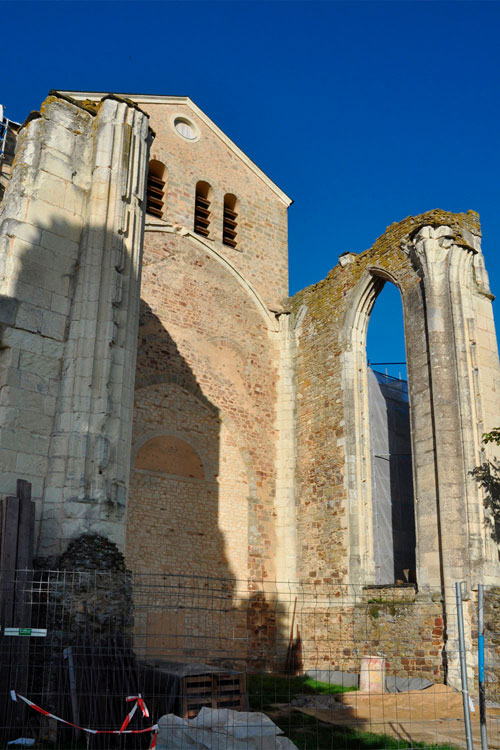
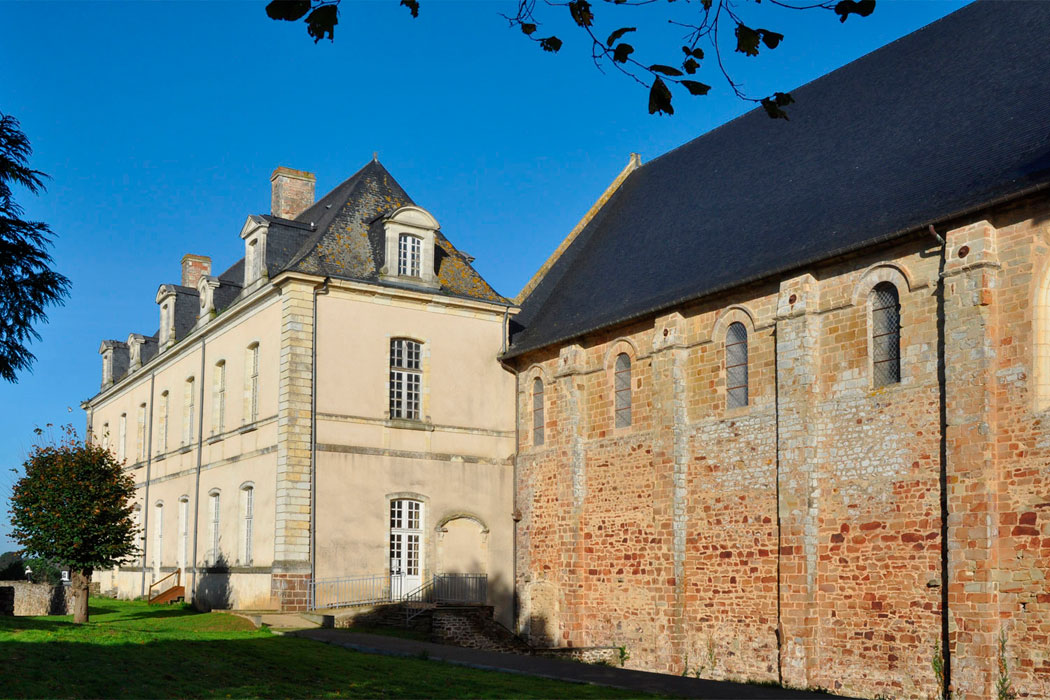
The Revolution, in 1791, brought monastic life at La Roë to an end, and the buildings began to fall into ruin. In 1795, the chevet of the church was destroyed by the collapse of the bell tower. Today, the church serves parish functions; the nave and transept are preserved, though heavily altered due to the loss of the apse. The space at the crossing has been adapted as the chancel. The conventual buildings are also partially preserved, having been rebuilt in the 17th century.
Robert of Arbrissel
Illustration from La vie du bien-heureux Robert d'Arbrissel (1648)
- ANGOT, Alphonse-Victor (1910). La Roë. Dictionnaire historique, topographique et biographique de la Mayenne, vol. 3. Laval
- BESSE, Jean-Martial (1920). Abbayes et prieurés de l'ancienne France, vol. 8, Tours. París : Picard
- DALARUM, Jacques (1986). Robert d'Arbrissel fondateur de Fontevraud. París: Albin Michel
- JOUBERT, André (1882). Le pillage de l'abbaye de la Roe par les huguenots en 1562. Revue historique et archéologique du Maine, vol. 12. Le Mans
- OUDART, Hervé (2003). Robert d’Arbrissel magister dans le récit de Baudri de Dol : spiritualité et condition juridique des frères aux débuts de l’abbaye de Notre-Dame de La Roë. Ermites de France et d’Italie (XIe-XVe siècle). École Française de Rome
- SAINT-MAUR, Congregació de (1856). Gallia Christiana in provincias ecclesiasticas distributa. Vol. 14. París: Typographia Regia
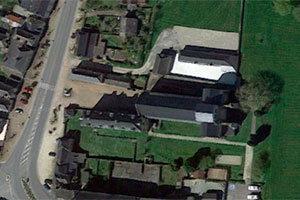
The commune of La Roë, where the monastery is located, lies to the southwest of Laval