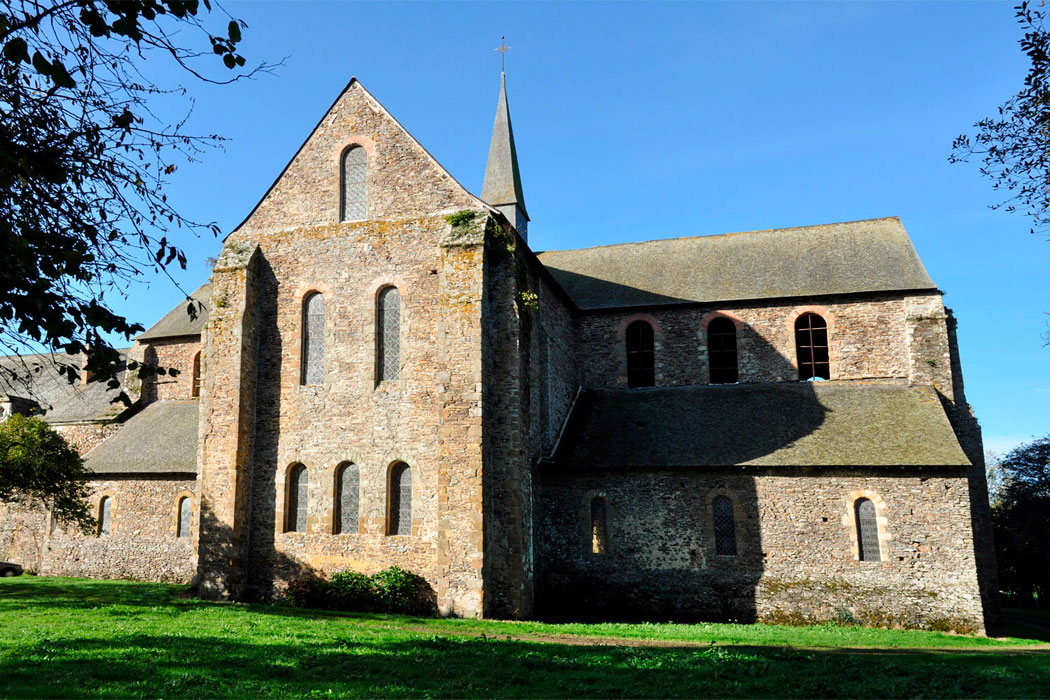
East apse

The Cistercian monastery of Notre-Dame de Clairmont was founded in 1150 at the initiative of the lords of Laval. According to tradition, Guy IV of Laval († c. 1185) sought the intervention of Bernard of Clairvaux (1090–1153) in this undertaking. In 1152, the first community arrived from the Abbey of Clairvaux (Aube), led by its first abbot, Philippe († 1181), who in 1179 became Bishop of Rennes.
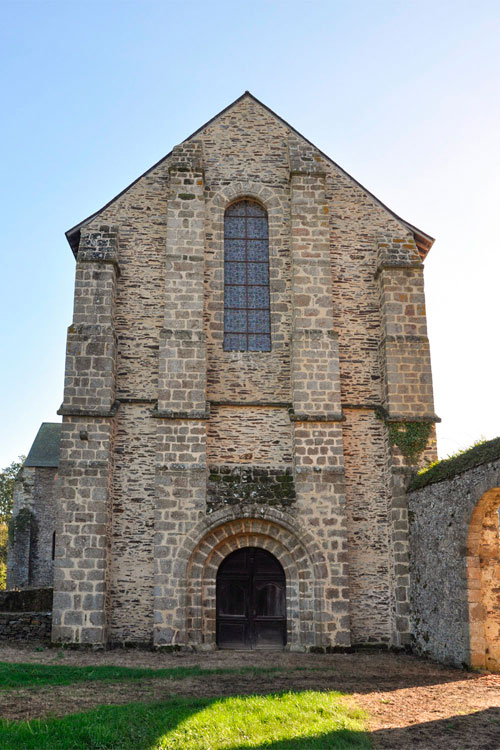
West facade of the church
The monastery became the burial place of the lords of Laval, who were interred there over many years. In 1204, the Abbey of Fontaine-Daniel was founded from here, located to the northeast in the same department of Mayenne. In 1509, Tronson, the last regular abbot, died, and the monks requested that the office be assumed by the Bishop of Rennes, a decision that was not accepted by the order and led to disputes. In 1513, the first commendatory abbot was appointed: Cardinal Soderini, Bishop of Tivoli.
Affiliation of Clairmont
According to Originum Cisterciensium (L. Janauschek, 1877)
During the 17th century, major works of modernization were carried out, although the church and other buildings from the early period were preserved. The monastery remained active until 1792, when it was abandoned as a result of the Revolution; the property was sold and put to agricultural use. It subsequently fell into near abandonment until, in 1936, it attracted the interest of Suzanne Denis and Hélène Blanchot, who promoted its acquisition, protection, and restoration.
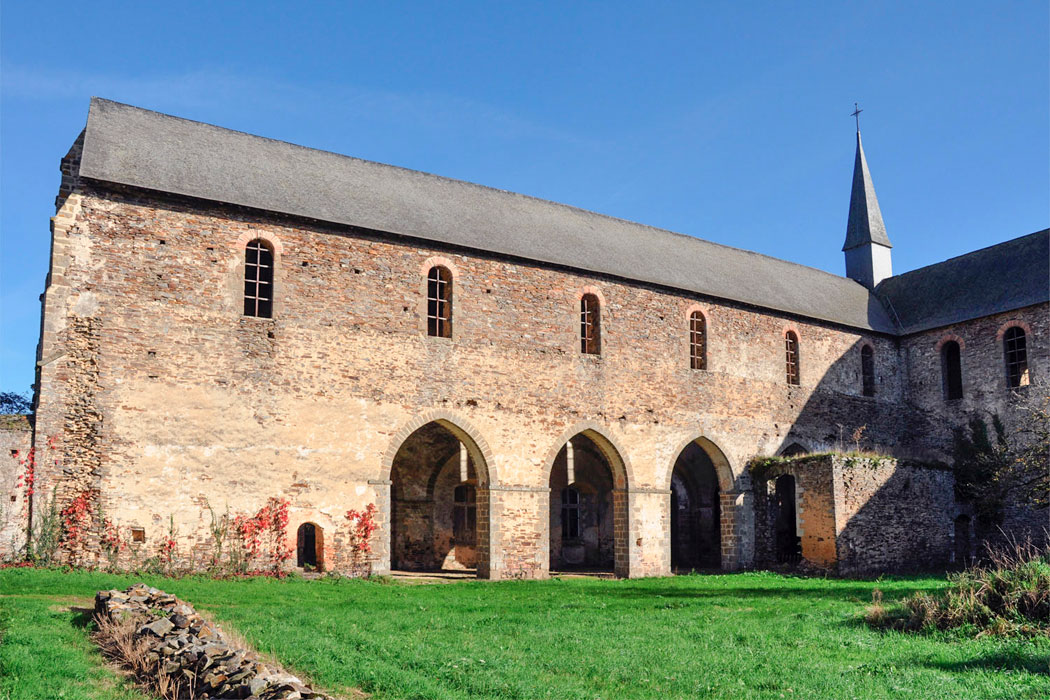
The church from the location of the cloister
The church is partially preserved and follows a typically Cistercian plan. Originally a three-aisled building, it has lost much of its side aisles. It features a transept opening onto seven rectangular chapels forming the “chevet”. The central chapel is the same width as the nave, while three further chapels open off each arm of the transept. The structure is simple, with wooden roofs and no sculptural decoration. To the south of the church stood the cloister and, to its west, the buildings of the lay brothers, also dating from the earliest period (12th century). To the east, extending from the transept, stands the 17th-century building.
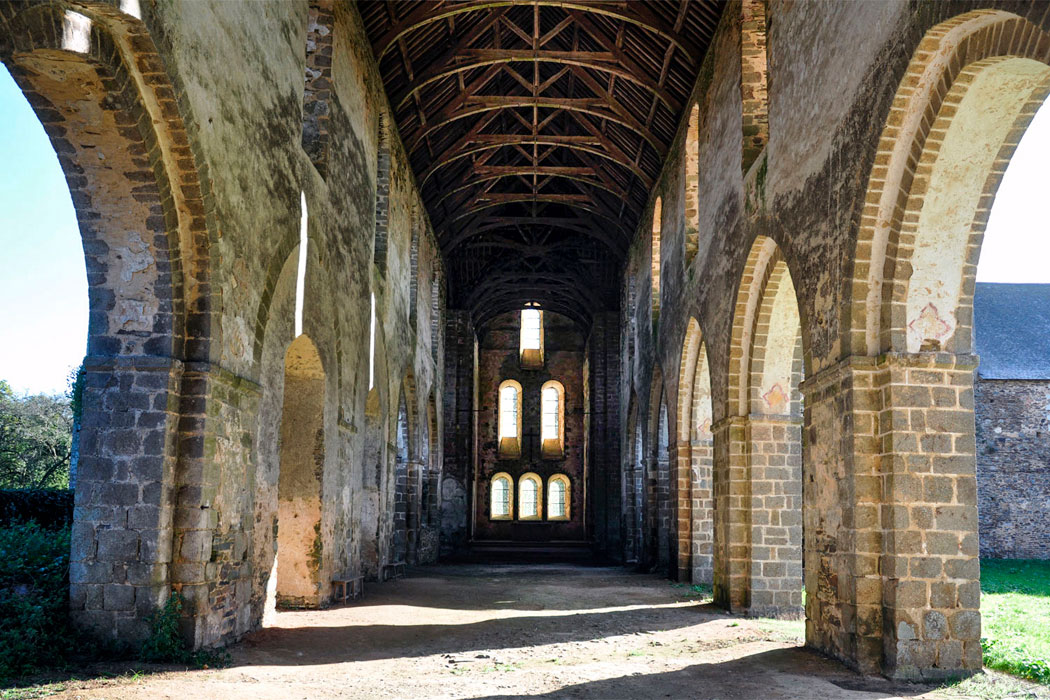
Central nave of the church
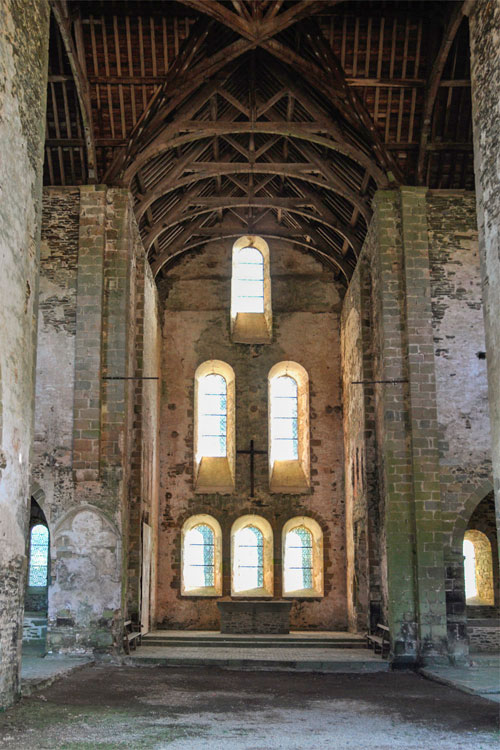
Chancel
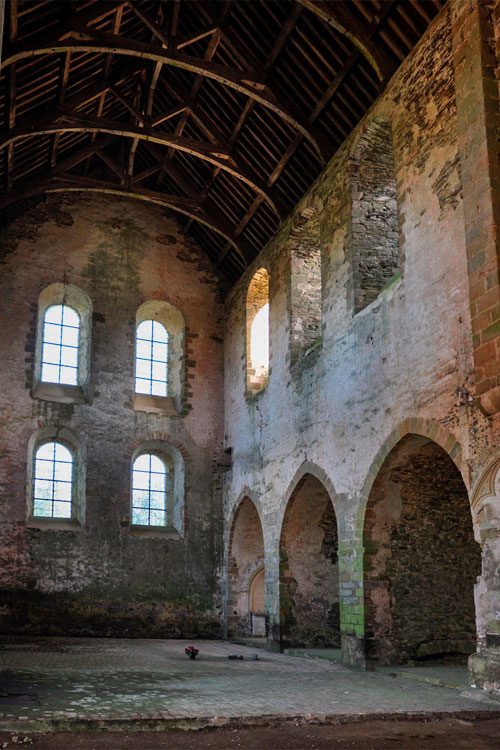
South transept
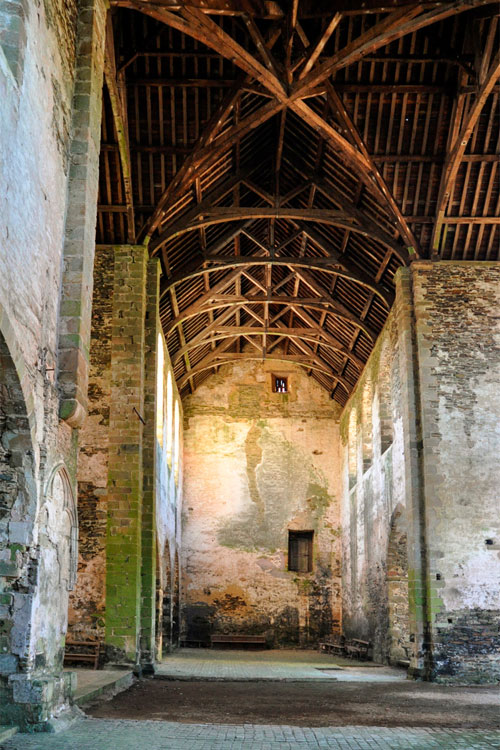
North transept
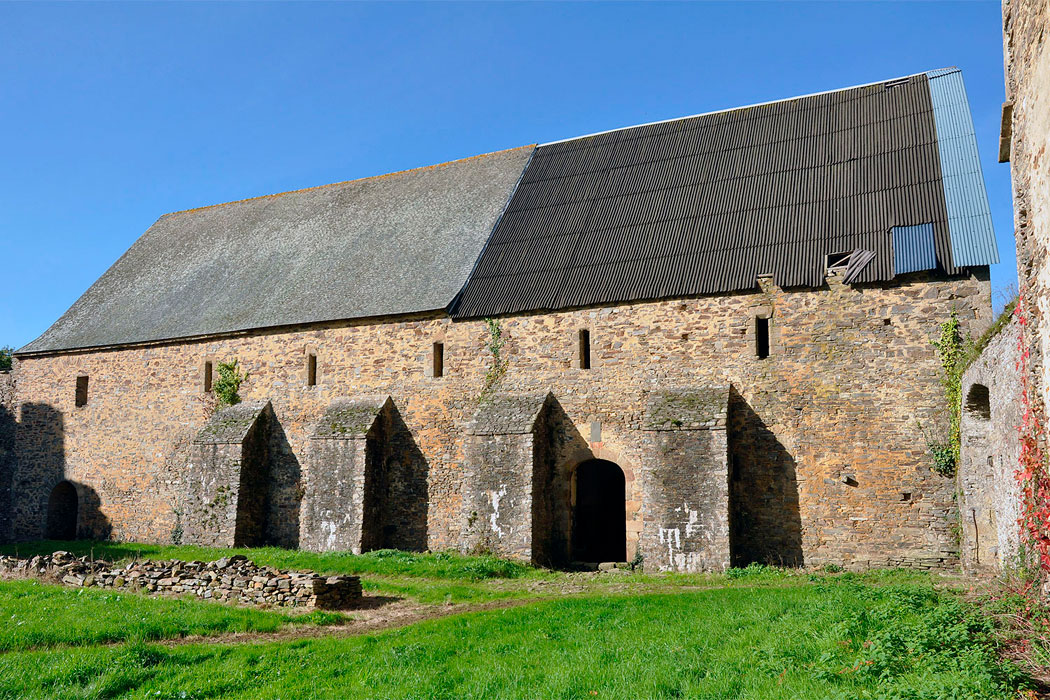
Lay brothers pavilion
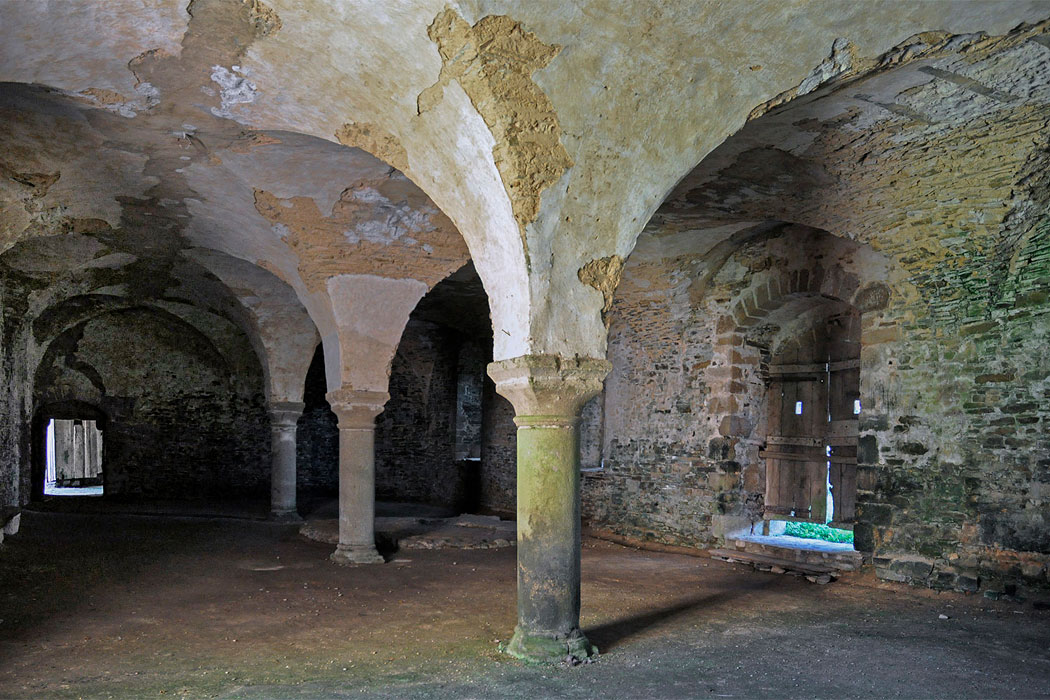
Lay brothers pavilion, cellar
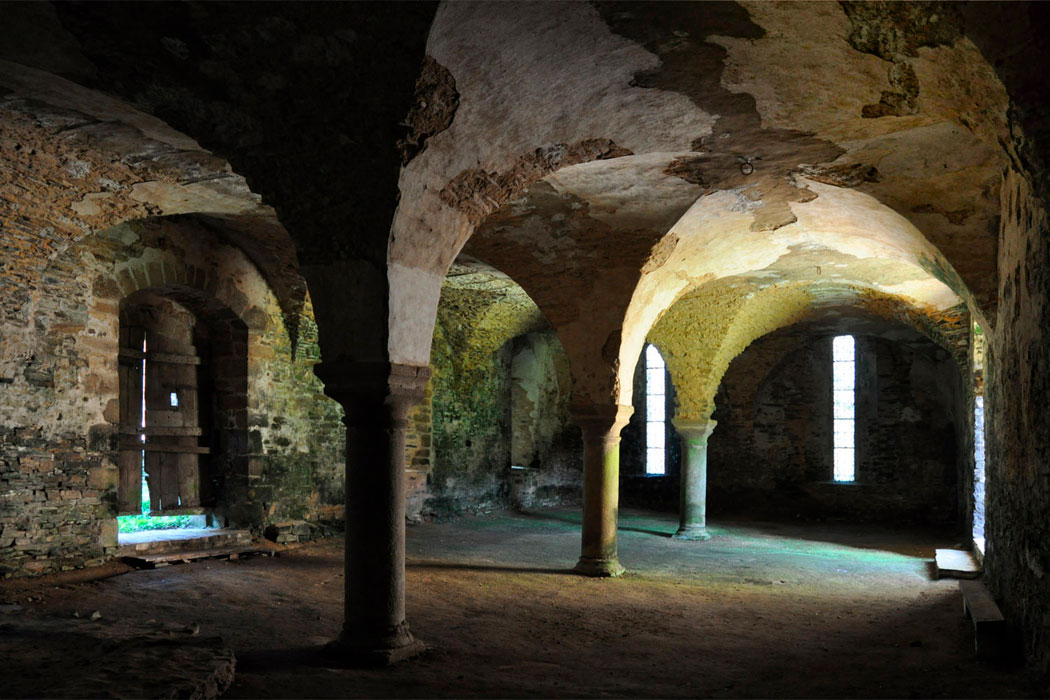
Lay brothers pavilion, cellar
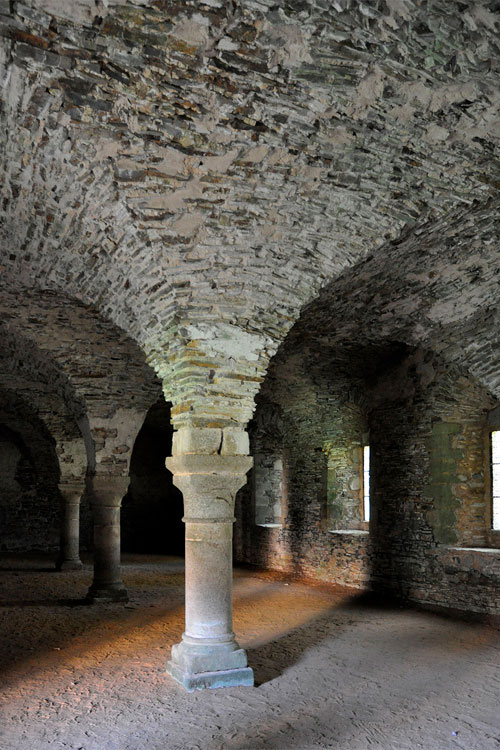
Lay brothers pavilion, refectory
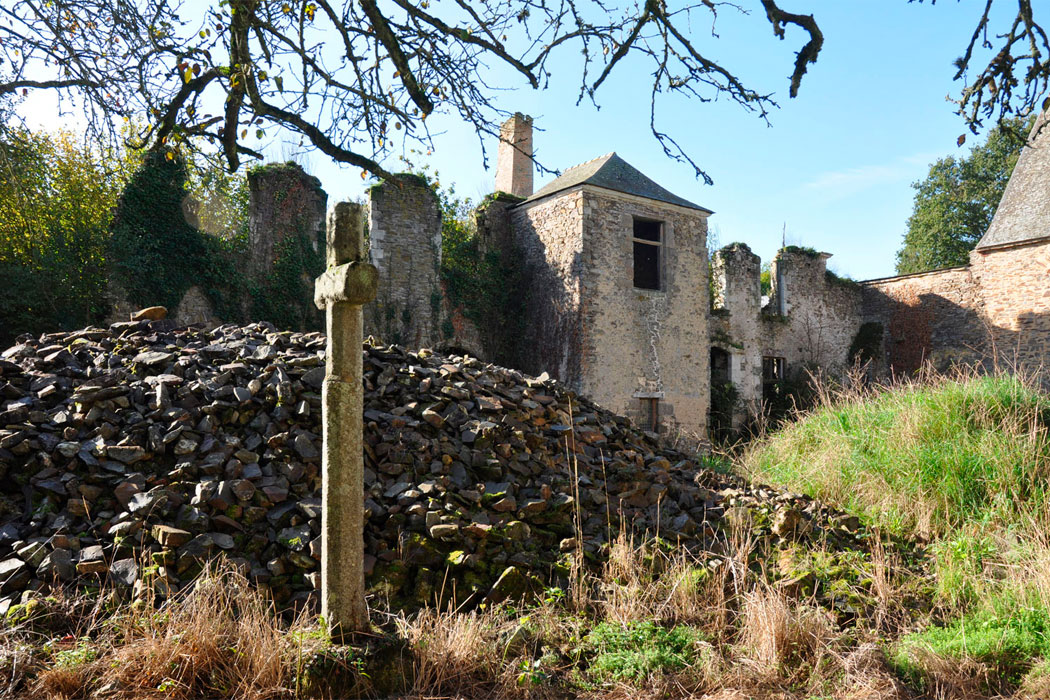
Ruins of the kitchen and refectory
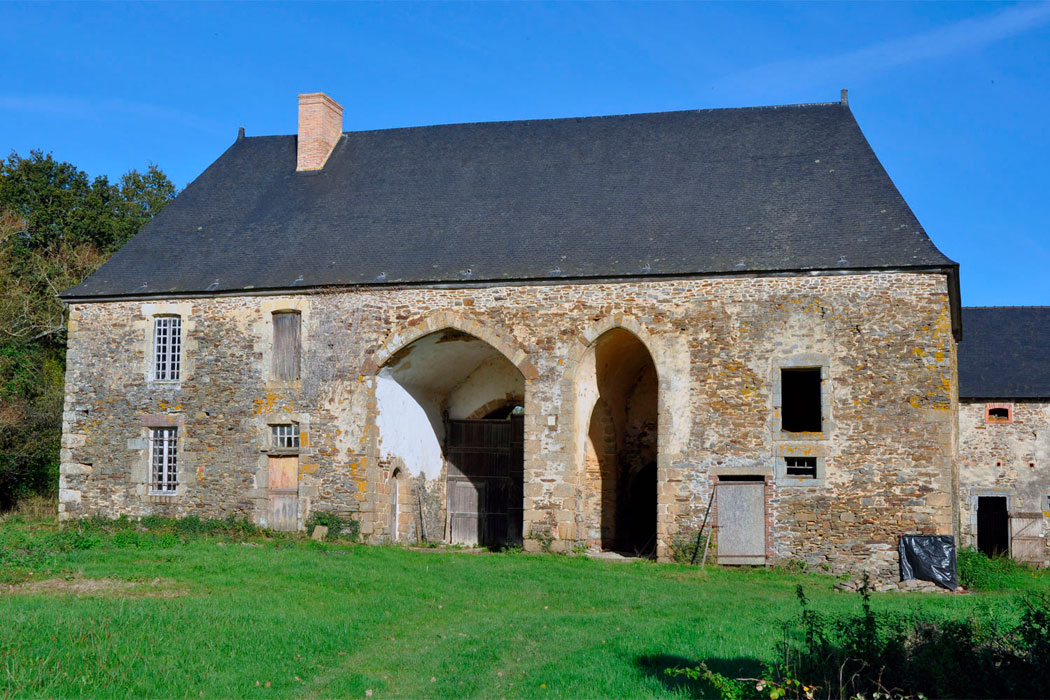
Porter’s lodge
- BAUDRILLART, Alfred (1953). Dictionnaire d'histoire et de géographie ecclésiastiques. Vol. 12. París: Letouzey et Ané
- BESSE, Jean-Martial (1920). Abbayes et prieurés de l'ancienne France, vol. 8, Tours. París : Picard
- BLANCHOT, Hélène (1985). Clairmont. Zodiaque. Núm. 145. La Pierre-qui-Vire
- JANAUSCHEK, Leopoldus (1877). Originum Cisterciensium. Vol. 1. Viena
- LADURÉE, Jean-Rene (2013). Clairmont et sa fille, Fontaine-Daniel: deux fondations claravalliennes dans le Bas-Maine (1150-1204). Annales de Bretagne et les Pays de l'Ouest. Vol. 120. Rennes: P.U. Rennes
- PICQUENARD, Georges (1961). Abbaye de Clermont. Congrès archéologique de France. 119e ss. Société française d'archéologie
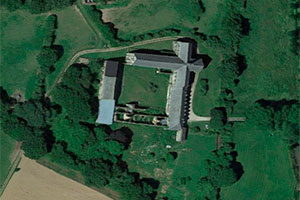
The monastery is situated in an isolated location within the commune of Olivet, west of Laval, in the direction of Rennes