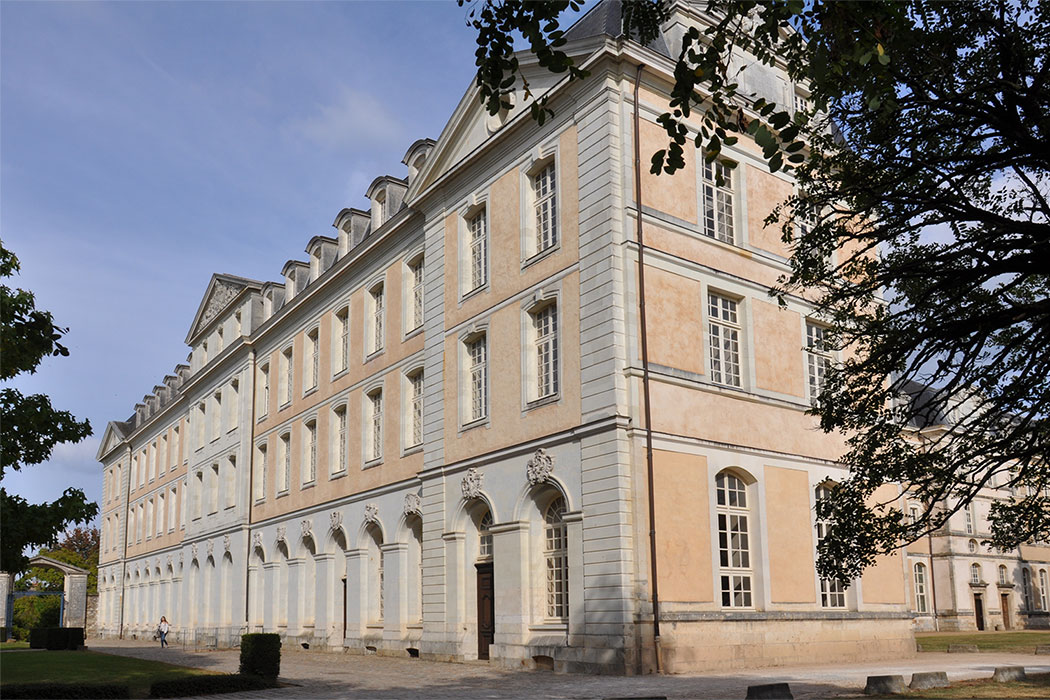
Now Lycée Bellevue


The Abbey of Saint-Vincent du Mans was founded in 572 by Domnole († 581), bishop of this diocese. He maintained relations with the Frankish king Chlothar I (c. 498-561) as well as with Saint Germain of Paris (496-576), who attended the consecration of the monastery. The house enjoyed a notable history, but during the time of Bishop Gauziolène (8th century), a member of the comital family, its possessions were squandered. It recovered under the episcopate of Aldric (832-839), which is why this prelate has been regarded as its second founder.
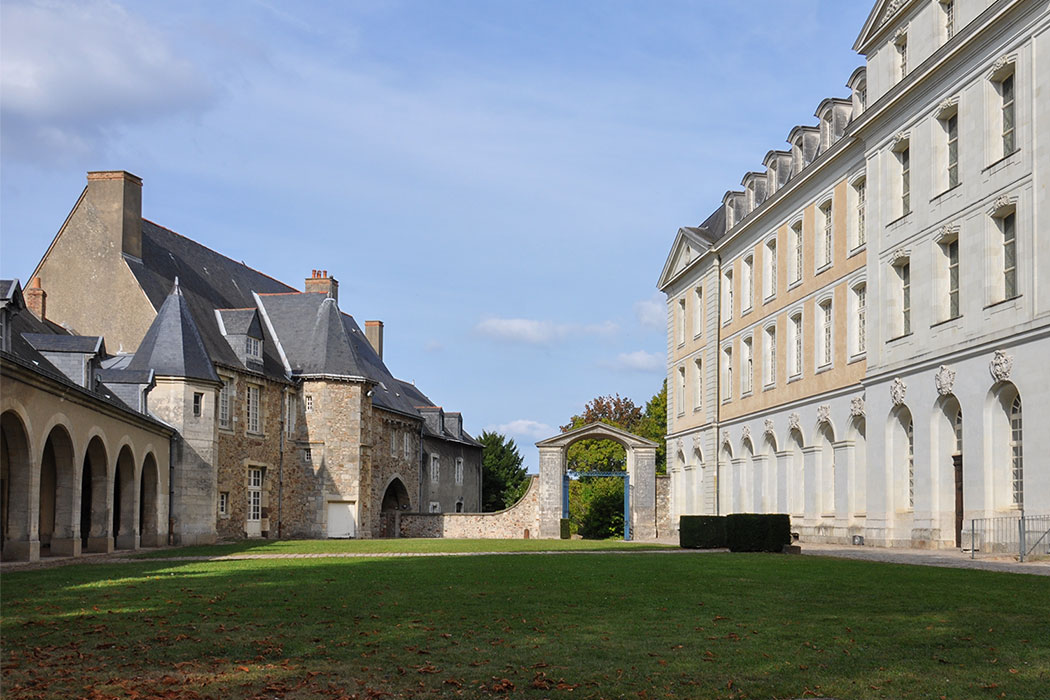
The Norman invasions and further usurpations once again brought the abbey into decline, until Avesgaud de Bellême occupied the episcopal see (995-1035) and gave it renewed impetus by building a new church and recovering its possessions and rights. At that time, the abbey maintained a large community and was able to prosper thanks to favourable economic conditions. On the other hand, in the 14th century it began to suffer from problems of observance, both within the community itself and among the many dependent houses under its control.
In 1466, the commendatory regime was adopted, but in 1502 the abbey joined the Congregation of Chezal-Benoît, once again restoring regular abbots. In 1561, the house suffered from plundering during the upheavals of the Wars of Religion. In 1636, it entered the Congregation of Saint-Maur, as did many other houses connected with Chezal-Benoît. The arrival of the Maurists encouraged the reconstruction of the monastery: the church was remodelled and, from 1685 onward and throughout the 18th century, the conventual buildings were rebuilt.
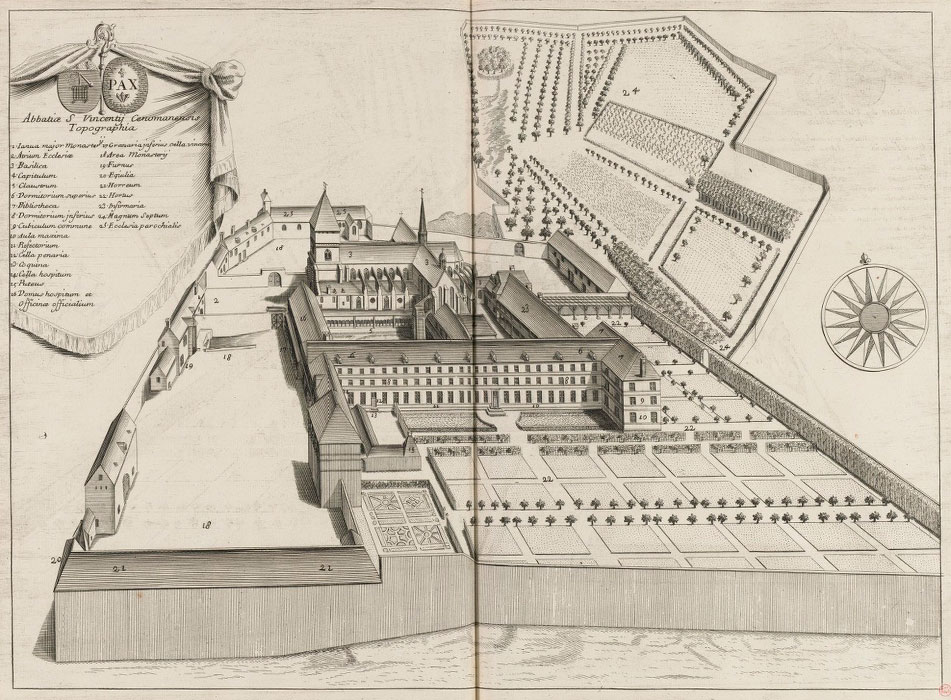
Monasticon Gallicanum
Bibliothèque nationale de France
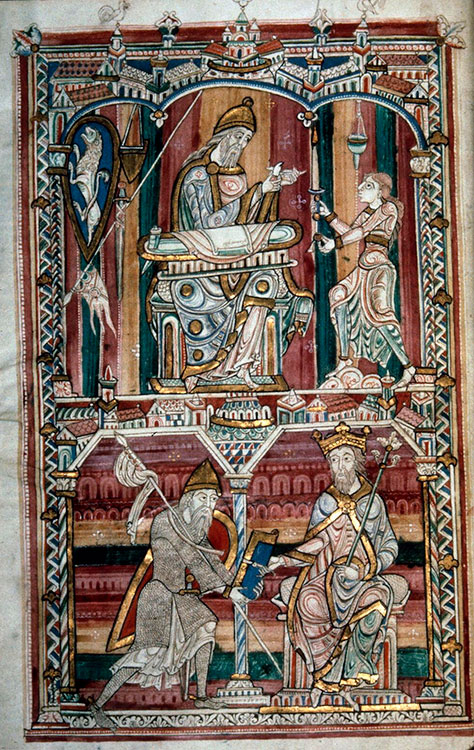
Frontispiece Gaii Plinii Secundi historiae naturalis (12th century)
From the monastery
Le Mans: Médiathèque Louis-Aragon - MS 263
In the 18th century, the monastery became a major cultural centre. It possessed an important library and produced pioneering scholarly works, such as the Histoire littéraire de la France, begun in 1733 by Antoine Rivet, a monk of the monastery, and continued up to the present day. In its final years, from 1763 onward, it once again had commendatory abbots, despite the opposition of the community. In 1790, following the Revolution, the monks were forced to abandon the monastery. The site was converted into barracks and, at the beginning of the 19th century, the church and cloister were demolished. It was later used as a seminary, hospital and archive repository and, since 1954, as an educational institution; today it houses the Lycée Bellevue.
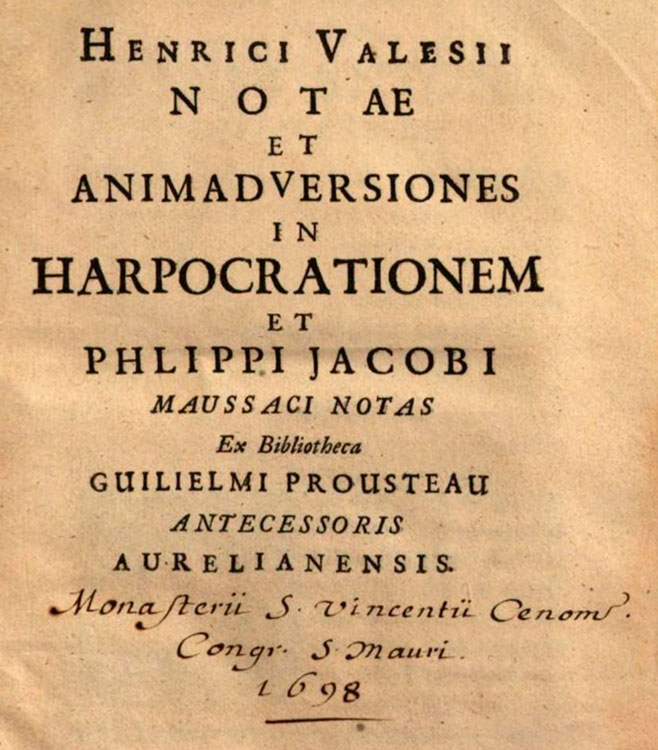
Title page of Henrici Valesii Notae et animadversiones in Harpocrationem (1698)
From the monastery library
Google Books

Title page of Histoire littéraire de la France (1733)
Google Books
- BESSE, Jean-Martial (1920). Abbayes et prieurés de l'ancienne France, vol. 8, Tours. París : Picard
- LÉVY, André; i altres (2012). L’autre temps des abbayes (XVIIe-XVIIIe siècles). Bibliotheca Vincentiana
- PEIGNÉ-DELACOURT, Achille (1877). Monasticon Gallicanum. Paris: G. Chamerot
- ROBERT, Charles; i altres, ed. (1886-1913). Cartulaire de l'abbaye de Saint-Vincent du Mans (ordre de saint Benoît) : Premier cartulaire : 572-1188. Le Mans: A. de Saint-Denis
- SAINT-MAUR, Congregació de (1856). Gallia Christiana in provincias ecclesiasticas distributa. Vol. 14. París: Typographia Regia
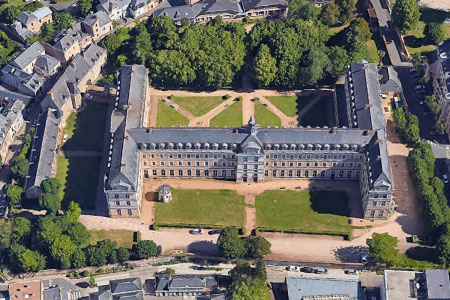
The monastery of Saint-Vincent, now the Lycée Bellevue, stands on elevated ground north of the historic centre of the city of Le Mans