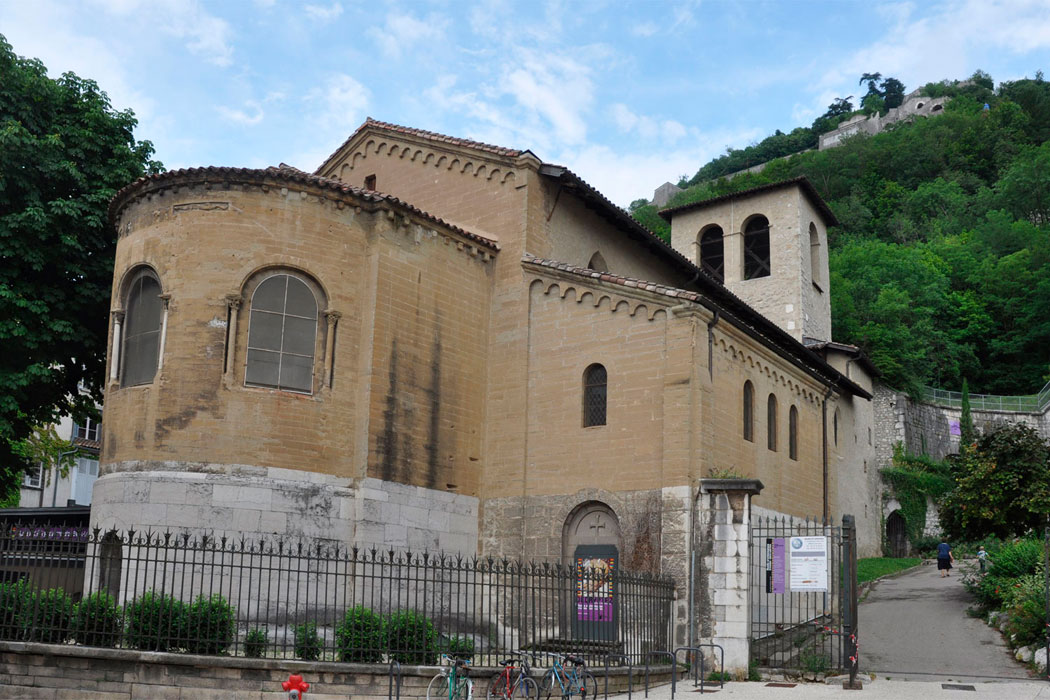

Saint-Laurent de Grenoble was a Benedictine priory founded outside the city, on a site occupied since Antiquity by a cemetery. Over time, several buildings succeeded one another on this spot, leaving traces from the 4th century to the present day. The site has been excavated and suitably arranged, making it possible to follow its historical development.
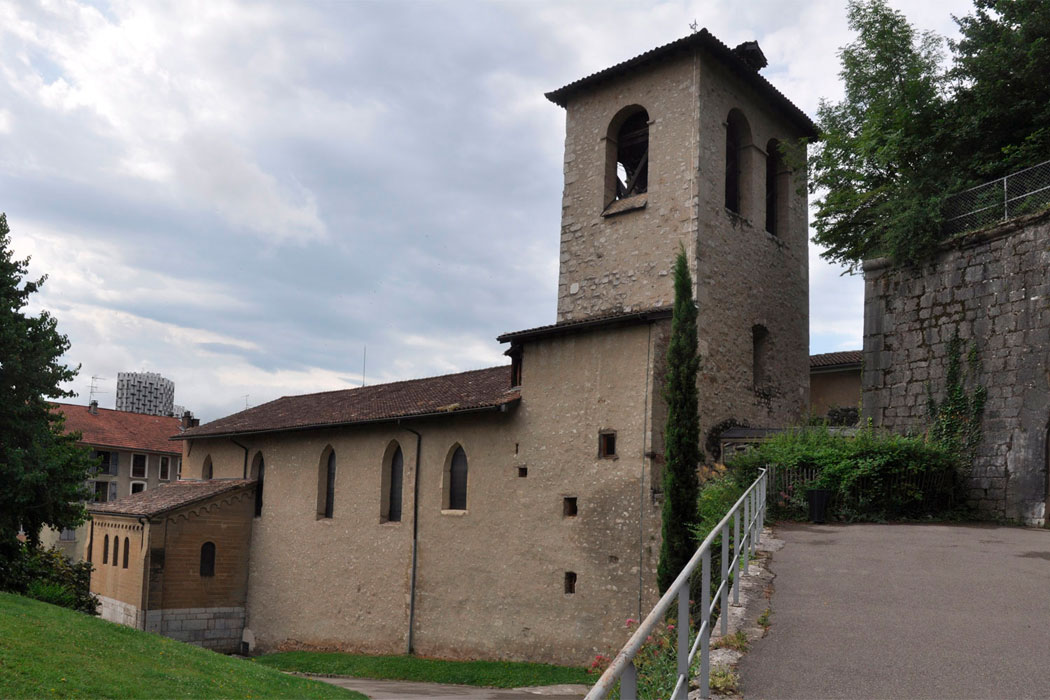
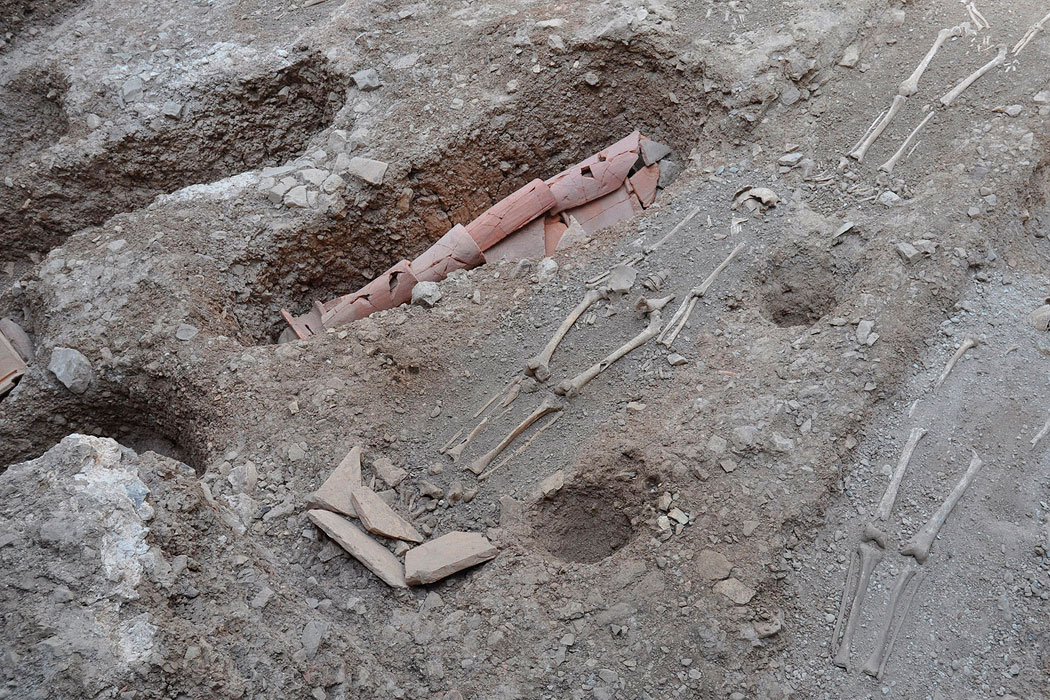
The precursor of the Priory of Saint-Laurent was a 4th-century necropolis, located to the north of the centre of the ancient city of Grenoble, on the opposite side of the Isère. Several mausoleums were built within this burial ground, probably belonging to aristocratic families. In the 6th century, a funerary church with a cruciform plan was erected; it was remodelled in the following century and decorated with wall paintings. During the first half of the 9th century, a Carolingian church with a rectangular nave was built, an intervention that partially affected the earlier structures.
The earliest surviving document relating to this site dates from 1012, when members of the Albon family donated the church dedicated to Saint-Laurent, together with the crypt of Saint-Oyand, to the Benedictines of the Abbey of Saint-Chaffre (Haute-Loire). At that time, the bishop of Grenoble was Humbert I d’Albon, who held the office at the end of the 10th century and the beginning of the next. The site became a Benedictine priory, and the buildings required for the new monastic activity were constructed.
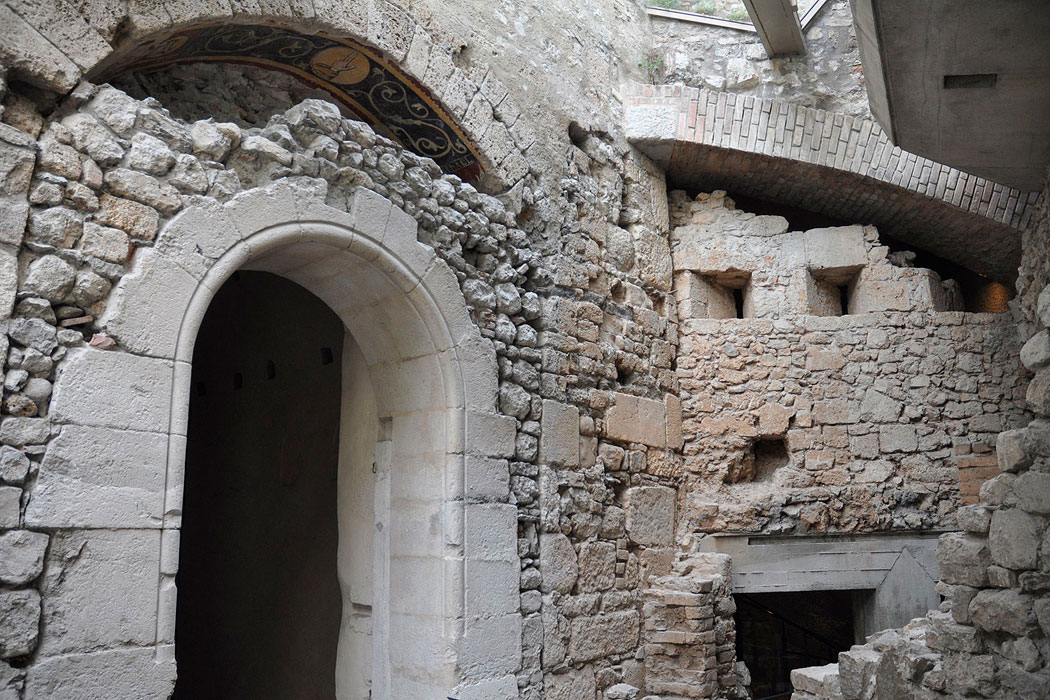
West portal of the church
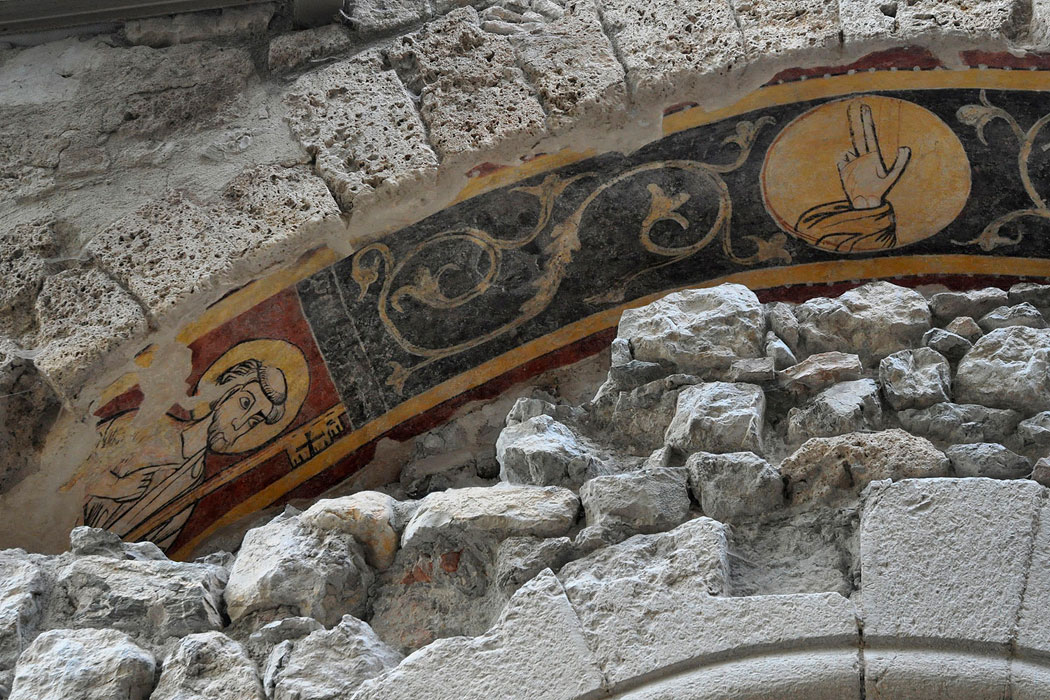
Mural decoration of the portal (14th century)
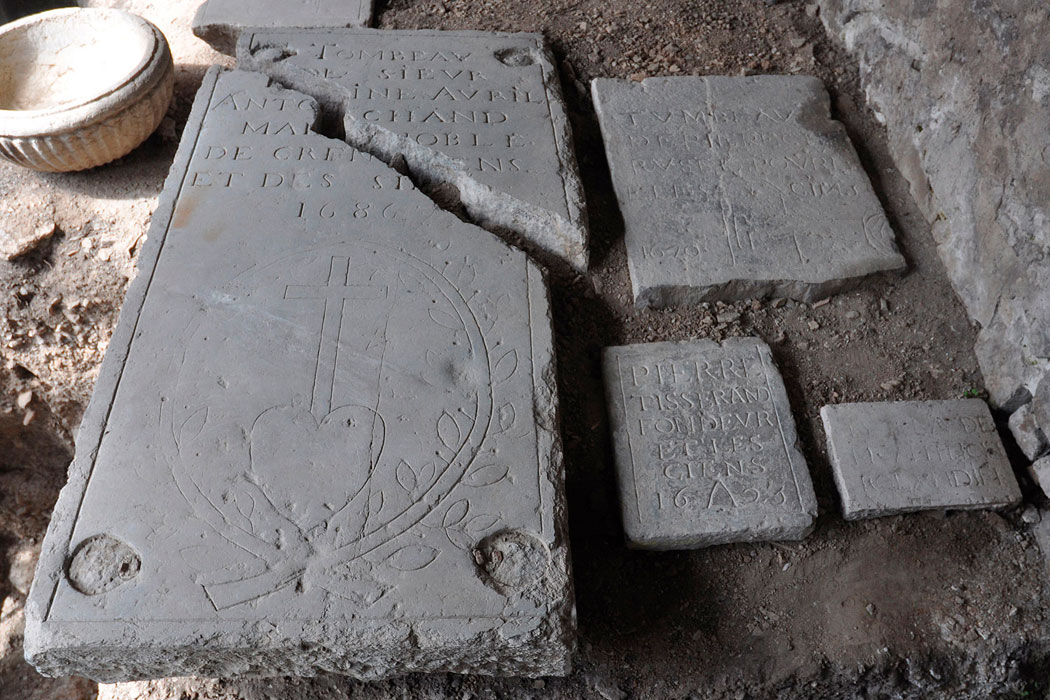
In the mid-11th century, the development of the monastic house led to a period of economic prosperity, which made it possible to build a new church, while essentially preserving the original crypt. A cloister was also built, adjoining the church. In the following years, the priory underwent reforms and alterations, while gradually entering a period of decline. In 1562 it suffered a military occupation during the Wars of Religion. In 1683 it was suppressed as a monastic house, while retaining its status as a parish church and its revenues.
After the Revolution, the site was deconsecrated and put to various uses. In the 19th century, the church was recognised and protected, and special attention was given to the crypt of Saint-Oyand, dedicated to this saint, also known as Eugendus, who was associated with the monastic movement of the so-called Jura Fathers. In recent years, Saint-Laurent has been thoroughly excavated, and today the remains of the successive structures accumulated over time, as a result of the various modifications carried out, are presented within the site. Saint-Laurent now forms part of the Archaeological Museum of Grenoble.
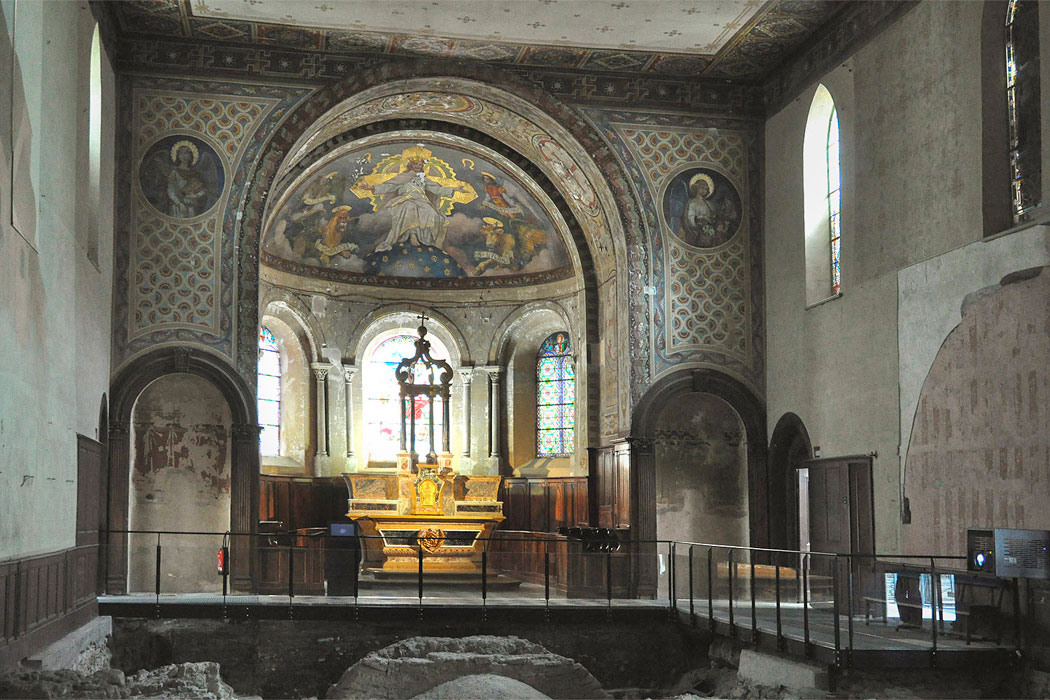
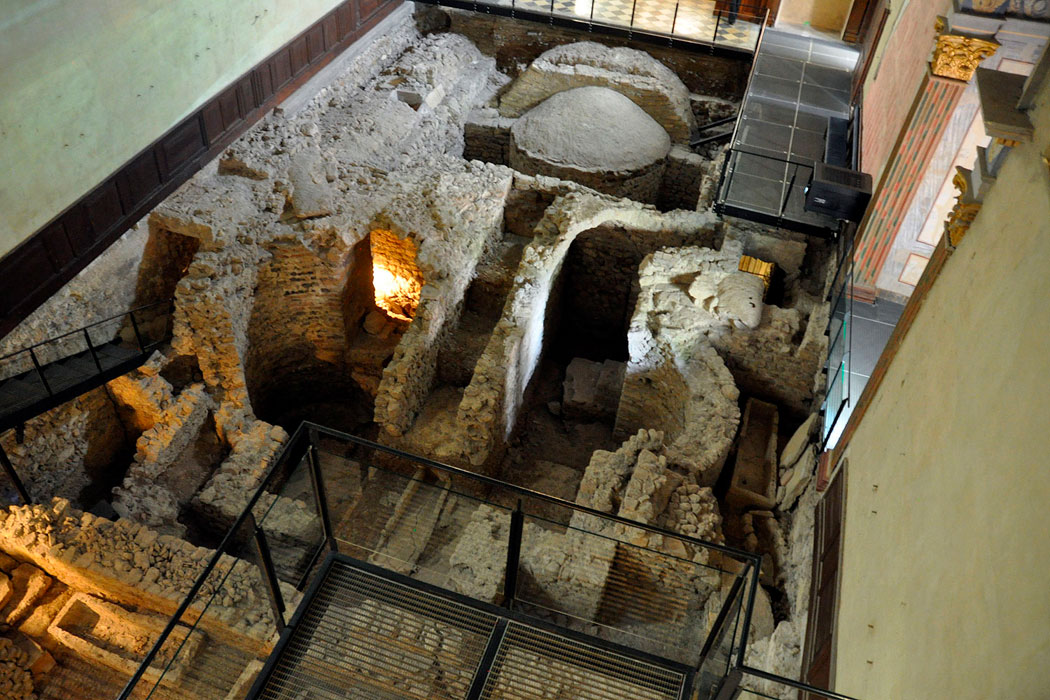
Ancient structures
Above: the old church, now the crypt of Saint-Oyand
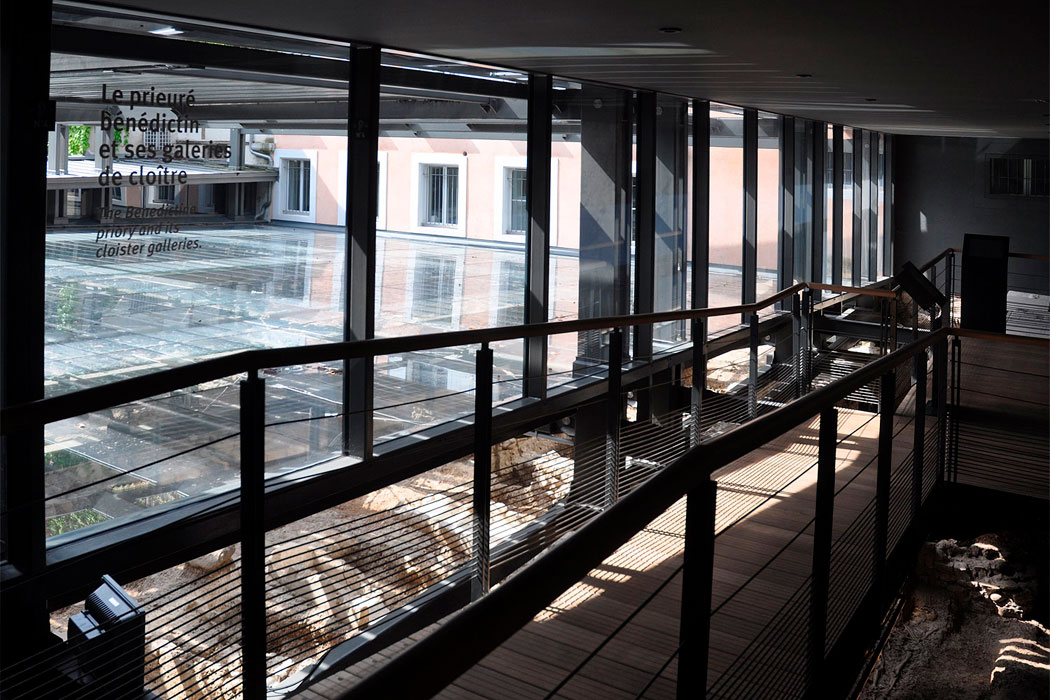
Cloister
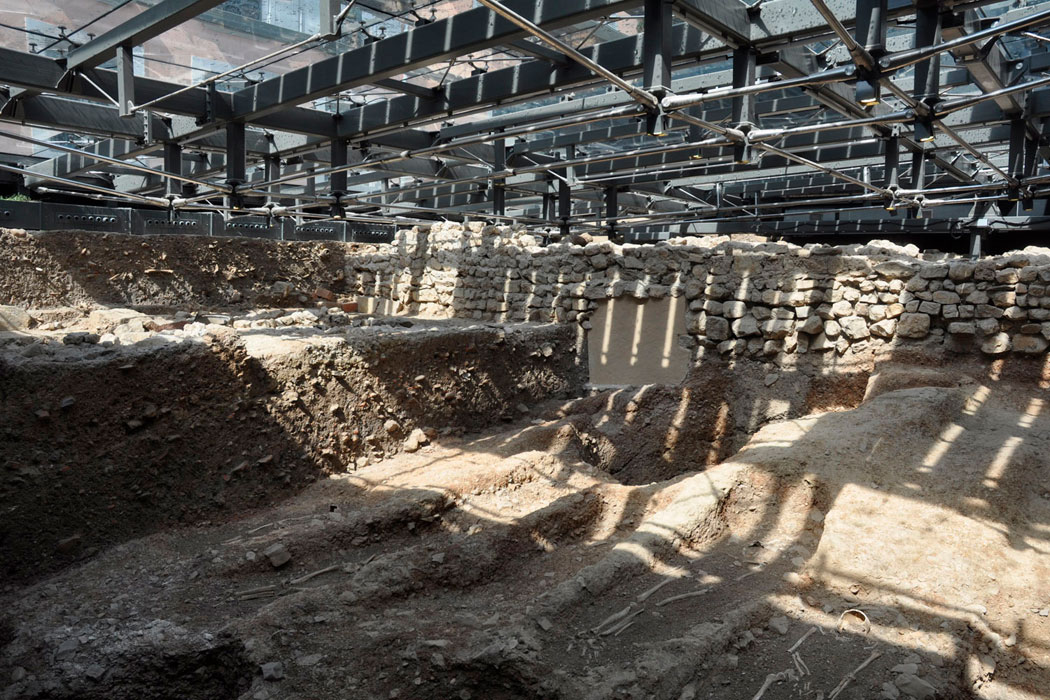
Cloister
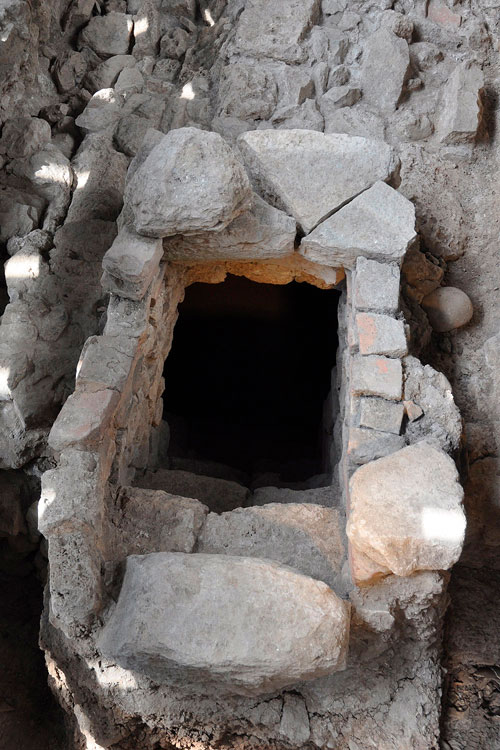
Basement entrance located in an old crypt
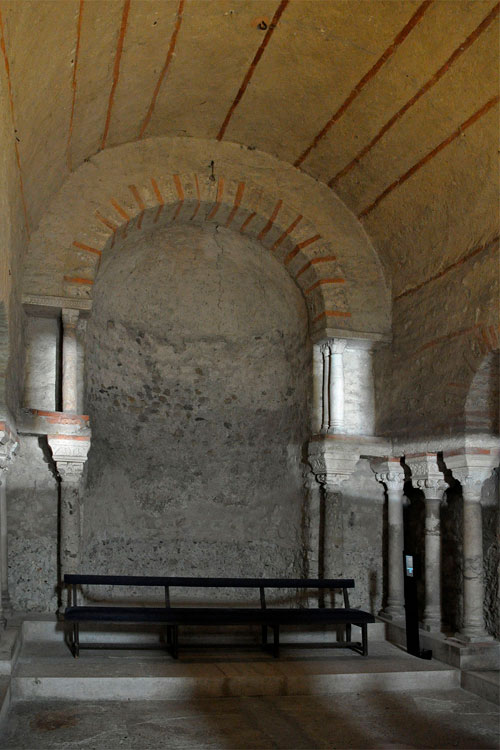
Crypt of Saint-Oyand
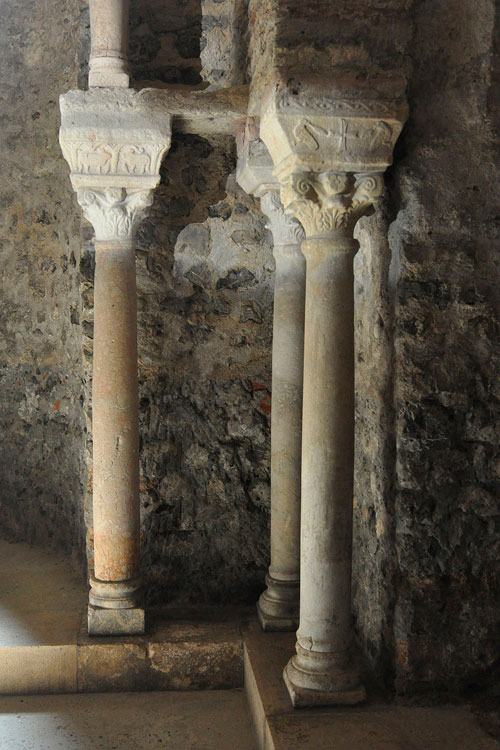
Crypt of Saint-Oyand
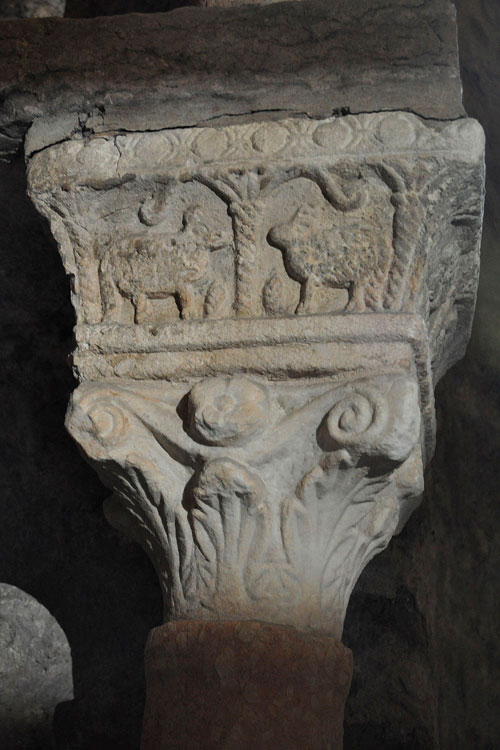
Crypt of Saint-Oyand
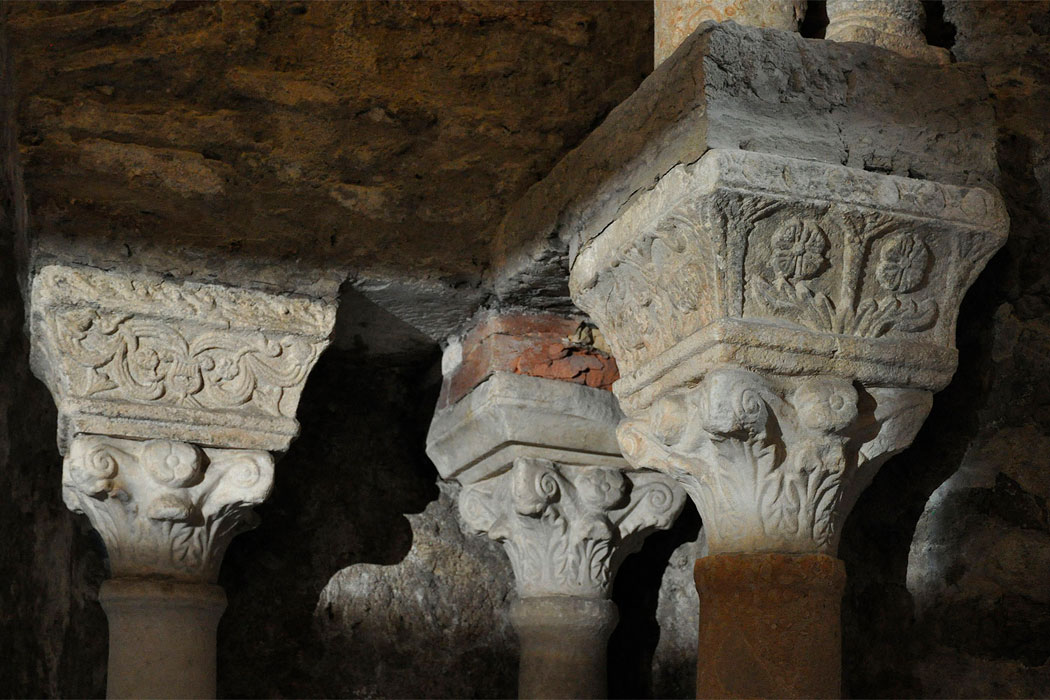
Crypt of Saint-Oyand
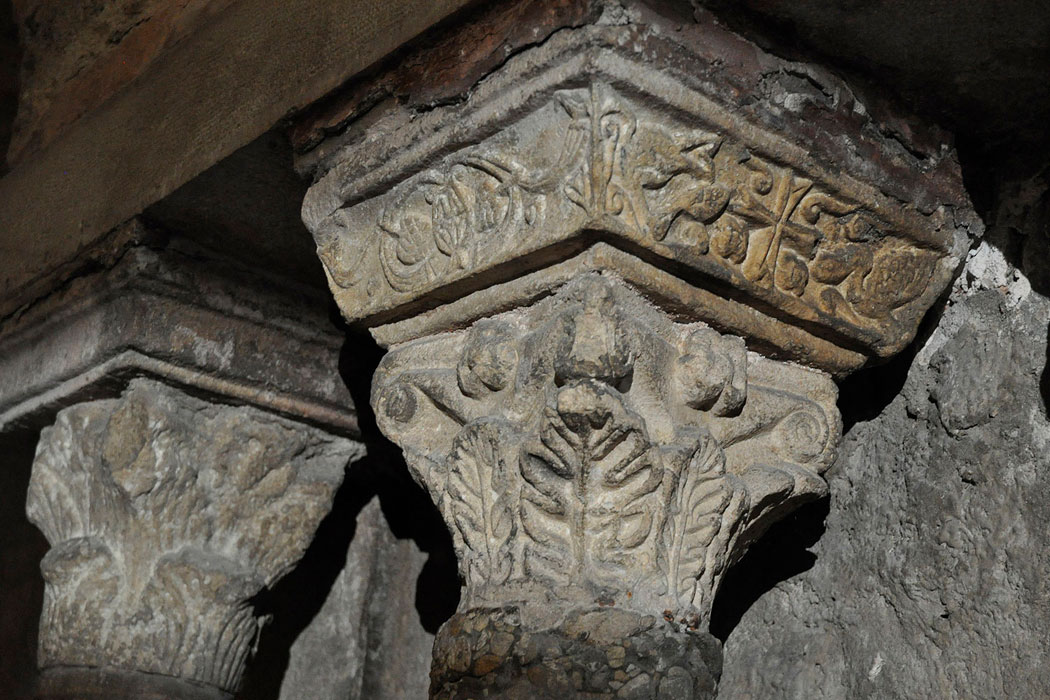
Crypt of Saint-Oyand
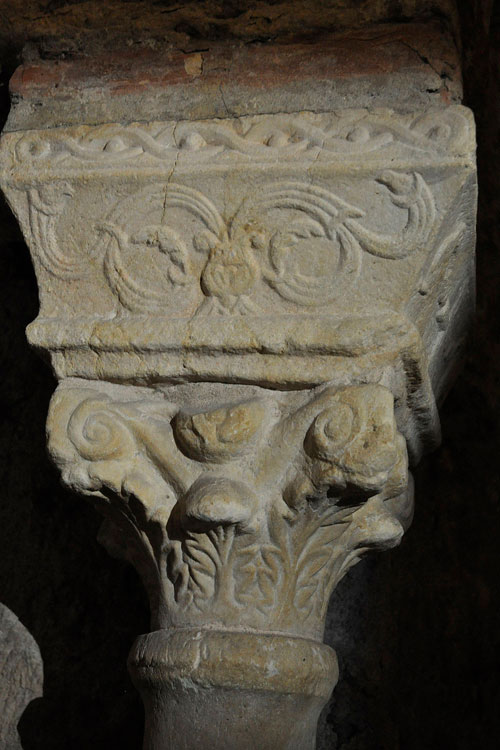
Crypt of Saint-Oyand
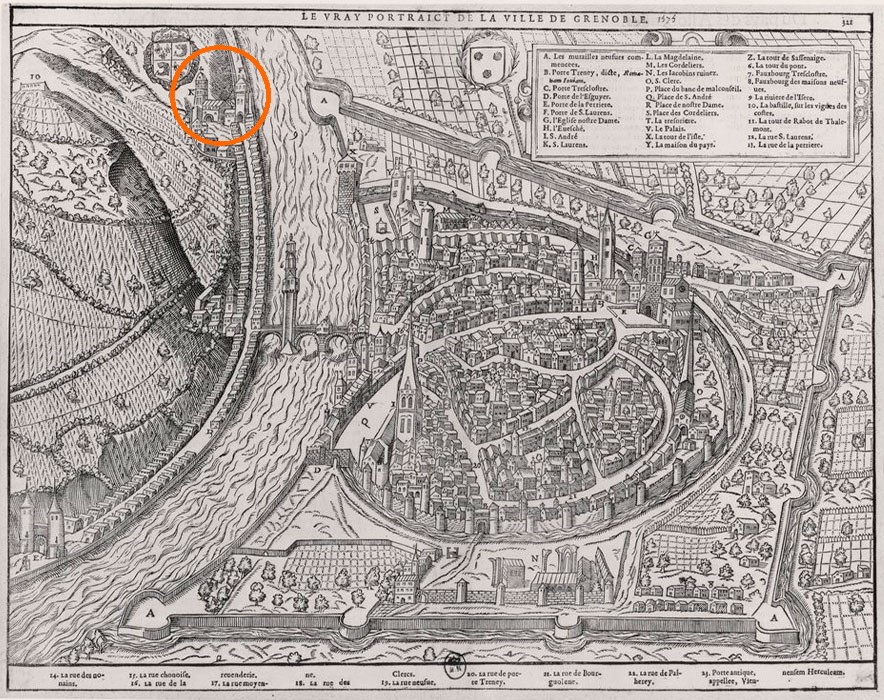
Detail of Le vray portraict de la ville de Grenoble
François de Belleforest, 1575
Bibliothèque nationale de France
- AUBERT, R. (1988). Dictionnaire d'histoire et de géographie ecclésiastiques. Vol. 22. París: Letouzey et Ané
- BESSE, J.-M.; i altres (1939). Abbayes et prieurés de l'ancienne France. Vol. 9: Province ecclésiastique de Vienne. Abbaye de Ligugé
- COLARDELLE, Renée (1996). Saint-Laurent et les cimetières de Grenoble du IVe au XVIIIe siècle. Archéologie du cimetière chrétien. ARCHEA
- COLARDELLE, Renée (2013). Saint-Laurent de Grenoble. De la crypte au musée archéologique. Grenoble: Presses universitaires de Grenoble
- COTTINEAU, Laurent-Henri (1936). Répertoire topo-bibliographique des abbayes et prieurés. Vol. 1. Mâcon: Protat
- DE GOURNAY, Radulph (1854). Sur les travaux faits à l'église St.-Laurent de Grenoble. Bulletin monumental, núm. 20. Société française d'archéologie
- PILOT DE THOREY, Jean Joseph Antoine (1864). Notice sur l'église de Saint-Laurent de Grenoble. Grenoble: Maisonville
- PILOT DE THOREY, Jean Joseph Antoine (1879). Description de l'église et de la crypte de Saint-Laurent de Grenoble. Bulletin de la Société de statistique de l'Isère, vol. XIX. Grenoble: Maisonville
- PRUDHOMME, Auguste (1888). Histoire de Grenoble. Grenoble: Gratier
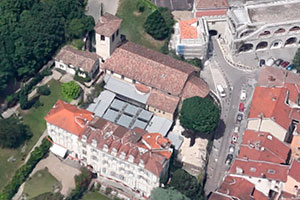
The Priory of Saint-Laurent is located to the north of the urban centre of Grenoble, on the right bank of the Isère