Lancharre Priory
Encharre / Encheria / Lencherria / Archpriory of Lancharre
(Chapaize, Saône-et-Loire)
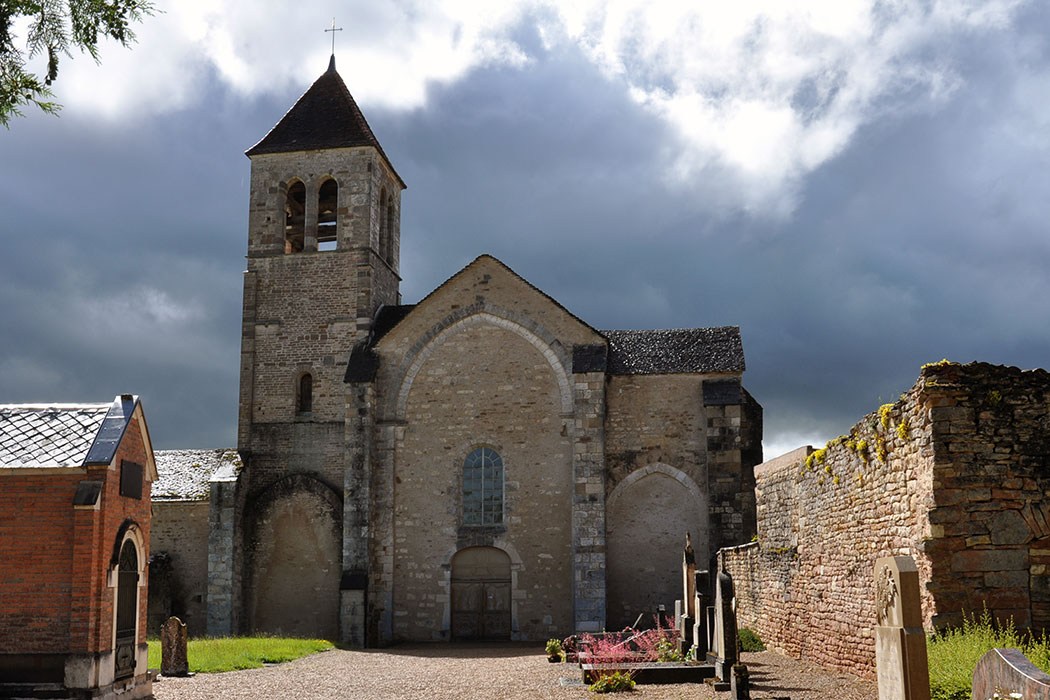


The origins of the priory of Notre-Dame de Lancharre are poorly known. The historian Courtépée placed its foundation in the 11th century and attributed it to the lords of Brancion, but neither of these claims has been confirmed. It has also been suggested that it was originally a community of canons which later adopted the Rule of Saint Benedict. It is known, however, that it was a community made up of women of the nobility, independent of any other monastery and observing customs less strict than those of other religious communities.
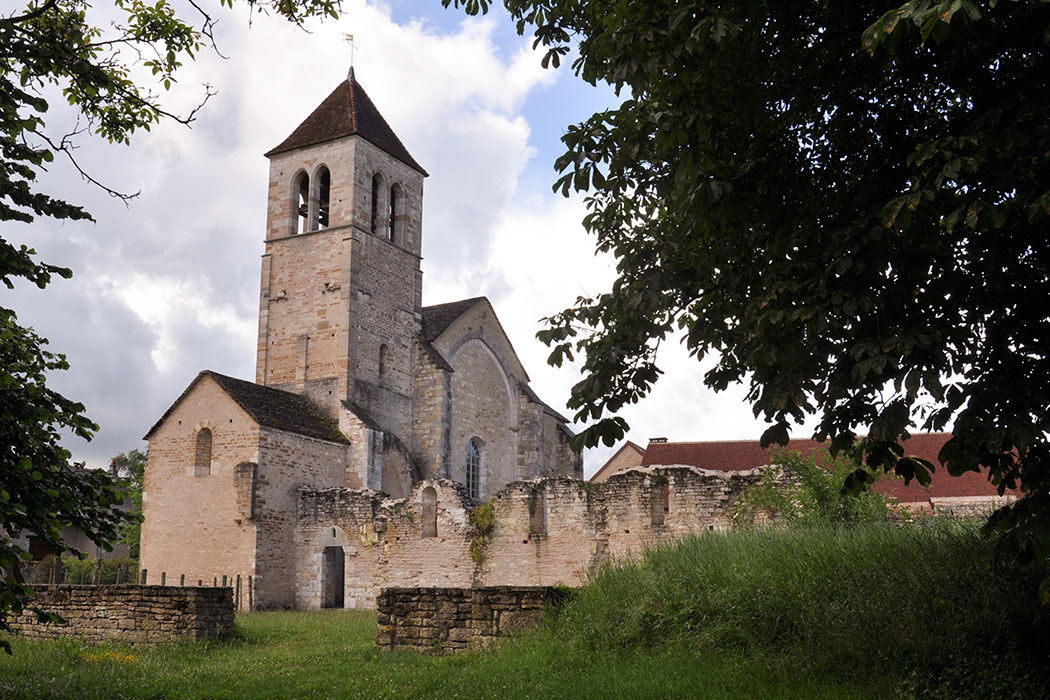
It is often referred to as the «archpriory of Lancharre», as a sign of its pre-eminence. Two priories depended on it, Lachaux and Le Puley, both located in the same department of Saône-et-Loire. Originally, it had a small three-aisled church with a transept and a single apse, an edifice dated to the 11th century. In the 13th century, perhaps when it became a Benedictine house, the church was enlarged and extensively remodelled. The earliest surviving documentation concerning the priory also dates from this period. In 1236, the name of the first known prioress, Wuillelma, appears.
During the tenure of the prioress Marie de Blé (1611-1662), the priory underwent an important transformation. On the one hand, it incorporated the community of Le Puley; it subsequently moved to Chalon-sur-Saône and finally adopted a stricter rule, not without opposition from some of the nuns. The incorporation of the priory of Le Puley was formalised in 1615. At that time, that house was in a very poor condition and was uninhabitable. The move to Chalon took place in 1626, when the nuns occupied a house belonging to the former commandery of the Temple, on the banks of the Saône, where they subsequently built a church and the conventual buildings. The move also complied with the provisions of the Council of Trent concerning women's monasteries located in isolated places.
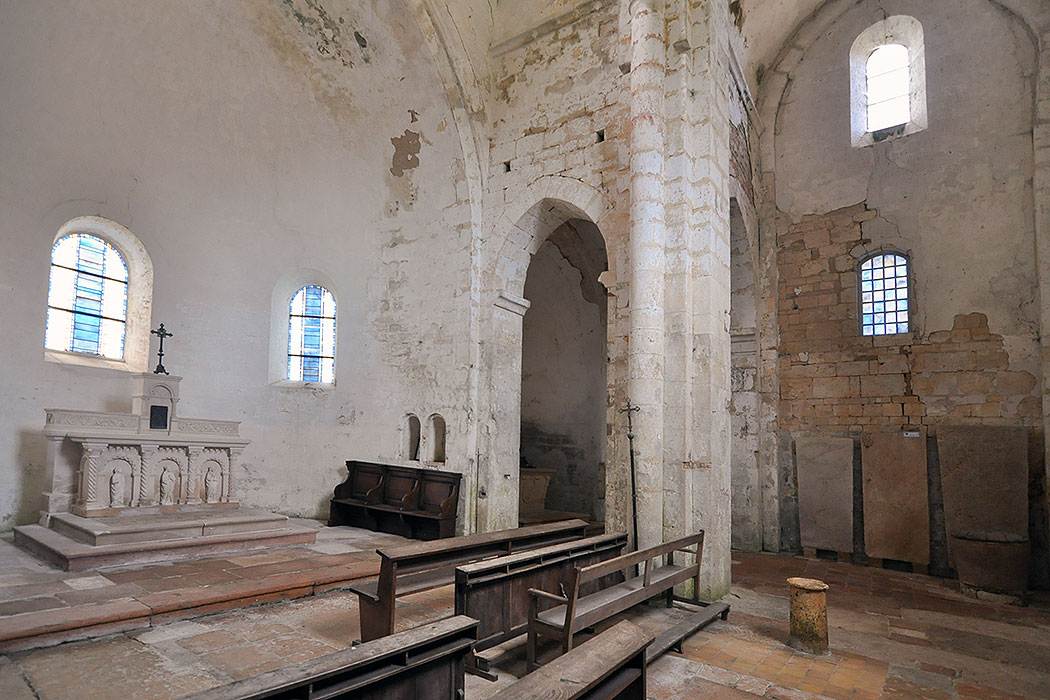
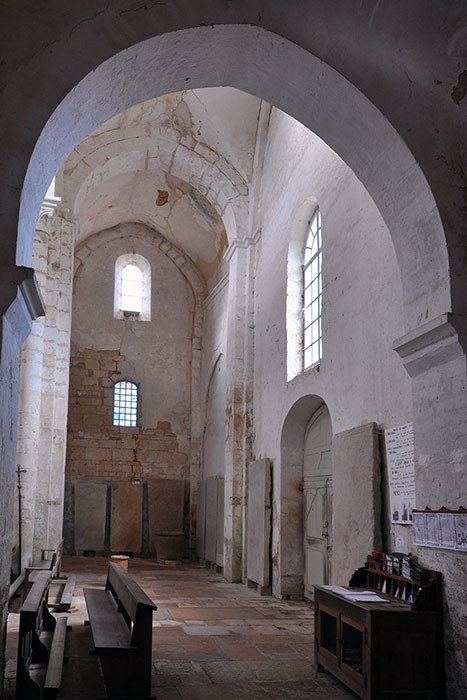
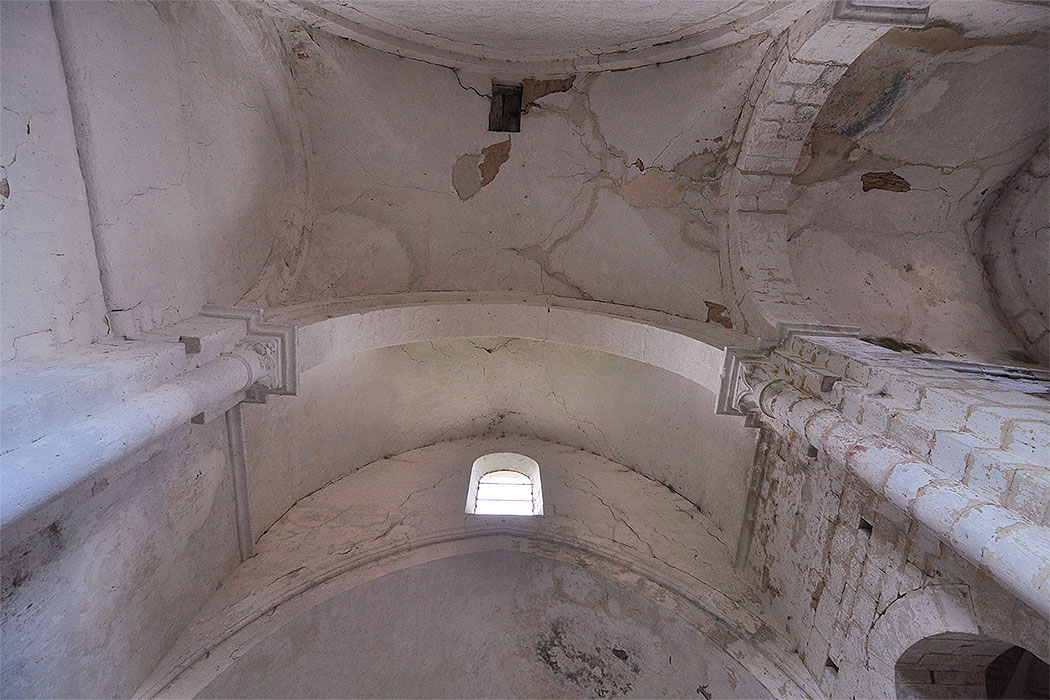
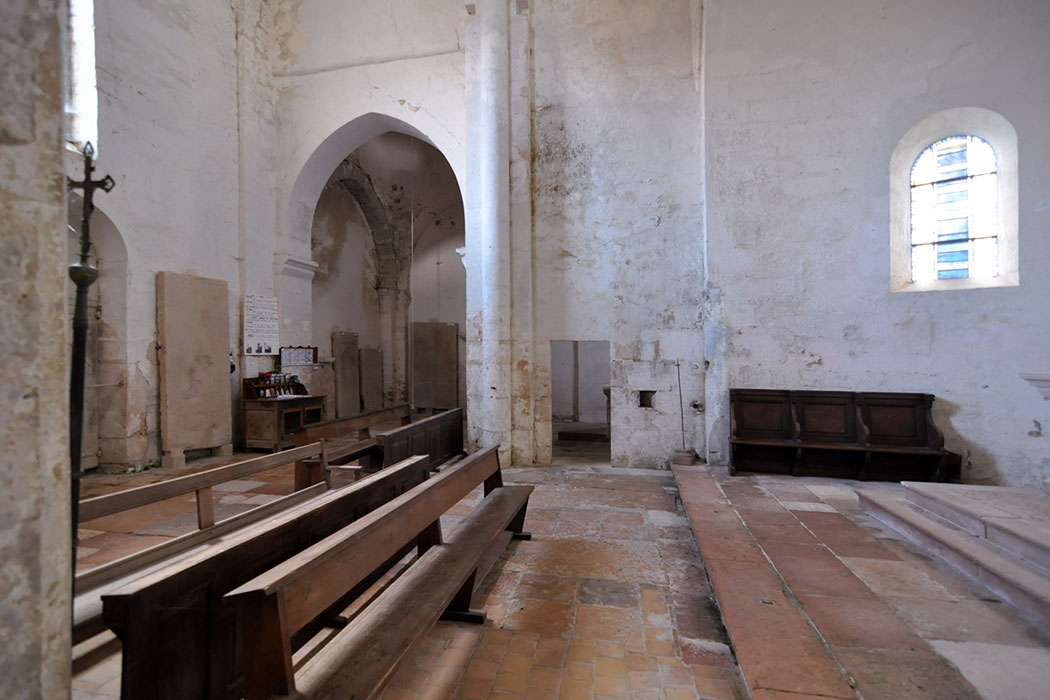
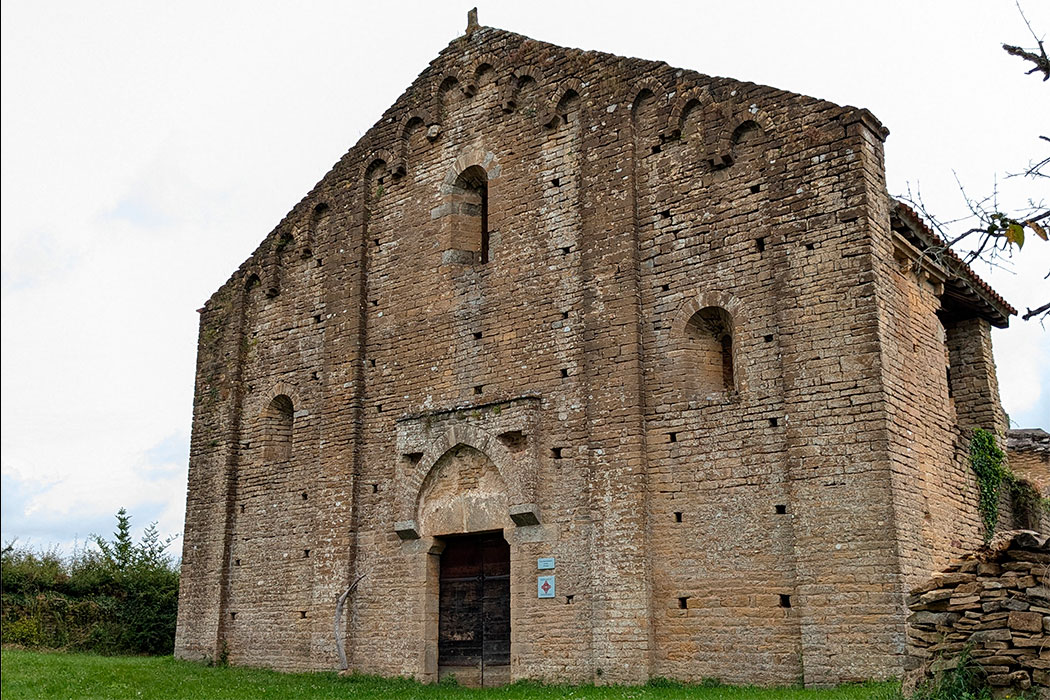
The transept, now the nave of the church
In 1666, Marie de Blé received the title of abbess, and the former priory became an abbey. The revival of communal life was significant, and the community was even able to contribute to the reform of other small houses, such as that of the Benedictine nuns of Le Villars (Saône-et-Loire). In 1789, the last abbess was appointed and, shortly afterwards, the monastery was suppressed. The community was dispersed, the establishment passed into private hands and its use changed.
As for the original priory at Lancharre, only the transept and the east end of the Romanesque church survive; the nave aisles were demolished in the 19th century because of the danger of collapse. During the 13th-century remodelling, the apse of the original building was incorporated laterally into a new east end with three apses, resulting in an irregular and asymmetrical layout. A considerable number of medieval sepulchral slabs are preserved inside.
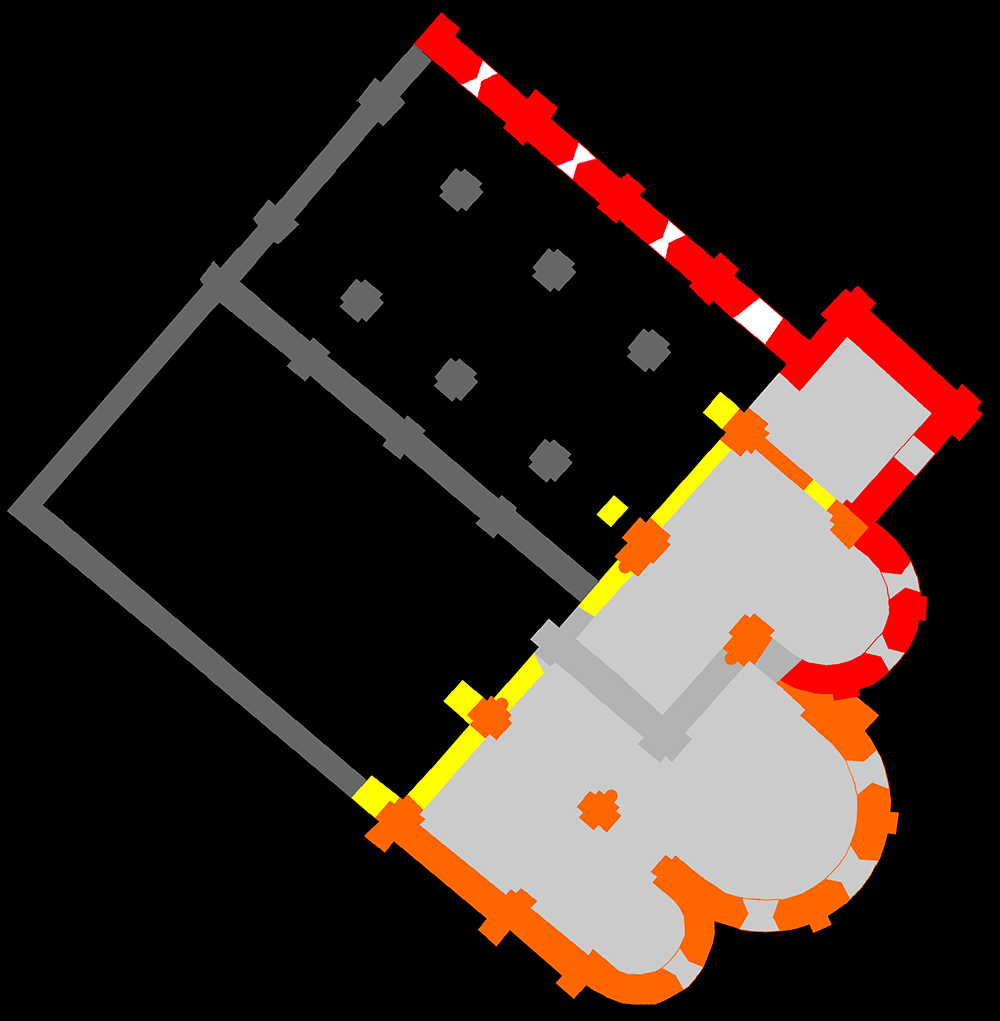
Outline of the church evolution

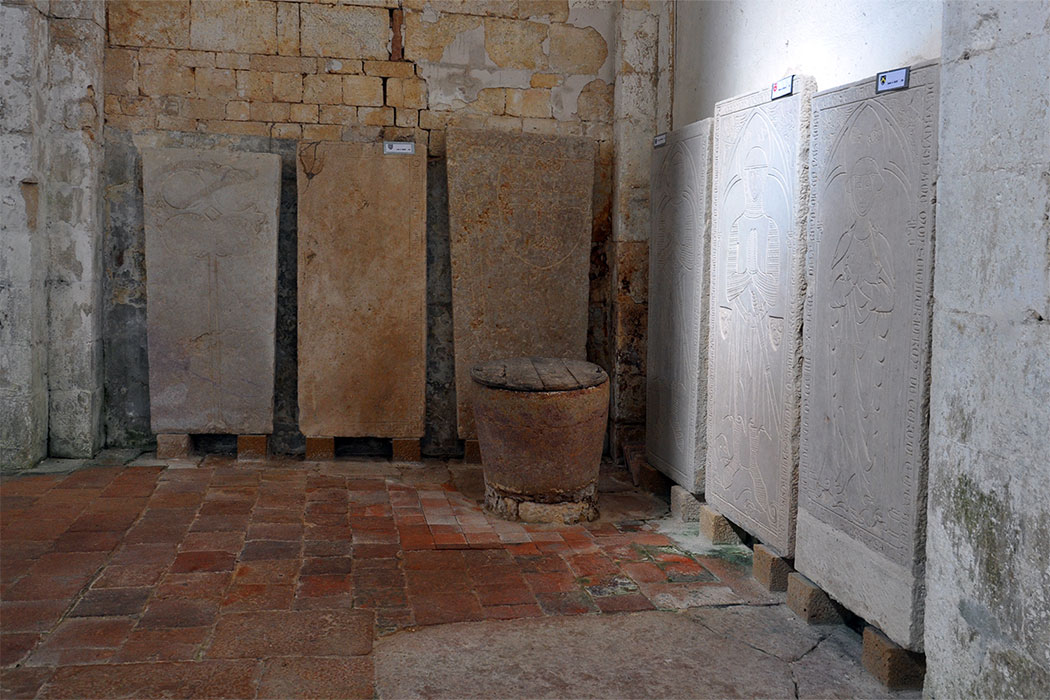
Gravestones
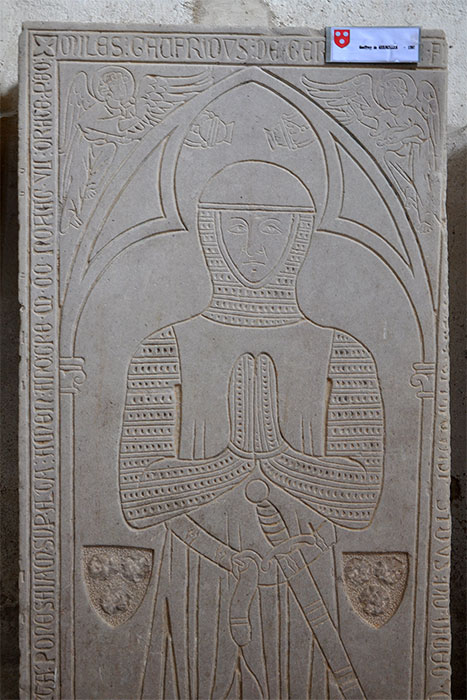
Gravestone of Geoffroy de Germolles (1297)
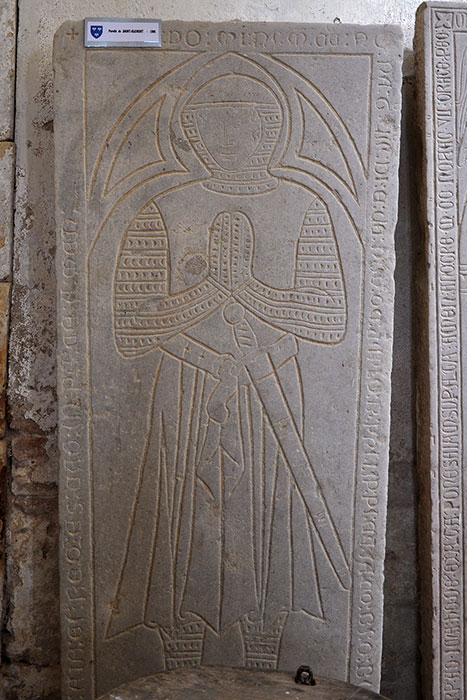
Gravestone of Parelle de Saint-Clément (1298)

Gravestone of Isabelle de Vauvry (1295)
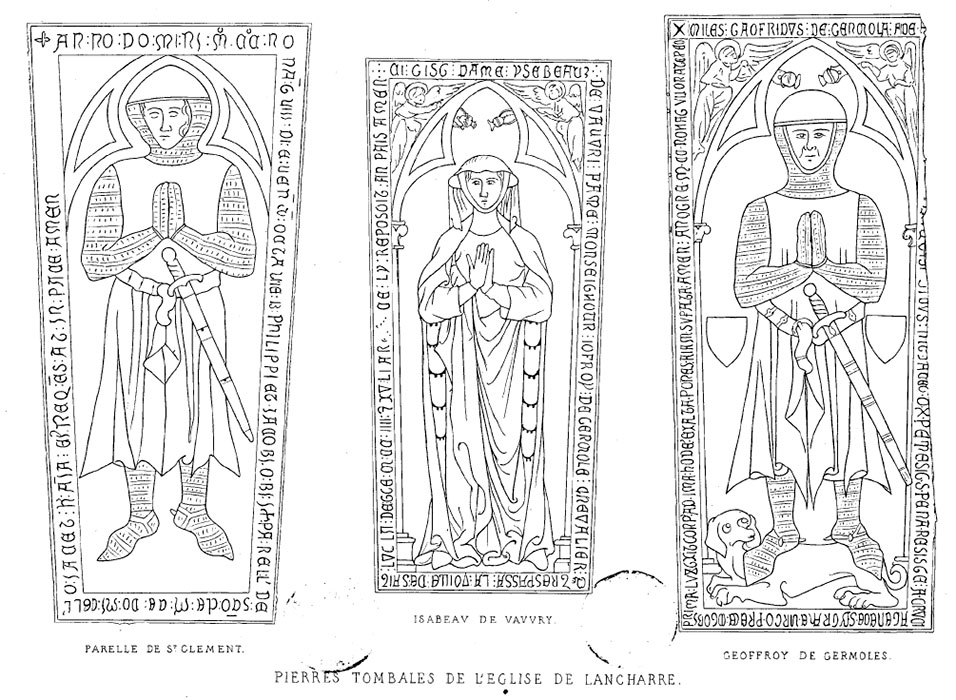
Gravestones of Parelle de Saint-Clément, Isabelle de Vauvry and Geoffroy de Germolles
Notice historique sur l'abbaye des Bénédictines de Lancharre
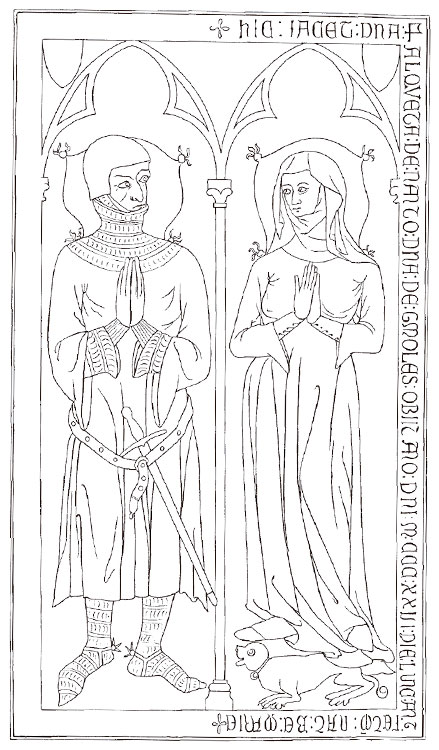
Tombstone with a knight (without inscription)
and Fauquette de Nanton (1326)
Notice historique sur l'abbaye des Bénédictines de Lancharre

According to Armorial général de France (18th century)
Bibliothèque nationale de France

The lords of Brancion are considered the founders of the priory
Dependent of Lancharre
Photo by AvidReader11663, on Wikimedia
- BABEY, Marcellin (2019). François Ier à Chalon-sur-Saône. La reconstruction de Saint-Martin de Chapaize, de Sainte-Marie de Lancharre et la genèse du château de Cormatin
- BATAULT, Henri (1854). Notice historique sur l'abbaye des Bénédictines de Lancharre et le prieuré du Puley. Mémoires de la Société d'histoire et d'archéologie de Chalon-sur-Saône. Chalon-sur-Saône: Dejussieu
- BAUDRILLART, Alfred (1953). Dictionnaire d'histoire et de géographie ecclésiastiques. Vol. 12. París: Letouzey et Ané
- COTTINEAU, Laurent-Henri (1936). Répertoire topo-bibliographique des abbayes et prieurés. Vol. 1. Mâcon: Protat
- COURTÉPÉE, Claude (ed. 1848). Description générale et particulière du Duché de Bourgogne. Vol. III. Dijon: Lagier
- DEFONTAINE, Patrick (2013). Recherches sur les prieurés réguliers, monastiques et canoniaux des anciens diocèses de Chalon et Mâcon (Xe - XIVe siècles). Université de Bourgogne
- MARTIN, J. (1904). Pierres tombales du prieuré de Lancharre. Annales de l'Académie de Mâcon. Mâcon: Protat
- PLANCHER, Urbain (1739). Histoire générale et particulière de Bourgogne, avec des notes... Dijon: Antoine de Fay
- SAINT-MAUR, Congregació de (1725). Gallia Christiana in provincias ecclesiasticas distributa. Vol. 4. París: Typographia Regia
The church of the original priory of Lancharre belongs to the commune of Chapaize, located west of Tournus