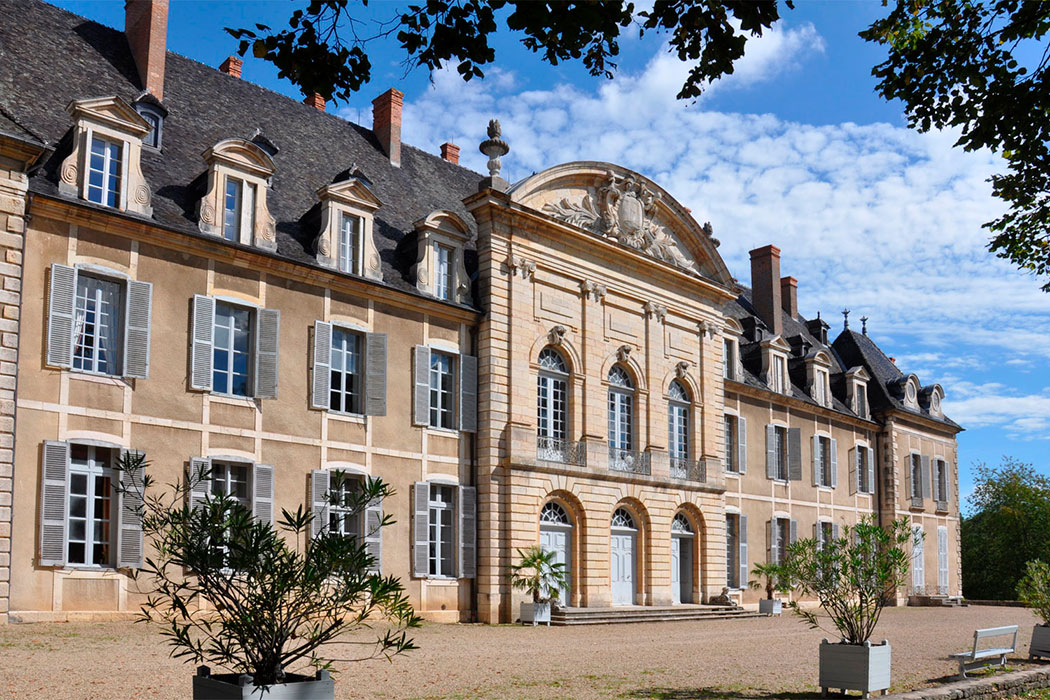

The importance of the Cistercian abbey of Notre-Dame de La Ferté lies in the fact that it was the first Cistercian foundation established from the Abbey of Cîteaux (Côte-d'Or). After an initial period of stagnation, the monastic community there developed during the abbacy of Stephen Harding, especially following the arrival of Bernard of Clairvaux. The growing number of monks made the community increasingly difficult to sustain, making the foundation of a new monastery advisable.
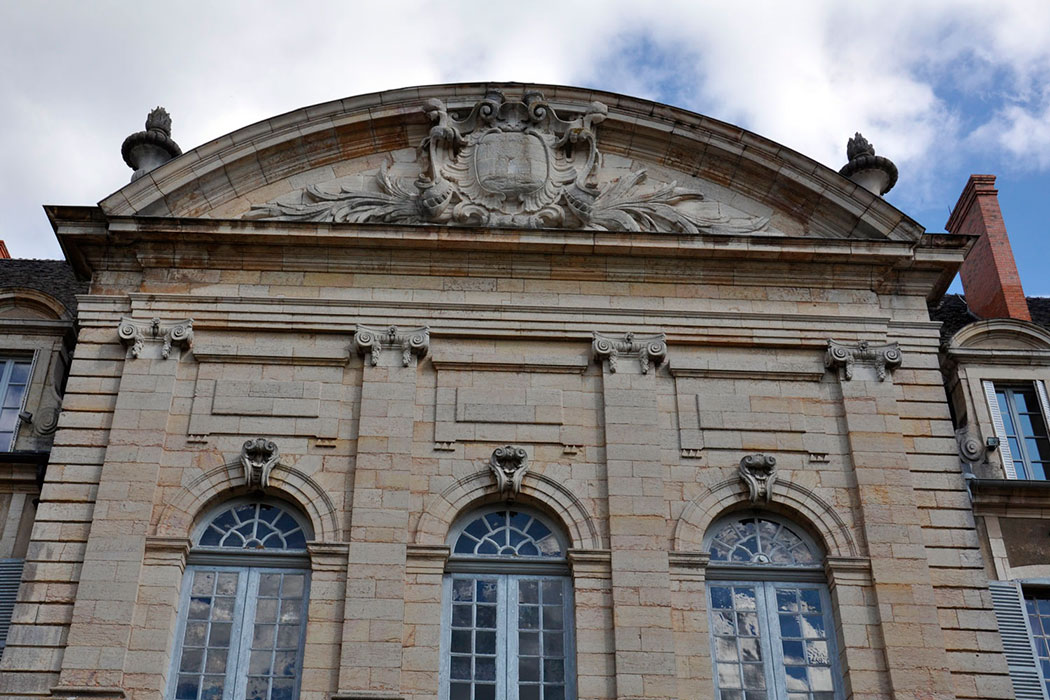
With the assistance of Gautier, Bishop of Chalon († 1121), a suitable site for the new foundation was obtained on the banks of the River Grosne, made available by the comital house of Chalon. In 1113, the first community of La Ferté left Cîteaux to settle in the new monastery, at the head of which Abbot Philibert was appointed. Initially, a chapel and several buildings intended for the monks were erected. In the following years, La Ferté received numerous donations and rapidly accumulated considerable wealth, including several granges.
Once the community had become established, its economic situation made it possible to build a new and larger church, which was completed at the beginning of the 13th century, during the abbacy of Simon. During the first years of its existence, La Ferté founded three monasteries: Maizières (Saône-et-Loire) in 1132, and two others in Italy. During the 13th century, it would still take part in the foundation of two further houses, one in Italy and the last in Lebanon.
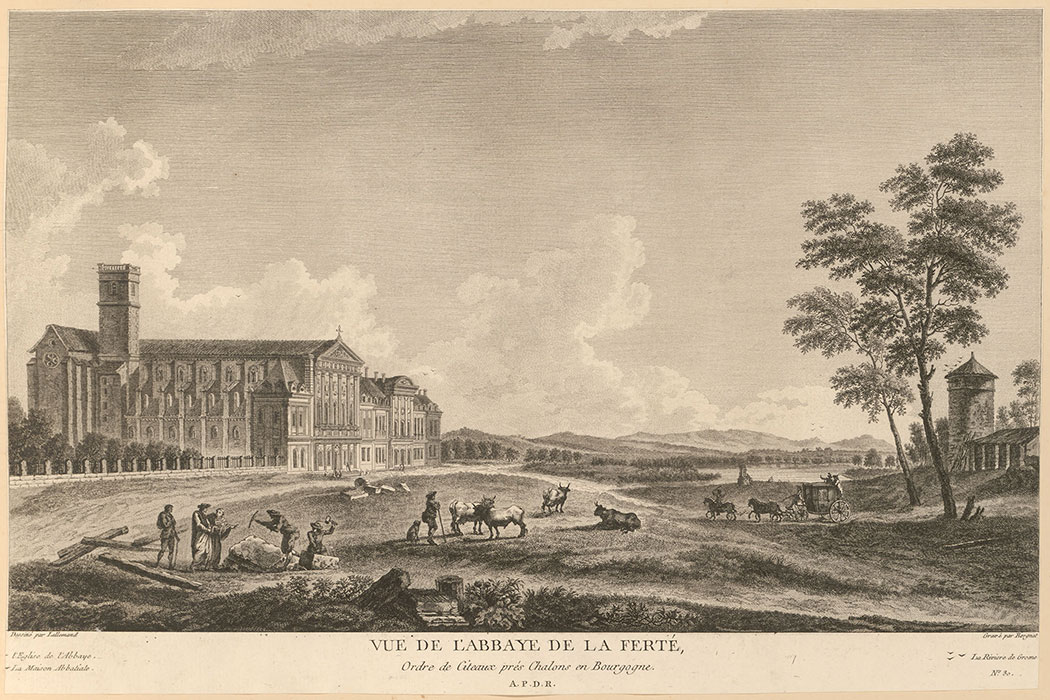
Jean-Baptiste Lallemand (18th century)
The Albertina Museum, Austria - Public Domain
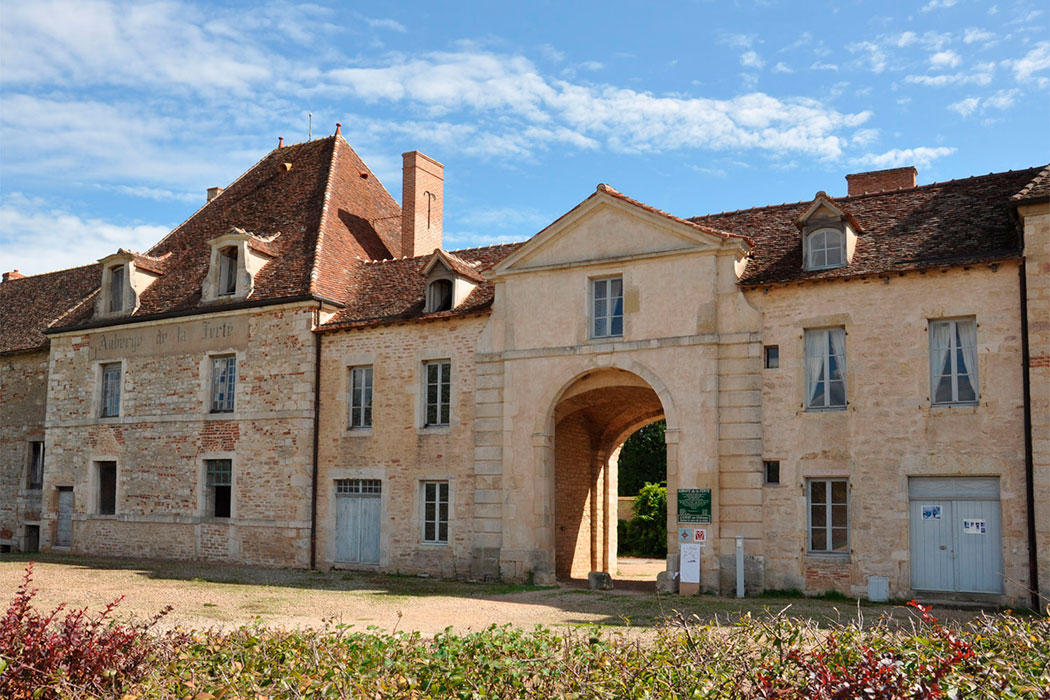
Around 1360, La Ferté fell victim to the mercenaries known as routiers, who were ravaging the region. At the beginning of the 15th century, the abbey was fortified. The period of instability was repeated during the Wars of Religion, in 1562, 1567 and, especially, in 1570, when the monastery was plundered by the troops of Admiral Coligny. The abbey was restored during the abbacy of Claude Petit (1677-1710). It was suppressed in 1790 during the Revolution, when its community still numbered fourteen religious. The site was sold, after which the church and monastic buildings were demolished. Only the abbatial palace, dating from the 17th and 18th centuries, and a few secondary structures survived.
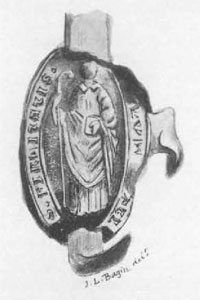
Seal of Abbot Hugues (1317)
Illustration from Notice historique sur l'abbaye de La Ferté-sur-Grosne (1895)
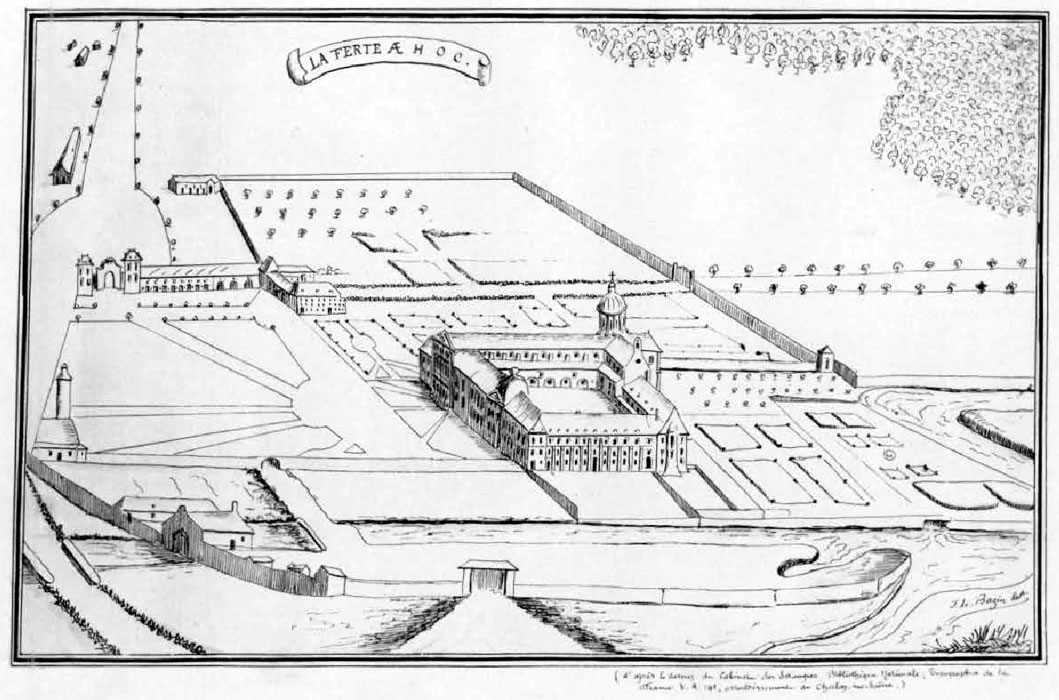
Illustration from Notice historique sur l'abbaye de La Ferté-sur-Grosne (1895)
Affiliation of La Ferté
According to Originum Cisterciensium (L. Janauschek, 1877)La Ferté Abbey / 1113
Tiglieto Abbey (Liguria) / 1120
Santa Maria de Lucedio Abbey (Piedmont) / 1124
Maizières Abbey (Saône-et-Loire) / 1132
Barona Abbey (Lombardy) / 1210
Sanctus Sergius Abbey (Lebanon) / 1235

According to Armorial général de France (18th century)
Bibliothèque nationale de France
- BAZIN, Louis (1895). Notice historique sur l'abbaye de La Ferté-sur-Grosne. Mémoires de la Société d’Histoire et d’Archéologies de Chalon-sur-Saone. Vol. VIII. Chalon-sur-Saone. Marceau
- COTTINEAU, Laurent-Henri (1936). Répertoire topo-bibliographique des abbayes et prieurés. Vol. 1. Mâcon: Protat
- GUÉRIN, Paul (1888). Les Petits Bollandistes. Vies des saints. Vol. 4. París: Bloud et Barral
- HÉLIAS-BARON, Marlène (2004). Chronologie des quatre premières filles de Cîteaux. La Ferté-sur-Grosne, Pontigny, Clairvaux et Morimond. Éditions de la Sorbonne: Hypothèses
- JANAUSCHEK, Leopoldus (1877). Originum Cisterciensium. Vol. 1. Viena
- MARTÈNE, Edmond; i altres (1717). Voyage littéraire de deux religieux bénédictins de la congrégation de Saint-Maur. 1ª part. París: Delaulne
- SAINT-MAUR, Congregació de (1725). Gallia Christiana in provincias ecclesiasticas distributa. Vol. 4. París: Typographia Regia
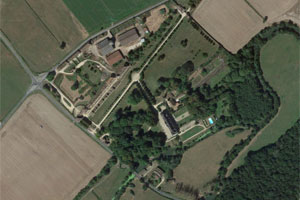
The abbatial palace, the only notable surviving remains of La Ferté, stands within the territory of Saint-Ambreuil, south of Chalon-sur-Saône