

The Cluniac priory of Saint-Étienne of Nevers may have originated in a nunnery founded around 610 by Saint Columbanus (c. 540–615), mentioned in the account of his Vita. This foundation was known only indirectly through later documents, but in 1974 remains of a Merovingian-period occupation were found in the church of Saint-Étienne, including several sarcophagi and fragments of mosaic, one of which depicts Saint Columbanus. These discoveries lend credibility to the tradition of an early Columbanian establishment, although they do not allow its nature to be established with certainty.
After the extinction of this first community, in 1063 Bishop Hugues II of Nevers (d. 1065) and Count Guillaume I of Nevers (d. 1098) promoted the restoration of Saint-Étienne and established a community of Augustinian canons there, which was short-lived. In 1068, Bishop Mauguin (d. 1074), with the consent of Count Guillaume I, gave Saint-Étienne to the Abbey of Cluny (Saône-et-Loire). From then on, the rebuilding of the establishment began, together with its transformation into a Cluniac house.
In 1090, Count Guillaume I generously endowed the priory, but the definitive foundation and endowment of the house was formalized in 1097. On that occasion, which also recorded the earlier donations, the church was consecrated, probably before it was completely finished. The charter, dated 13 December, was issued by Count Guillaume in the presence of Abbot Hugues of Cluny and Bishop Gui of Nevers, together with other prelates from the region. In 1420, during the Hundred Years’ War, a fire destroyed the monastic buildings, but the church was spared. After suffering the effects of the plague, the first commendatory prior, François Le Bourgoin, was appointed in 1534. The priory remained active until the Revolution, when its community consisted of five religious.

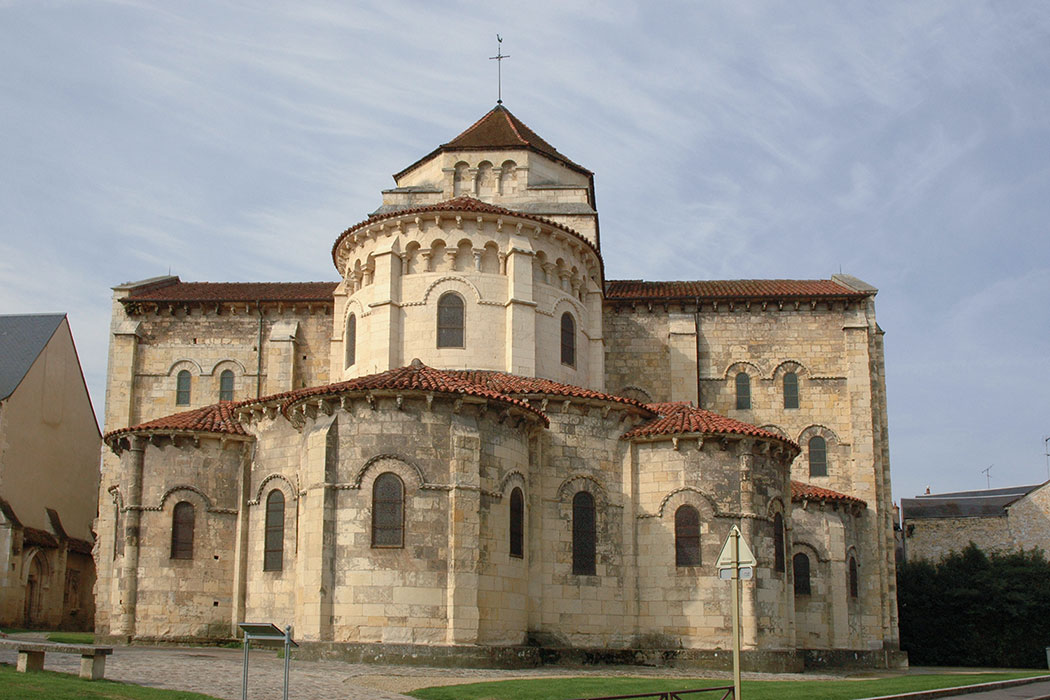
Exterior of the transept
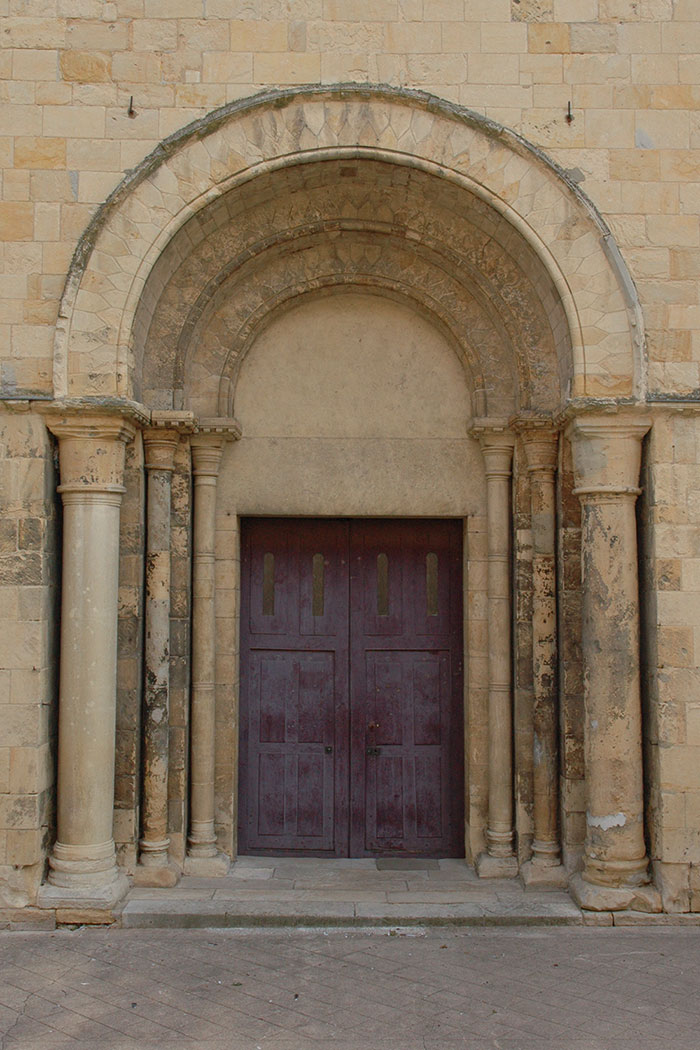
Western portal
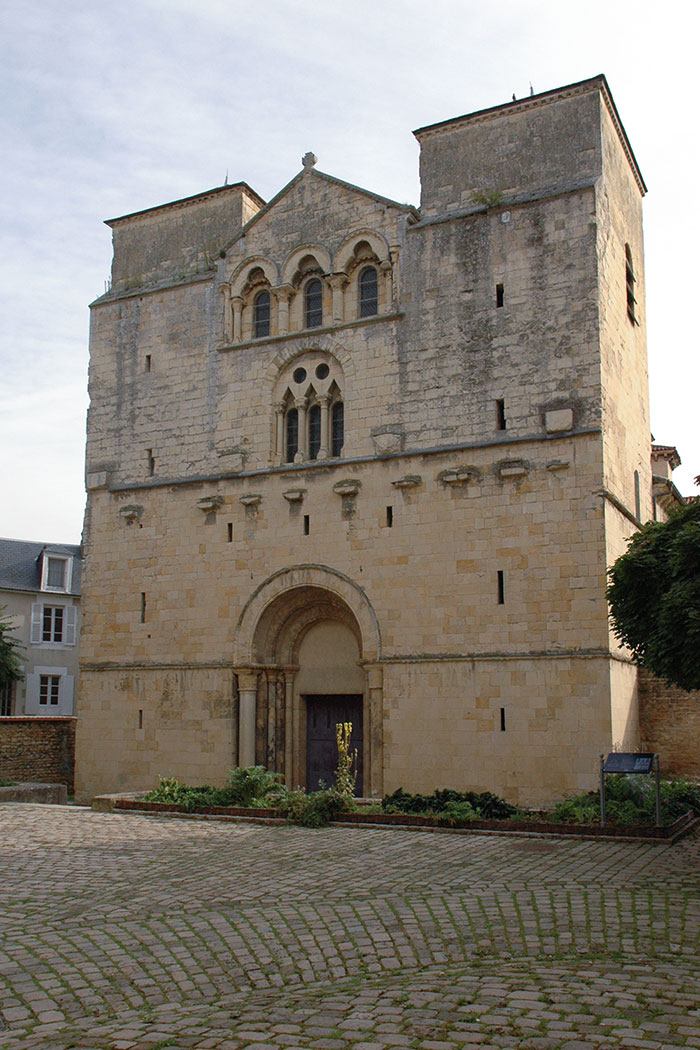
A notable Romanesque church survives, now serving as a parish church. It has three aisles, a transept and an eastern end consisting of a central apse surrounded by an ambulatory with three radiating chapels. Each arm of the transept also has an apsidal chapel. A bell tower rises above the crossing. The building was constructed between 1068 and 1097 and, although it was probably not yet completely finished at the time of its consecration, its main structure must already have been defined. It subsequently underwent several modifications. In the 12th century a narthex was added in front of the western façade; it was destroyed in 1792, together with the three Romanesque bell towers. Only the lower parts of the two towers flanking the façade survive.


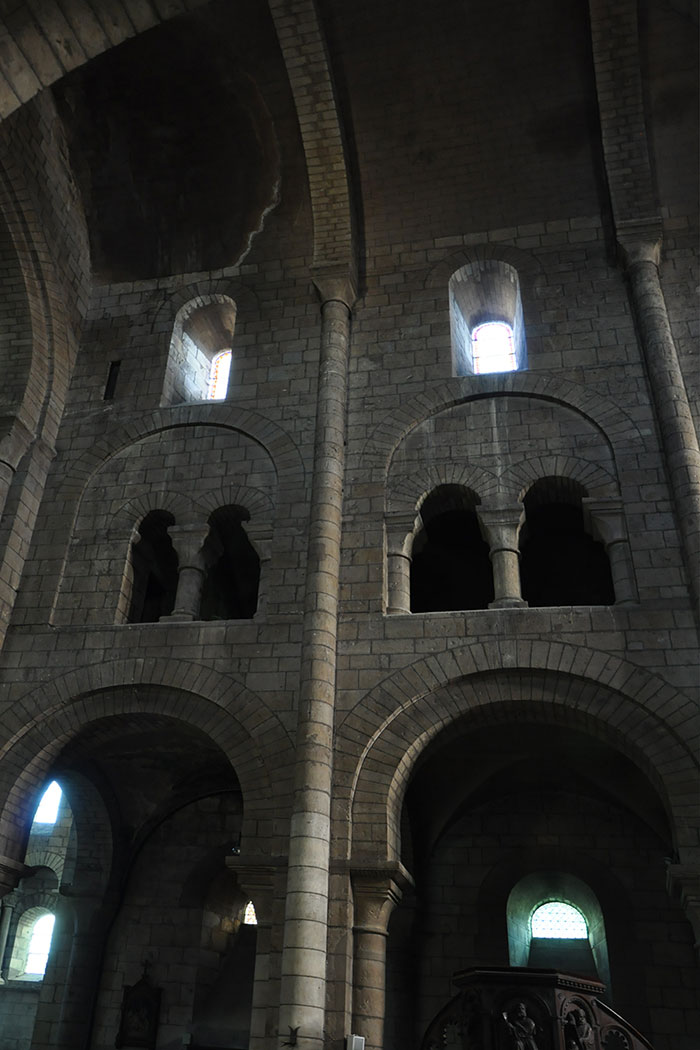
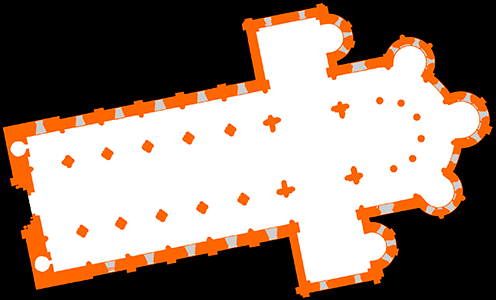
Schematic plan of the church
- BOUCHACOURT, M. (1922). Le Prieuré Saint-Étienne à Nevers. Historique. Bulletin de la Société nivernaise des lettres, sciences et arts. Nevers
- BROSSE, Jacques; i altres (1966). Dictionnaire des églises de France. II, Centre et Sud-Est. Robert Laffont
- COTTINEAU, Laurent-Henri (1939). Répertoire topo-bibliographique des abbayes et prieurés. Vol. 2. Mâcon: Protat
- CROSNIER, Augustin-Joseph (1877). Les congrégations religieuses dans le diocèse de Nevers. Vol. 1. Nevers: Michot
- DUPONT, Jean (1976). Nivernais, Boubonnais roman. La nuit des temps, núm.45. Zodiaque, 1976
- FISQUET, Honoré (1873). La France pontificale (Gallia christiana). Sens. París: Repos
- LESPINASSE, René de (1908). Les chartes de Saint-Étienne de Nevers. Bulletin de la Société nivernaise des lettres, sciences et arts. Nevers: Mazeron
- SAINT-MAUR, Congregació de (1770). Gallia Christiana in provincias ecclesiasticas distributa. Vol. 12. París: Typographia Regia
- SALET, Francis (1967). Saint-Étienne de Nevers. Congrès archéologique de France. 125ss. Nivernais. Société française d'archéologie
- VIEILLARD-TROIEKOUROFF, May (1980). Trois sarcophages mérovingiens découverts à Saint-Étienne de Nevers en janvier 1974. Bulletin Monumental
- VIOLLET-LE-DUC, Eugène (1875). Dictionnaire raisonné de l'architecture francaise. Vol. 7. París: Morel
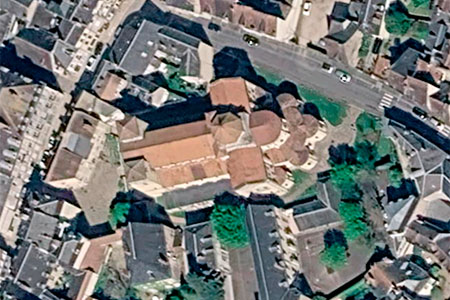
The parish church of Saint-Étienne is located in the historic centre of the city of Nevers