Paray-le-Monial Priory
Val d’Or / Aurea Vallis / Orval / Paredum / Sacré-Cœur Basilica
(Paray-le-Monial, Saône-et-Loire)
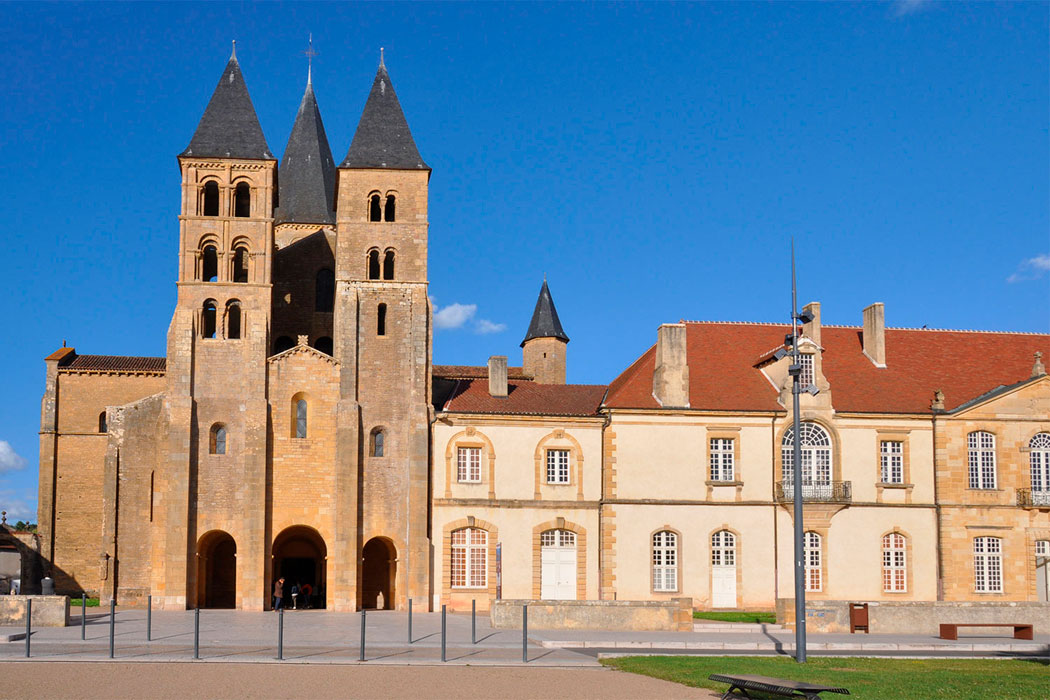
Sacré-Cœur Basilica


The present Basilica of the Sacré-Cœur at Paray-le-Monial originated as an ancient monastery, founded in 970 on a hill near the present site by Count Lambert of Chalon († 978). The foundation was indirectly supported by Maiolus, Abbot of Cluny (910-994), who was his friend. In 973 construction began on this first monastery which, despite its connection with Cluny, was not placed under its authority and retained the character of a traditional Benedictine establishment, known as Val d’Or.

The church was consecrated in 977. At that time, the founder endowed it with property, churches and other rights, and brought there the relics of Saint Grat, a seventh-century bishop of Chalon. Shortly afterwards, before the end of the century, the monastery was moved to the lower part of the valley, beside the Bourbince River. Lambert’s son, Count Hugh I of Chalon (c. 970-1039), was appointed Bishop of Auxerre in 999 and, that same year, attached the monastery founded by his father to Cluny Abbey, then under the direction of Abbot Odilo (c. 962-1048). From then on, it became a Cluniac priory. The donation was confirmed that same year by Robert II the Pious (972-1031).
At the beginning of the eleventh century, a new church preceded by a porch was built and consecrated in 1004. This building was replaced by a new structure, built during the twelfth century from the east end towards the porch. The narthex of the primitive church was retained, thus forming the remarkable building that survives today, with some modifications. Its plan shows that the nave and aisles are short in relation to their width and that the building was probably never completed to its full length. This has been associated with the instability of the ground caused by the proximity of the river, with possible funding problems, or with a combination of both factors.
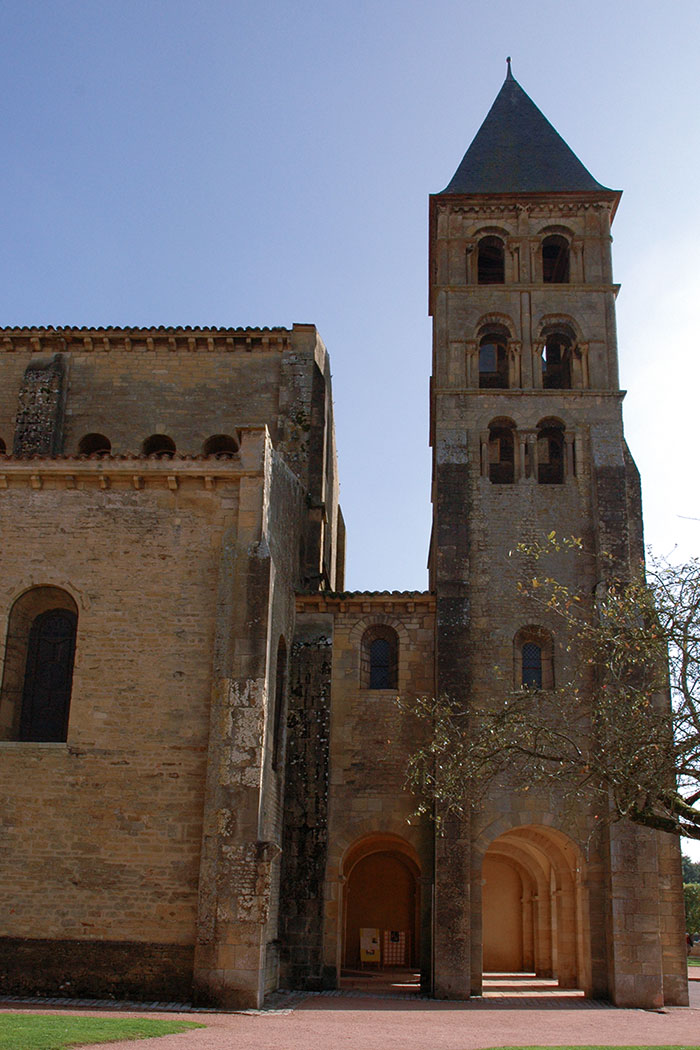
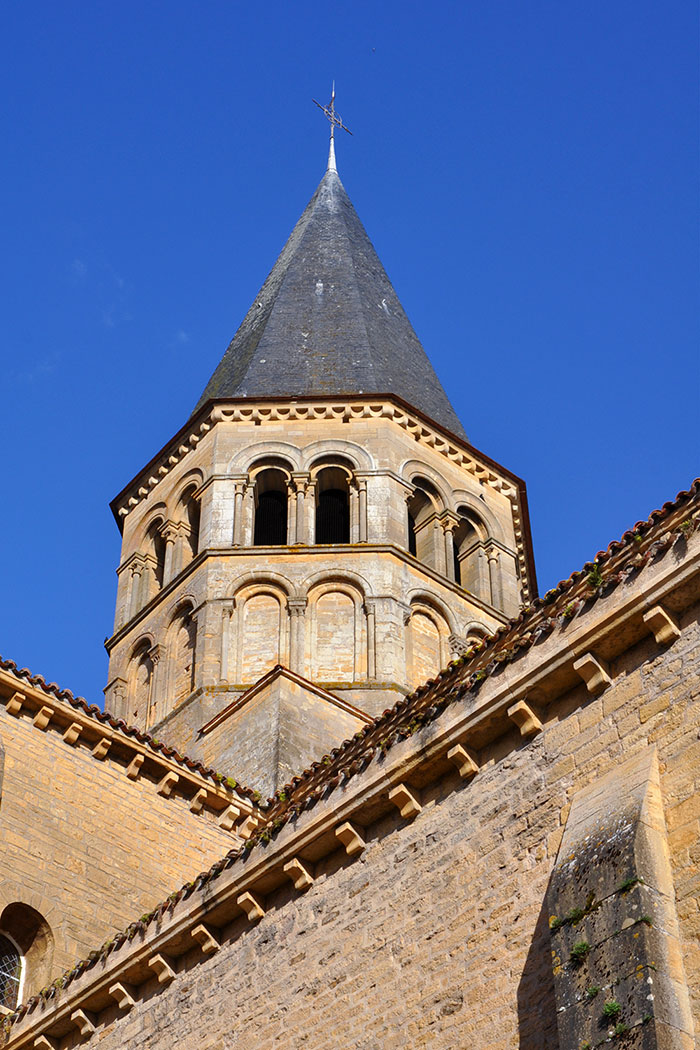
Tower over the crossing
In any event, construction had been completed by the beginning of the thirteenth century. Until the beginning of the fourteenth century, the priory enjoyed a period of prosperity, with a community of more than twenty monks. The proximity of the great abbey of Cluny affected its development, favourably in some respects but negatively in others. Signs of decline appeared in the fourteenth century and, in addition to the poor condition of the buildings, Cluny decided in 1344 to take charge of the priory’s economic affairs. This economic dependence on Cluny continued until the revolutionary period, despite opposition from the community.
In the last quarter of the fifteenth century, the priory and the town of Paray suffered the effects of the Hundred Years’ War and, later, of the Wars of Religion in the second half of the sixteenth century, particularly in 1562. The state of neglect persisted, but the monastic buildings were nevertheless renewed between 1702 and 1747. They were erected over the former medieval monastery, which disappeared. The Revolution brought communal life at the site to an end: the priory was suppressed in 1790, the last monks left in 1791 and, that same year, the complex was acquired by the municipality.
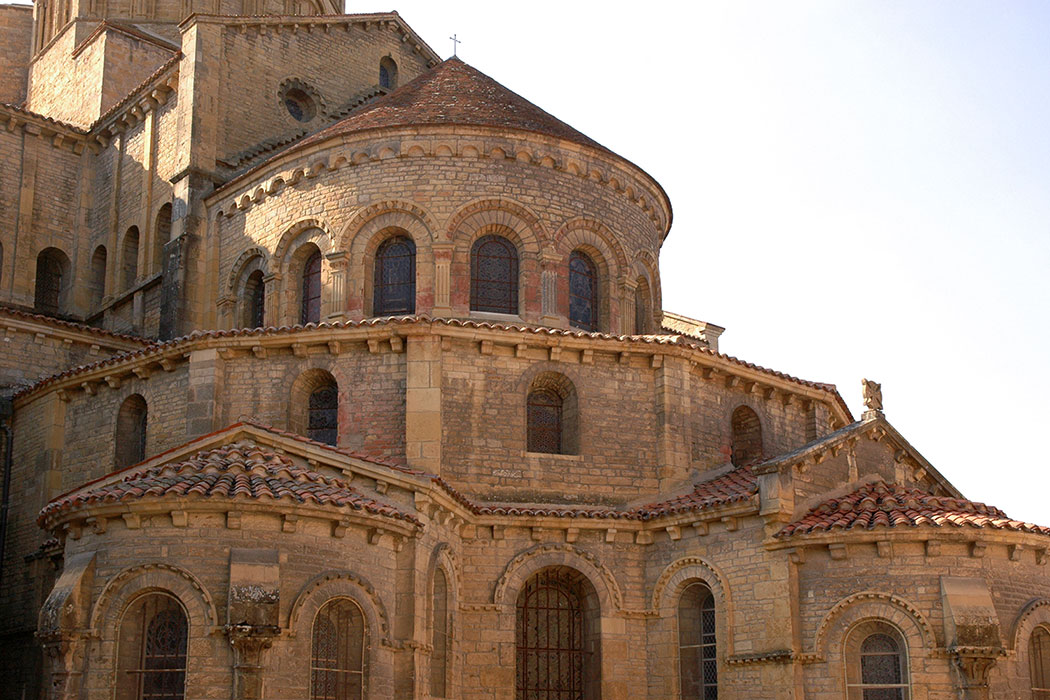
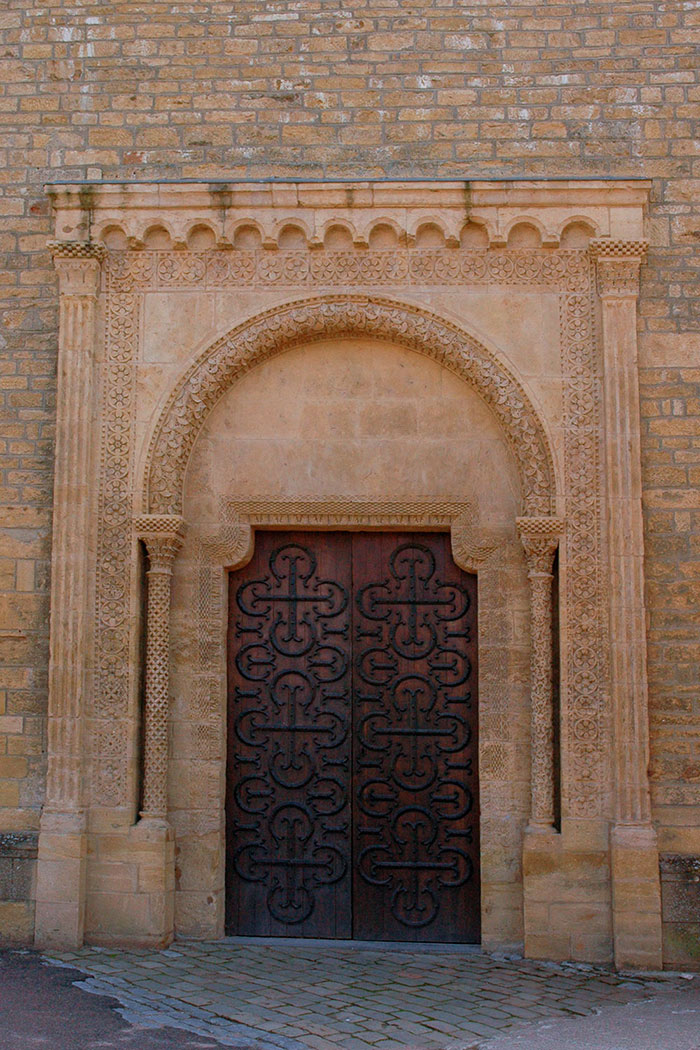
North portal of the transept
After a period of uncertainty, the church resumed its functions in 1801, despite its poor state of preservation. Its recovery was made possible by its designation as a Historic Monument in 1842 and by the restoration work that followed. In 1875 it was granted the status of minor basilica and the dedication of the Sacré-Cœur. The most important building in the complex is the monastic church, a Romanesque construction built from the end of the eleventh century to the beginning of the thirteenth century, adjoining the monastery built in the eighteenth century. The church has been restored but retains its medieval structures.
Initially, a single-nave church with a transept is thought to have been built, with an east end consisting of three apses opening onto the central nave, complemented by two further apses, one in each arm of the transept. The church also had a porch or narthex attached to the western façade. Very soon, during the twelfth century, the church was enlarged, with a new three-aisled building, transept and east end being constructed around it. The east end consisted of the chancel, provided with an ambulatory and three radiating chapels. There are two further apses, one in each arm of the transept, one of which was rebuilt in the fifteenth century. The primitive narthex survives.

Narthex with the west portal
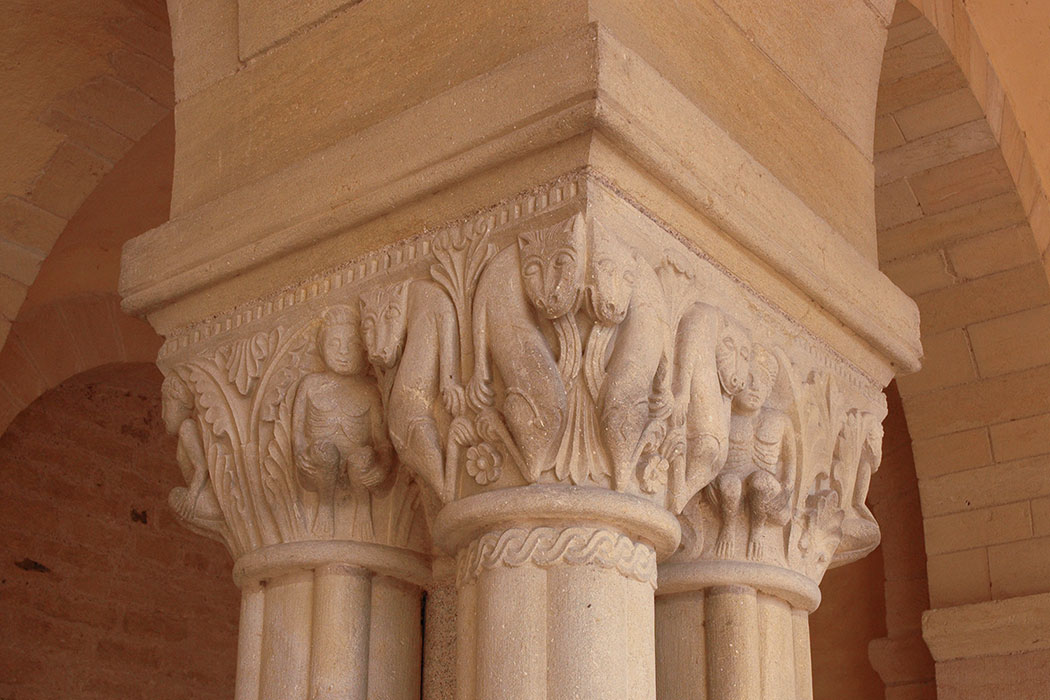
Narthex capitals
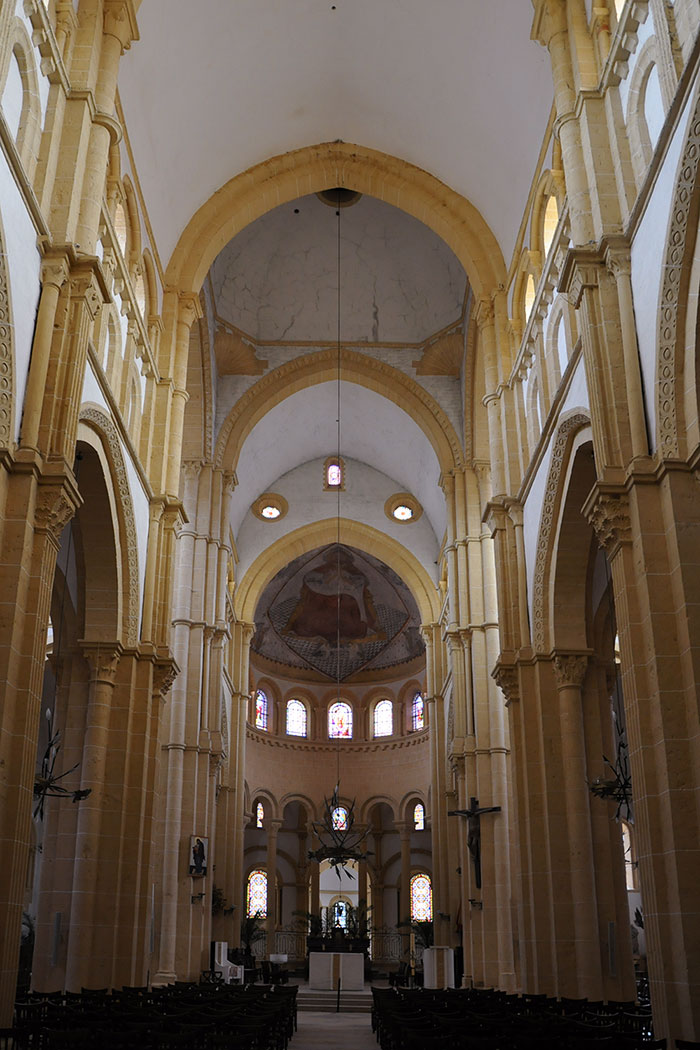
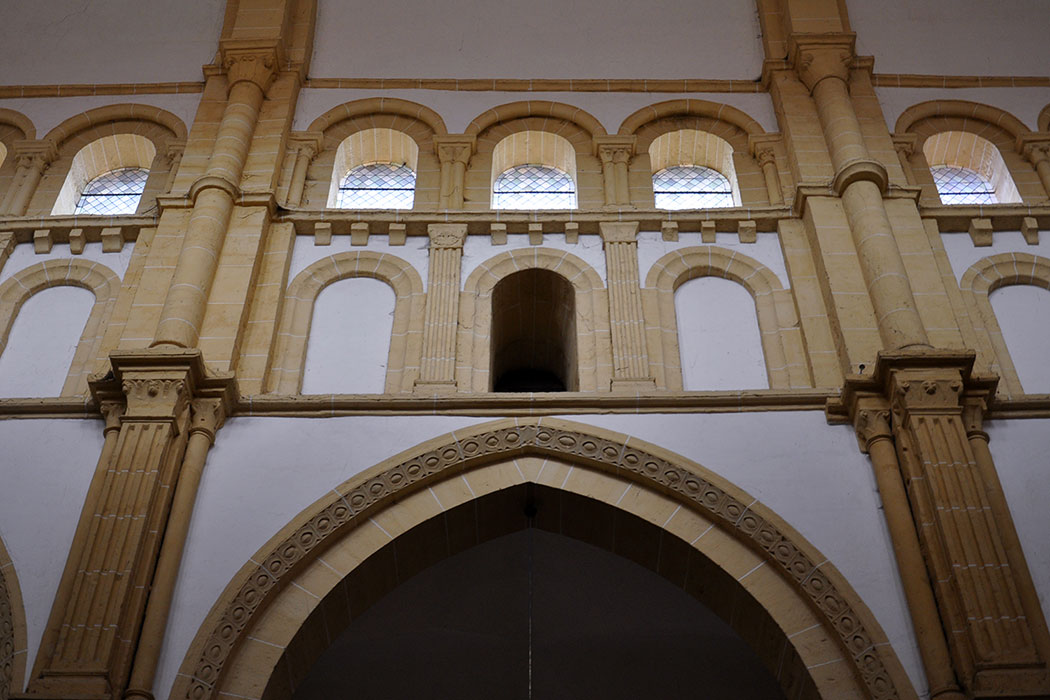
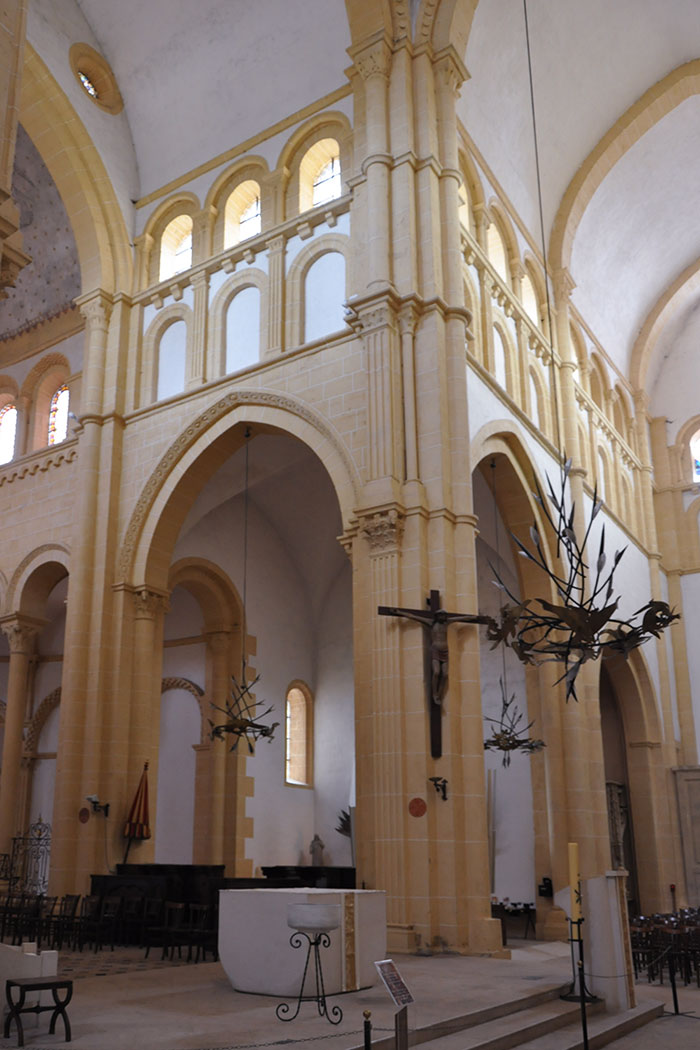
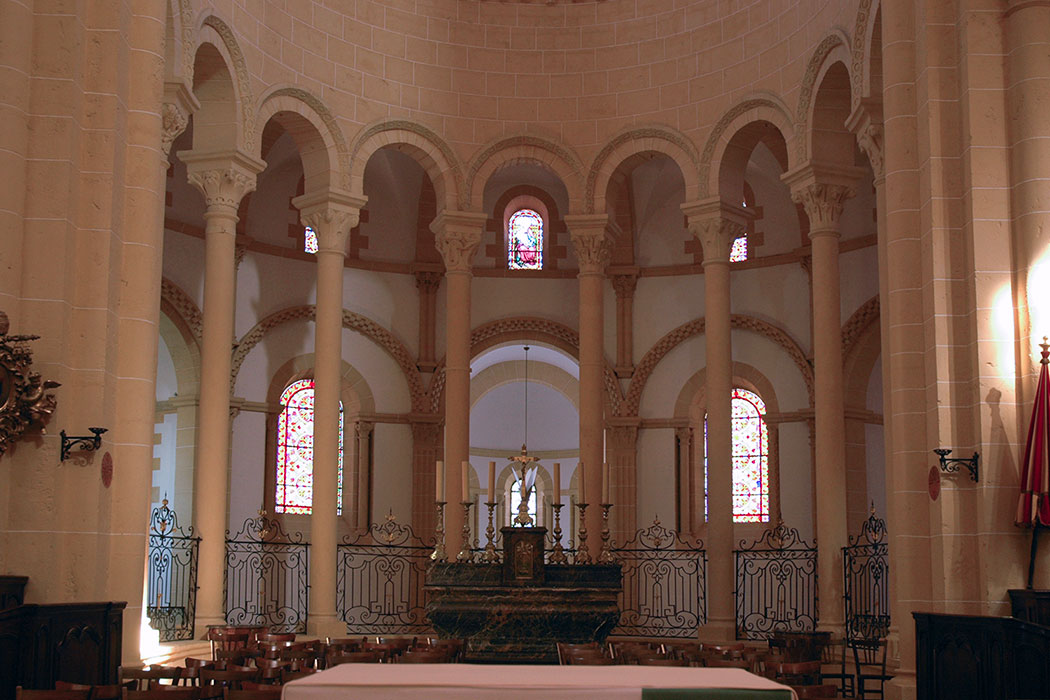
Chancel
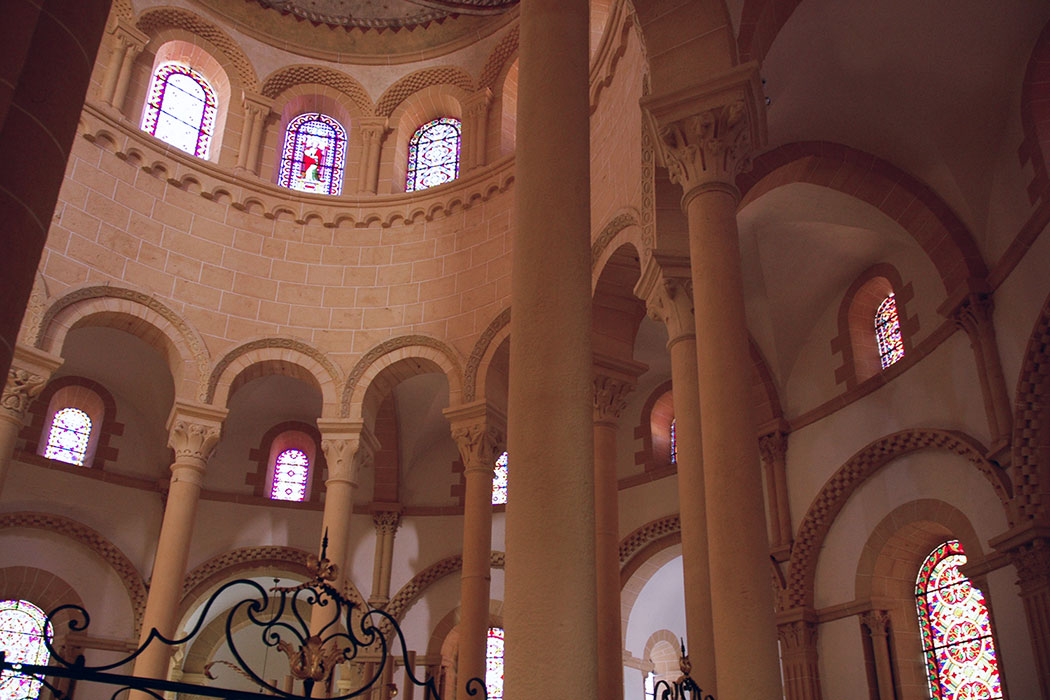
Chancel
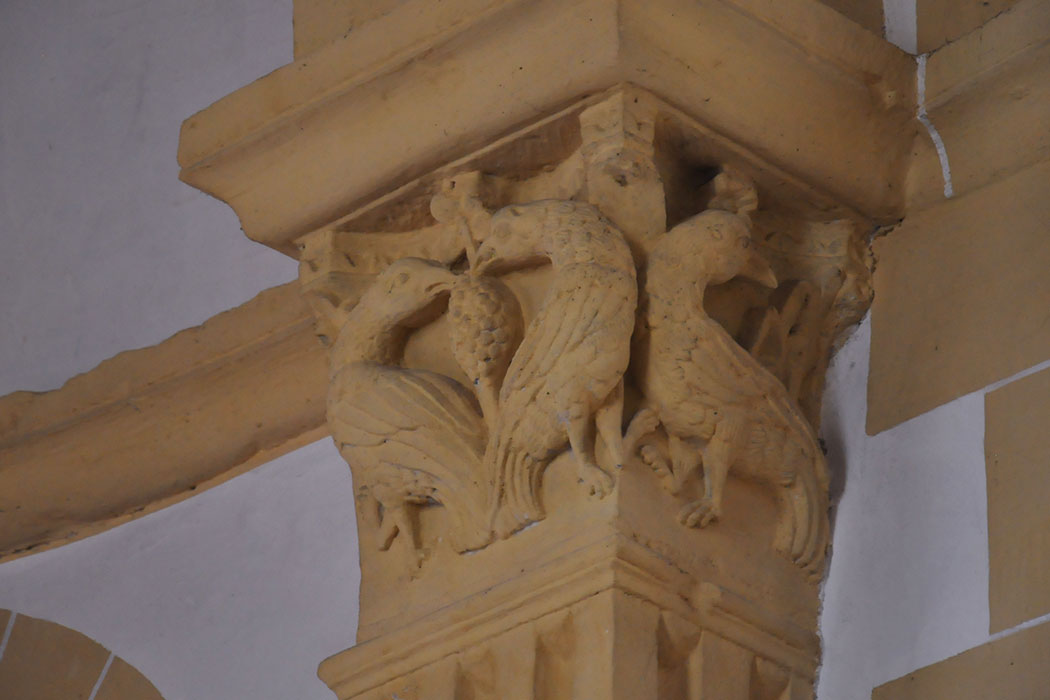
Church capital
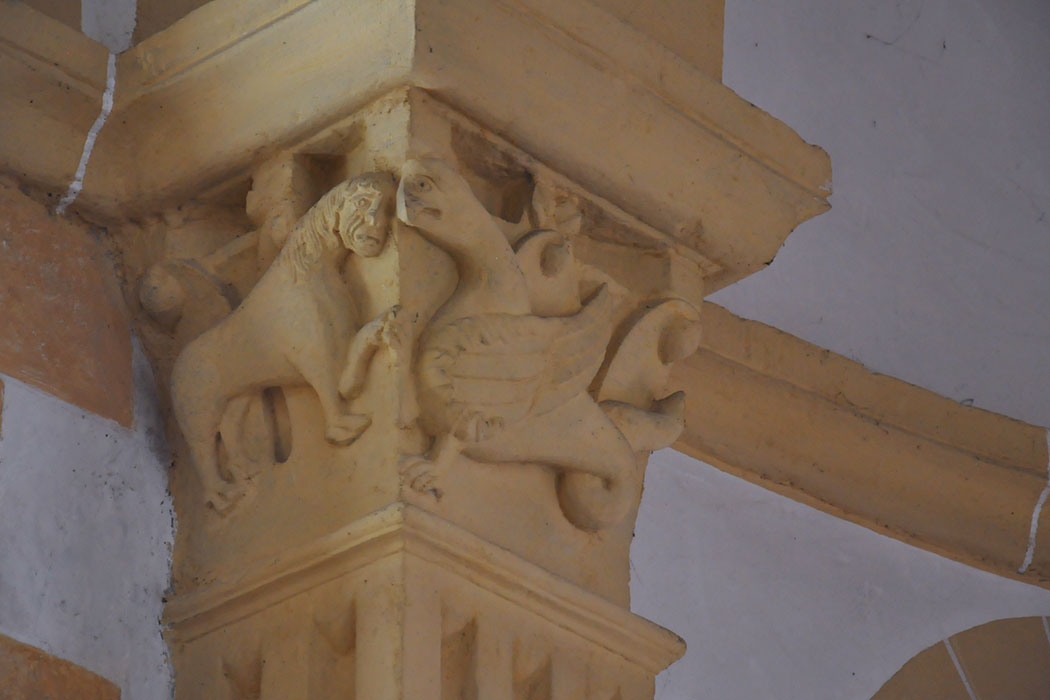
Church capital
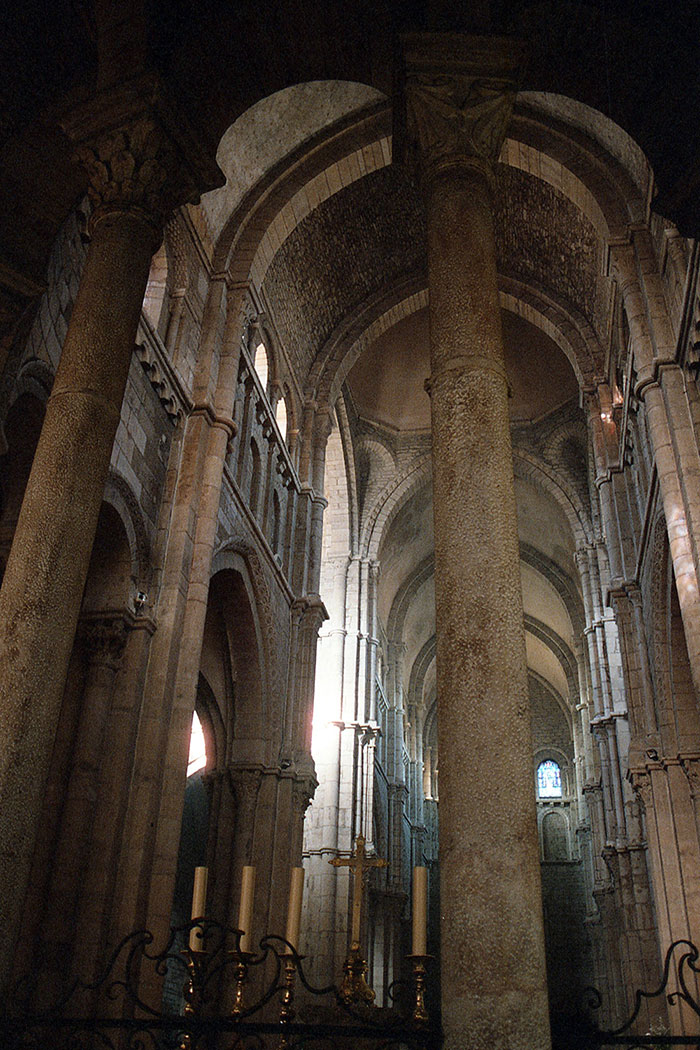
Interior of the church in 1988, with the walls stripped
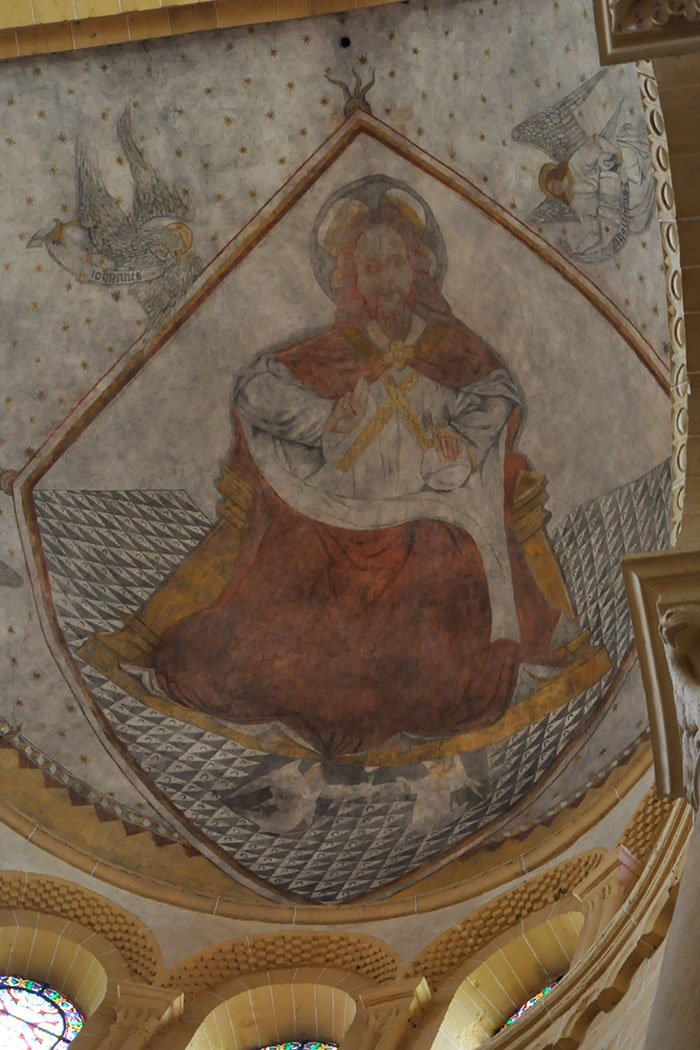
Mural painting (14th century)
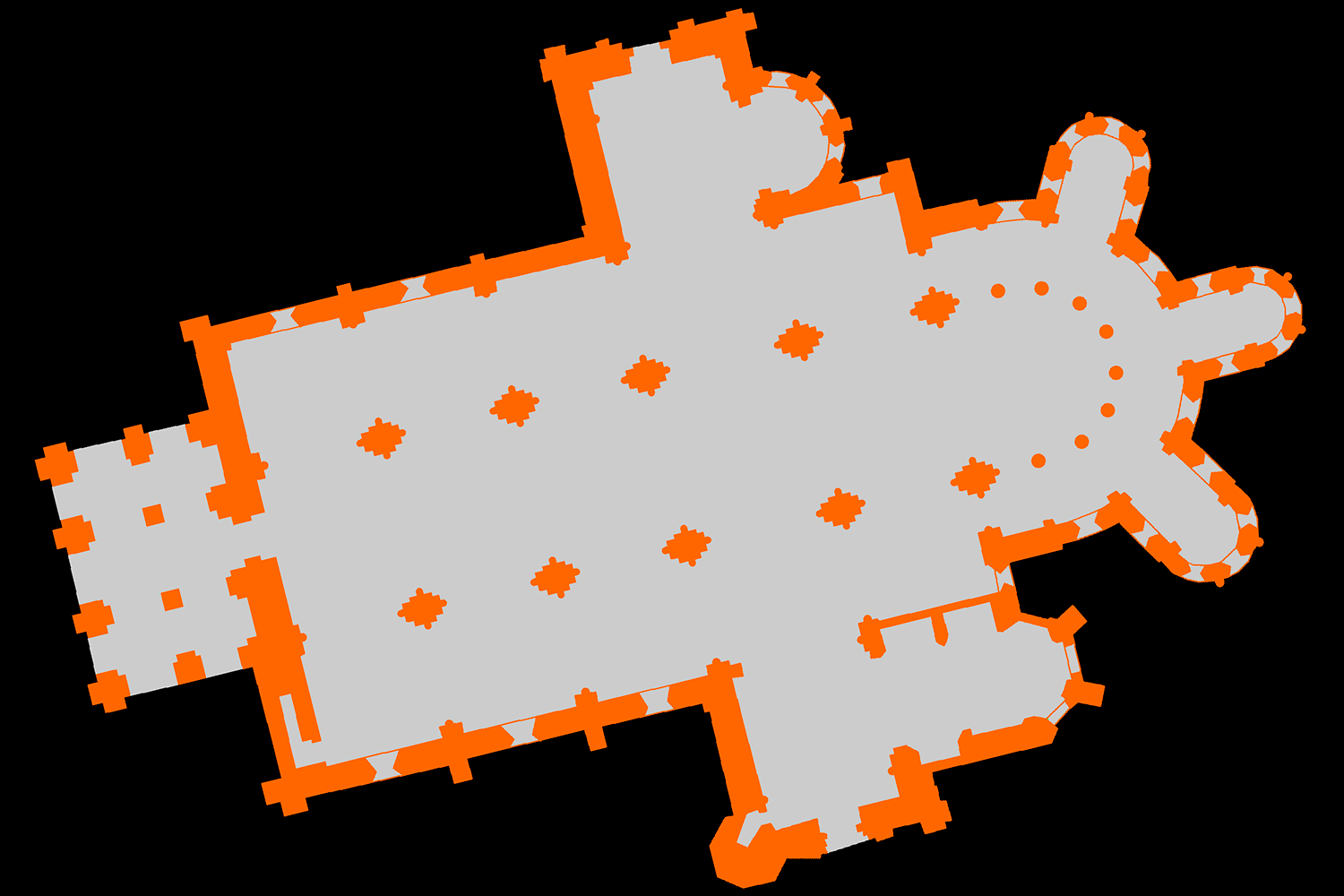
Schematic plan of the church
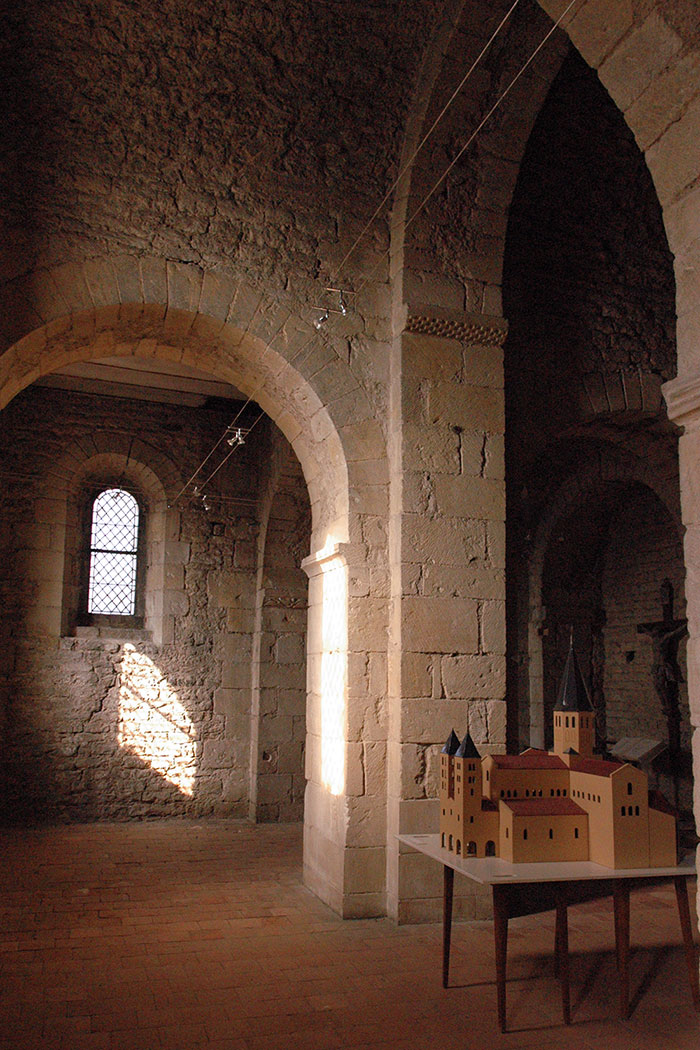
Upper level of the narthex (2008)
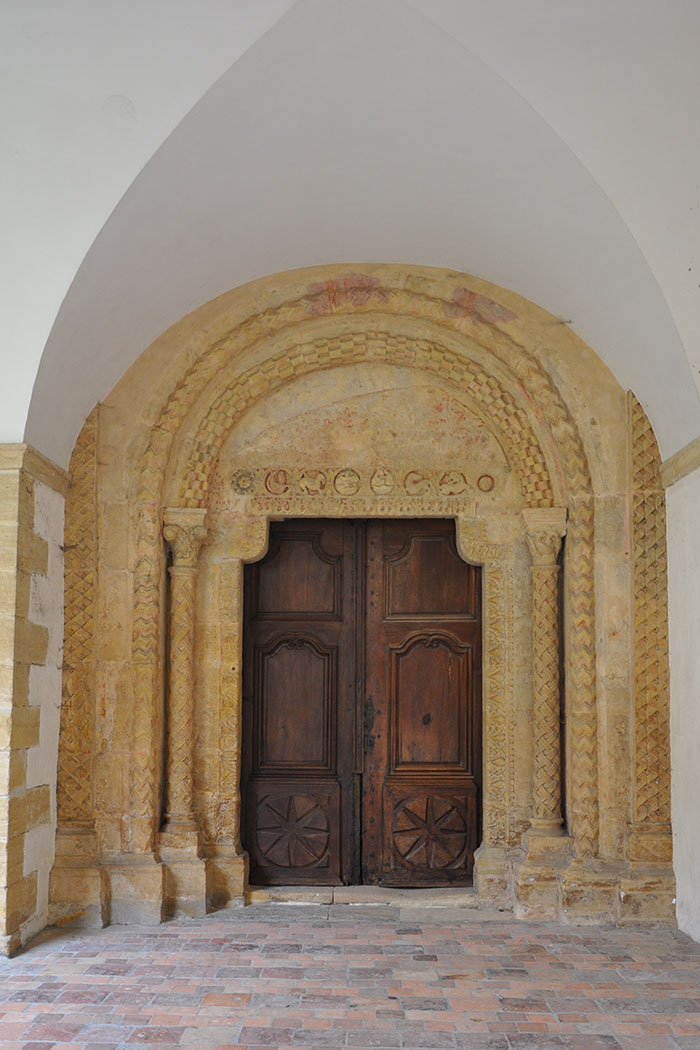
Cloister portal

Cloister portal
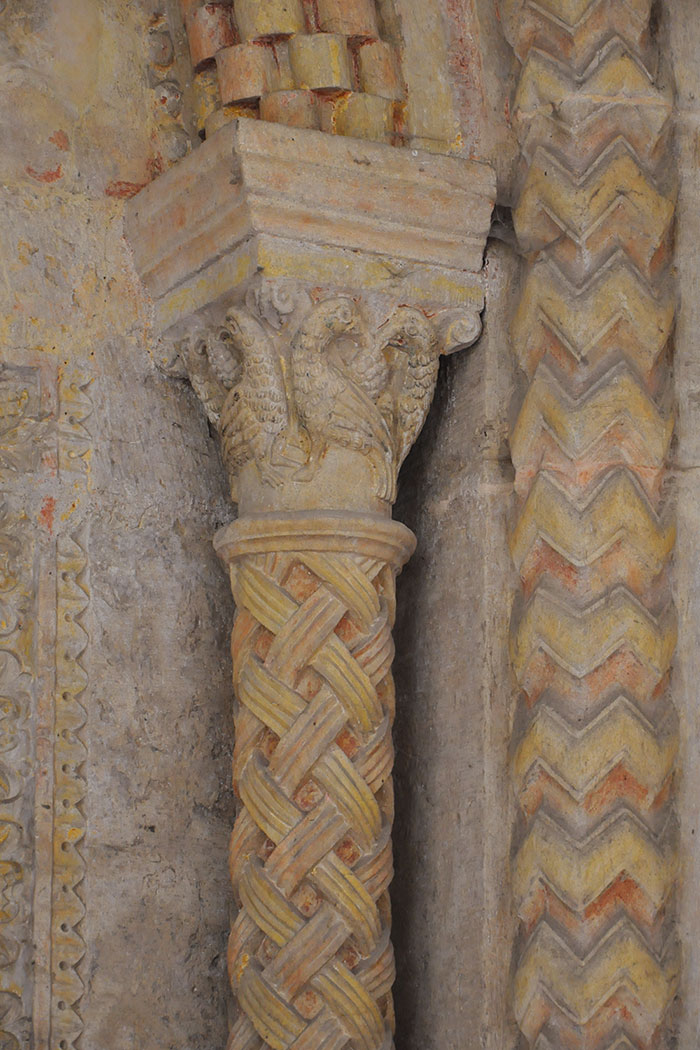
Cloister portal

Cloister
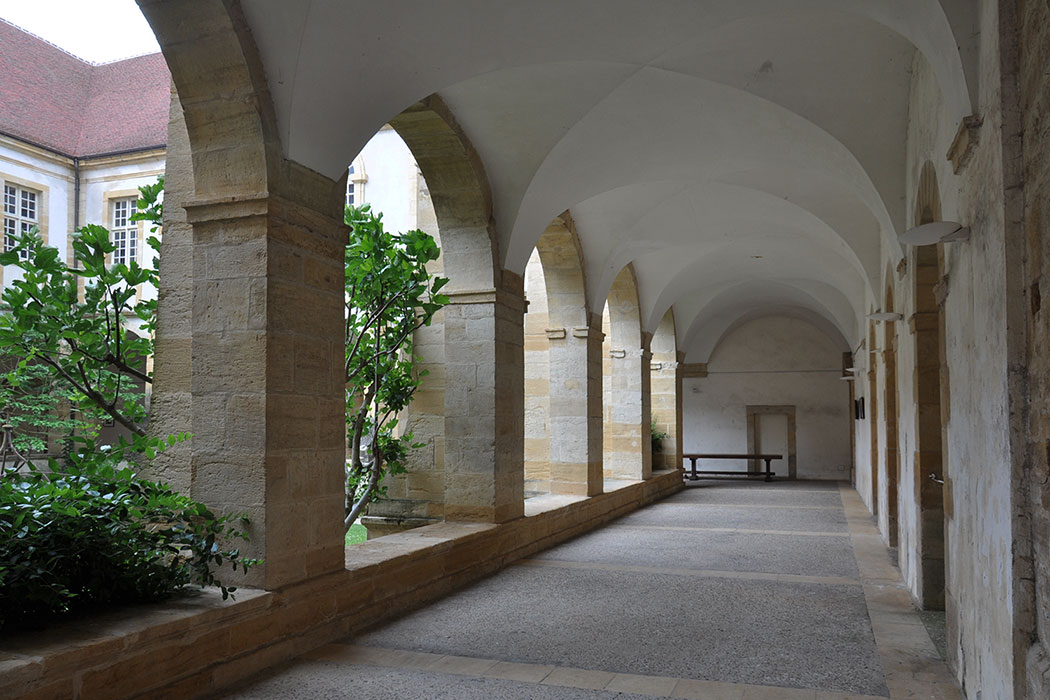
Cloister

The 18th-century priory
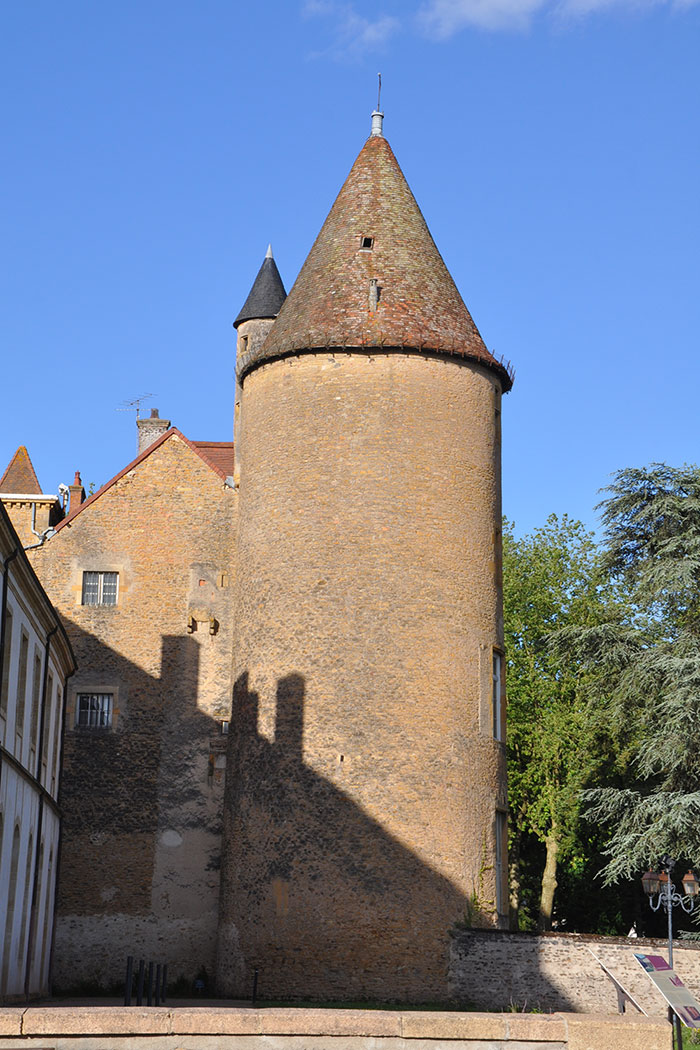
Prior's Palace Tower
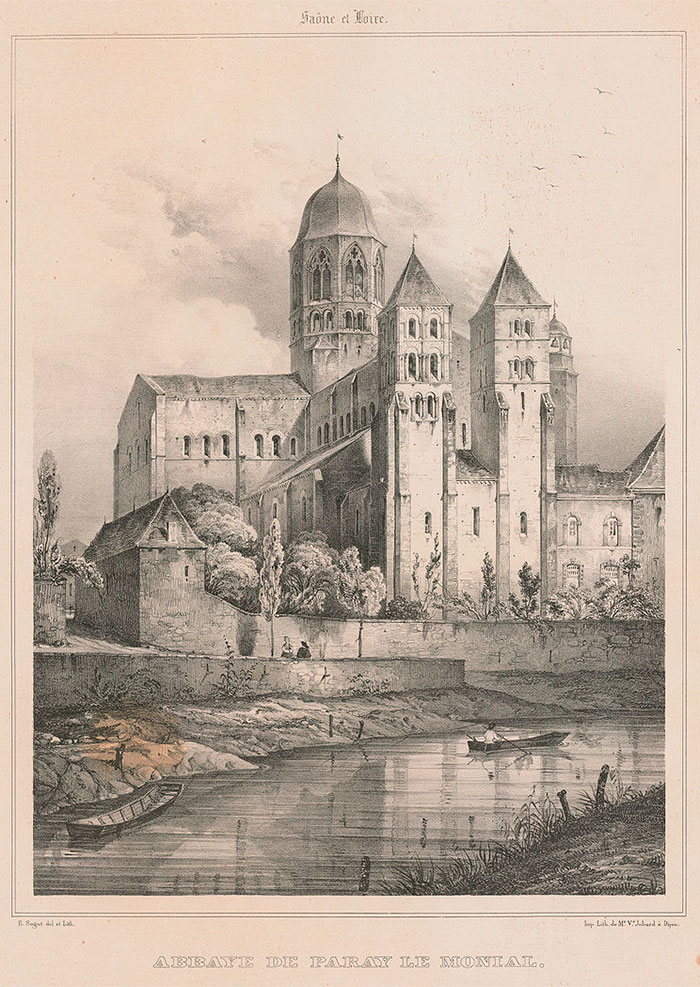
Illustration by Emile Sagot published in
Voyage pittoresque en Bourgogne (1835)
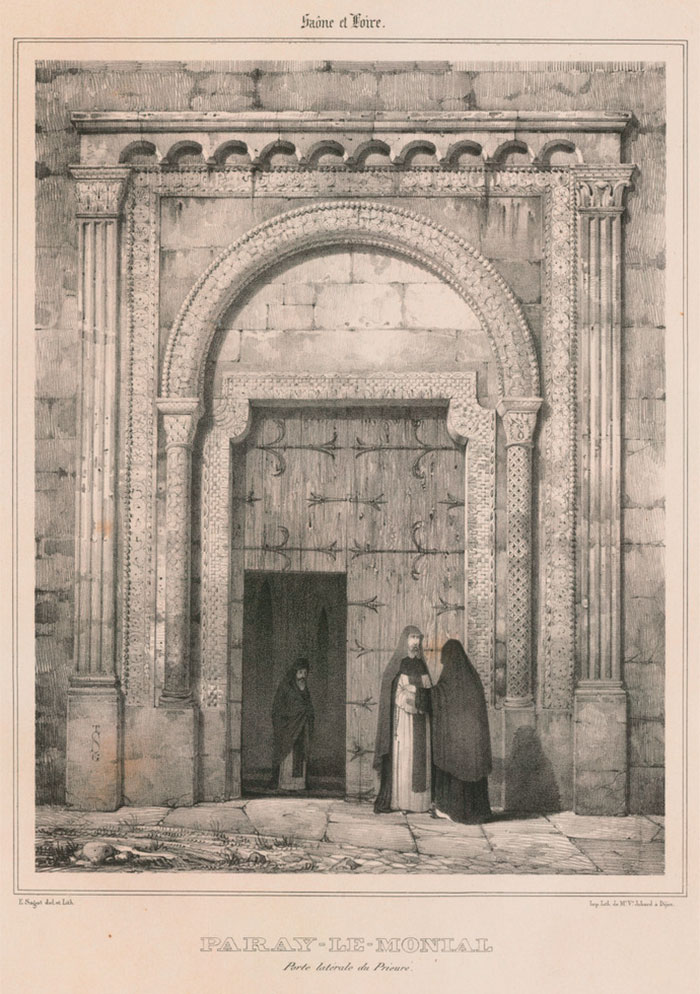
North portal of the transept
Illustration by Emile Sagot published in
Voyage pittoresque en Bourgogne (1835)

Chapel south of the transept (15th century)
Illustration by Emile Sagot published in
Voyage pittoresque en Bourgogne (1835)
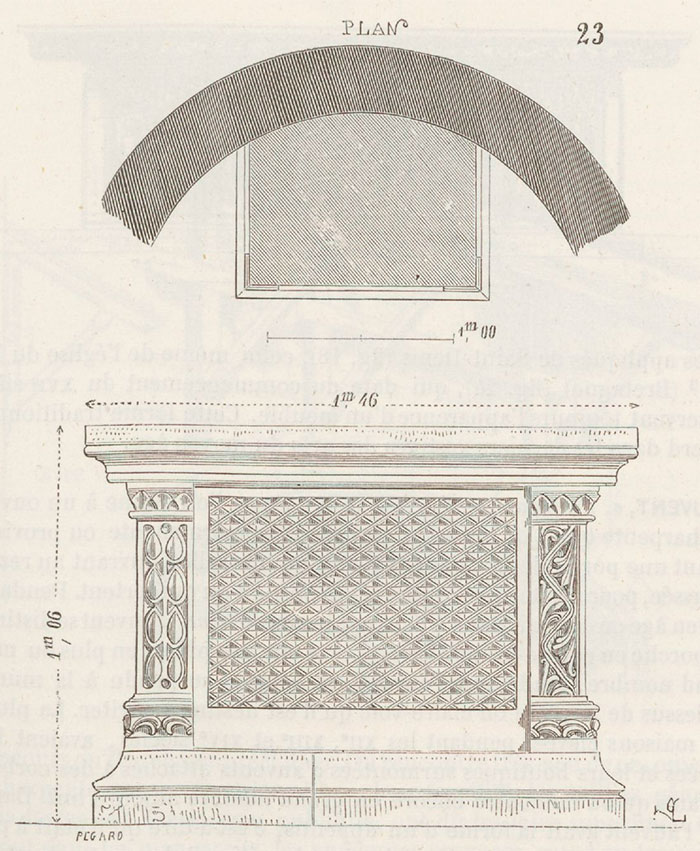
Romanesque altar
Illustration from Dictionnaire raisonné de l'architecture française (1875)
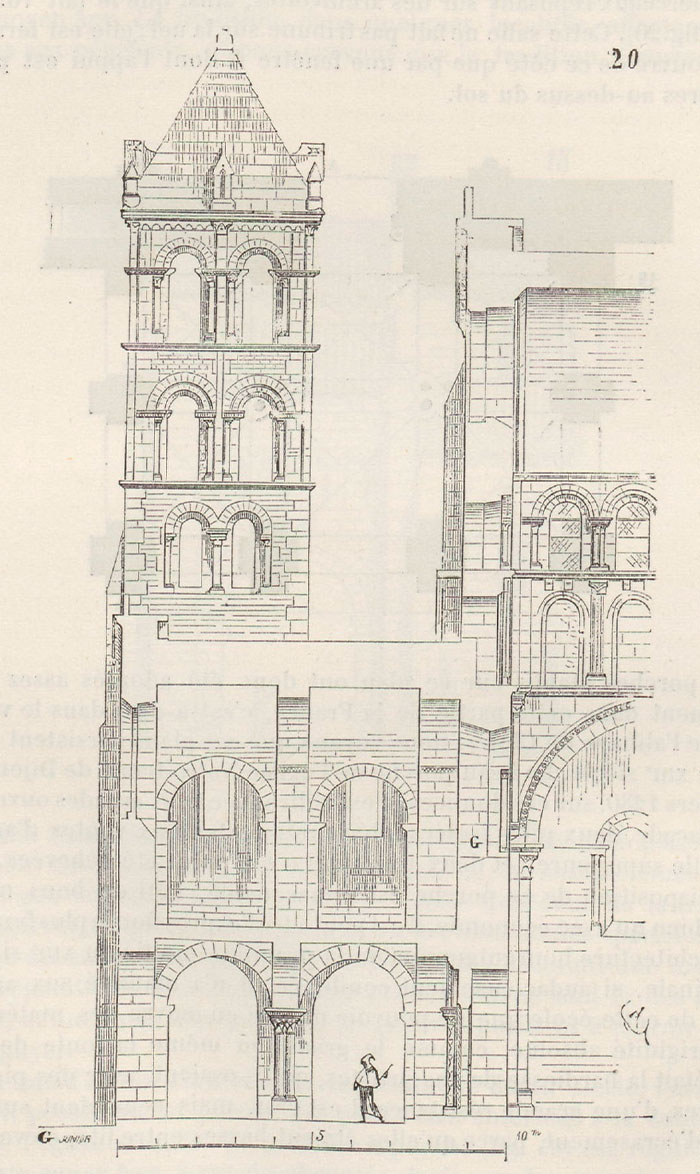
Narthex of the church
Illustration from Dictionnaire raisonné de l'architecture française (1875)
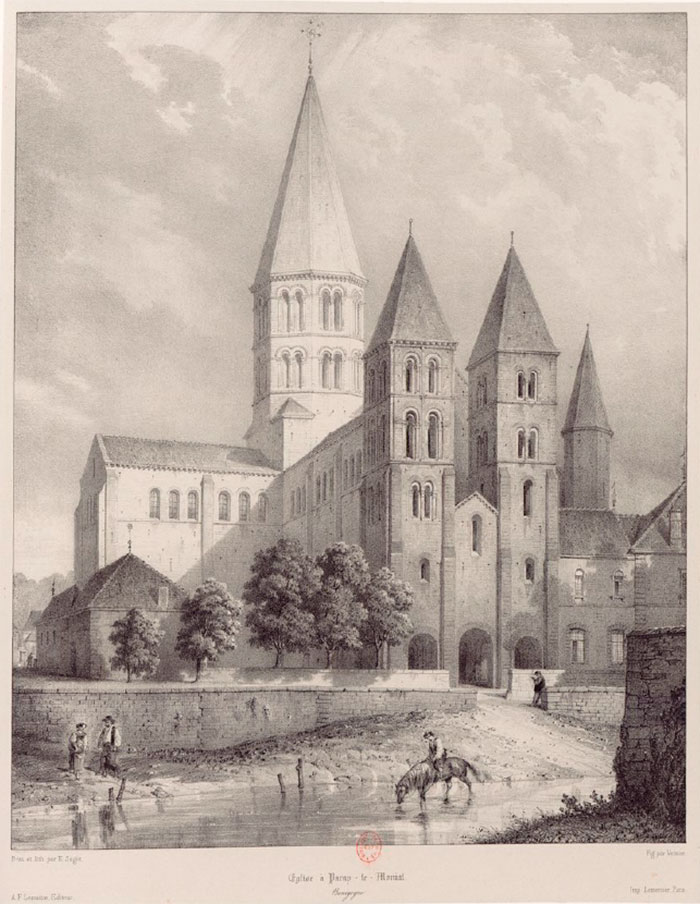
Illustration by Emile Sagot published in
Voyages pittoresques et romantiques dans l'ancienne France (1863)
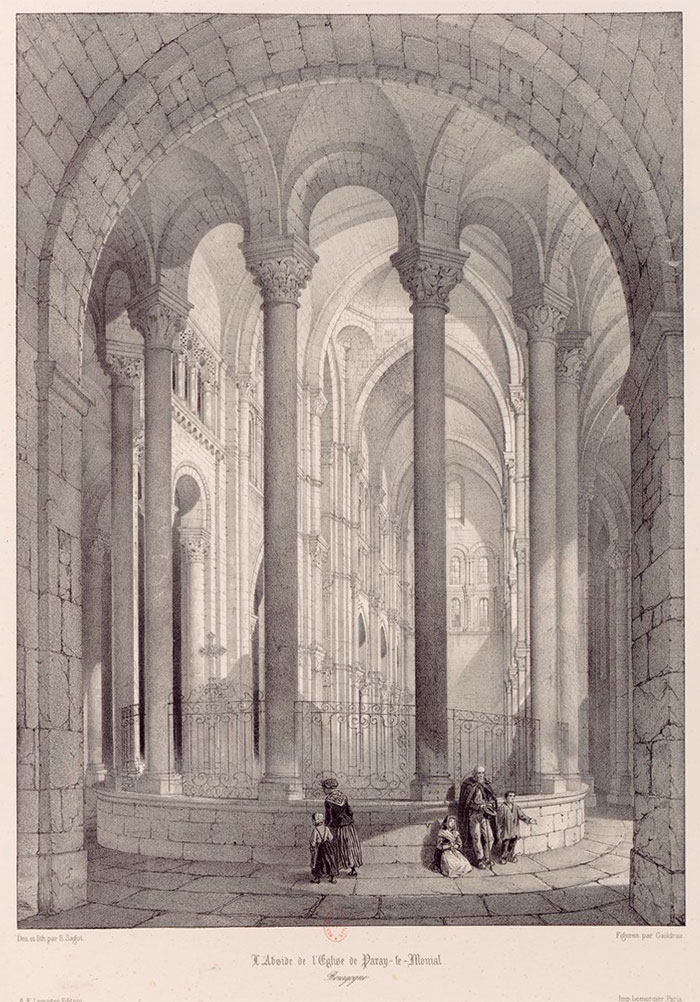
Illustration by Emile Sagot published in
Voyages pittoresques et romantiques dans l'ancienne France (1863)
- CANAT DE CHISY, Marcel (1876). Précis històriques des origines du prieuré de Notre-Dame de Paray le Monial. Chalon-sur-Saone: Dejussieu
- CHEVALIER, Ulysse (1890). Paray-le-Monial et son fondateur, étude critique. Lió: Vitte
- CHEVALIER, Ulysse; Ed. (1890). Cartulaire du prieuré de Paray-le-Monial, ordre de Saint-Benoît. París: Picard
- COTTINEAU, Laurent-Henri (1939). Répertoire topo-bibliographique des abbayes et prieurés. Vol. 2. Mâcon: Protat
- CUCHERAT, François (1877). Essai historique sur Paray-le-Monial. Paray-le-Monial: Lamborot
- CUCHERAT, François (1878). Fondation du monastère bénédictin de Paray-le-Monial. Paray-le-Monial: Lamborot
- CUCHERAT, François (1878). Premier siècle du monastère bénédictin de Paray-le-Monial. Paray-le-Monial: Lamborot
- CUCHERAT, François (1879). Épreuves de Paray-le-Monial au XIIe siècle. Paray-le-Monial: Lamborot
- CUCHERAT, François (1879). Monographie de la Basilique du Sacré-Coeur. Paray-le-Monial: Lamborot
- CUCHERAT, François (1880). Union de Paray à la mense abbatiale de Cluny. Paray-le-Monial: Lamborot
- LEFÈVRE-PONTALIS, Eugène (1886). Étude historique et archéologique sur l'église de Paray-le-Monial. Autun: Dejussieu
- MAILLARD DE CHAMBURE, Charles-Hippolyte; dir. (1835). Voyage pittoresque en Bourgogne. 2e partie, Département de Saône-et-Loire. Dijon: Jobar
- OURSEL, Raymond (1974). Bourgogne romane. La nuit des temps, 1. Zodiaque
- OURSEL, Raymond; BARNOUD, Jean-Noël (1992). Paray-le-Monial, les 900 ans d’une basílique. Besançon: La Manufacture
- ROLLIER, Gilles. L’archéologie à Paray-le-Monial. L’église romane de fond en comble
- ROUX-PERINO, Julie (2008). Cluny. Vic-en-Bigorre: MSM
- VIOLLET-LE-DUC, Eugène (1875). Dictionnaire raisonné de l’architecture française du XIe au XVIe siècle. París: A. Morel
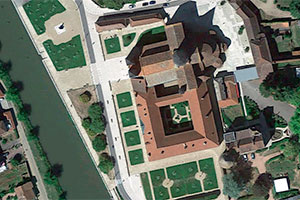
Paray-le-Monial lies west of Mâcon, between Cluny and Moulins