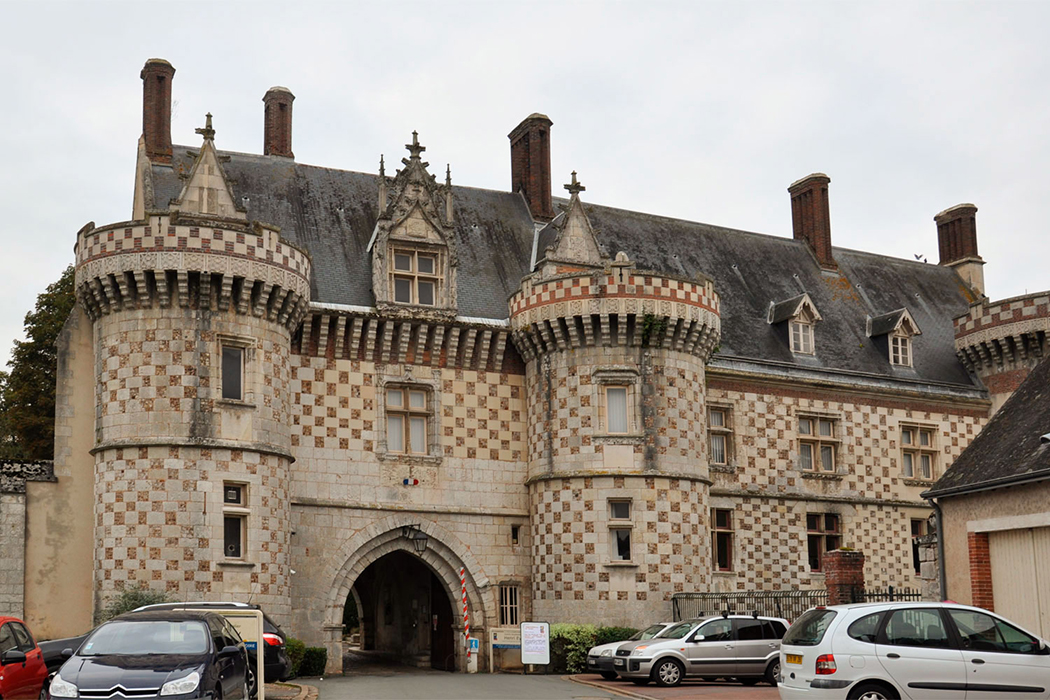
Portal of the monastery and abbot's residence


The Benedictine Abbey of Bonneval, dedicated to Saint-Florentin, is said to have been founded by Charles of Provence (845–863), son of Emperor Lothair I. In 857, the founder donated the land on which the monastery was to be built and endowed it appropriately. The church was placed under the patronage of Saint Marcellinus and Saint Peter. On the other hand, the relics of the martyrs Florentinus and Hilary were venerated at Saint-Martin d’Ainay Abbey (Lyon, Rhône). According to tradition, that house was in decline and, around 863, monks from Bonneval arrived there to restore observance and rebuild it.
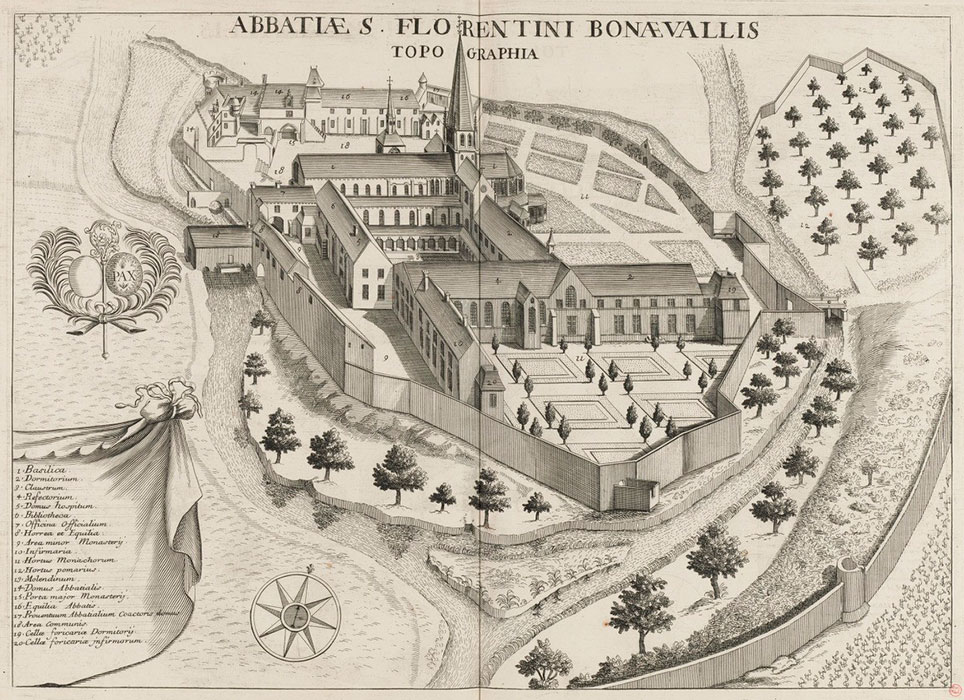
Monasticon Gallicanum
Bibliothèque nationale de France
Once their task was completed, the monks returned to Bonneval, taking with them part of the holy relics of the martyrs. By around 875, the house at Bonneval had already been placed under the patronage of Saint Florentinus. In 911, the monastery fell victim to the Normans who were ravaging the region; they sacked it and left it without a community. The monks who survived dispersed. Once the situation had been recovered, the counts of Blois, Theobald I (c. 910–c. 977) and his son Odo I (c. 950–996), restored the abbey. In 967, it obtained the protection of Lothair I of France (941–986).
For many years the abbey enjoyed a period of prosperity, which was interrupted in 1370 and 1420, during the Hundred Years’ War, when it was sacked and burned. In 1525, the last regular abbot, Odard, died. Charles de La Chambre was appointed to succeed him, becoming the first commendatory abbot. In 1568, it again suffered from the effects of warfare, this time during the Wars of Religion. At the beginning of the 17th century, the abbey was in a state of decline and observance of the Rule had deteriorated. This led, in 1645, to the house joining the Congregation of Saint-Maur, which also undertook the rebuilding of the monastery’s various buildings. This work was carried out at the end of that century and the beginning of the next.
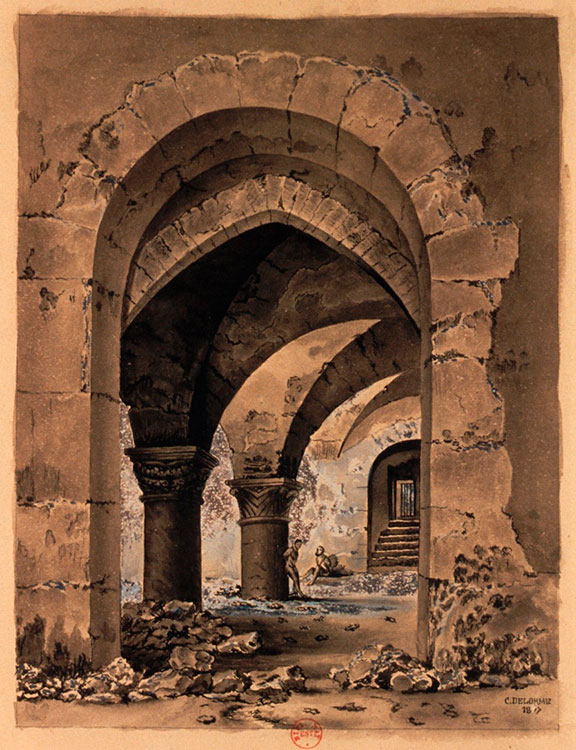
Crypt
C. Delorme (1817)
Bibliothèque nationale de France
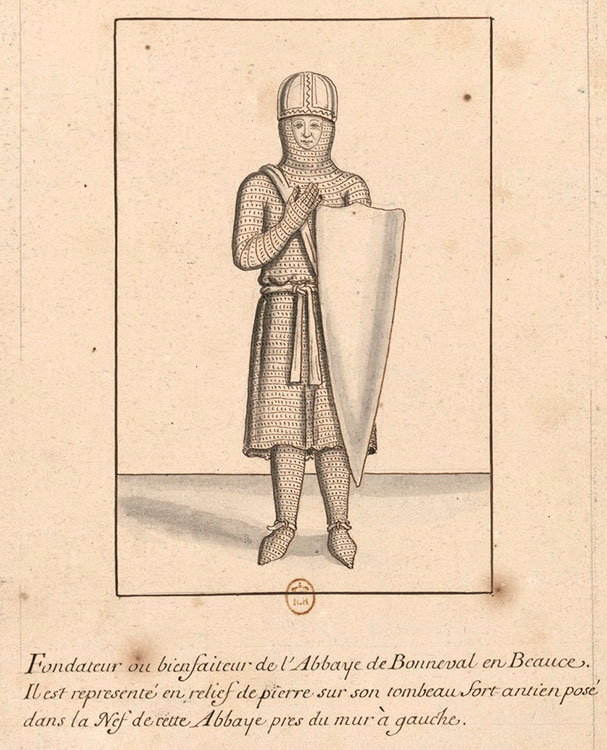
Knight, in the abbey church (17th century)
Bibliothèque nationale de France
In 1768, the community consisted of nine monks. It continued until 1790, when the monastery was suppressed as a result of the Revolution and the monks were forced to leave. The buildings were put up for sale and, in 1793, a cotton-spinning mill was established there, while the church was demolished. Later, the site passed into public ownership; in 1845, an agricultural colony was established there and, in 1861, a psychiatric hospital, a function it still serves. Important remains of the 18th-century abbey survive, together with some elements of earlier buildings.
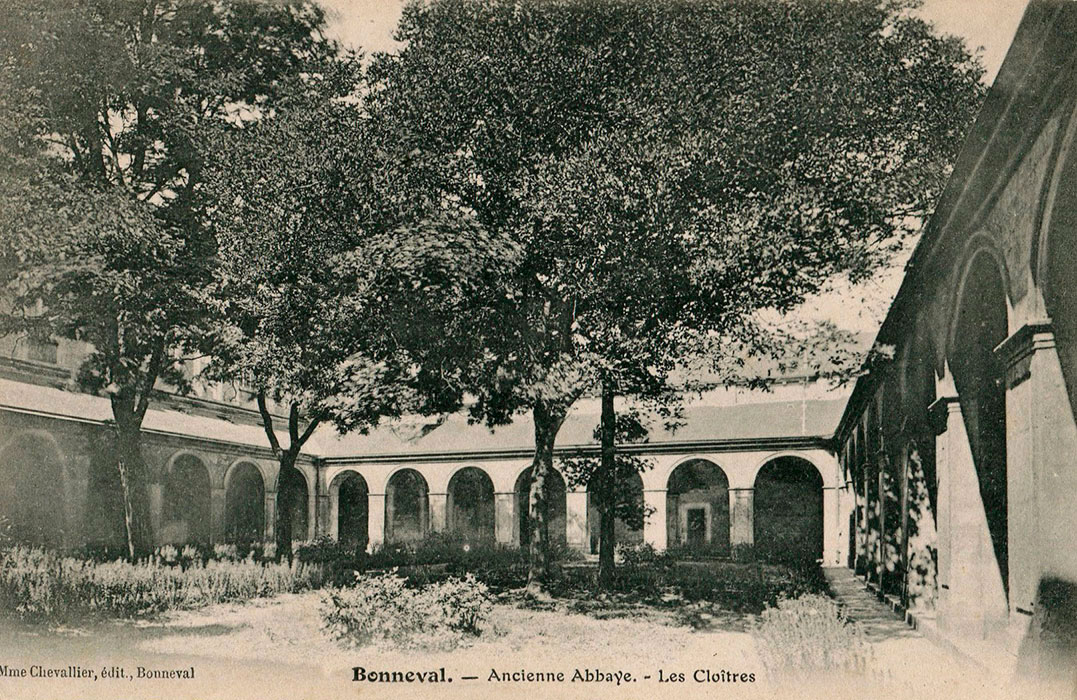
Old postcard, private collection
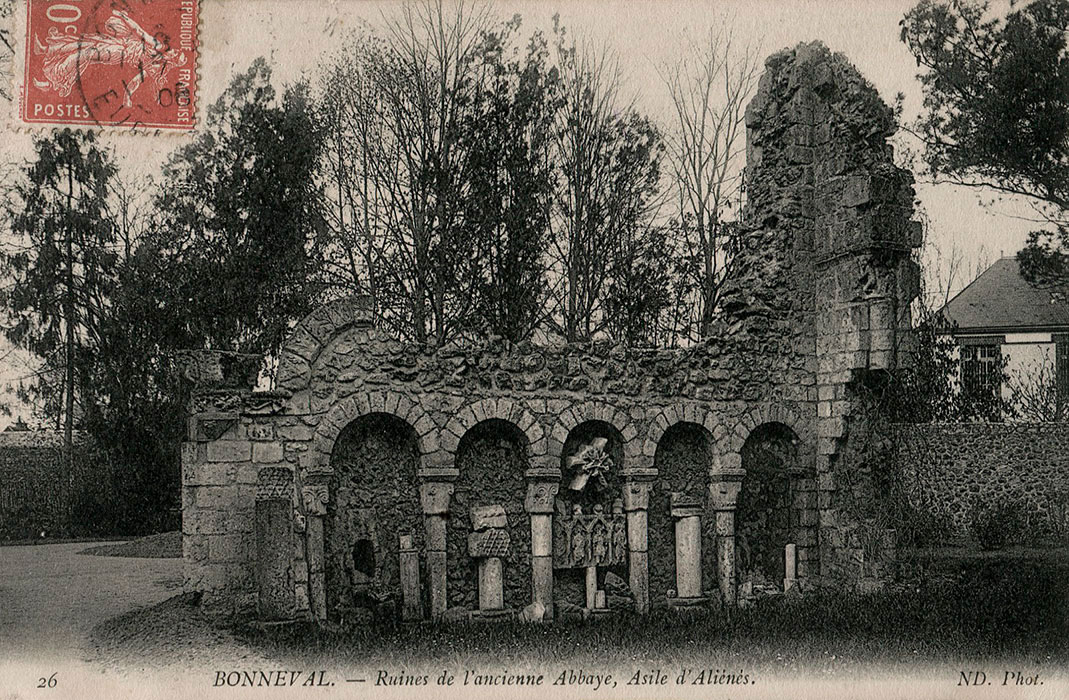
Old postcard, private collection
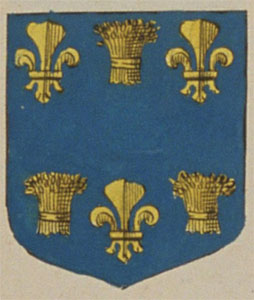
According to Armorial général de France (s. XVIII)
Bibliothèque nationale de France
- BEAUNIER, Dom (1905). Recueil historique des Archêvechés, Évêchés, Abbayes et Prieurés de France. Vol. 1. Province ecclésiastique de Paris. París: Poussielgue
- MERLET, René Petite (1890). Chronique de l'abbaye de Bonneval, de 857 à 1050 environ. Chartres: Garnier
- PEIGNÉ-DELACOURT, Achille (1877). Monasticon Gallicanum. Paris: G. Chamerot
- ROBIN, René; ed. (1982). L'abbaye Saint-Florentin de Bonneval. Bulletin de la Société Archéologique d'Eure-et-Loir, núm. 92. Chartres
- SAINT-MAUR, Congregació de (1744). Gallia Christiana in provincias ecclesiasticas distributa. Vol. 8. París: Typographia Regia
- THIROUX, Jean; i altres (1875). Histoire abregée de l’abbaye de Saint-Florentin de Bonneval. Châteaudun: Henri Lecesne
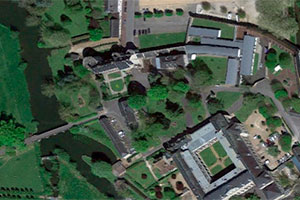
Bonneval Abbey is located in the commune of the same name, north of Châteaudun