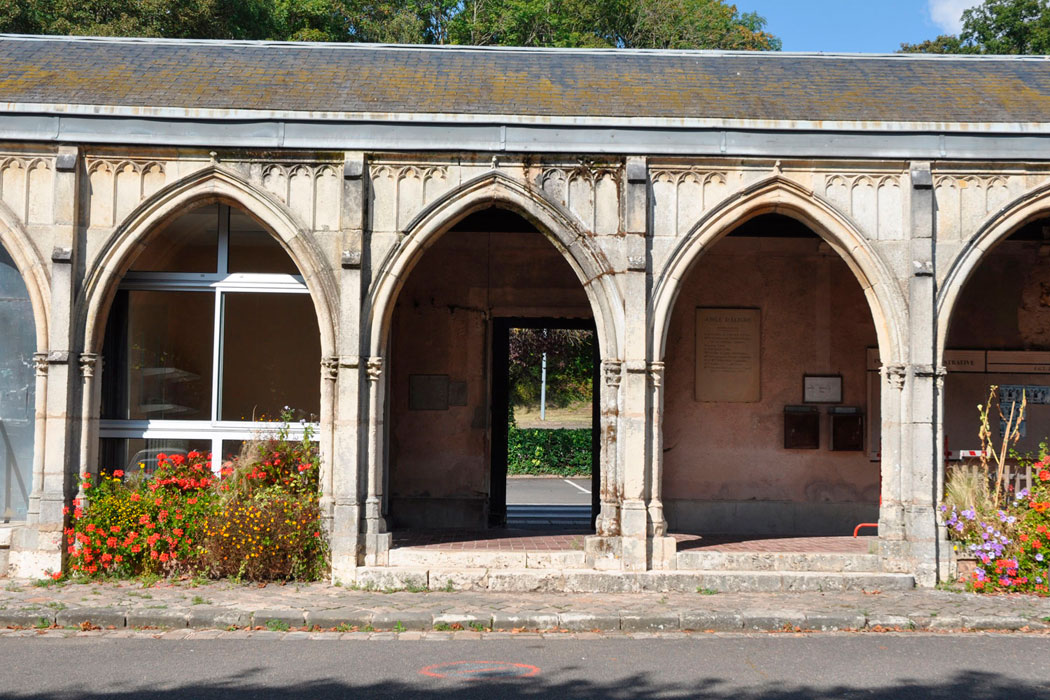
Cloister moved to the grounds of the Abbey of Josaphat


The Benedictine Abbey of Notre-Dame de Coulombs is said to have been founded at an uncertain date, perhaps in the 8th century, by the lords of Nogent. Hugh the Great (c. 898–986) gave it to Archbishop Hugh of Blois († 986), after which it passed into the hands of his nephew and heir, Roger I of Blois († 1024). He found the house in ruins as a result of the Norman invasions, rebuilt it and endowed it financially. The site was temporarily placed in the care of a community of secular clergy.
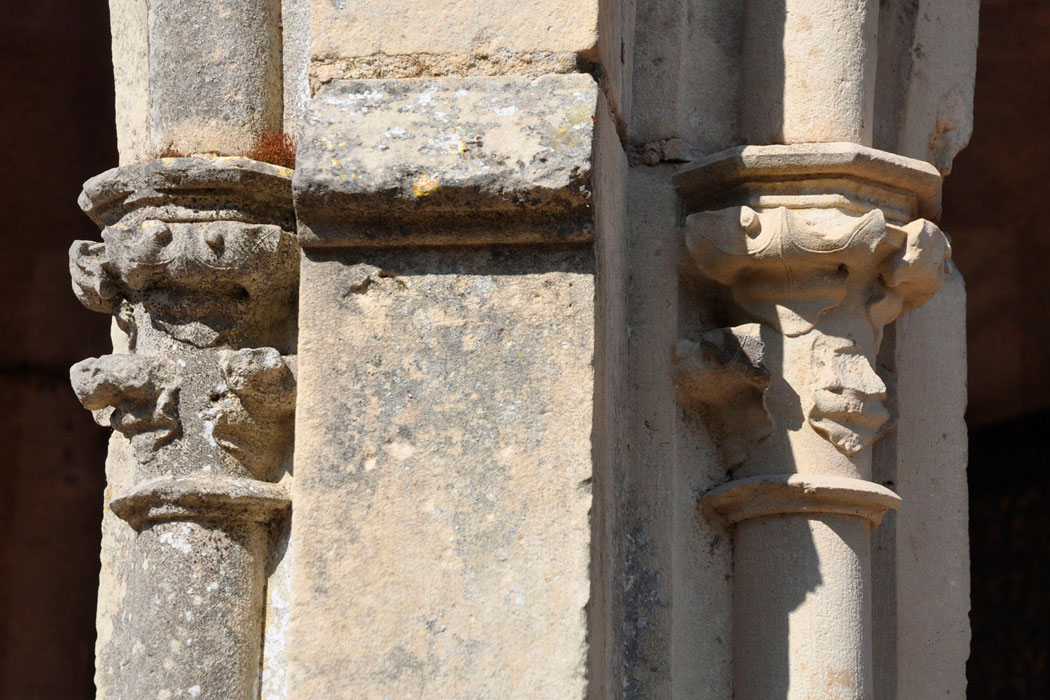
Cloister moved to the grounds of the Abbey of Josaphat
His heir, Bishop Odalric of Orléans († 1033), had the church rebuilt, and much of this work survived until the Revolution, with some elements still preserved today. In 1026, Odalric introduced a regular community of Benedictine monks, whose first abbot was Berengar. In 1071, Coulombs took part in the foundation of Notre-Dame d’Ivry Abbey (Eure), whose abbots were appointed from Coulombs until 1224. The abbey suffered from the effects of the Hundred Years’ War during the second half of the 14th century and the first half of the 15th century. This led to ruin and decline, a situation that prompted the nearby women’s abbey of Sainte-Gemme (Eure), which was itself in deep decline, to be united with Coulombs in 1441.
By the middle of the 15th century, restoration work was under way, and in 1530 the renovated abbey church was consecrated. In 1514, the last regular abbot, Guillaume d’Hargeville, resigned, and the following year Miles d’Illiers was appointed as the first commendatory abbot. In 1562, 1568 and 1592, the abbey was again affected by the Wars of Religion, with episodes of occupation, looting and the flight of the community. In 1648, the reform of the Congregation of Saint-Maur began to be introduced, with the aim of remedying the state of laxity affecting the abbey, not without opposition from the community.
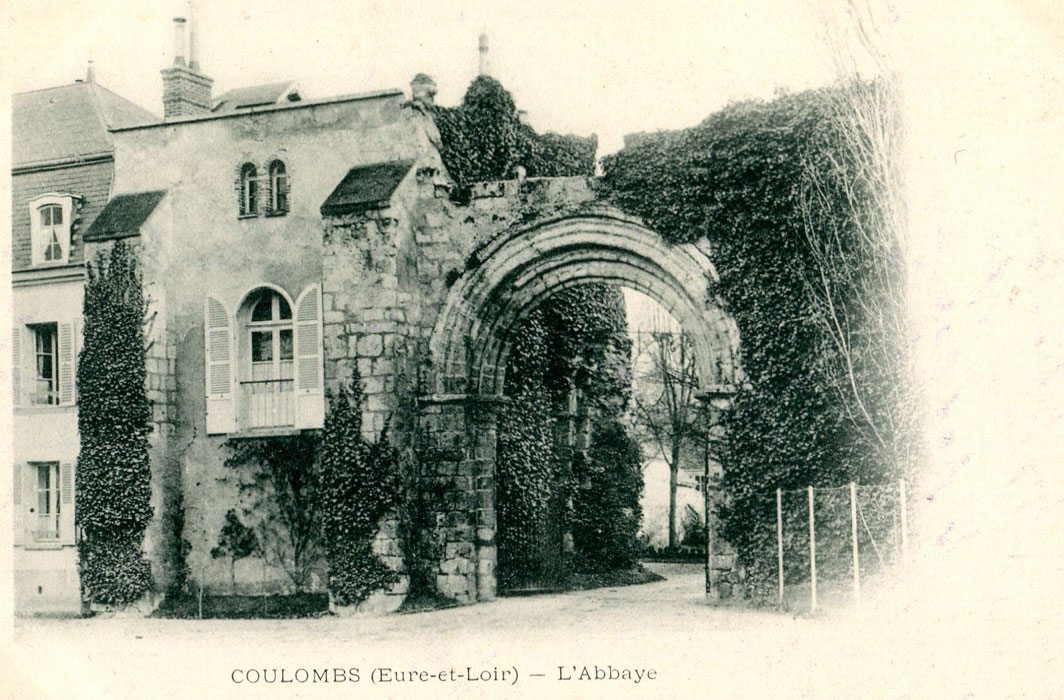
Church portal
Old postcard, private collection
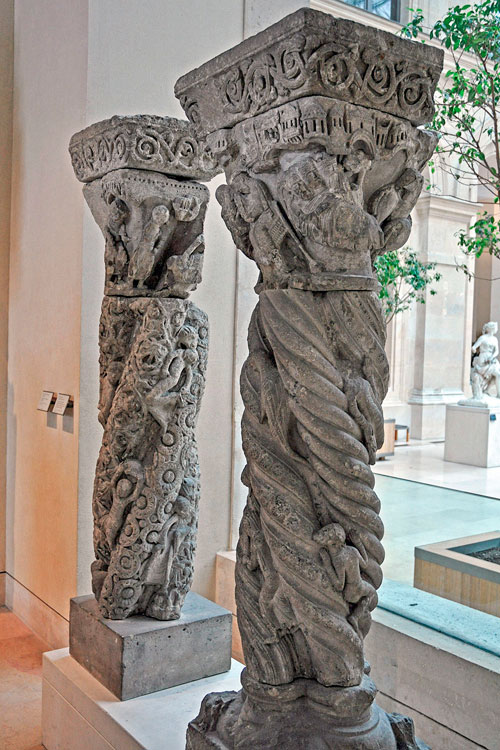
Columns from the monastery
Louvre Museum, Paris
In 1686, construction began on the Maintenon Aqueduct, which was intended to bring water to Versailles, and Coulombs Abbey was converted into a hospital for the workers, forcing the community to leave. The works were abandoned and, in 1689, the monks returned to reclaim their house, incurring further expenses to repair the damage caused. This work, together with the renewal of old structures, continued in the following years. In 1790, the monastery was suppressed as a result of the Revolution and was sold the following year. The church and the other buildings were subsequently demolished. Today, only a few remains survive in situ, together with part of the cloister, which was transferred to the former Notre-Dame de Josaphat Abbey (Eure-et-Loir).
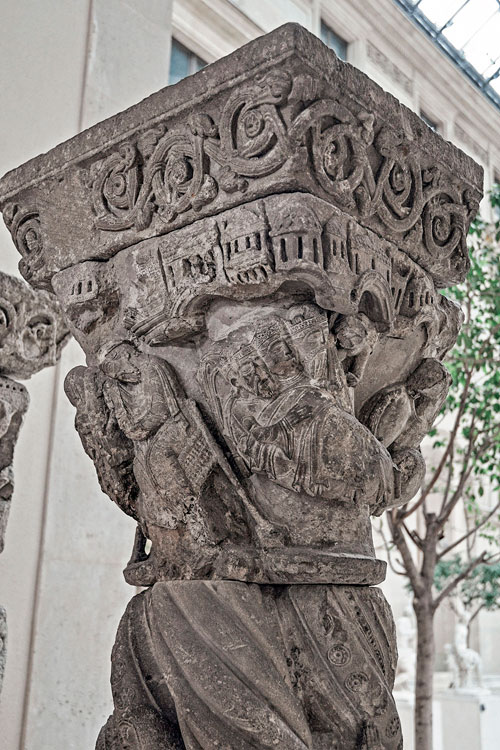
Capital from the monastery
Louvre Museum, Paris
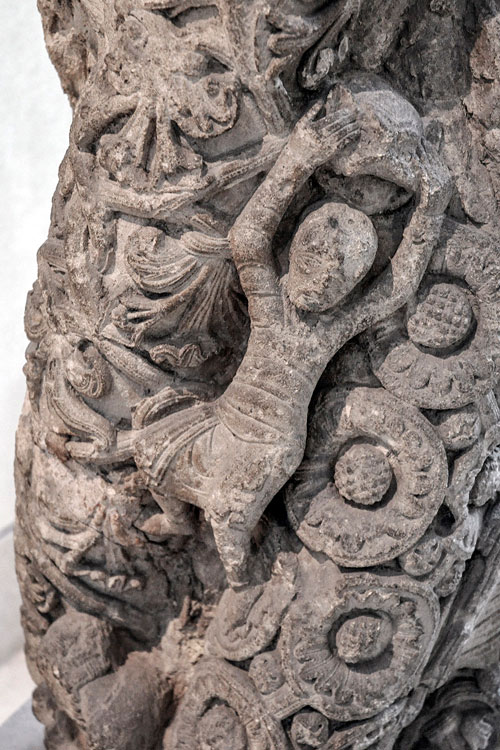
Column from the monastery
Louvre Museum, Paris
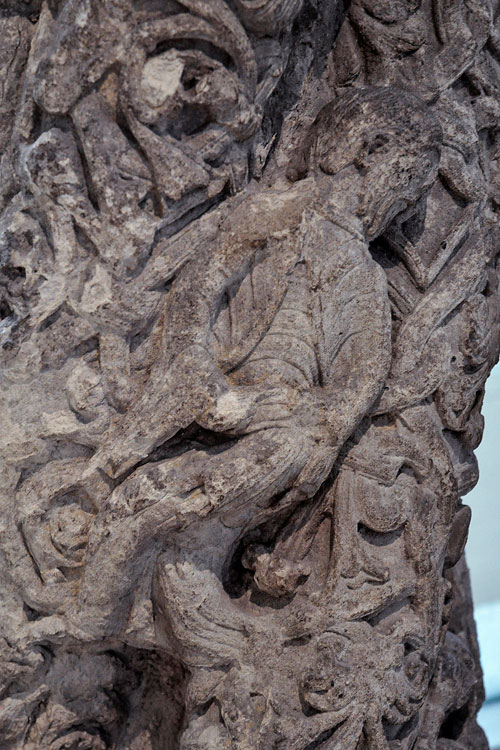
Column from the monastery
Louvre Museum, Paris
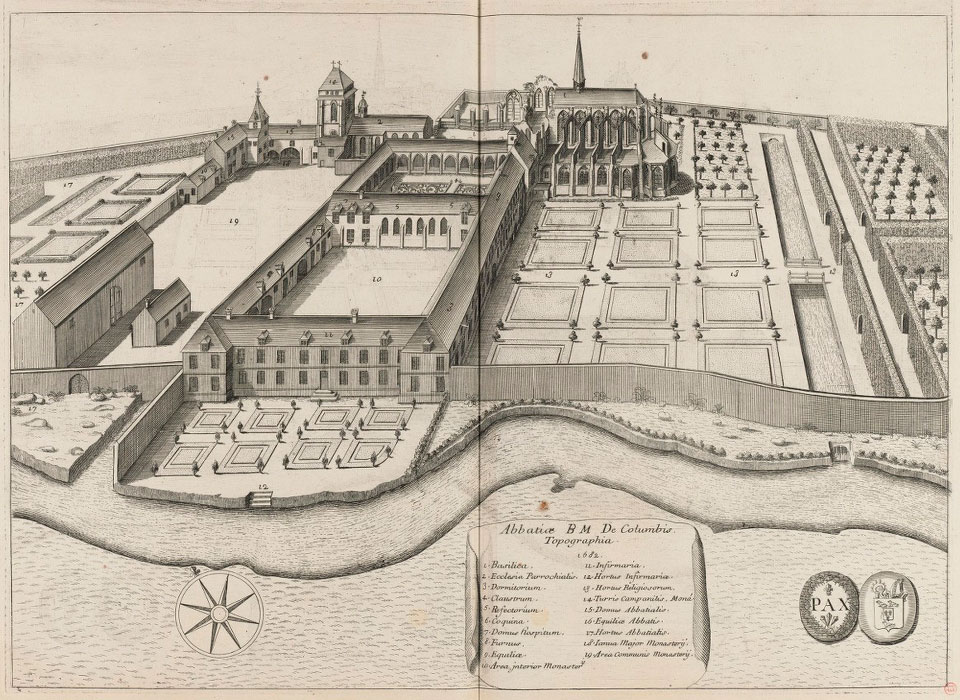
Monasticon Gallicanum
Bibliothèque nationale de France
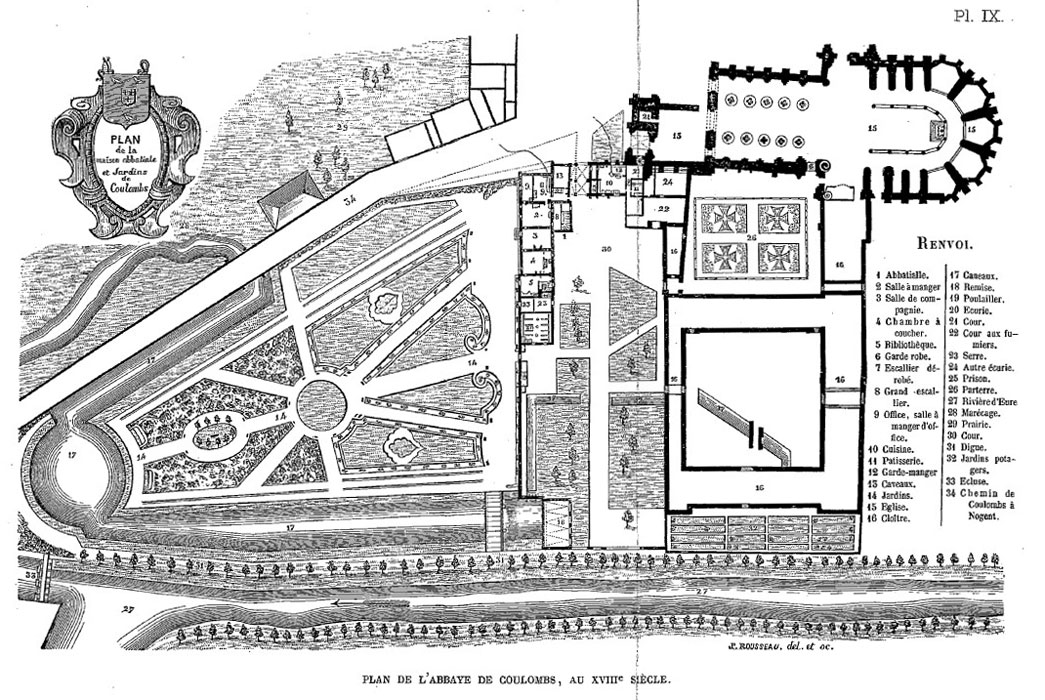
Monastery floor plan
Illustration from Histoire de l'abbaye de Coulombs
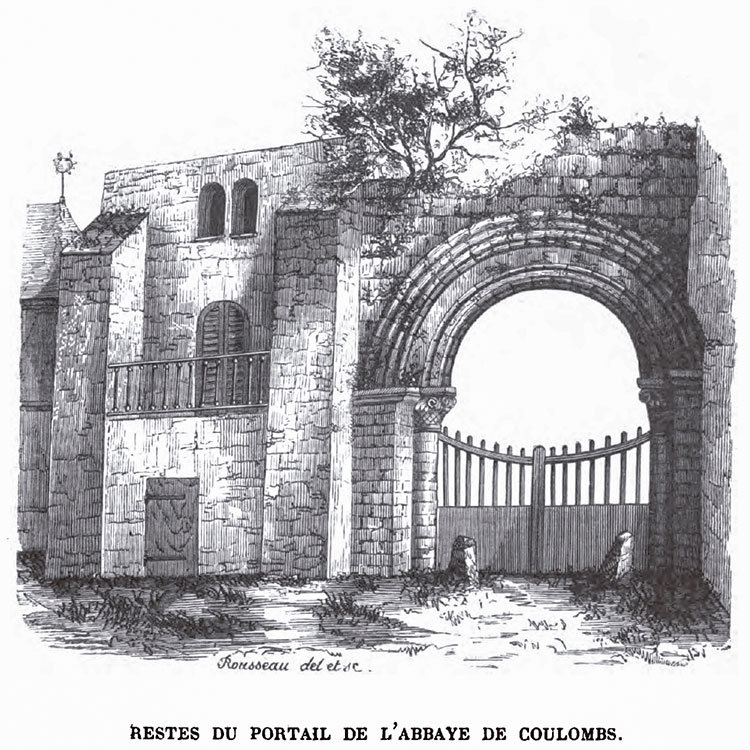
Church portal
Illustration from Histoire de l'abbaye de Coulombs
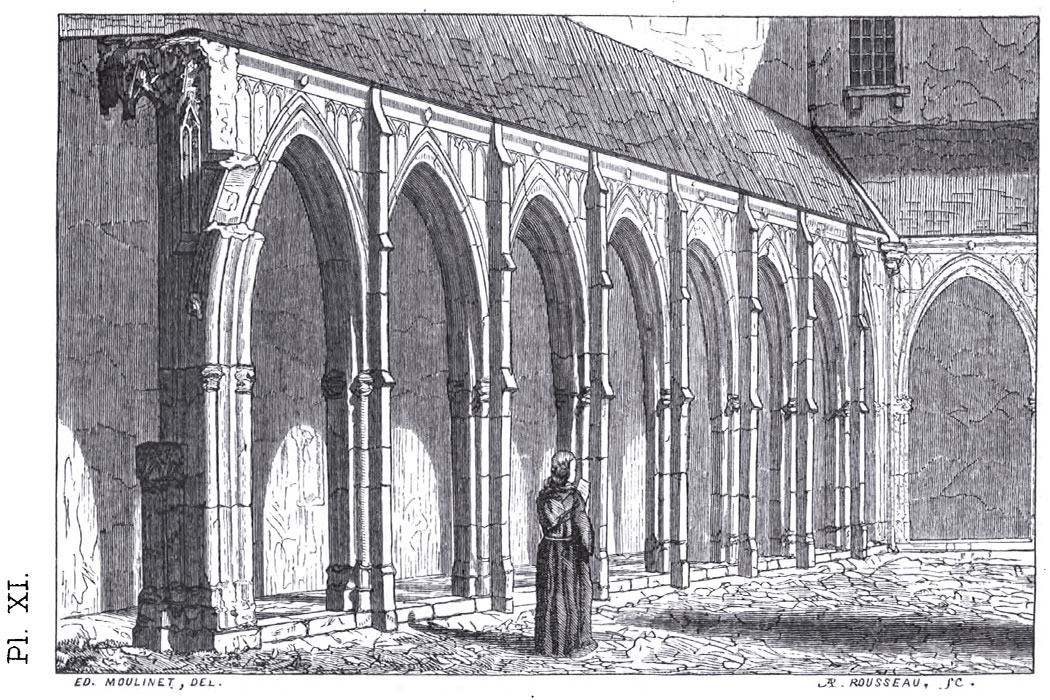
Cloister
Illustration from Histoire de l'abbaye de Coulombs

According to Armorial général de France (18th century)
Bibliothèque nationale de France
- BAUDRILLART, Alfred (1956). Dictionnaire d'histoire et de géographie ecclésiastiques. Vol. 13. París: Letouzey et Ané
- BEAUNIER, Dom (1905). Recueil historique des Archêvechés, Évêchés, Abbayes et Prieurés de France. Vol. 1. Province ecclésiastique de Paris. París: Poussielgue
- ESPAGNAC, Léonard Sahuguet d' (1861). Les seigneurs de Nogent-le-Roi et les abbés de Coulombs sous la dynastie capétienne. Dreux: Lacroix et Lallemant
- MERLET, Lucien (1864). Histoire de l'abbaye de Coulombs. Chartres: Petrot-Garniet
- PEIGNÉ-DELACOURT, Achille (1877). Monasticon Gallicanum. Paris: G. Chamerot
- SAINT-MAUR, Congregació de (1744). Gallia Christiana in provincias ecclesiasticas distributa. Vol. 8. París: Typographia Regia
The remains of Coulombs Abbey are located in the centre of the village of the same name, north of Chartres. Part of the cloister is preserved at Notre-Dame de Josaphat