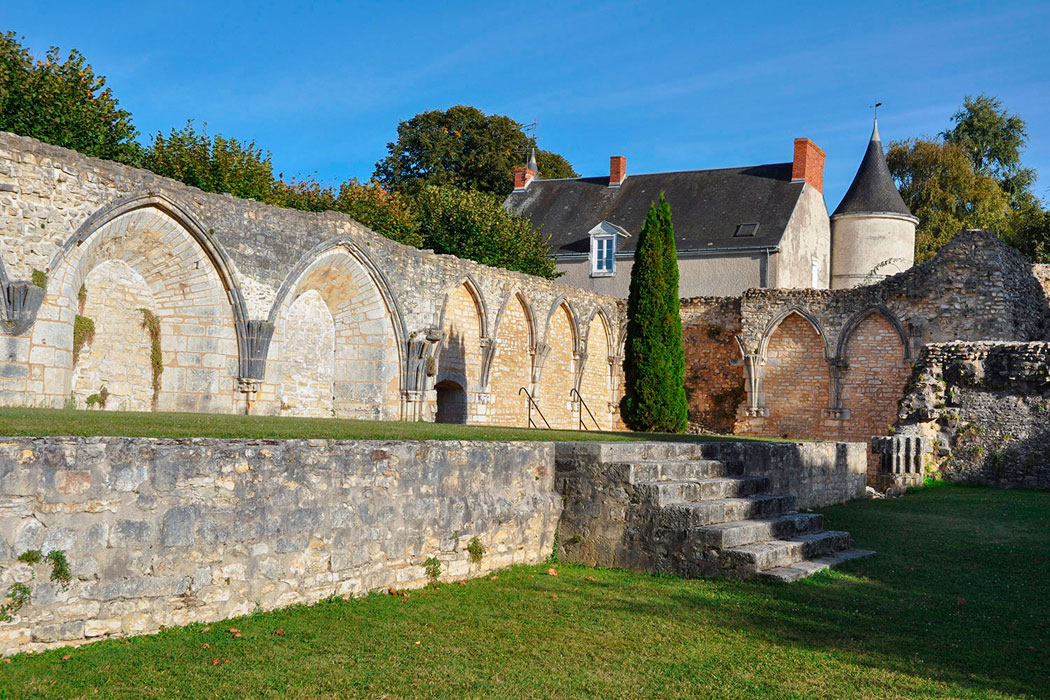

The Benedictine Abbey of Notre-Dame de Déols (or Bourg-Dieu) was founded around 917 by Ebbes the Noble (874-935), lord of Déols, and his wife Hildegarde. At the time of its foundation, Ebbes also endowed the monastery financially. William I of Aquitaine (c. 875-918) and Berno (c. 850-926), Abbot of Cluny (Saône-et-Loire), were among the figures involved in its establishment. Berno played a significant role, as he also served as Abbot of Déols and, upon his death, Odo of Cluny (c. 878-942) succeeded him in both positions.
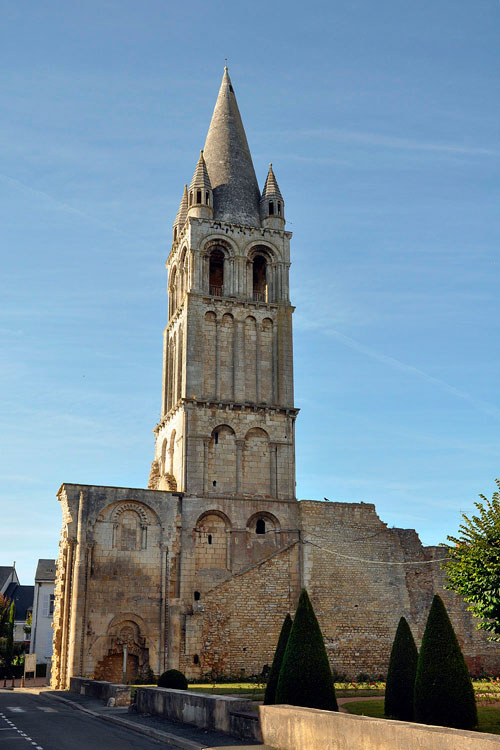
In 927, the monastery church was consecrated and, around the same time, the Frankish king Rudolph I (890-936) confirmed its privileges. Déols also served as a place of refuge. Around 933, monks from the Abbey of Saint-Gildas de Rhuys (Morbihan, Brittany), fleeing Norman incursions, were temporarily received there. Raoul le Large († 959) transferred them to the new Abbey of Saint-Gildas in Châteauroux, where the lords of Déols had built a new castle after abandoning their former possessions at Déols, which were then occupied by this monastery.
At the end of the 10th century, during the time of Raoul II († 1012), the reconstruction of the monastery began, and its church was consecrated in 1021. In the 12th century, a new phase of reconstruction took place and, in 1107, Pope Paschal II consecrated an altar in the church. It was a large building with an atrium, three aisles, a transept, and an extensive chancel with an ambulatory serving seven radiating chapels. In 1211, the bell tower collapsed without causing any casualties.
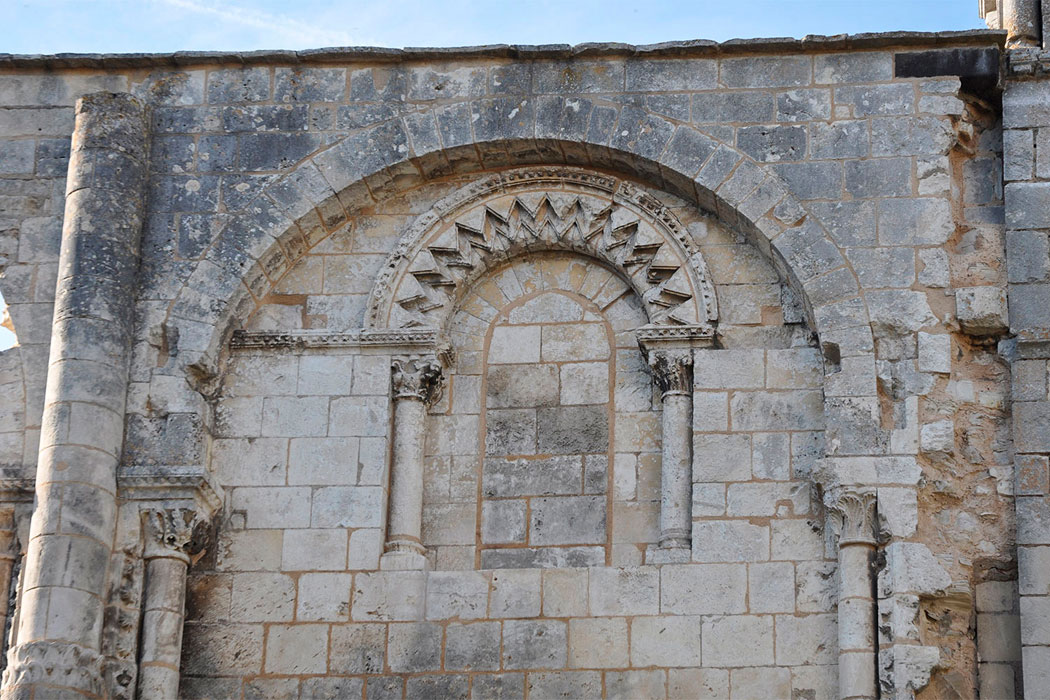
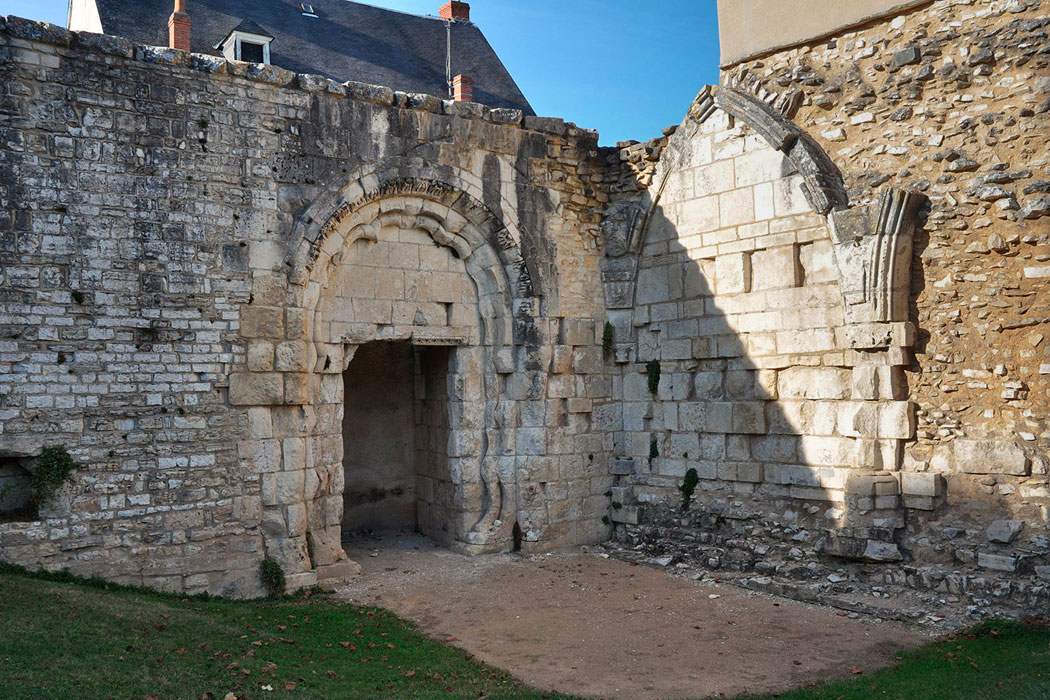
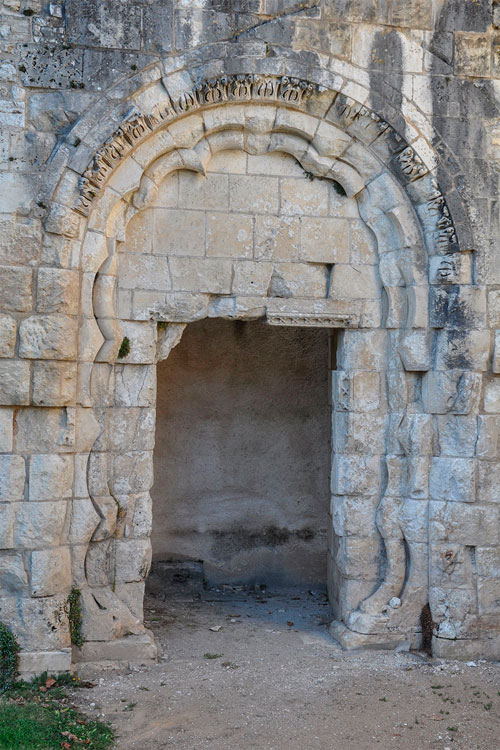
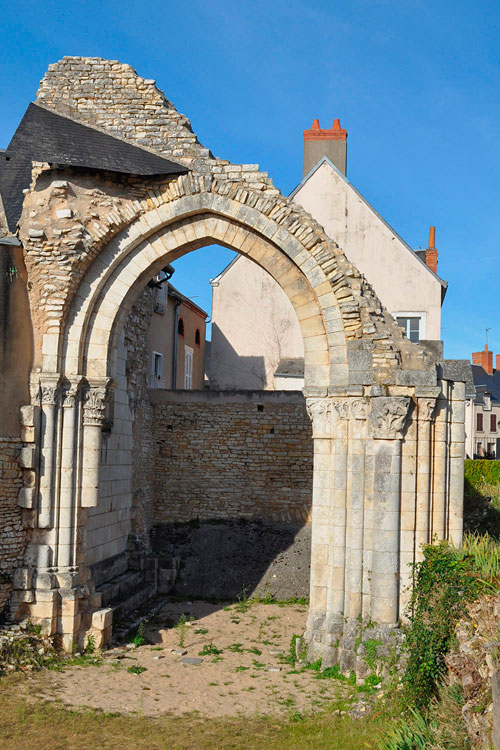
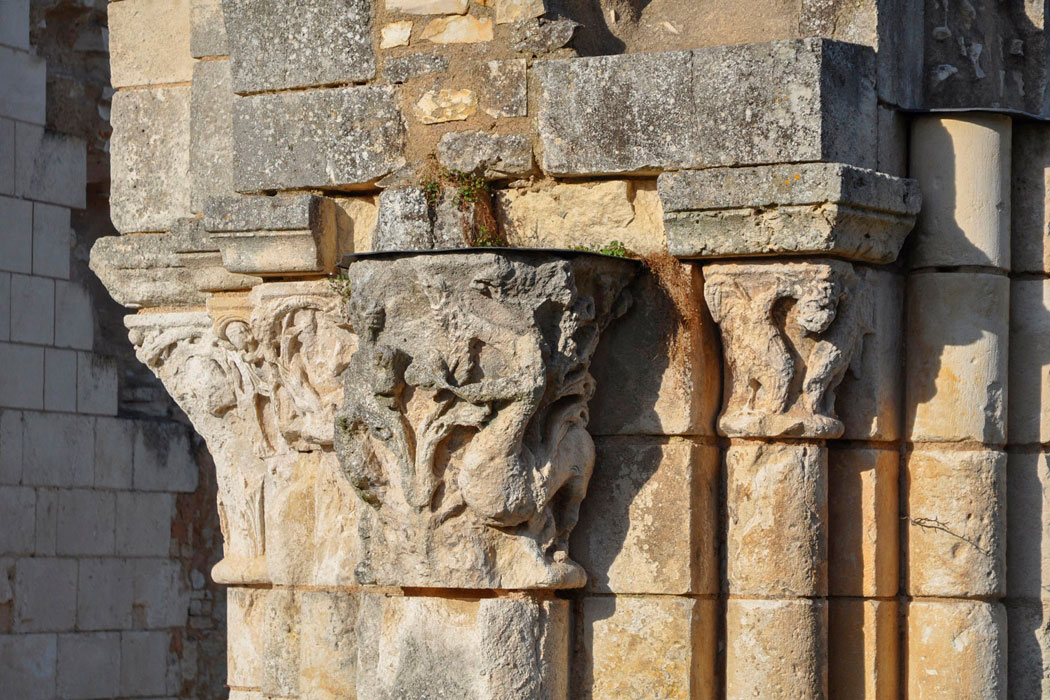
In the 15th century, the abbey suffered the effects of the Hundred Years' War, marking the beginning of its decline. In the 16th century, the house adopted the commendatory regime, and in 1567 it was occupied and plundered during the Wars of Religion. This period of instability lasted for several years and adversely affected monastic life. In 1622, its secularisation was decreed, and the abbey passed into the hands of Henry II of Bourbon-Condé (1588-1646), Duke of Châteauroux. Gradually, its structures disappeared. Today, a tower of the bell tower and some elements of the cloister still survive, together with other minor remains.
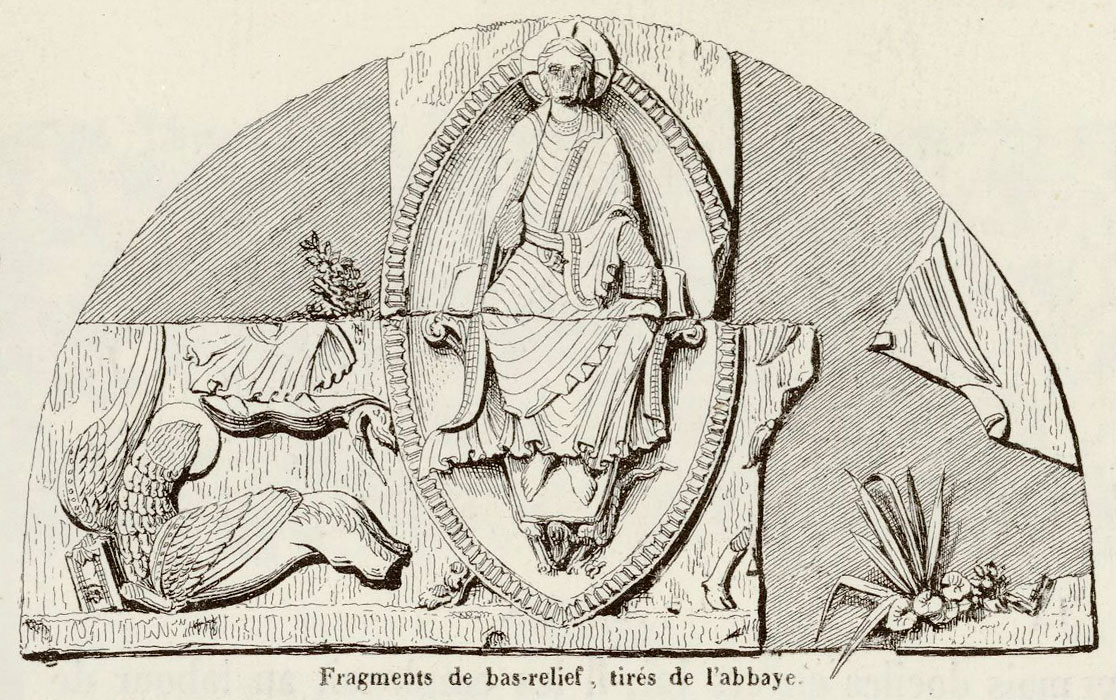
Tympanum from the monastery
Illustration from Esquisses pittoresques sur le département de l'Indre (1854)
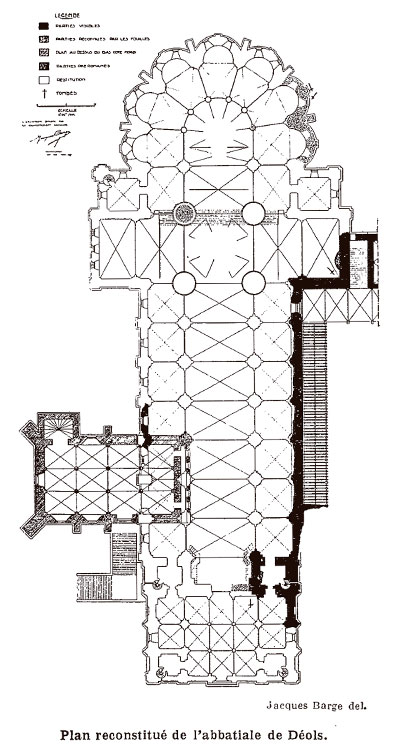
Church floor plan
L'abbatiale de Notre-Dame de Déols (1927)

Illustration from Esquisses pittoresques sur le département de l'Indre (1854)

Old postcard, private collection
- BAUDRILLART, Alfred (1938). Dictionnaire d'histoire et de géographie ecclésiastiques. Vol. 10. París: Letouzey et Ané
- BEAUNIER, Dom (1912). Abbayes et prieurés de l'ancienne France. Vol. 5. Bourges. Abbaye de Ligugé
- FAVIÈRE, Jean (1970). Berry roman. La nuit des temps, 32. Zodiaque
- FAUCONNEAU-DUFRESNE, Victor Albans (1873). Histoire de Déols et de Châteauroux. Vol. 1. Châteauroux: A. Nuret
- GRILLON DES CHAPELLES (1857). Notice sur l’abbaye de Déols. París: N. Chaix
- HUBERT, Jean (1927). L'abbatiale de Notre-Dame de Déols. Bulletin monumental. Vol. LXXXVI. París: Picard
- HUBERT, Jean (1987). L'abbaye exempte de Déols et la Papauté (Xe-XIIe siècles). Bibliothèque de l'École des chartes, vol. 145/1
- LA TRAMBLAIS, Louis Alexandre de; i altres (1854). Esquisses pittoresques sur le département de l'Indre. Châteauroux: Migné
- SAINT-MAUR, Congregació de (1720). Gallia Christiana in provincias ecclesiasticas distributa. Vol. 2. París: Typographia Regia
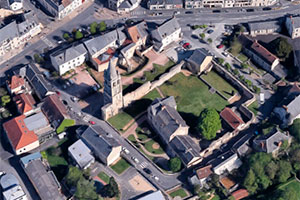
The remains of the monastery are located in the historic centre of Déols, north of Châteauroux