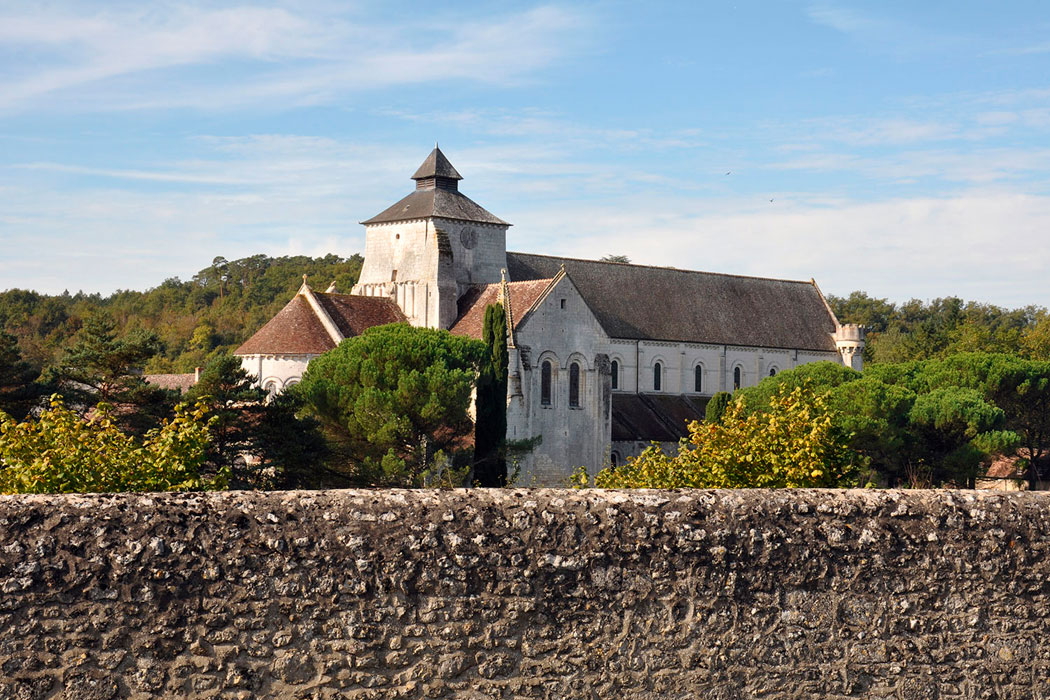


The origins of the Benedictine Abbey of Notre-Dame de Fontgombault date back to around the year 1000 when, according to tradition, the site was occupied by the hermit Gombaud. Over time, other hermits gathered around him. By the end of the eleventh century, the magister Pierre de l’Étoile led a hermit community that possessed a church dedicated to Saint Julian of Le Mans.
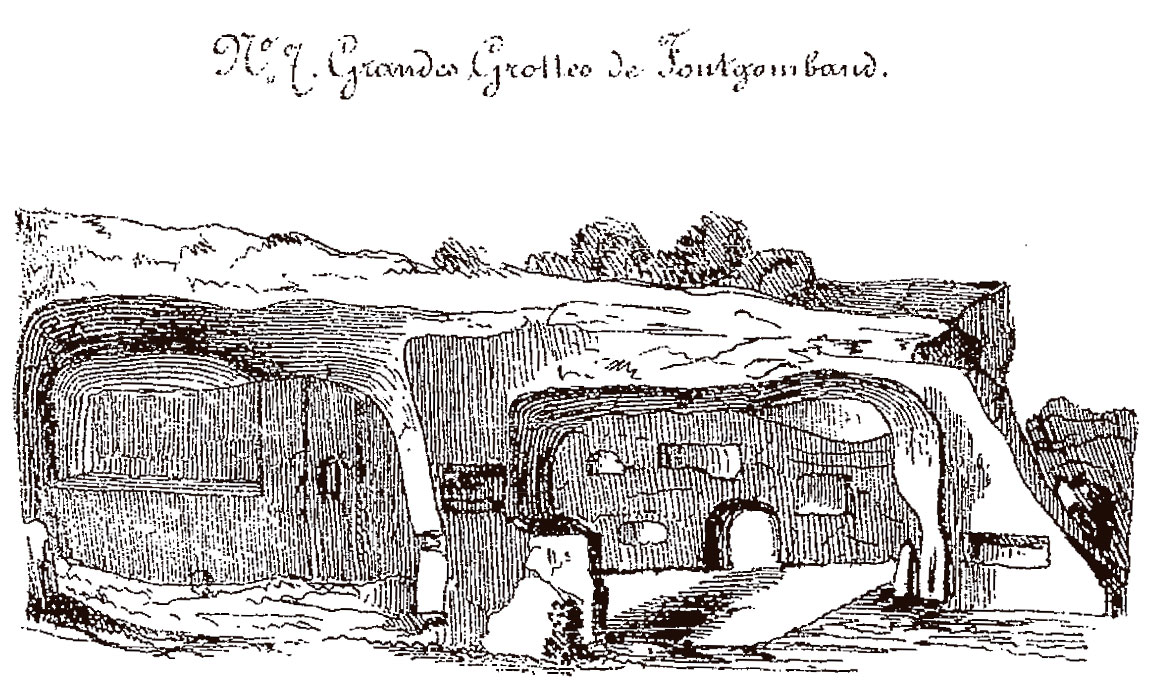
Illustration from Légendes des origines de l'abbaye de Notre-Dame de Fontgombaut
Brother of Isembaud, founder of the Abbey of l’Étoile (Vienne). He maintained contacts with several important monastic figures, including Bernard of Tiron († 1116), Robert d’Arbrissel (c. 1045-c. 1117), and Vital of Savigny (c. 1050-1122), founder of Savigny (Manche). He died in 1114 and was buried in the chapter house of Fontgombault. His tomb was lost in 1569 during the French Wars of Religion, but it was rediscovered in 1954.
In 1091, Pierre de l’Étoile decided to transform the hermitage into a Benedictine monastery, established on the opposite bank of the river, and became its first abbot. One of the hermits was probably Isembaud († 1140), brother of Pierre de l’Étoile, who left Fontgombault around 1120 to found other abbeys, among them Notre-Dame de l’Étoile (Vienne). The abbey experienced rapid growth thanks to the support of the nobility. William X of Aquitaine (1130), Robert de Lisle, Viscount of Blois (1208), and the Counts of Poitiers, among others, contributed to its prosperity, enabling it to acquire extensive lands and properties throughout the surrounding region.
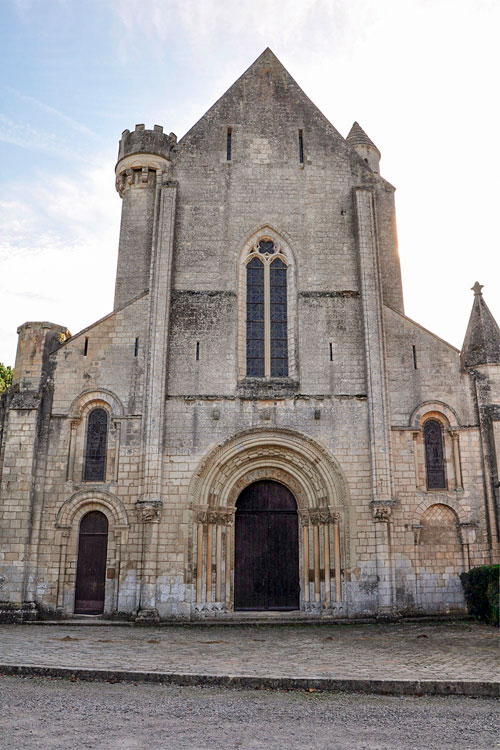
Western portal
This prosperity allowed it to establish a considerable number of dependent priories. In 1145, Pope Eugene III confirmed its possessions. During this flourishing period, the great monastic church was built and consecrated in 1141. This favourable situation lasted until the mid-fourteenth century, when Fontgombault was affected by the Hundred Years’ War despite having been fortified. During the second half of the fifteenth century, once stability had returned, the monastery was restored. In 1500, the commendatory regime was introduced, a circumstance that also led to episodes of violence.
The most serious blow came in 1569, when the abbey was occupied by Calvinists. The church was almost completely destroyed and the community was forced to occupy dilapidated buildings, making the normal observance of monastic life difficult for the small number of monks who remained. Eventually, the church became unusable and a chapel was fitted out for worship. It remained in use until 1693, when the chancel was restored. In 1741, the four monks who still resided there abandoned the monastery. Later attempts were made to establish other communities, but none proved successful.
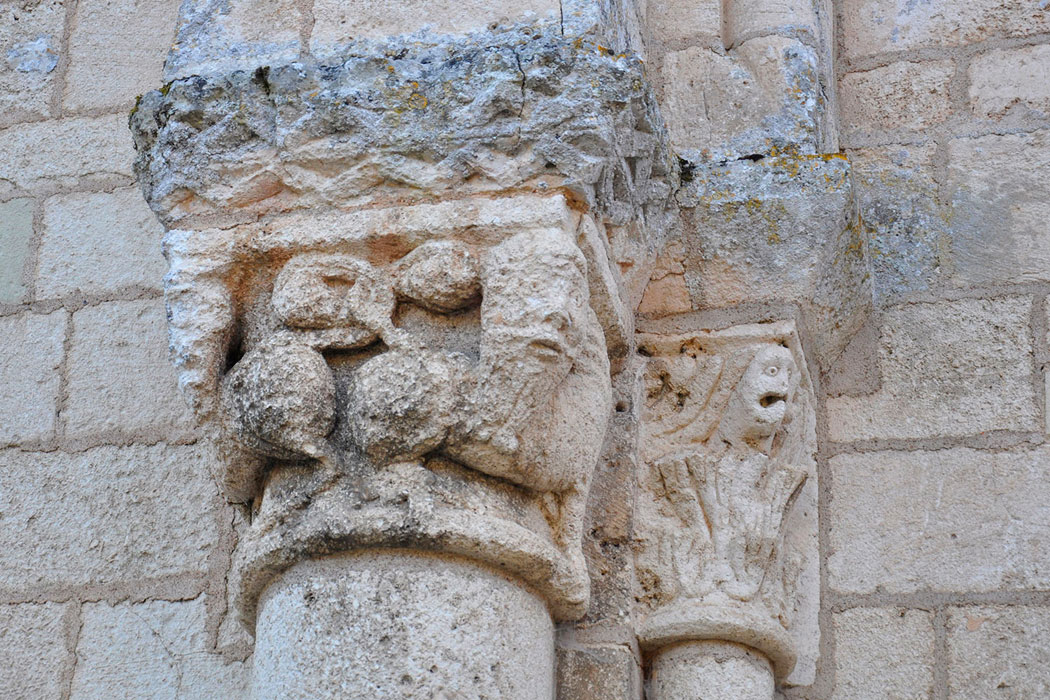
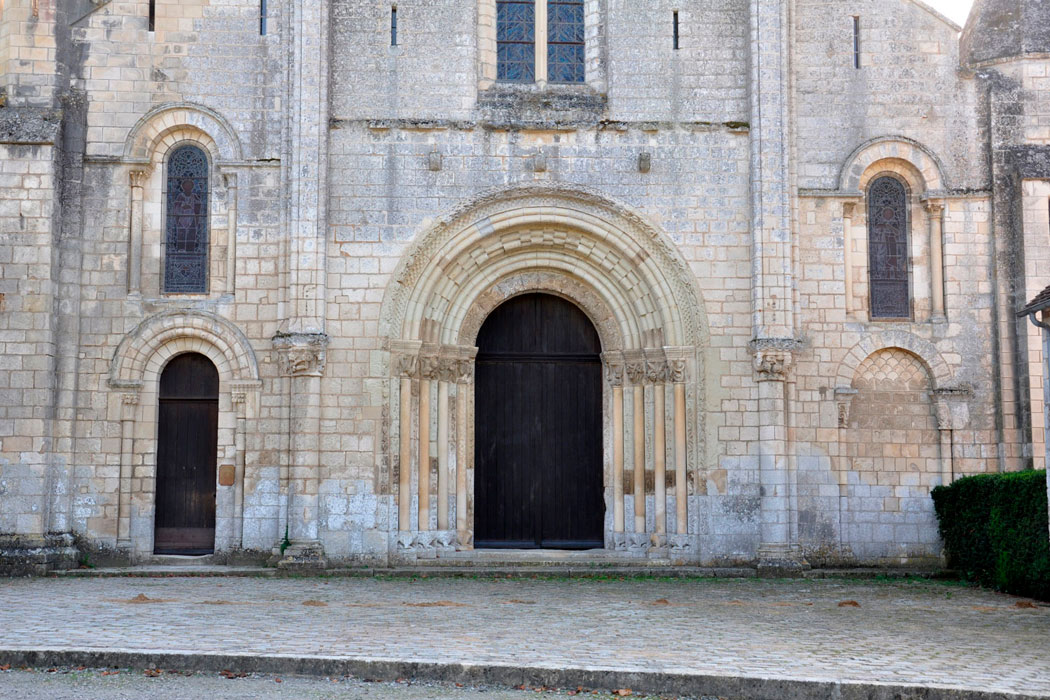
Western portal
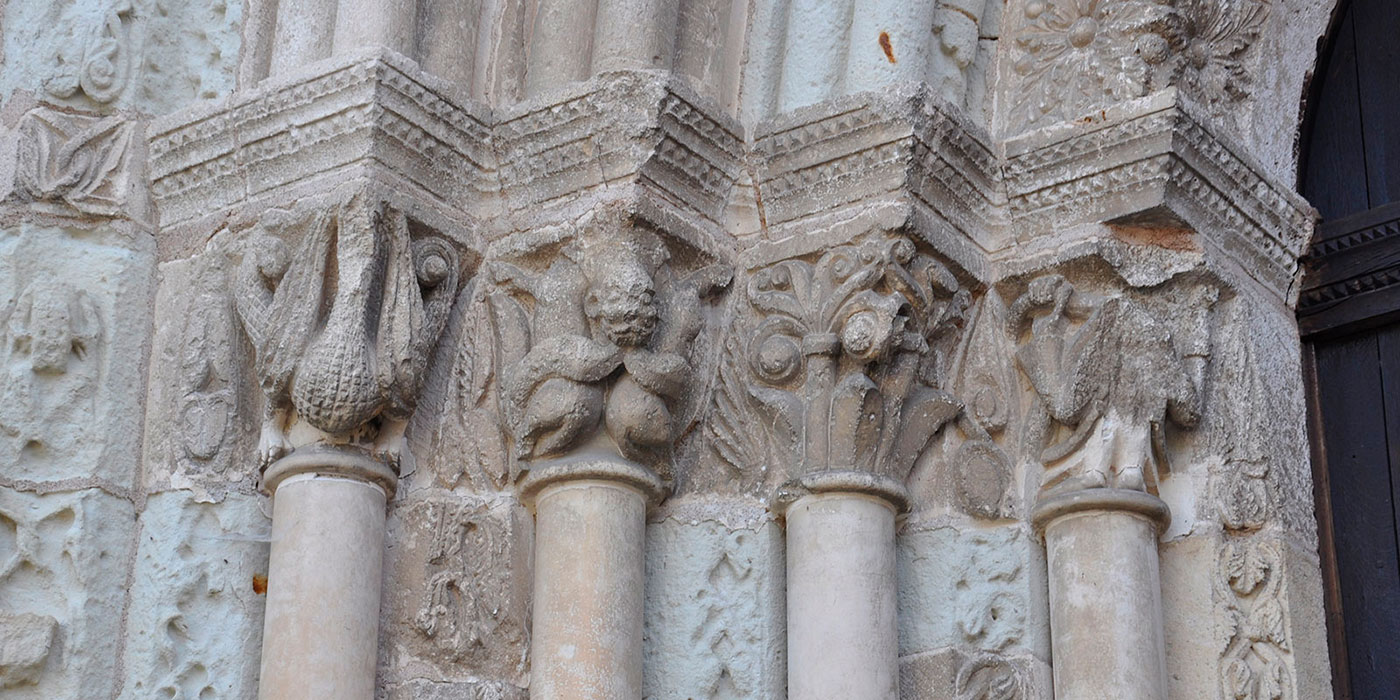
Western portal
In 1791, the site was sold following the Revolution, which further aggravated the ruined condition of the buildings. In 1849, the physical and monastic restoration of the site began with the arrival of Trappist monks, who remained there until their expulsion in 1903. In 1948, the Benedictine community was restored with monks from the Abbey of Solesmes (Sarthe), and since then it has belonged to the Solesmes Congregation. In 1954, during restoration work, the tomb of Pierre de l’Étoile was discovered, transferred to the church and suitably arranged there. The church itself was reconsecrated that same year.
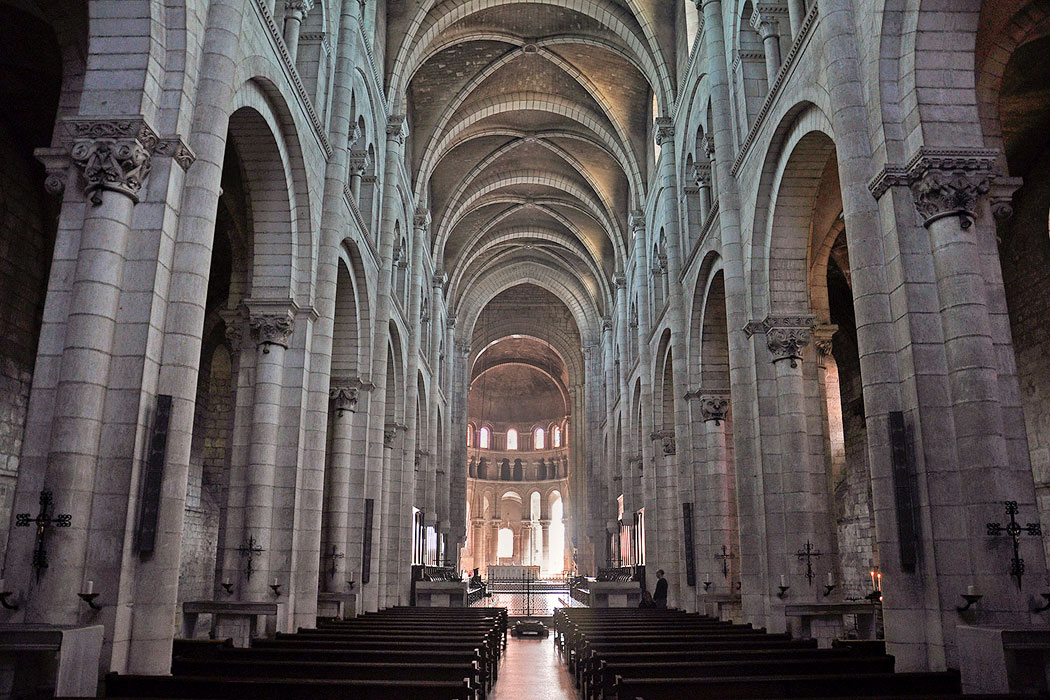
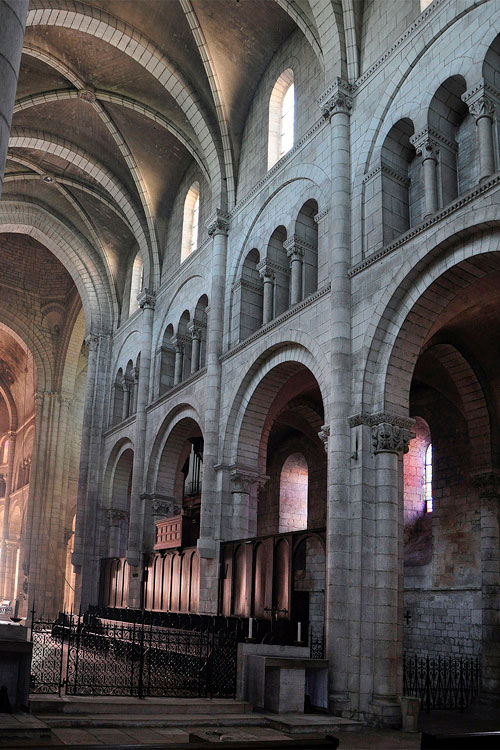
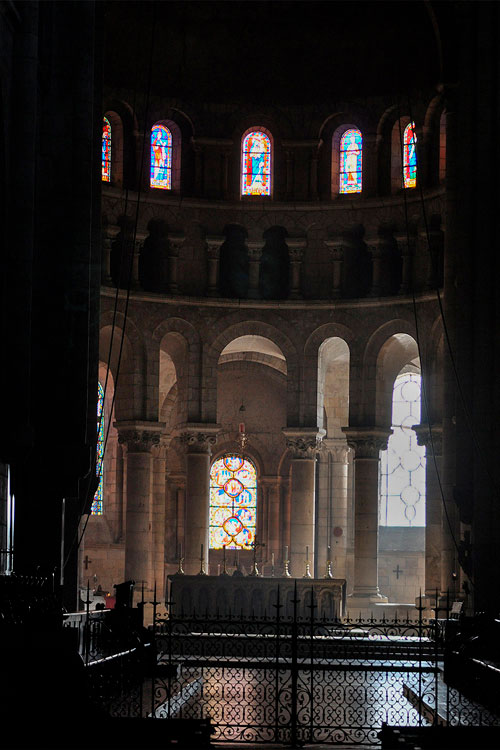
The present church preserves its twelfth-century structure. It is a three-aisled building opening onto a transept. Beyond lies the chancel, flanked by two aisles running parallel to the transept. A deambulatory connects with the side aisles of the church. This ambulatory has three radiating chapels, together with two additional apsidal chapels opening onto the transept arms. The entire chevet is not perfectly aligned with the axis of the nave but is slightly inclined. The nave had been lost and was rebuilt, only parts of the lateral walls having survived. The western portal, with its round arch and sculptural decoration, is also medieval.
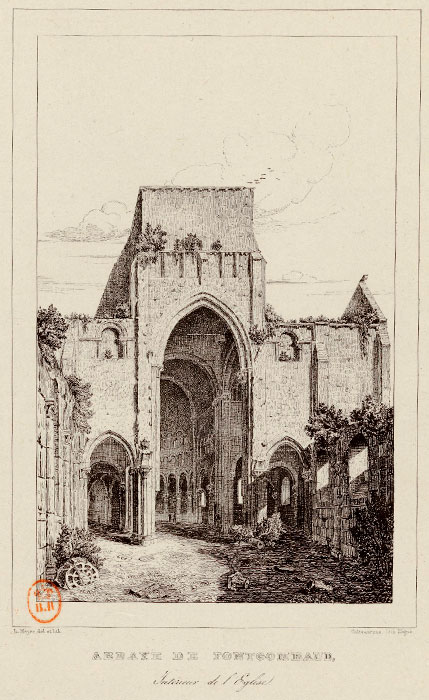
The church in ruins
Illustration from Esquisses pittoresques sur le sépartement de l'Indre (1854)
Bibliothèque nationale de France

Illustration from Esquisses pittoresques sur le sépartement de l'Indre (1854)
Bibliothèque nationale de France
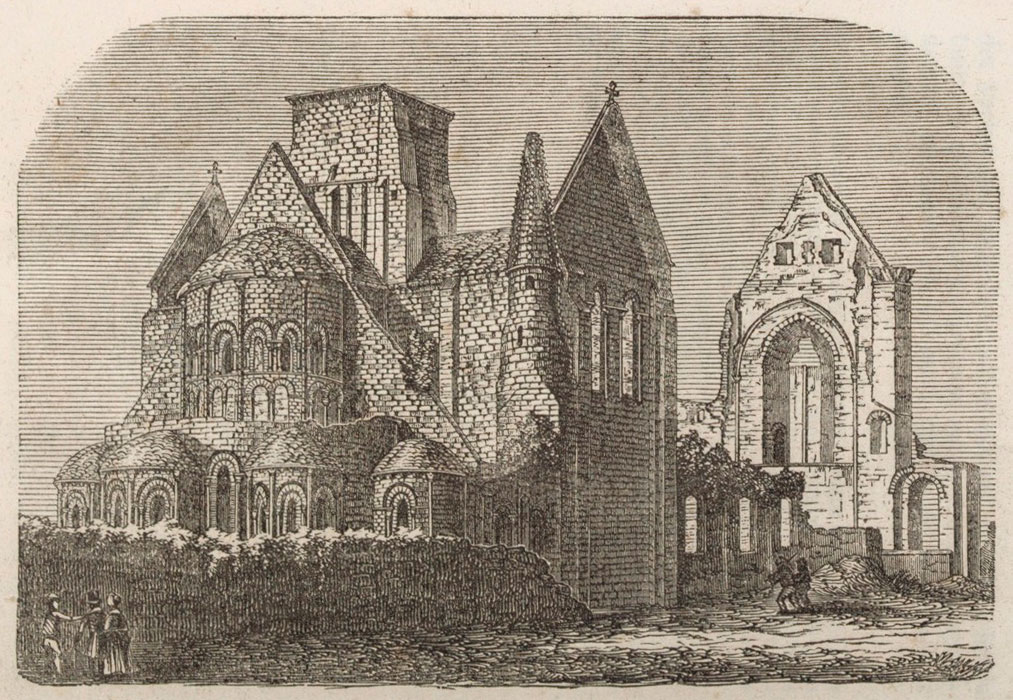
Illustration from Les vies des saints du Poitou
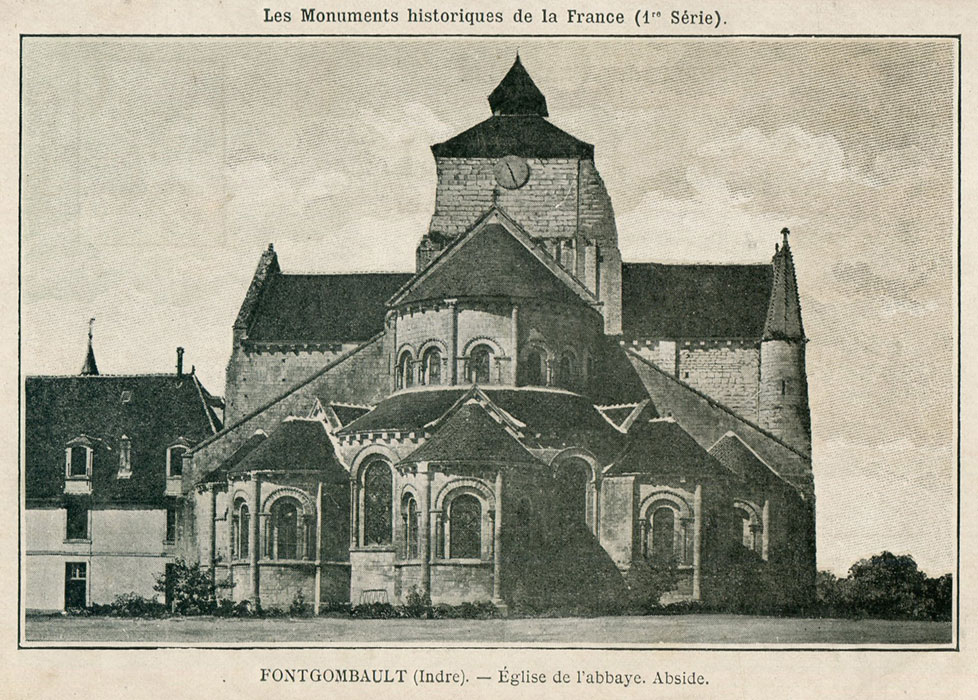
Old postcard, private collection
- AUBERT, R. (1971). Dictionnaire d'histoire et de géographie ecclésiastiques. Vol. 17. París: Letouzey et Ané
- BEAUNIER, Dom (1912). Abbayes et prieurés de l'ancienne France. Vol. 5. Bourges. Abbaye de Ligugé
- CHERGÉ, Charles de (1856). Les vies des saints du Poitou. Poitiers: Dupré
- DAMOURETTE, Louis (1884-85). Légendes des origines de l'abbaye de Notre-Dame de Fontgombaut. Revue du Centre. Châteauroux: Majesté
- DEMENAIS, L. (1921). L'église abbatiale de Fontgombault. Bulletin monumental, vol. 80. Société française d'archéologie
- FAVIÈRE, Jean (1970). Berry roman. La nuit des temps, 32. Zodiaque
- FONTGOMBAULT (2005). Abbaye Notre-Dame de Fontgombault. Moisenay: Gaud
- HENRIET, Jacques (1987). L'abbatiale Notre-Dame de Fontgombault. Congrès archéologique de France, 142 ss. Société française d'archéologie
- LA TRAMBLAIS, Louis Alexandre de; i altres (1854). Esquisses pittoresques sur le département de l'Indre. Châteauroux: Migné
- SAINT-MAUR, Congregació de (1720). Gallia Christiana in provincias ecclesiasticas distributa. Vol. 2. París: Typographia Regia
- TIRET, Jean (1954). La sépulture de Pierre de l'Étoile à Fontgombault. Bulletin Monumental, vol, 122/3
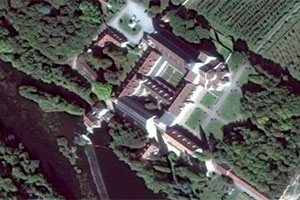
The Abbey of Fontgombault is located in the commune of the same name, on the banks of the Creuse River, between Châteauroux and Poitiers