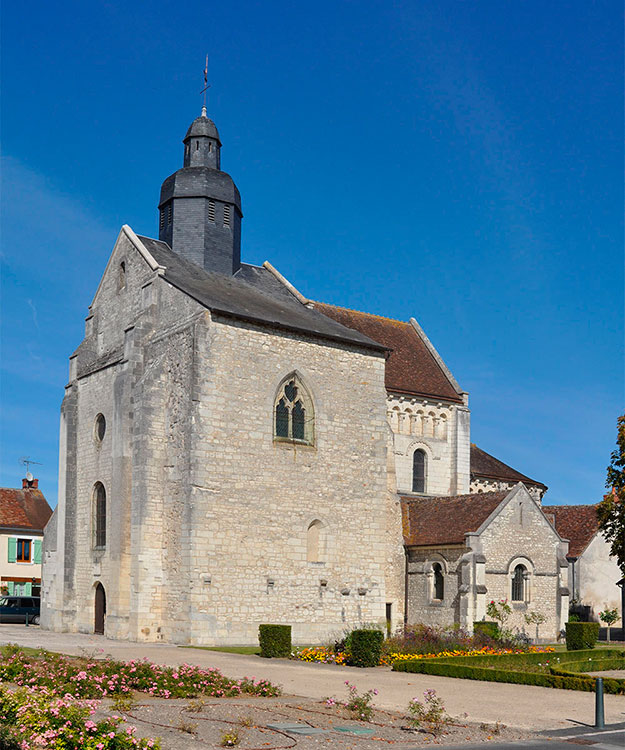

Some details of the history of the Abbey of Saint-Genou are known indirectly through the account of the Miracles of Saint Genou, written by a monk of this monastery at the beginning of the 11th century. Later information is very scarce because the archives were destroyed in 1580. In 828, Count Wicfred of Bourges († 838) and his wife Oda founded and endowed a church dedicated to Our Lady at Strata (l’Estrée). In 830, Pippin I of Aquitaine (c. 797–838) confirmed the foundation and granted it privileges. It was probably more than a simple church and may in fact have been a house of Aachener canons.
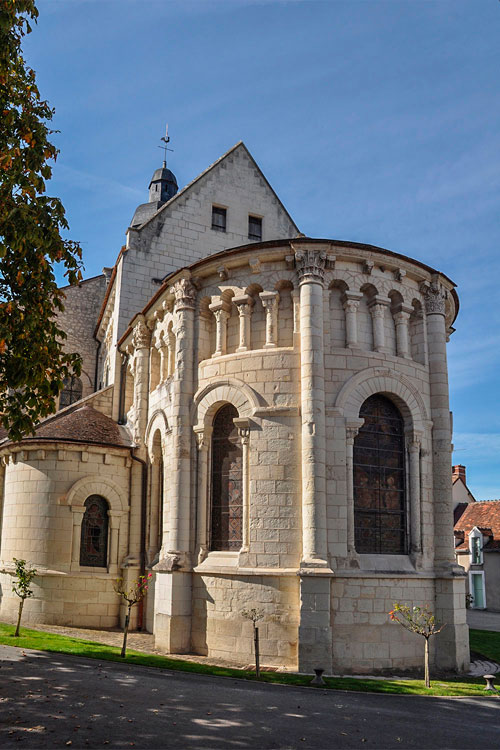
At an unknown date, the same founders established this Benedictine monastery, also at l’Estrée but on the banks of the Indre, dedicated to Saint-Sauveur; its first abbot was Dodon († 853). In 843, the Frankish king Charles the Bald (823–877) confirmed the foundation and privileges of this second house, which may have received the canons from l’Estrée. Nearby, at the monastery of Selles-sur-Nahon (Indre), were the tombs of Saint Genou and his father Saint Genit, figures whom tradition regards as natives of Rome who reached this region in the 3rd century after a stay in Cahors, where Genou is considered the first bishop of that diocese.
Abbot Mainard, Dodon’s successor, obtained permission from Charles the Bald to transfer the saints’ relics to Saint-Sauveur de l’Estrée. However, because of the Norman invasions, both the relics and the monastic community sought temporary refuge at the monastery of Saint-Pierre-le-Moûtier (Nièvre). Once conditions had stabilised, they were able to return to their monastery, which later became known under the dedication of Saint-Genou. Saint-Laurent de Palluau, situated west of the abbey, was a priory dependent on this house. Meanwhile, after the Viking incursions, the canonry of l’Estrée disappeared and, from the 10th century onwards, the site is documented as a parish.
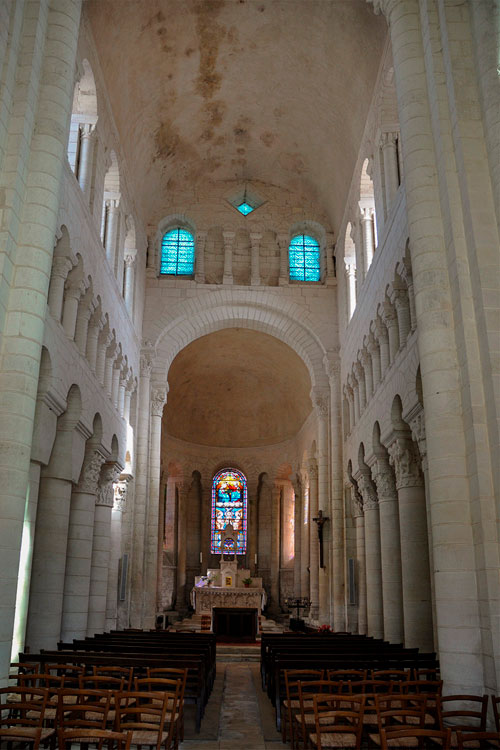
Around 994, construction began on a new monastery where the relics of Saint Genou were suitably installed. The church was consecrated by the archbishops of Bourges and Tours in 1066. At that time, the monastery was enjoying a period of prosperity. Around 1007, it was able to send monks to found the Abbey of Beaulieu-lès-Loches (Indre-et-Loire). During the 15th century, the introduction of the commendatory regime led to the decline of the house. In 1673, the abbot ordered the demolition of the church nave because of its poor condition and because it was no longer needed. In 1773, before the Revolution, the monastery was suppressed and the church became a parish church.
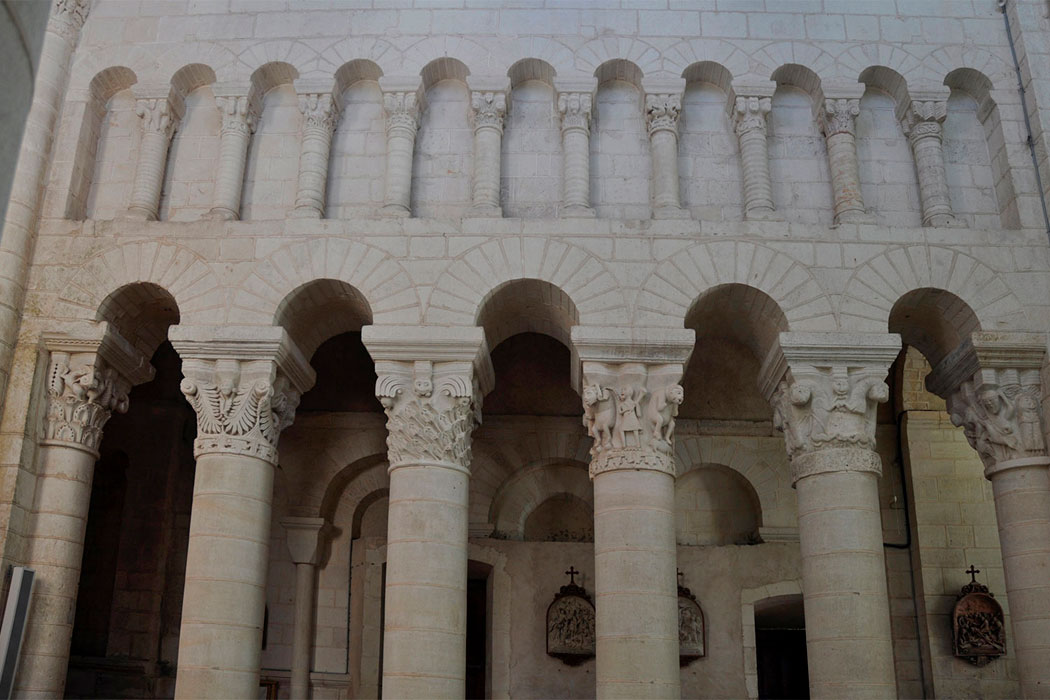
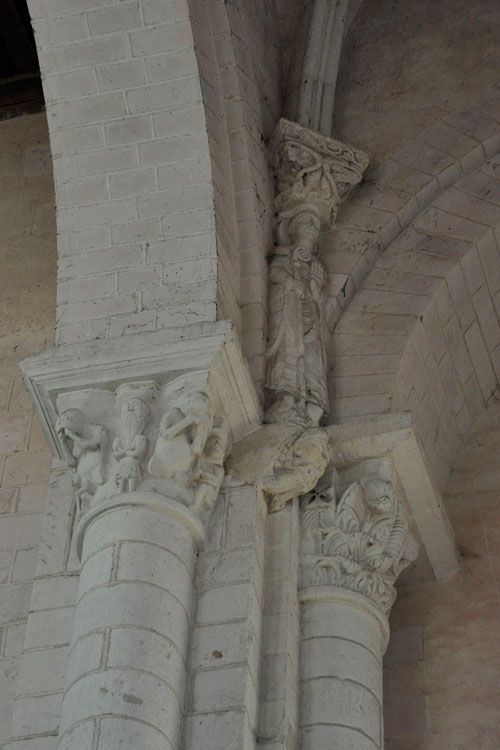
The monastery was sold in 1796, but the church later regained its parochial function and was protected. The building has been extensively altered and reflects both the vicissitudes of its history and the major interventions carried out in the second half of the 19th century. Romanesque in structure, it consists of a central nave ending in an apse containing the chancel, together with two side aisles. It once possessed a transept, now lost. The church preserves a remarkable series of capitals, but the rather insensitive restorations carried out on many of them give them an almost new appearance and make their interpretation more difficult. In its original form, the ensemble may be dated between the 11th century and the beginning of the 12th century.
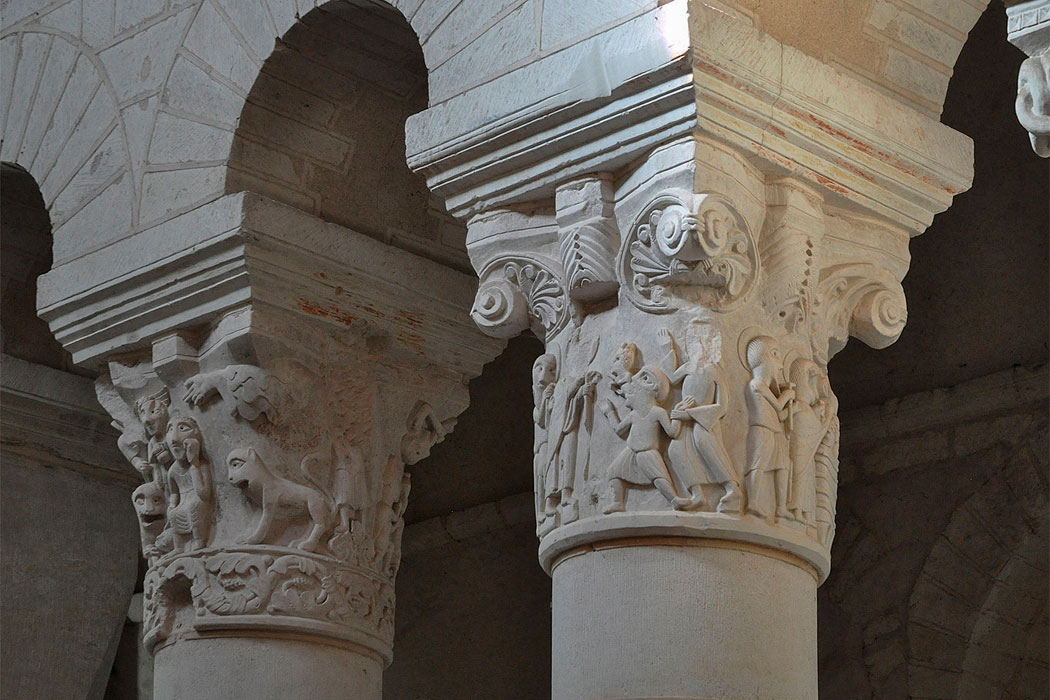
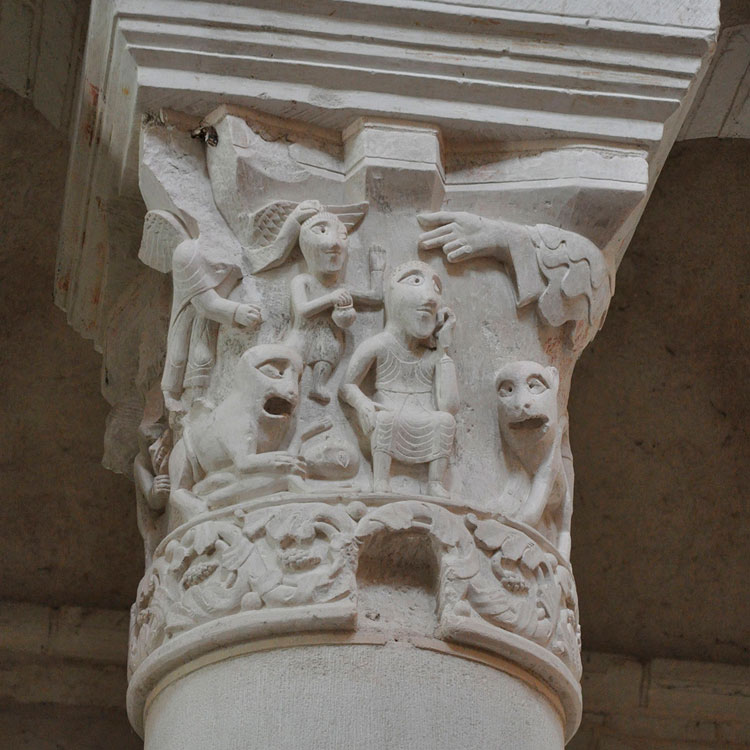
Daniel in the lion's den
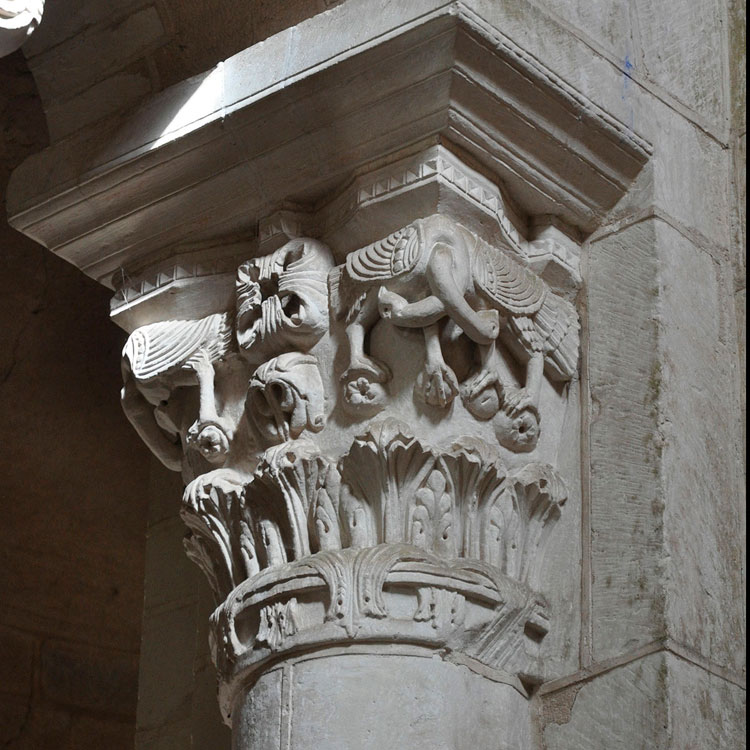
Vegetable capital with birds
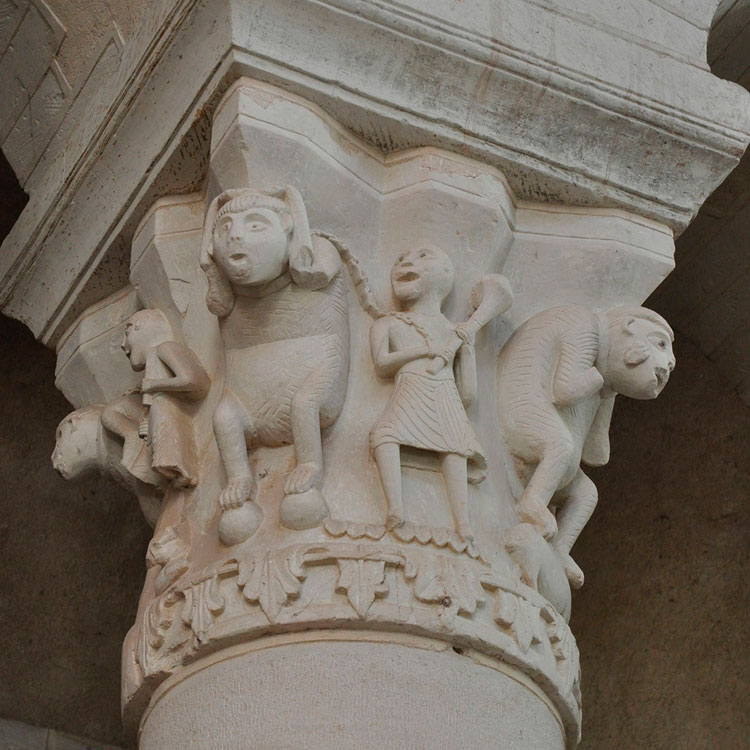
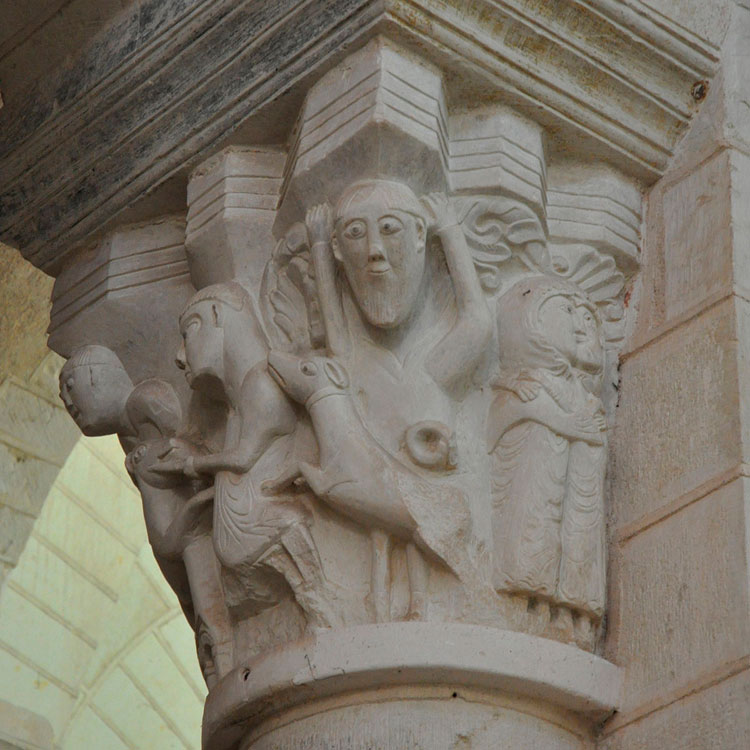
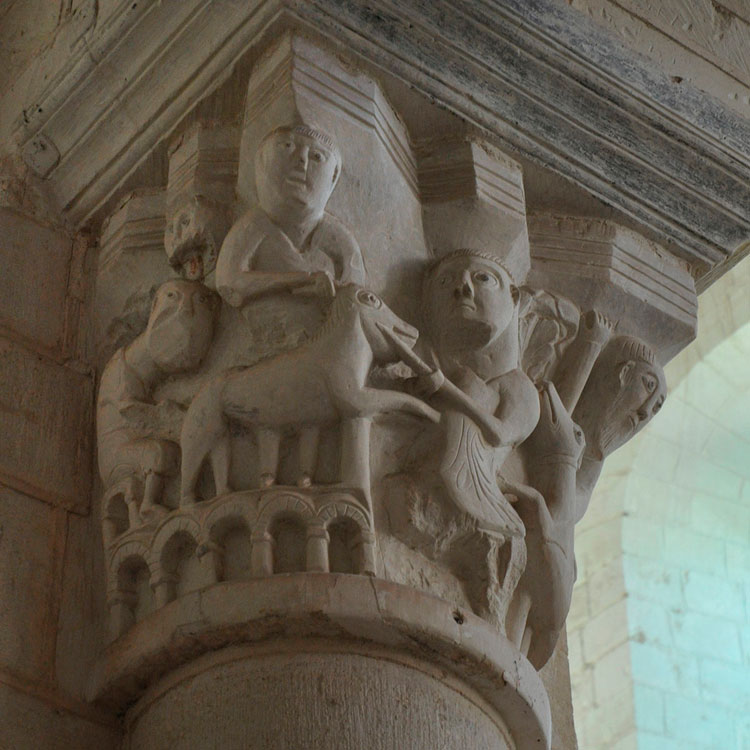
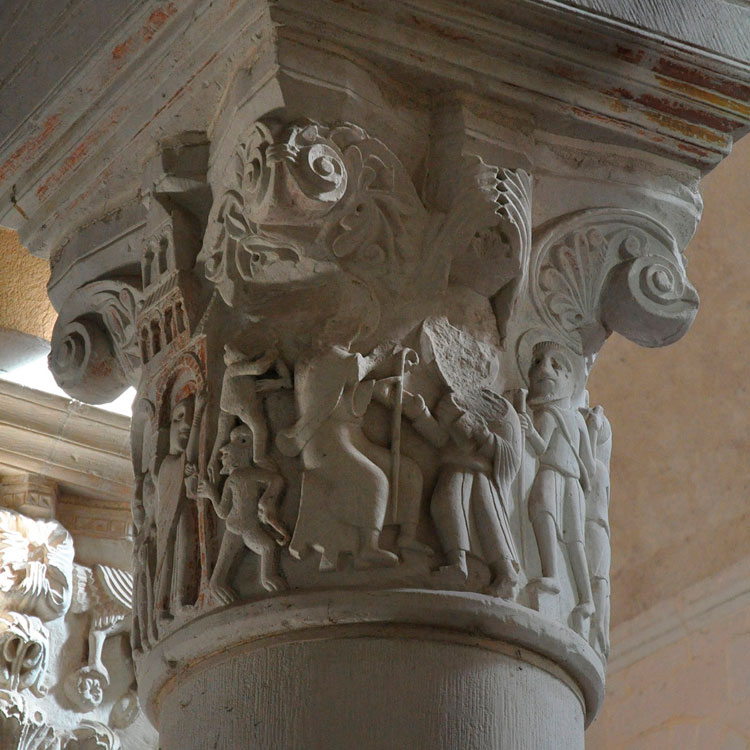
Scenes from the life of Saint Genou
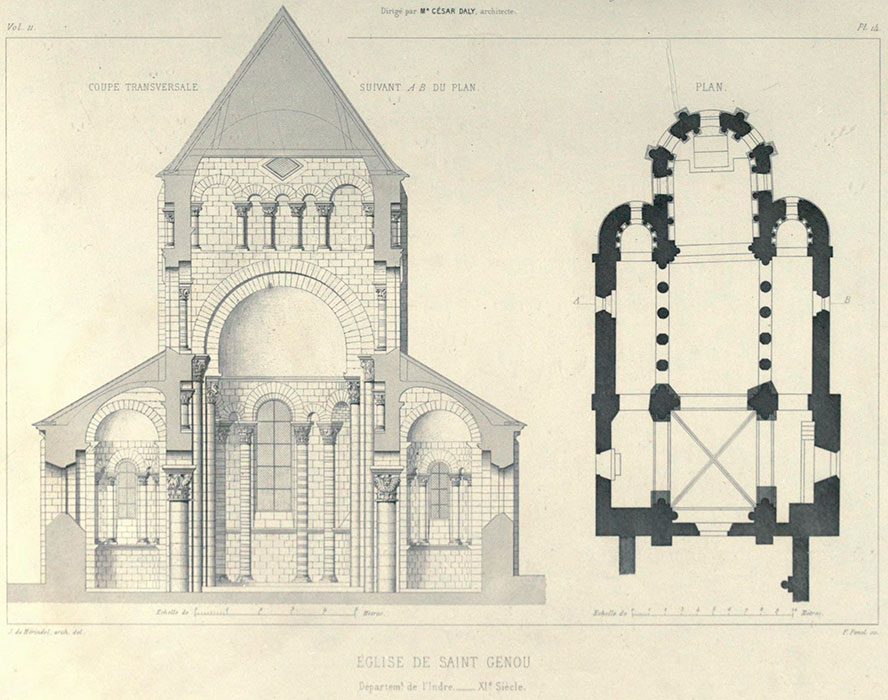
Illustration from Église de Saint-Genou (1853)

Old postcard, private collection
- BEAUNIER, Dom (1912). Abbayes et prieurés de l'ancienne France. Vol. 5. Bourges. Abbaye de Ligugé
- BOUSSARD, Jacques (1962). L'origine des familles seigneuriales dans la région de la Loire moyenne. Cahiers de civilisation médiévale, núm. 19
- BOUYONNET, Pierre (1902). Estrées-Saint-Genou. Bulletin de la Société Académique du Centre. Vol. I. Châteauroux: Langlois
- CAMUS, Marie-Thérèse (1987). L'église de Saint-Genou. Congrès archéologique de France, 142 ss. Société française d'archéologie
- DALY, César (1853). Église de Saint-Genou (Indre - Xie siècle). Revue générale de l'architecture et des travaux publics, vol. 11. París
- DESHOULIÈRES, François (1947). L'église de Saint-Genou (Indre). Bulletin Monumental, Vol. 105/1
- FAVIÈRE, Jean (1970). Berry roman. La nuit des temps, 32. Zodiaque
- GUÉRIN, Paul (1888). Les Petits Bollandistes. Vies des saints. Vol. 1. París: Bloud et Barral
- OURY, Guy-Marie (1994). Un monastère de la Touraine berrichonne: Saint-Genou de l'Estrée du IXe au XIIe siècle. Bulletin de la Société archéologique de Touraine. Tours
- SAINT-MAUR, Congregació de (1720). Gallia Christiana in provincias ecclesiasticas distributa. Vol. 2. París: Typographia Regia
- THAUMAS DE LA THAUMASSIÈRE, Gaspard (1589). Histoire de Berry. París: J. Morel
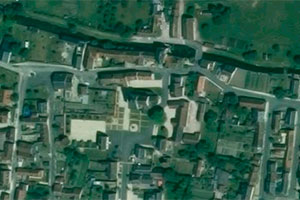
The abbey church of Saint-Genou stands west of Châteauroux, on the road towards Loches