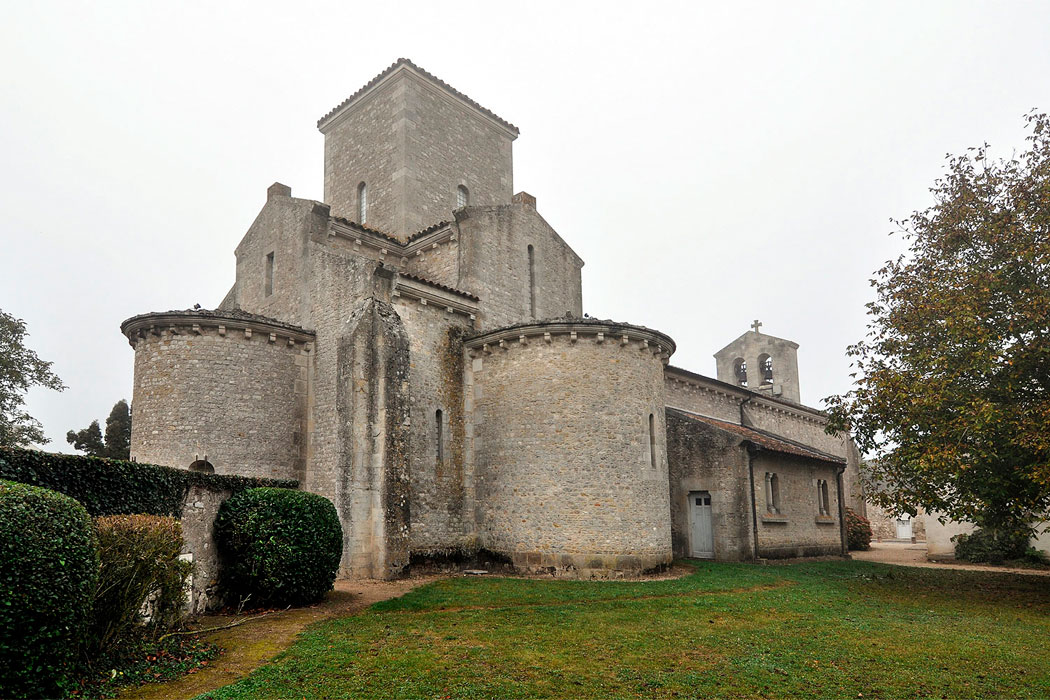

The village of Germigny-des-Prés is renowned for preserving one of the few Carolingian churches that have survived to the present day. The place-name Germaniacus is not documented until 843, although indirect sources from the monastery of Saint-Benoît-sur-Loire (also known as Fleury, Loiret) indicate that Abbot Theodulf of Orléans (c. 755-c. 821) built a residence, or villa, here, together with a chapel dedicated to the Holy Trinity.
Theodulf was probably of northern Hispanic origin, although he had settled in Septimania and, by the 780s, had already gained considerable influence at the Carolingian court. He served as an adviser to Charlemagne (748-814). In 798 he was appointed Bishop of Orléans and, in the same year, also became abbot of Saint-Benoît-sur-Loire. He remained a close associate of Charlemagne until the emperor's death and played a role in the spread of the Benedictine reform promoted by Benedict of Aniane (c. 750-821). He is also remembered for revising and disseminating biblical texts, several manuscripts of which survive, notably the Thedulf Bible, now preserved in the Bibliothèque nationale de France. The circumstances surrounding the construction of the residence and its chapel, however, remain unknown.
After Theodulf's death, the residence passed into the hands of the Carolingian emperor and became the venue for several assemblies. Charles the Bald (840-877) stayed there, and the site became known as the "royal palace". Around 855-865, the residence was burned during the Viking incursions, and the chapel was also partially damaged. By the time of Abbot Hugh of Saint-Benoît-sur-Loire (c. 1037-c. 1049), Germigny had been largely abandoned and was then restored. In 1067, a community of four monks was established there, creating a small priory dependent on Saint-Benoît-sur-Loire. During the thirteenth century it also acquired parochial functions, but by the sixteenth century it had lost its monastic role and became the village parish church.
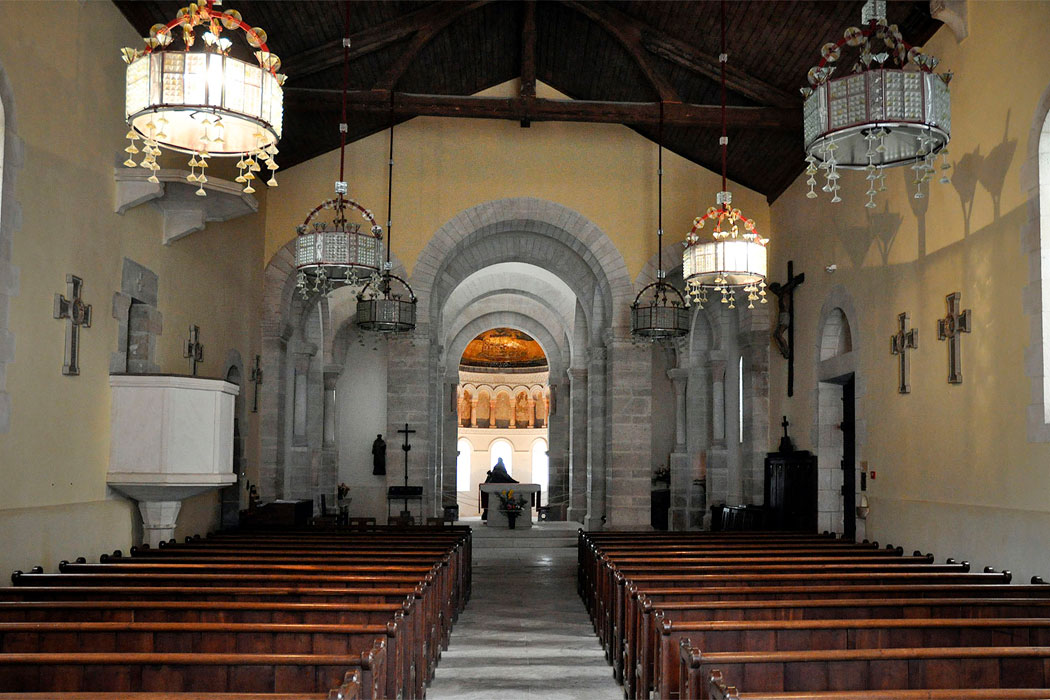
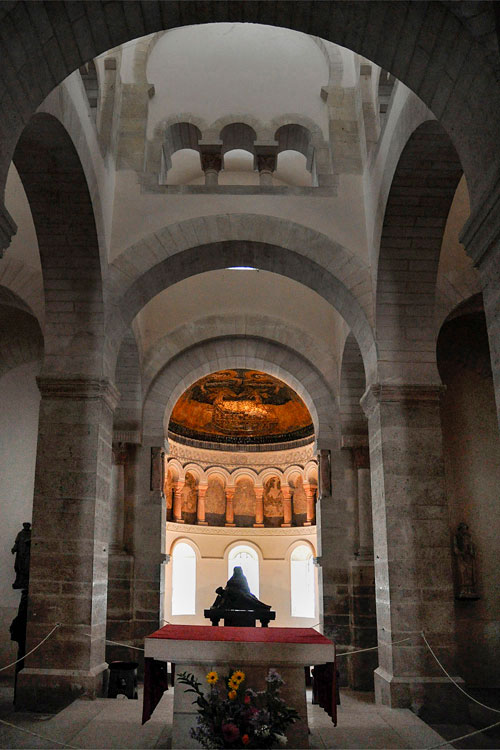
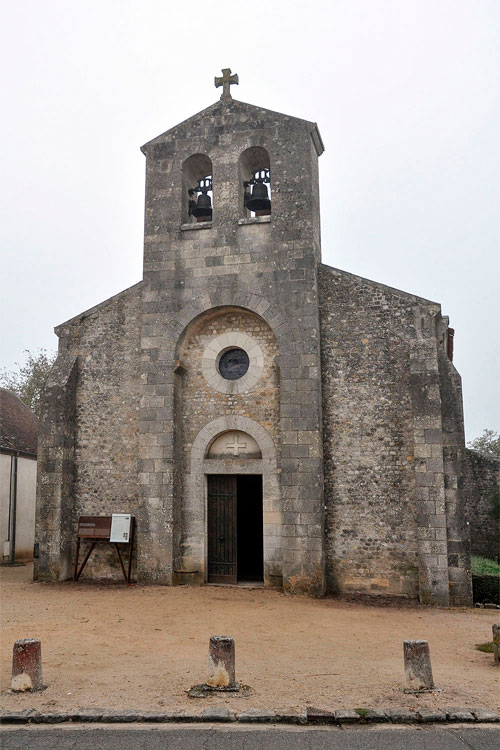
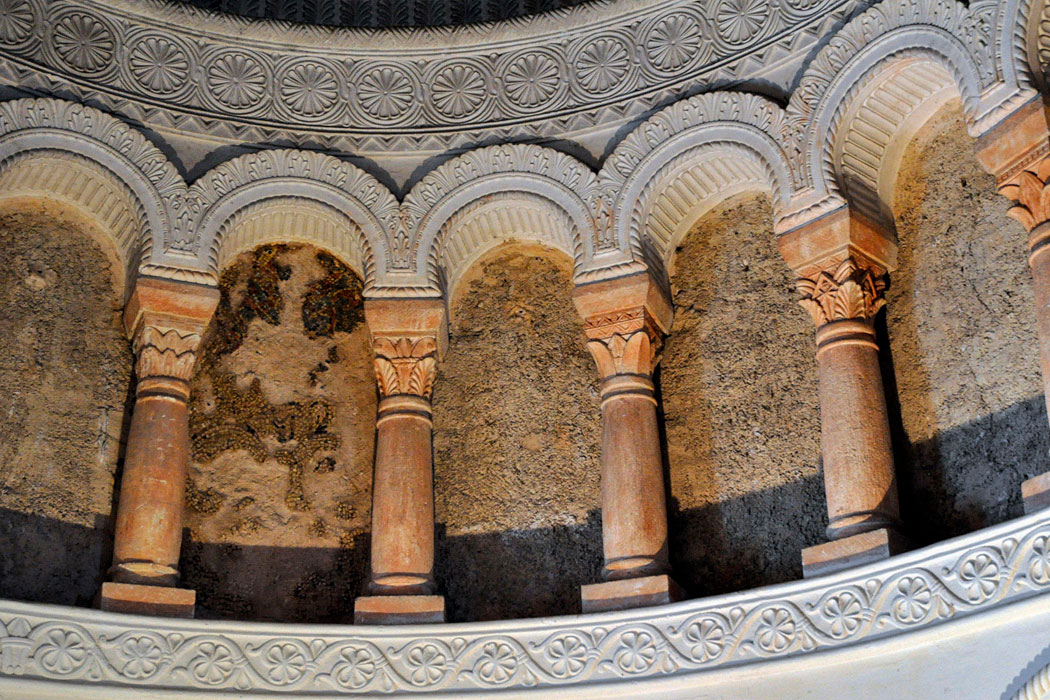
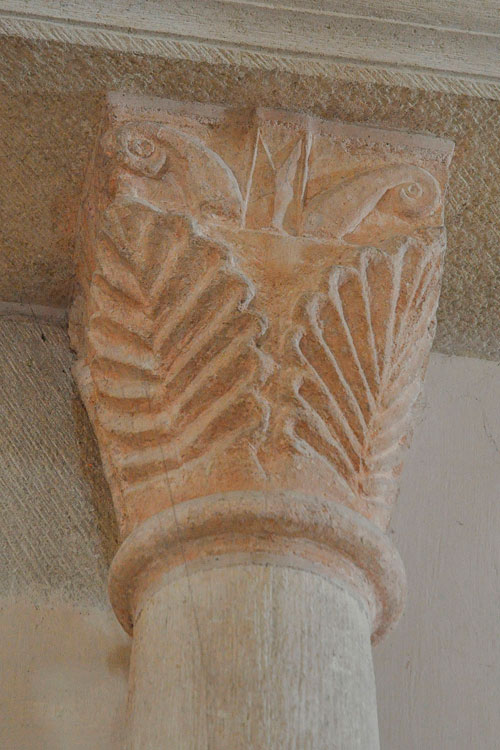
It was not until the nineteenth century that the monument was rediscovered as an outstanding example of Carolingian architecture and its Carolingian mosaic decoration, still preserved today, was fully appreciated. The building was subsequently restored, excavated and extensively studied. The small Carolingian church built in Theodulf's time survives today. It has a square plan and originally featured three apses on the eastern side and a further apse centred on each of the other three façades. It retains several original features alongside others resulting from later alterations, additions and reconstructions. The most significant modification was the addition of a nave to the west of the original chapel.
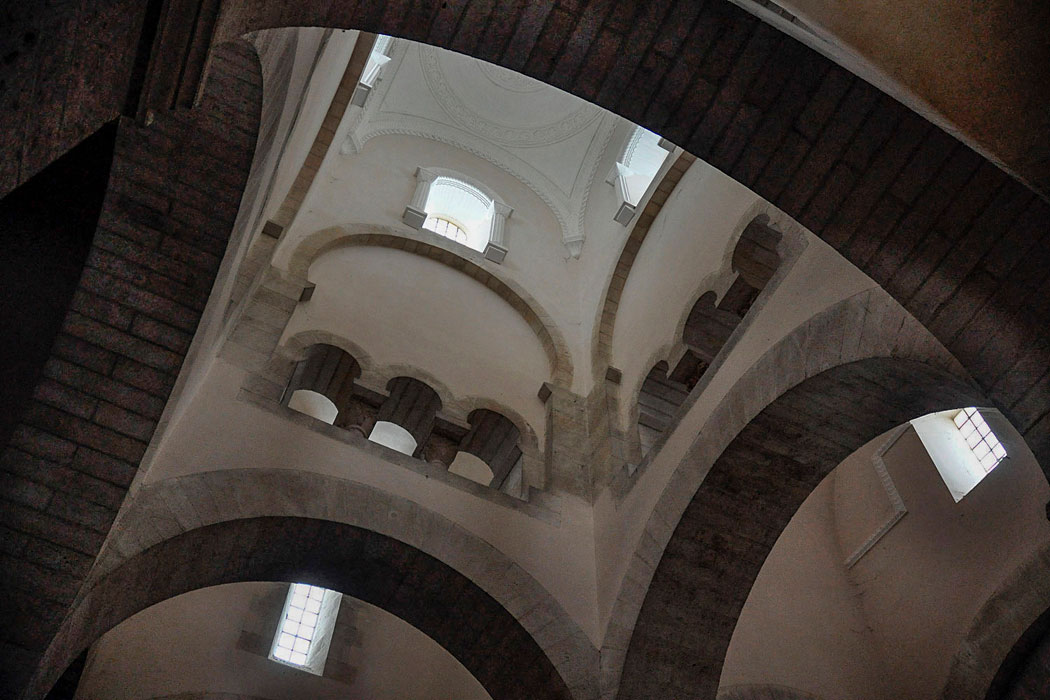
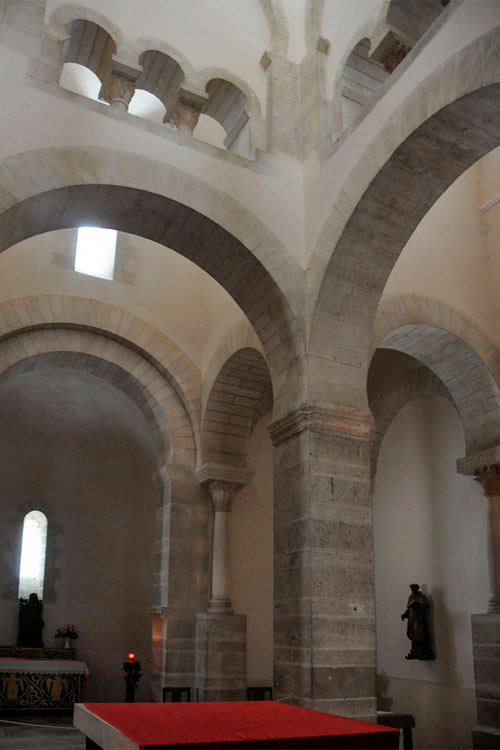
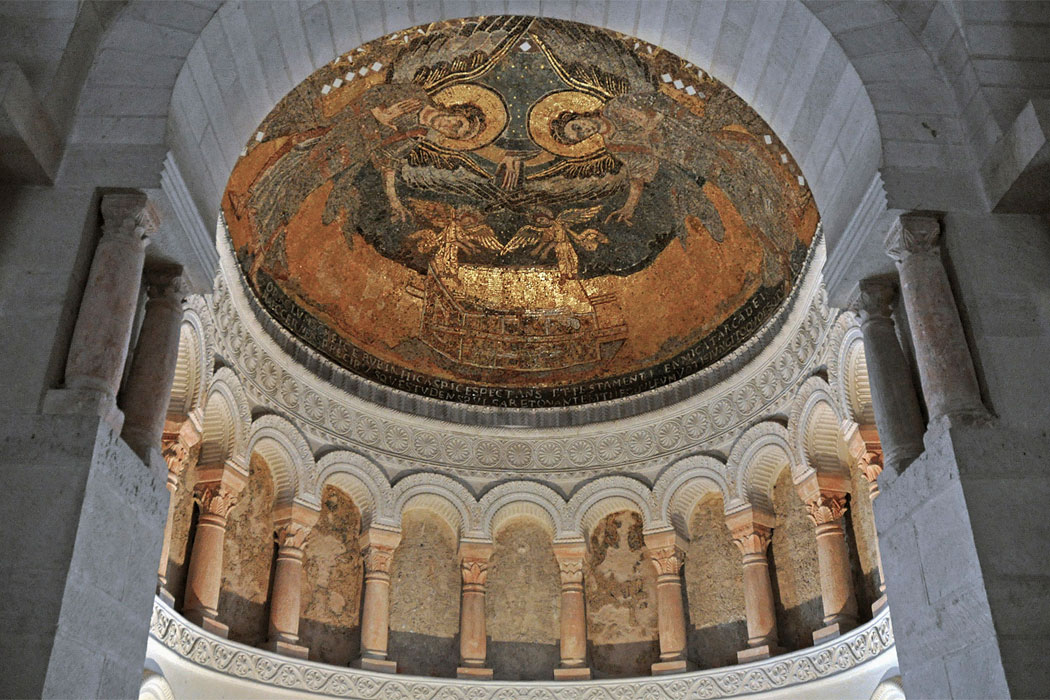
Mosaic of the apse (9th century)
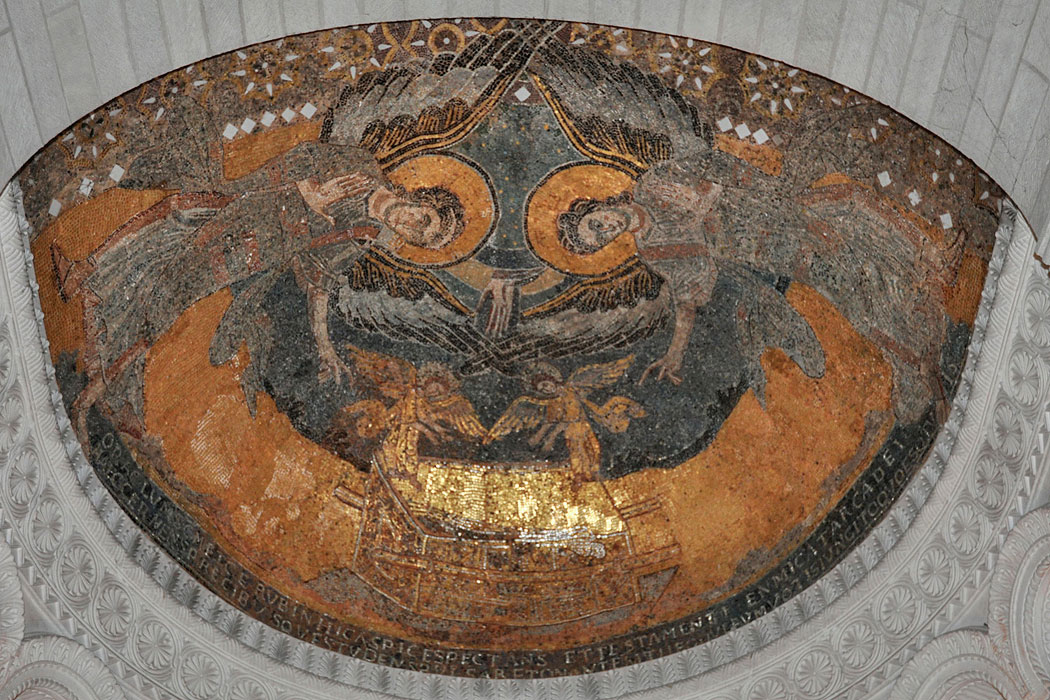
Mosaic of the apse, with two angels and the Ark of the Covenant
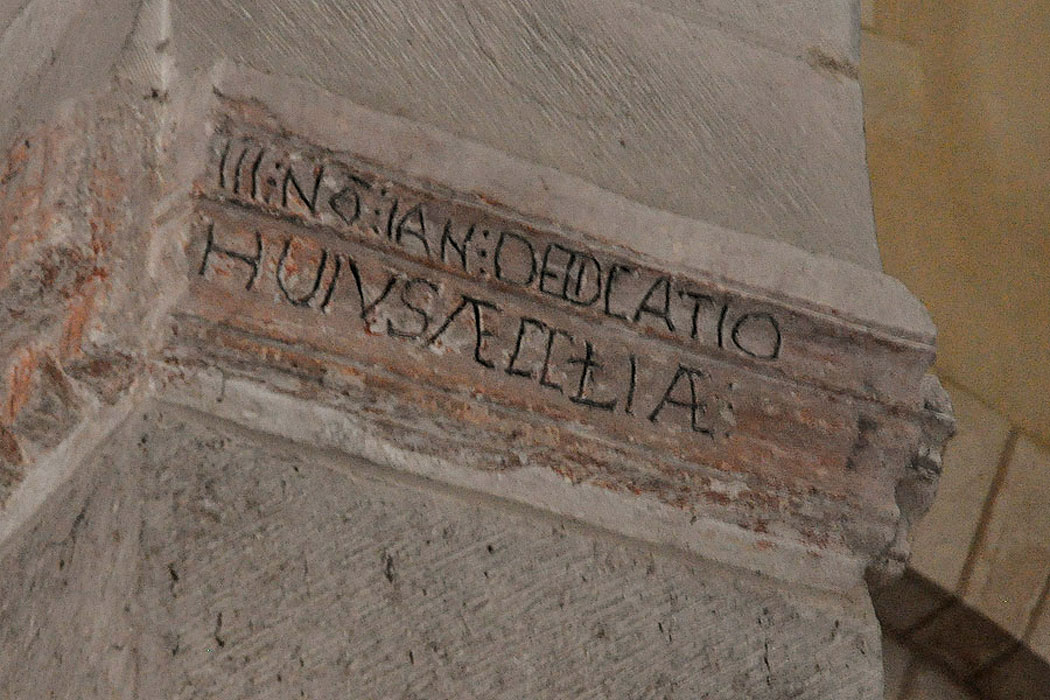
Foundational inscription
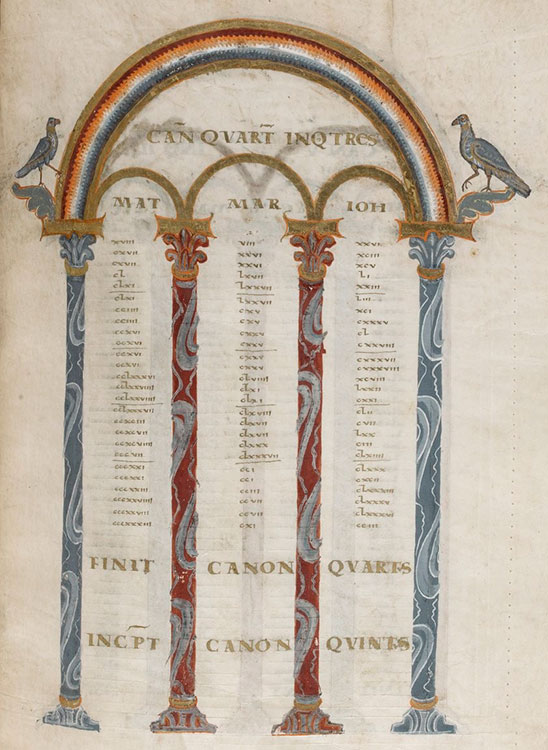
Bibliothèque nationale de France
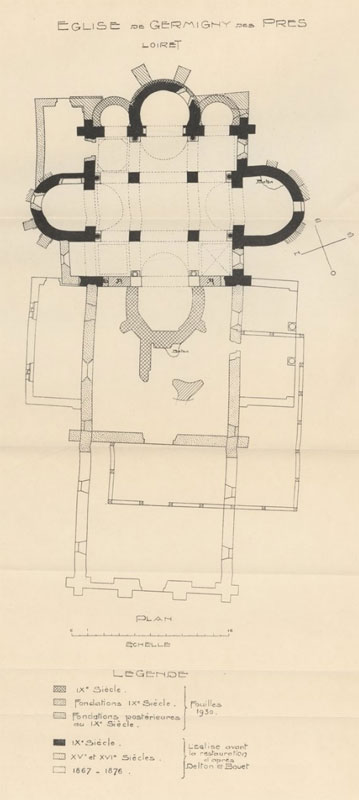
Plan of the church, published in Église de Germigny-des-Prés (Loiret).
Note sur les fouilles faites à l'extérieur et à l'intérieur... (1931)

Miniature of Les Grandes Chroniques de France (14th century)
From British Library collection (Royal MS 16 G VI f. 194r)

Schematic plan of the Carolingian chapel
- AUBERT, R. (1984). Dictionnaire d'histoire et de géographie ecclésiastiques. Vol. 20. París: Letouzey et Ané
- BAUNARD, Louis (1860). Théodulfe, évêque d'Orléans et abbé de Fleury-sur-Loire. París: Douniol
- BOSC-LAUBY, Aurélie; coord. (2004). Lumières de l’an mil en Orléanais. Autour du millénaire d’Abbon de Fleury. Brepols
- DEL MEDICO, H. E. (1943). La mosaïque de l'abside orientale à Germigny-des-Prés. Monuments et mémoires de la Fondation Eugène Piot, tome 39
- GAUTHIER, Monique i Michel (2008). L’oratoire carolingien de Germigny des Prés. M. G. Editions
- HUBERT, Jean (1931). Germigny-des-Prés. Congrès archéologique de France, 93 ss. París: Société française d'archéologie
- MASSON, Léon (1931). Église de Germigny-des-Prés (Loiret). Note sur les fouilles faites à l'extérieur et à l'intérieur en mars, avril et mai 1930. Bulletin de la Société archéologique et historique de l'Orléanais. Orleans
- POILPRÉ, Anne-Orange (2019). Le décor intérieur de l’oratoire de Germigny-des-Prés et son iconographie. Bulletin du centre d’études médiévales d’Auxerre, núm. 11
- POILPRÉ, Anne-Orange. (1998). Le décor de l'oratoire de Germigny-des-Prés. L'authentique et le restauré. Cahiers de civilisation médiévale. Núm. 163
- PRÉVOST, Moïse (1889). La Basilique de Théodulfe et la Paroisse de Germigny-des-Prés. Orleans: Herluison
- ROCHER, Jacques (1865). Histoire de l’abbaye royale de Saint-Benoît-sur-Loire. Orleans: Herluison
- SAPIN, Christian (2019). Germigny-des-Prés (Loiret), l’oratoire carolingien. Orleans: DRAC
Germigny-des-Prés lies east of Orléans, near Saint-Benoît-sur-Loire