Saint-Benoît-sur-Loire Abbey
Fleury / Floriacus / S Petri Floriacensi
(Saint-Benoît-sur-Loire, Loiret)
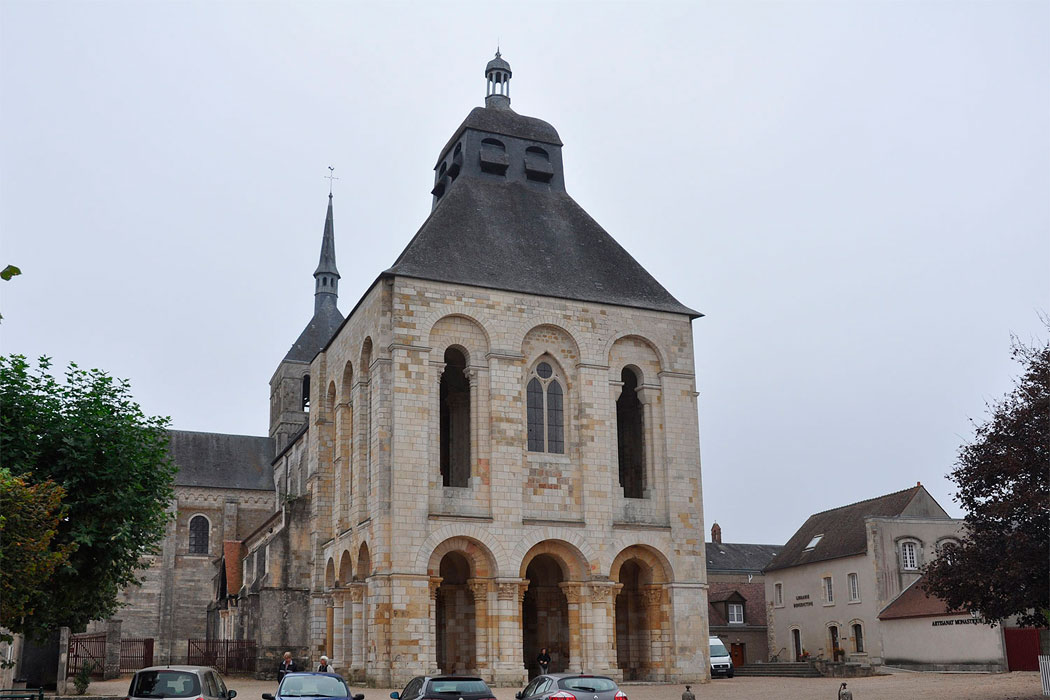


There is a tradition that indirectly links the foundation of Saint-Benoît-sur-Loire Abbey (or Fleury) with Benedict of Nursia (480–547), who, at the request of the bishop of Le Mans, is said to have sent several monks from Monte Cassino (Lazio, Italy) to Gaul, among them his disciple Maurus (c. 512–c. 584). They attempted to introduce the Benedictine Rule at the monastery of Saint-Pierre-aux-Boeufs, in Orléans, but without success.
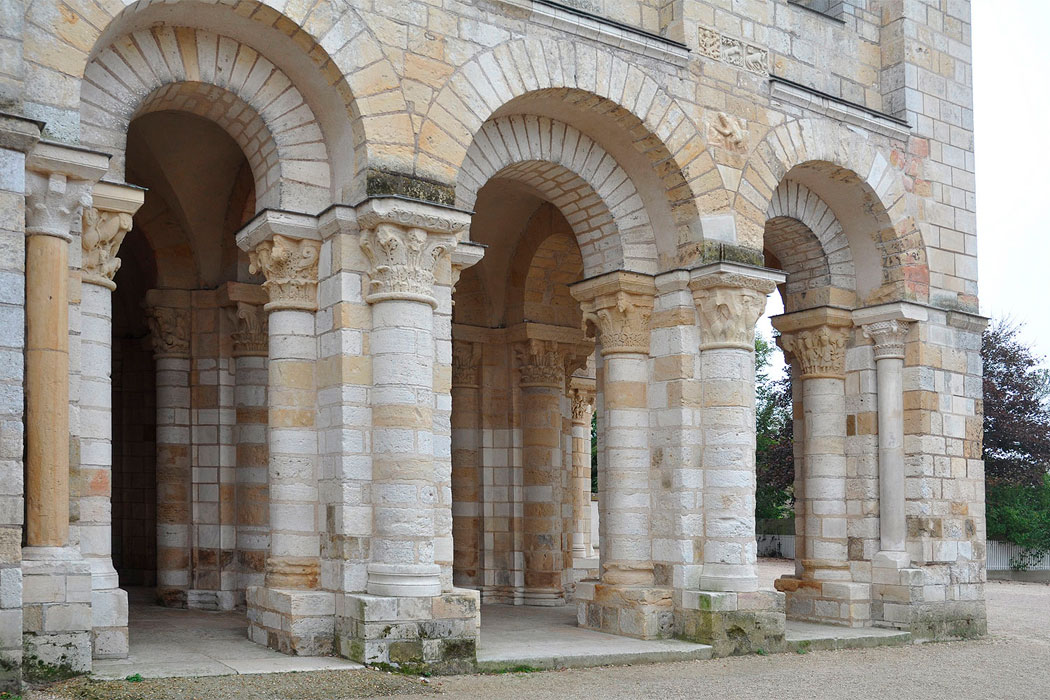
Porch
According to a document dated 651 and known only through later copies, Leodebod (or Leobald, † 655), abbot of Saint-Pierre-aux-Boeufs, also known as Saint-Agnan, acquired the site of Fleury in order to found a monastery dedicated to Saint Peter. It is generally accepted that the monastery of Saint-Pierre de Fleury was established around 650, or perhaps slightly earlier, and that it followed both the Rule of Saint Benedict and the Rule of Saint Columbanus. It was not until the time of Benedict of Aniane (c. 750–821) that the Benedictine Rule became generally established.
That small rural community underwent a profound transformation with the arrival of the relics of Benedict of Nursia. The saint had died at Monte Cassino in 547 and was buried there beside his sister Scholastica (c. 480–547). In 577, however, the monastery was destroyed and remained abandoned until 720. During that period, an expedition organised by the monastery of Fleury during the abbacy of Mummolus († 663), with the assistance of the bishop of Le Mans, travelled to Monte Cassino and obtained the relics of Saints Benedict and Scholastica. In 655, the relics of the two saints were deposited at Fleury and Le Mans respectively.
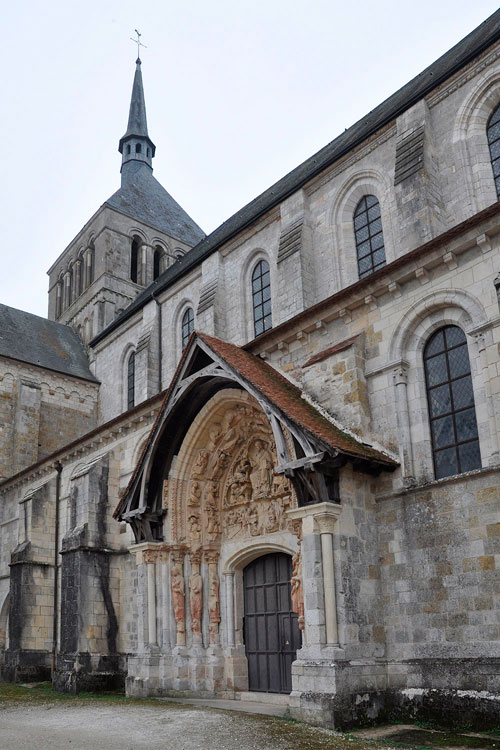
North facade
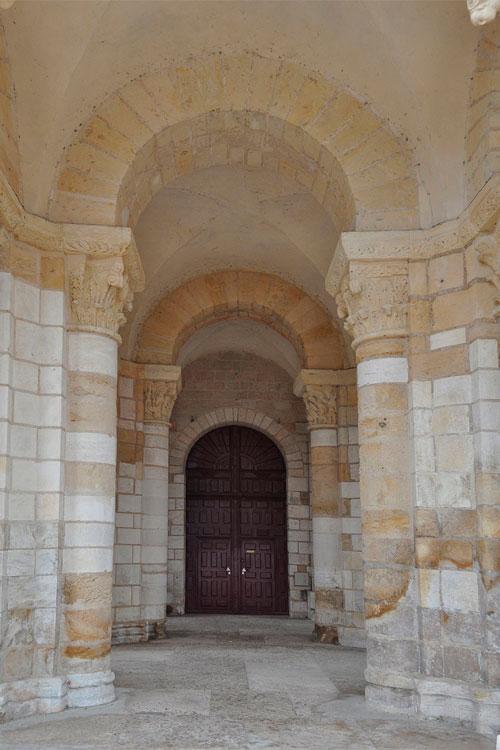
Porch, with the church portal
Although the account of the translation of the relics raises some doubts, it is generally regarded as credible in its essential outline. Their arrival transformed the life of the monastery: their cult was officially recognised by the Benedictines, giving a decisive impetus to the development of the community. The monastery first became known as Saint-Benoît de Fleury and later as Saint-Benoît-sur-Loire. Numerous donations provided it with financial stability and ushered in a period of prosperity. Between 798 and 818, the community was governed by Abbot Theodulf (c. 755–c. 821), a learned man of Hispanic origin, who founded a school and promoted the scriptorium.
Theodulf also built a villa on monastic lands at Germigny-des-Prés (Loiret). This residence included a chapel that still survives, although in a modified form. Later, in the eleventh century, a small community was established there, eventually becoming a priory of Fleury. During the ninth century, the region suffered from the Norman invasions. In 865 Saint-Benoît-sur-Loire was set on fire, and similar attacks followed later. The relics of Saint Benedict were temporarily taken to Orléans for safekeeping, while those of Saint Aigulf (Ayoul) were transferred to Provins, where the Priory of Saint-Ayoul was subsequently established.
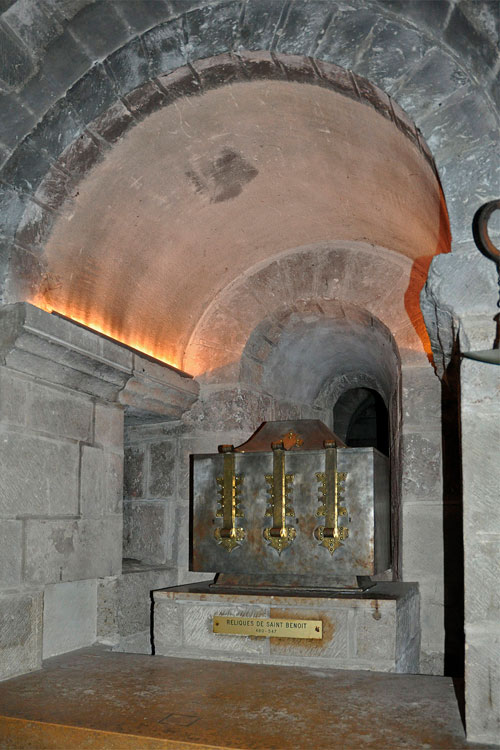
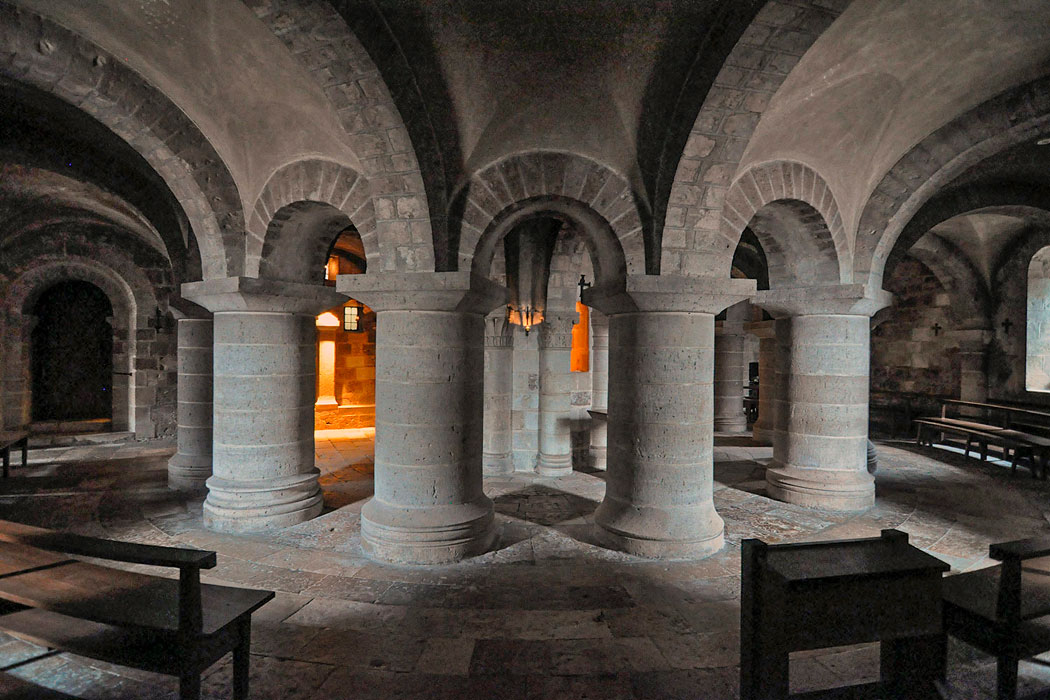
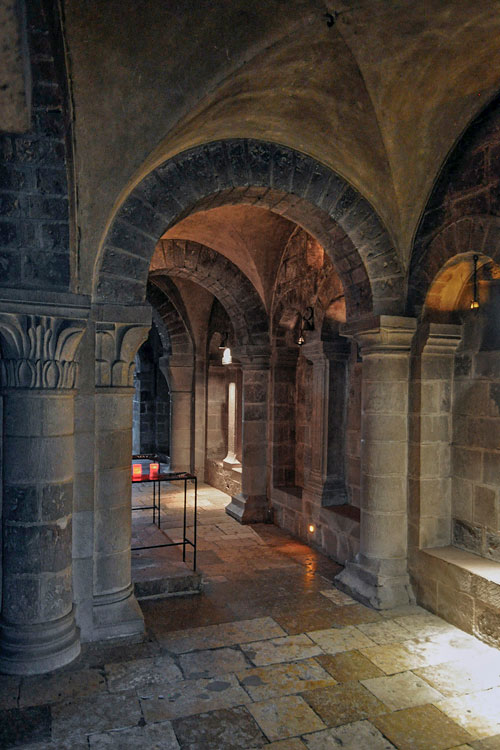
This situation led to a period of decline, which was mitigated by the intervention of Cluny (Saône-et-Loire) and especially of Odo of Cluny (c. 878–942), who also served as abbot of Saint-Benoît-sur-Loire between 930 and 942. He ordered the excavation of a crypt in which the relics of Saint Benedict were enshrined. Other notable abbots included Archambault (943–948), Abbo of Fleury (988–1004) and Gauzlin (1004–1030), the latter being associated with Abbot Oliba (c. 971–1046). Gauzlin, who also became Archbishop of Bourges, began the construction of a new church after the fire of 1026 had destroyed the previous one.
In 1108, the remains of Saint Benedict were enshrined in the new church, whose construction was not completed until 1218, when it was dedicated. During the second half of the fourteenth century, the Hundred Years' War severely affected the abbey, which also suffered outbreaks of plague (1338). The commendatory regime, introduced between 1486 and 1525, the Wars of Religion (1562 and 1567), and another fire in 1584 ushered in a new period of decline, reducing the community to only five monks. Nevertheless, monastic life continued. In 1627 the abbey joined the Congregation of Saint-Maur, whose members restored monastic observance and undertook extensive rebuilding works that continued for many years. Finally, in 1790, the abbey was suppressed during the French Revolution.
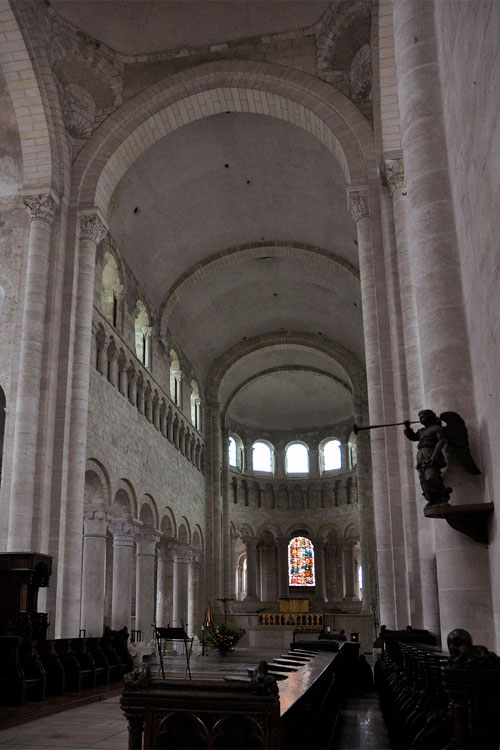
After passing into public ownership, the demolition of the monastic buildings began. The church, however, was saved when it replaced the former parish church, which had fallen into ruin. Later, the complex was protected as a historic monument and extensive restoration work was undertaken. In 1864 a new monastic community settled there and remained until 1903. In 1944 another community took over the former monastery and still occupies it today; since 1959 it has once again held the status of an abbey.
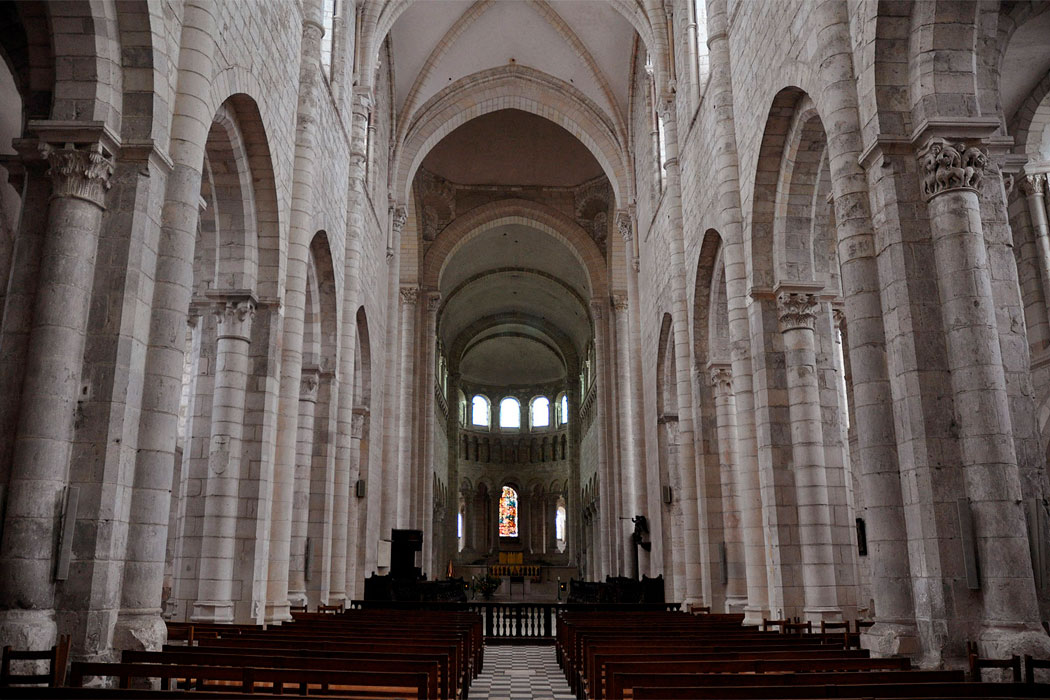
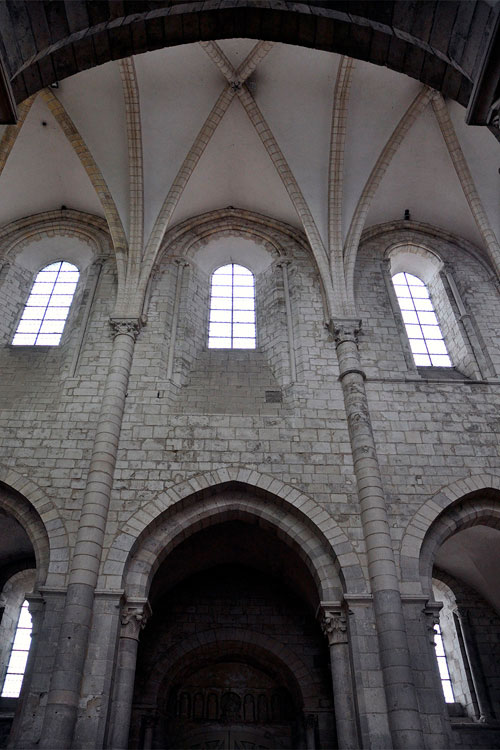
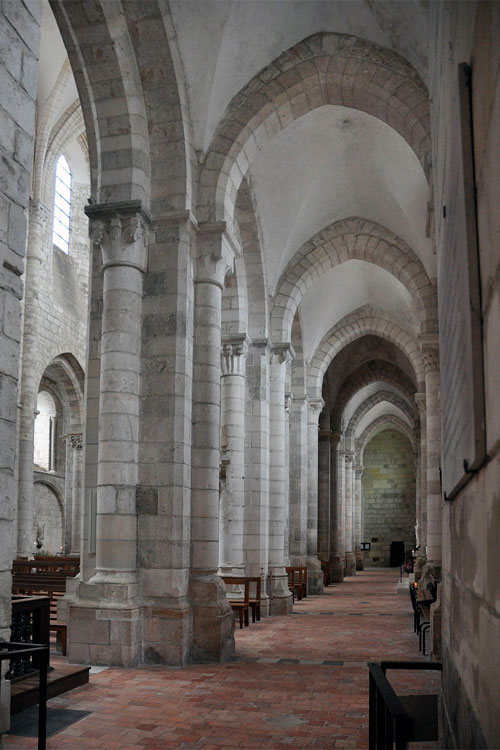
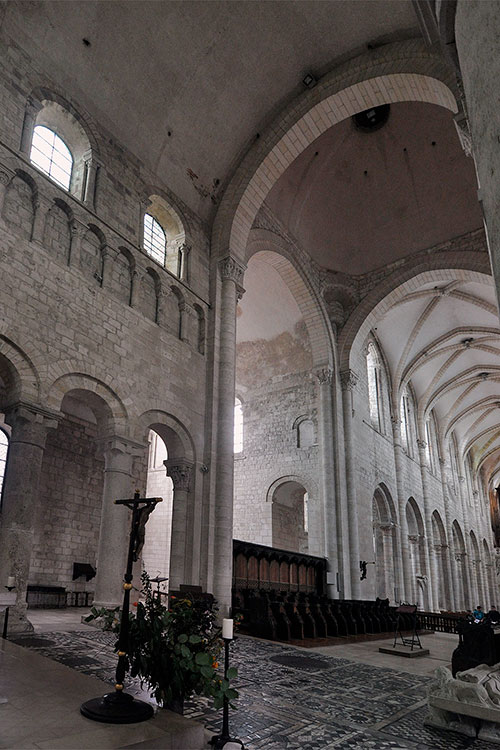
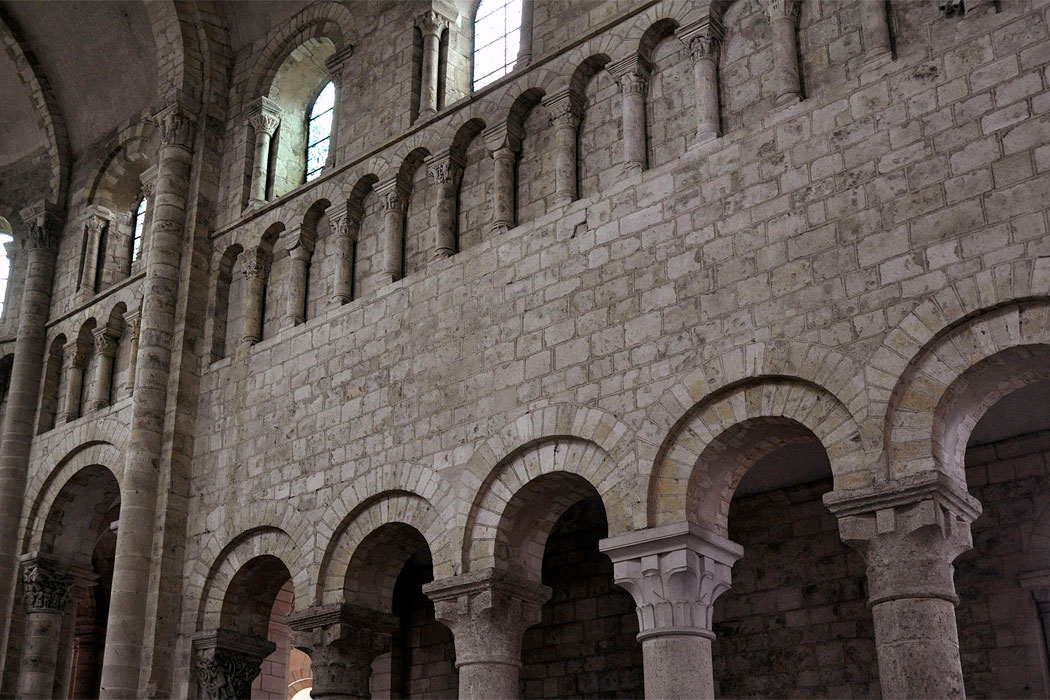
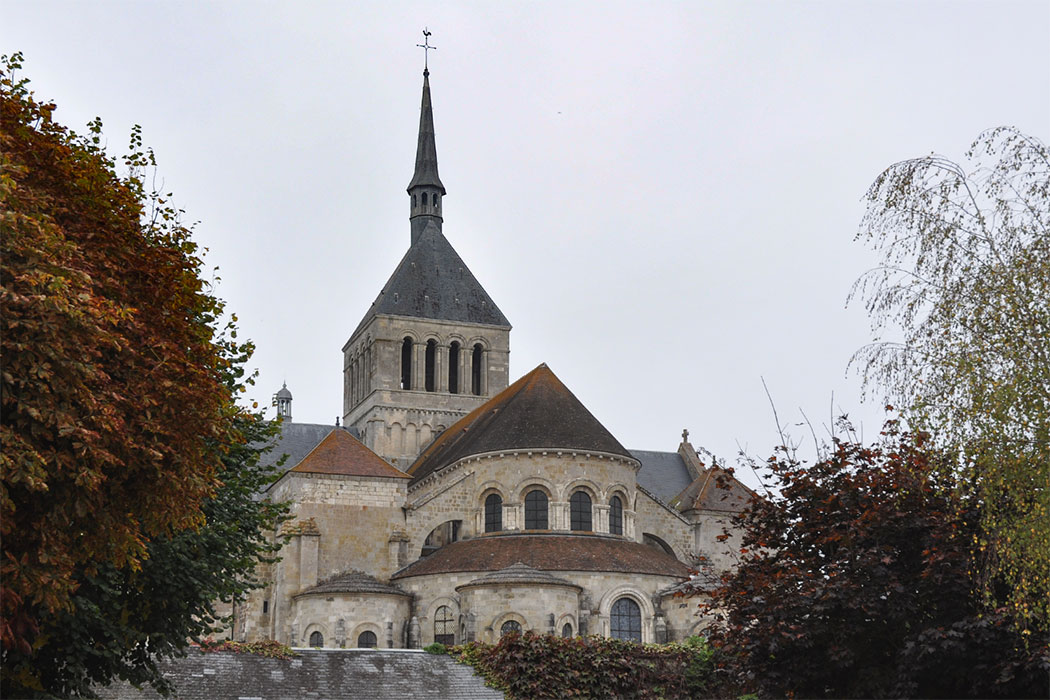
The monastery's first two churches, Saint Peter and Notre-Dame, have disappeared. The former was replaced by a new building in the eighteenth century. The present Church of Notre-Dame is the successor to the original structure and is essentially Romanesque. It consists of a square porch tower, the oldest part of the complex, dating from the first half of the eleventh century. Attached to it is a three-aisled church followed by a transept with two apsidioles in each arm. The eastern end consists of a spacious chancel that continues the same layout as the nave and terminates in a semicircular apse surrounded by four radial chapels. This phase of construction dates from between the second half of the eleventh century and the beginning of the thirteenth.
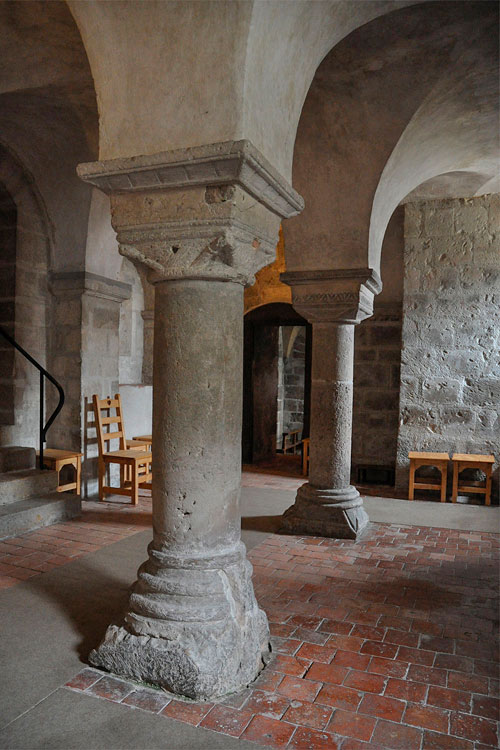
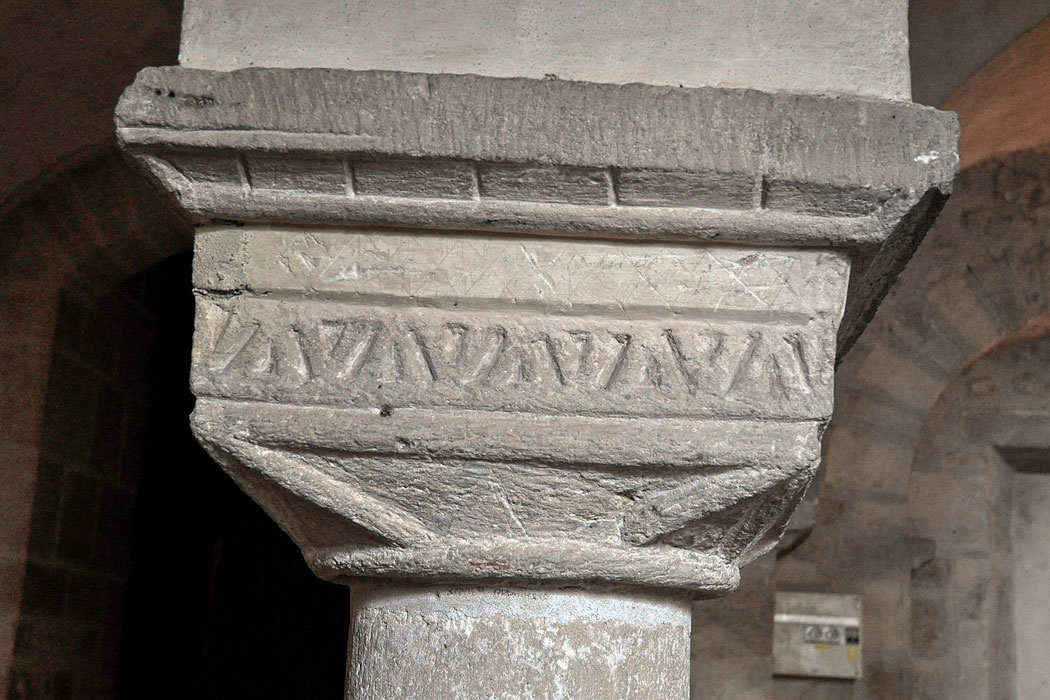
The tower is the most remarkable feature of the building. Its interior is divided into three aisles and three bays, open on three sides, while the fourth is attached to the church and contains the main portal. Its sculptural decoration is exceptional, with fifty-four capitals on the ground floor and seventy-four on the upper level, many of them historiated.
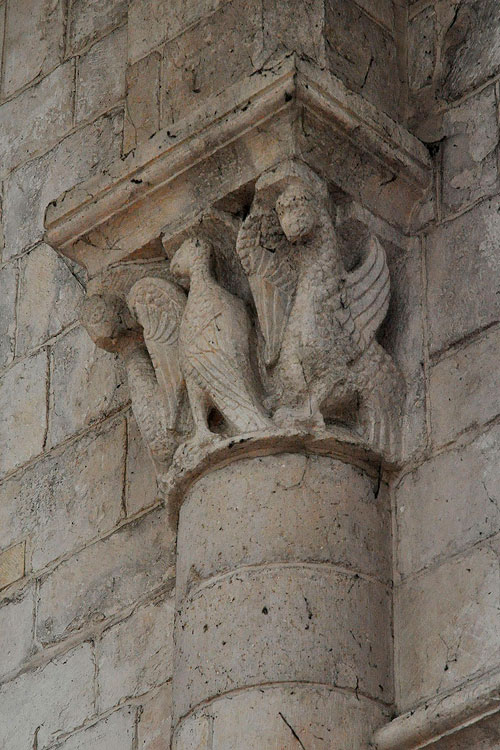
Church capital
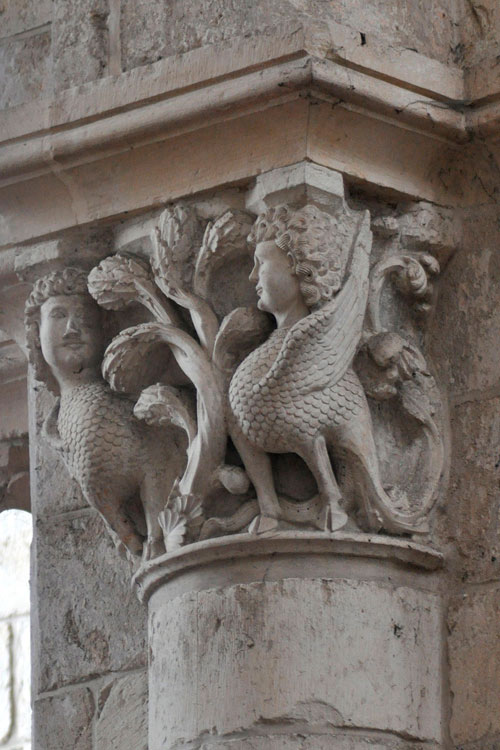
Church capital
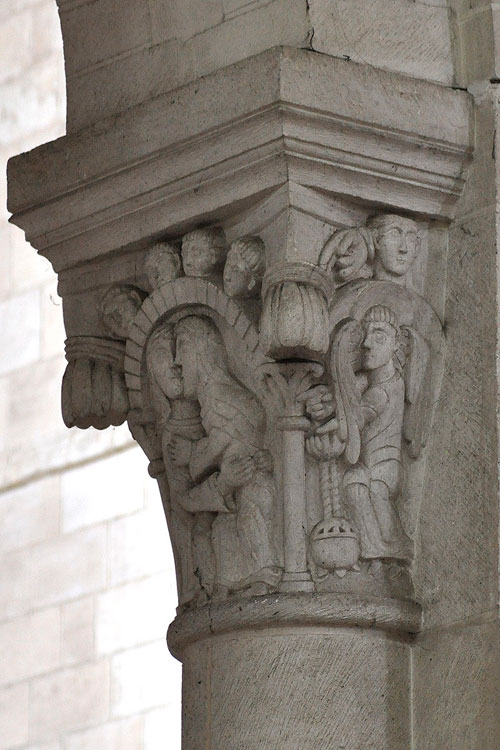
Church capital
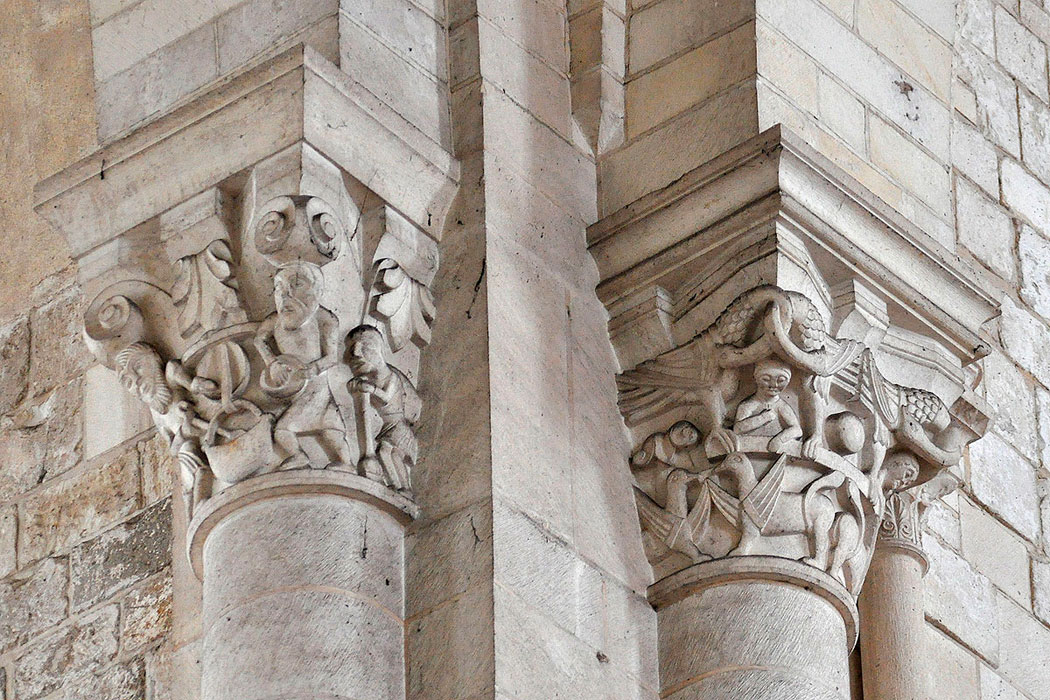
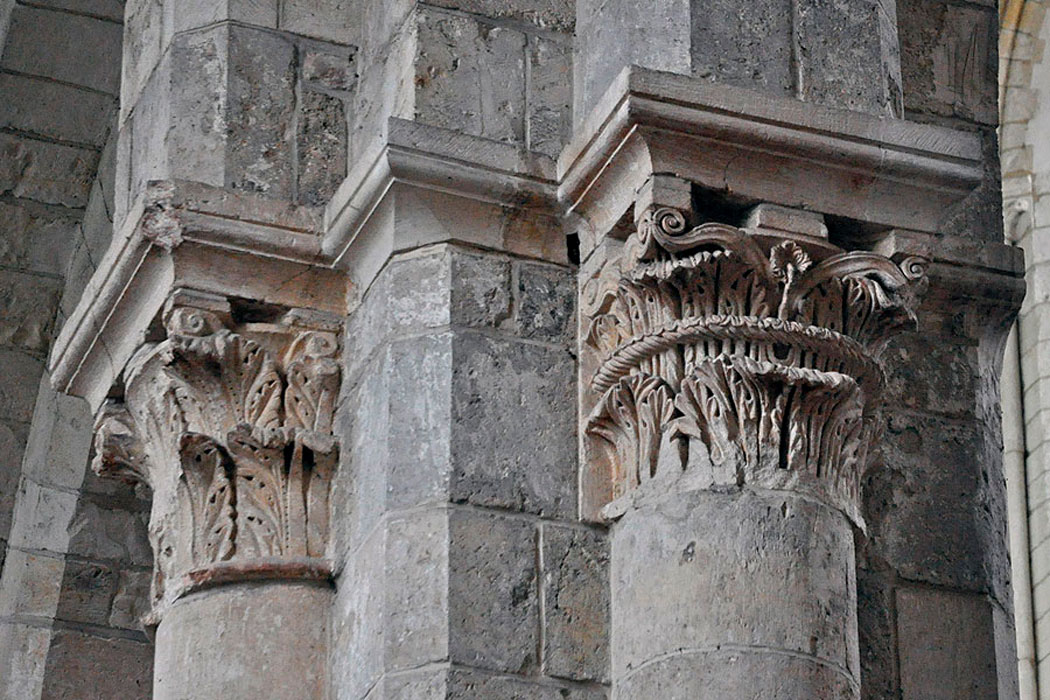
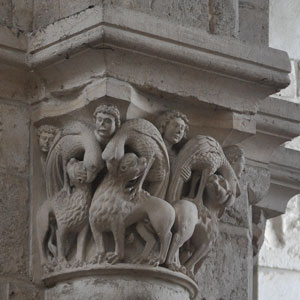
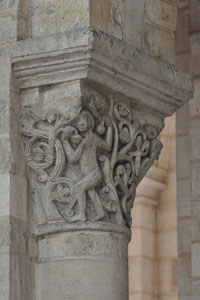
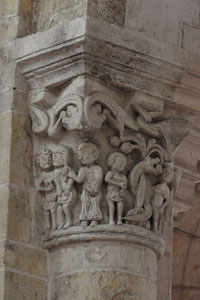
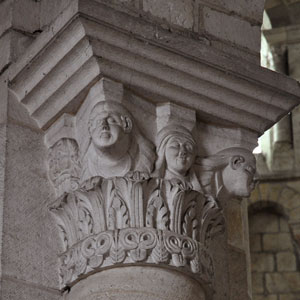
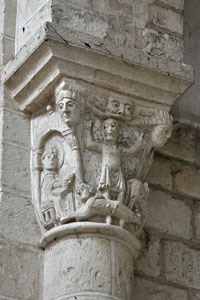
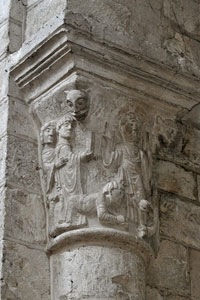
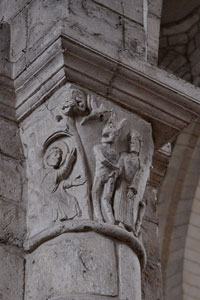
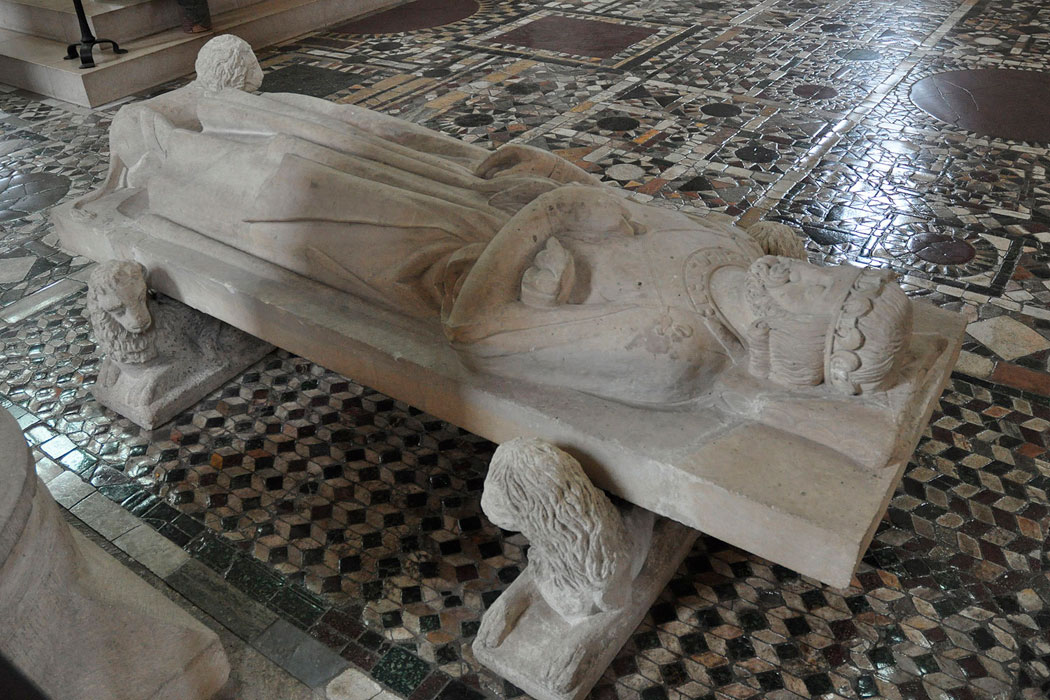
Tomb of Philip I of France (1052-1108)
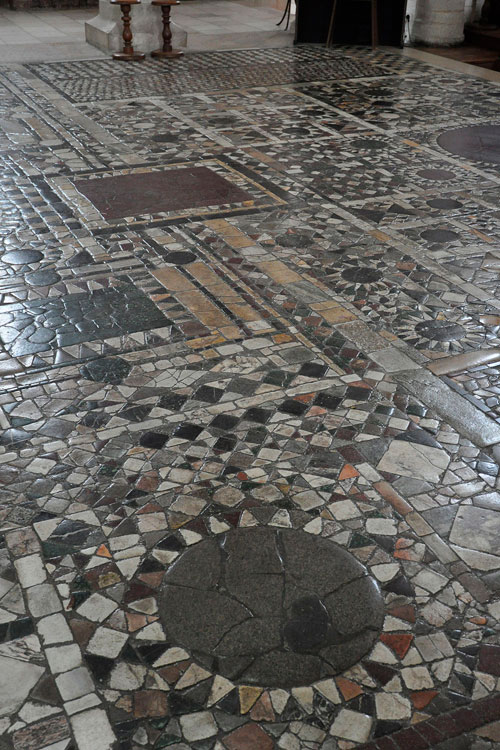
Old mosaic pavement, in the chancel
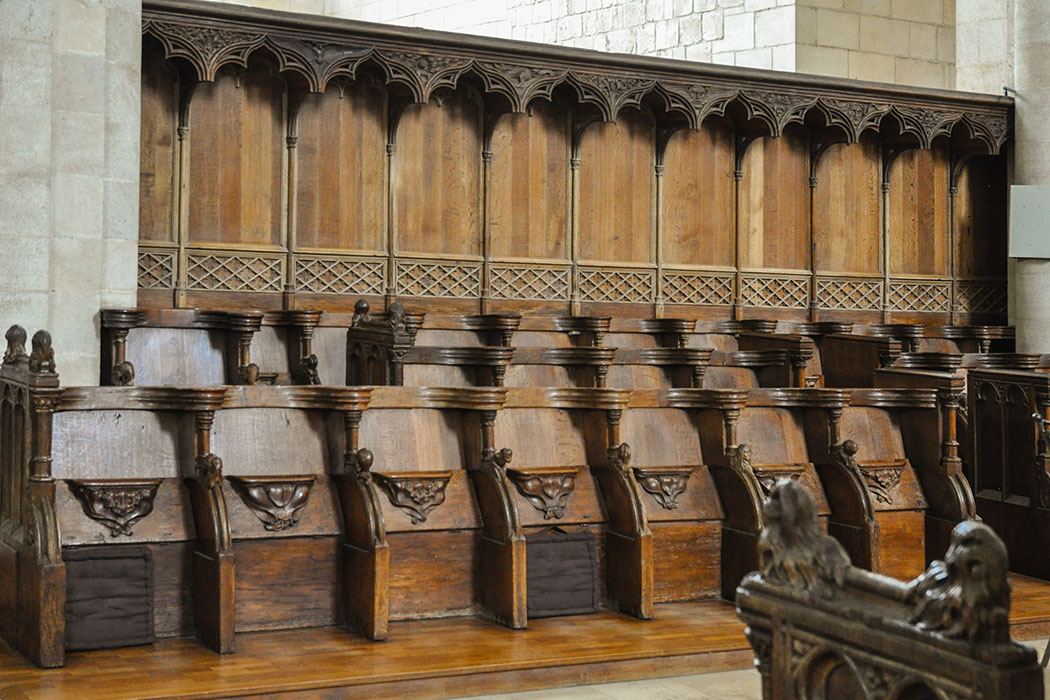
Choir-stalls (15th century)
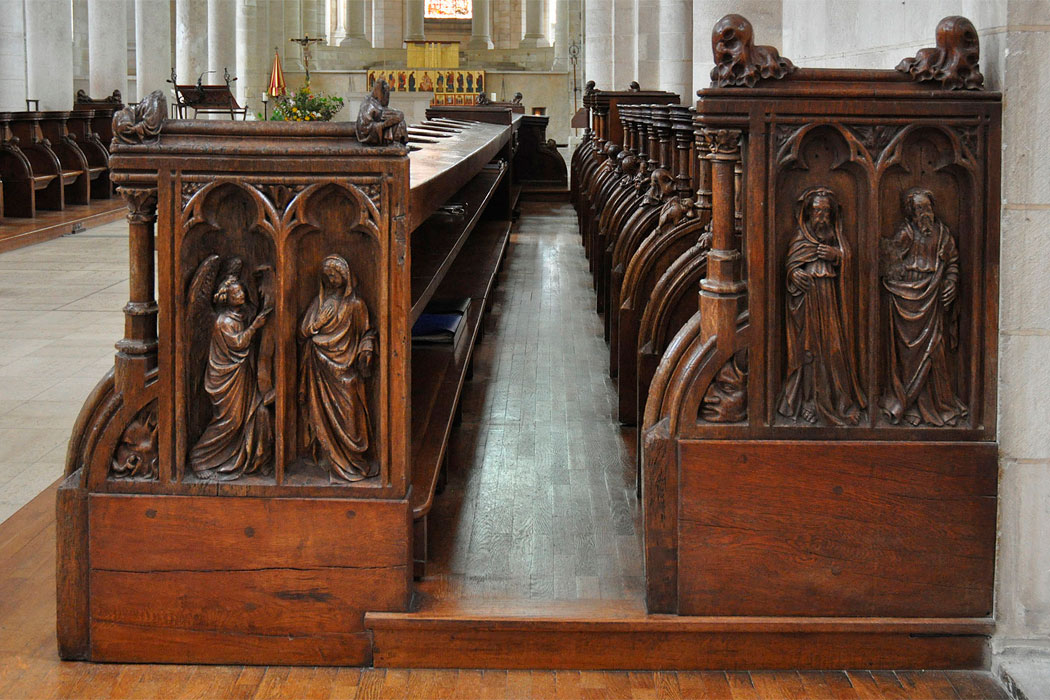
Choir-stalls (15th century)
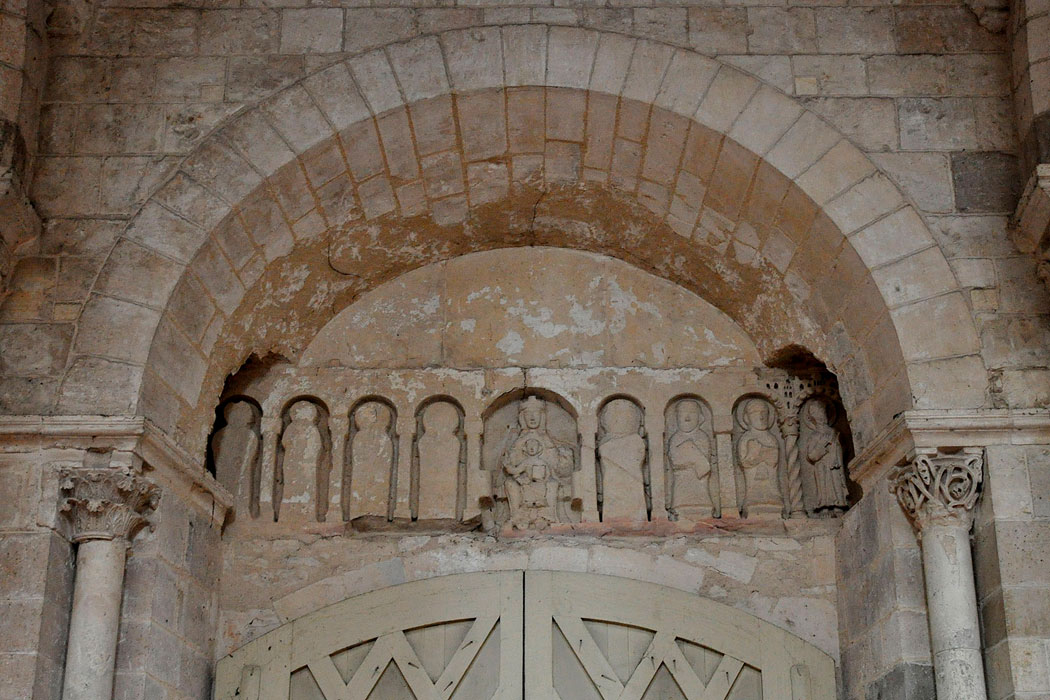
Unfinished lintel
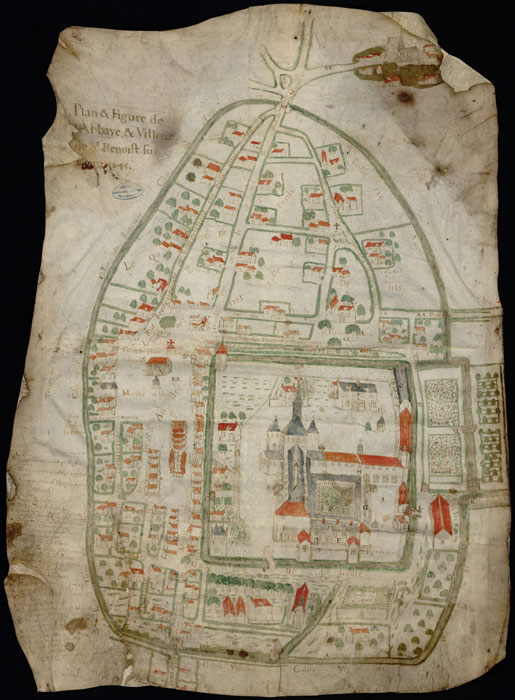
Monastery map (1645)
Médiathèque centre-ville, Orleans
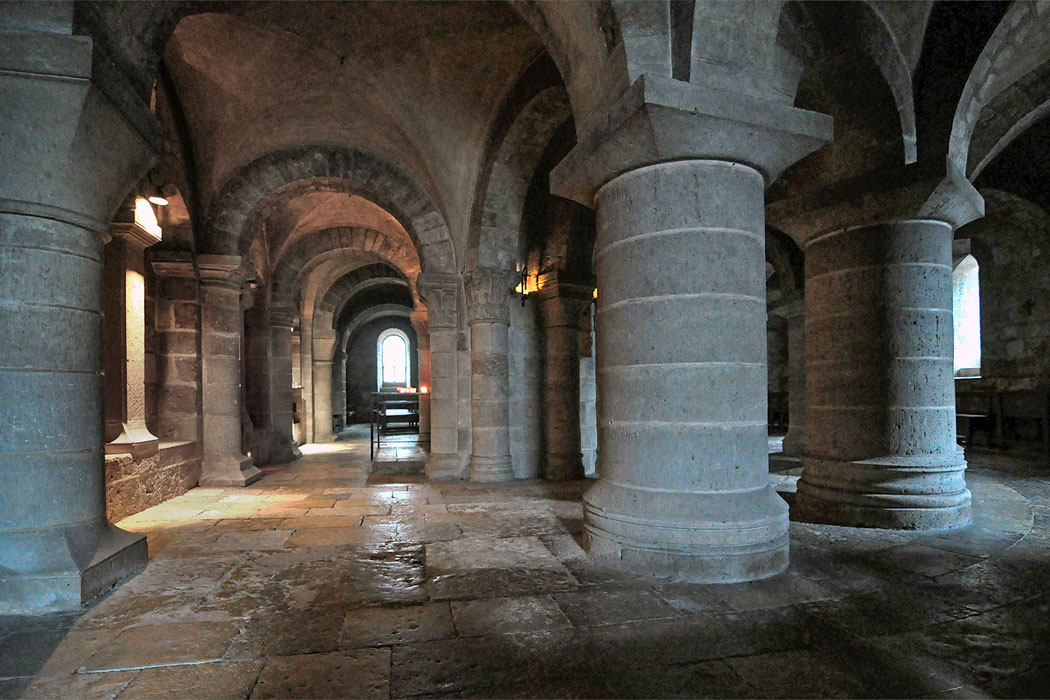
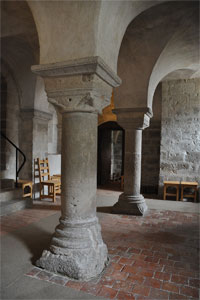

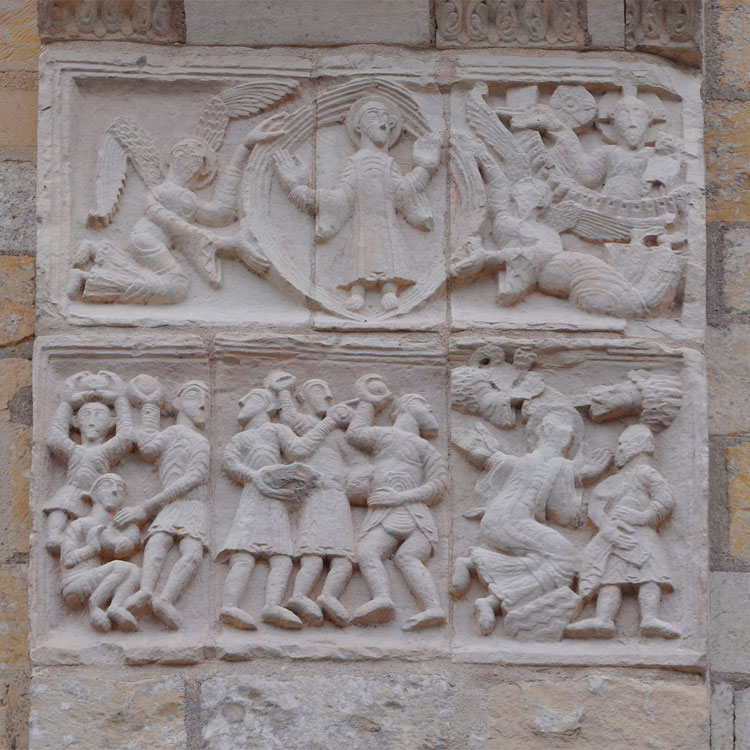
Martyrdom of Saint Stephen
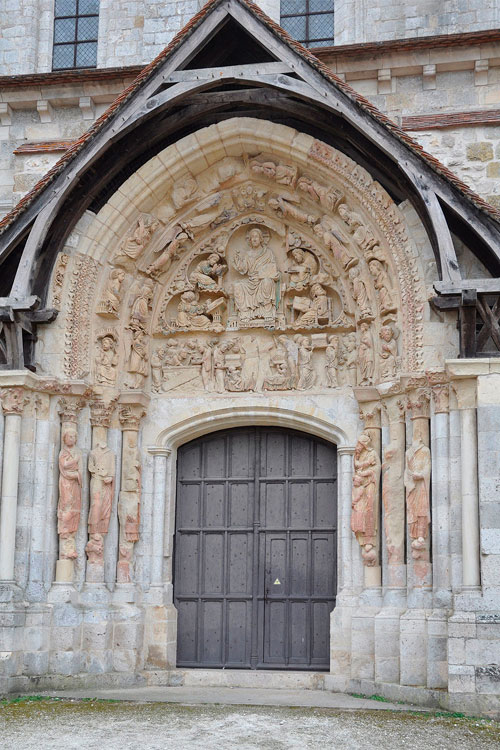
North portal (12th century)
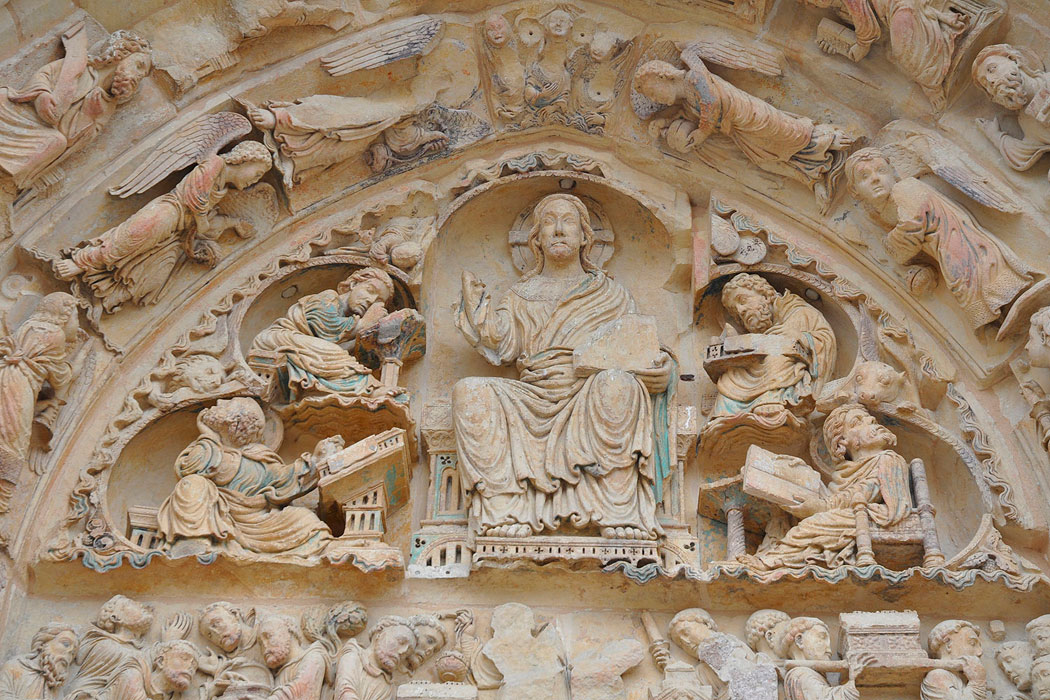
North portal
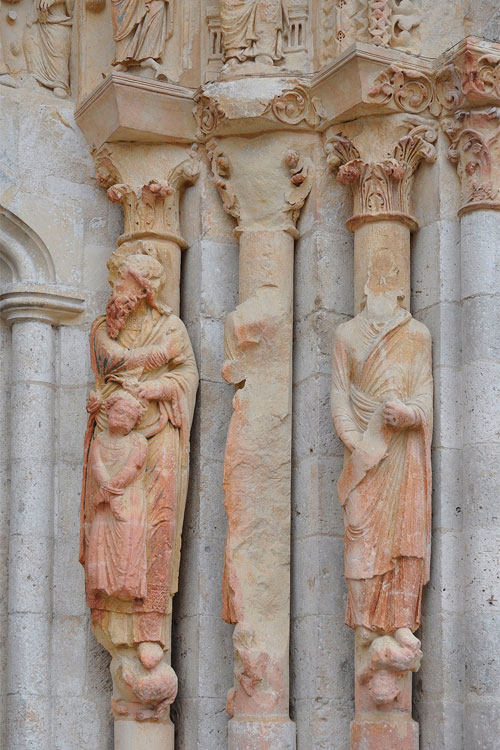
North portal
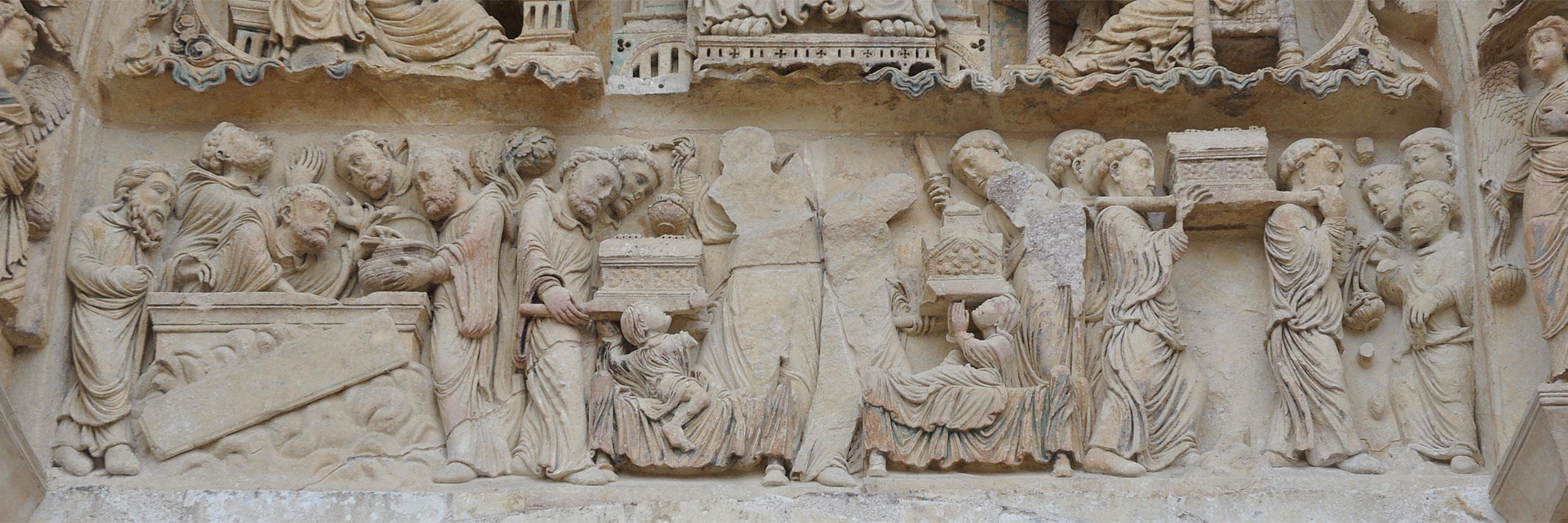
North portal
Translation of the relics of Saint Benedict from Monte Cassino to Fleury
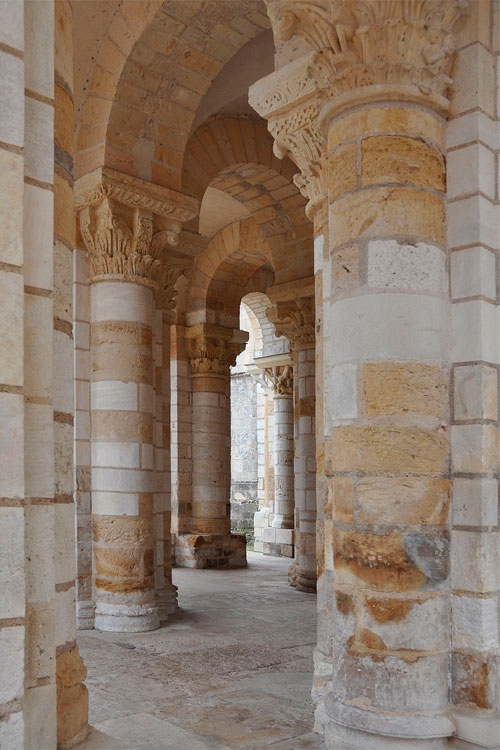
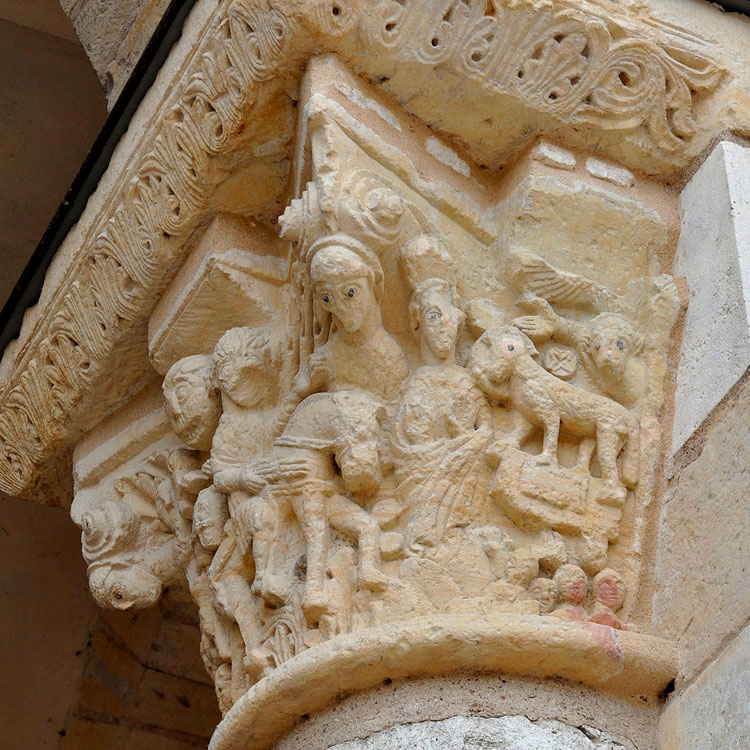
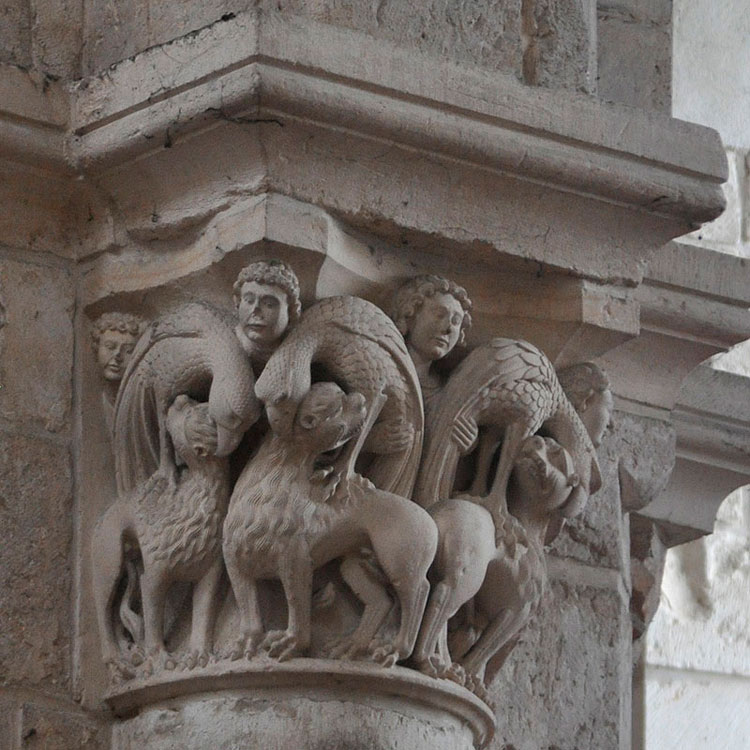
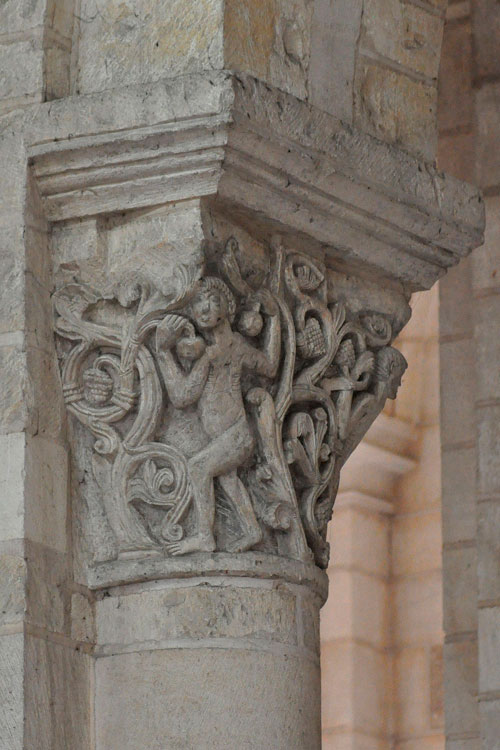
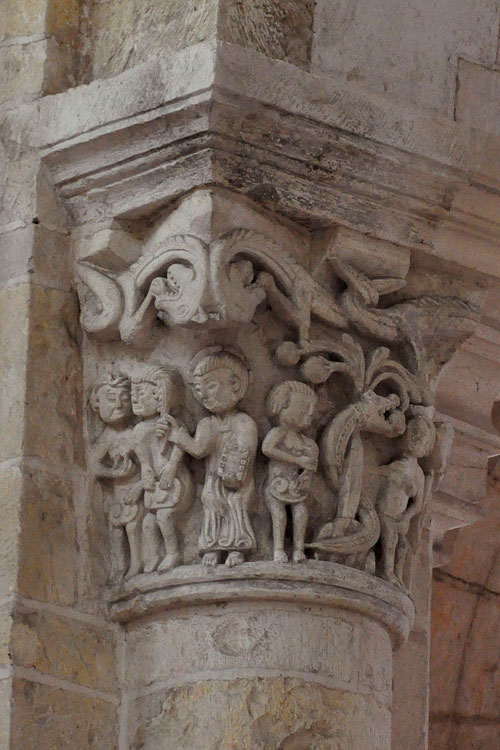
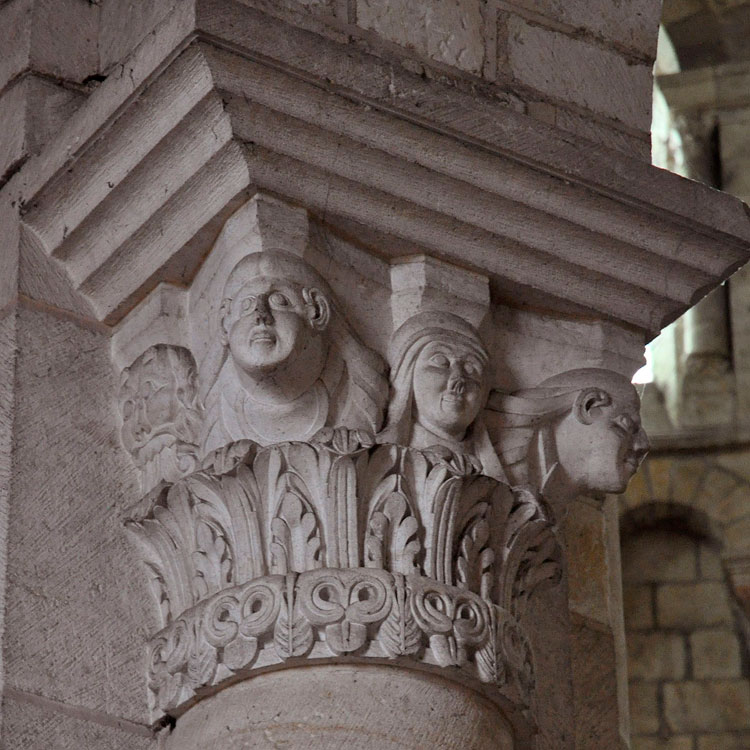
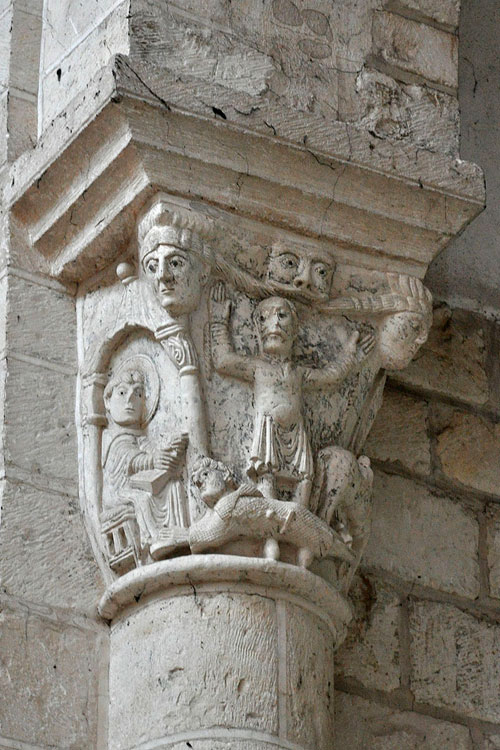
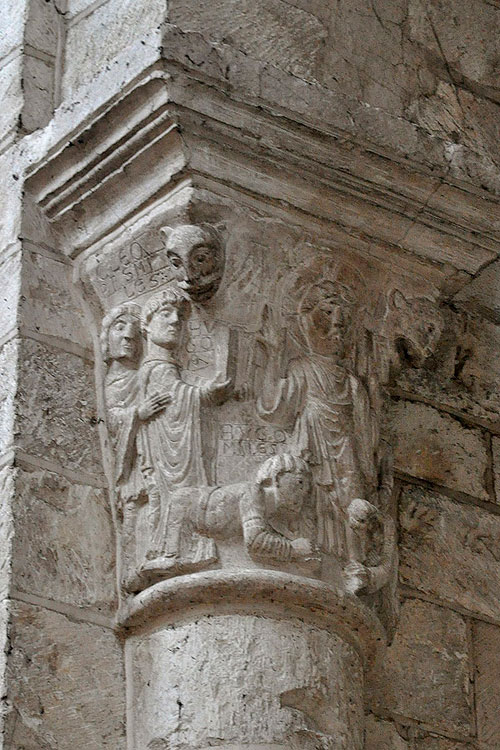
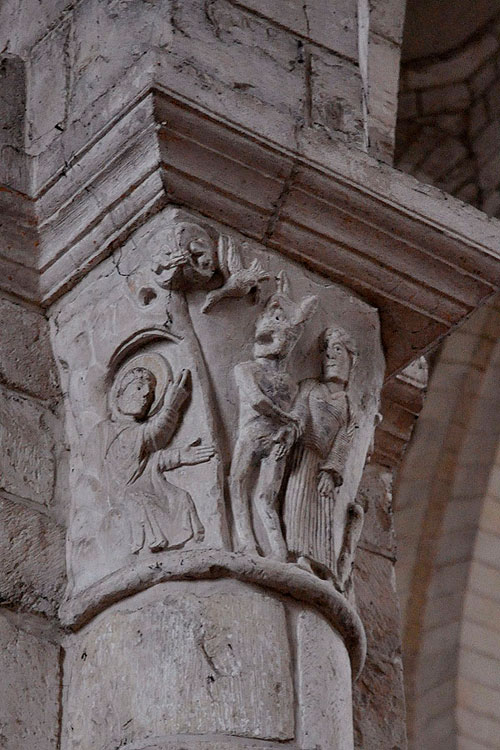
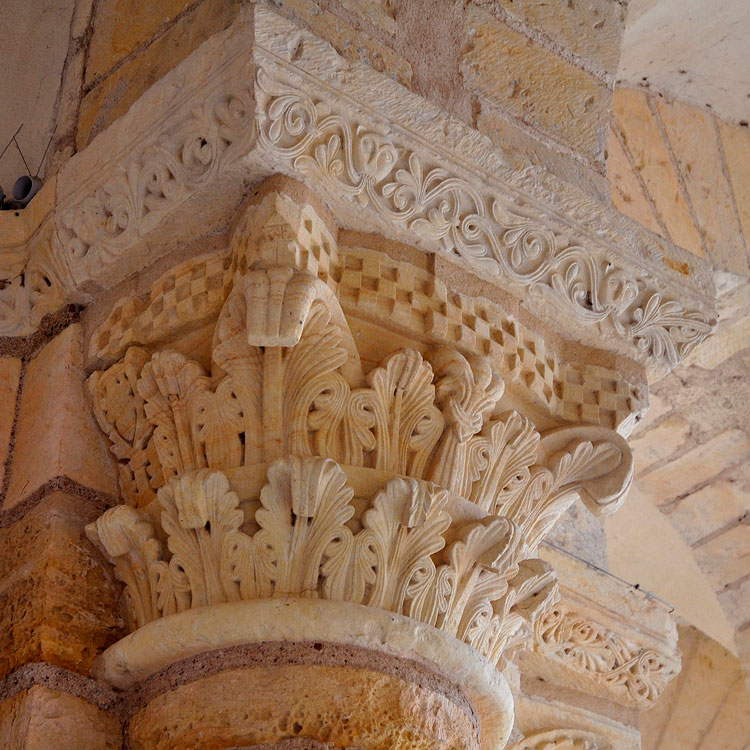
Capital 23. Vegetable
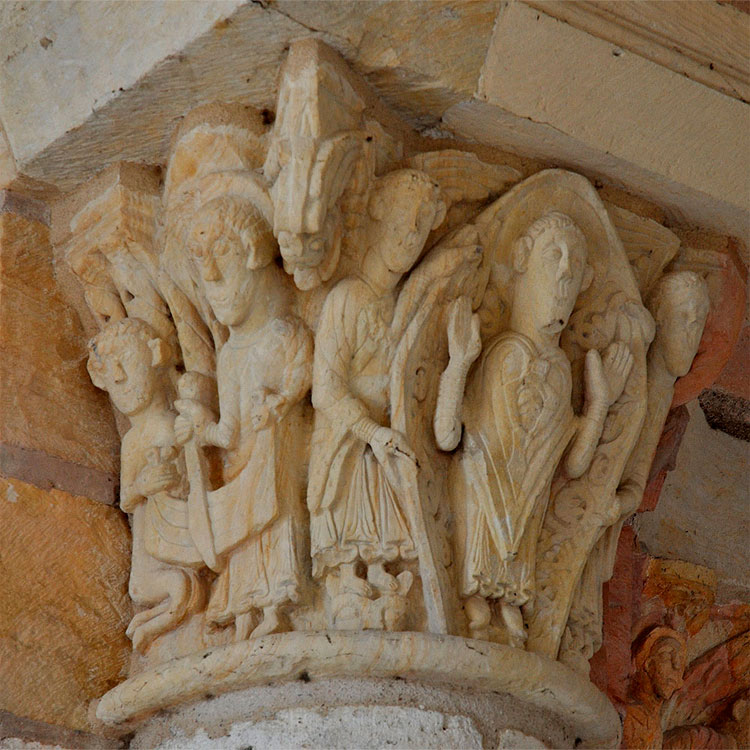
Capital 37. Saint Martin

Schematic plan of the church
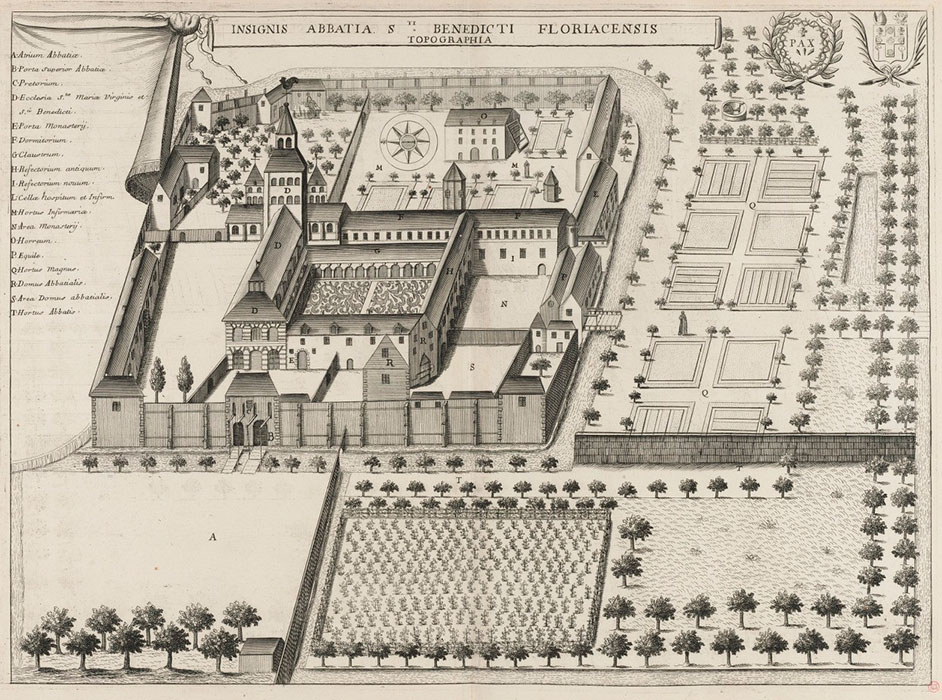
Monasticon Gallicanum
Bibliothèque nationale de France
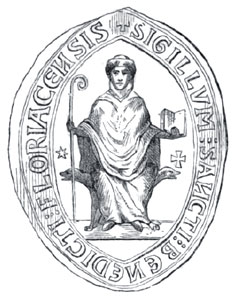
Seal of an abbot
Published in Histoire de l’abbaye royale de Saint-Benoît-sur-Loire
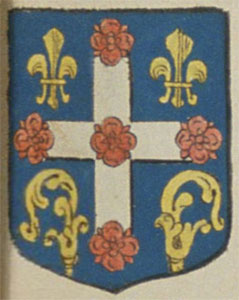
According to Armorial général de France (18th century)
Bibliothèque nationale de France
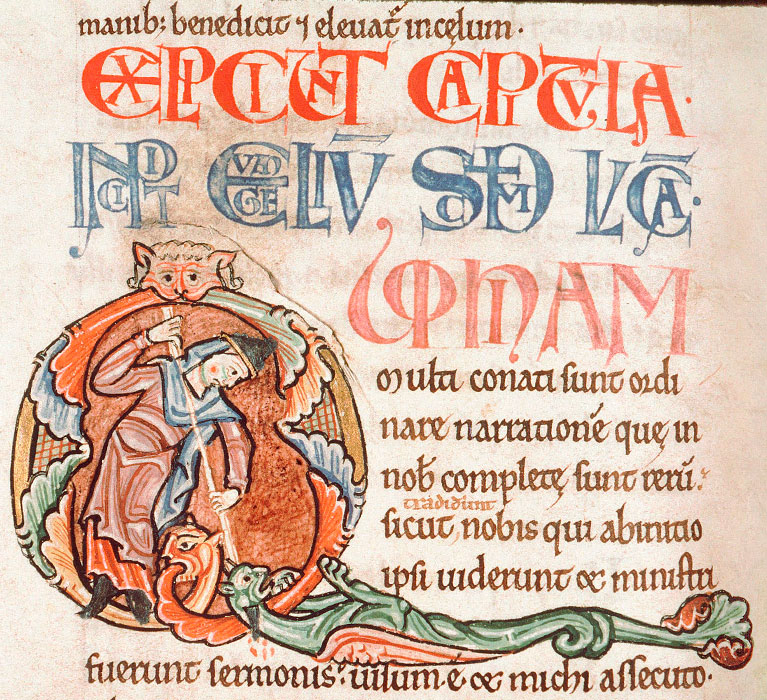
Illustration of a Bible, from the monastery (12th century)
Médiathèque centre-ville, Orleans
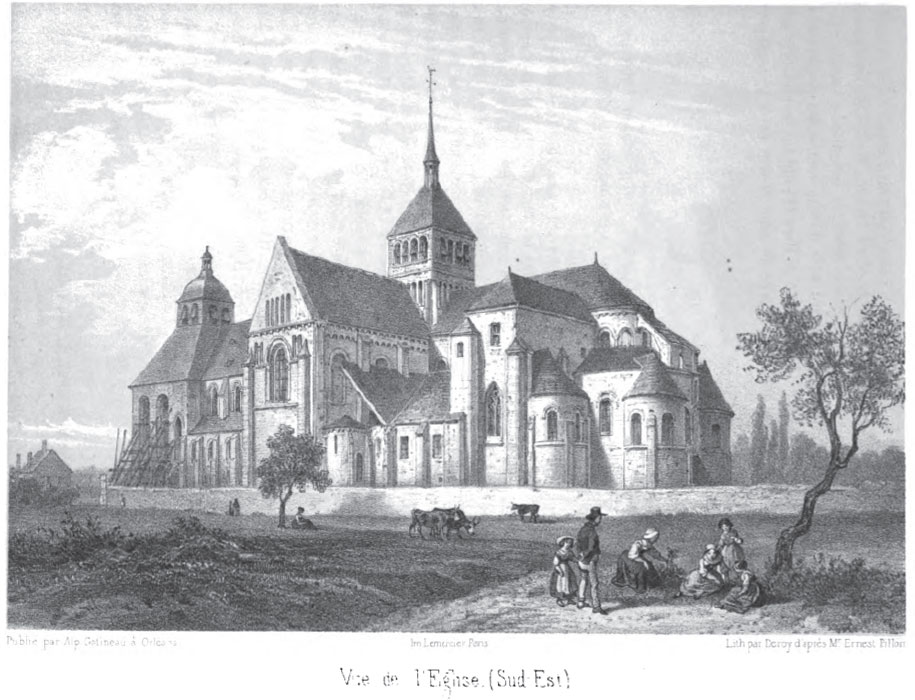
Illustration from Histoire de l’abbaye royale de Saint-Benoît-sur-Loire
- AUBERT, Marcel (1931). L'église de Saint-Benoît-sur-Loire. París: S. G. Imprimerie
- AUBERT, R. (1971). Dictionnaire d'histoire et de géographie ecclésiastiques. Vol. 17. París: Letouzey et Ané
- BARATIN, Jean-François; i altres (1996). Abbaye de Fleury, portail nord. Orleans: DPI
- BAUNARD, Louis (1860). Théodulfe, évêque d'Orléans et abbé de Fleury-sur-Loire. París: Douniol
- BEAUNIER, Dom (1905). Recueil historique des Archêvechés, Évêchés, Abbayes et Prieurés de France. Vol. 1. Province ecclésiastique de Paris. París: Poussielgue
- BERLAND, Jean-Marie (1980). Les chapiteaux historiés du triforium de l'église abbatiale de Saint-Benoît-sur-Loire. Les Cahiers de Saint-Michel de Cuxa, núm. 11. Prades: Abadia Saint-Michel-de-Cuxa
- BERLAND, Jean-Marie (1980). Val de Loire roman. La nuit des temps. Zodiaque
- BERLAND, Jean-Marie (1984). La tour-porche de l'abbatiale de Saint-Benoit-sur-Loire. Bulletin de la Société archéologique et historique de l'Orléanais, nú. 66
- BERLAND, Jean-Marie (1985). Saint-Benoît-sur-Loire. Ouest-France
- BOSC-LAUBY, Aurélie; coord. (2004). Lumières de l’an mil en Orléanais. Autour du millénaire d’Abbon de Fleury. Brepols
- CHENESSEAU, Georges (1931). L'abbaye de Fleury à Saint-Benoît-sur-Loire. París: Van Oest
- DAVRIL, Anselme (1976). La vie à l'Abbaye de Fleury-Saint-Benoit au XIIIe siècle. Bulletin de la Société archéologique et historique de l'Orléanais, núm. 45b
- GUÉRIN, Paul (1888). Les Petits Bollandistes. Vies des saints. Vol. 1 i 9. París: Bloud et Barral
- LESUEUR, Frédéric (1969). La date du porche de Saint-Benoît-sur-Loire. Bulletin Monumental, vol. 127/2
- PEIGNÉ-DELACOURT, Achille (1877). Monasticon Gallicanum. Paris: G. Chamerot
- PROU, Maurice; i altres, Ed. (1907-12). Recueil des chartes de l'abbaye de Saint-Benoît-sur-Loire. Vol. 1/2. París: Picard
- ROCHER, Jacques (1852). Pélerinage à Saint-Benoît-sur-Loire, ou Notions historiques et archéologiques sur cette antique abbaye et son église monumentale. Orleans: A. Gatineau
- ROCHER, Jacques (1865). Histoire de l’abbaye royale de Saint-Benoît-sur-Loire. Orleans: Herluison
- SAINT VINCENT, Alphonse (1994). Saint-Benoît-sur-Loire. La Renaissance de l'Abbaye de Fleury (1850-1994). París: Beauchesne
- SAINT-MAUR, Congregació de (1744). Gallia Christiana in provincias ecclesiasticas distributa. Vol. 8. París: Typographia Regia
- VERGNOLLE, Éliane (1985). Saint-Benoît-sur-Loire et la sculpture du XIe siècle. París: Picard
- VERGNOLLE, Éliane (2018). Saint-Benoît-sur-Loire. L’abbatiale romane. París. Société Française d’Archéologie
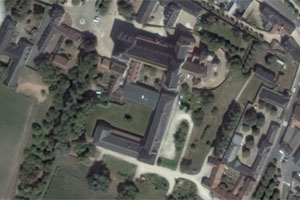
The abbey stands in the commune of Saint-Benoît-sur-Loire, east of Orléans, upstream along the Loire, between that city and Gien