Fontainejean Abbey
Fons-Joannis / Fontis-Johannis / Fontaine-Jean
(Saint-Maurice-sur-Aveyron, Loiret)
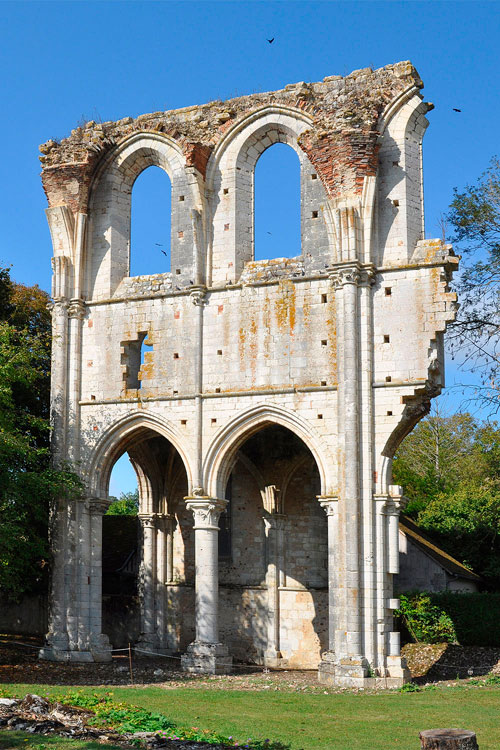

The Cistercian abbey of Notre-Dame de Fontainejean was founded from Pontigny Abbey (Yonne) through the initiative and support of Milon (or Miles), lord of Courtenay († 1127). Milon appealed to Hugues de Mâcon, abbot of Pontigny, requesting that he send an initial community to establish the new monastery, whose financial support he undertook to provide. In 1124, twelve monks from Pontigny, under the leadership of Stephen, the first abbot, arrived at Fontainejean. The first chapel erected on the site was dedicated to Mary Magdalene.
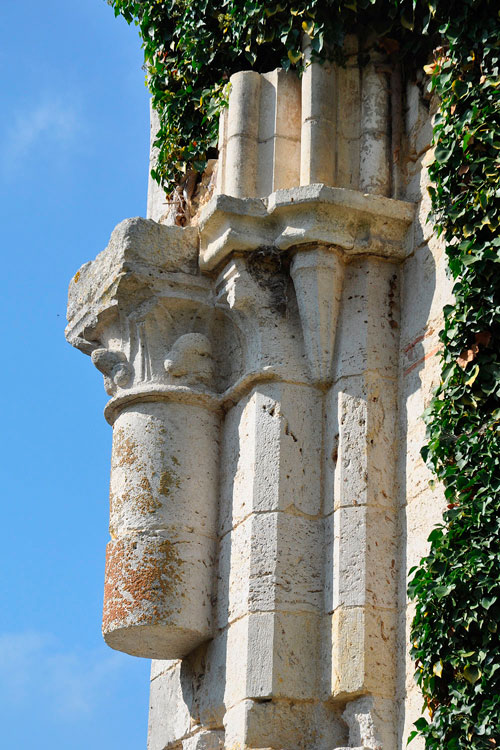
After the founder's death, he was buried in the monastery, which became the burial place of his lineage. In 1148, Guillaume, the founder's son, died in the Holy Land and was also buried there. In 1147, Abbot Stephen obtained a papal bull from Pope Eugene III placing the new abbey under papal protection and, in 1163, another bull issued by Pope Alexander III confirmed these privileges. In 1150, the lordship of Courtenay passed to Peter (c. 1126-c. 1183), son of King Louis VI the Fat, who had married Élisabeth, the founder's granddaughter; for this reason, Fontainejean came to be regarded as a royal abbey. Over time it accumulated considerable property and a number of privileges, including judicial rights.
In 1173, Guillaume de Champagne, Archbishop of Sens, consecrated the church that had replaced the original chapel, whose construction had begun in 1140. King Louis VII, known as the Young (1120-1180), brother of Peter of Courtenay, attended the ceremony. During the abbacy of William of Bourges (1185-1187), Fontainejean enjoyed a period of remarkable prosperity; contemporary sources speak of a community of two hundred monks. In 1187, William was appointed abbot of Chaalis Abbey (Oise) and, in 1199, Archbishop of Bourges, an office he held until his death in 1209. He was canonised shortly afterwards.
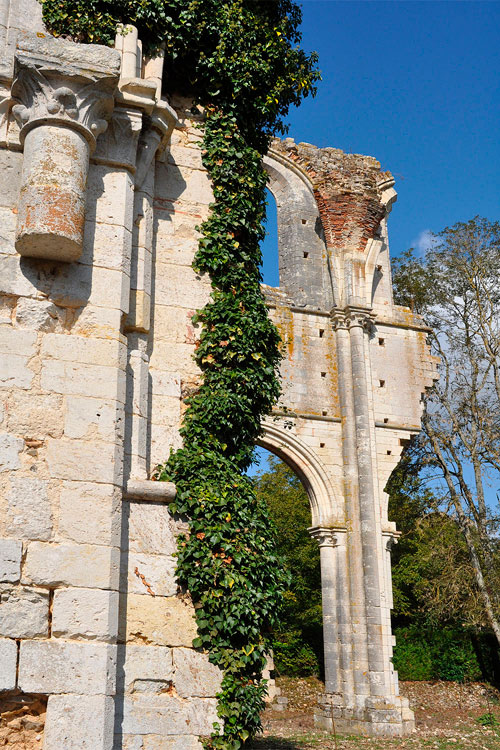
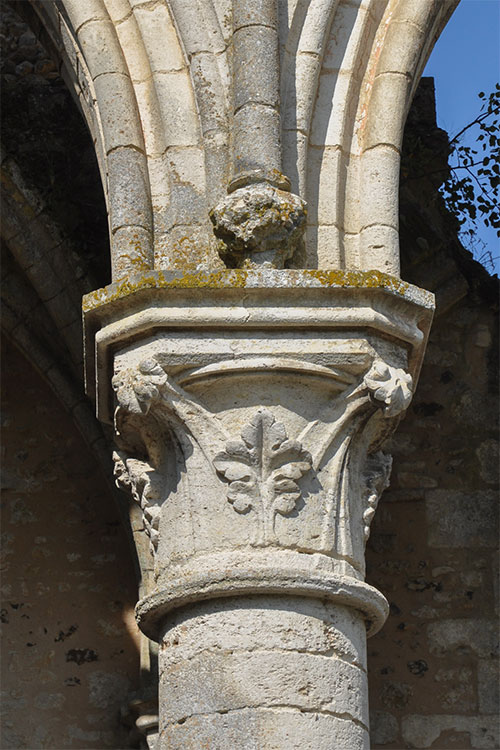
During the second half of the thirteenth century, the monastery entered a period of decline and a certain relaxation of monastic discipline. It was also severely affected by the Hundred Years' War. In the mid-fourteenth century, Fontainejean's estates and the abbey itself suffered heavily from the conflict: the monastery was abandoned and sustained major losses. The same situation recurred during the first half of the fifteenth century. In 1549, while reconstruction was underway, the abbey was placed under the commendatory system and, shortly afterwards, was affected by the French Wars of Religion. In 1561, the abbot embraced Calvinist ideas and, the following year, Fontainejean was attacked, leaving it in ruins and forcing the community to take refuge elsewhere.
After a long period of abandonment, reconstruction began around 1595 and, despite many difficulties, the monastery gradually recovered. It maintained only a very small community until the French Revolution. As a result, the monks left the abbey in 1790 and, in 1794, its valuable possessions and buildings were sold. The church was plundered and gradually fell into ruin; it was then dismantled so that its building materials could be reused. Today, only a few remains of the complex survive.
Affiliation of Fontainejean
According to Originum Cisterciensium (L. Janauschek, 1877)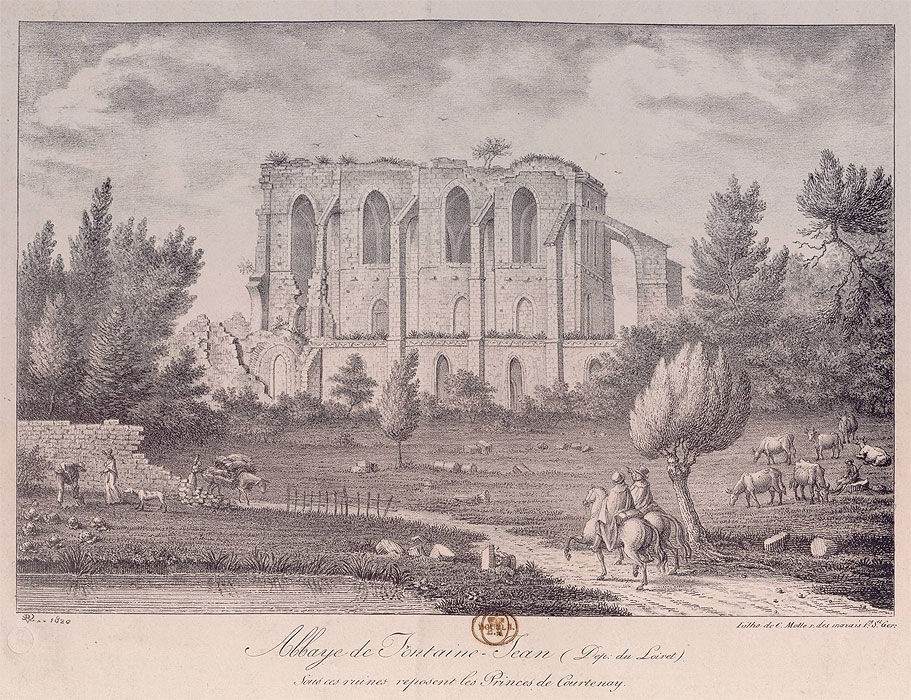
Ange René Ravault (1820)
Bibliothèque municipale d'Orléans (ICO P 96)

Photo published in Histoire de l'abbaye de Fontaine-Jean (1891)

According to Armorial général de France (18th century)
Bibliothèque nationale de France
- AUBERT, R. (1971). Dictionnaire d'histoire et de géographie ecclésiastiques. Vol. 17. París: Letouzey et Ané
- BESSE, Jean-Martial (1913). Abbayes et prieurés de l'ancienne France, vol. 6. Province ecclésiastique de Sens. Ligugé/París
- FISQUET, Honoré (1867). La France pontificale (Gallia christiana). Vol. 15. Sens, Auxerre. París: E. Repos
- JANAUSCHEK, Leopoldus (1877). Originum Cisterciensium. Vol. 1. Viena
- JAROSSAY, Eugène (1891-93). Histoire de l'abbaye de Fontaine-Jean de l'ordre de Cîteaux (1124-1790). Annales dela Société Historique & Archéologique du Gatinais. Vols. IX-XI. Fontainebleau
- SAINT-MAUR, Congregació de (1770). Gallia Christiana in provincias ecclesiasticas distributa. Vol. 12. París: Typographia Regia
The remains of the monastery lie east of the commune of Saint-Maurice-sur-Aveyron, to which they belong. The village is situated between Orléans and Auxerre. The site is privately owned