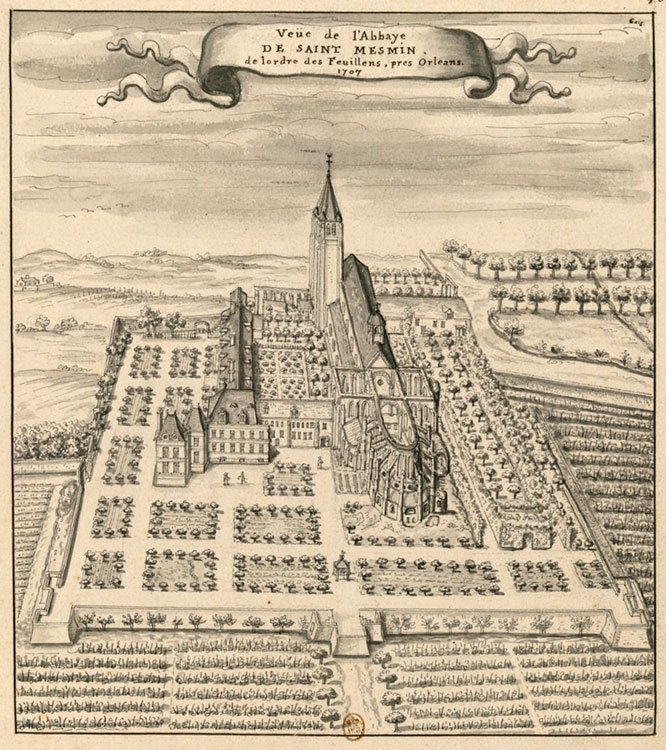
Detail of Veüe de l'Abbaye Saint Mesmin de l'ordre des Feuillens
Louis Boudan (1707)
Bibliothèque nationale de France


Micy Abbey, dedicated to Saint Mesmin, is of ancient origin. Its foundation has traditionally been associated with the Merovingian king Clovis I (c. 466–511), who granted the estate of Micy to his adviser Euspicius († 510), a native of this region. Besides a forged document, a genuine undated diploma of Clovis recording this grant has also been preserved. Micy was a disused royal residence situated at the confluence of the Loire and the Loiret rivers.
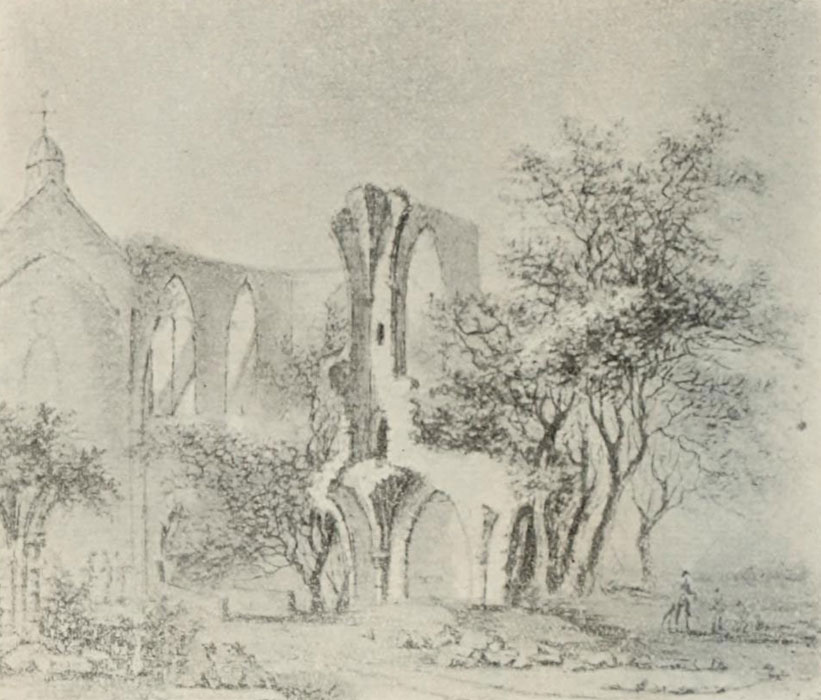
Illustration from
Histoire de l'abbaye de Micy-Saint-Mesmin lez-Orléans (1902)
Around 508, Euspicius, with the support of his nephew Maximin (Mesmin, † c. 520), founded a monastery there with the assistance of the Bishop of Orléans. Euspicius died two years later, and Maximin became head of the community; both are venerated as saints. Maximin was succeeded by Saint Avitus († 530), followed by other abbots, many of whom were likewise regarded as saints. Saint Laumer (c. 516–c. 594), founder of the monastery of Corbion (Orne), received his monastic formation here. In 675, the relics of the first two abbots were transferred to Orléans. Micy Abbey, which probably followed a pre-Benedictine rule, remained active until the Norman invasions devastated the monastery, leading to its abandonment.
The monastery was restored by Theodulf (c. 755–c. 821), adviser to Charlemagne, abbot of Saint-Benoît-sur-Loire (Loiret) from 798 and Bishop of Orléans. He introduced the Rule of Saint Benedict in accordance with the reform promoted by Benedict of Aniane (c. 750–821), whom he had previously met at the monastery of Aniane (Hérault). In 834, the relics of Saint Maximin were returned to Micy, and from then on, the monastery became known as Saint-Mesmin de Micy. A new wave of Norman invasions (856–865) forced the community to flee to its residence in the city of Orléans, known as the Alleu de Saint-Mesmin. Monastic life was not restored until the middle of the tenth century, when Abbot Annon († 972) arrived, inaugurating a new period of prosperity. Pope Benedict VII (974–983) confirmed the abbey's possessions and privileges.
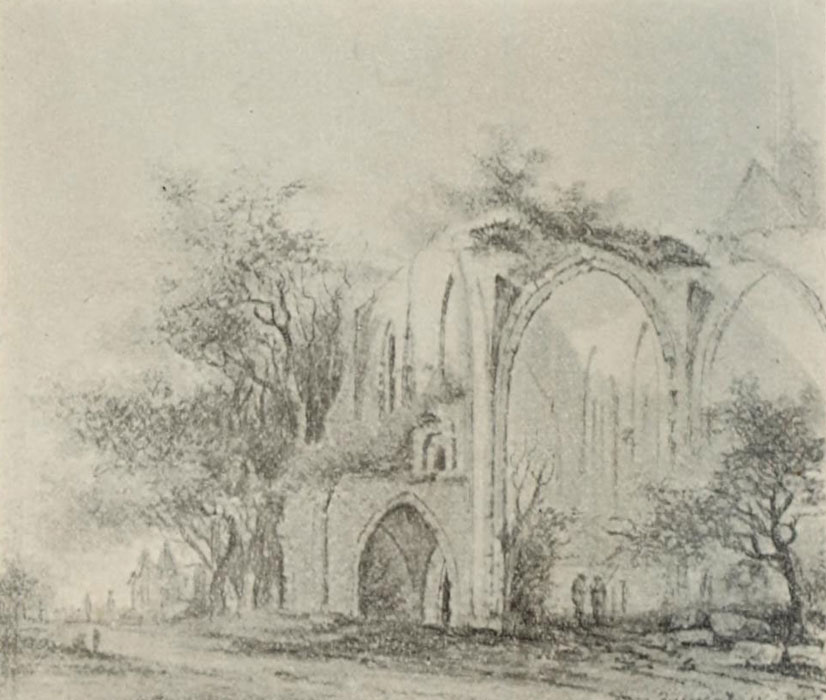
Illustration from
Histoire de l'abbaye de Micy-Saint-Mesmin lez-Orléans (1902)
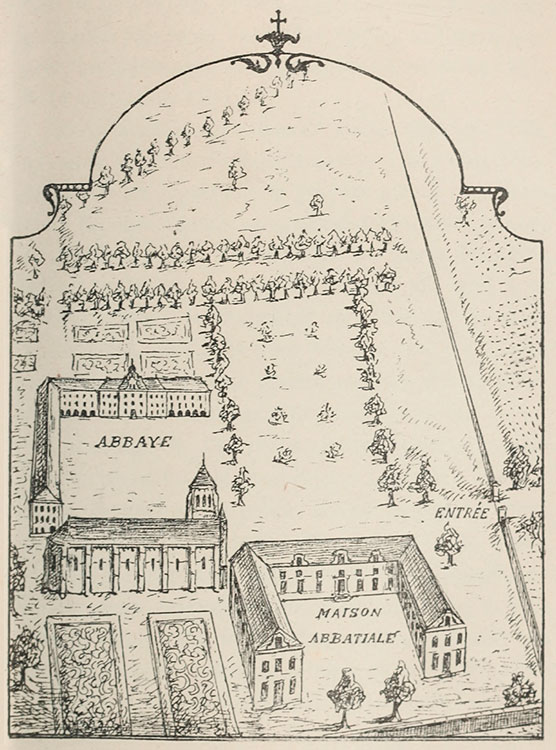
Illustration from
Histoire de l'abbaye de Micy-Saint-Mesmin lez-Orléans (1902)
During the second half of the fourteenth century, because of the instability caused by the Hundred Years' War, the community once again abandoned the monastery and took refuge in Orléans. Once conditions improved, the rebuilding of the abbey began. To help finance this work, the Alleu of Orléans became the parish of Alleu de Saint-Mesmin, a status it retained thereafter. The restoration, however, could not be completed because of further attacks on the monastery around 1420. In 1493, the last regular abbot returned the saint's relics from the refuge in Orléans to the partially restored monastery. In 1513, the first commendatory abbot took office.
In 1562 and 1567, during the French Wars of Religion, the monastery was again destroyed, as was the Alleu of Orléans. In 1598, the abbey, then in deep decline, came under the authority of the commendatory abbot François de La Rochefoucauld (1558–1645). The poor relationship between the new abbot and the Benedictine community led to the reform of the monastery. In 1608 the Benedictine community was suppressed and expelled, and the abbey was entrusted to the Cistercian Feuillants, who remained there until the French Revolution (1790), when the monastery was permanently suppressed. Today, virtually nothing remains of the monastic buildings.
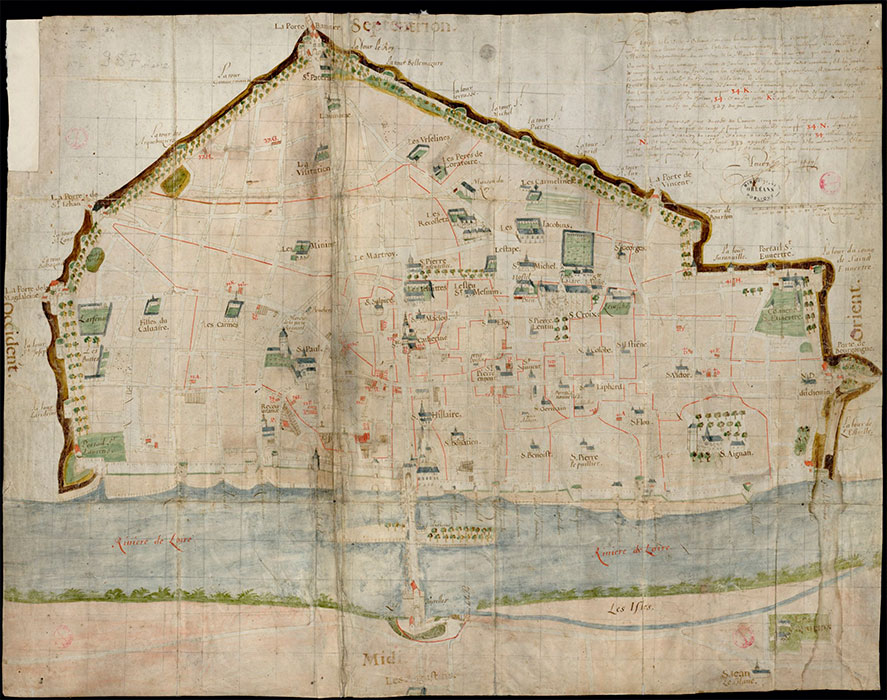
Alleu Saint-Mesmin, a property of the abbey located in Orleans
Detail of Jean Fleury's plan (1640)
Médiathèque centre-ville, Orleans
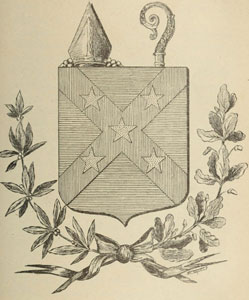
Illustration from
Histoire de l'abbaye de Micy-Saint-Mesmin lez-Orléans (1902)
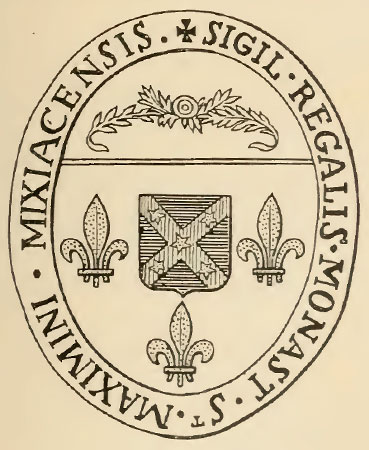
Illustration from
Histoire de l'abbaye de Micy-Saint-Mesmin lez-Orléans (1902)
- BEAUNIER, Dom (1905). Recueil historique des Archêvechés, Évêchés, Abbayes et Prieurés de France. Vol. 1. Province ecclésiastique de Paris. París: Poussielgue
- BOSC-LAUBY, Aurélie; coord. (2004). Lumières de l’an mil en Orléanais. Autour du millénaire d’Abbon de Fleury. Brepols
- CHARLES, Jacques (1976). Quelques réflexions sur les origines de l'abbaye de Micy-lez-Orléans. Bulletin de la Société archéologique et historique de l'Orléanais, vol. VI
- GUÉRIN, Paul (1888). Les Petits Bollandistes. Vols. VII i XIV. París: Bloud et Barral
- HAVET, Julien (1885). Questions mérovingiennes. Bibliothèque de l'École des Chartes, vol. XLVI
- JAROSSAY, Eugène (1902). Histoire de l'abbaye de Micy-Saint-Mesmin lez-Orléans (502-1790). Orleans: Marron
- PONCELET, Albert (1905). Les saints de Micy. Analecta Bollandiana, vol. XXIV/1. Bruxelles
- SAINT-MAUR, Congregació de (1744). Gallia Christiana in provincias ecclesiasticas distributa. Vol. 8. París: Typographia Regia
- SATOSHI TADA (2018). Hagiographic traditions regarding St Maximinus (Mesmin) up to the Ninth Century. Spicilegium, 2
The monastery stood at the confluence of the Loire and the Loiret rivers, west of Orléans. No remains survive