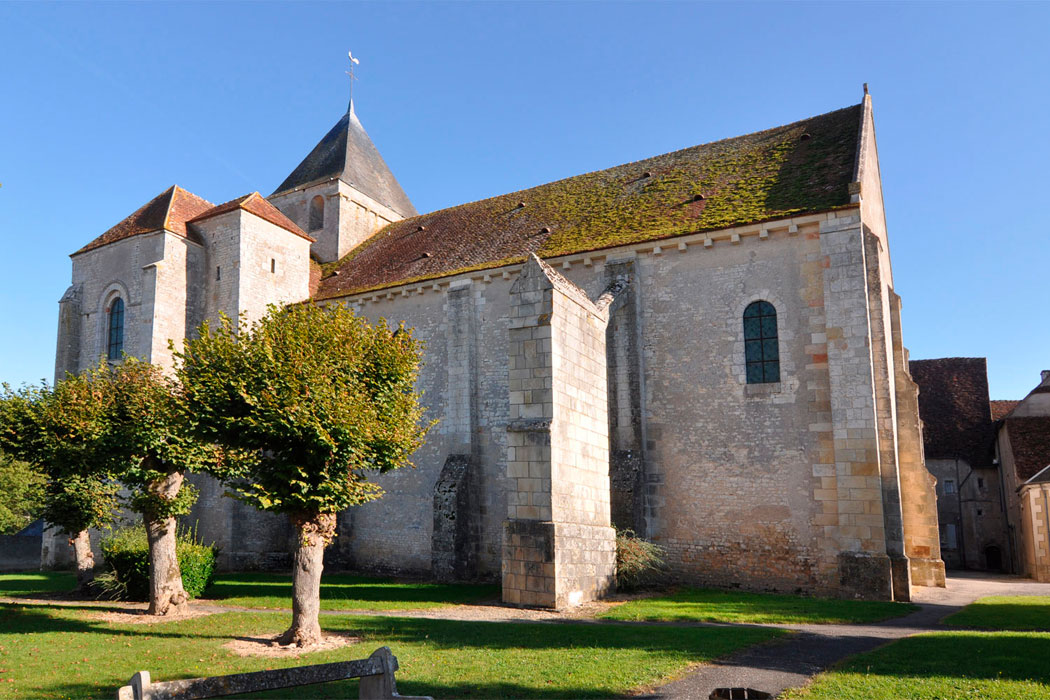

The Augustinian house of canons regular of Saint-Martin de Plaimpied was founded around 1080 by Richard II, Archbishop of Bourges from 1071 to 1093, and was dedicated to Martin of Tours. After his death, the founder was buried in the church. His successors at the head of the archdiocese, especially Audebert (1094–1098), took care of the community and completed the construction of the abbey, a project that continued throughout the first half of the twelfth century.
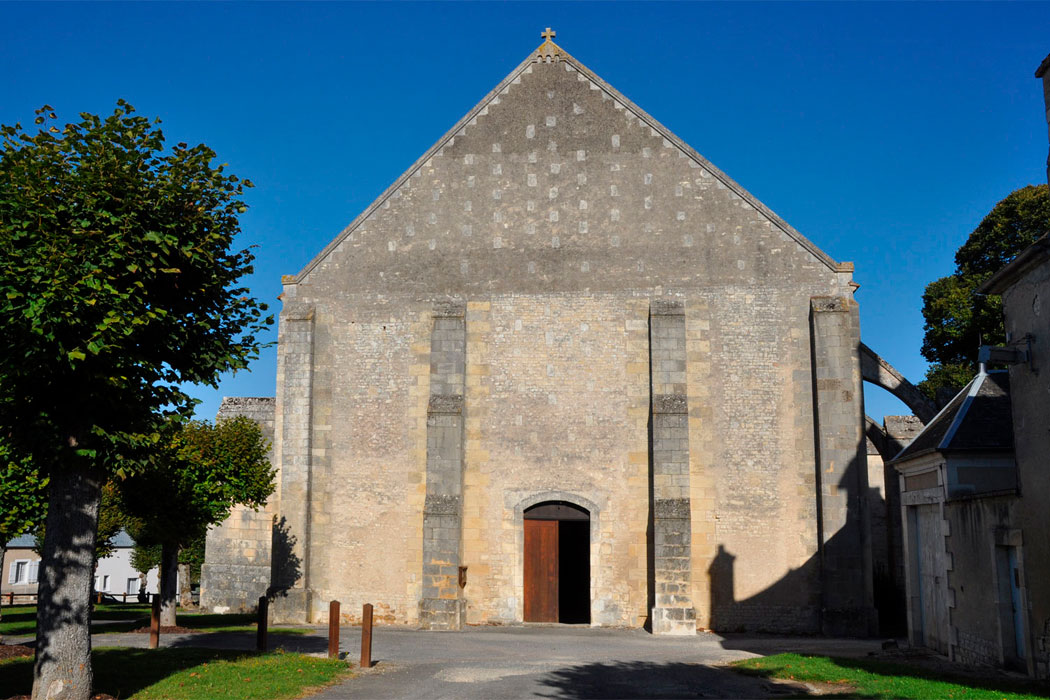
The Gallia Christiana mentions Petrus as the first abbot, elected by the community in 1100, suggesting that, despite its institutional dependence on the Diocese of Bourges, the house enjoyed a certain degree of autonomy from episcopal authority. King Philip I of France (1052–1108) granted it seigneurial rights over Plaimpied. The abbey also amassed considerable possessions, including numerous churches throughout the region, as confirmed by a bull issued by Pope Paschal II in 1110. Thanks to these resources, the community prospered during the twelfth and thirteenth centuries, reaching the height of its development.
A long period of decline followed, marked by the relaxation of religious observance, the introduction of the commendatory system and, above all, the effects of political instability. As a result, by the sixteenth century the church had fallen into a ruinous state. It also suffered during the French Wars of Religion. An inscription records that it was restored in 1654.
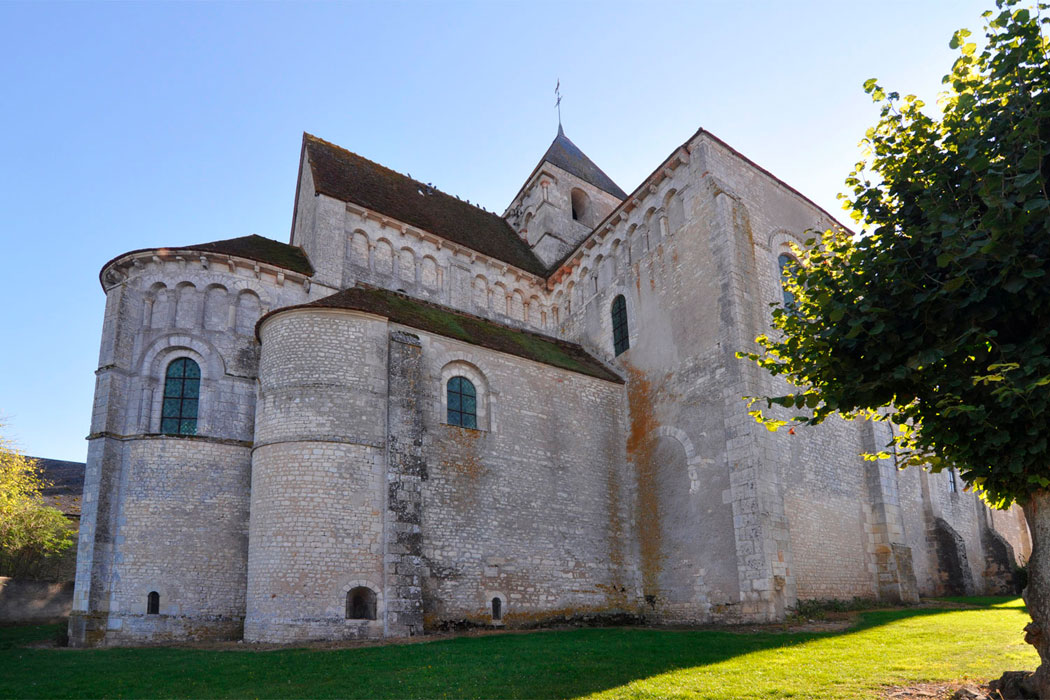
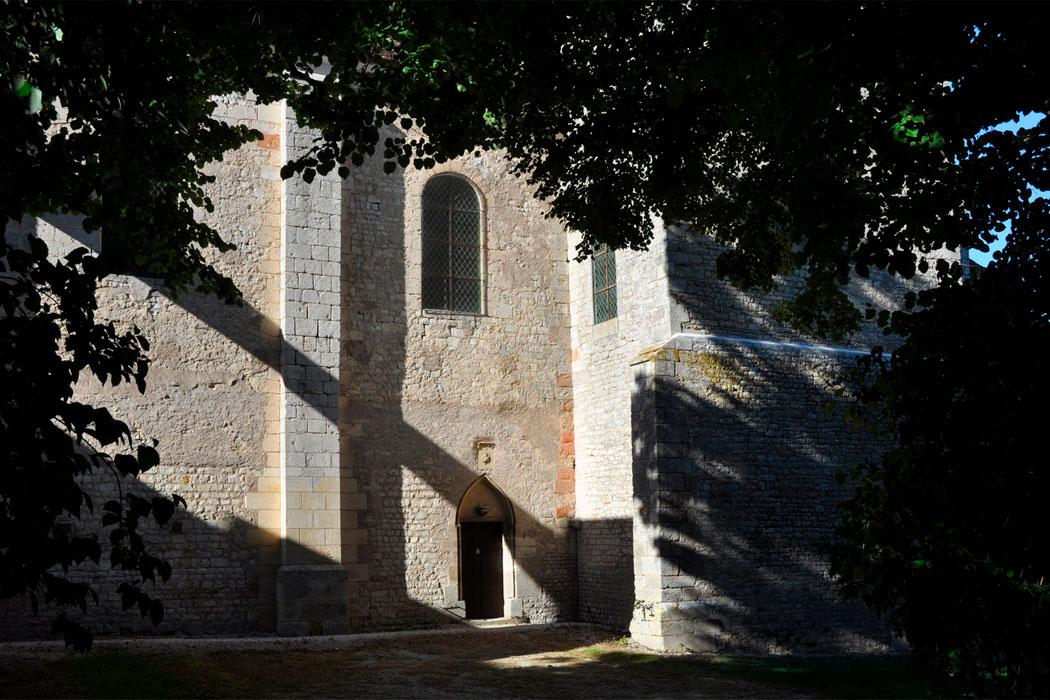
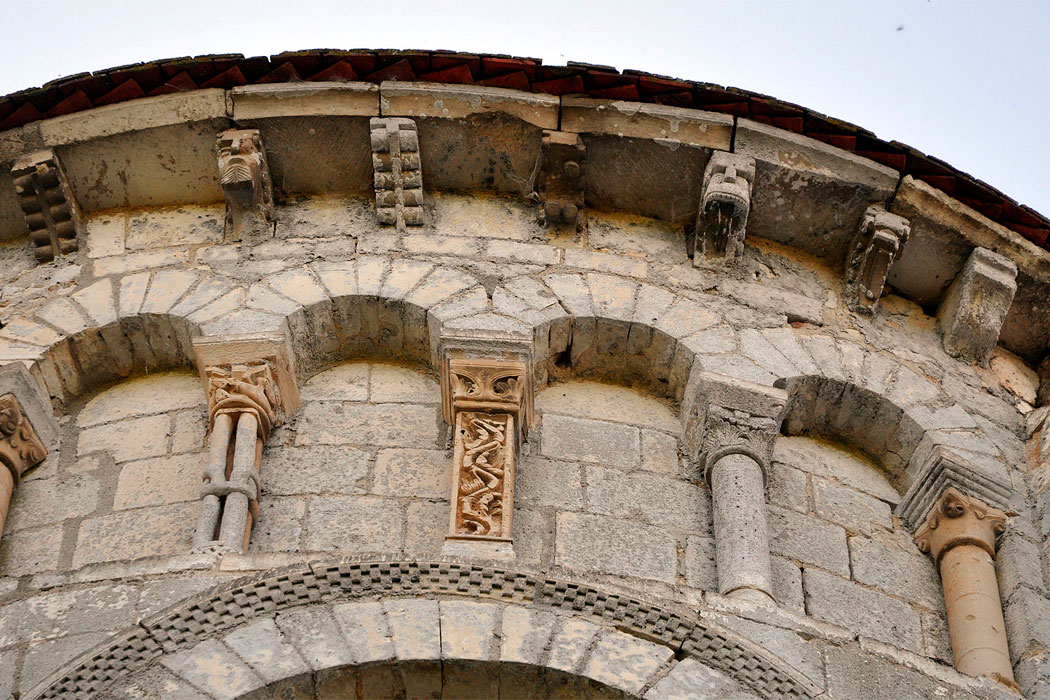
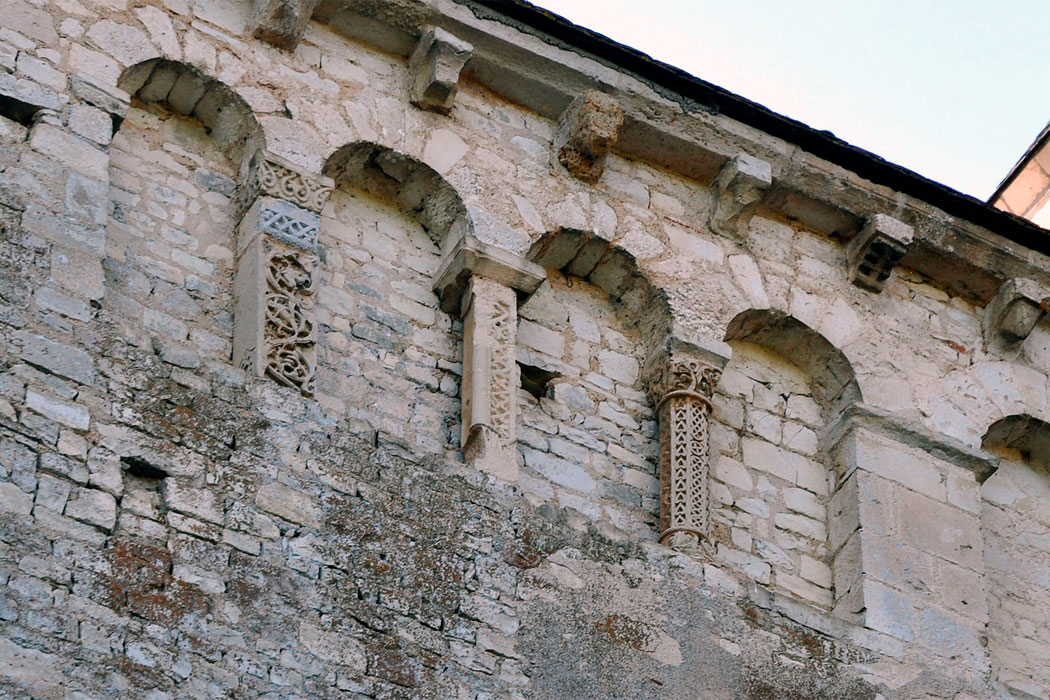
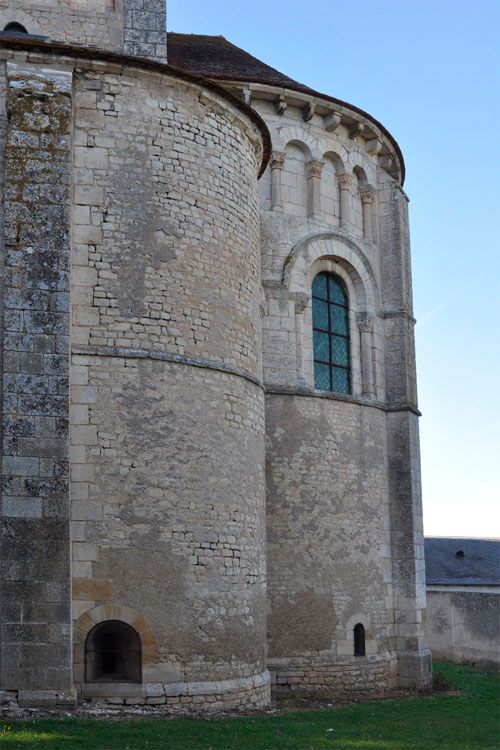
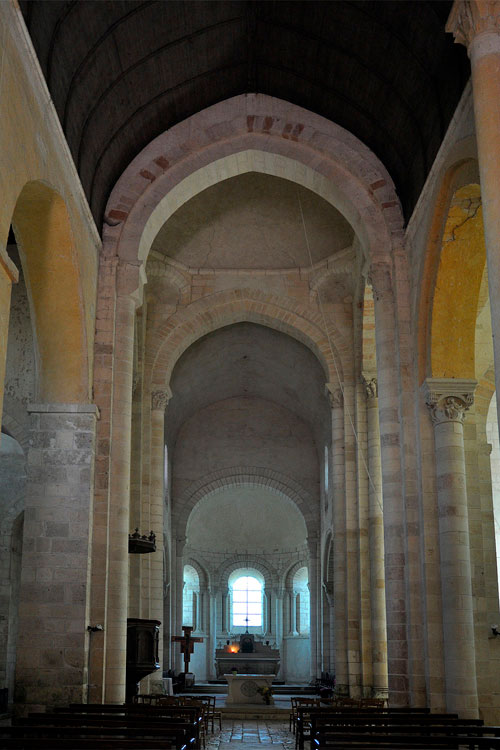
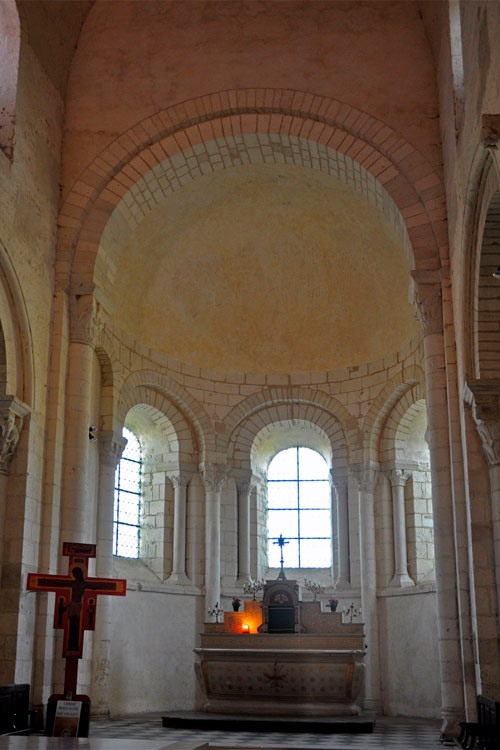
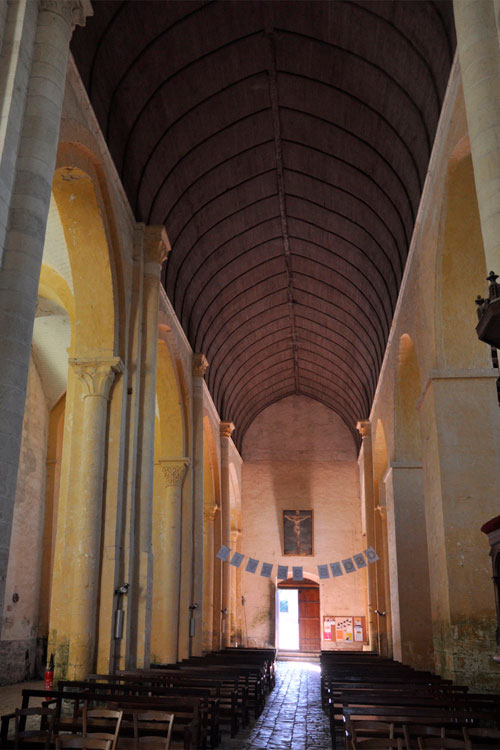
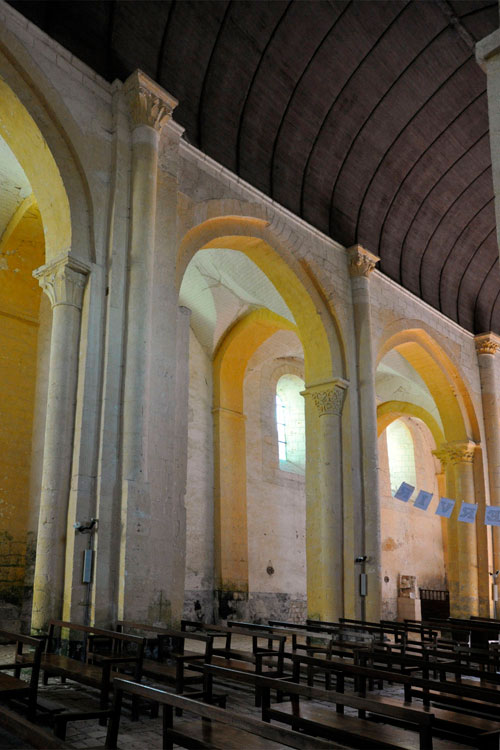
The church of Romanesque origin is currently preserved, the historical evolution of which is little known due to the lack of documentation. It has a three-aisled nave divided into four bays, though it was originally longer. Beyond it are the transept and the three-aisled chancel, with two bays. The eastern end is formed by three semicircular apses.
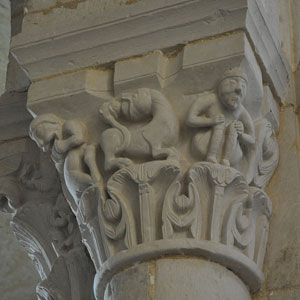
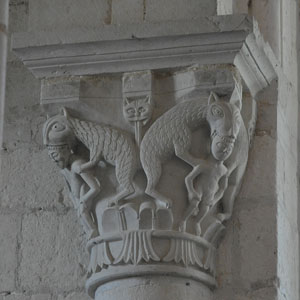
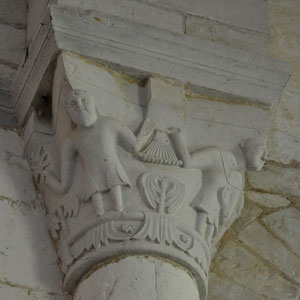
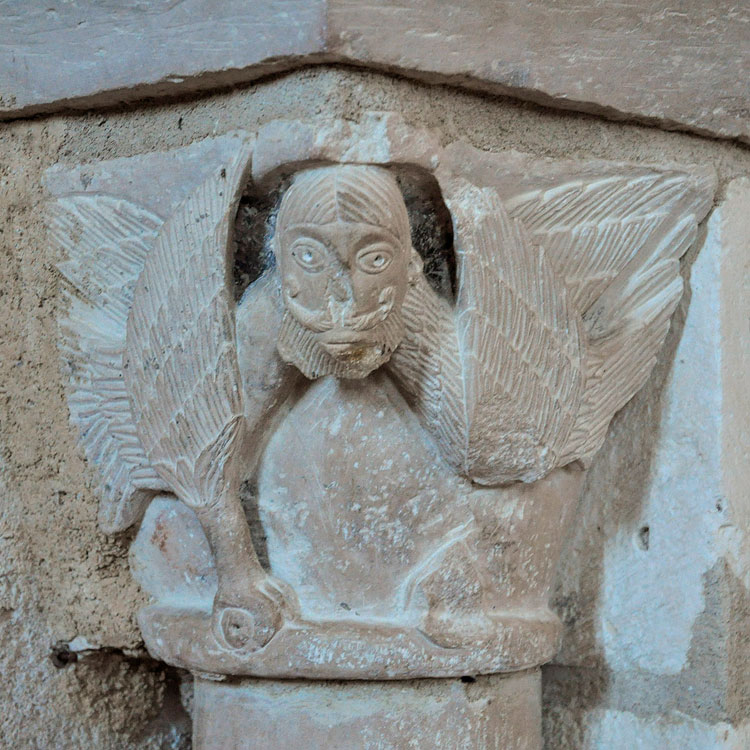
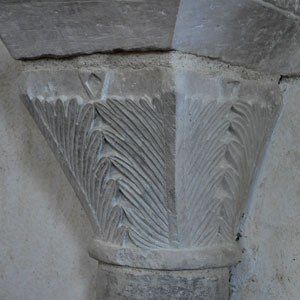
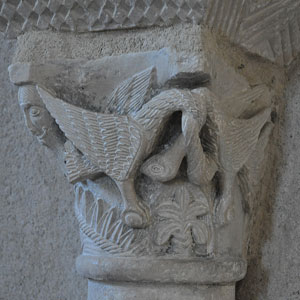
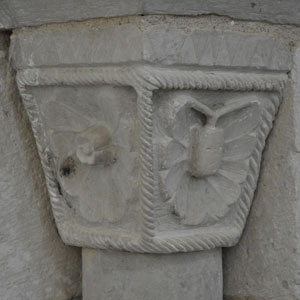
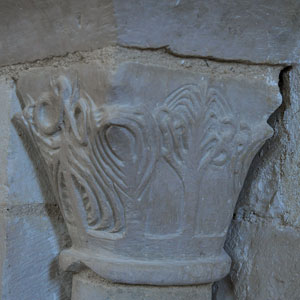
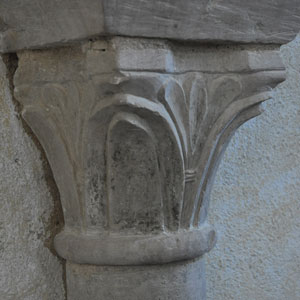
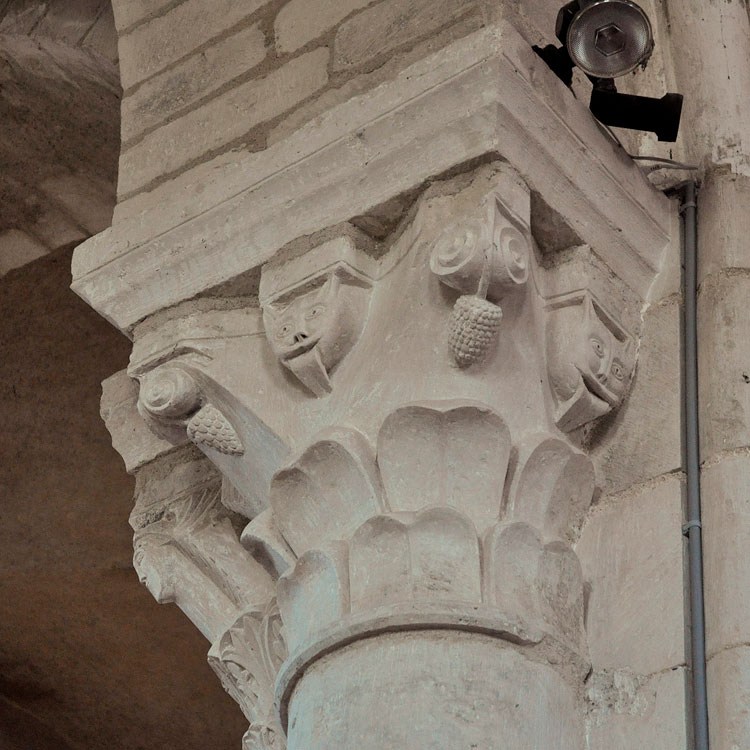
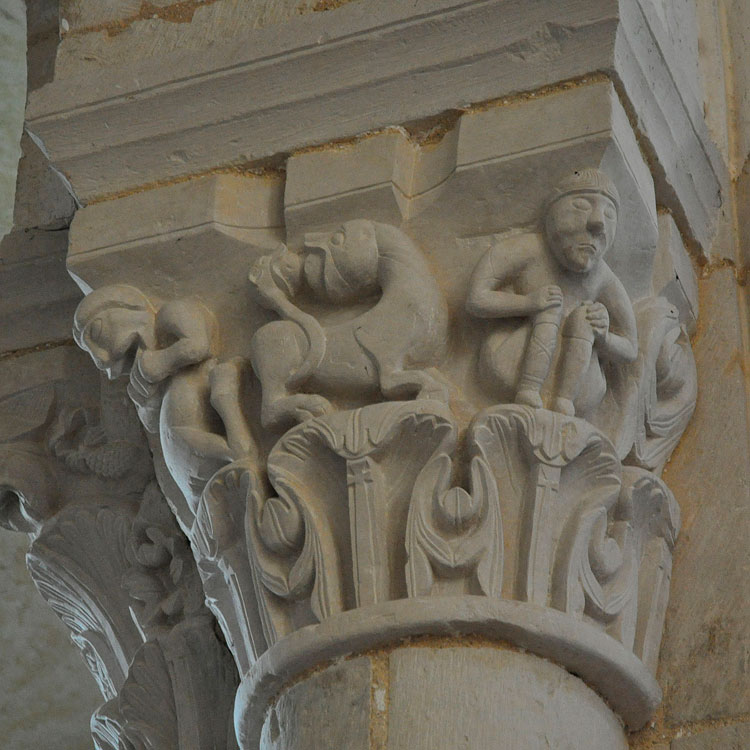
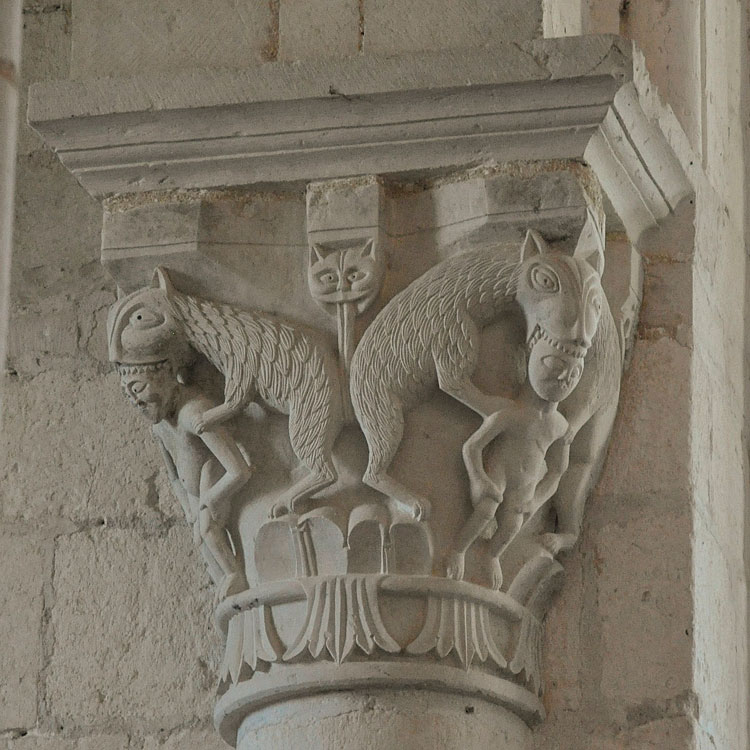
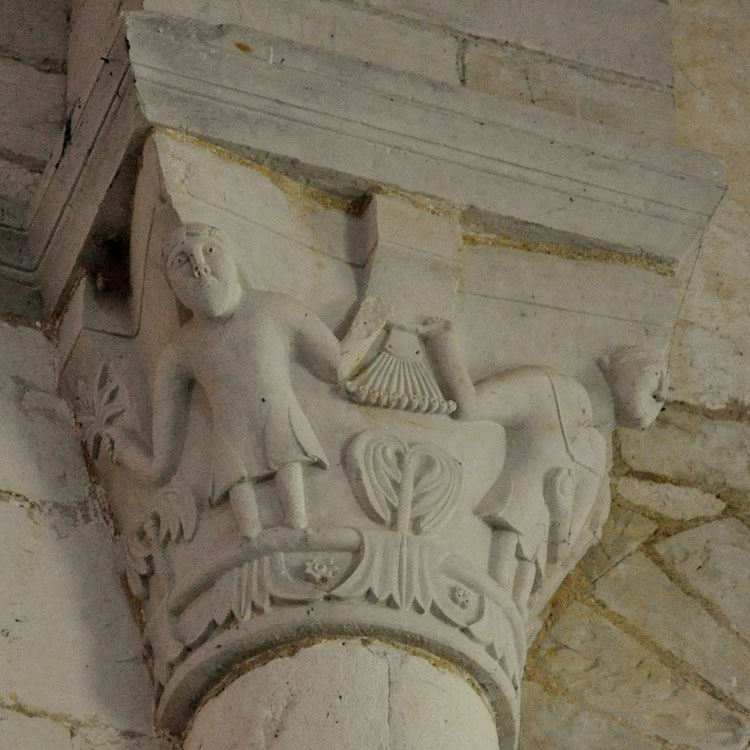
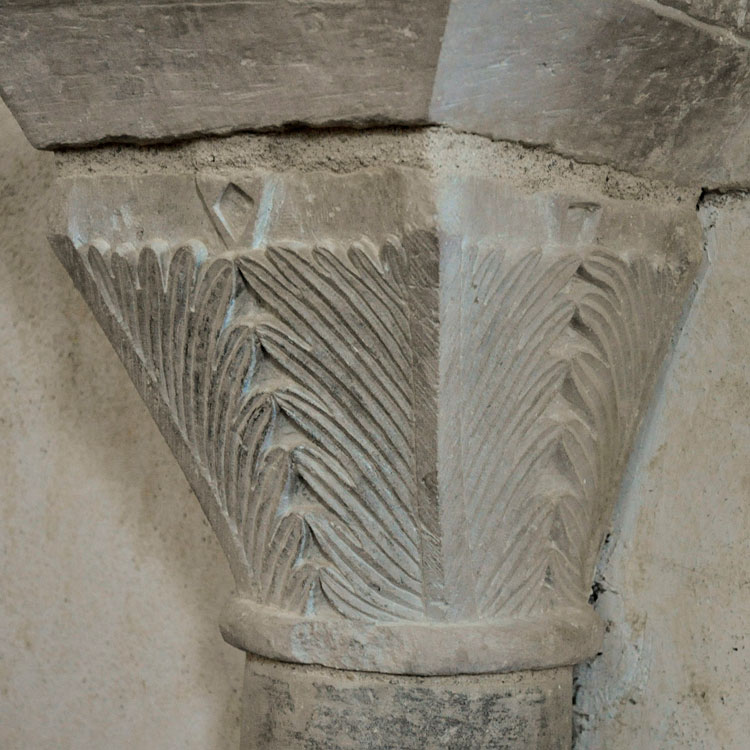
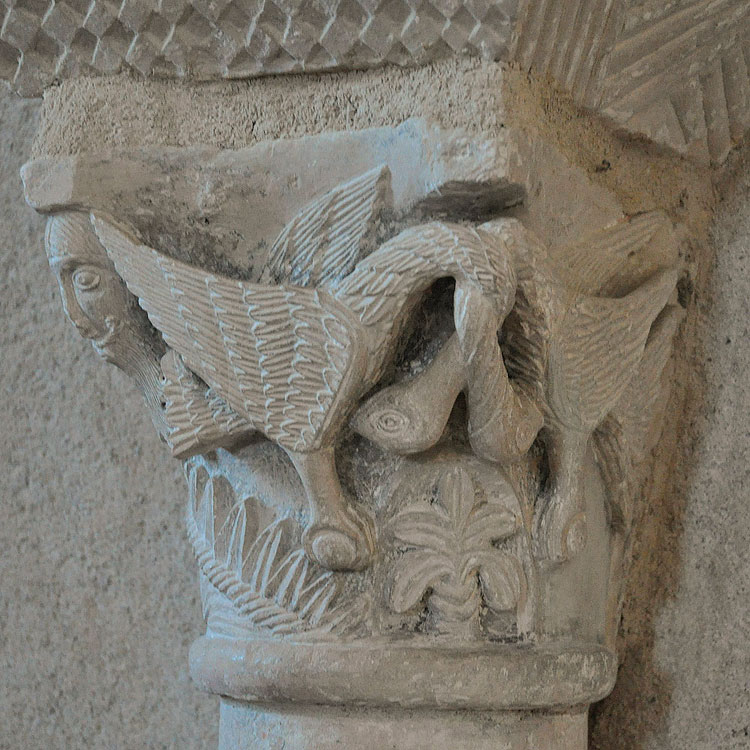
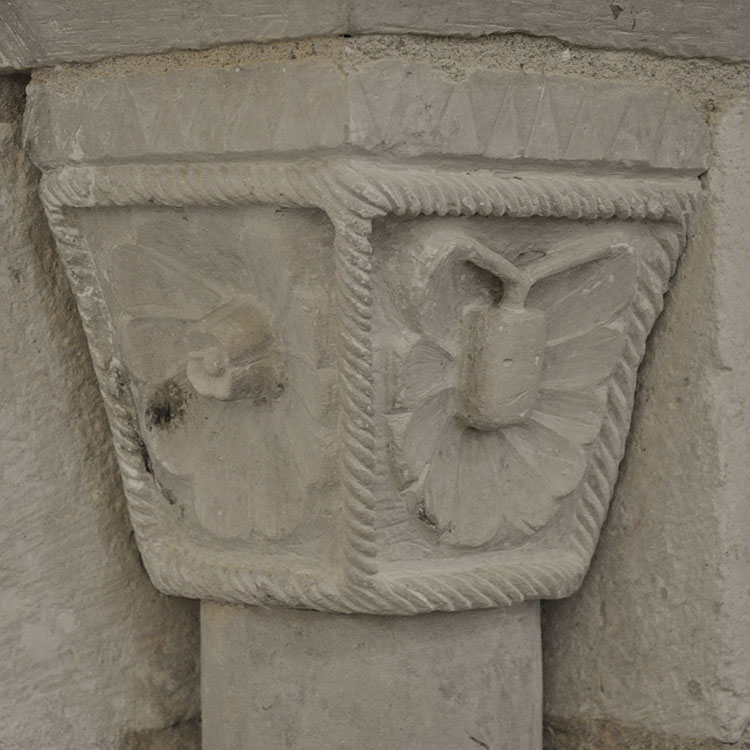
The church preserves remarkable sculptural and epigraphic elements, some of them originating from the cloister. Particularly noteworthy are the tomb of Archbishop Richard II and the epitaph of the canon Sulpicius (possibly dating from 1142), carved by the same master responsible for the capital depicting the Temptation of Christ. The church also contains a spacious crypt, which originally had its own independent entrance, allowing the faithful to reach it without passing through the areas reserved for the canons.
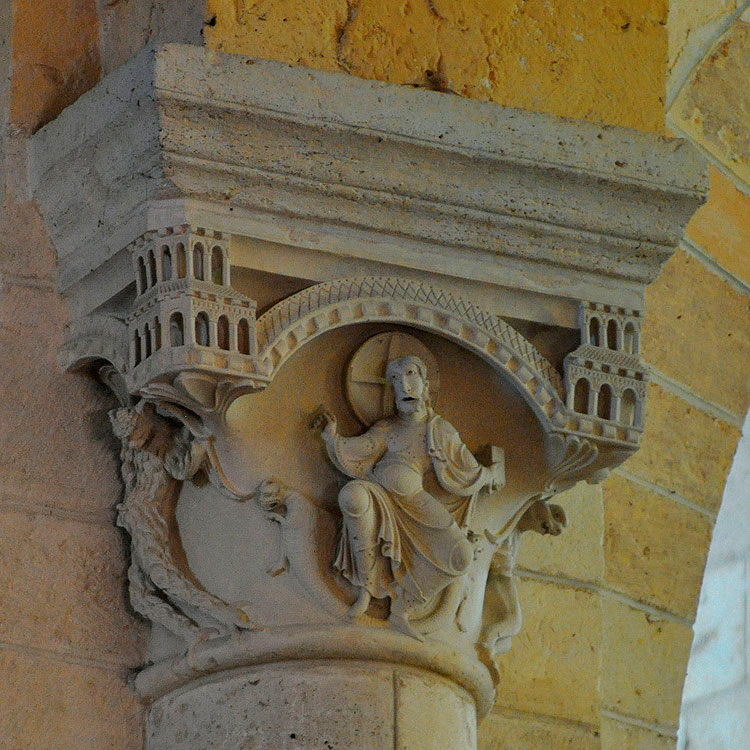
Capital of the Temptation of Christ
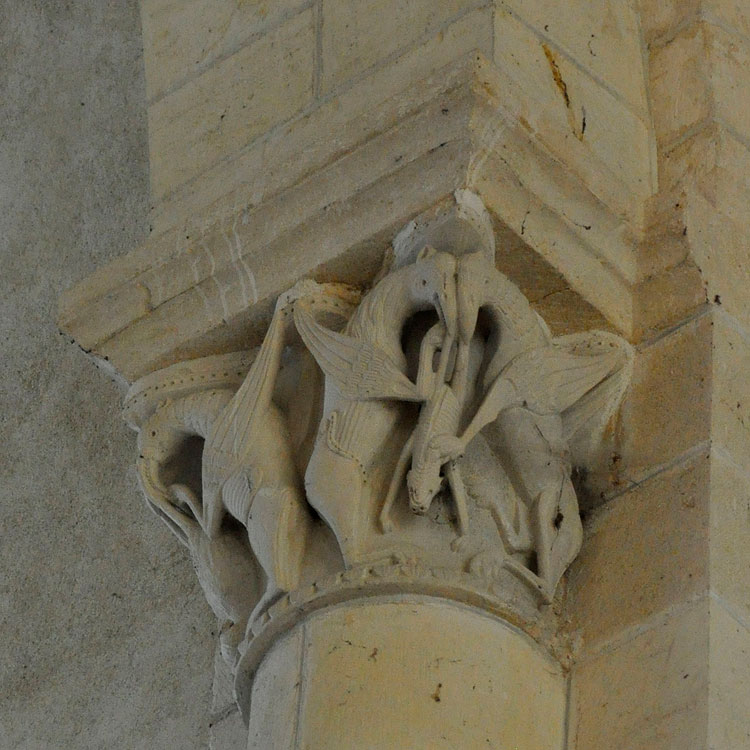
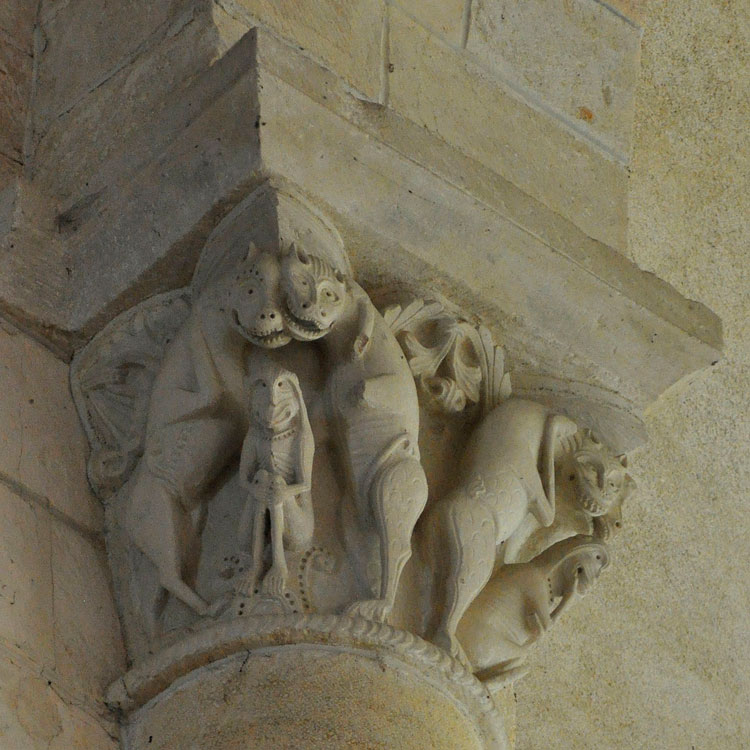
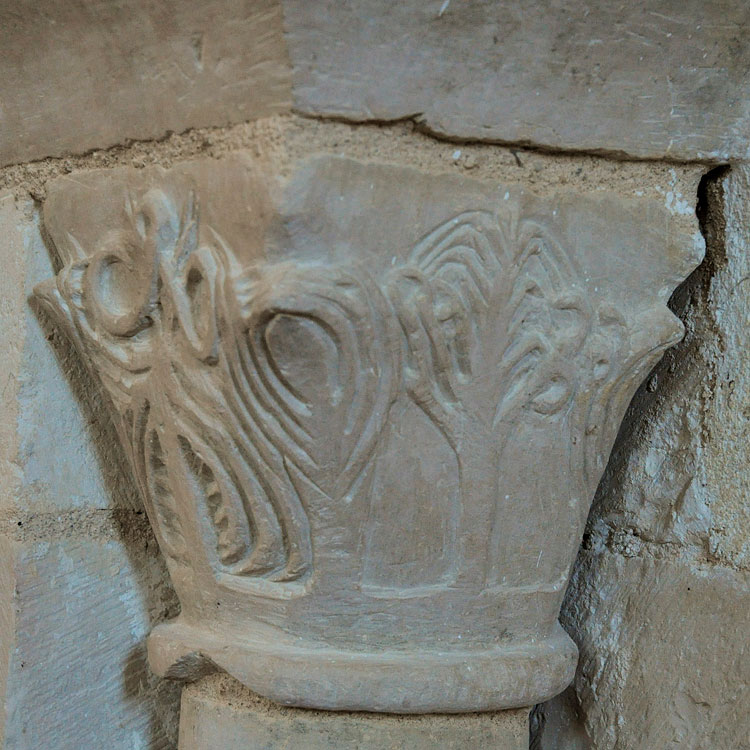
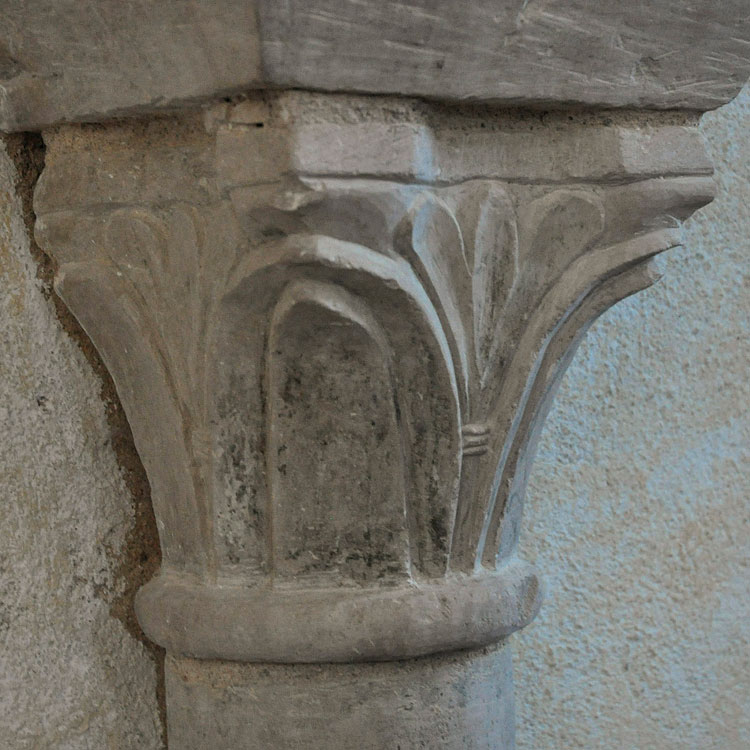
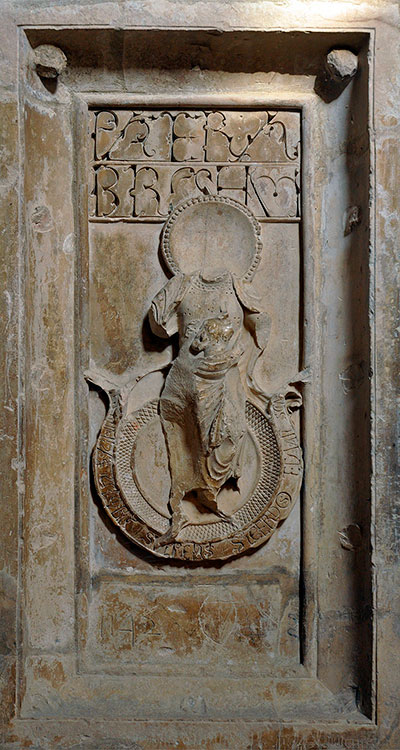
Epitaph of Canon Sulpicius (1142?)

Epigraphic elements
Illustration from Inscriptions murales de l’église de Plaimpied (1887)
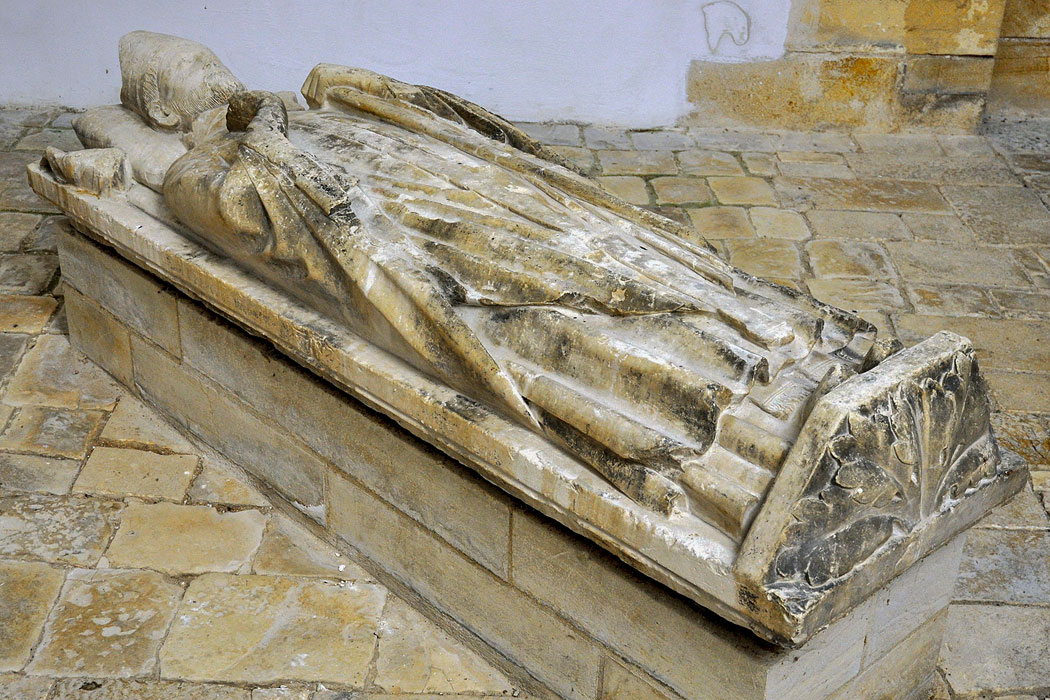
Tomb of Archbishop Richard II
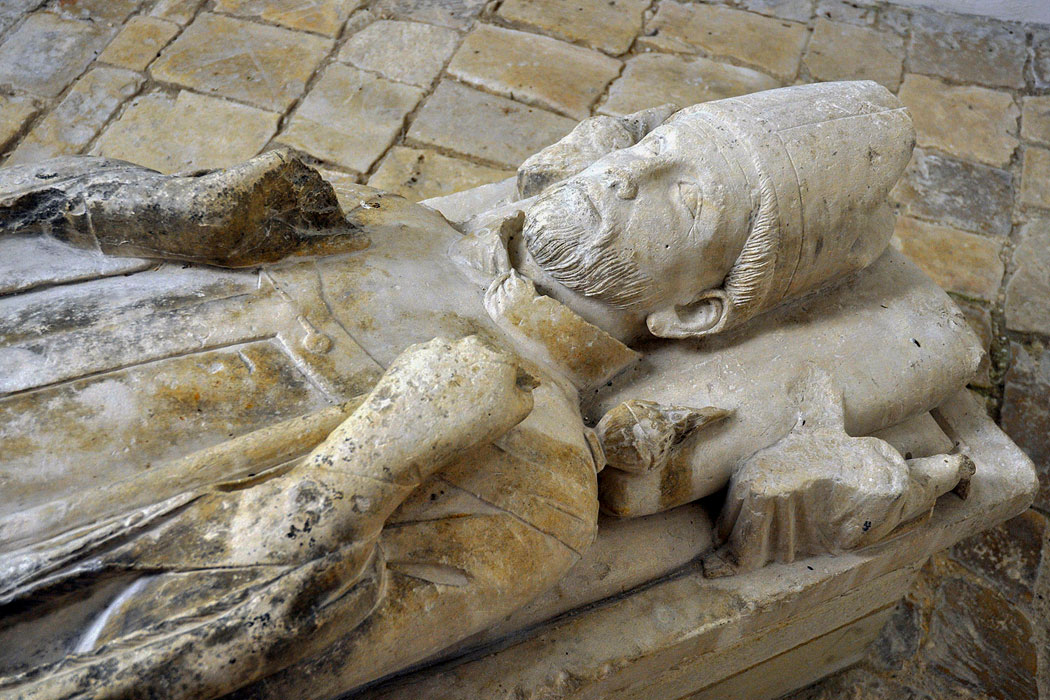
Tomb of Archbishop Richard II
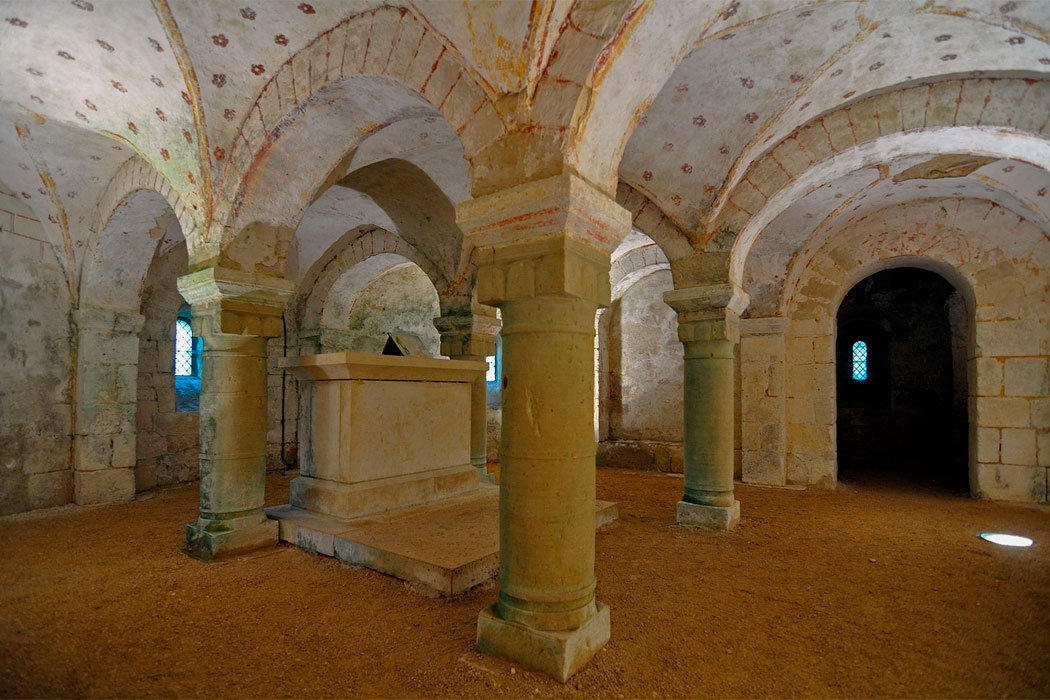
Crypt
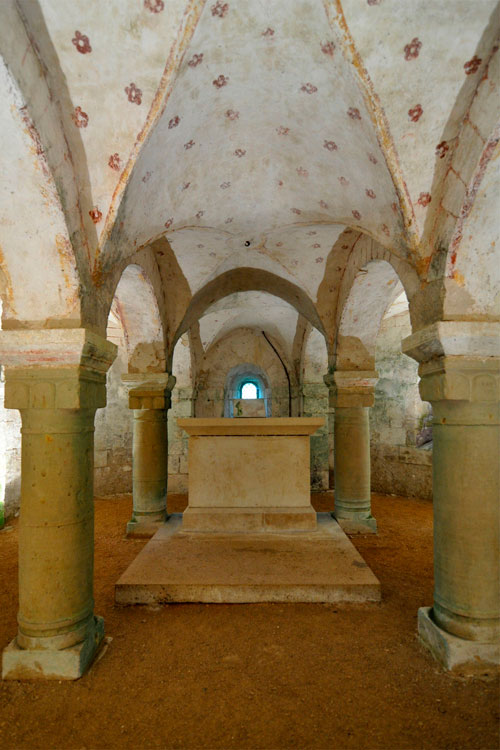
Crypt
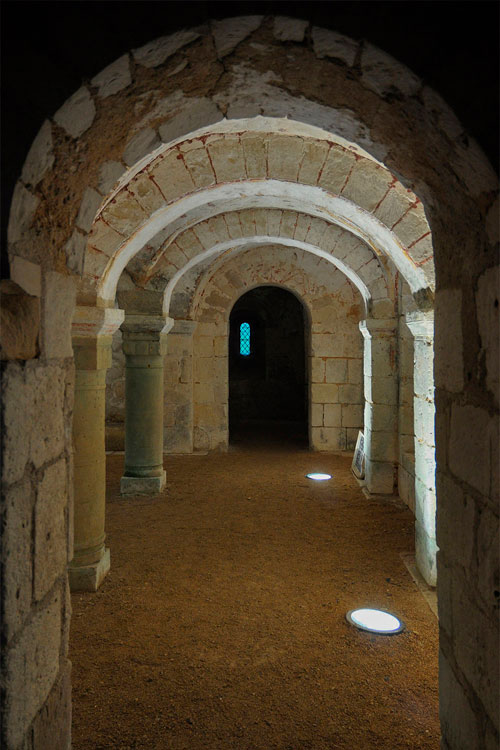
Crypt
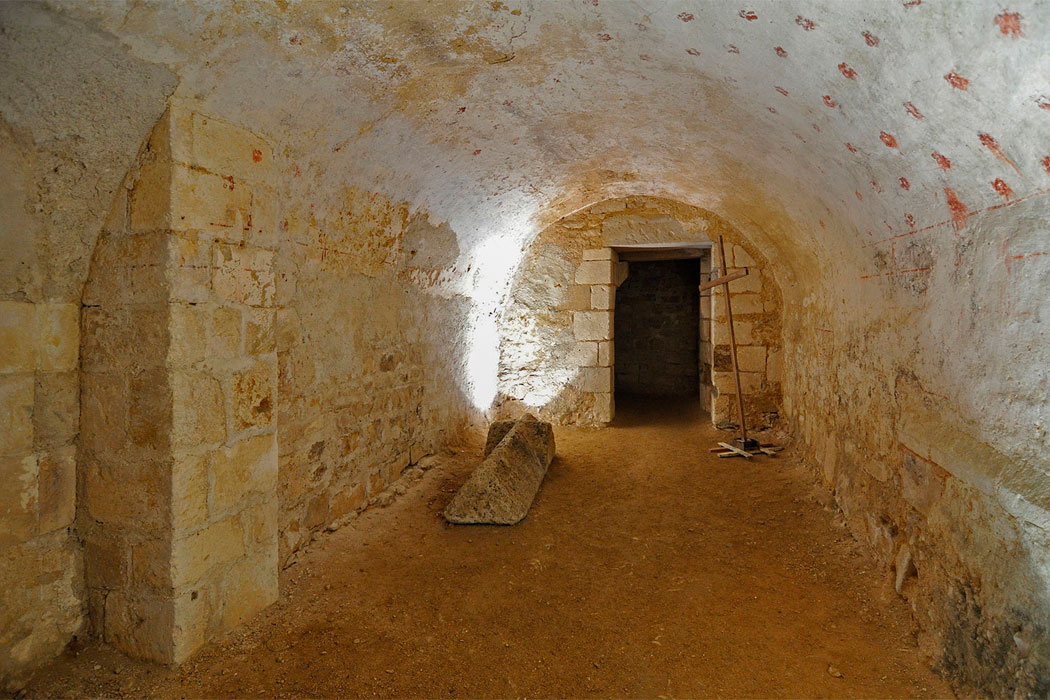
Crypt
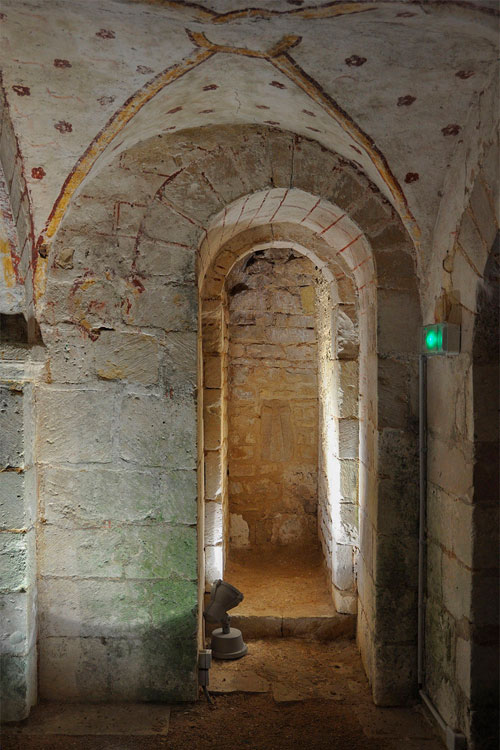
Crypt
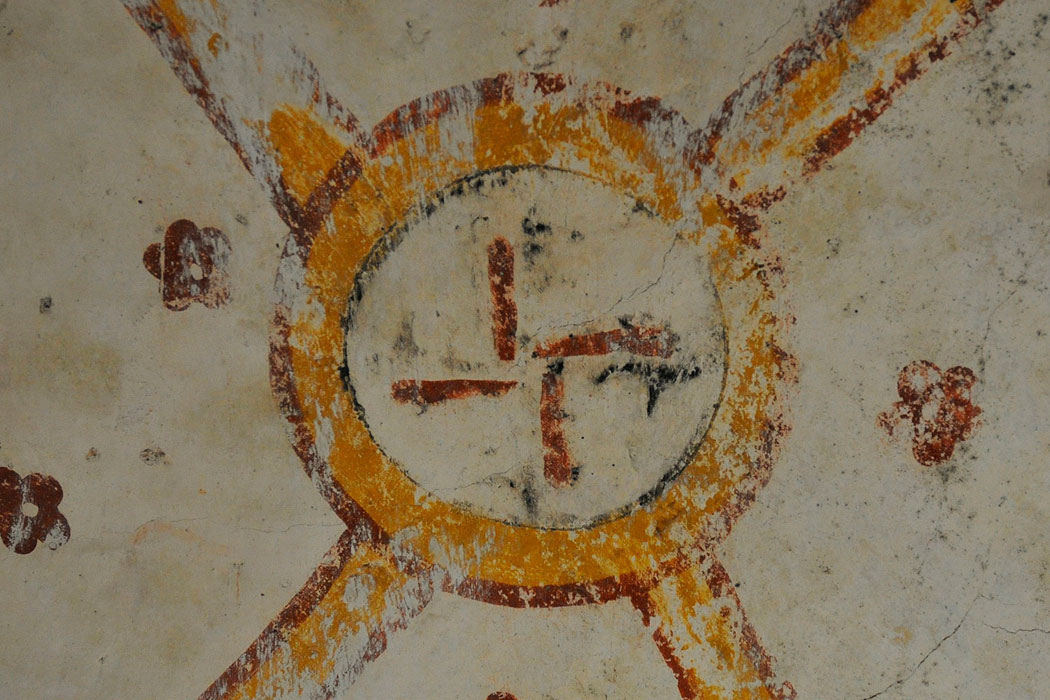
Crypt
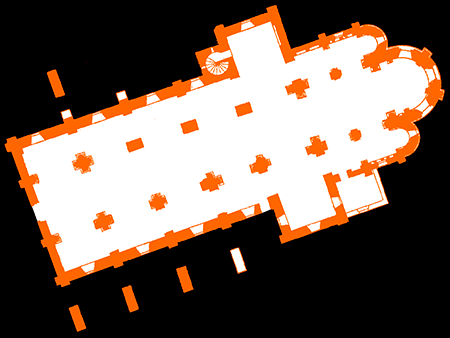
Schematic plan of the church

Acording to Armorial général de France (18th century)
Bibliothèque nationale de France
- BEAUNIER, Dom (1912). Abbayes et prieurés de l'ancienne France. Vol. 5. Bourges. Abbaye de Ligugé
- BUHOT DE KERSERS, Alphonse (1887). Inscriptions murales de l’église de Plaimpied (Cher). Mémoires de la Société des antiquaires du Centre. Bourges: Tardy
- BUHOT DE KERSERS, Alphonse (1891). Histoire et statistique monumentale du département du Cher, vol. 5. Bourges: Tardy
- DESHOULIÈRES, François (1929). La date de l’église de Plaimpied (Cher). Mémoires de la Société des antiquaires du Centre. Bourges: Tardy
- DESHOULIÈRES, François. (1932). Plaimpied. Congrès archéologique de France. 94ss. Bourges. Société française d'archéologie
- FAVIÈRE, Jean (1970). Berry roman. La nuit des temps, 32. Zodiaque
- PETIT, Bernard (2005). Abbatiale Saint Martin de Plaimpied. Bourges: Pat Flash
- SAINT-MAUR, Congregació de (1720). Gallia Christiana in provincias ecclesiasticas distributa. Vol. 2. París: Typographia Regia
- STRATFORD, Neil (2015). Le chapiteau de la Tentation du Christ à Plaimpied revisité. Bulletin Monumental, vol. 173/4
- THAUMAS DE LA THAUMASSIÈRE, Gaspard (1689). Histoire de Berry. Bourges: Toubeau
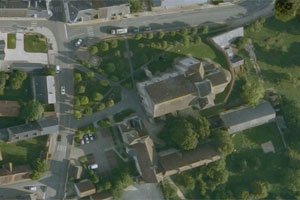
L'abbaye de Plaimpied appartient à la commune de Plaimpied-Givaudins, située au sud de Bourges