Abbey of Notre-Dame de Pontlevoy
Pontilevium / Ponte Leviaco / Notre-Dame in Albis
(Pontlevoy, Loir-et-Cher)
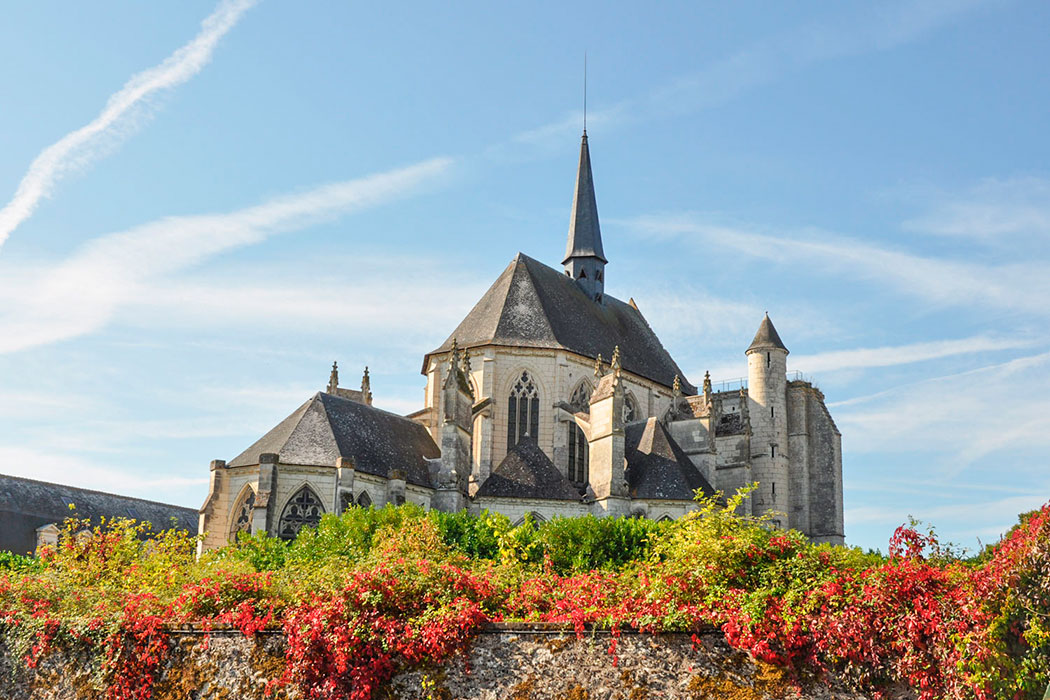


The Benedictine Abbey of Notre-Dame de Pontlevoy was founded and endowed in 1034 by Gelduin (†1040), Lord of Pontlevoy and a vassal of the Count of Blois. The founder had taken part in the Battle of Pontlevoy (1016) and built the Château of Chaumont. The abbey was founded after Gelduin, while on a pilgrimage to the Holy Land, escaped unharmed from a dangerous situation through the intercession of the Virgin Mary.
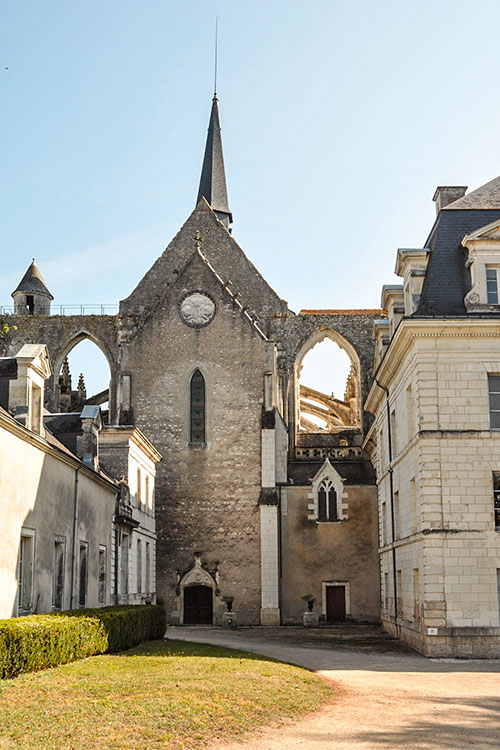
With the approval of Théodoric, Bishop of Chartres, Gelduin brought a community of monks from Saint-Florent Abbey of Saumur (Maine-et-Loire), placing them under the leadership of Abbot Ansbert. Geoffroy, Gelduin's son, together with other local lords, made further donations, enabling the monastery to develop rapidly into an important monastic centre. In 1075, King Philip I of France (1052–1108) confirmed its foundation and possessions. The abbey also became an important cultural centre, with a distinguished scriptorium and library.
The abbey suffered several setbacks, including a fire in 1262 and damage during the Hundred Years' War at the end of the fourteenth century, when it was also fortified. From 1468 onwards it was governed by commendatory abbots. In 1568 it was affected by the French Wars of Religion, further worsening the decline caused by the conflicts. During the last quarter of the sixteenth century, reconstruction of the abbey church began but remained unfinished. Today only the chancel and the eastern end survive.
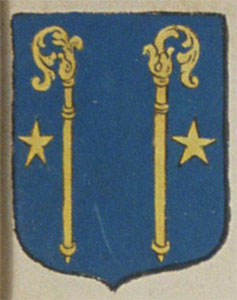
According to Armorial général de France (18th century)
Bibliothèque nationale de France
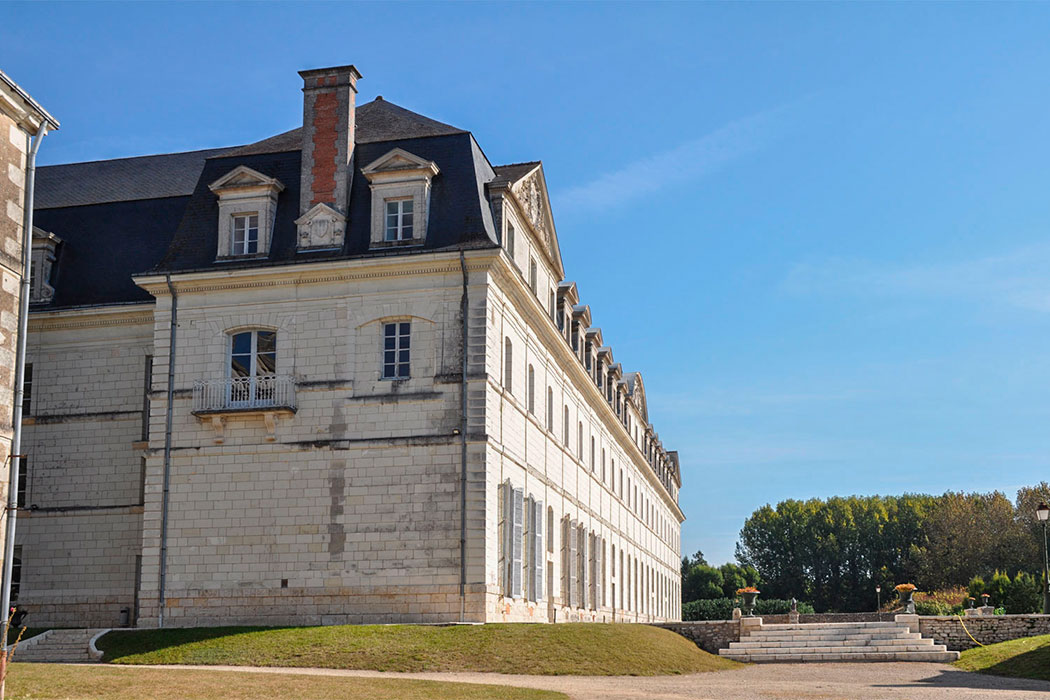
After several unsuccessful attempts at reform, Pontlevoy joined the Congregation of Saint-Maur in 1631, at a time when the monastery was in serious decline. The Maurists not only carried out extensive rebuilding works but also established a school that enjoyed a great reputation throughout the seventeenth and eighteenth centuries. In 1776 it became a military school. The monastery was suppressed in 1789, although the school remained in operation until 1793. During both the First and Second World Wars, the former monastery served as a relief centre, but it was damaged after the retreat of the German army. It is now a Catholic educational institution.
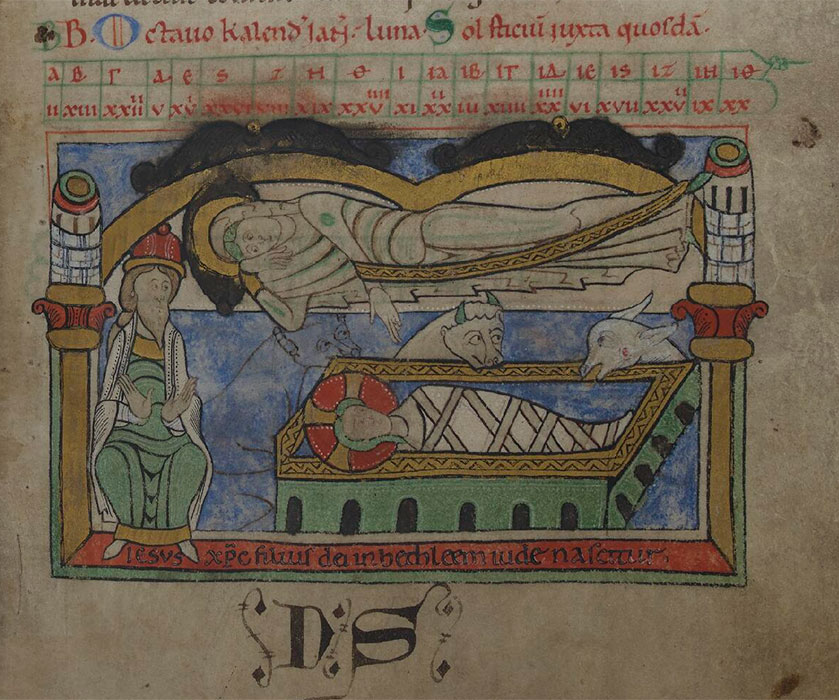
Illustration of a martyrology (12th century), from the monastery
Blois. Bibliothèque Abbé Grégoire
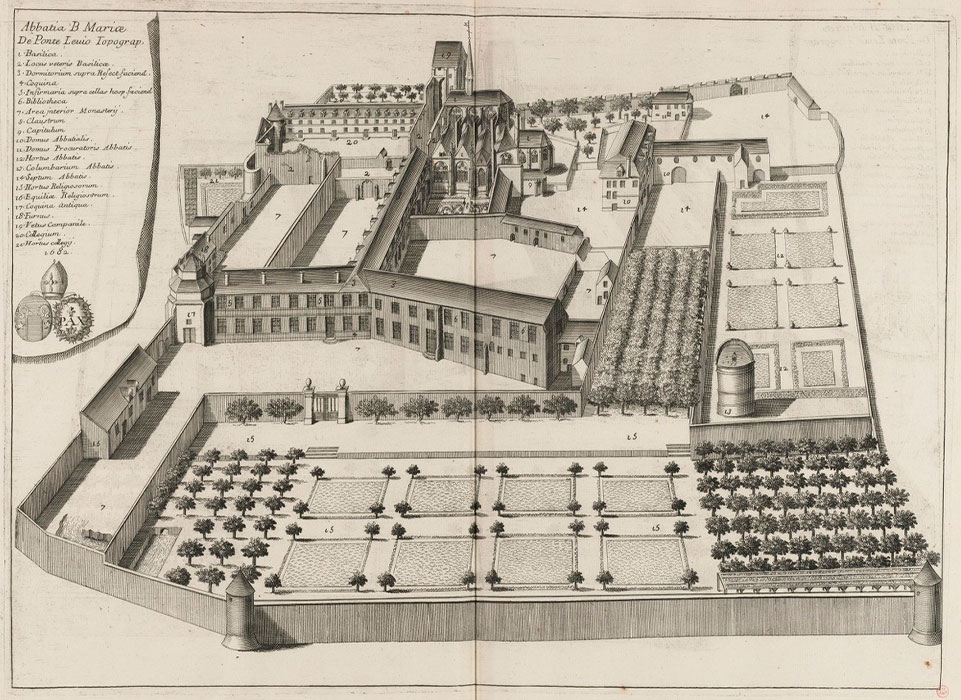
Monasticon Gallicanum
Bibliothèque nationale de France
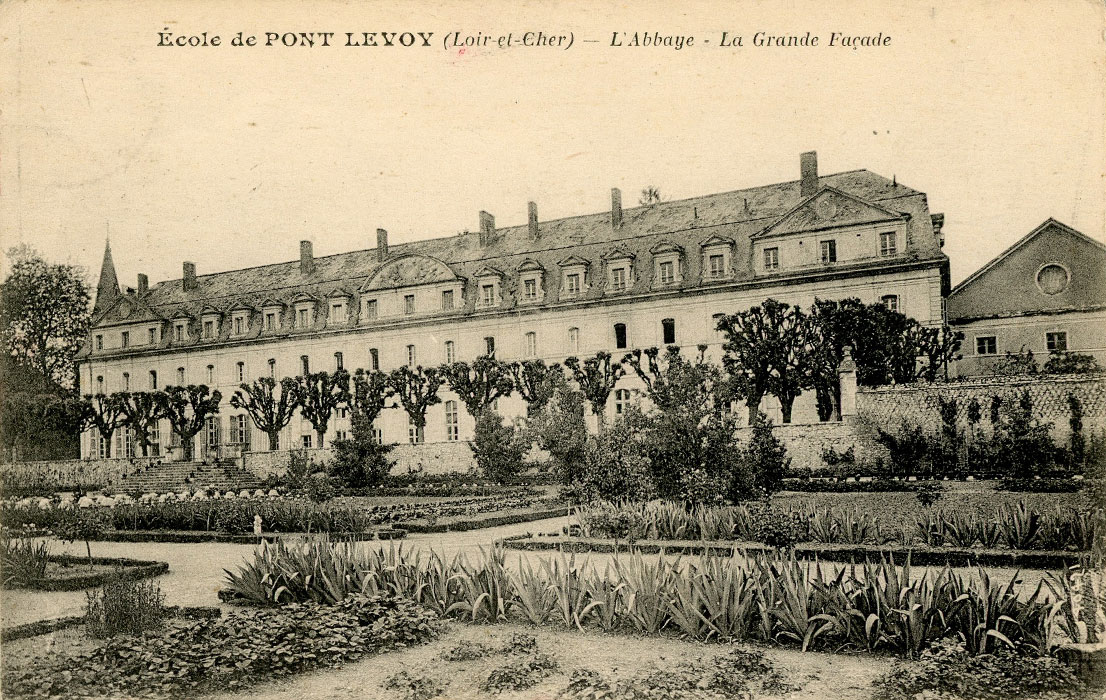
Old postcard, private collection
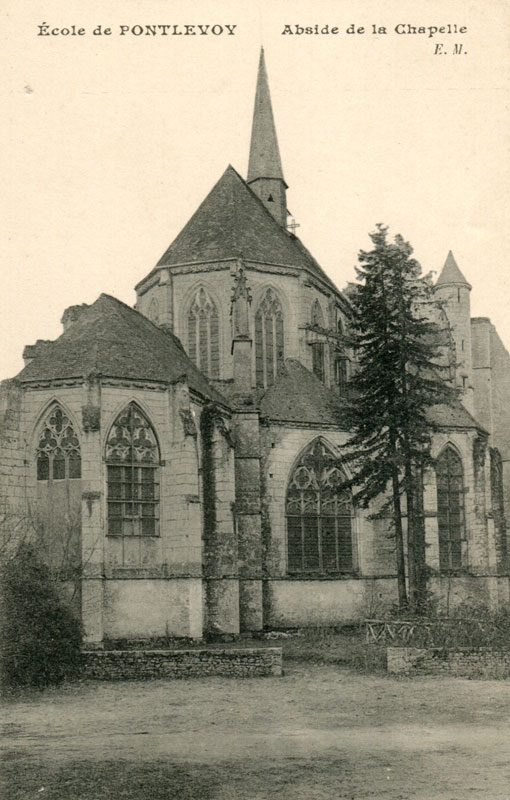
Old postcard, private collection
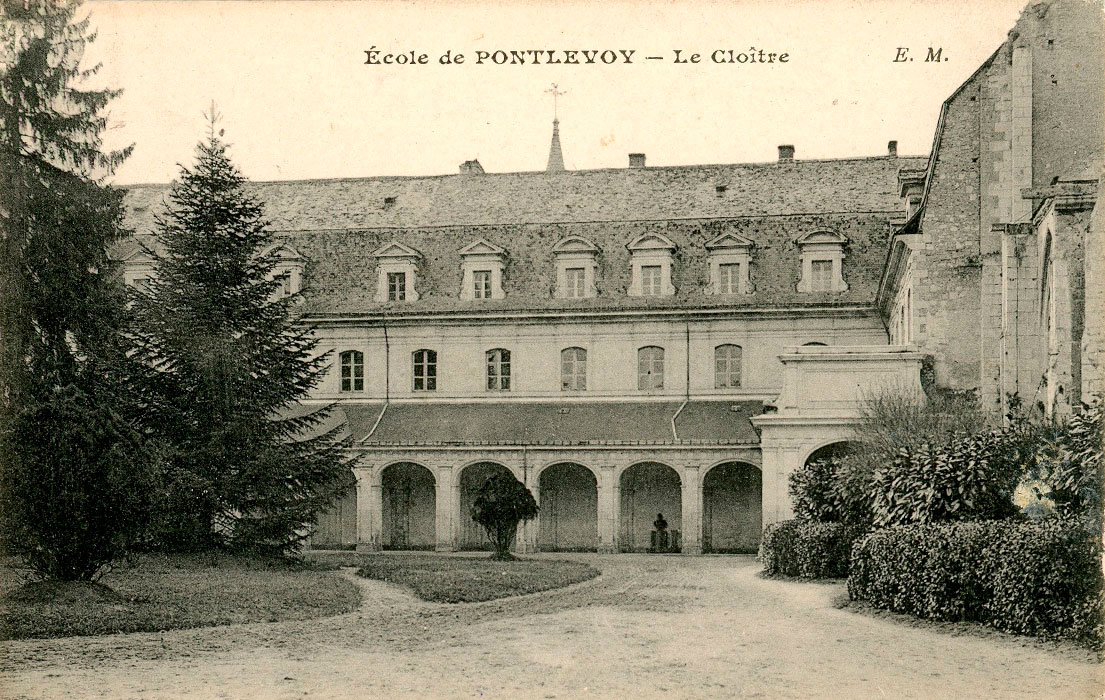
Old postcard, private collection
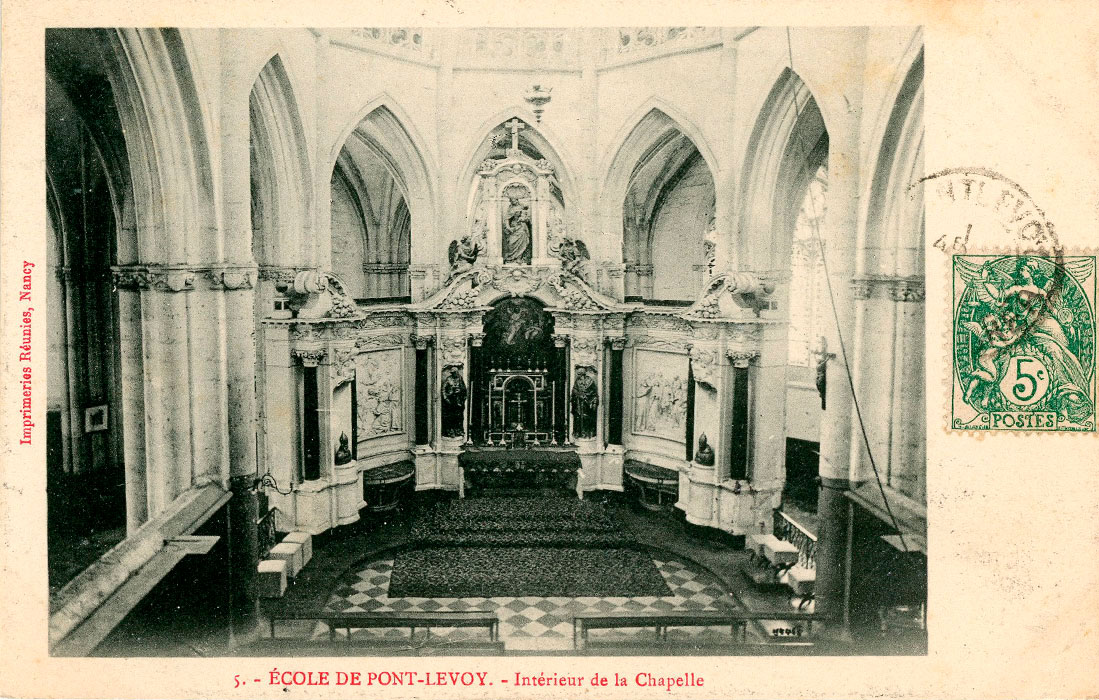
Old postcard, private collection
- BEAUNIER, Dom (1905). Recueil historique des Archêvechés, Évêchés, Abbayes et Prieurés de France. Vol. 1. Province ecclésiastique de Paris. París: Poussielgue
- PASCAL, Jean-Baptiste Étienne (1836). Notice historique et descriptive sur Pontlevoy. Blois: Dèzairs-Blanchet
- PEIGNÉ-DELACOURT, Achille (1877). Monasticon Gallicanum. Paris: G. Chamerot
- PORQUET, Daniel (2011). L’École royale militaire de Pontlevoy. Bénédictins de Saint-Maur et boursiers du roi (1776-1793). Tesi doctoral. Université Paris-Sorbonne
- SAINT-MAUR, Congregació de (1744). Gallia Christiana in provincias ecclesiasticas distributa. Vol. 8. París: Typographia Regia
- WAGNER, Abbé (1893). Pont-Levoy, ses origines, ses destinées. Châtillon-sur-Seine. Pichat et Pepin
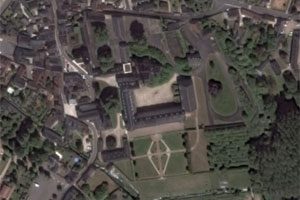
Pontlevoy is located south of Blois