Saint-Eusice Abbey of Selles-sur-Cher
Cella Sancti Eusitii / Sancta Maria de Cella / Notre-Dame la Blanche
(Selles-sur-Cher, Loir-et-Cher)
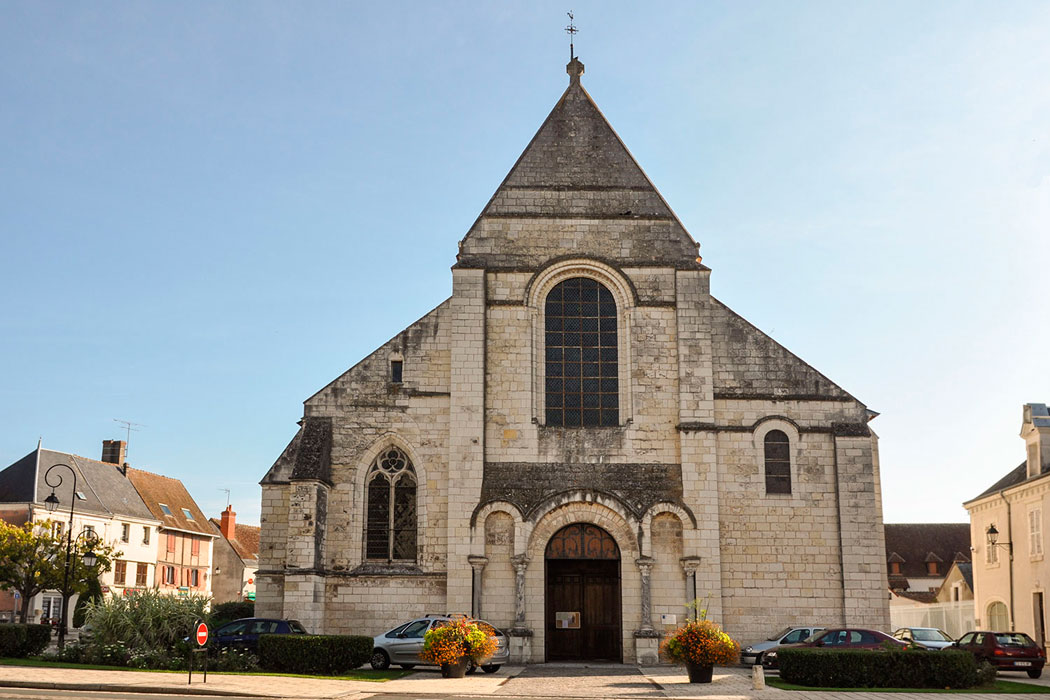
Notre-Dame la Blanche


The Benedictine Abbey of Saint-Eusice, at Selles-sur-Cher, stands on the site where tradition places the hermitage to which Saint Eusicius (465–542), a native of the Dordogne, withdrew after moving to the ancient province of Berry for economic reasons. For the same reason, he had entered the monastery known as Patriciacum, which he later left to live as a hermit.
According to Gregory of Tours, it was in this secluded place that he acquired a reputation as a wonderworker. In 531, the Merovingian king Childebert I (c. 496–558) visited Eusicius before setting out on a campaign against the Visigoths in Hispania. The king offered him a considerable sum of money, but the hermit refused it. Childebert then distributed the gold among the poor and vowed that, should he return safely from the campaign, he would have a basilica built, a promise he fulfilled. A monastic community gradually formed around Eusicius, known as Cella Sancti Eusitii, from which the present name of Selles derives.
Other sources state that the monastery was founded after the death of Eusicius by one of his disciples, Saint Wulsin, a figure connected with the royal household, who entered the fledgling community and is believed to have promoted the construction of the basilica. In any case, a magnificent church was erected and survived until the ninth century. In 853 it was destroyed during a Norman raid, and further incursions brought renewed devastation. The site remained in ruins until about 1020, when it was restored. After an unsuccessful attempt to incorporate it into the powerful Abbey of Marmoutier (Tours), Archbishop Pierre de La Châtre of Bourges († 1171) established a community of Augustinian canons there in 1145.
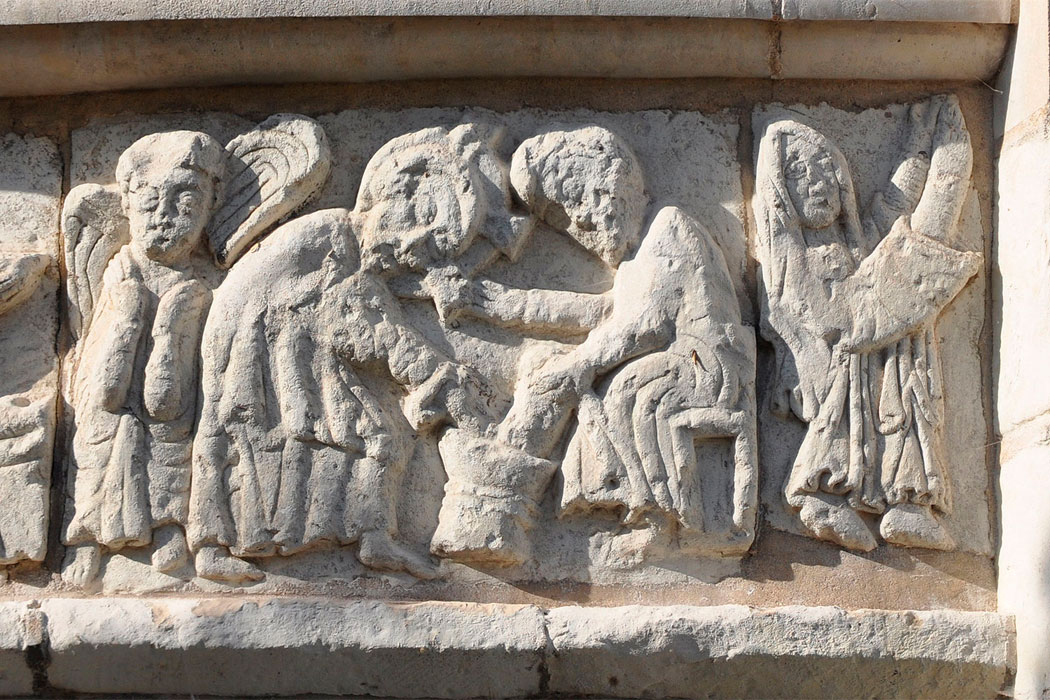
Washing of the Feet
The present church was probably built during this period. Much of it was destroyed by a fire at the end of the thirteenth century, making partial reconstruction necessary. It later suffered further damage, including the collapse of the tower above the crossing after a lightning strike and, above all, the sack and destruction carried out by the Huguenots in 1563. During the period of monastic reform, efforts were made to incorporate the house into the Congregation of Saint-Victor; however, in 1612 it instead joined the Cistercian Congregation of Feuillant, approved by Pope Paul V. The monastery survived until the French Revolution.
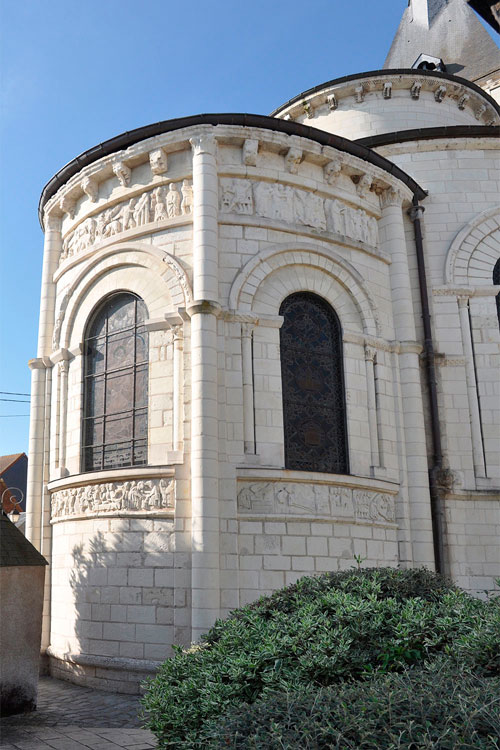
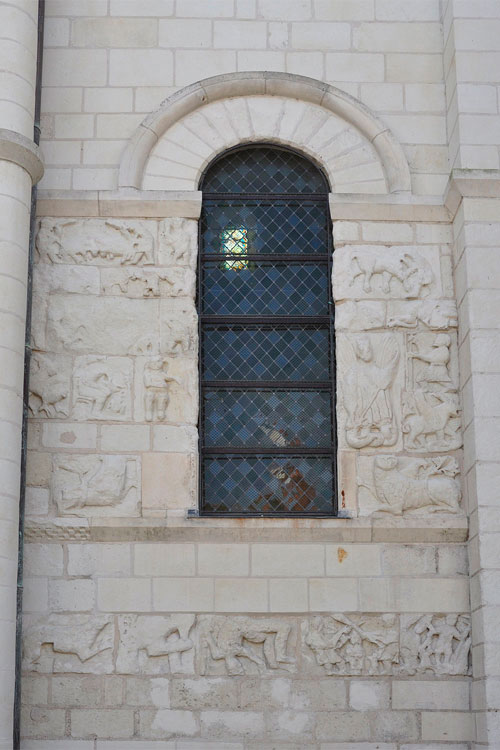
The surviving church, largely Romanesque in date, was restored at the end of the nineteenth century while preserving its medieval character. It has a three-aisled plan with a transept, whose arms each contain an apsidiole. The chancel is surrounded by an ambulatory with three radiating chapels. The surviving sculptural decoration is also noteworthy, including several elements attributed to the church of Childebert's period, such as the columns and capitals of the western façade. Outside, several fragments of a historiated frieze are still preserved, some of them displaced from their original position.
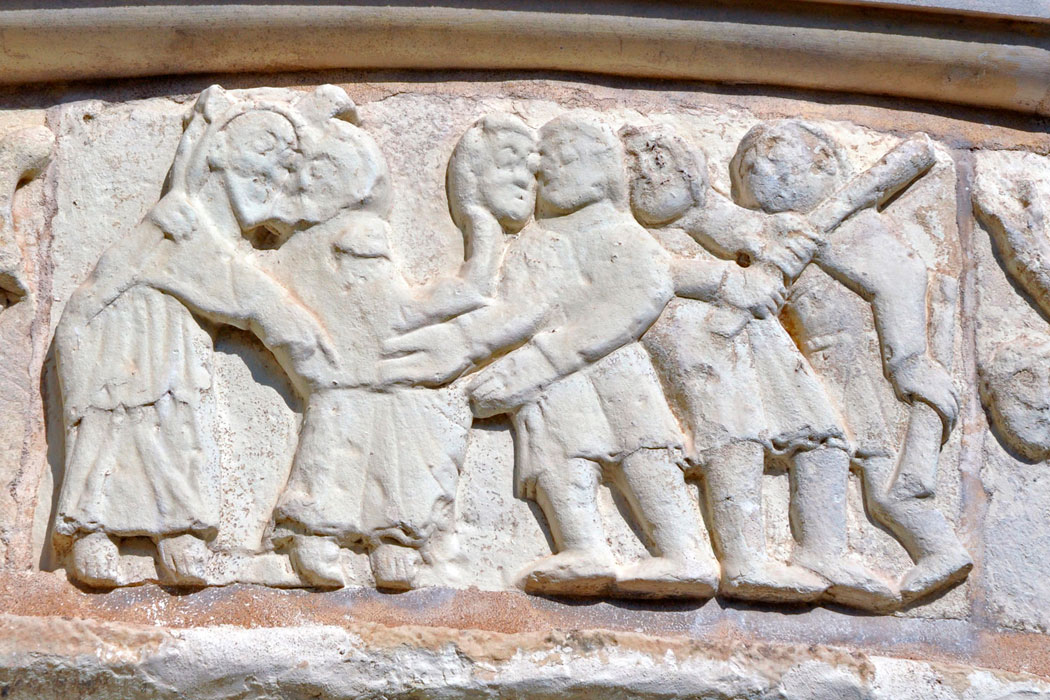
Arrest of Christ
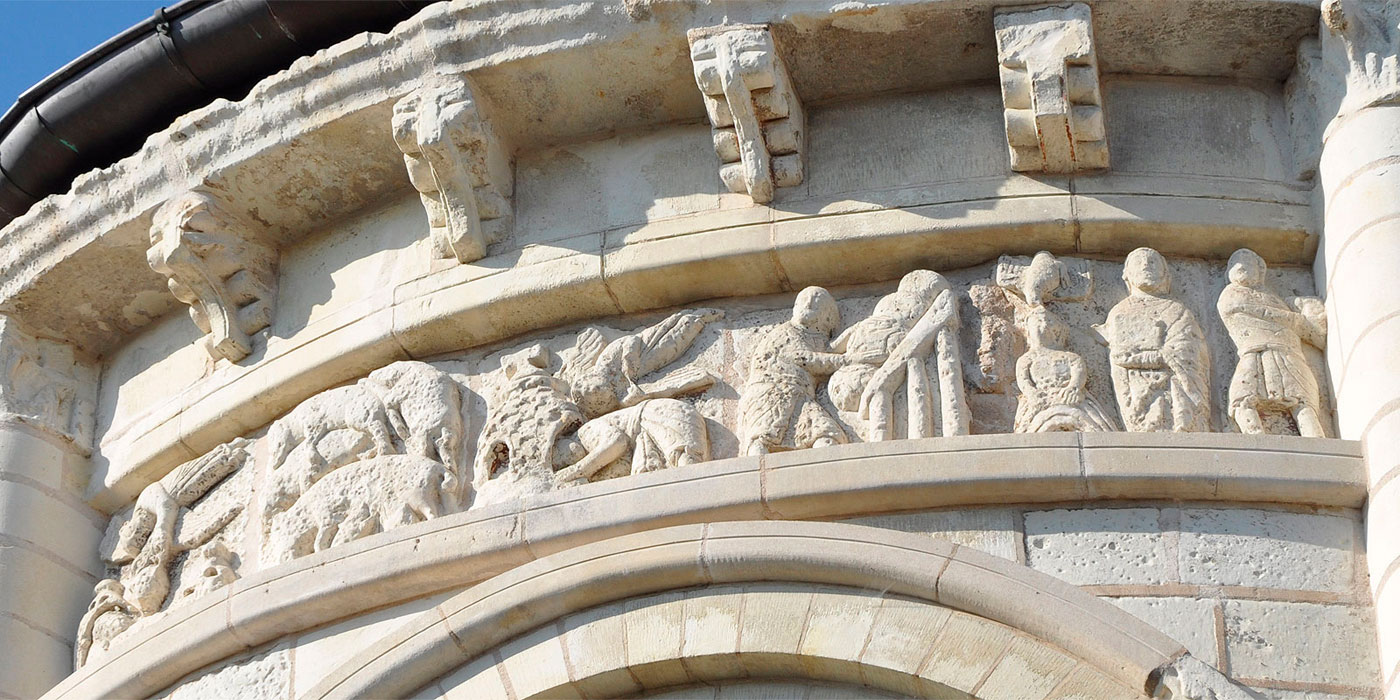
Episodes from the life of Saint Eusice
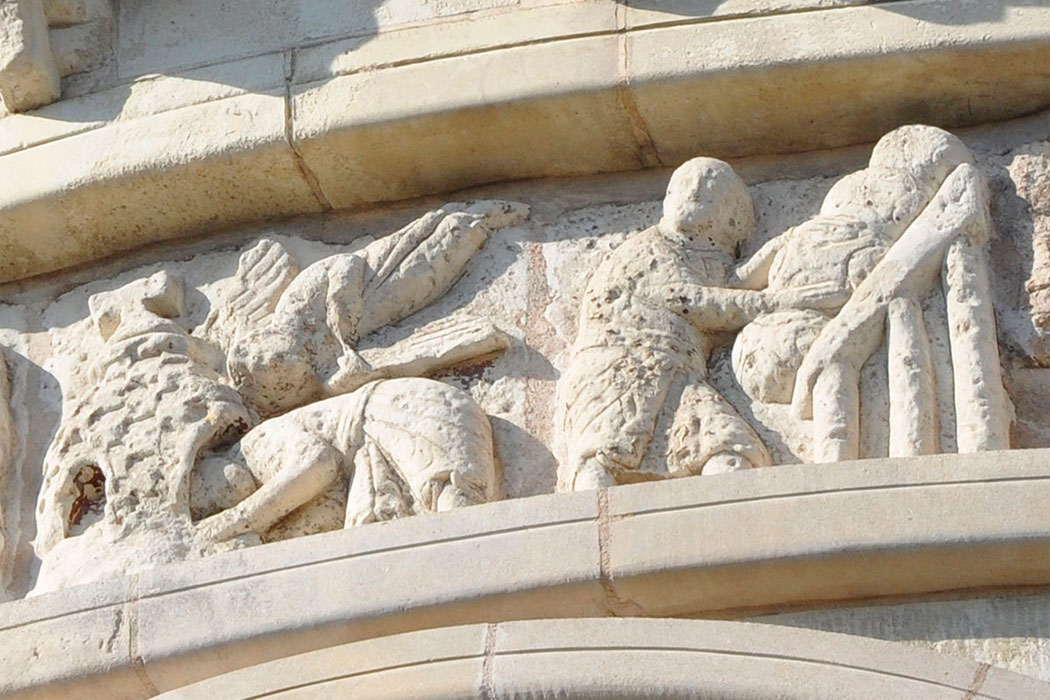
Miracle of Saint Eusice entering a bread oven without burning himself
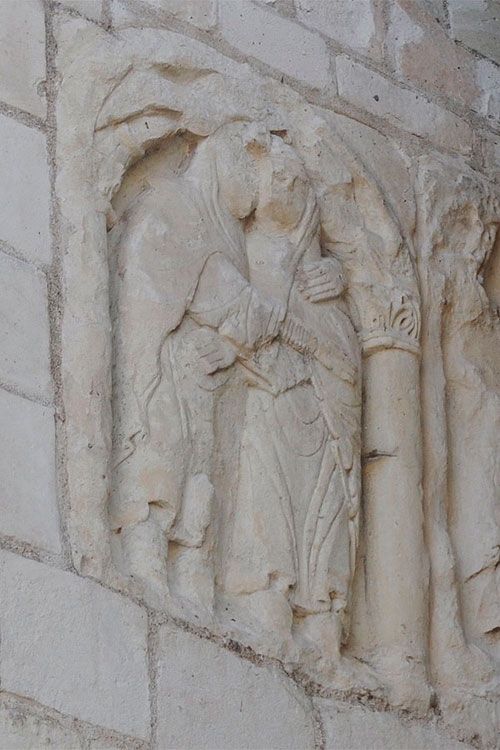
Visitation
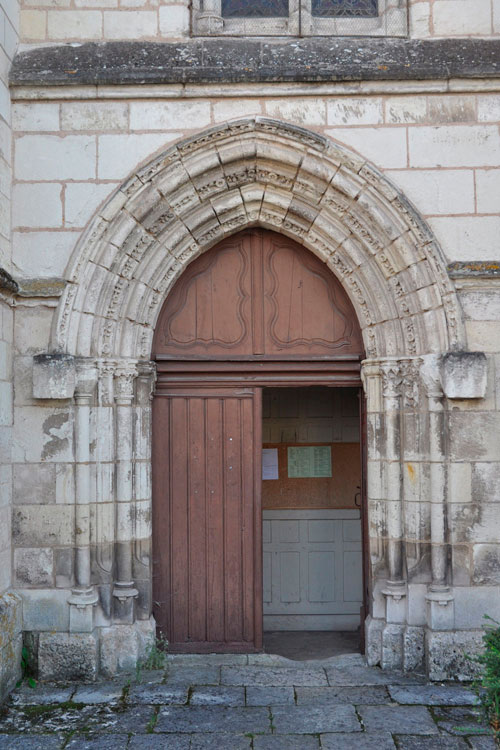
North portal
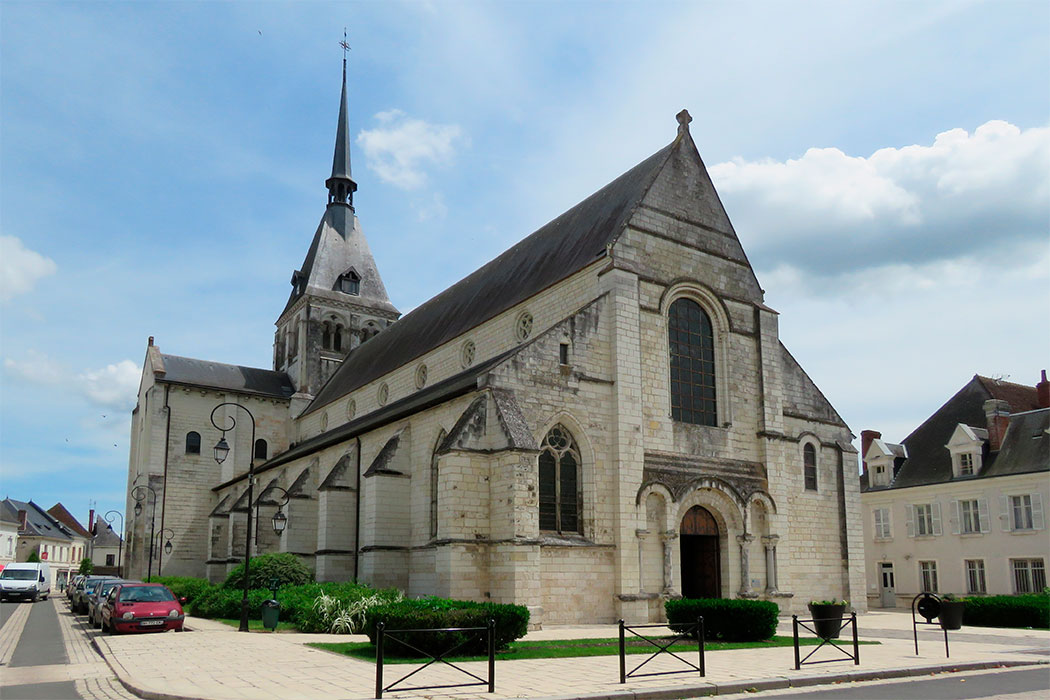
Photo by Lomita, on Wikimedia
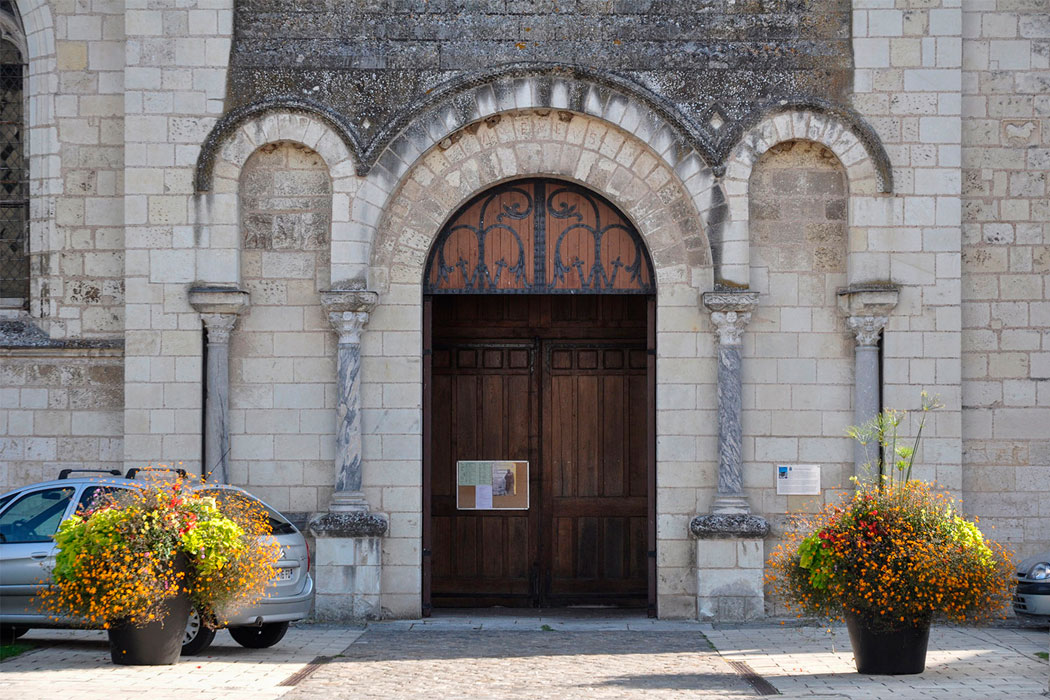
Western portal
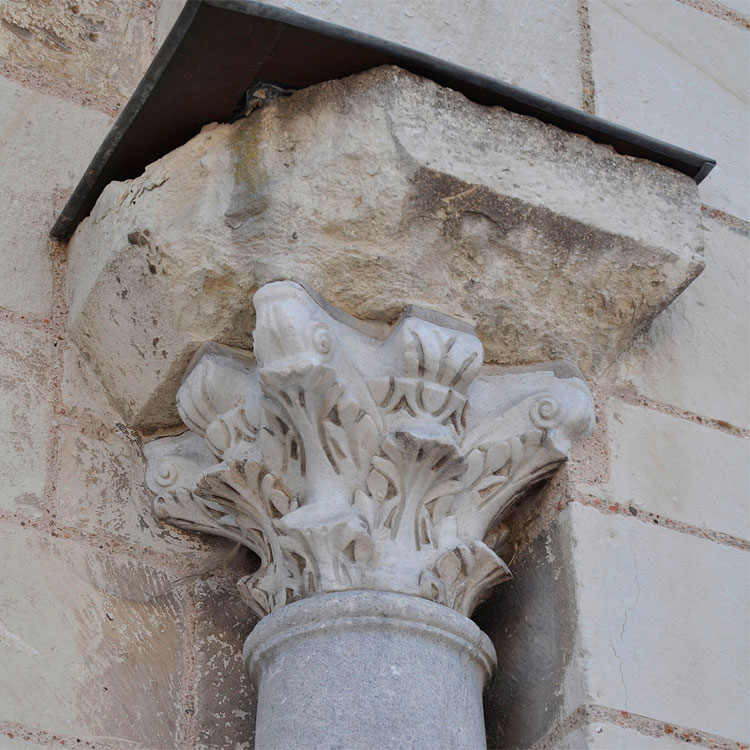
Ancient capital, on the west portal
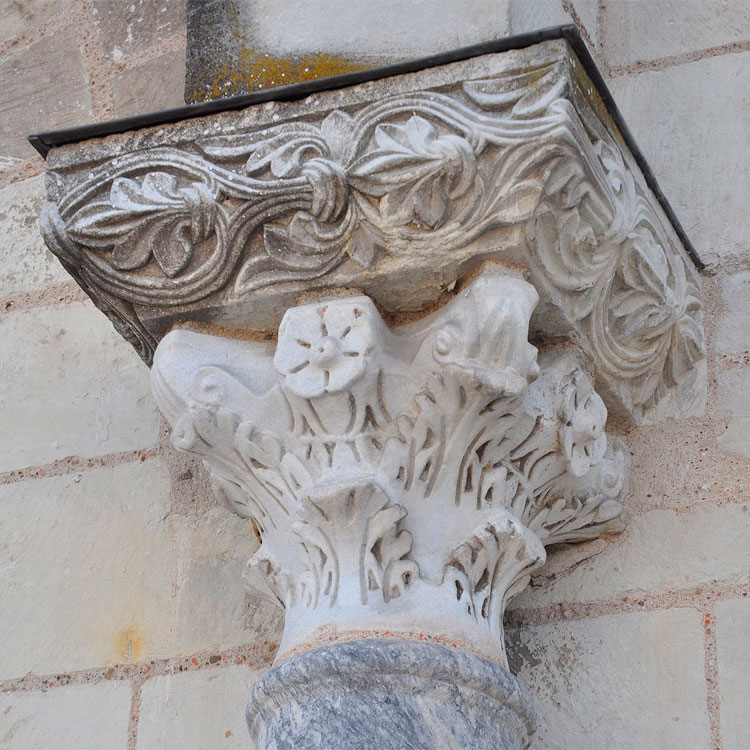
Ancient capital, on the west portal
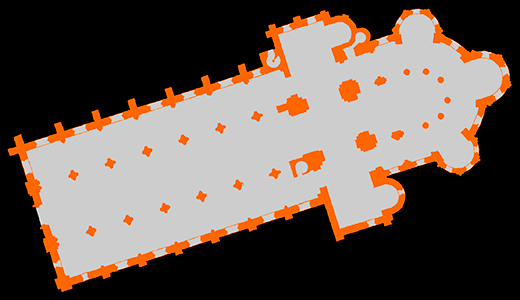
Schematic plan of the church
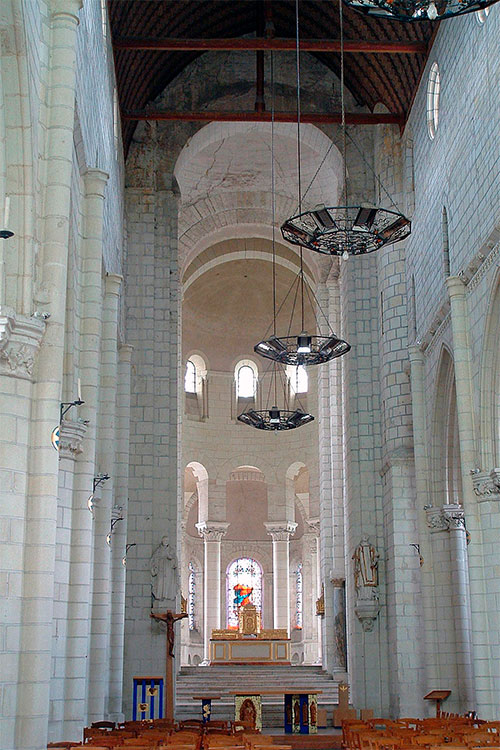
Photo by Mossot, on Wikimedia
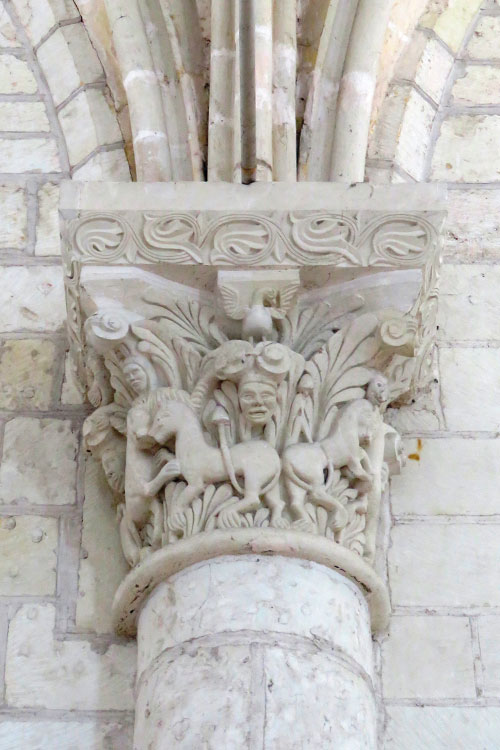
Photo by Lomita, on Wikimedia
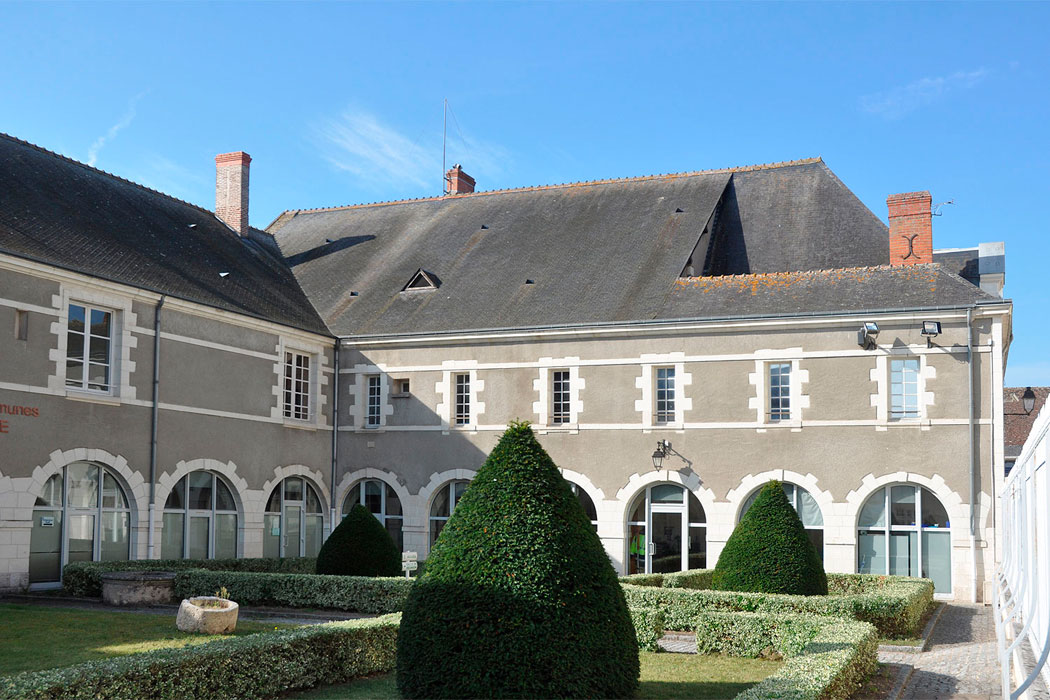
Courtyard of the old cloister next to the church
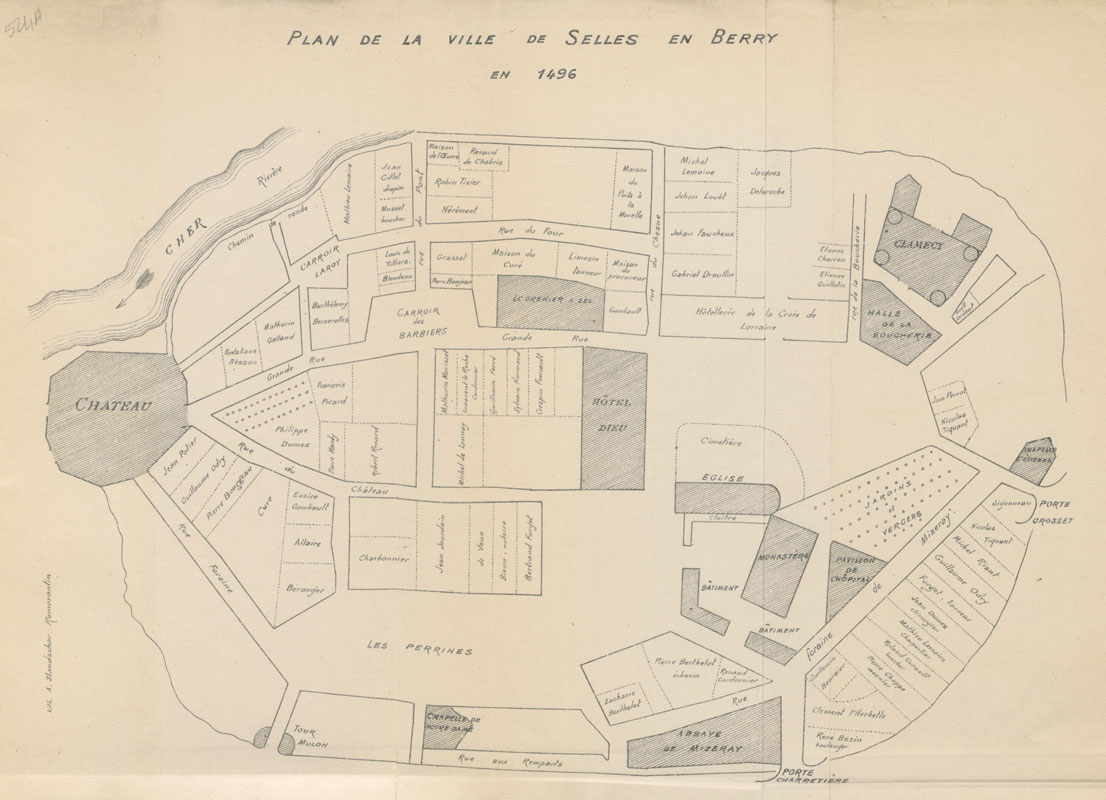
Plan of Selles, published in Histoire de Selles en Berry et de ses seigneurs
British Library

Drawing attributed to Louis Boudan (1707)
Bibliothèque nationale de France

According to Armorial général de France
Bibliothèque nationale de France
- AUBERT, Marcel (1913). L'église abbatiale de Selles-sur-Cher. Bulletin monumental. Vol 77. París/Caen: Picard/Delesques
- BEAUNIER, Dom (1912). Abbayes et prieurés de l'ancienne France. Vol. 5. Bourges. Abbaye de Ligugé
- BERLAND, Jean-Marie (1980). Val de Loire roman. La nuit des temps. Zodiaque
- DESCONEGUT (1708). La Vie de S. Eusice, abbé, patron et fondateur de la ville de Celles en Berri
- GREGORI DE TOURS (1861). Histoire ecclésiastique des Francs. Vol. 2. París: F. Didot
- GUÉRIN, Paul (1888). Les Petits Bollandistes. Vies des saints. Vol. 13. París: Bloud et Barral
- KAHN, Deborah (2020). Le chevet de Saint-Eusice à Selles-sur-Cher. Architecture et programme sculpté. Bulletin Monumental, vol. 178/1
- MONTALEMBERT, Comte de (1869). Les moines en Gaule sous les premiers mérovingiens. París: Soye
- RÉAU, Louis (1997). Iconografía del Arte Cristiano. Iconografía de los santos (A-F). Barcelona: Ed. Del Serbal
- SAINT-MAUR, Congregació de (1720). Gallia Christiana in provincias ecclesiasticas distributa. Vol. 2. París: Typographia Regia
- THAUMAS DE LA THAUMASSIÈRE, Gaspard (1689). Histoire de Berry, contenant tout ce qui regarde cette province & le diocese de Bourges. París: Morel
- V. H. (1899). Selles en Berry et ses seigneurs. Bulletin de la Société Académique du Centre. Núm. 2
- WITTE, M. J. de (1851). Notice sur l'église abbatiale de Celles-Saint-Eusice. Mémoires de la Société Archéologique de l’Orléanais. Vol. I. París: Gatineau
The abbey church stands in the commune of Selles-sur-Cher, south of Blois, on the road towards Châteauroux