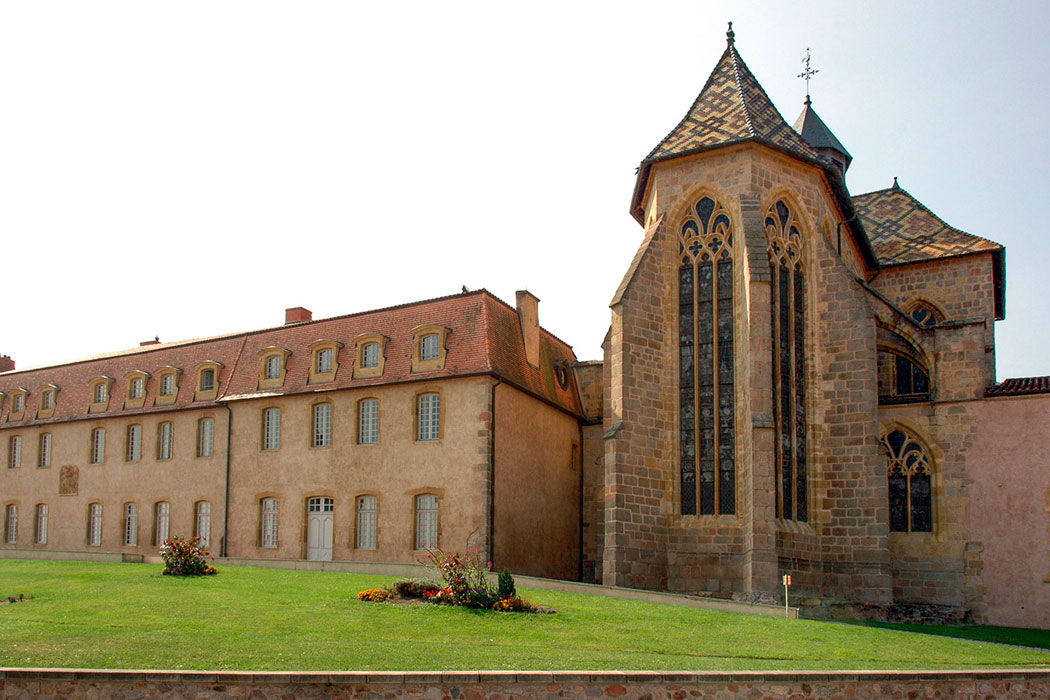


The abbey of Ambierle is documented from the year 902. Although its archives have been lost, there are references placing its foundation in the 6th century, on a site occupied since antiquity. In this regard, it has been attributed to Clotilde (c. 474–545), wife of Clovis I (466–511), around the year 505. Another tradition considers that Ambierle was founded by Berta († 873), wife of Girart de Roussillon (c. 810–877).
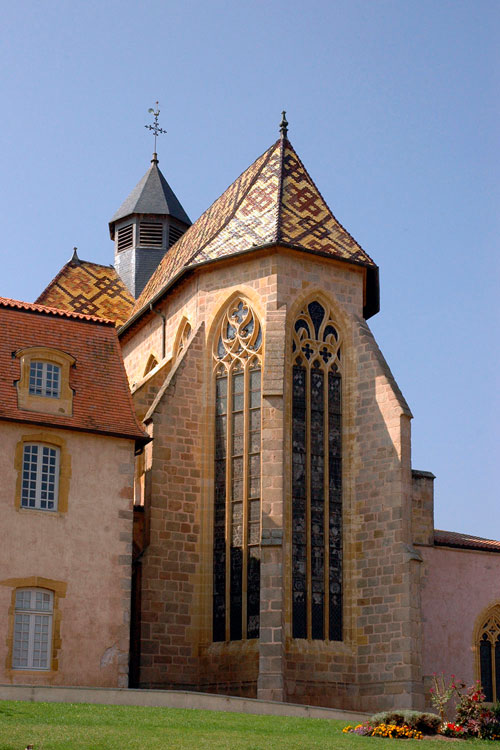
In 902, Louis III the Blind confirmed the abbey’s lands and rights, while entrusting it to laymen, which suggests an already significant patrimony and long history. This situation lasted until 938, when Abbot Odo (926–942) brought the monastery under the authority of Cluny Abbey (Saône-et-Loire). The donation was confirmed the following year by Louis IV of Overseas (c. 920–954). Ambierle kept the title of abbey; indeed, Odilo, Abbot of Cluny between 994 and 1049, was also Abbot of Ambierle and rebuilt the monastery during his tenure.
A papal bull issued by Pope Paschal II in 1101 granted it the title of priory, despite opposition from the local nobility, who promoted the designation “abbey-priory” and kept certain rights in the election of the prior. In the second half of the 14th century, restoration works were undertaken, including the rebuilding of the church’s chancel. However, in 1441 the monastic complex was damaged by a fire which destroyed much of the priory buildings and the church. Reconstruction took place on the original foundations between 1445 and 1480, except for the chancel, which was redesigned, replacing the three semicircular apses and thus losing its Romanesque features.
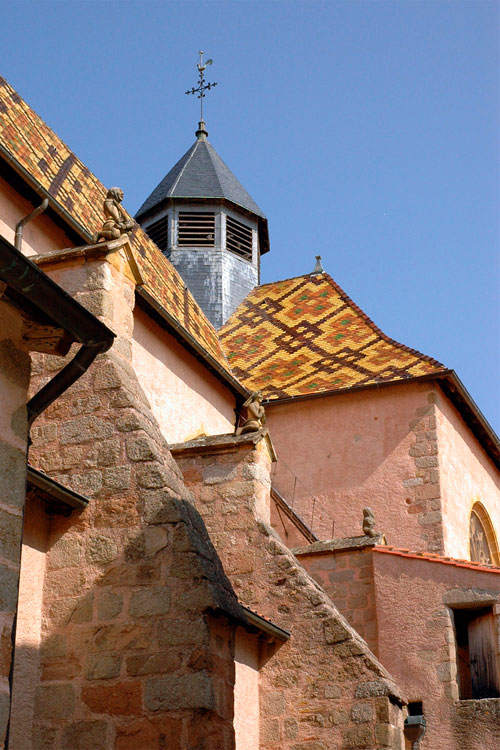
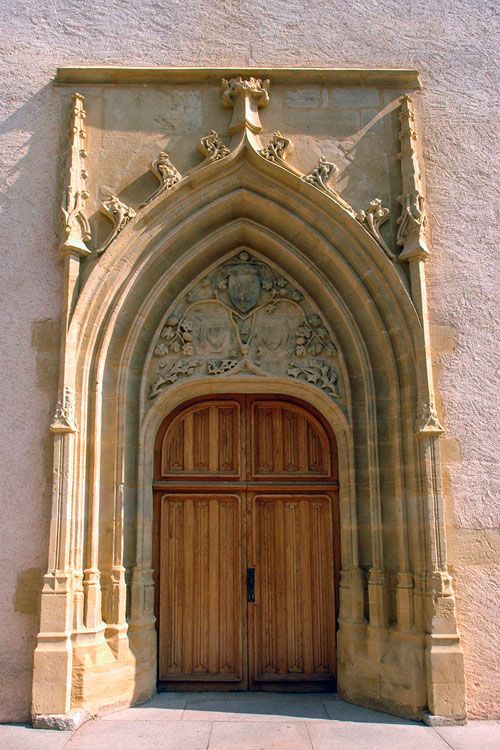
Church portal
In 1560, the priory adopted the Protestant Reformation and the community was expelled, but later regained its former status. Unlike many other religious houses, it suffered only limited damage and the loss of some properties. Later, in 1746, another fire affected the priory, which was rapidly rebuilt during the tenure of the last prior, Jean-B. de La Rochefoucauld (1753–1789). It was secularised in 1786, a measure implemented in 1789. With the Revolution that same year, it became public property and the archives were destroyed.
The church preserves a fine Flemish altarpiece, with a carved central section depicting the Calvary and scenes of the Passion. It is accompanied by a series of twelve painted panels: in the lower part, the donor Michel de Chaugy, his wife and his parents; and in the upper part, angels holding the family coats of arms. On the reverse, four saints and the Annunciation. The work should be dated to around 1466, when the chancel was being rebuilt; the painter remains unknown, although a possible link to Rogier van der Weyden has been suggested.
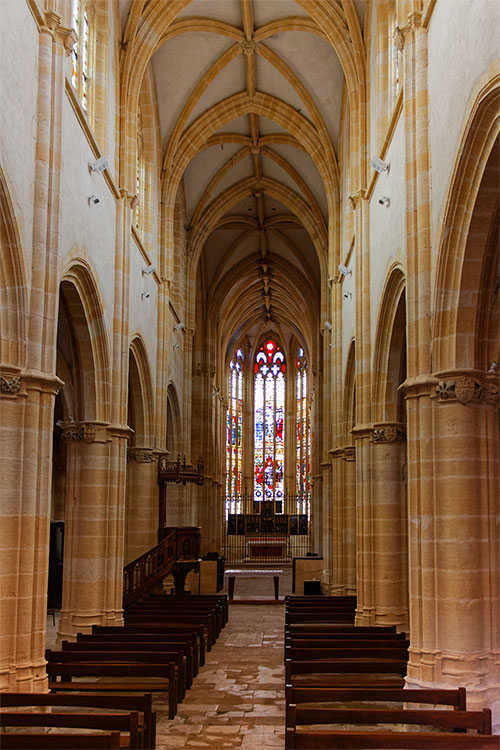
Photo by Daniel Villafruela, on Wikimedia
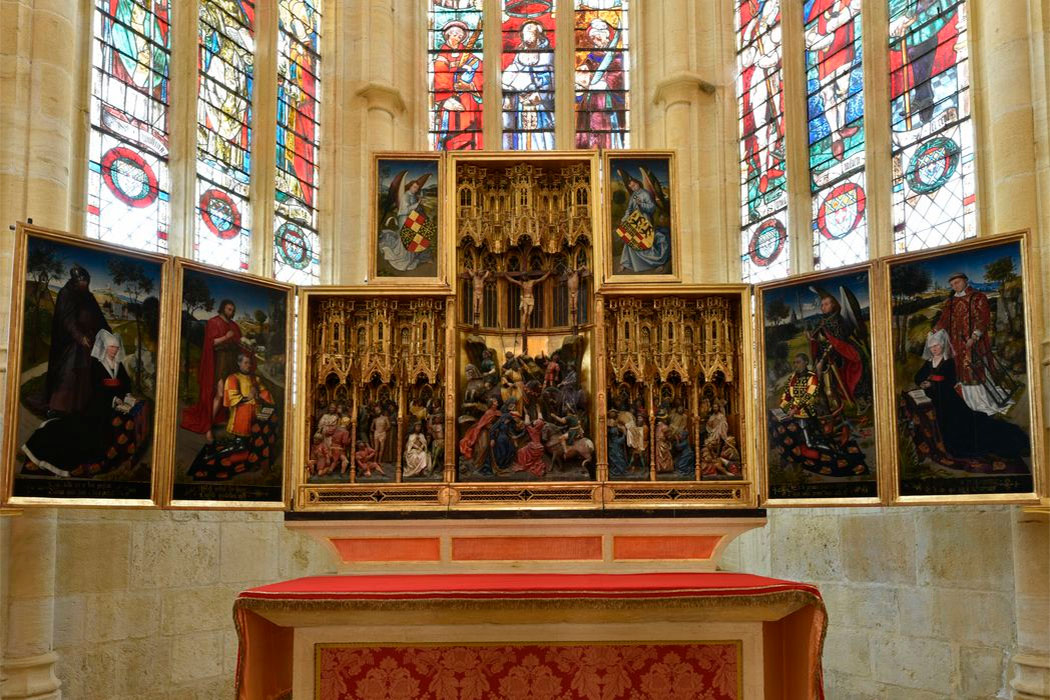
Flemish altarpiece (c. 1466)
Photo by Pierre Taillefer
® Ministère de la Culture (France)
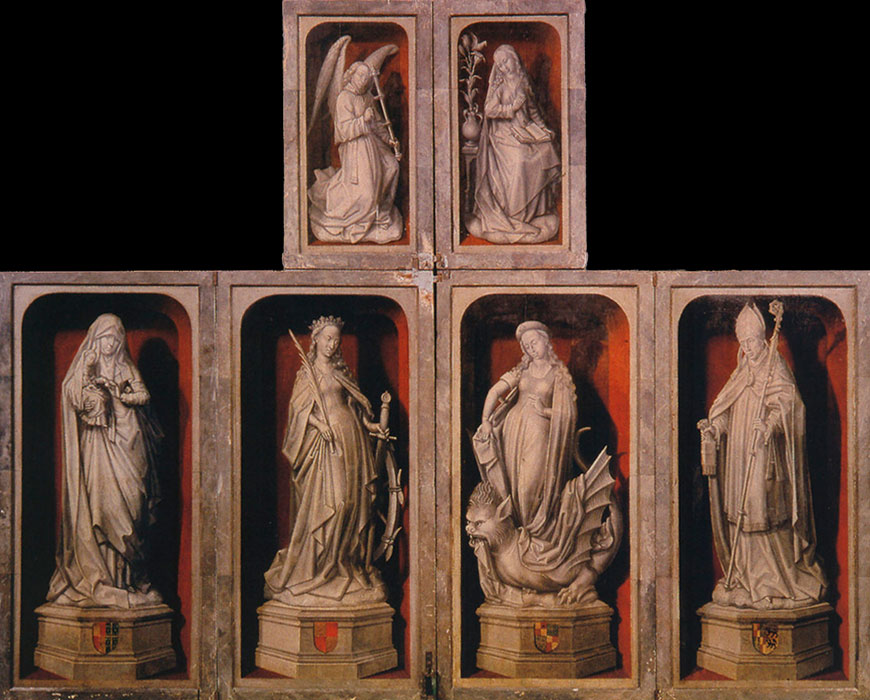
Closed Flemish altarpiece (c. 1466)
Photo by Wikimedia
- BAUDRILLART, Alfred (1914). Dictionnaire d'histoire et de géographie ecclésiastiques. Vol. 2. París: Letouzey et Ané
- BOUILLER, Robert; i altres (1978). Ambierle. Syndicat d'initiative d'Ambierle
- BRUEL, Alexandre. (1876). Recueil des chartes de l'abbaye de Cluny. Tome 1. París: Imprimerie nationale
- CARCEL, B.; i altres (1990). Le chevet du XIe siècle du prieuré d'Ambierle. Bulletin Monumental, vol. 148
- CHERPIN, Germaine; i altres (1960). Ambierle. Ambierle: S. Initiative
- COTTINEAU, Laurent-Henri (1936). Répertoire topo-bibliographique des abbayes et prieurés. Vol. 1. Mâcon: Protat
- DE VAIVRE, Jean-Bernard (1987). Le retable de la Passion d'Ambierle. Bulletin Monumental, vol. 145
- DÉCHELETTE, Joseph (1901). Église Saint-Martin d’Ambierle. Inventaire général des richesses d'art de la France. Province, monuments religieux. Tome 3. París: Plon
- DUPONT, Jacques (1938). Le retable d'Ambierle. Gazette des beaux-arts. Núm. 20. París
- FOURNIAL, Étienne (2019). L'implantation monastique en Forez antérieurement à l'an mil. Papauté, monachisme et théories politiques. Lyon
- LA MURE, Jean-Marie de (1671). Histoire ecclésiastique du diocèse de Lyon. Lyon: Gautherin
- LA MURE, Jean-Marie de (1860). Histoire des Ducs de Bourbon et des Comtes de Forez, vol. 1. París: Potier
- SAINT-MAUR, Congregació de (1725). Gallia Christiana in provincias ecclesiasticas distributa. Vol. 4. París: Typographia Regia
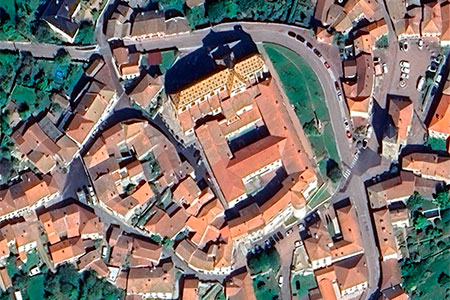
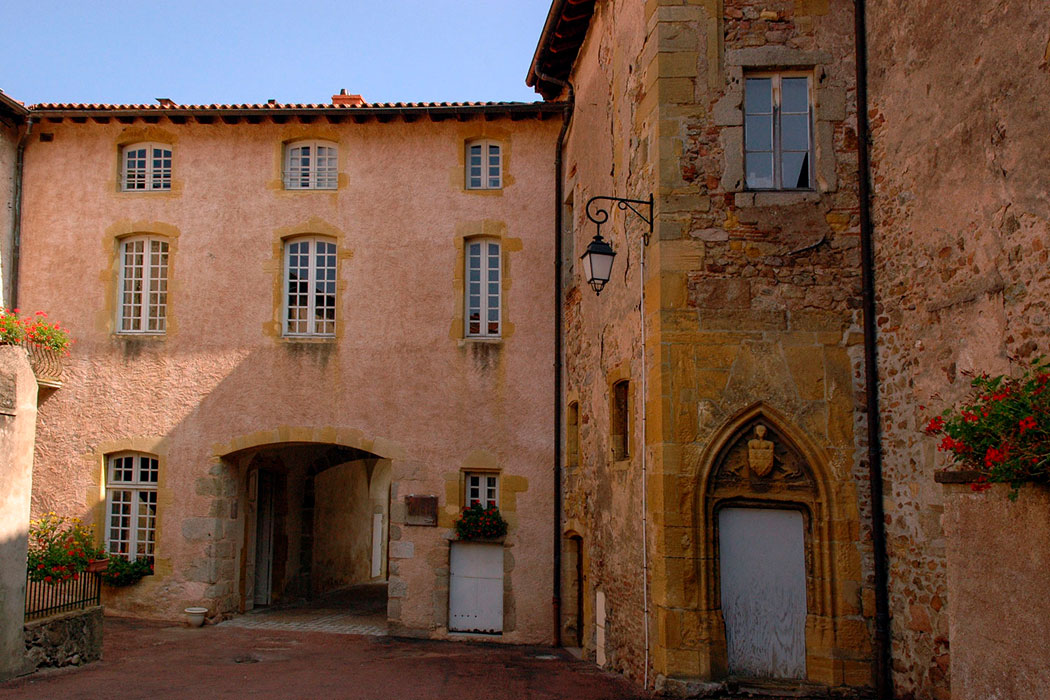
Ambierle lies to the north-west of Roanne, on the road to Vichy