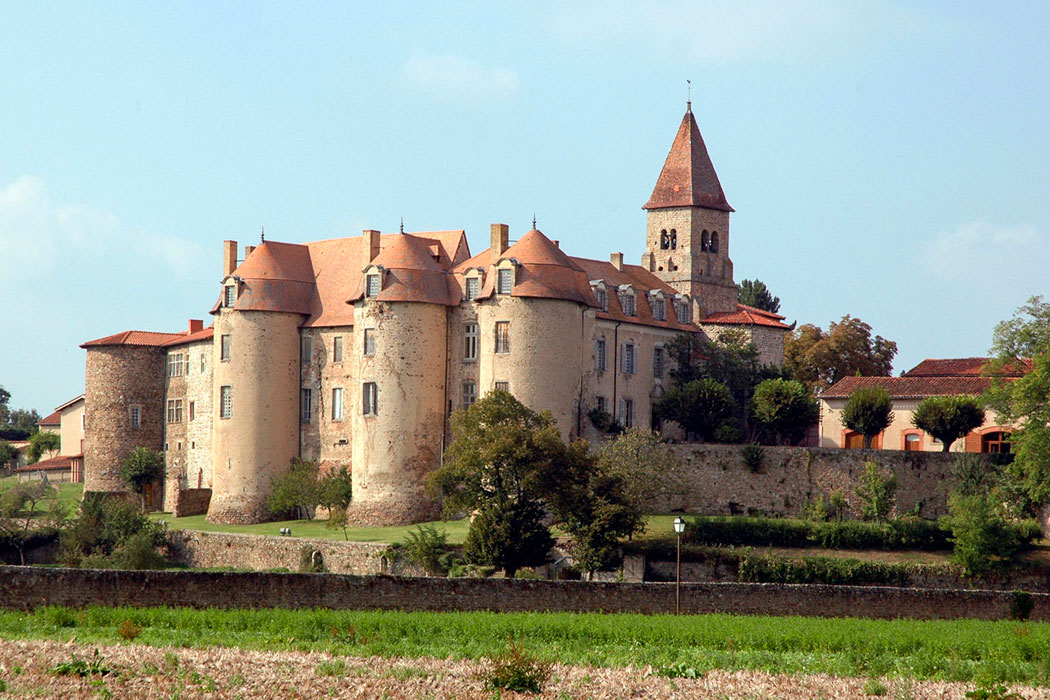

In 891, the archbishop of Lyon granted the site of Pommiers to the abbey of Saint-Pierre de Nantua (Ain). It was an ancient location already occupied during the Roman period, then mentioned as a “cell”. The bishopric had obtained possession of that small monastery in 878, suggesting that its origins may date back to the 8th or 9th century. This first church was probably that of Saint-Julien, built in the 9th century and later serving as the parish church.
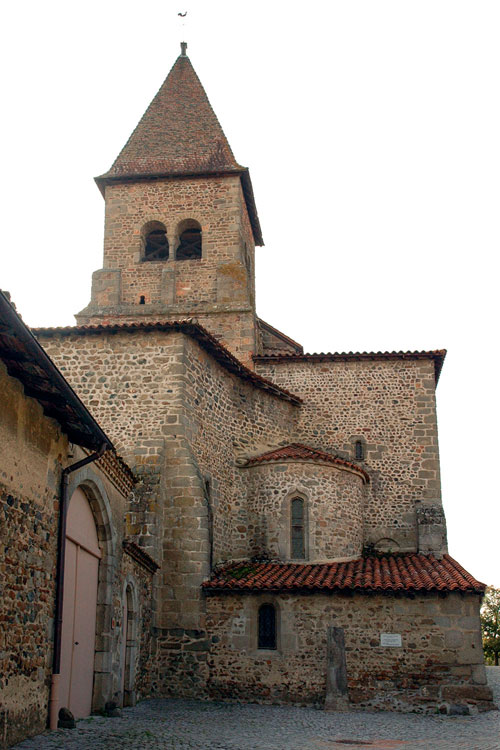
When the Benedictine priory dependent on Nantua was established, a new church was built next to the earlier one, dedicated to Saints Peter and Paul. In 959, the abbey of Nantua joined Cluny (Saône-et-Loire), and Pommiers became integrated into this influential monastic network. Although in 1109 Nantua lost its status as an abbey and was reduced to a priory, Pommiers remained one of its dependencies. Despite some periods of decline, it enjoyed a long era of prosperity.
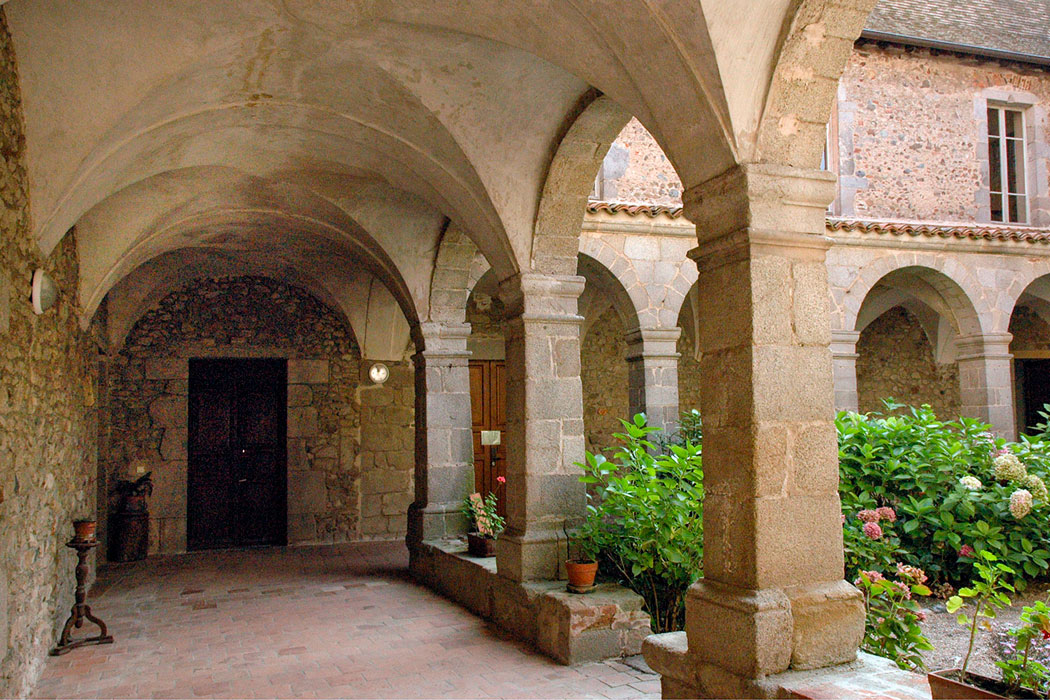
The dangers of the Hundred Years’ War made it necessary to fortify both the priory and the surrounding village with a circular wall. In the 15th century and the beginning of the 16th, significant architectural modifications were undertaken, notably the construction of a cloister extending to adjacent buildings. Around the same time, the commendatory system was introduced, with members of the Rostaing family serving as commendatory priors for more than a century.
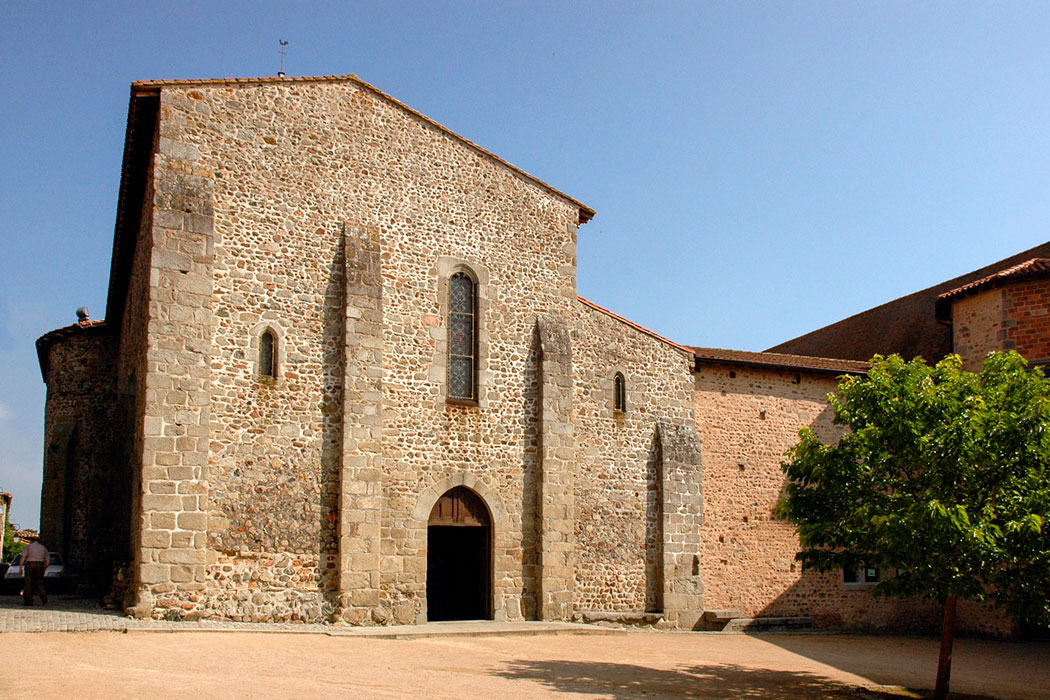
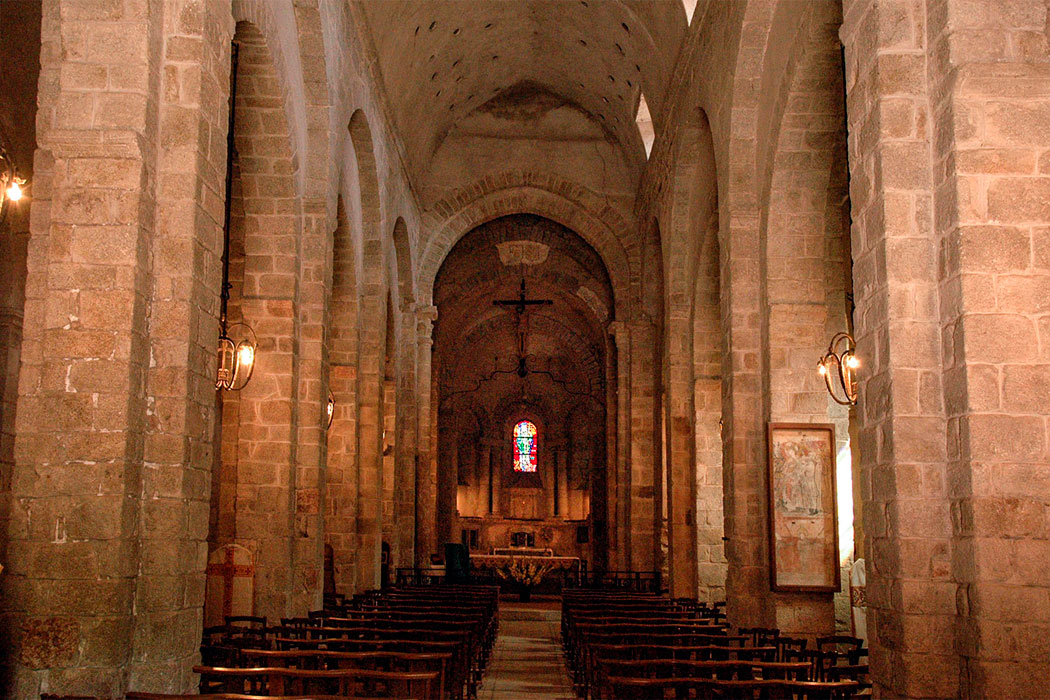
The priory was also affected by the Wars of Religion, prompting further repairs and restoration. Internal reforms were also implemented to reinforce monastic discipline. It was at this time, too, that the cult of Saint Prève was created and developed, portraying her as a martyr and traditionally —though without historical basis— linked to the foundation of the priory.
The French Revolution put an end to monastic life in Pommiers: in 1792 the monks were forced to leave. In 1805 the former parish church of Saint-Julien recovered worship, though in poor condition. In 1821 parish services were transferred to the priory church of Saint-Pierre. The monastic buildings were divided between public and private ownership, with various uses. Finally, in 1990 the private section was ceded to the Conseil général de la Loire.
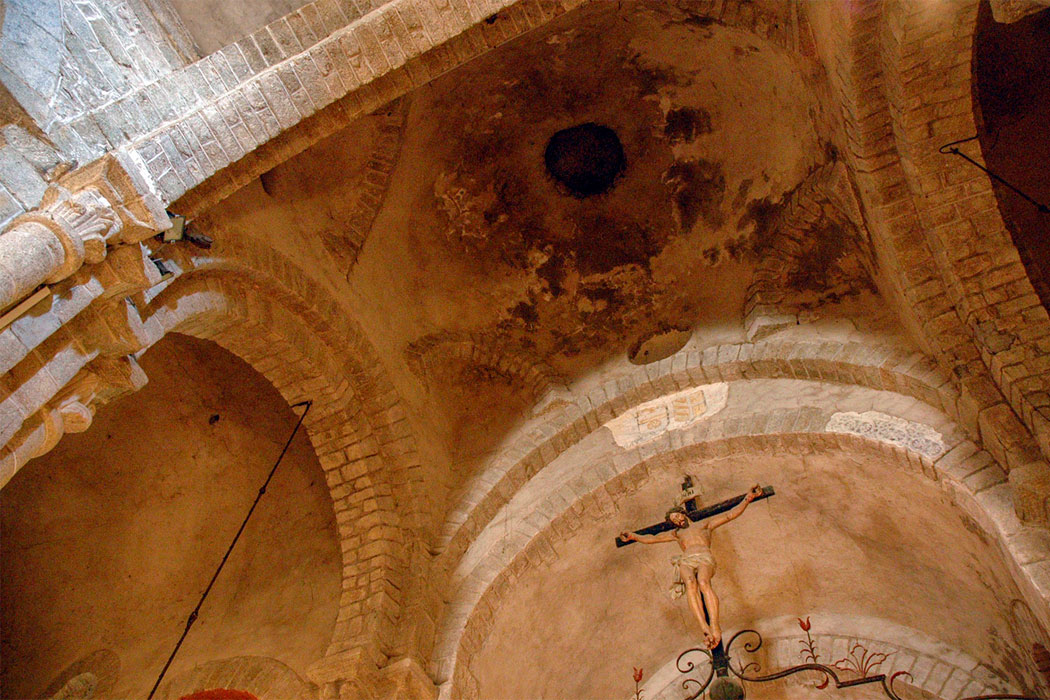
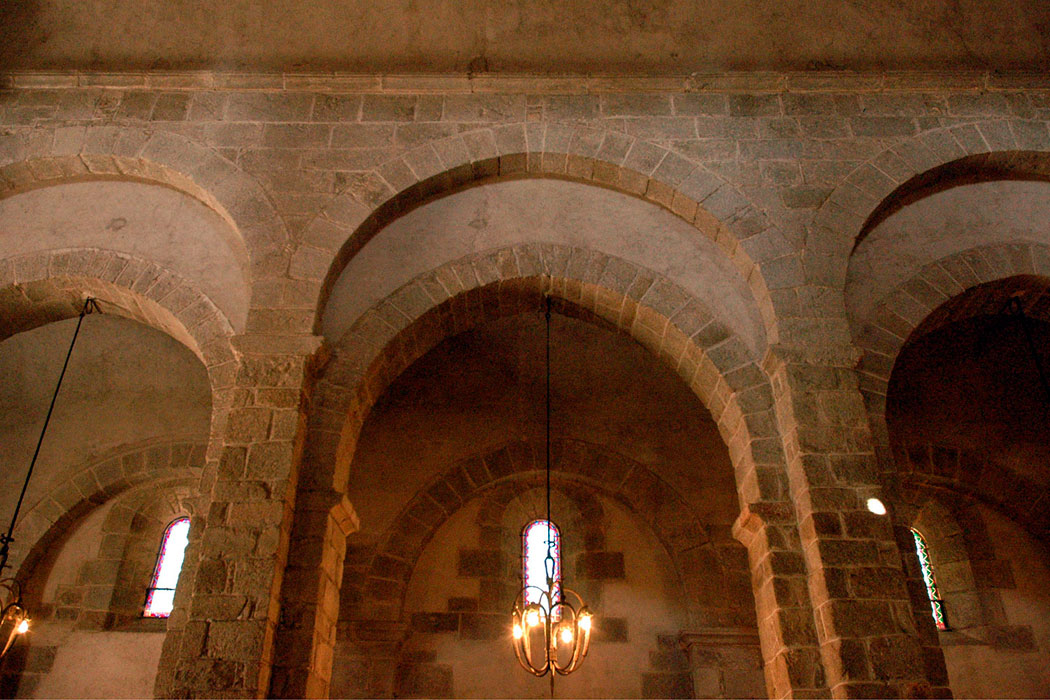
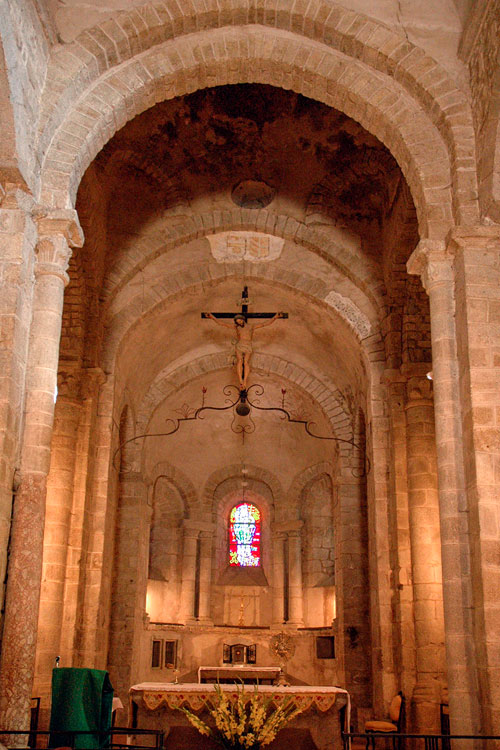
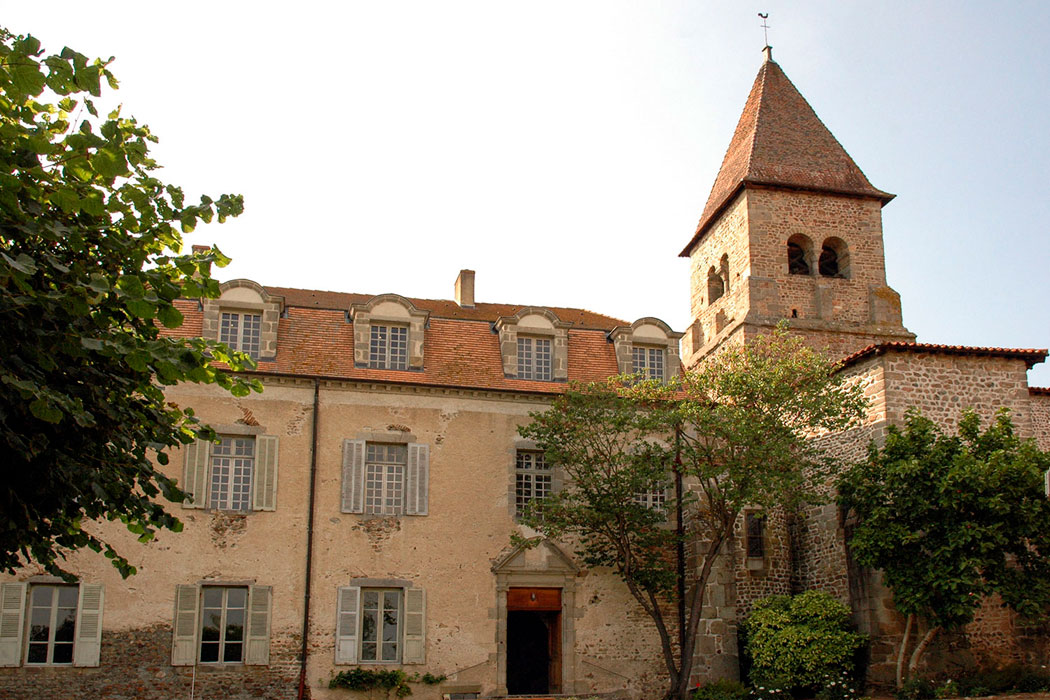
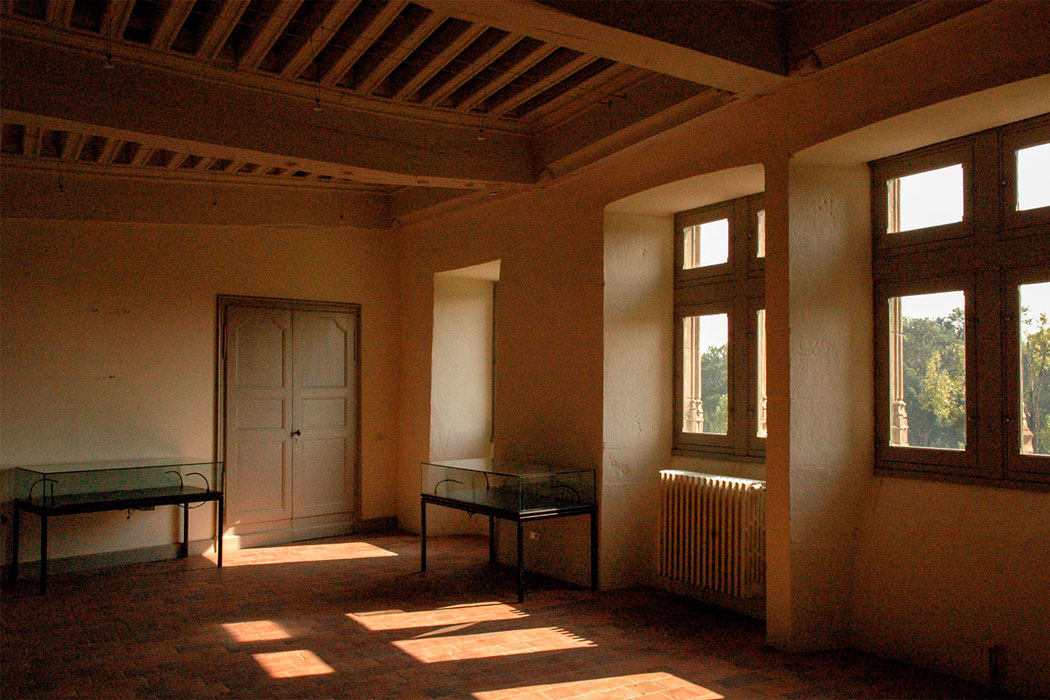
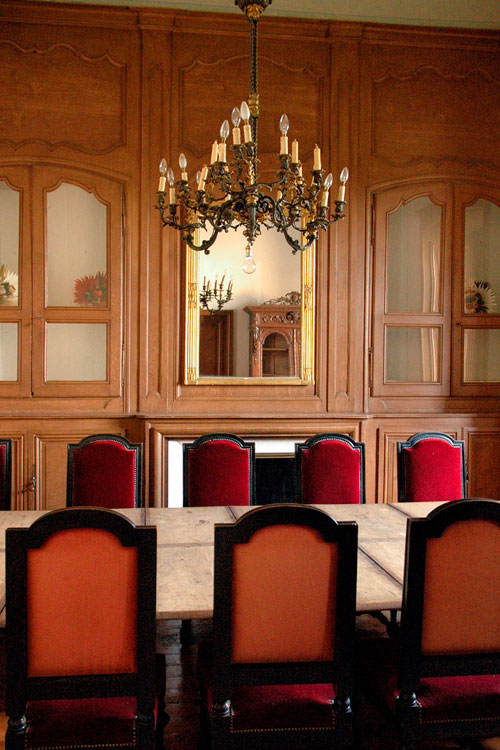
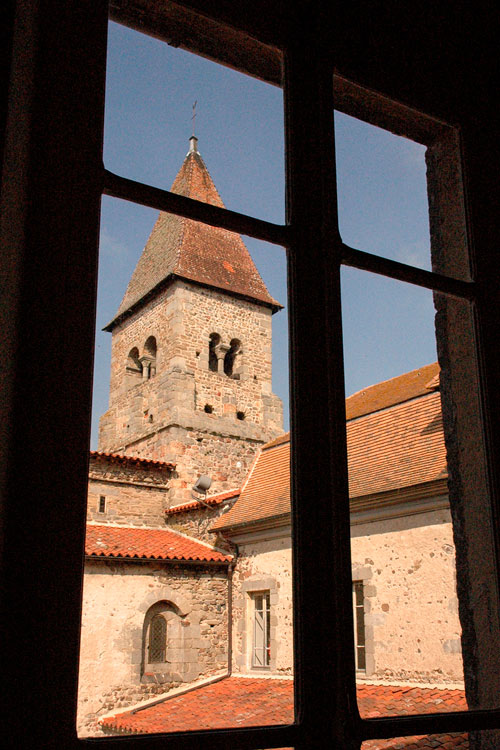
The architectural ensemble is complex, the result of successive constructions, rebuilding, and restoration. The church, with three naves and five bays, dates from the 11th–12th centuries. It has a transept with three semicircular apses, although the central apse is trapezoidal on the outside. The north apsidiole preserves mural paintings probably from the 15th century. This chevet is the oldest part, from the 11th century. To the south lies the cloister (18th century) and its buildings, while to the west there is a courtyard beside the prioral residence. On the southern side stand four defensive towers, three of them built in the 14th century when the site was fortified.
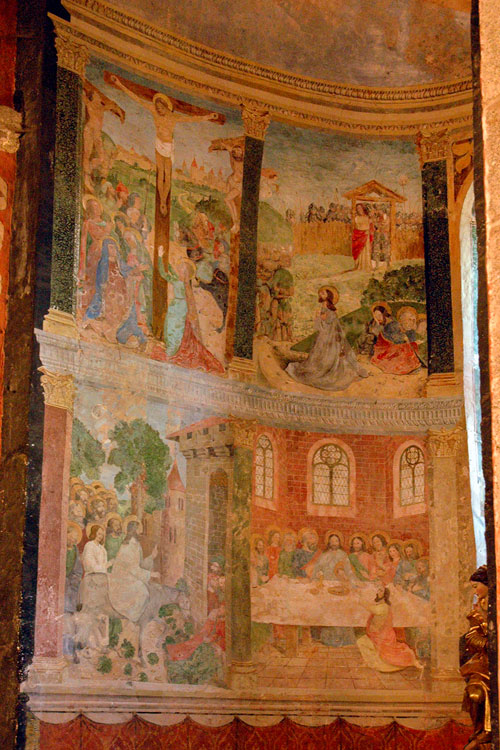
Mural decoration of the north apse (15th century?)
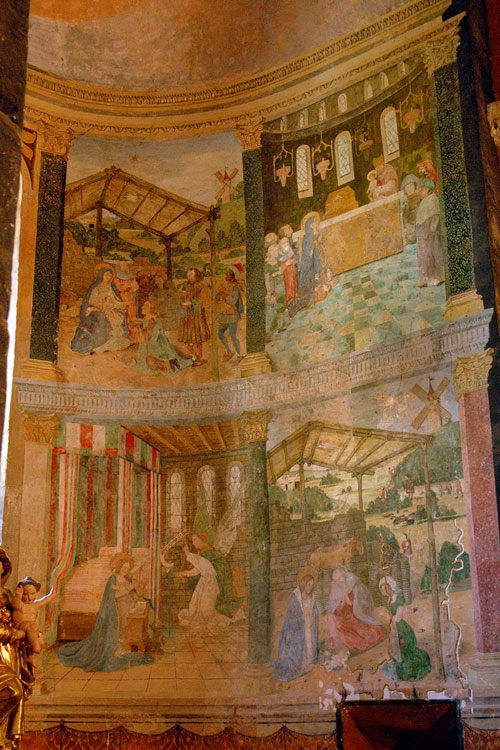
Mural decoration of the north apse (15th century?)
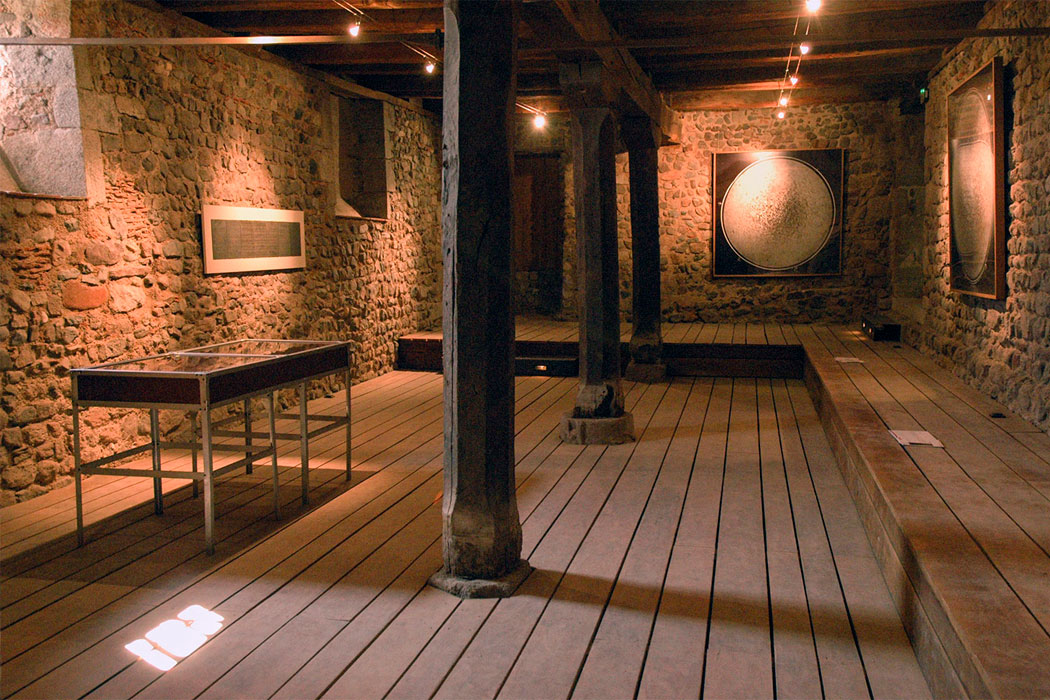
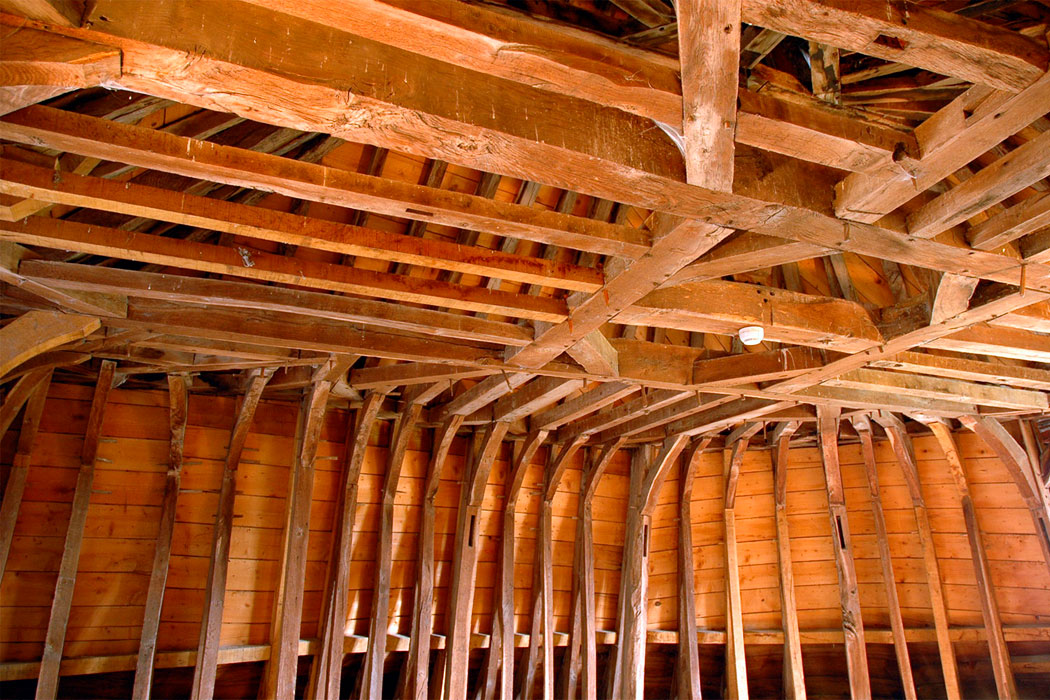
Timber roof structure
- BUENNER, Denys (1947). Pommiers-en-Forez. Lyon: Lescuyer
- COTTINEAU, Laurent-Henri (1939). Répertoire topo-bibliographique des abbayes et prieurés. Vol. 2. Mâcon: Protat
- DELOMIER, Chantal (2011). Pommiers ?. L’Armorial de Guillaume Revel. Alpara
- DELOMIER, Chantal (2013). Les espaces monastiques et ecclésiaux à Pommiers-en-Forez (Loire). Architecture, décor, organisation de l'espace. Alpara
- REYNAUD, Jean-François; i altres (s.d.). Pommiers-en-Forez. Association culturelle de Pommiers
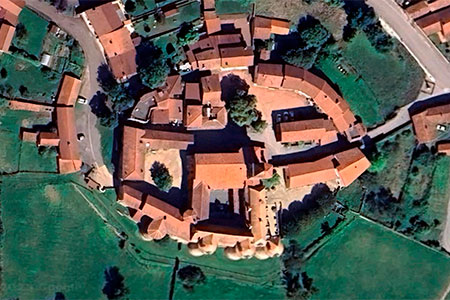
The priory is located in Pommiers-en-Forez, on the route from Lyon to Clermont-Ferrand