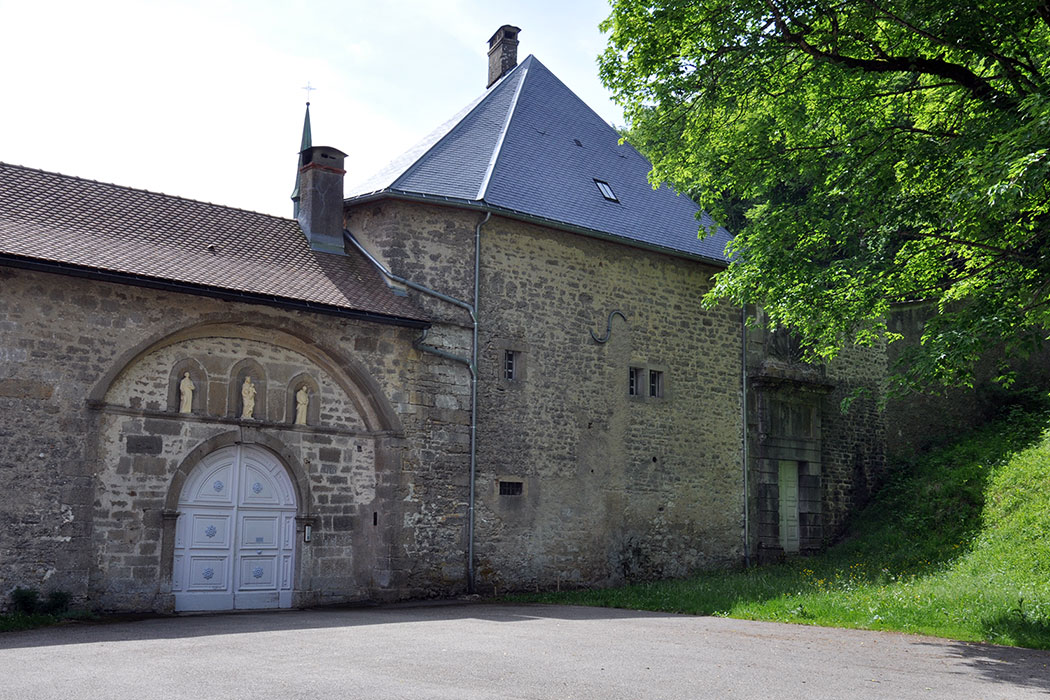

The charterhouse of Portes is located in an isolated mountainous setting. It is one of the earliest foundations of the Carthusian Order and remains active today. It is also known for the number of notable figures associated with it, such as Saint Anthelm of Belley (or of Chignin, † 1178).
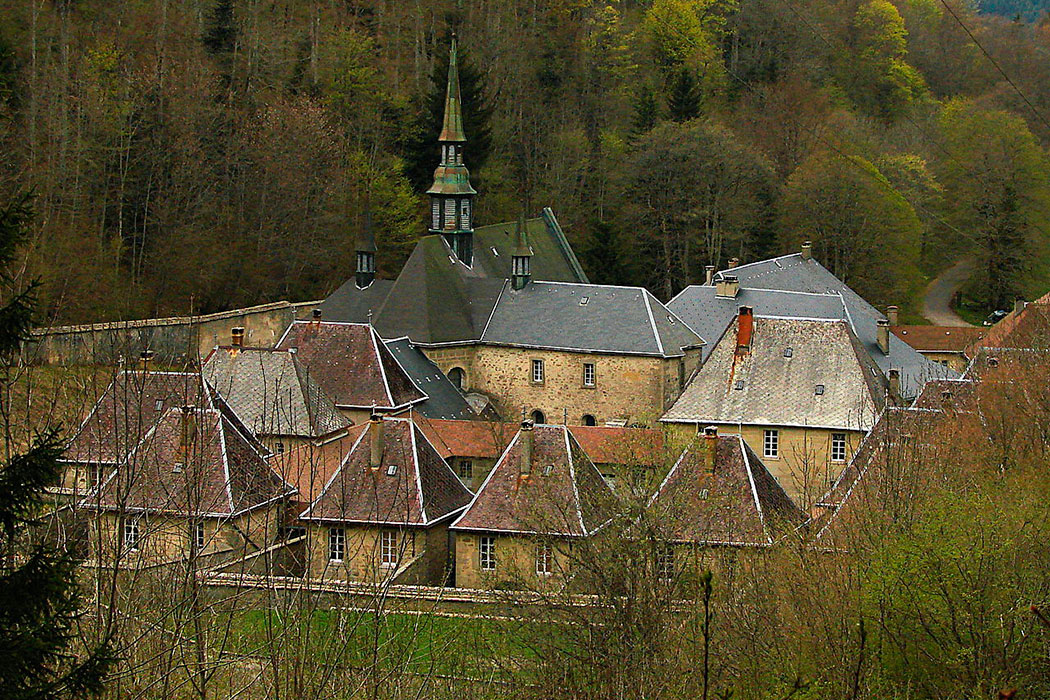
Photo by Classiccardinal, on Wikimedia
In 1115, two Benedictine monks from the Abbey of Ambronay (Ain), Bernard de Varey and Ponce, withdrew to Portes with the intention of practising eremitical life, with the support of the monastery of Ambronay, which provided the land, and of Gauceran, Archbishop of Lyon. They soon established contact with the Grande Chartreuse (Isère) and its prior Guigo (or Guigues, † 1136), who sent monks to instruct them in Carthusian customs. This house is regarded as the second Carthusian foundation after the Grande Chartreuse, or the third if the foundation of Santo Stefano del Bosco (Calabria) by Saint Bruno himself is taken into account.
The first settlement was provisional and very precarious; from that site, the construction of the charterhouse was undertaken in a more remote location, suitable for a larger community. Tradition holds that the initial settlement was located on the site that later became the monastery’s “correrie” (farm), known as La Courrerie. During this formative period, Portes was visited by Bishop Hugh of Grenoble, one of the principal promoters of the Carthusian Order, as well as by Humbaud, Archbishop of Lyon, and Humbert, Bishop of Geneva, who took part in the consecration of the churches of Portes (1125) and La Courrerie (1128). Pope Innocent II (1130–1143) also granted privileges to the charterhouse through two papal bulls.
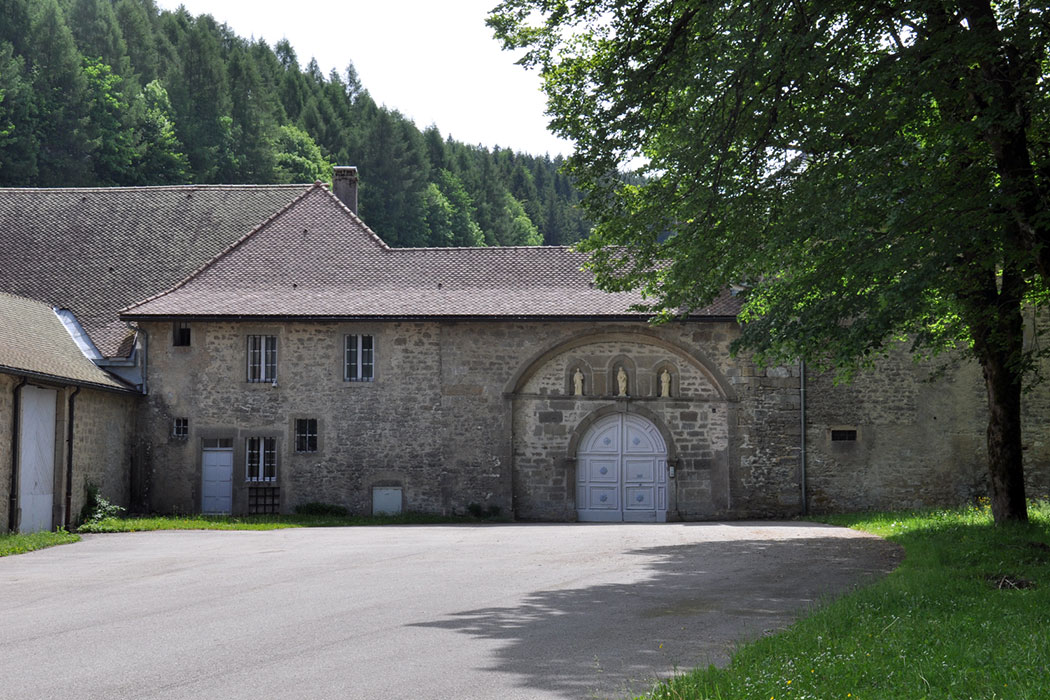
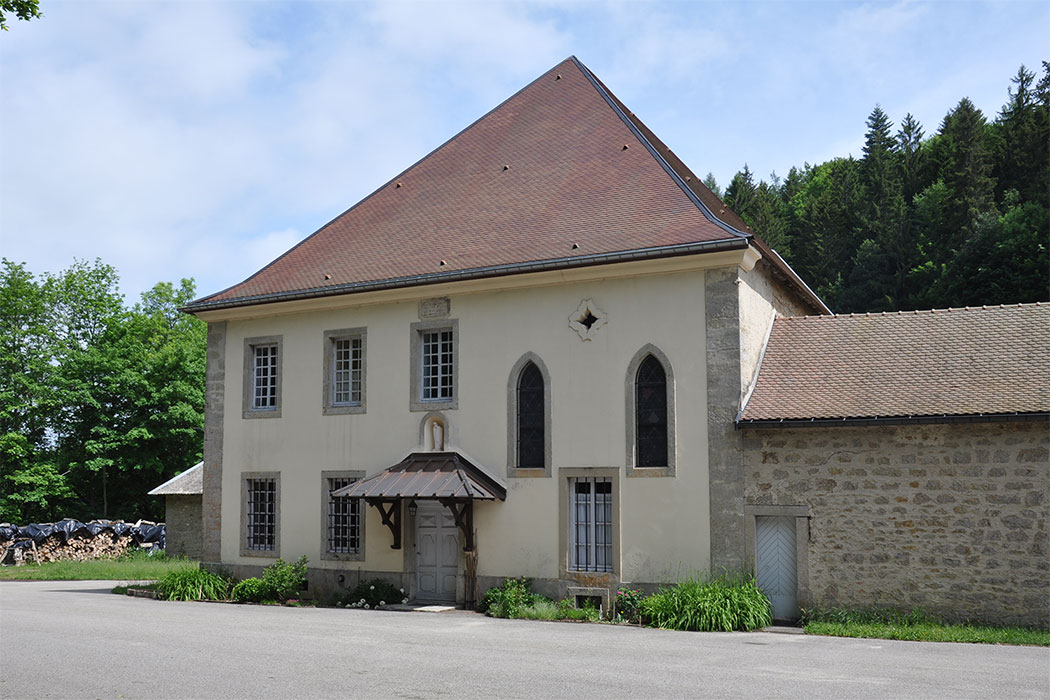
In the early modern period, the house benefited from the protection of the Dukes of Savoy, the monarchy, and the papacy, enabling it to acquire numerous possessions. The monastic complex was entirely rebuilt in the seventeenth century. Suppressed in 1791 as a result of the Revolution, it was repurchased by the Carthusians in 1855, who were able to resume monastic life there. It remains active today, despite an interruption between 1903 and 1951, when it suffered a second expulsion. An ivory oliphant (eleventh–twelfth centuries), discovered around 1400 and donated to the charterhouse, is preserved in the National Library of France; it had been kept at Portes until the Revolution.
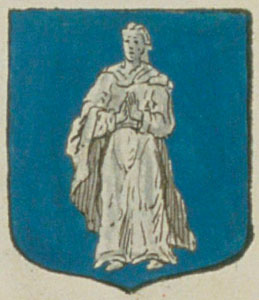
Armorial général de France (18th century)
Bibliothèque nationale de France
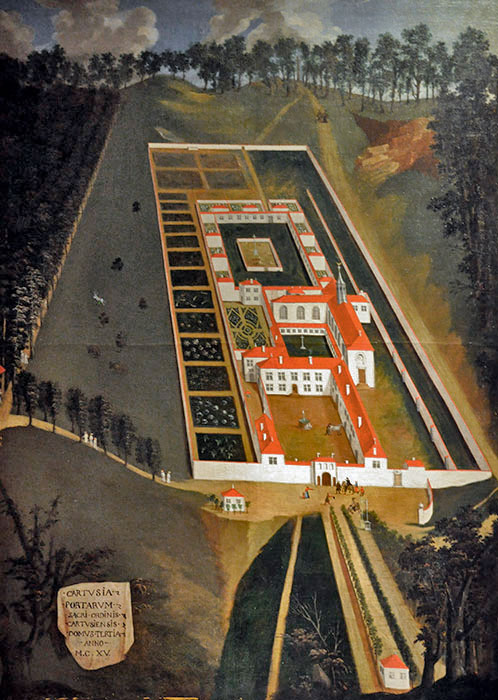
Grande Chartreuse Museum
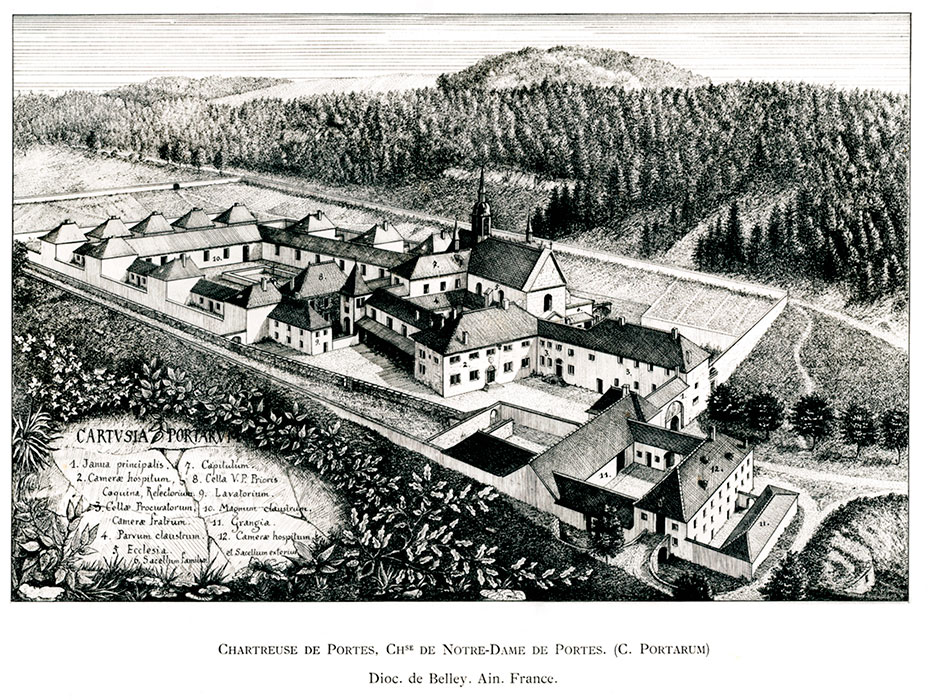
Illustration from Maisons de l'ordre des Chartreux
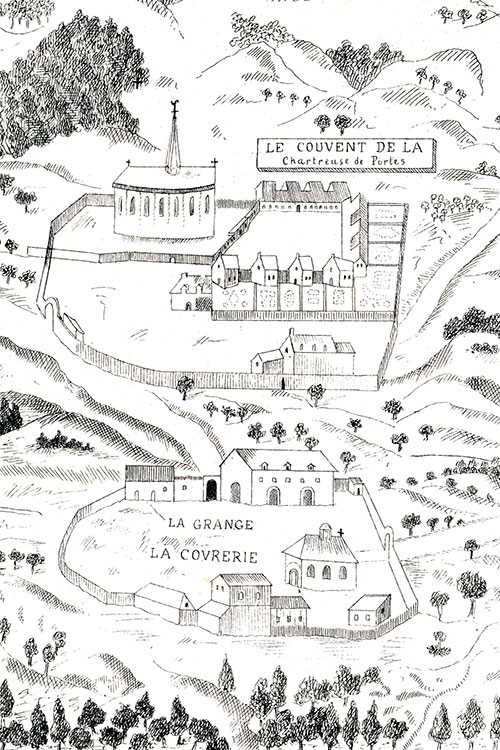
Illustration from Maisons de l'ordre des Chartreux
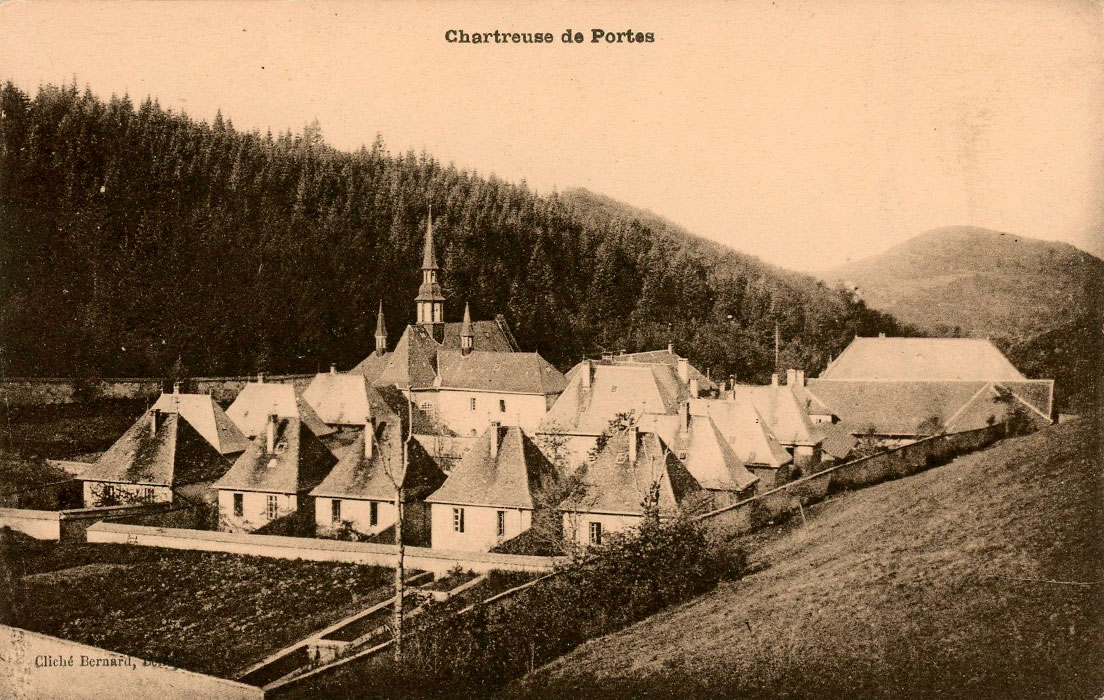
Old postcard, private collection
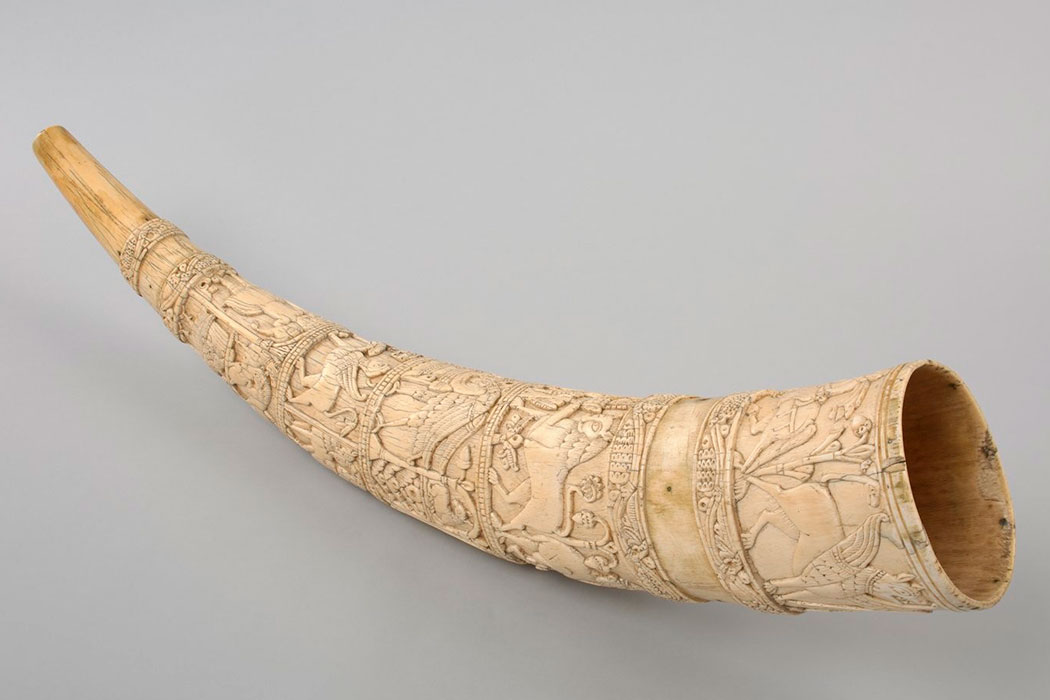
Ivory olifant (11th-12th century)
Bibliothèque nationale de France
- ANIEL, Jean-Pierre (1983). Les maisons de chartreux des origines à la chartreuse de Pavie. París: Arts et Métiers Graphiques
- CARTOIXA DE PARKMINSTER (1915). Maisons de l'ordre des Chartreux. Vol. II. Chartreuse de Saint-Hughes (Sussex)
- COTTINEAU, Laurent-Henri (1939). Répertoire topo-bibliographique des abbayes et prieurés. Vol. 2. Mâcon: Protat
- DUBOIS, Jacques (1971). L'implantation monastique dans le Bugey au Moyen Âge. Journal des savants
- JOLY, L. (1910-1912). Les commencements de la chartreuse de Portes. Bulletin de la Société Gorini. Bourg
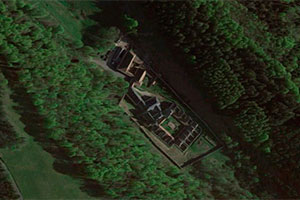
The charterhouse is situated in an isolated valley within the territory of Bénonces (Ain), east of Lyon