
The monastery, on the banks of the Yonne River


In the mid-5th century, Germanus (c. 380–448), bishop of Auxerre, founded a chapel in the city dedicated to Saint Maurice, where he deposited some relics of the patron saint. After his death, the founder was buried there, and the site also became the burial place of other bishops of the diocese. Over time, a funerary basilica developed there, dedicated to the cult of Germanus, who was venerated as a saint.
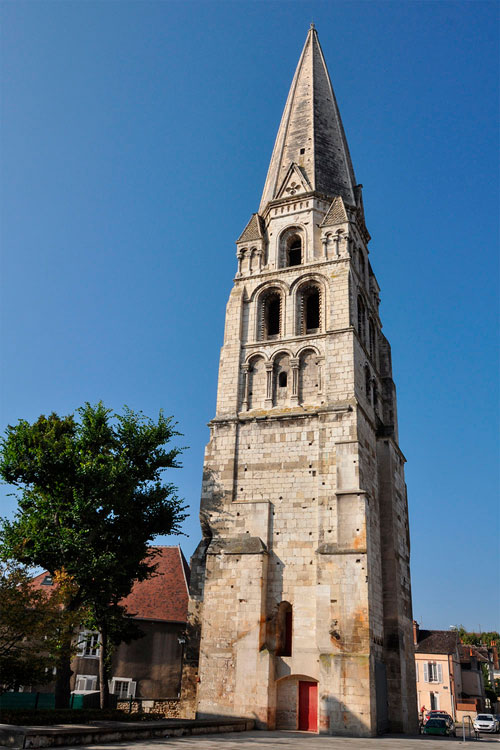
The Saint-Jean Tower
In the 6th century, Clotilde (c. 474–c. 545), widow of Clovis I († 511), had a large basilica built over Saint Germanus’s tomb. During the following centuries, the building underwent several extensions and alterations. There is evidence that, during the 6th and 7th centuries, the church was served by a community of clerics. This community subsequently adopted a monastic rule, of which some references have survived. By the first quarter of the 8th century, the presence of monks at the site was well documented. At the same time, the popularity of Saint Germanus grew, and he acquired a reputation for performing numerous miracles.
The abbey developed rapidly and, in the 8th century, ceased to depend on episcopal authority and came under the control of the Frankish kings. They exerted considerable influence over the establishment, encouraging its economic development and enabling it to accumulate substantial property. During the Carolingian period, particularly under the reign of Charles the Bald (840–877), major improvements were made to the funerary basilica, and the king also granted privileges to the monastery. At this time, the construction of a new crypt to house Saint Germanus’s tomb was promoted following a miraculous event involving Conrad, brother-in-law of Louis the Pious.
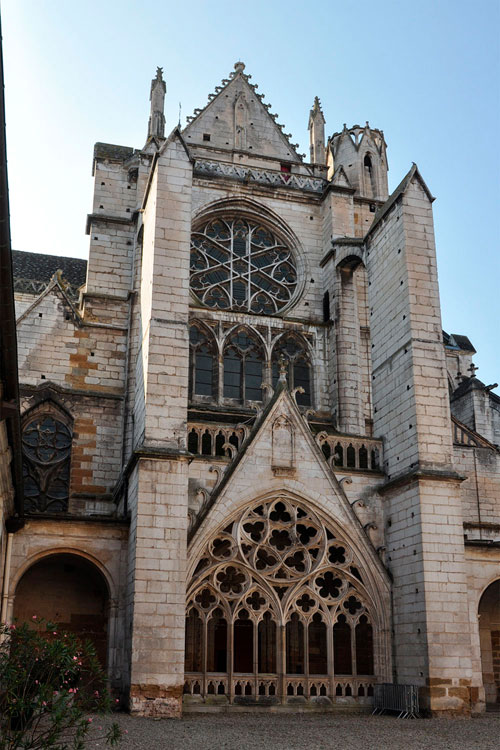
North transept façade
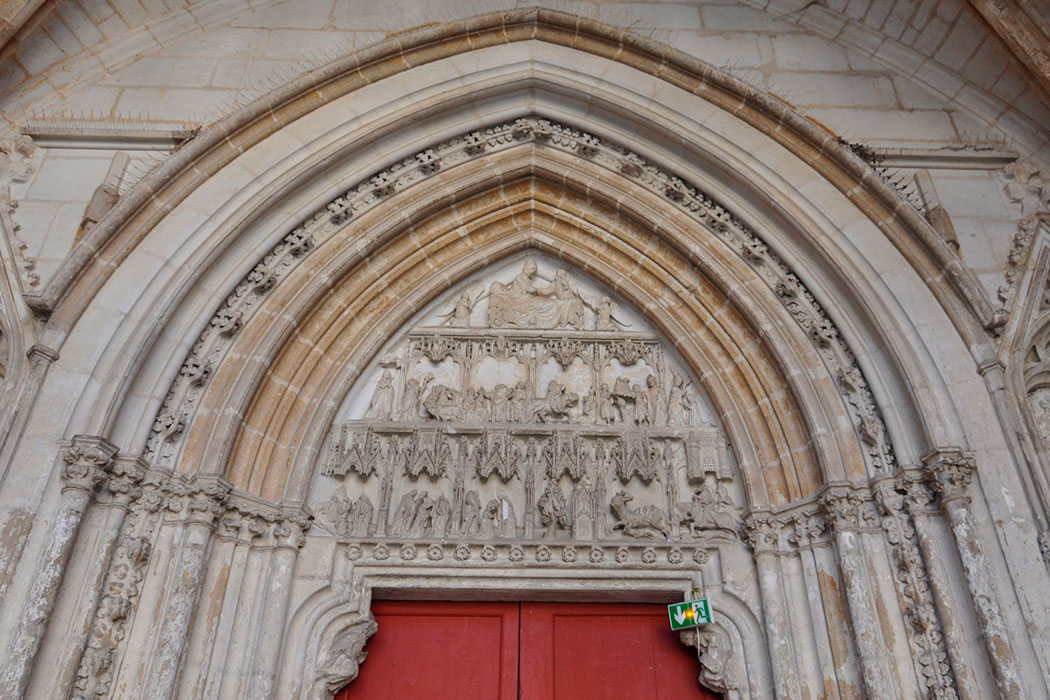
Transept portal
At the end of the 9th century, Auxerre suffered a Norman attack that also affected the monastery. Around 990, the abbey was experiencing a period of decline and, through the intervention of Maiolus of Cluny (910–994), moved closer to the Cluniac reform. It formally joined the reform in 1100, but regained its independence in 1256. From 1277 onwards, a long series of building works began, affecting both the church and the other monastic buildings over the following centuries. François de Beaujeu, the last regular abbot, died in 1539, and the following year Louis de Lorraine was appointed the house’s first commendatory abbot.
In 1567, the establishment suffered the destructive effects of the passage of Protestant forces during the French Wars of Religion, when the relics of Saint Germanus were lost. In 1629, the Congregation of Saint-Maur took charge of the abbey, which was then in decline, a situation common to many monastic institutions of the period. The abbey was suppressed between 1790 and 1793, and in 1810 the buildings were converted into a hospital. During the second half of the 20th century, the complex passed into municipal ownership, making archaeological and historical research into the former monastery possible.
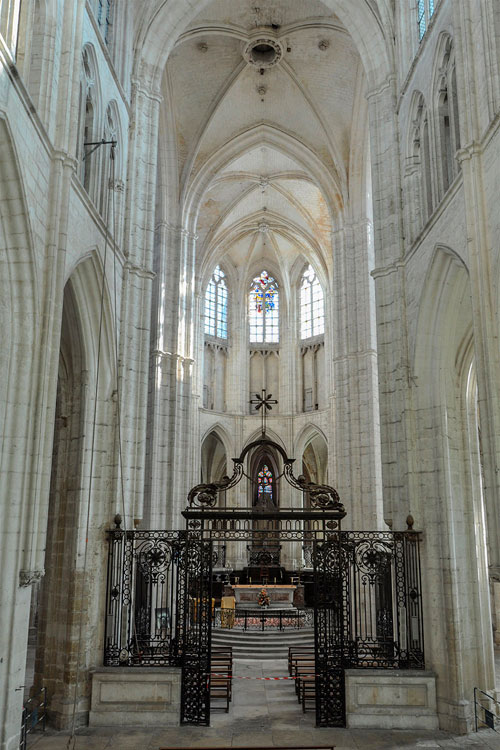
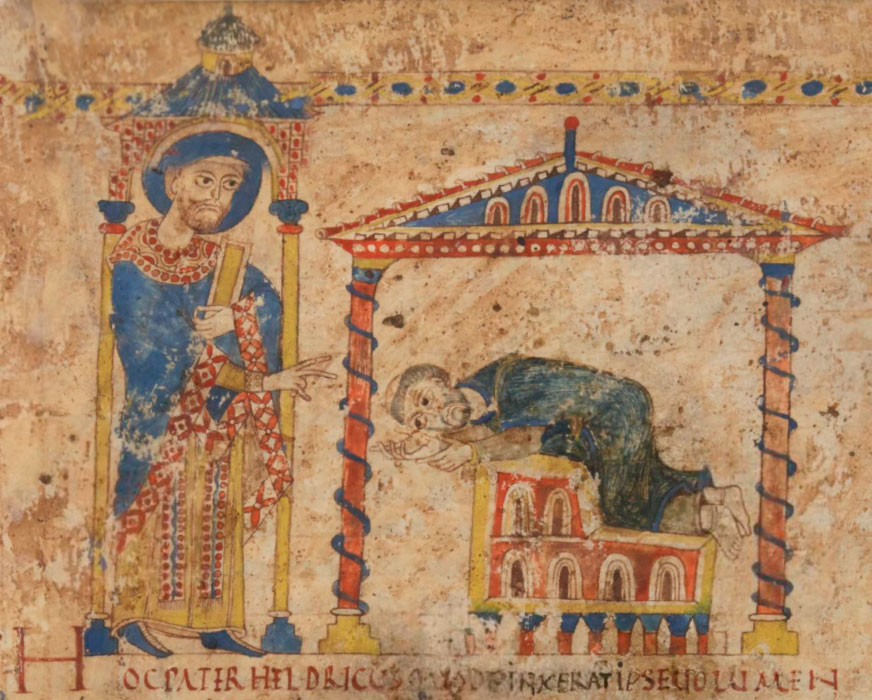
From a manuscript containing texts by the monk Haymo of Auxerre (10th–11th centuries)
Bibliothèque nationale de France
Germanus was born near Auxerre into a Gallo-Roman family. He received his education in Rome and subsequently returned to Gaul, where he served as governor of several provinces. After coming into conflict with Amator († 418), bishop of Auxerre, he converted to Christianity under his influence. Amator designated him as his successor at the head of the diocese. During his episcopate, Germanus founded the monastery of Saint-Marien in Auxerre, which no longer survives. He pursued an active pastoral and political career, intervening in ecclesiastical disputes in other dioceses as well as in secular affairs. He died in Ravenna in 448, and his body was transferred to Auxerre, where he was buried.
The surviving architectural complex is the result of numerous interventions carried out since the construction of Clotilde’s first basilica in the 6th century. An atrium was added during the 7th and 8th centuries. In the 9th century, the building underwent a radical transformation, with the construction of a rotunda beyond the chancel and the complete rebuilding of this section. In the 11th century, the church was entirely rebuilt, changing from a simple basilican plan to one with five aisles and a transept, while the atrium was retained and incorporated into the church.
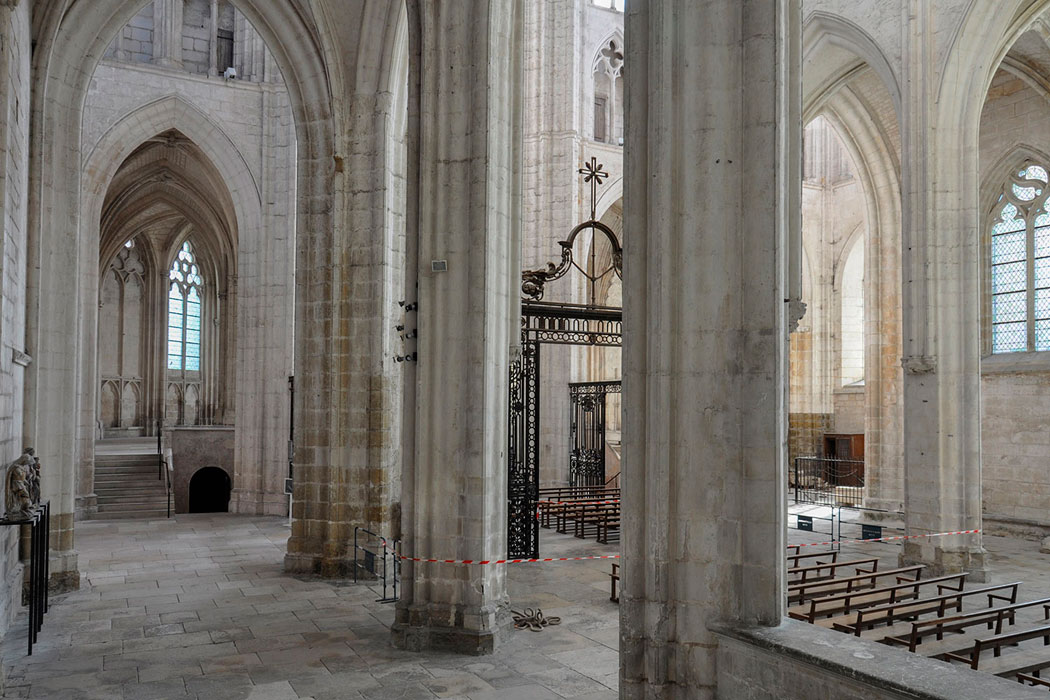
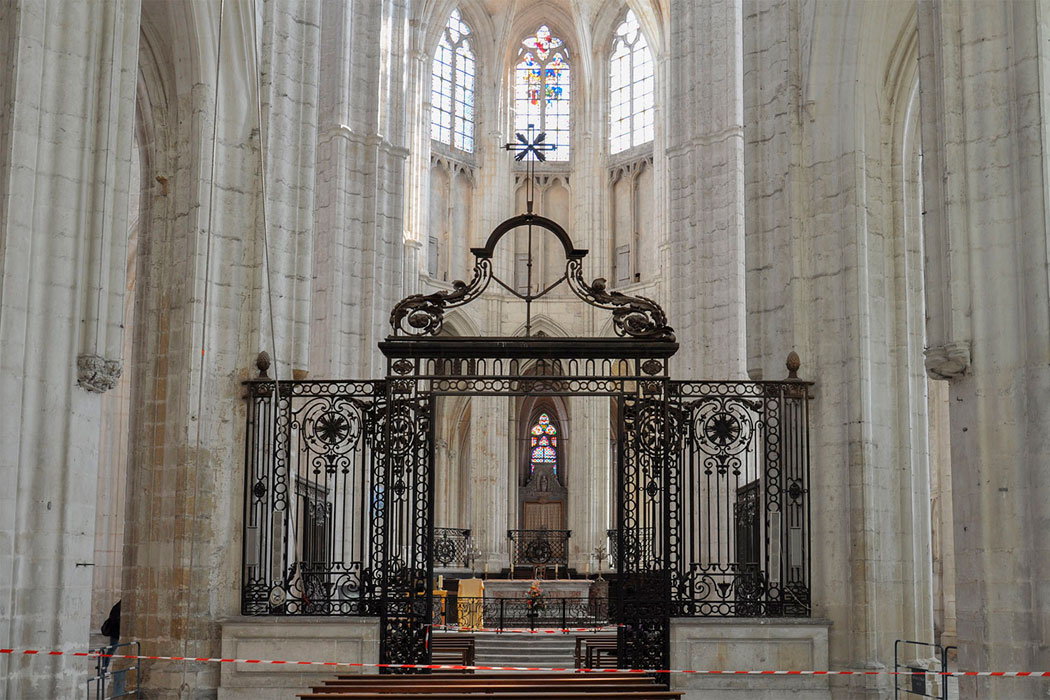
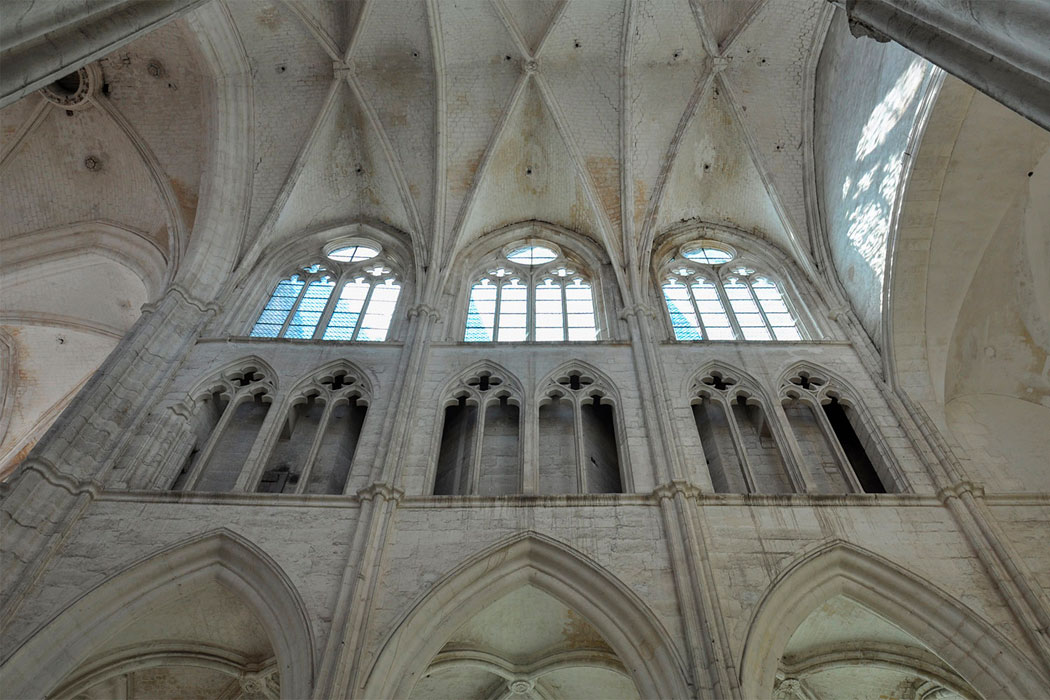
Other monastic buildings must also have existed during these early periods, but the earliest for which documentary evidence survives date from the 12th century: the sacristy, chapter house and library, as well as a bell tower. Because of the church’s deteriorating condition, compounded by a fire, a further rebuilding campaign began in 1277, resulting in the present building. The cellar also dates from this period. With the arrival of the Congregation of Saint-Maur, the last buildings were erected, chiefly the cloister and the abbot’s residence.
After the French Revolution, the narthex and the first bays of the aisles were demolished, turning that part of the building into an open space in which only the Saint-Jean bell tower was preserved. The crypt also survives; it is a complex structure resulting from the various alterations it has undergone.
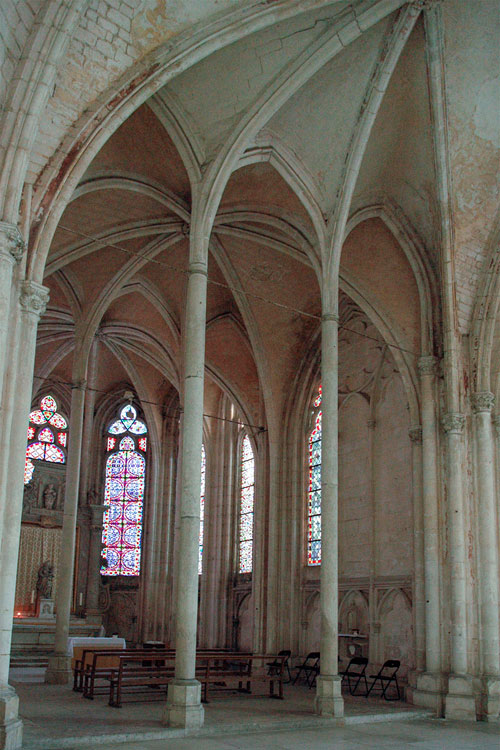
Apsidal chapel
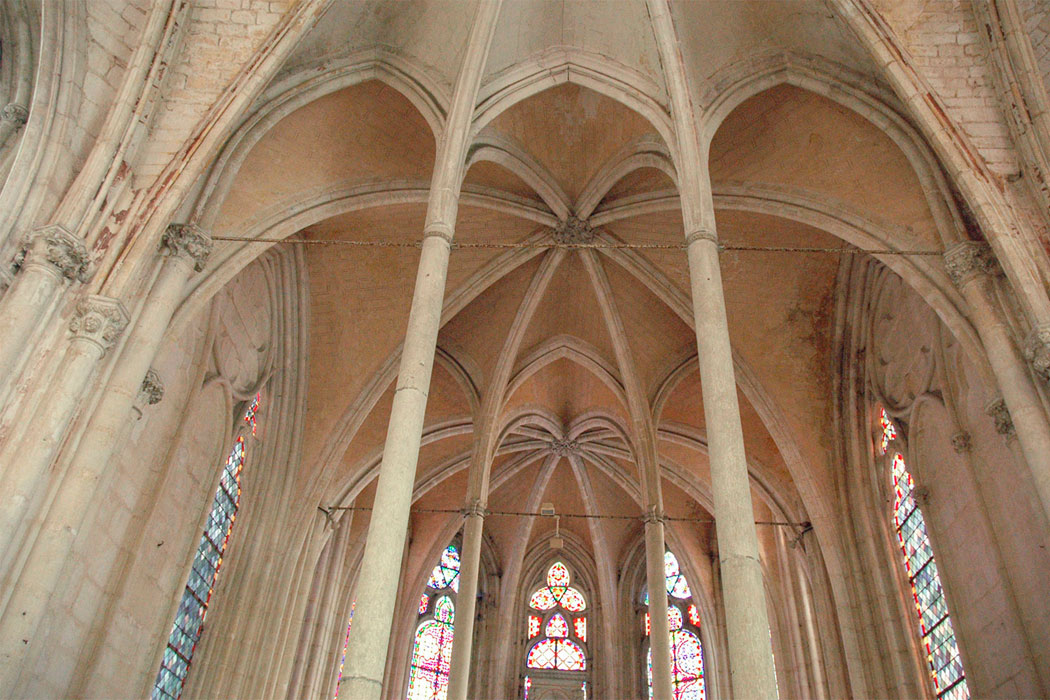
Apsidal chapel
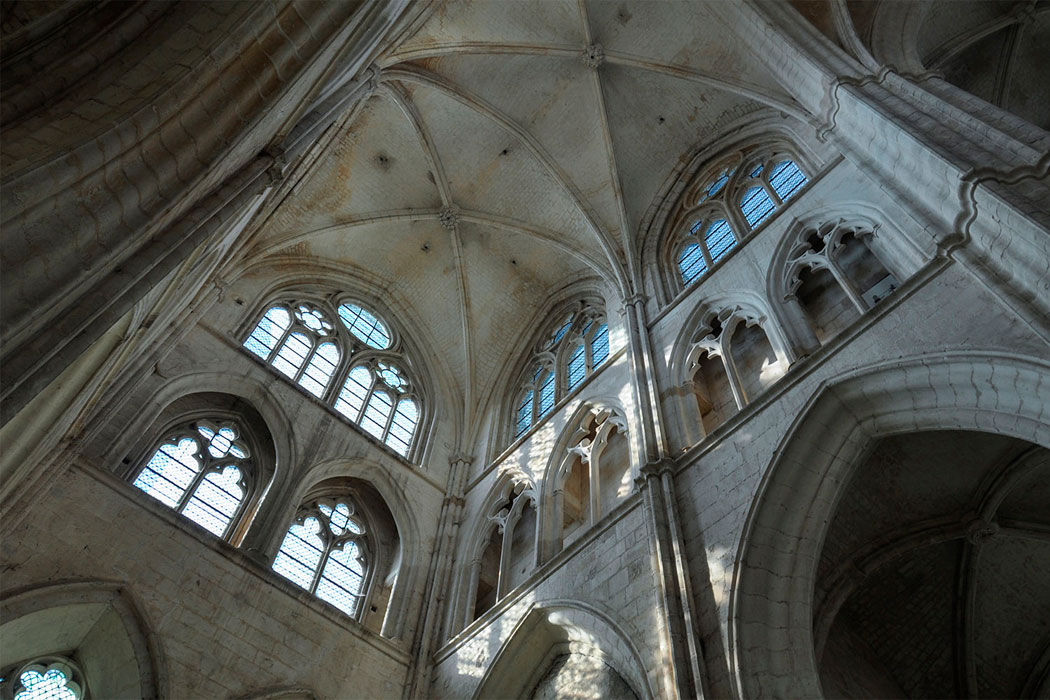
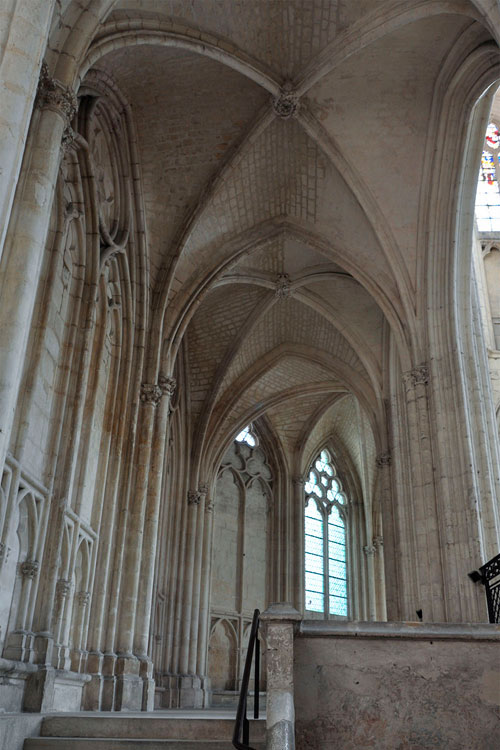
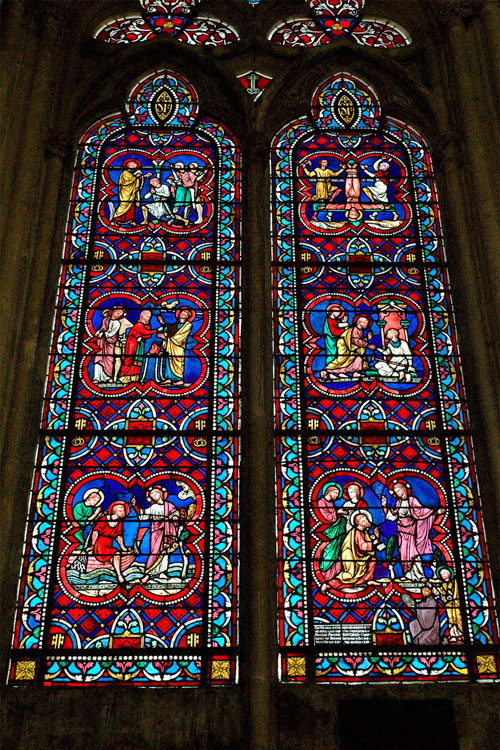
Modern stained glass
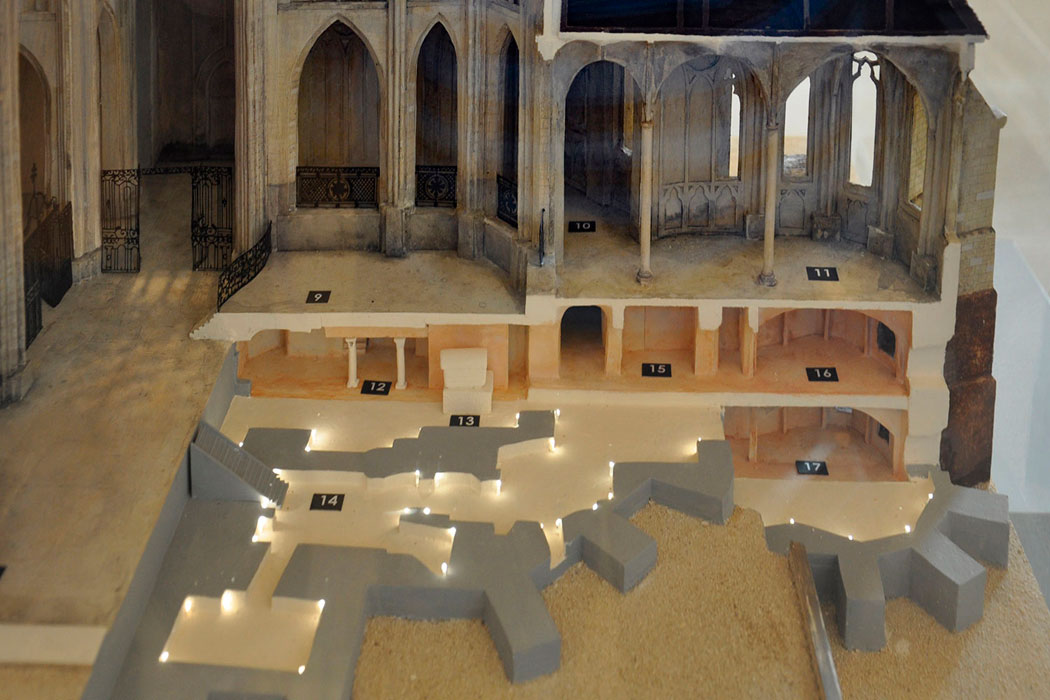
Model of the crypt
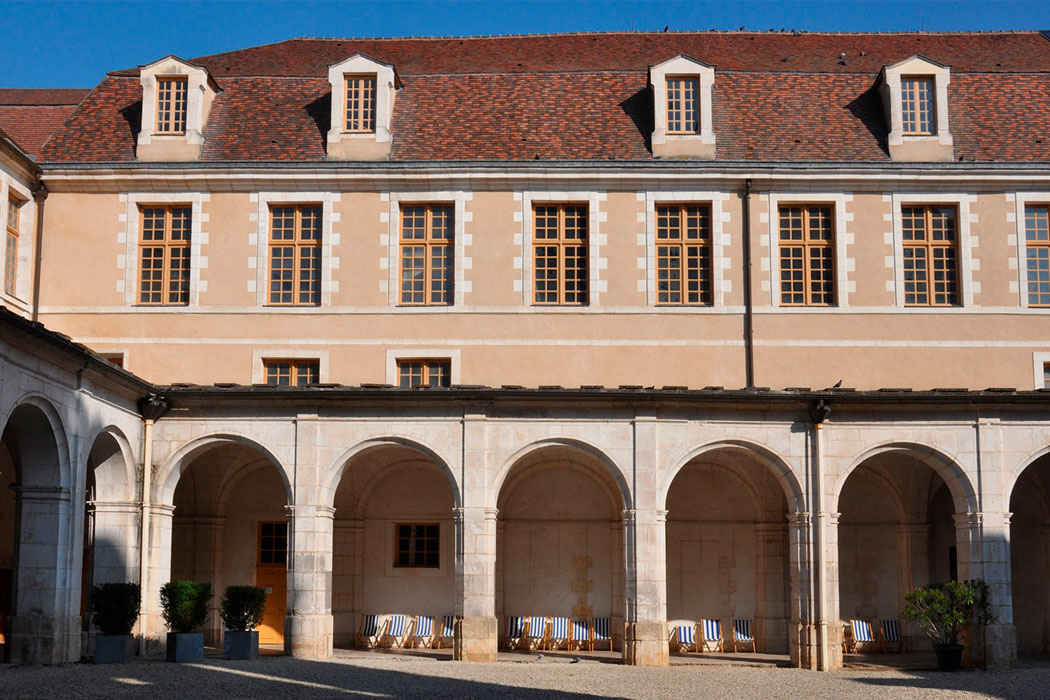
Cloister
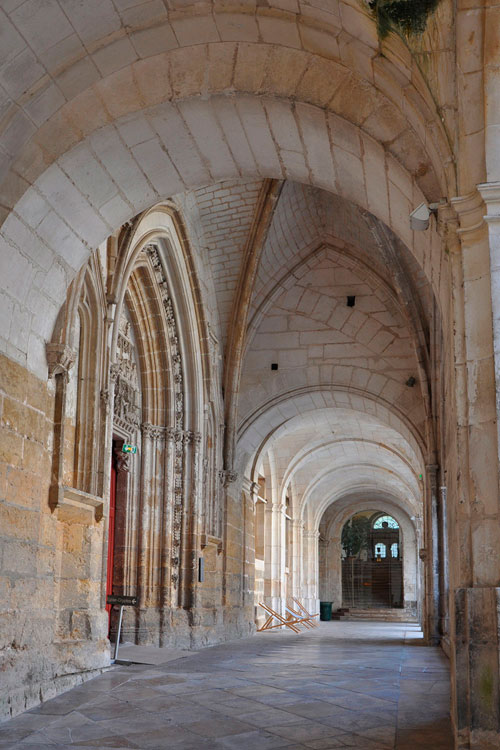
Cloister
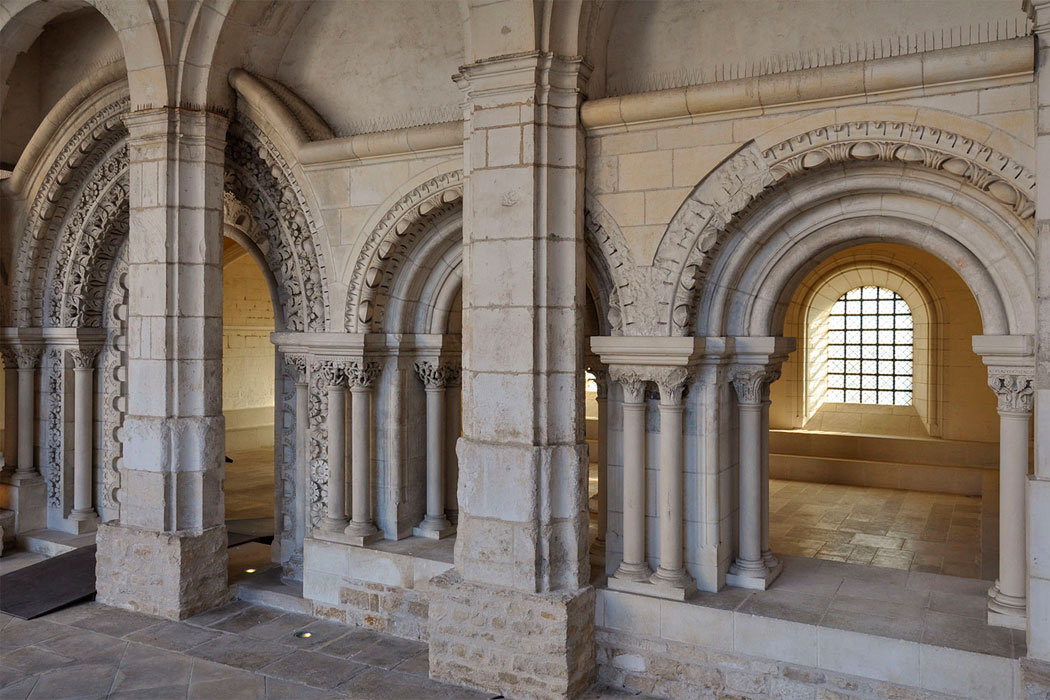
Chapter house
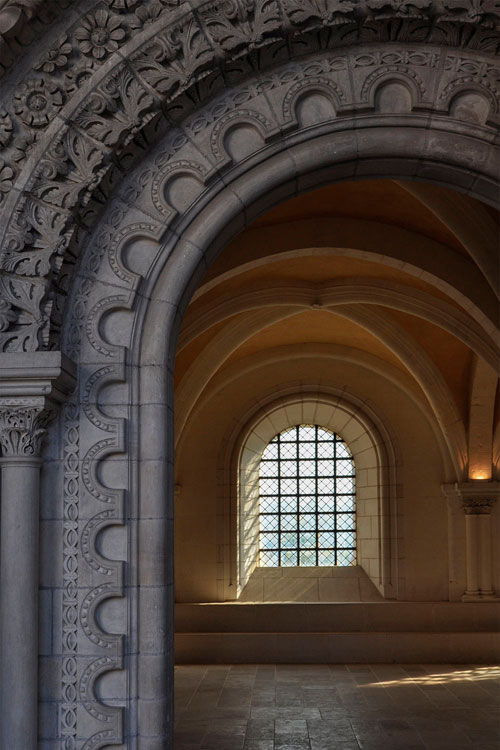
Chapter house
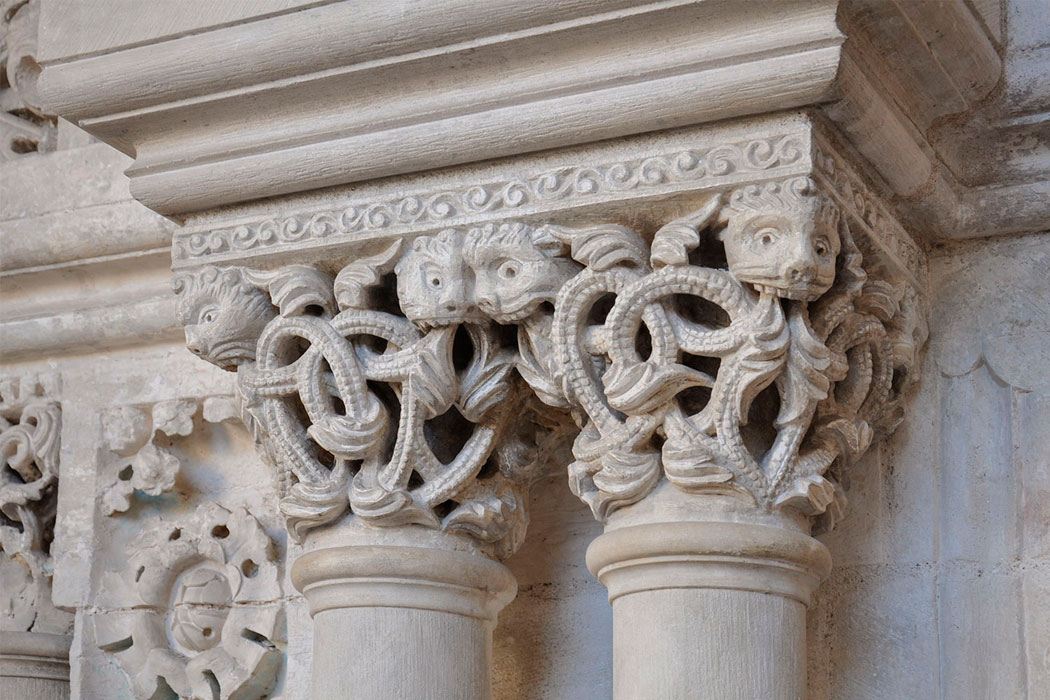
Chapter house
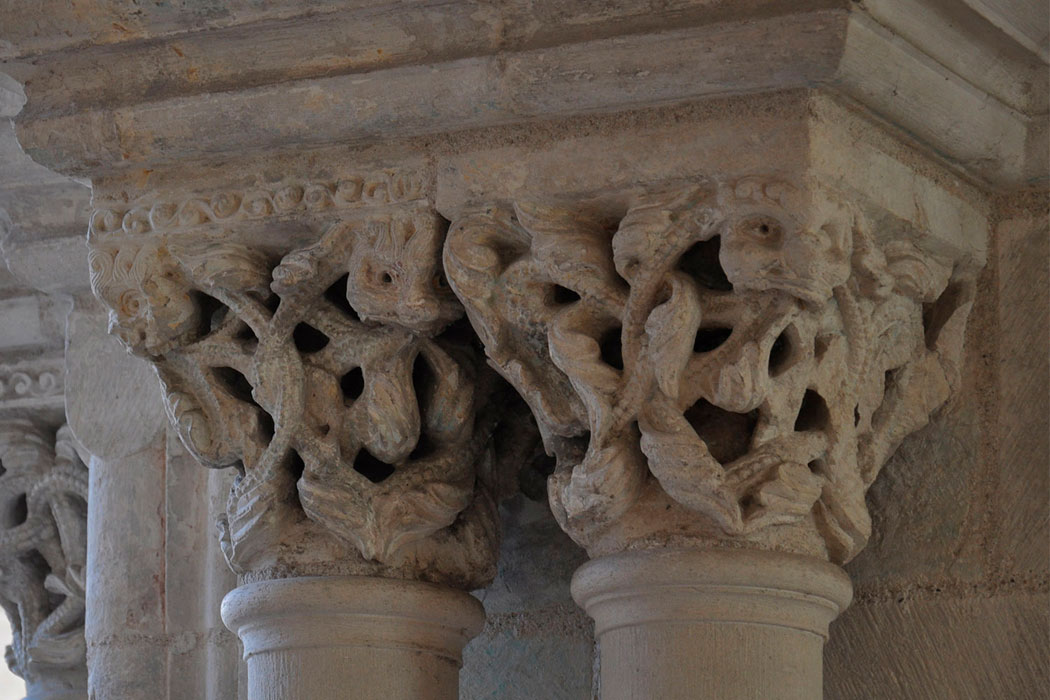
Chapter house
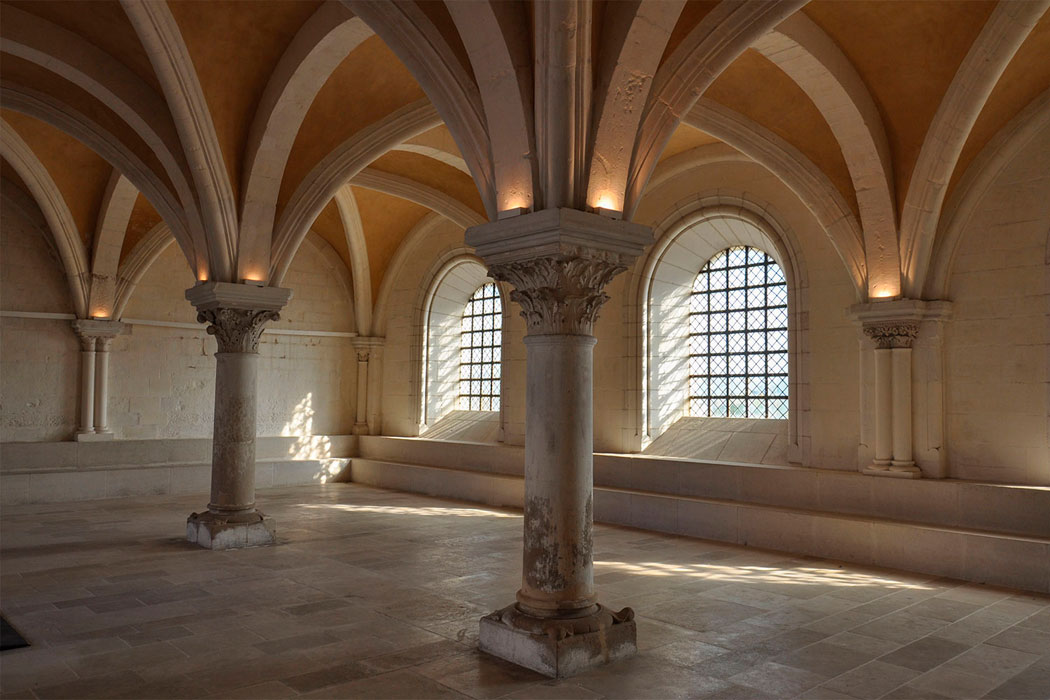
Chapter house
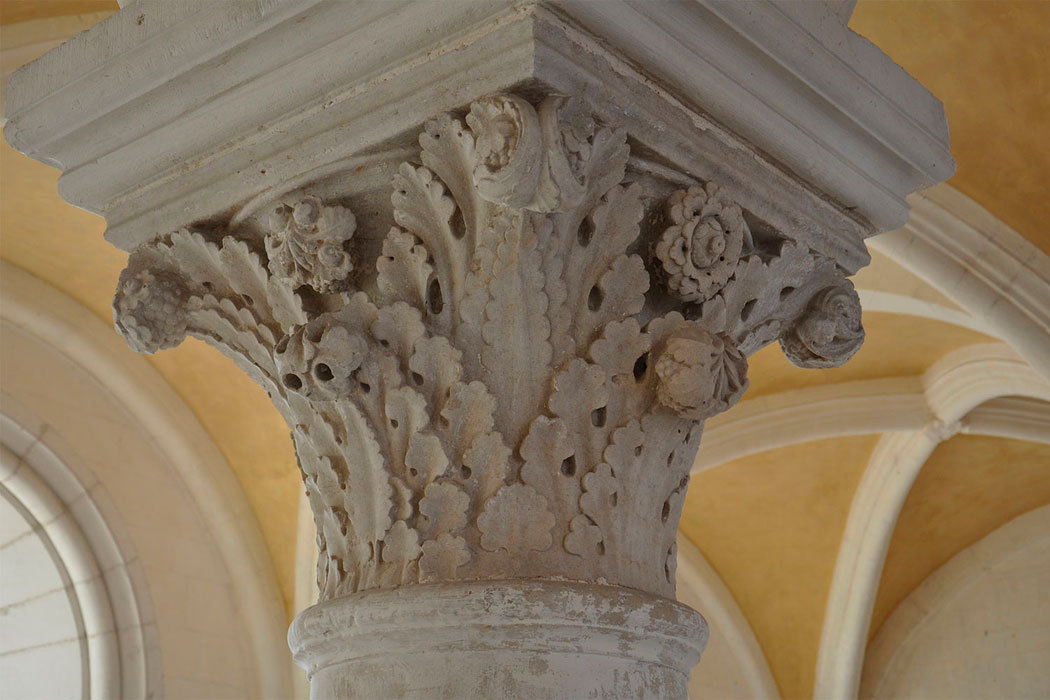
Chapter house
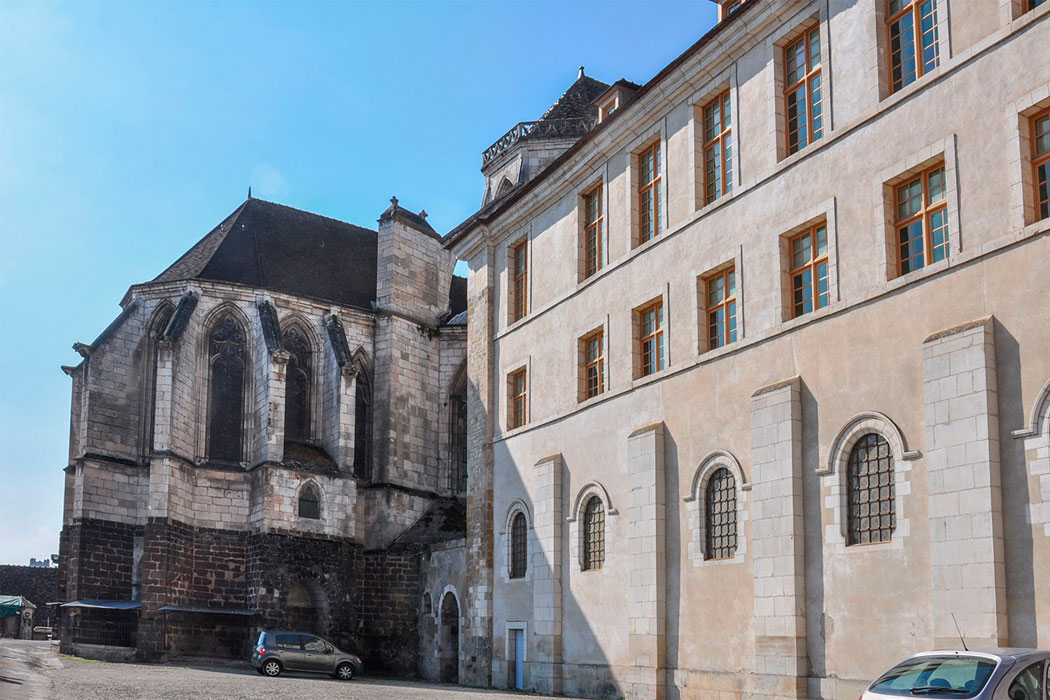
Church apse
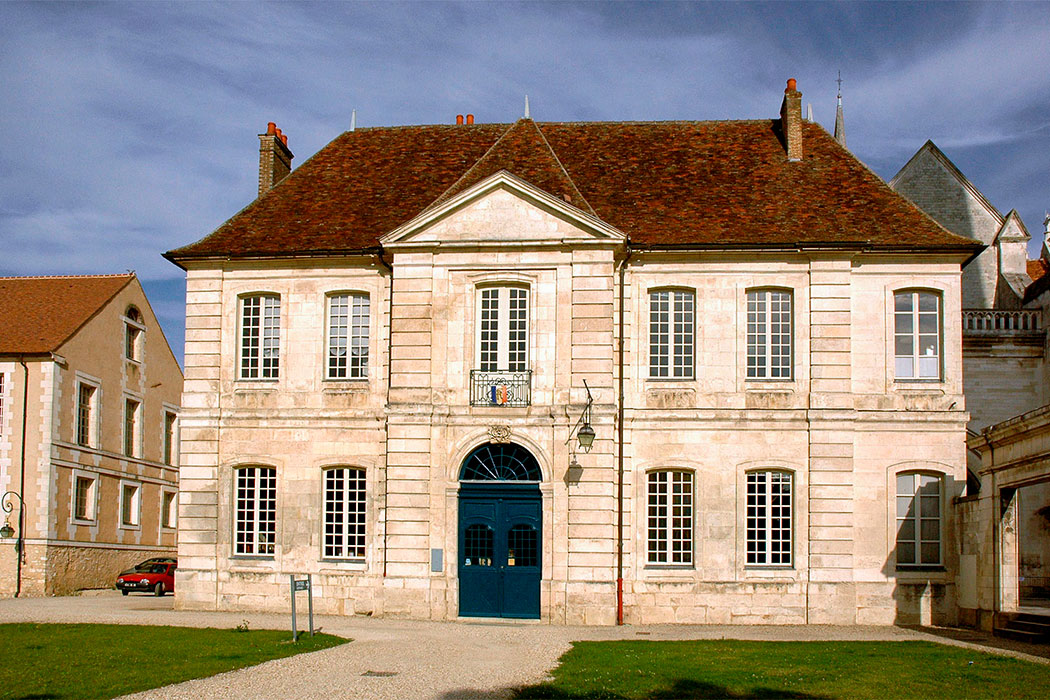
Abbot's House
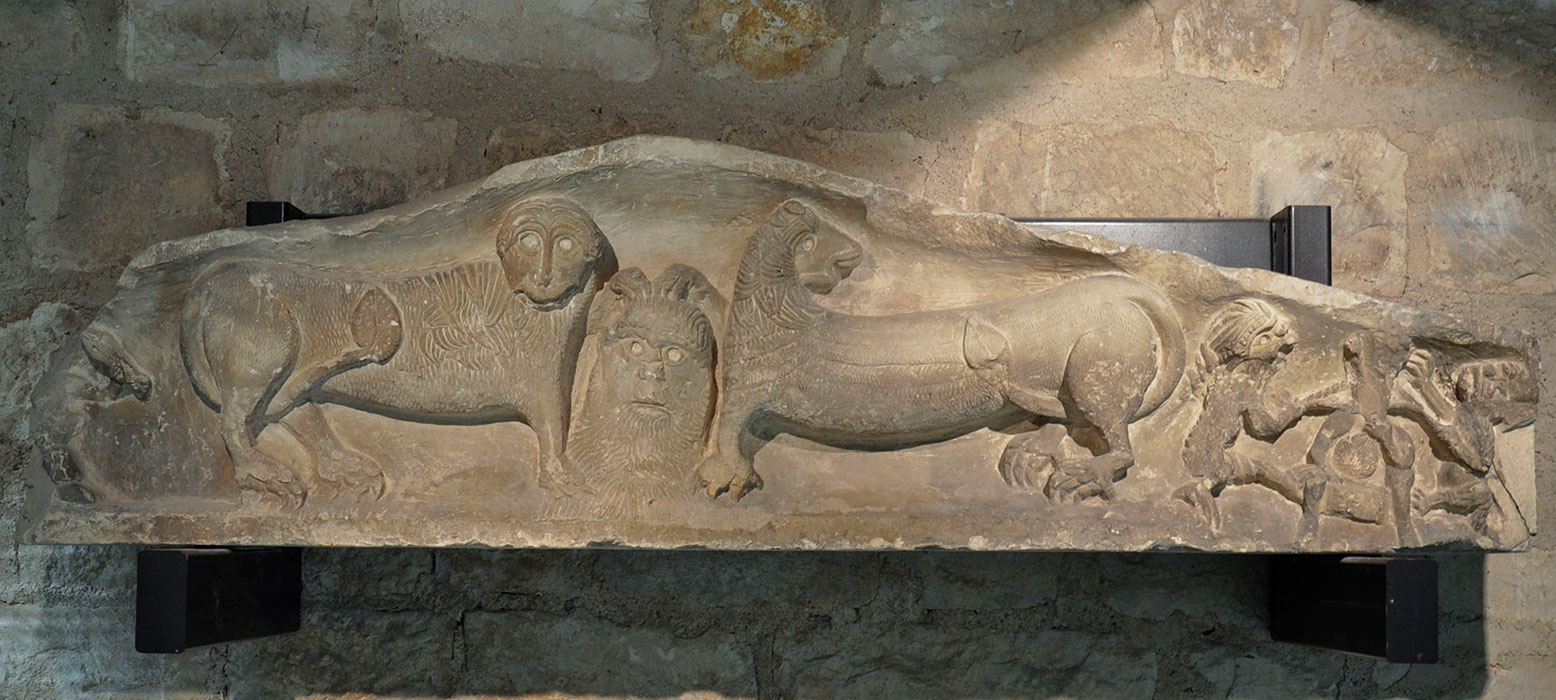
Lintel (11th century)
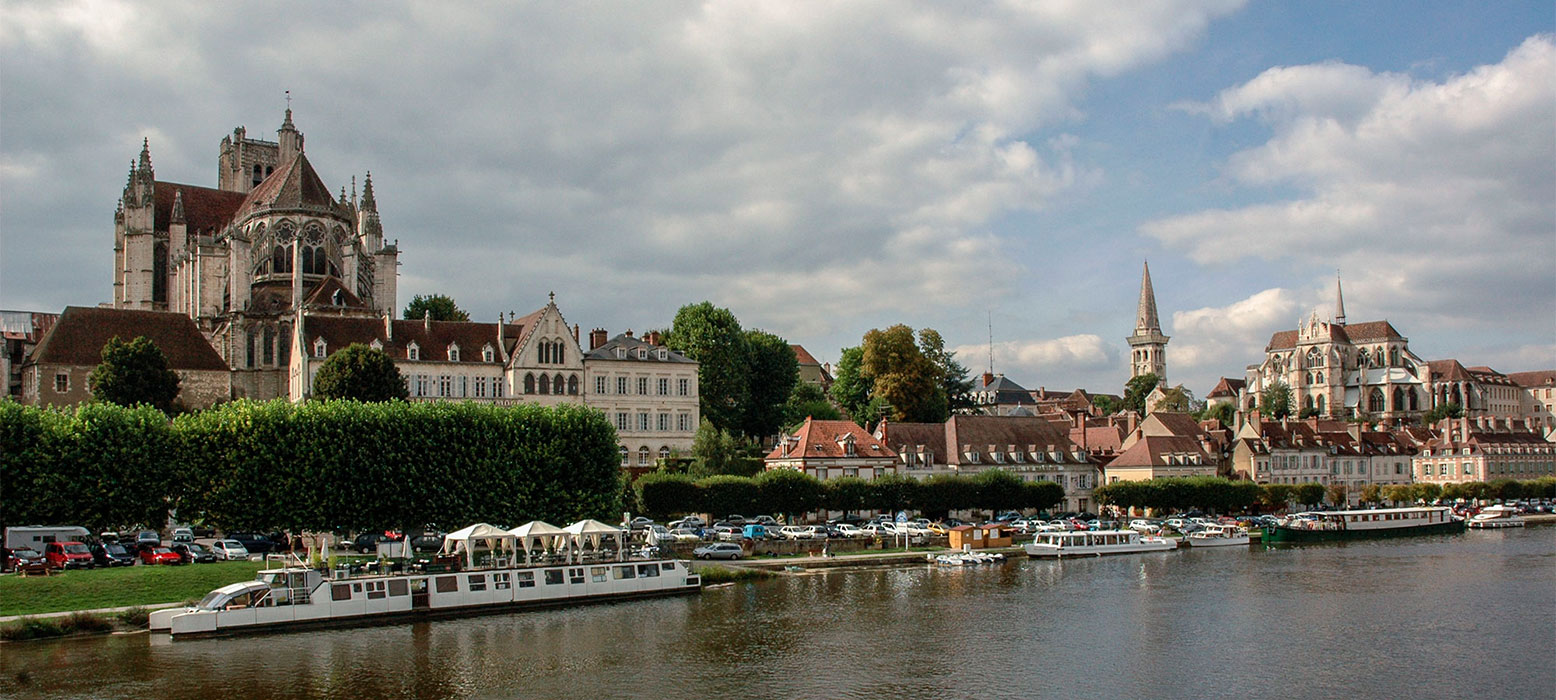
The cathedral and the monastery of Saint-Germain
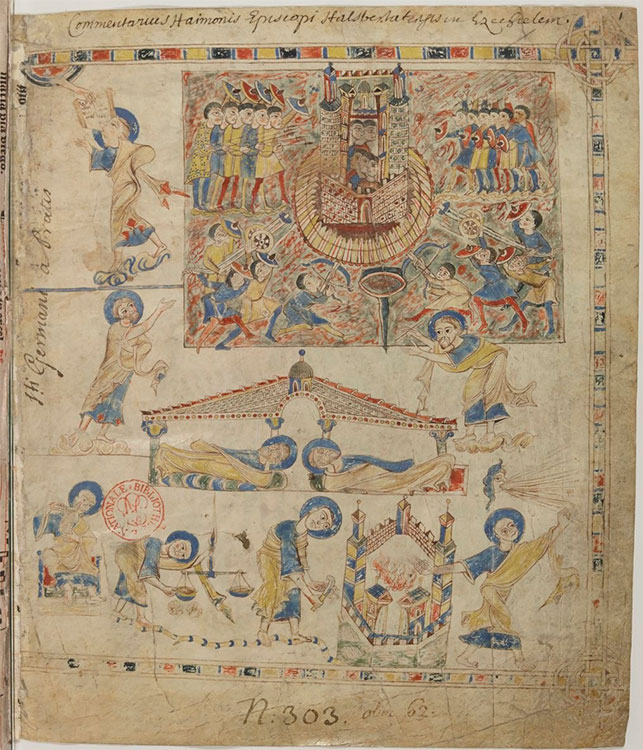
Manuscript containing texts by the monk Haymo of Auxerre (10th–11th centuries)
Bibliothèque nationale de France
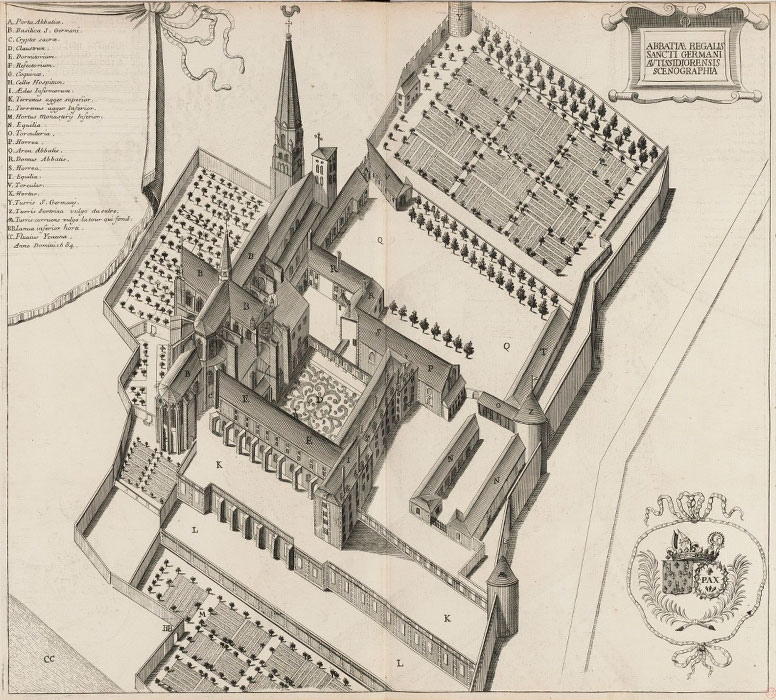
Monasticon Gallicanum (1677-1710)
Bibliothèque nationale de France
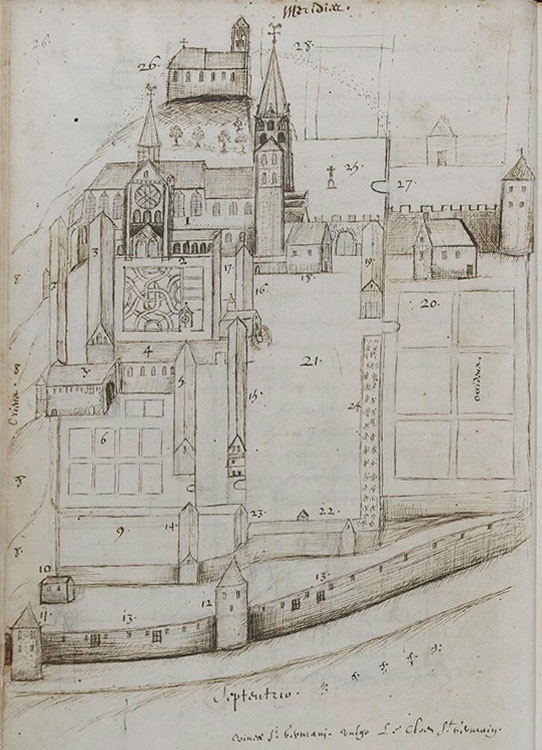
Plan of the monastery
Dom Cottron (c. 1650)
Bibliothèque municipale, Auxerre
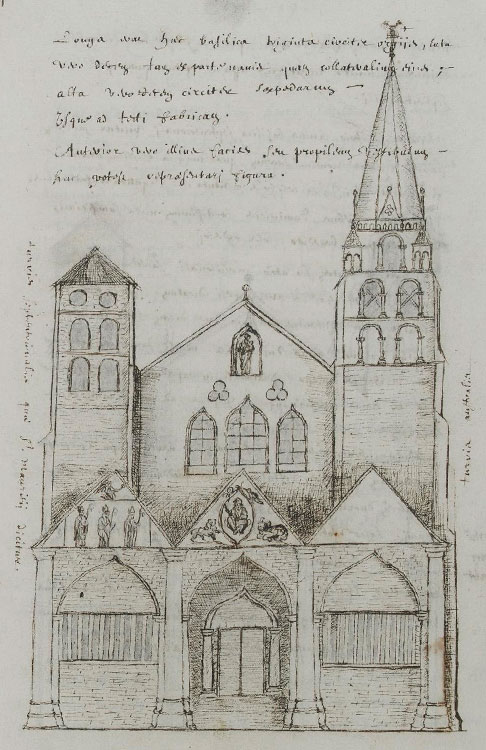
Church façade, before the demolition
Dom Cottron (c. 1650)
Bibliothèque municipale, Auxerre
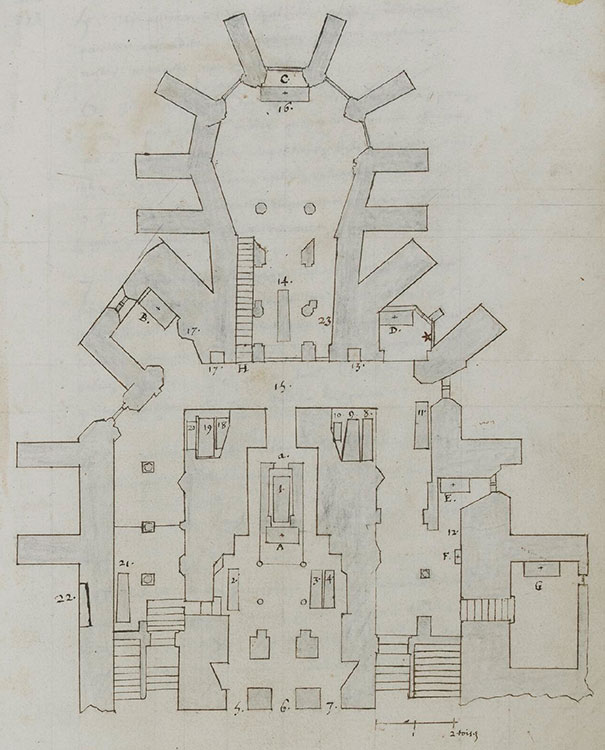
Crypt
Dom Cottron (c. 1650)
Bibliothèque municipale, Auxerre
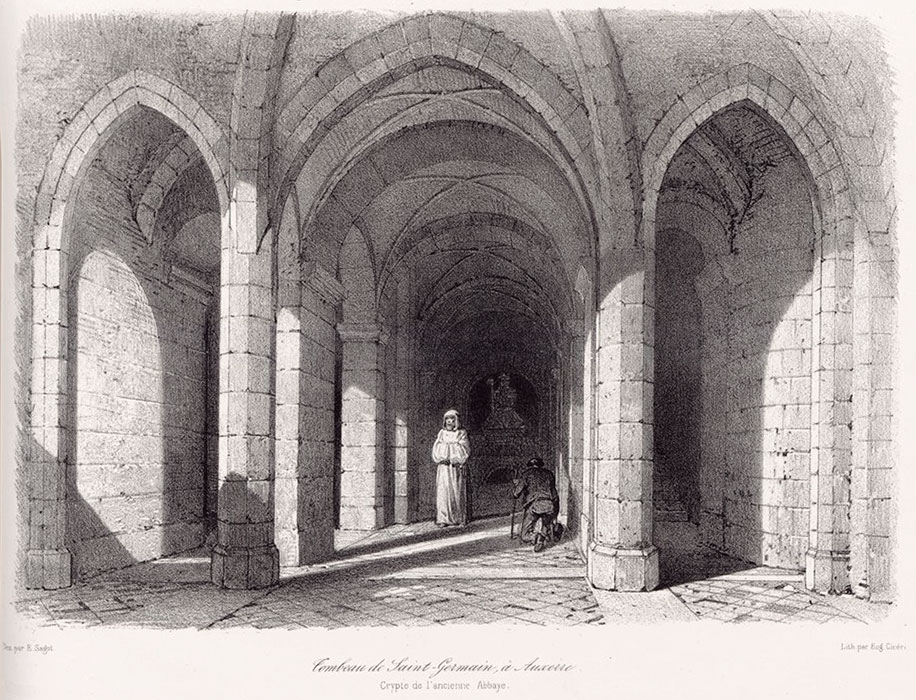
Cripta
Illustration from Voyages pittoresques et romantiques dans l'ancienne France (1863)
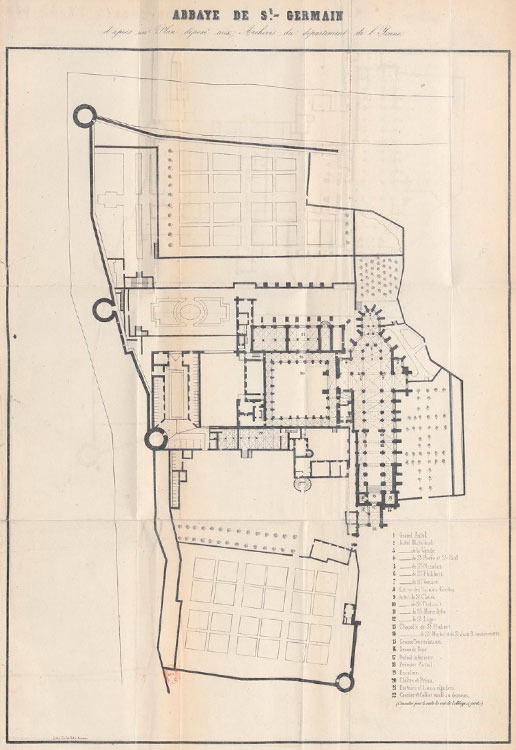
Plan of the monastery
Histoire de l’abbaye de Saint-Germain d’Auxerre (1853)
- AUBERT, R. (1984). Dictionnaire d'histoire et de géographie ecclésiastiques. Vol. 20. París: Letouzey et Ané
- COTTINEAU, Laurent-Henri (1936). Répertoire topo-bibliographique des abbayes et prieurés. Vol. 1. Mâcon: Protat
- HENRY, Waast-Barthélemy (1853). Histoire de l’abbaye de Saint-Germain d’Auxerre. Auxerre: Gallot
- ISAÏA, Marie-Céline (2011). Noëlle Deflou-Leca, Saint-Germain d’Auxerre et ses dépendances (Ve-XIIIe siècle). Cahiers de recherches médiévales et humanistes
- PEIGNÉ-DELACOURT, Achille (1877). Monasticon Gallicanum. Paris: G. Chamerot
- SAINT-MAUR, Congregació de (1770). Gallia Christiana in provincias ecclesiasticas distributa. Vol. 12. París: Typographia Regia
- SAPIN, Christian; i altres (2000). Archéologie el architecture d’un site monastique. Auxerre: Ed. du CTHS
- SASSIER, Yves (1981). Quelques remarques sur les diplomes d'immunité octroyés par les Carolingiens a l'abbaye de Saint-Germain d'Auxerre. Bibliothèque de l'École des chartes, vol. 139/1
- TAYLOR, J.; i altres (1863). Voyages pittoresques et romantiques dans l'ancienne France. Bourgogne. París: Firmin Didot

Saint-Germain Abbey is located in the historic centre of the city of Auxerre