
West façade


Around 860, Girart of Roussillon (or Girart of Vienne, c. 810–877) founded two Benedictine monasteries: Saint-Pierre-et-Saint-Paul de Pothières (Côte-d’Or), which housed a male community, and another at present-day Saint-Père (Yonne), inhabited by nuns. Girart was closely connected to the Carolingian monarchy and was the brother-in-law of Lothair I (795–855).
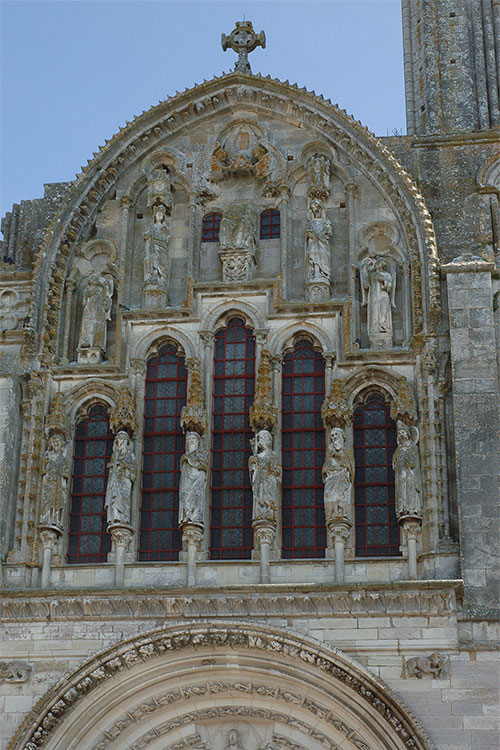
West façade (13th century)
A papal bull issued by Pope Nicholas I around 863 is known to have placed the foundation under the direct authority of the Holy See. Before 877, the nuns were replaced by a male community, probably consisting of monks from Saint-Martin Abbey of Autun (Saône-et-Loire). A bull issued by Pope John VIII in 878 mentions Eudes as the first abbot. The monastery did not remain at this site, as it was destroyed by a Norman raid in 887. This foundation was the predecessor of Sainte-Marie-Madeleine de Vézelay Abbey, to which the community moved at a more sheltered and fortified location. The relocation was initiated in the same year, although there is evidence that construction of the new monastery had already begun.
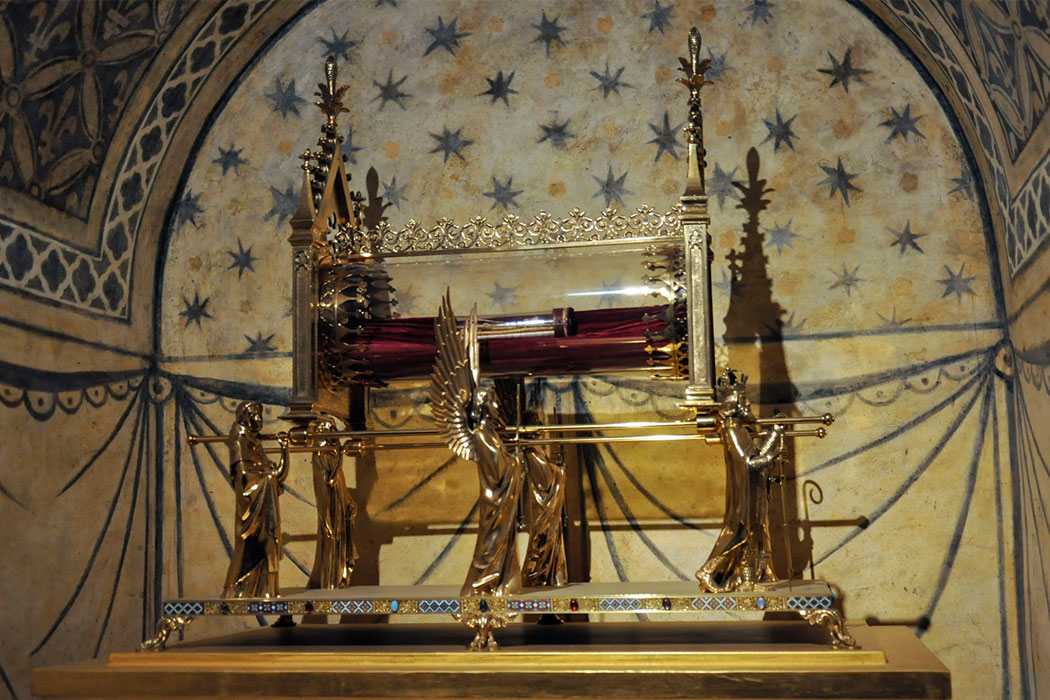
The relics of Saint Mary Magdalene were venerated at Vézelay Abbey. One tradition dates their arrival to the time of Charlemagne, while another account relates that they were obtained in 882, when they were taken during a Saracen raid that affected the sanctuary of Sainte-Baume (Var). According to tradition, Mary Magdalene spent the final years of her life at that site and was buried there. In 1058, the pope officially recognised the relics. Around this time, the monastery changed its dedication from Saint Mary to Sainte-Marie-Madeleine.
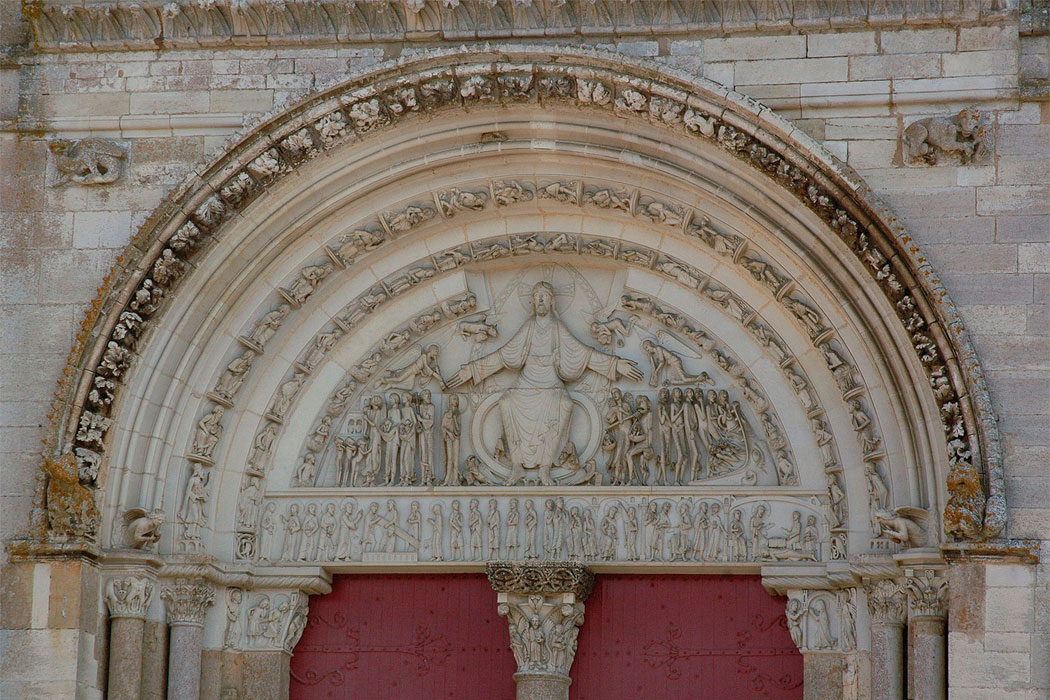
West façade
Neo-Romanesque portal
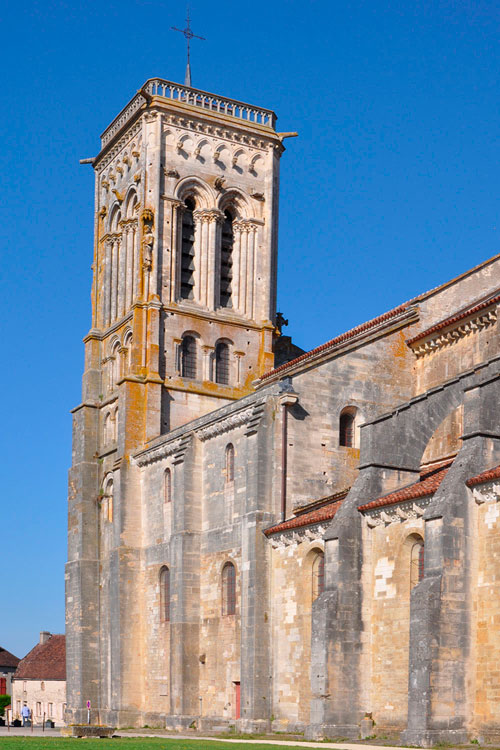
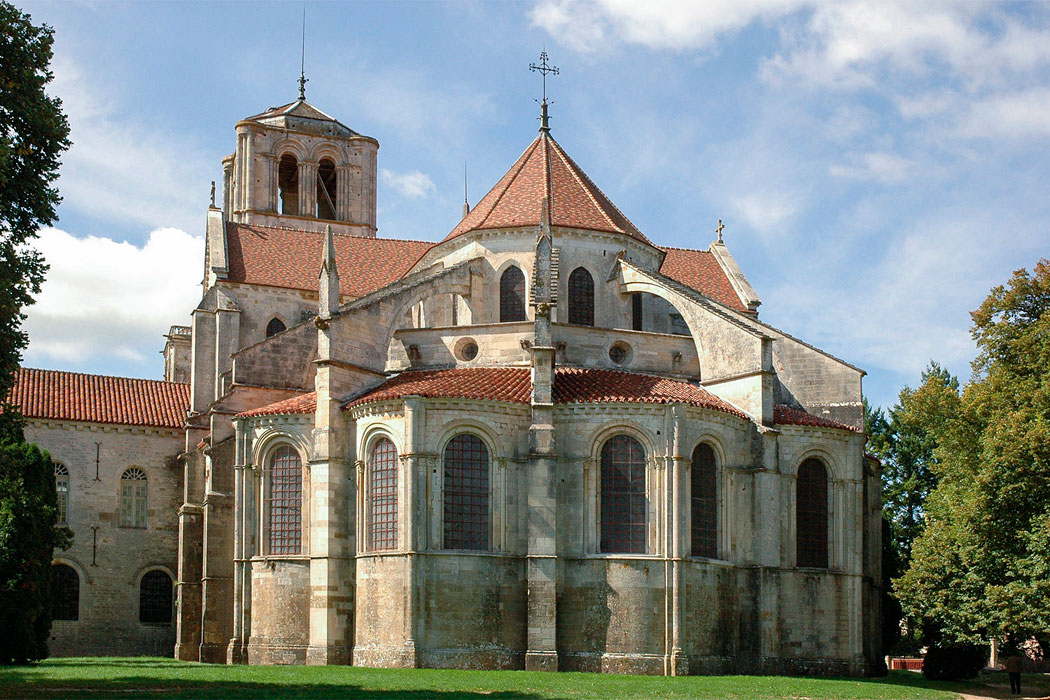
In the mid-11th century, under Abbot Boniface (1052–1075), the abbey came within Cluny’s sphere of influence (Saône-et-Loire), despite opposition from part of the community. It also became an important stopping point on the Way of Saint James. Its prosperity made it possible to build a new church to replace the earlier one. The works, initiated by Abbot Artaud, who held office from 1096 to 1106, culminated in the consecration of the building in 1104. Following a fire, the church was rebuilt between 1120 and 1140. Pope Innocent II consecrated the porch in 1132. A second fire destroyed the eastern end in 1165, and it was rebuilt towards the end of that century.
In 1279, the ecclesiastical authorities withdrew their recognition of the relics of Mary Magdalene preserved at Vézelay and acknowledged those venerated at Sainte-Baume as authentic. These relics were transferred to Saint-Maximin (Var), which thereafter became the principal centre of devotion to the saint. This led to a decline in pilgrimages and the gradual decline of Vézelay. In 1537, the abbey was secularised and became a collegiate church, bringing monastic life to an end. In 1569, during the Wars of Religion, the site was attacked and plundered. During the French Revolution, the buildings and works of art suffered further damage, and the church became a parish church.
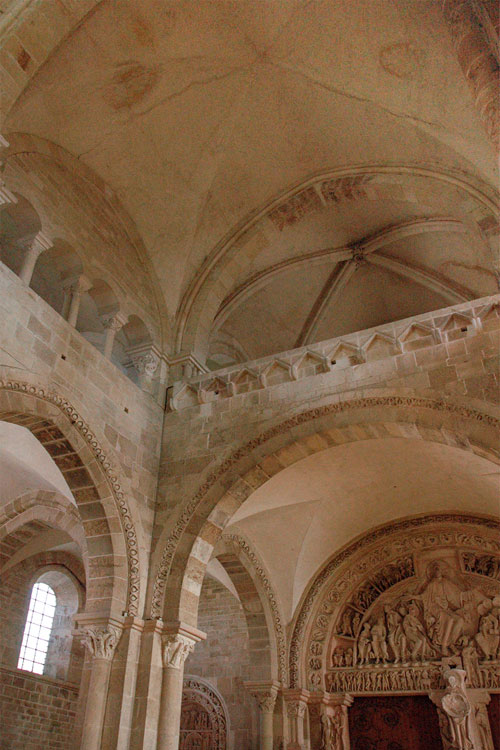
Narthex
In the 19th century, Viollet-le-Duc undertook restoration work on the building. In 1840, it was listed as a historic monument, helping to ensure its preservation. Since 1920, it has held the title of basilica. Its artistic importance has made it a major tourist destination. The church is a remarkable Romanesque building, dating predominantly from the 12th century, although some parts have been reconstructed. The western façade results from 13th-century alterations and 19th-century restoration work, while the portal is Neo-Romanesque. It leads into an almost square porch, whose vaults are supported by four columns.
The porch contains three richly decorated portals leading into the church. The central portal has a tympanum depicting Christ surrounded by various figures, while Saint John the Baptist is represented on the trumeau. It is flanked by two smaller portals decorated with narrative scenes. The church has three aisles divided into ten bays. The piers supporting the vaults have attached columns and capitals.
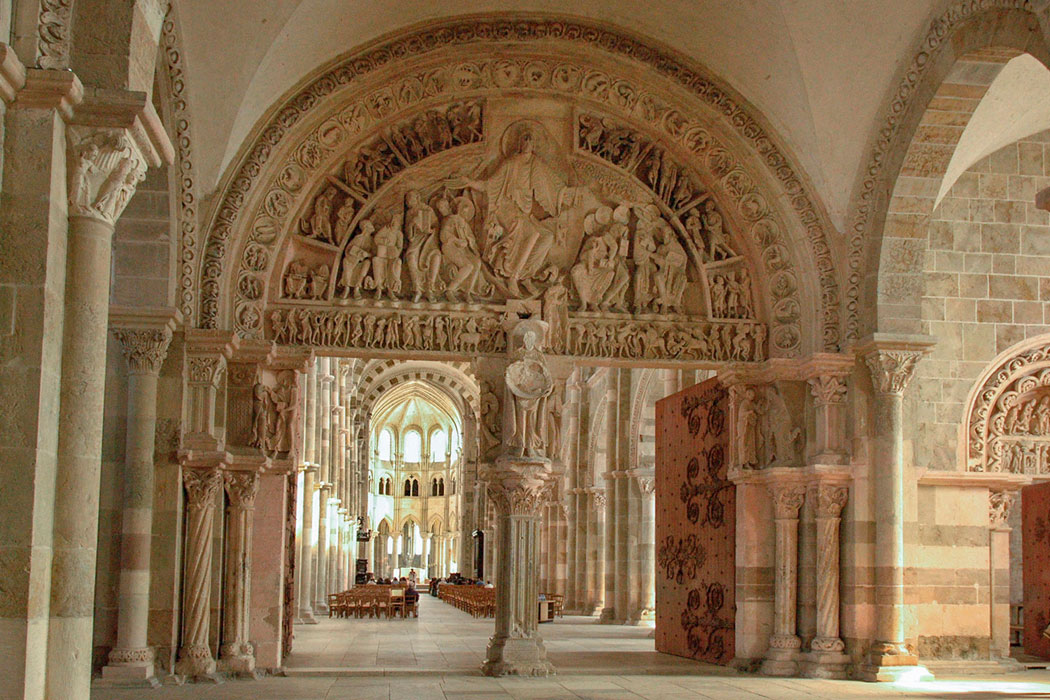
Narthex. Central portal
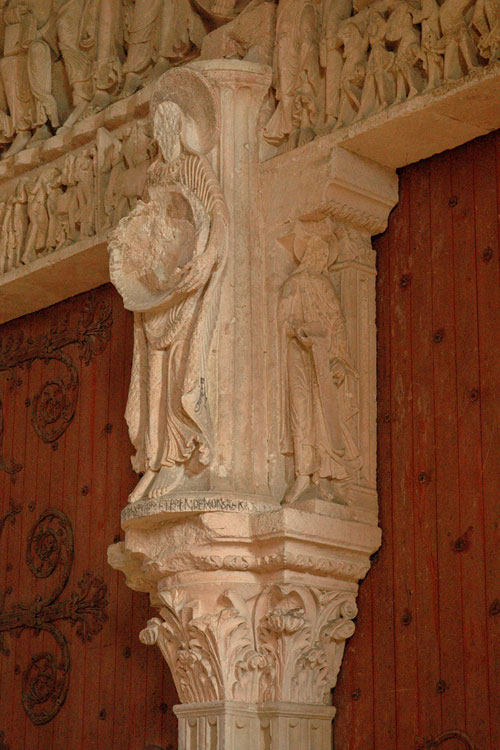
Narthex. Central portal
Saint John the Baptist
The transept does not project beyond the width of the aisles. At the eastern end, the church terminates in a late-12th-century chevet, with the chancel surrounded by an ambulatory and nine radiating chapels. A crypt lies beneath the chevet. To the south of the church stands the medieval chapter house. At Saint-Père, some structures belonging to the original nunnery also survive, built over Late Antique remains.
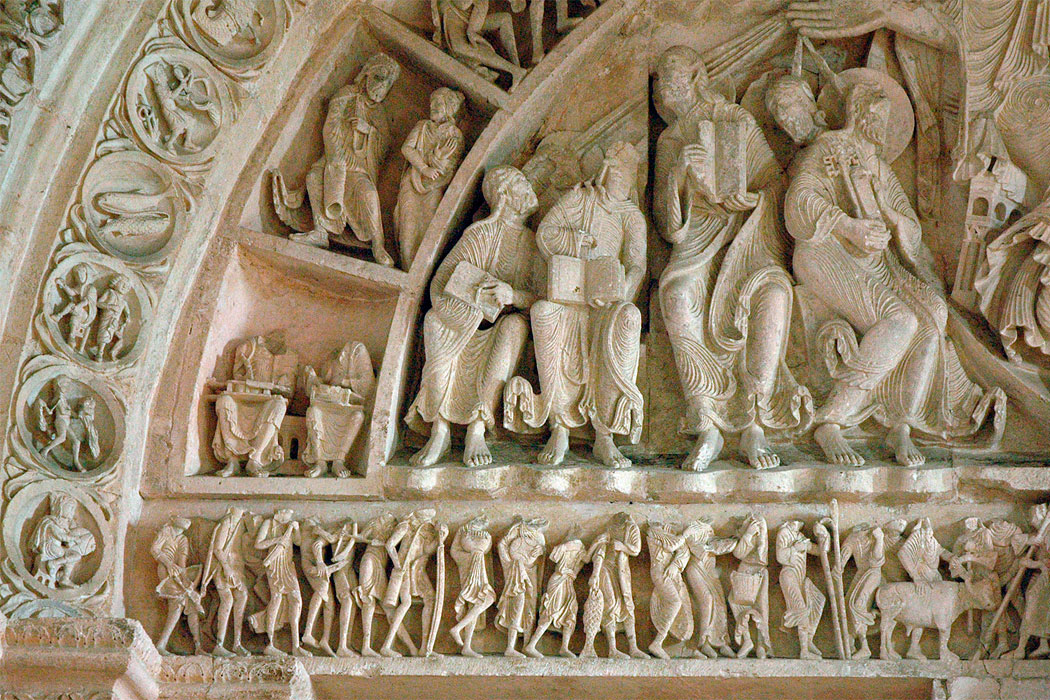
Narthex. Tympanum of the central portal
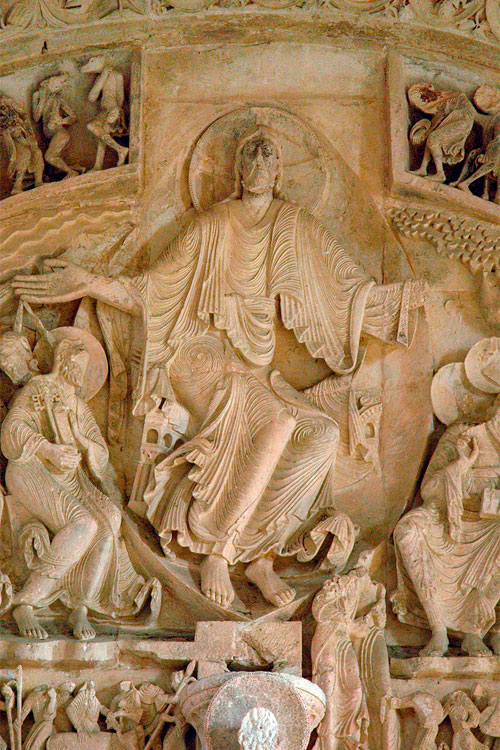
Narthex. Tympanum of the central portal
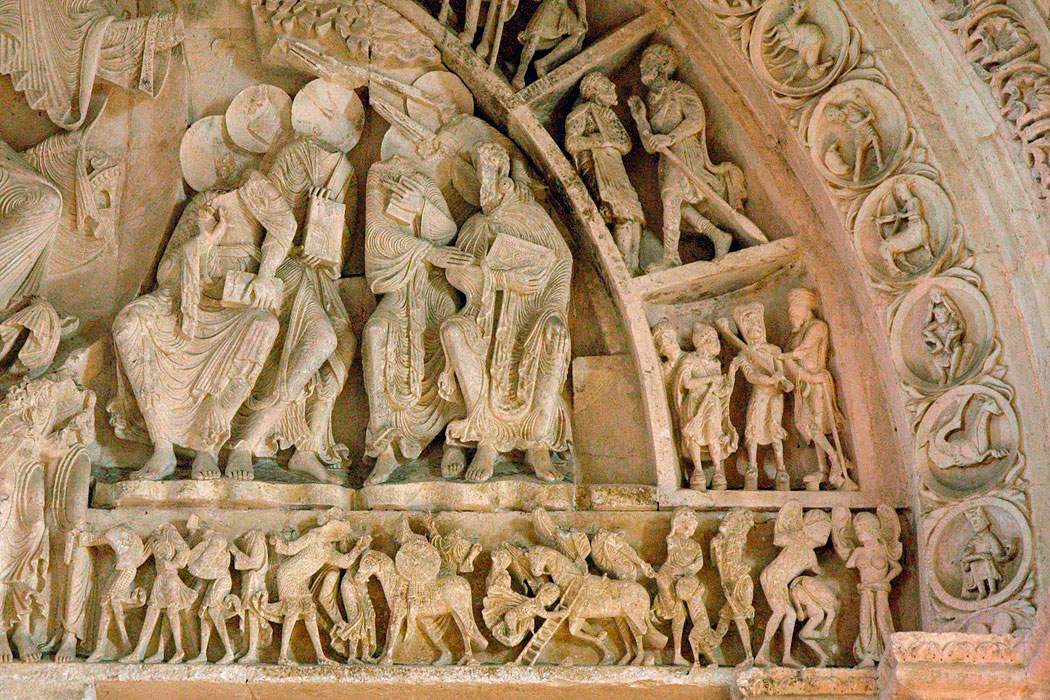
Narthex. Tympanum of the central portal
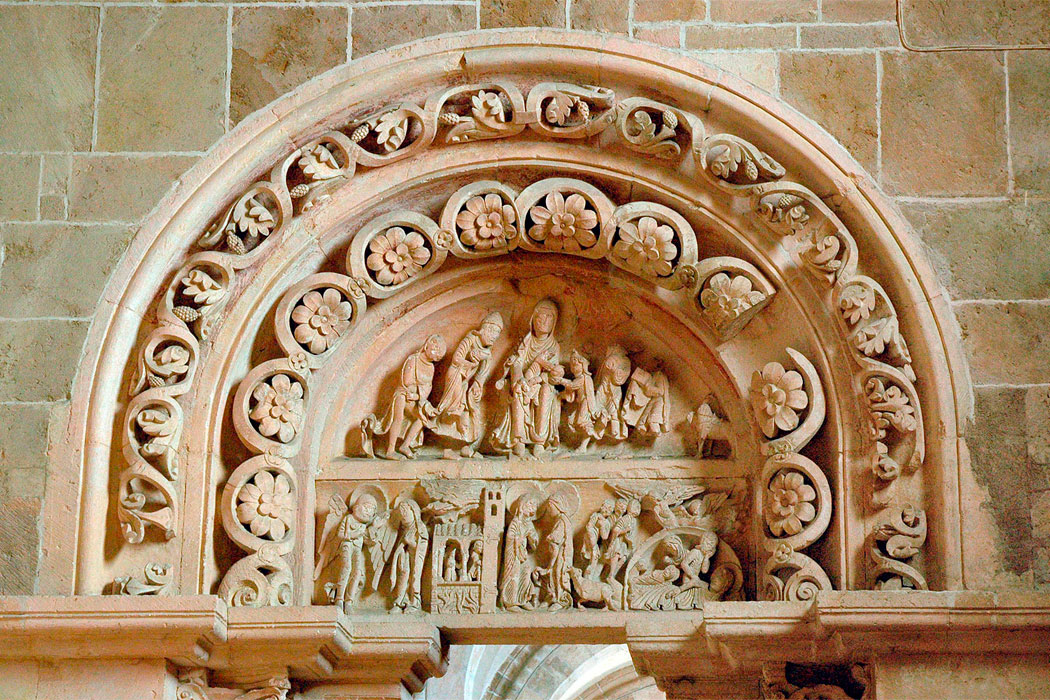
Narthex. Side portal
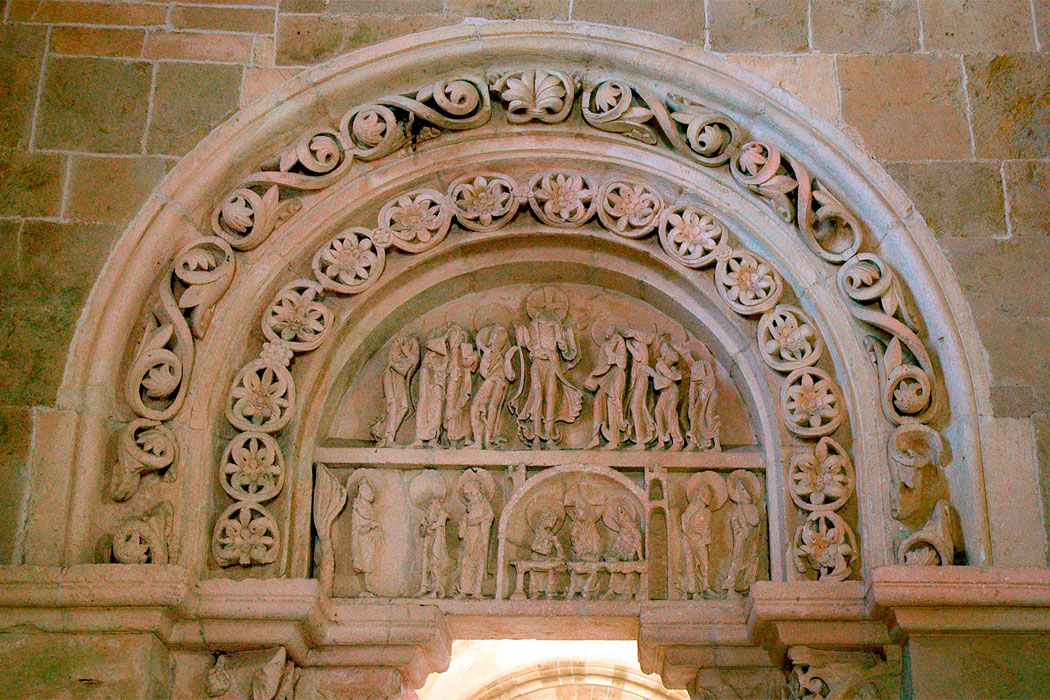
Narthex. Side portal
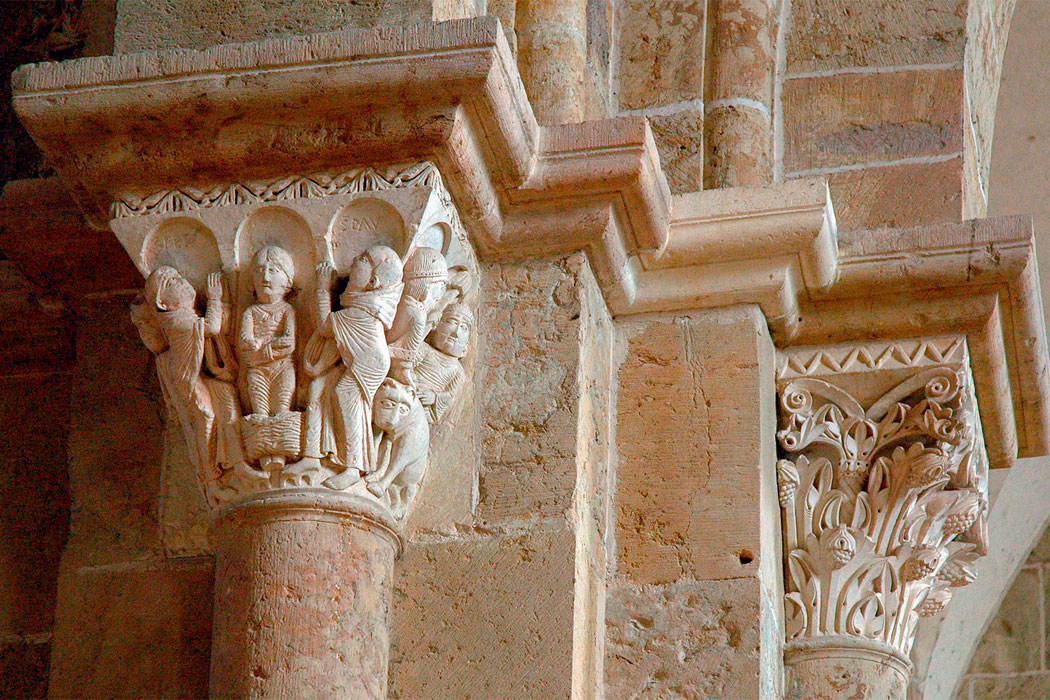
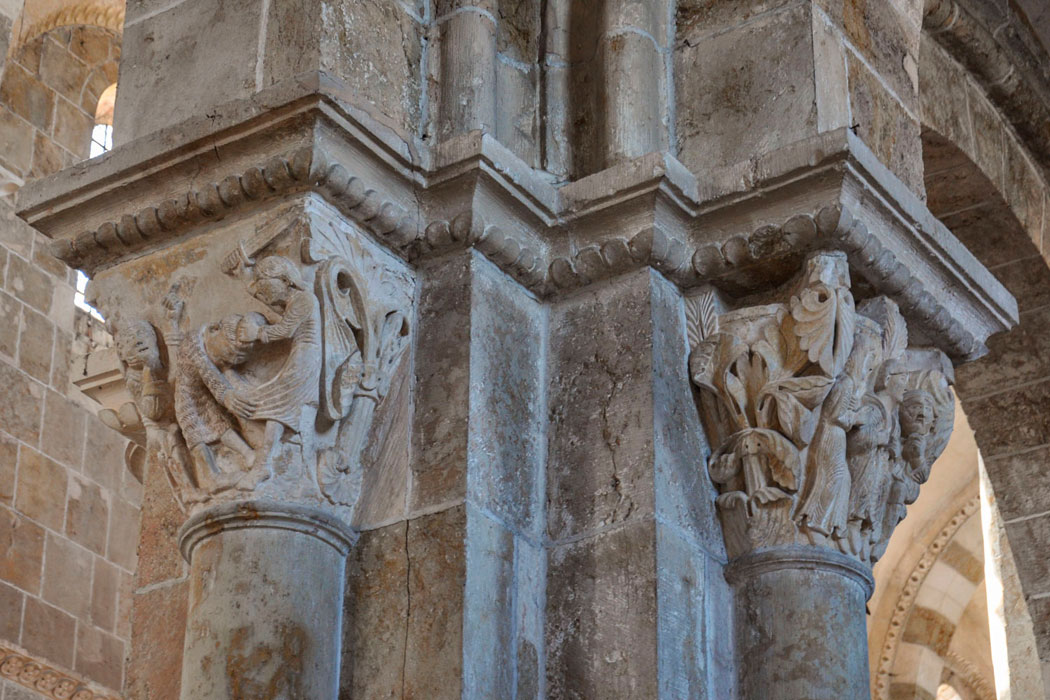
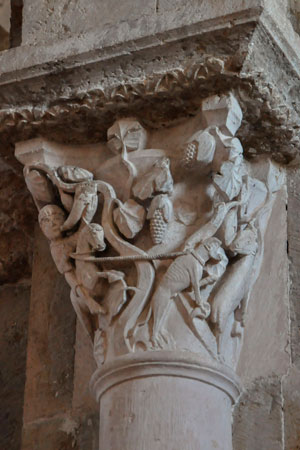
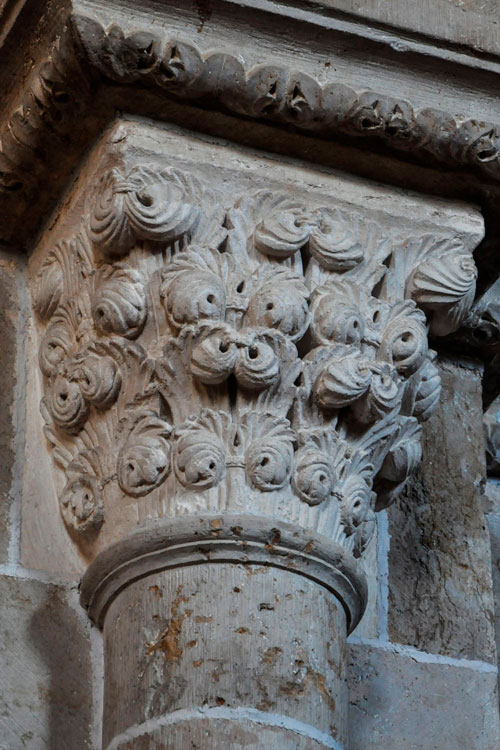
Narthex capitals
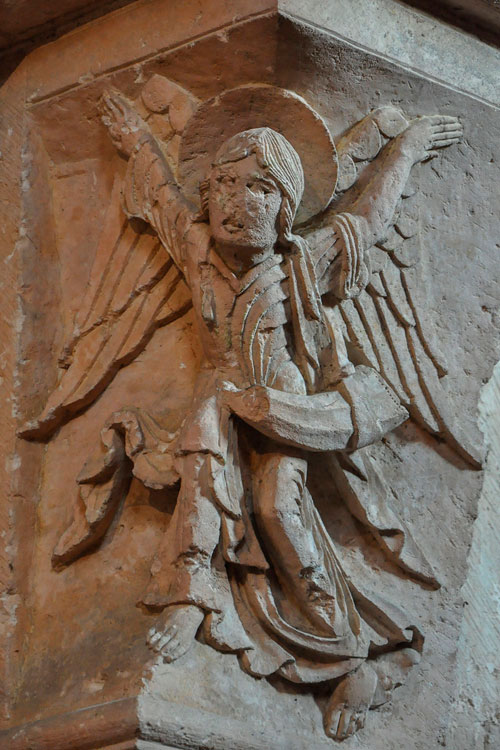
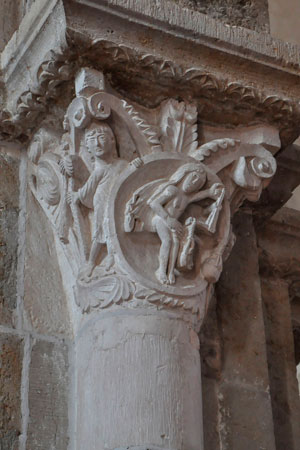
Narthex capital
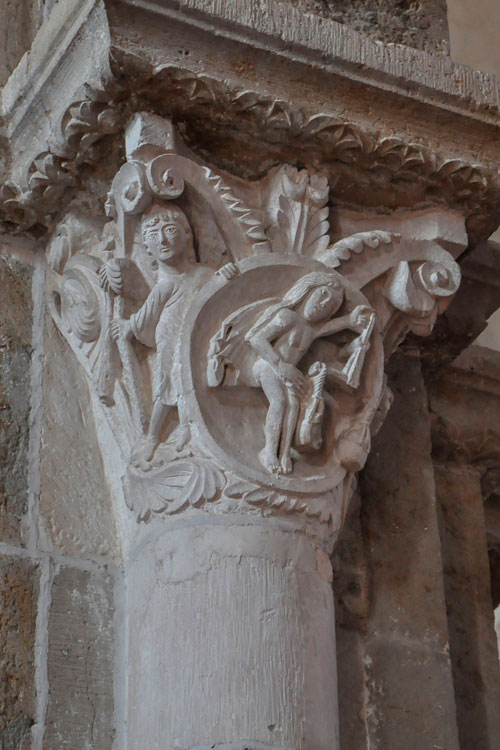
Angel
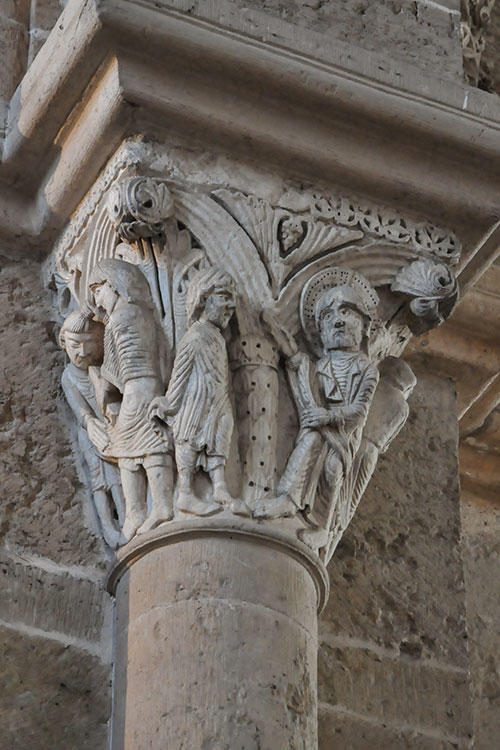
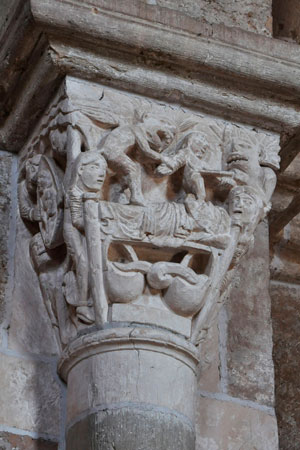
Narthex capital
Beheading of John the Baptist
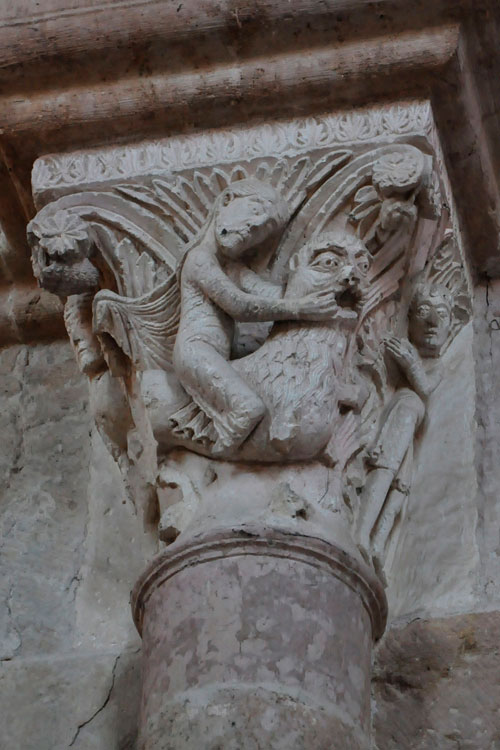
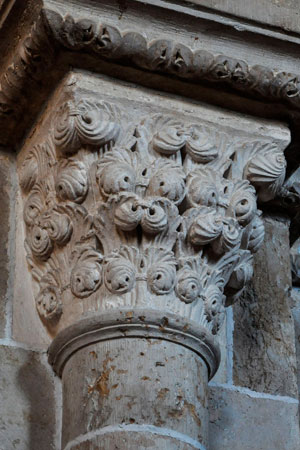
Narthex capital
Samson fighting the lion
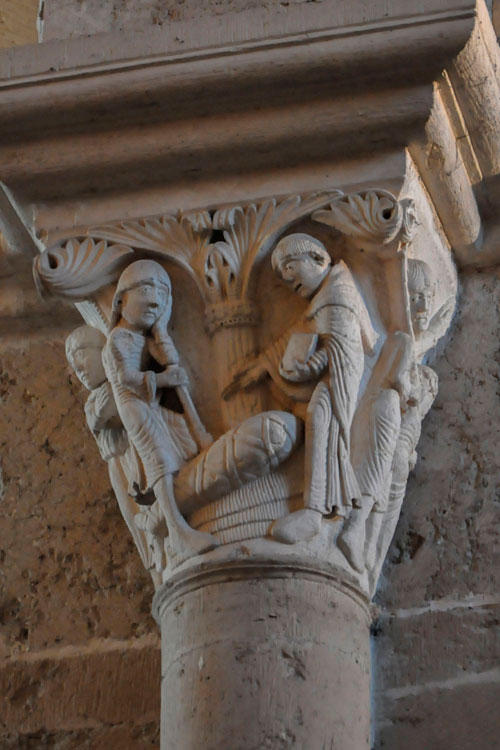
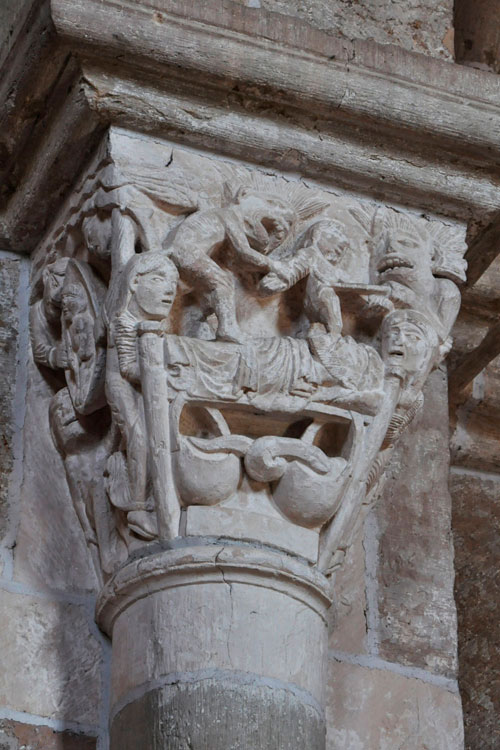
Narthex capital
Miracle of Saint Benedict
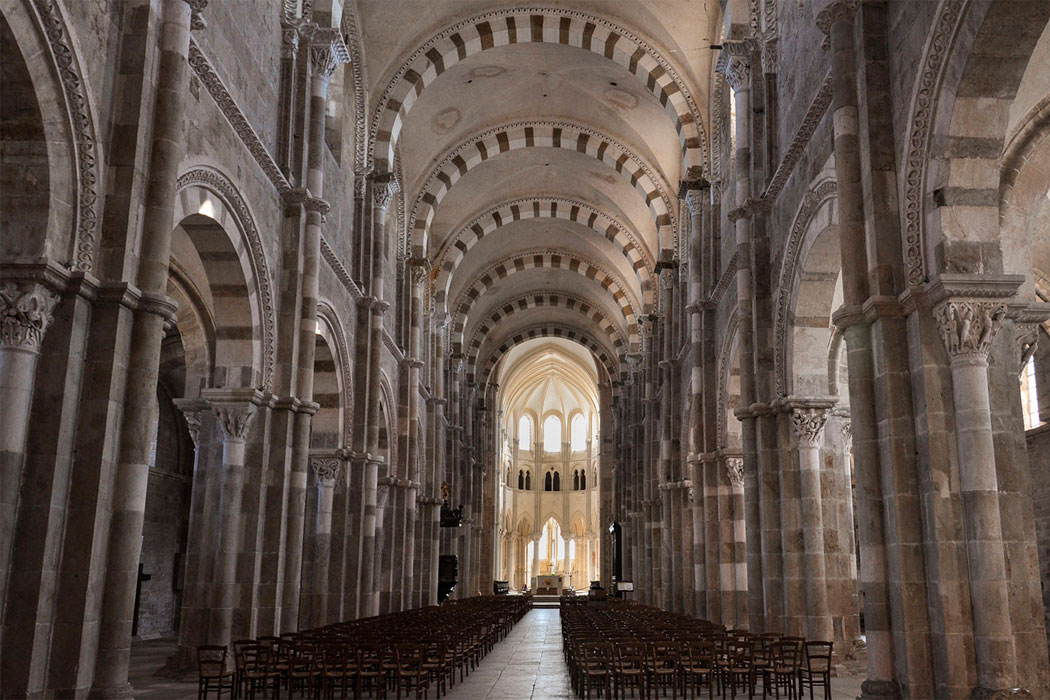
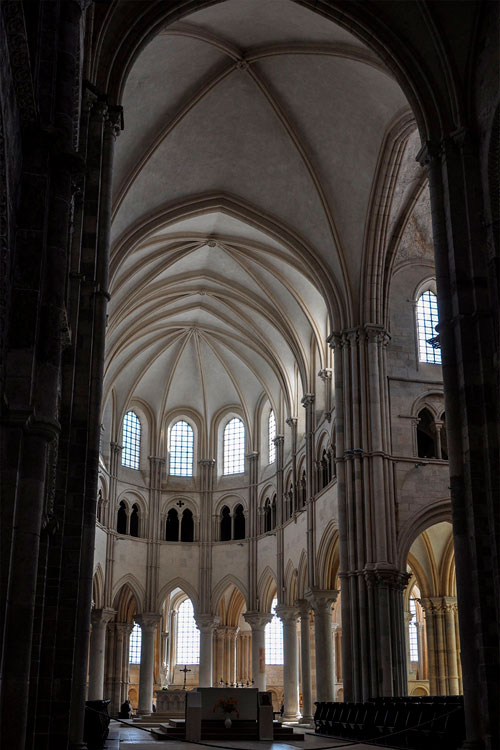
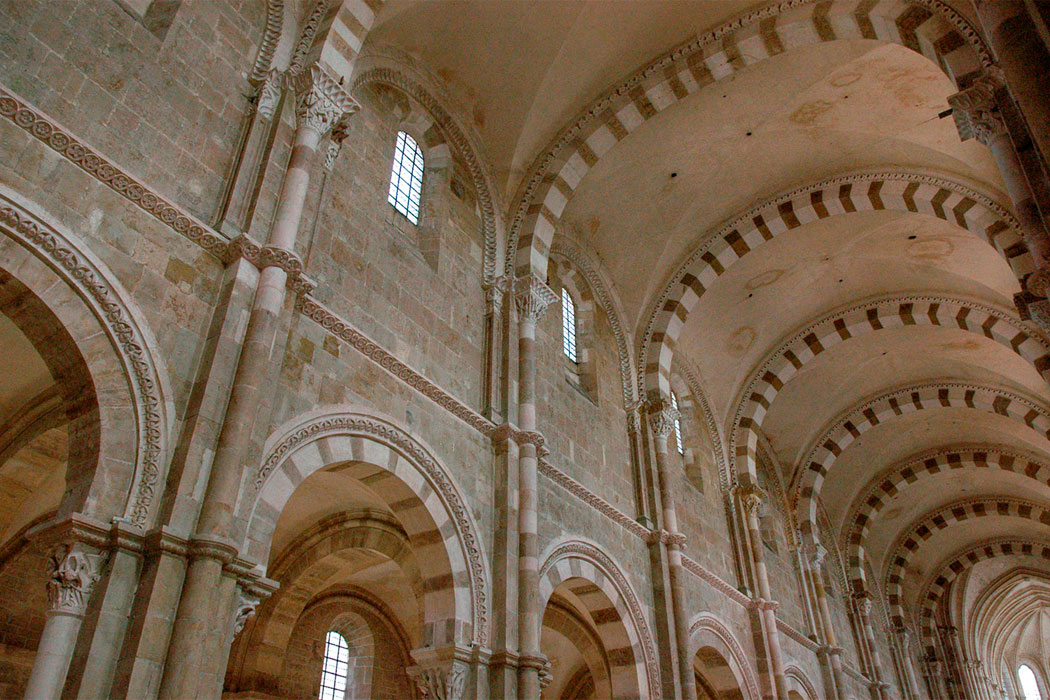
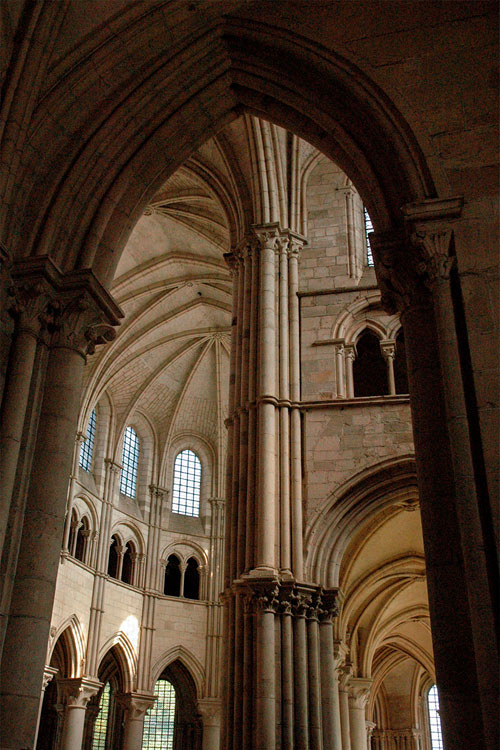
Chancel and ambulatory
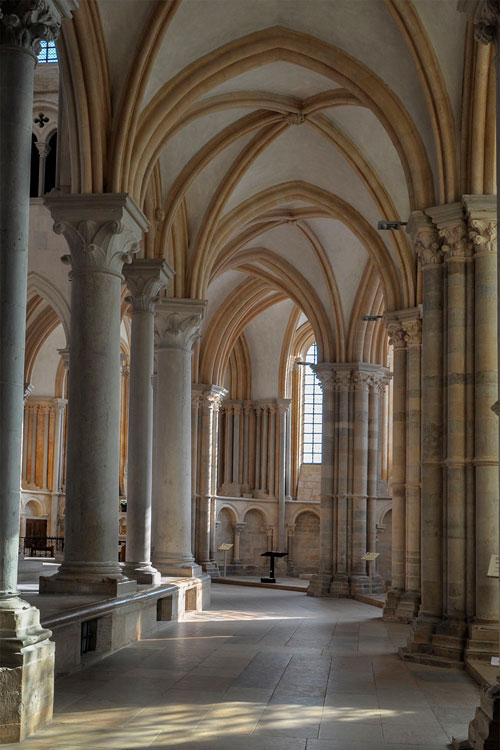
Ambulatory
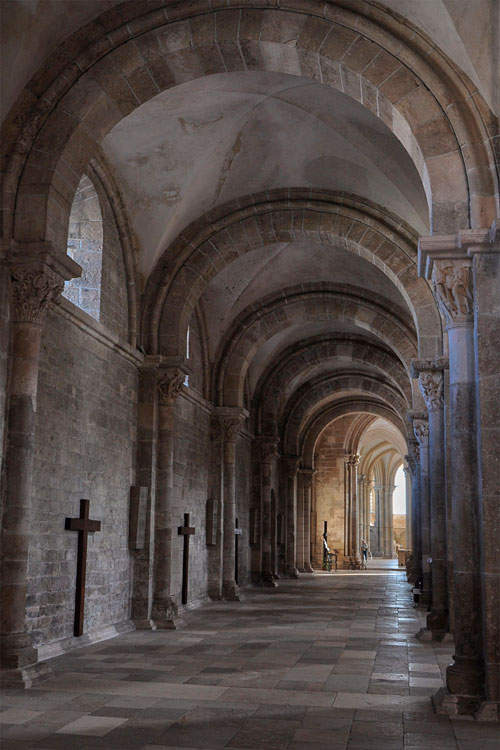
Side aisle
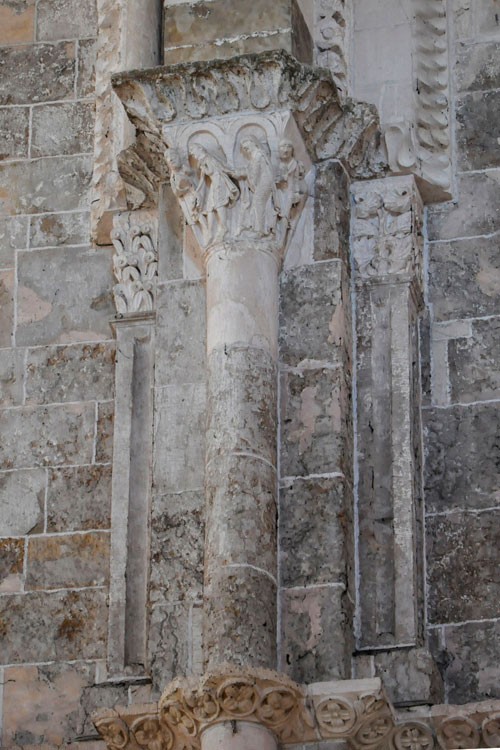
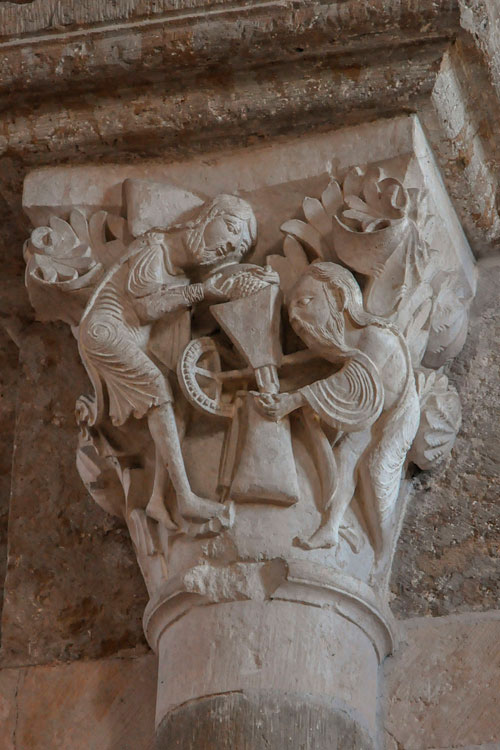
Capital of the nave
Mystic Mill
Moses and Saint Paul
Allegory of the New Covenant
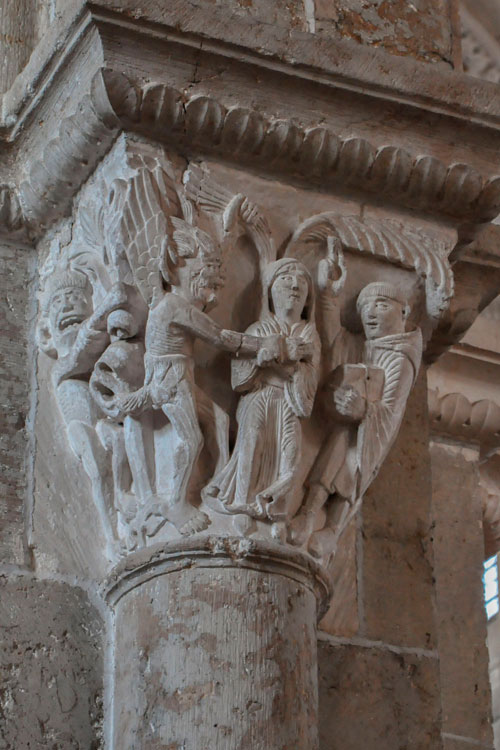
Capital of the nave
Miracle of Saint Benedict
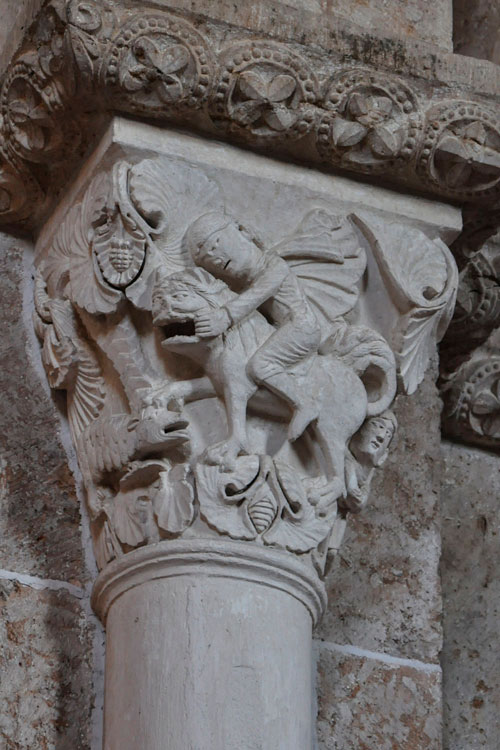
Capital of the nave
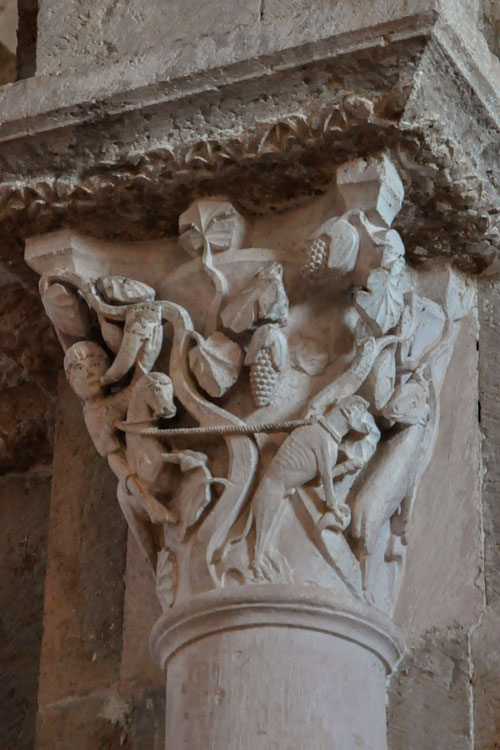
Samson fighting the lion lleó
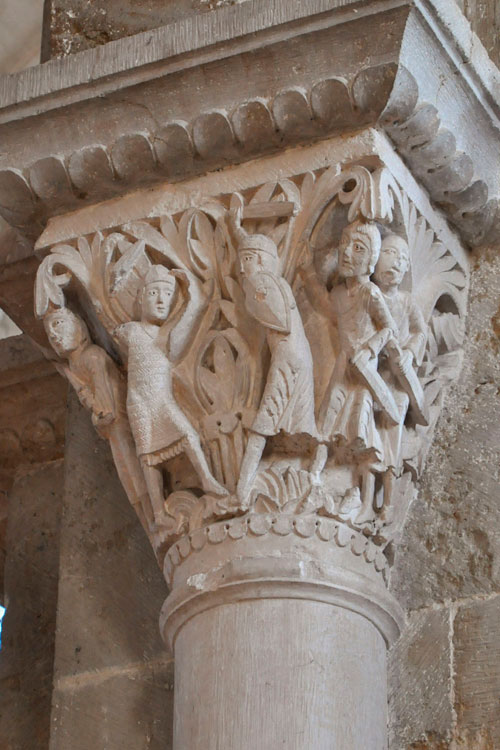
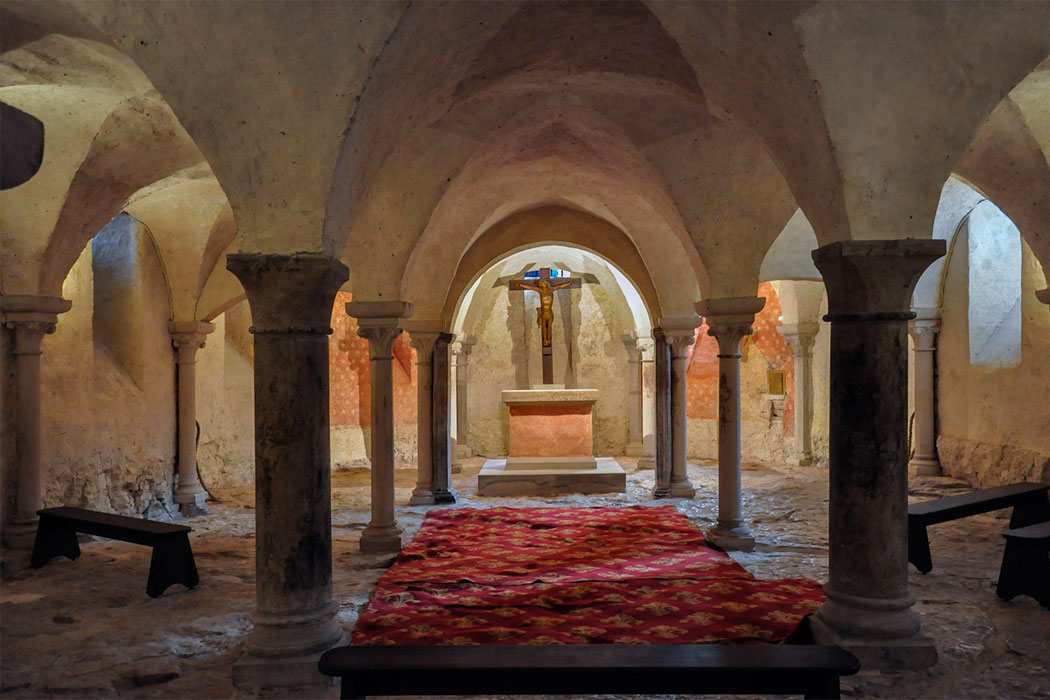
Crypt
Crypt
Reliquary of Mary Magdalene
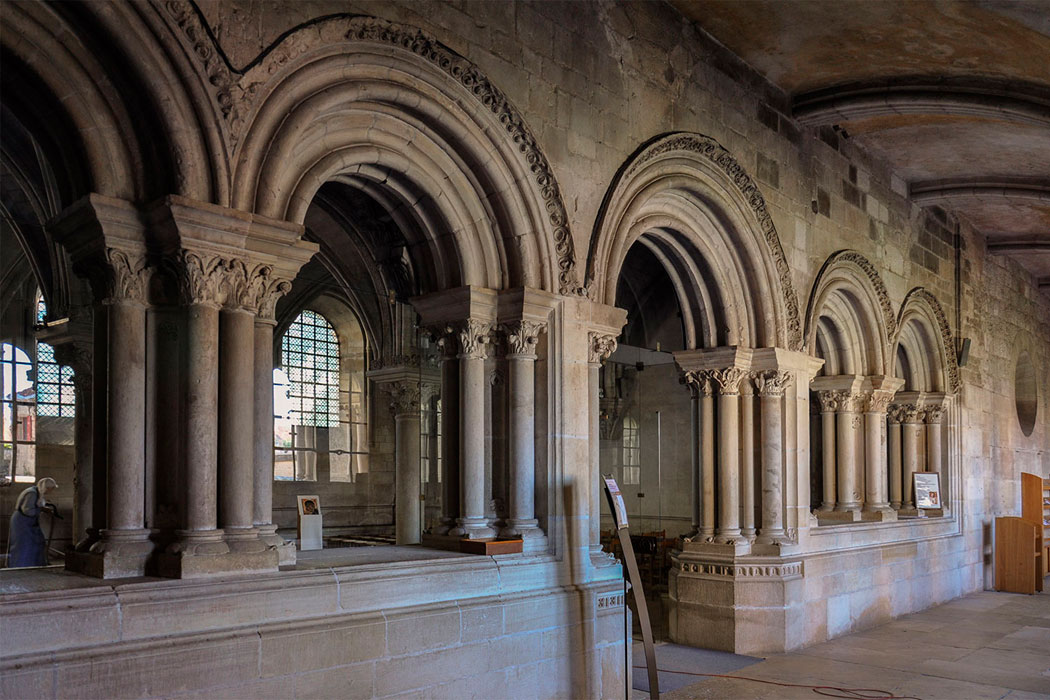
Chapter house
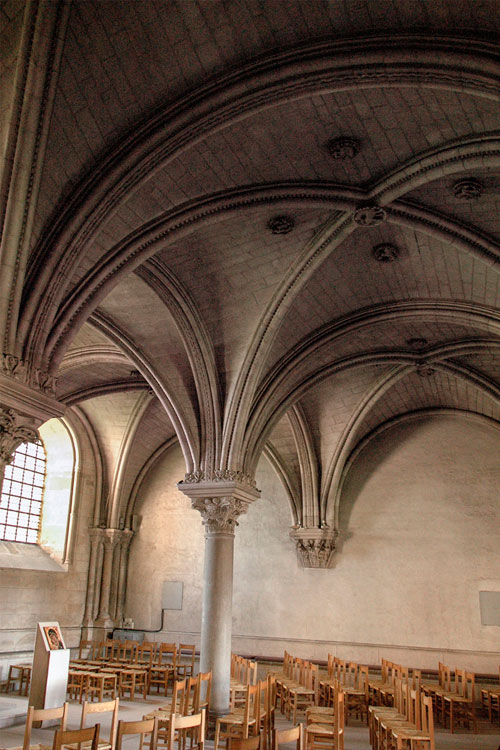
Chapter house
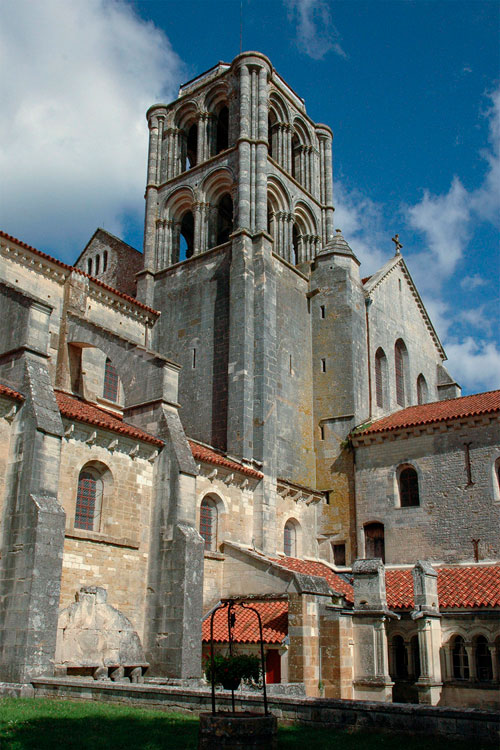
Transept tower
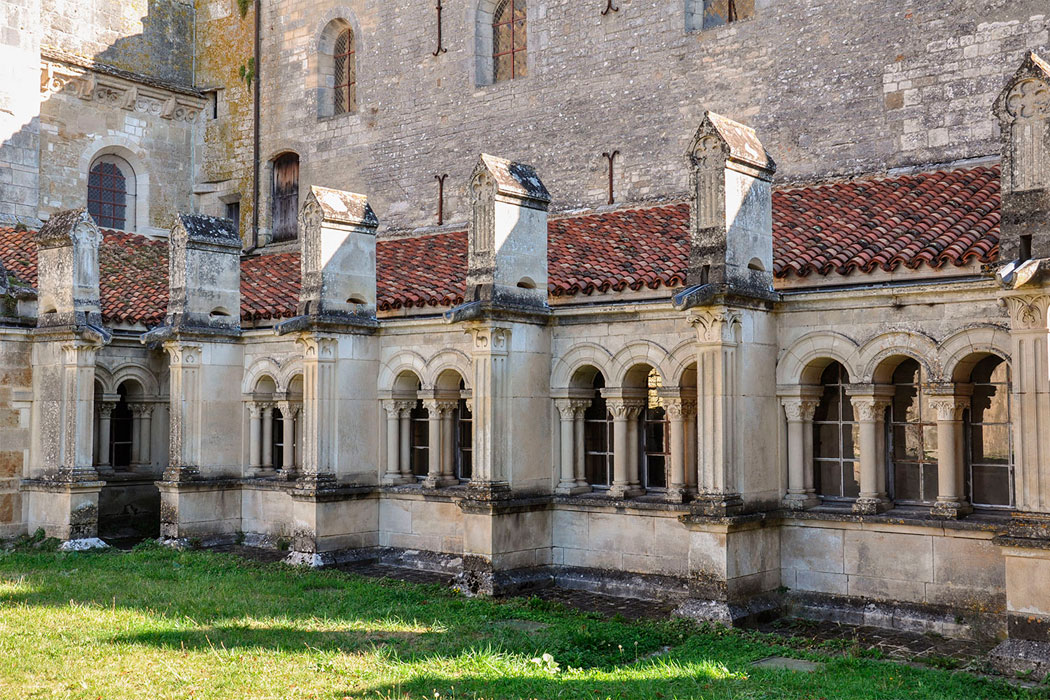
Cloister
- CHÉREST, Aimé (1859). Gérard de Roussillon, dans l'histoire, les romans et les légendes. Congrès scientifique de France, 25 ss. París: Derache
- CHÉREST, Aimé (1863-68). Vézelay: étude historique, vol. 1-3. Auxerre: G. Perriquet
- COTTINEAU, Laurent-Henri (1939). Répertoire topo-bibliographique des abbayes et prieurés. Vol. 2. Mâcon: Protat
- MARTIN, Nicolas Léonard (1832). Précis historique et anecdotes diverses sur la ville et l'ancienne abbaye de Vézelay. Auxerre: Gallot-Fournier
- NURIDSANY, Michel; i altres (2001). Vézelay, la lumière de l’élan. París: Ed. du Huitième Jour
- OURSEL, Raymond (1974). Bourgogne romane. La nuit des temps, 1. Zodiaque
- ROUX-PERINO, Julie (2008). Cluny. Vic-en-Bigorre: MSM
- SAINT-MAUR, Congregació de (1725). Gallia Christiana in provincias ecclesiasticas distributa. Vol. 4. París: Typographia Regia
- SALET, Francis (1936). La Madeleine de Vézelay et ses dates de construction. Bulletin Monumental, vol. 95/1
- SAPIN, Christian; I altres (2015). Les origines de l’abbaye de Vézelay et les débuts de son organisationclaustrale (Ixe-XIIe xiècle). Archéologie médiévale, núm. 45
- ZINK, Michel (1976). Moulin mystique. À propos d'un chapiteau de Vézelay : figures allégoriques dans la prédication et dans l'iconographie romanes. Annales. Economies, sociétés, civilisations, núm. 31/3

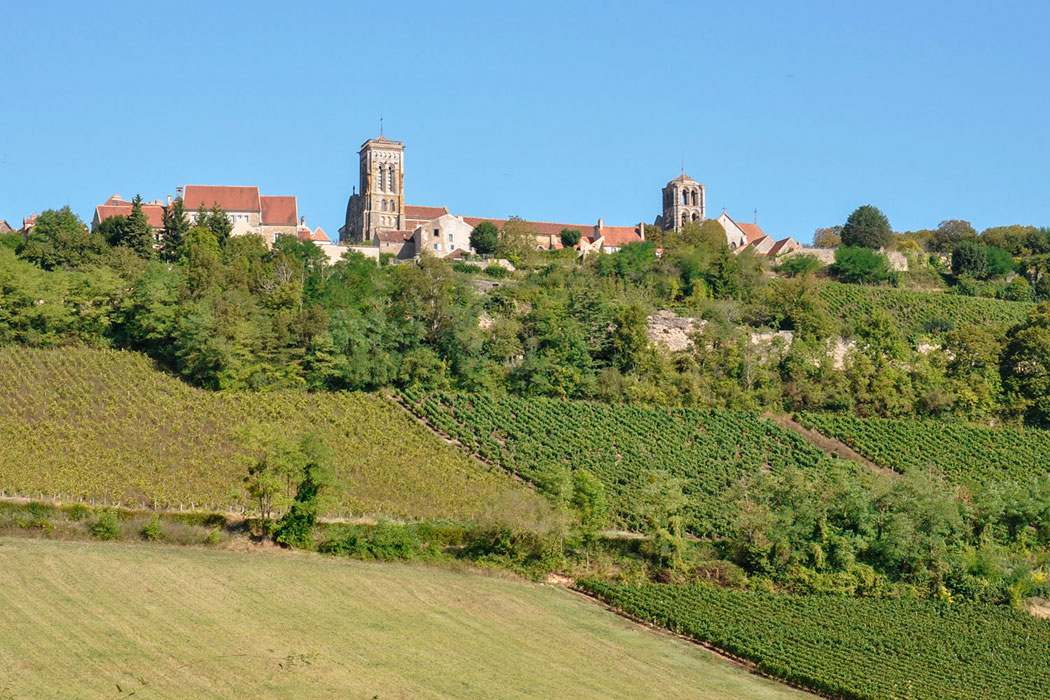
Vézelay is situated between Dijon and Bourges