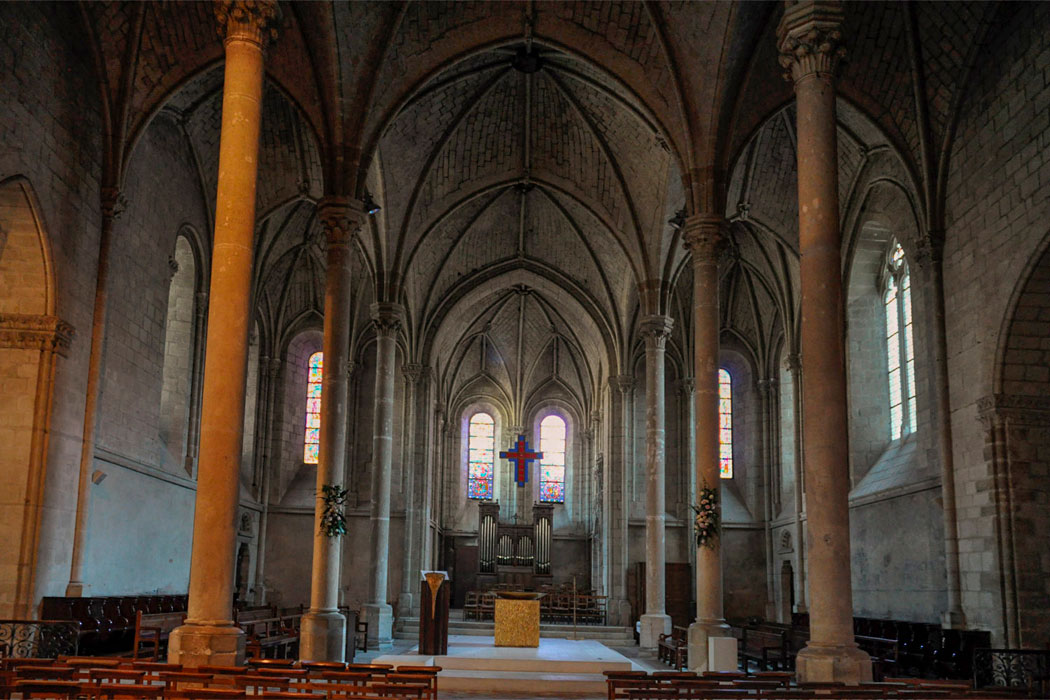
Chancel


The early history of the Abbey of Saint-Serge d’Angers is poorly known. Its foundation is thought to date back to the reign of Clovis II (639–657), who is said to have taken the initiative following a healing. The first document mentioning it is signed by Childebert III (c. 678–711): it dates from 705 and concerns a confirmation of properties, some of which had reportedly been granted by Clovis II. At that time, the site was dedicated to Saint-Serge and Saint-Médard. At the end of the 9th century, King Alain I of Brittany († 907) granted the monastery to Bishop Rainon of Angers, who established a community of canons there.
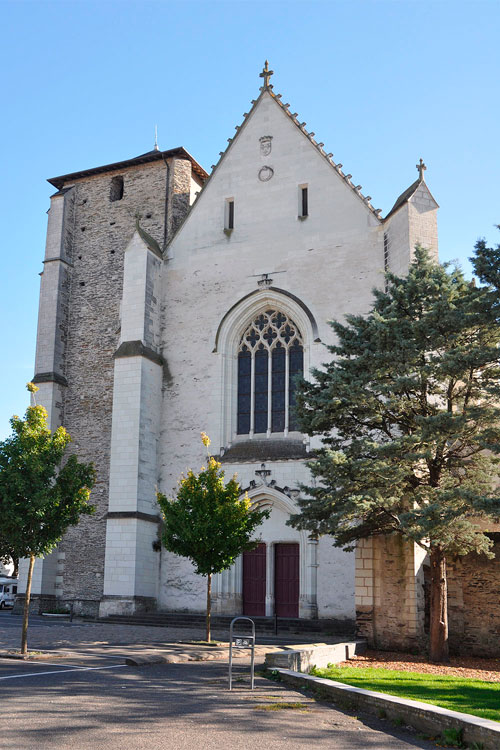
Nearly a century later, Bishop Renaud II (973–1005) restored the abbey and introduced Benedictine monks. At that time, the site was known as Saint-Serge and Saint-Bacchus. The reconstruction was carried out with the support of the counts of Anjou, and the new church —of which some elements still survive in the transept— was consecrated in 1059. The church housed the relics of Saint Brioc of Brittany (5th–6th centuries), a monk and bishop, which arrived in Angers in 851 due to the instability caused by the Norman invasions, prompting their transfer from Brittany.
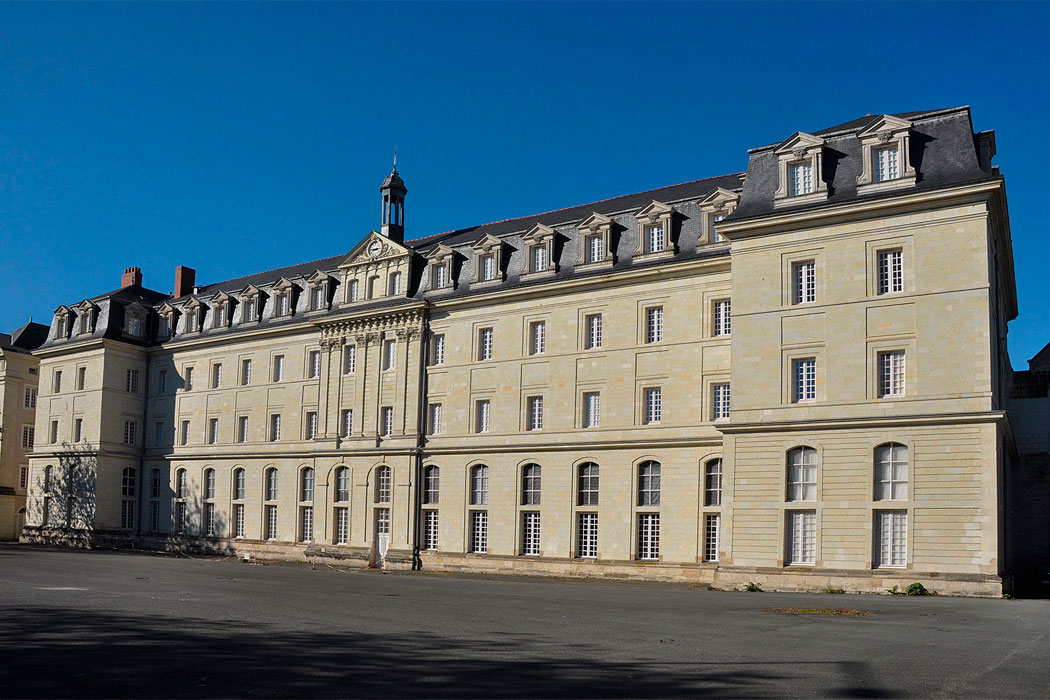
During the 13th century, the chancel and the chevet of the church were rebuilt, and in the 15th century the naves, which had been severely damaged during the Hundred Years’ War; the monastery, located outside the city walls, had remained unprotected. It later suffered further damage during the Wars of Religion and, from 1553 onwards, the introduction of the commendatory regime. In 1628, the Congregation of Saint-Maur took over the monastery and, towards the end of that century, began its reconstruction, particularly of the conventual buildings. The Benedictine community remained here until the Revolution: in 1790, when it was closed, it numbered thirteen monks.
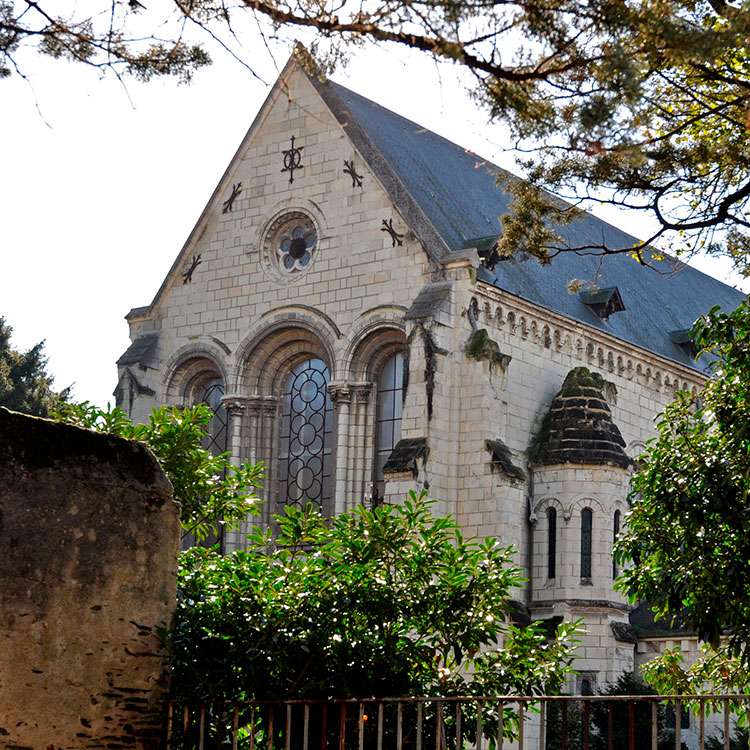
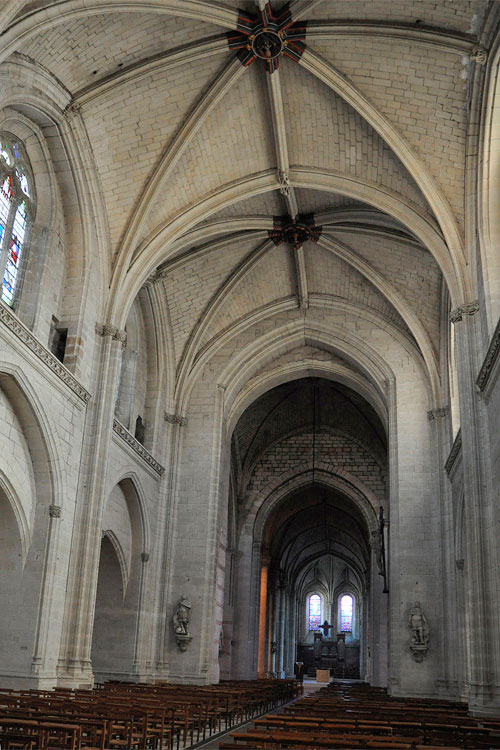
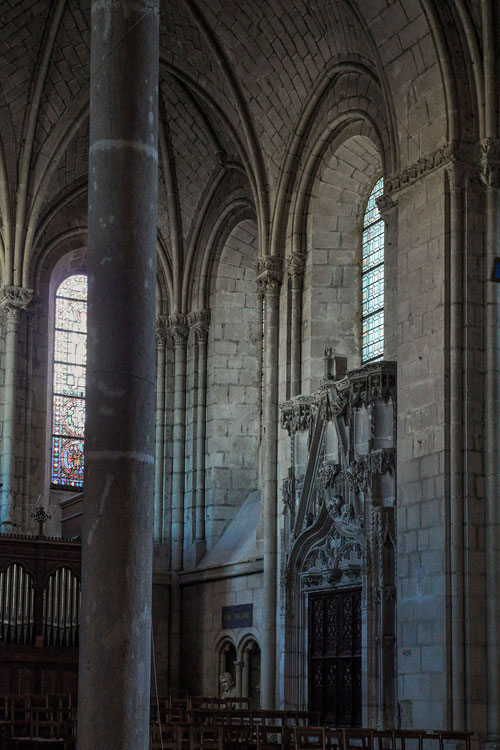
Today, the church serves parish functions. It is a complex building, reflecting the many interventions carried out over time. The 13th-century chancel stands out: a large rectangular space covered with vaults supported by six columns, well lit by large windows. On either side are two lateral chapels: one rectangular and from the same period, and another, older one from the 12th century, with a semicircular apse. This ensemble connects with the transept, which preserves structures from the 11th century. The naves date from the 15th-century reconstruction.
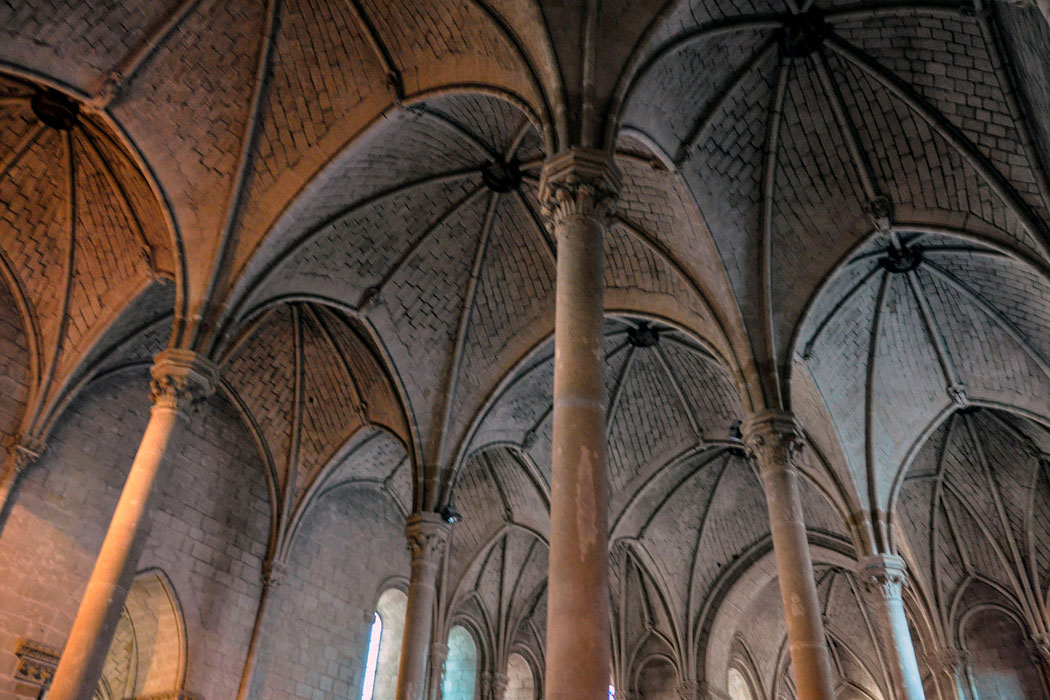
Chancel
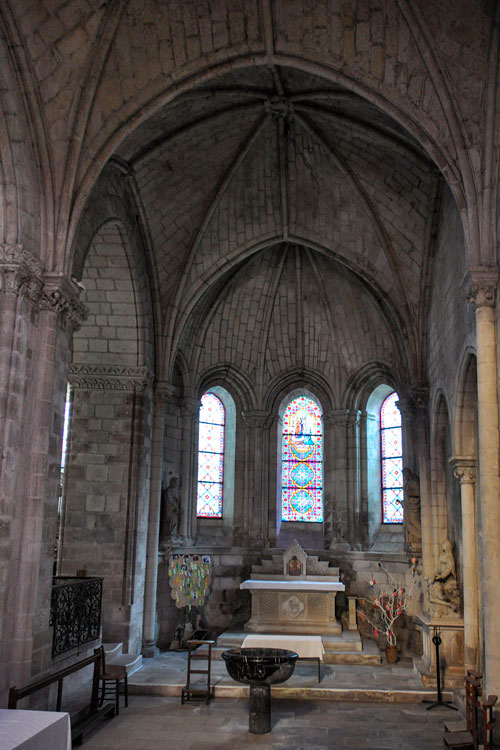
Side apse
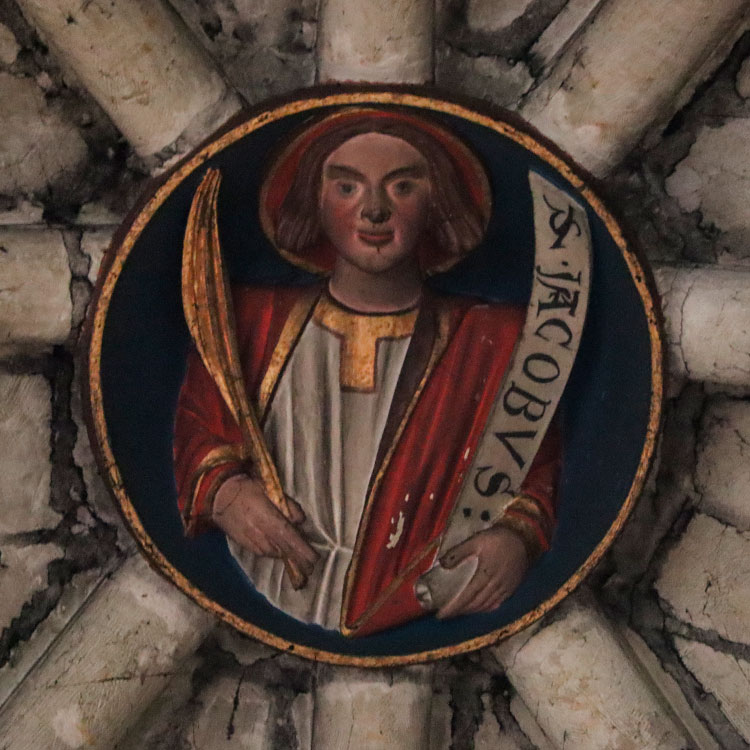
Keystone of the presbytery. Saint James
Photo by GO69, on Wikimedia
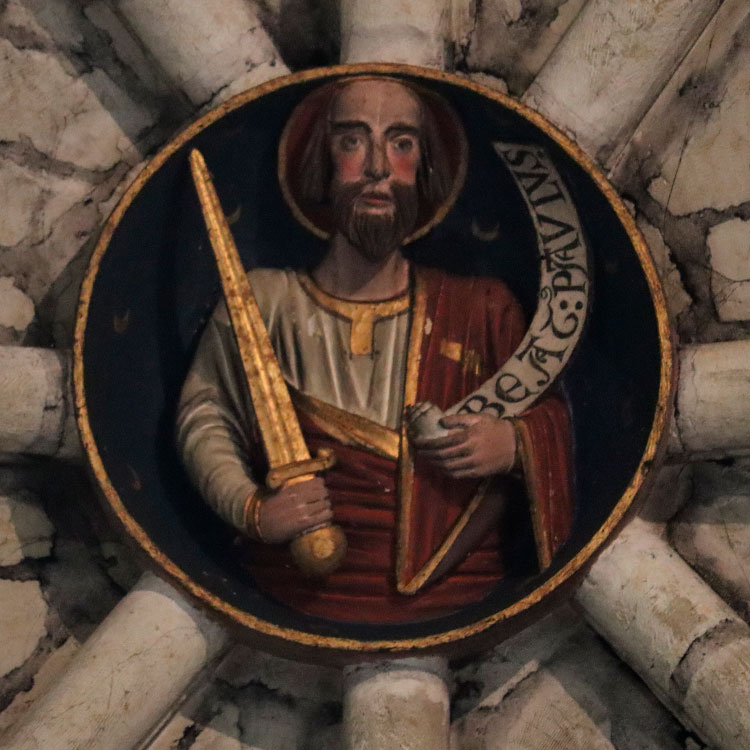
Keystone of the presbytery. Saint Paul
Photo by GO69, on Wikimedia

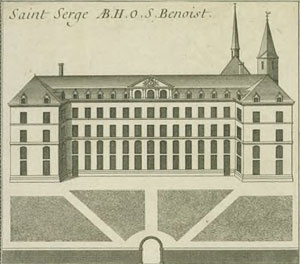
Monasticon Gallicanum
Bibliothèque nationale de France
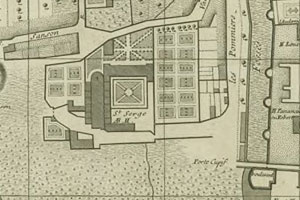
Detail of Nouveau plan de la Ville d'Angers (1736)
Bibliothèque nationale de France
Detail of Nouveau plan de la Ville d'Angers (1736)
Bibliothèque nationale de France

Angers pittoresque (1843)

Angers pittoresque (1843)
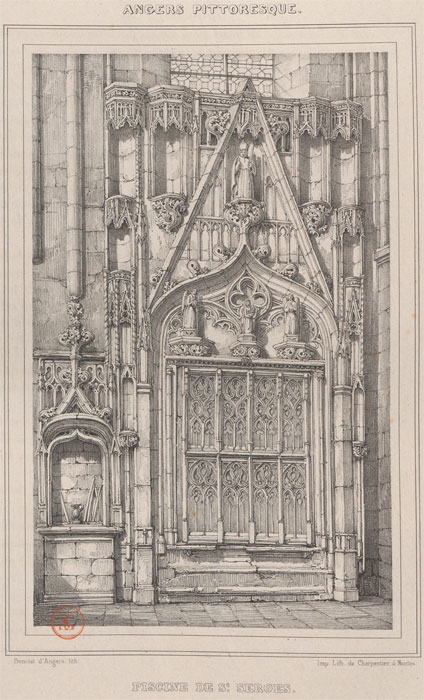
Angers pittoresque (1843)
- BAUDRILLART, Alfred (1924). Dictionnaire d'histoire et de géographie ecclésiastiques. Vol. 3. París: Letouzey et Ané
- BESSE, Jean-Martial (1920). Abbayes et prieurés de l'ancienne France, vol. 8, Tours. París : Picard
- DENAIS, Joseph; i altres (1901). Richesses d'art de la France. Province, monuments religieux. Tome 3. París: Plon
- DESCONEGUT (sd). Abbatiale Saint-Serge. Angers. Lyon: Lescuyer
- DURVILLE, Georges (1903). Le cartulaire de Saint-Serge d'Angers. Nantes: Joubin
- GUÉRIN, Paul (1888). Les Petits Bollandistes. Vies des saints. Vol. 5. París: Bloud et Barral
- MUSSAT, André (1964). Saint-Serge d'Angers. Congrès archéologique de France, 122 ss. Anjou. Société française d'archéologie
- PEIGNÉ-DELACOURT, Achille (1877). Monasticon Gallicanum. Paris: G. Chamerot
- SAINT-MAUR, Congregació de (1856). Gallia Christiana in provincias ecclesiasticas distributa. Vol. 14. París: Typographia Regia
- TARDIF-DESVAUX (1843). Angers pittoresque. Angers: Cosnier et Lachèse

The former Abbey of Saint-Serge is located on the northern side of the historic centre of Angers