Abbey of Toussaint d’Angers
Omnes Sancti / Omnium Sanctorum Andegavensis / Toussaints
(Angers, Maine-et-Loire)
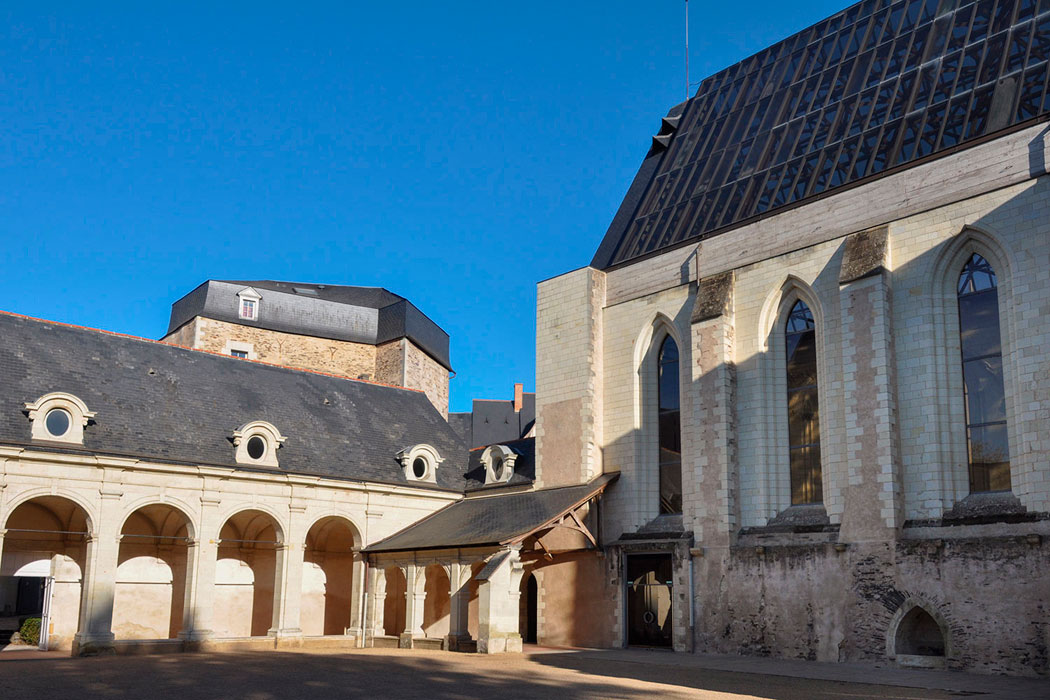


This former abbey originated in a charitable institution founded in the city of Angers before 1047 (probably around 1040) by Giraud, a canon of the cathedral. This establishment was created to assist the needy in case of illness and to provide them with a place of burial after death; it therefore included an oratory and a cemetery. Its administration was entrusted to the cathedral chapter, which was responsible for the functioning of the new institution.
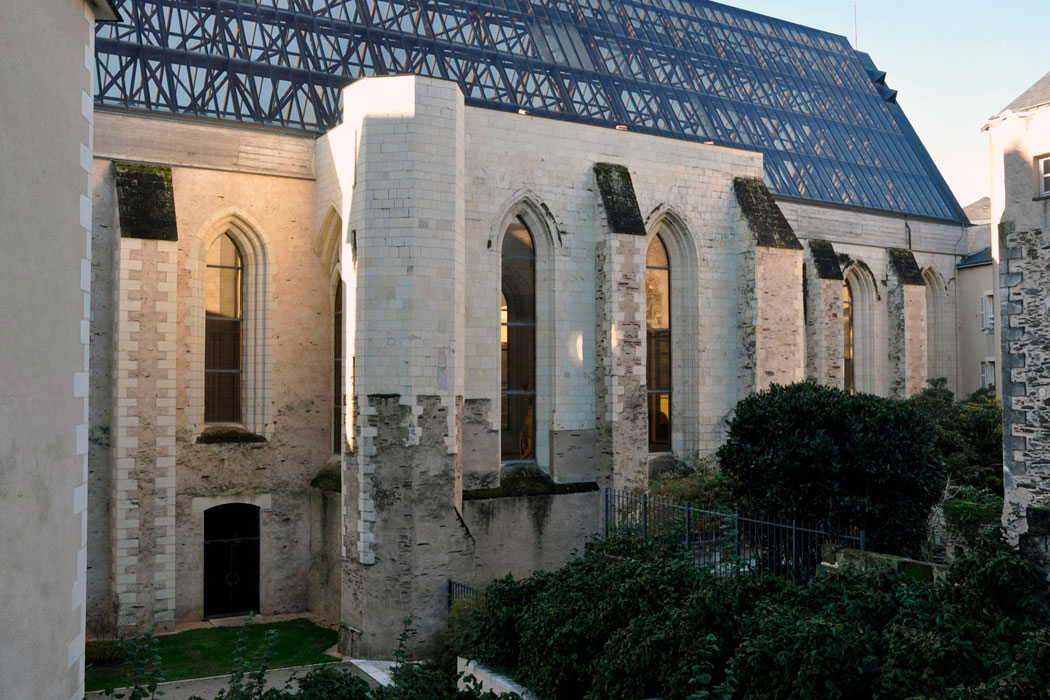
Shortly after its foundation, before 1049, Count Jofré II Martel (1006–1060) granted it to the Benedictine abbey of la Trinité de Vendôme (Loir-et-Cher), which he himself had founded, with episcopal approval and the obligation to maintain its charitable role. The agreement was formalised in 1049, but it was short-lived, either because of the establishment, from Vendôme, of the new priory of Saint-Sauveur de l’Esvière in the same city, or due to the difficulty of reconciling charitable activity with Benedictine customs. Around 1056, the house returned to the cathedral chapter.
At the initiative of Bishop Renaud, around 1102–1103, the first canons regular arrived from Saint-Pierre d’Airvault (Deux-Sèvres), despite opposition from Vendôme, which attempted to recover possession. Once established, the house developed and by 1118 it had become an abbey, whose first abbot was Robert. A period of decline is recorded from the 14th century onwards. In 1624, while it still retained its charitable character, the house was reformed by being incorporated into the Congregation of Sainte-Geneviève, which also undertook its rebuilding.
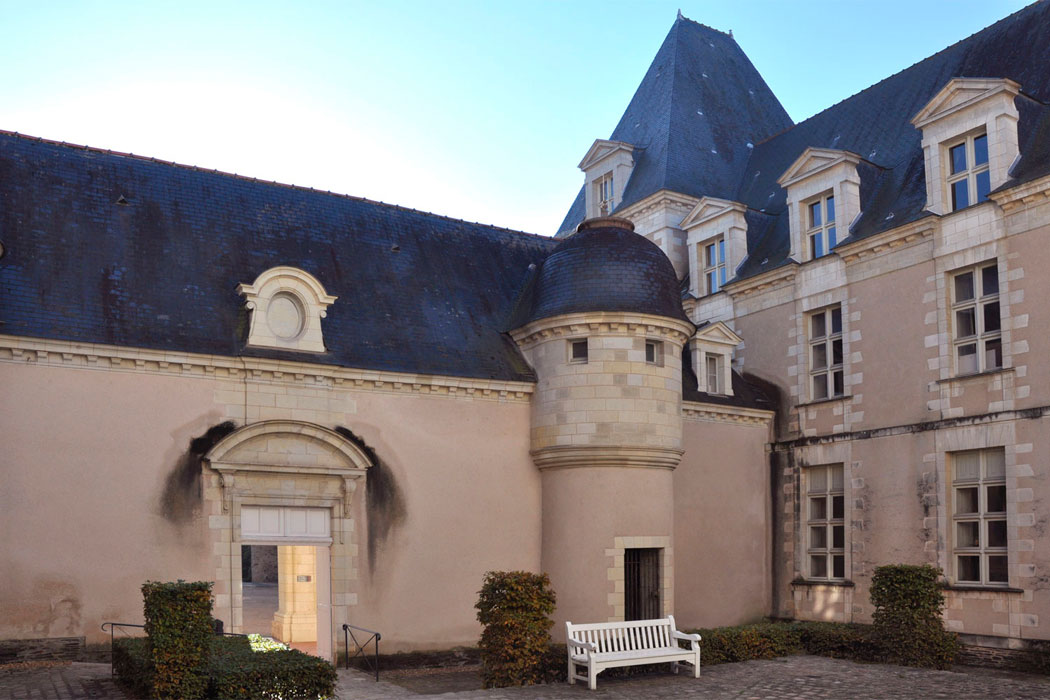
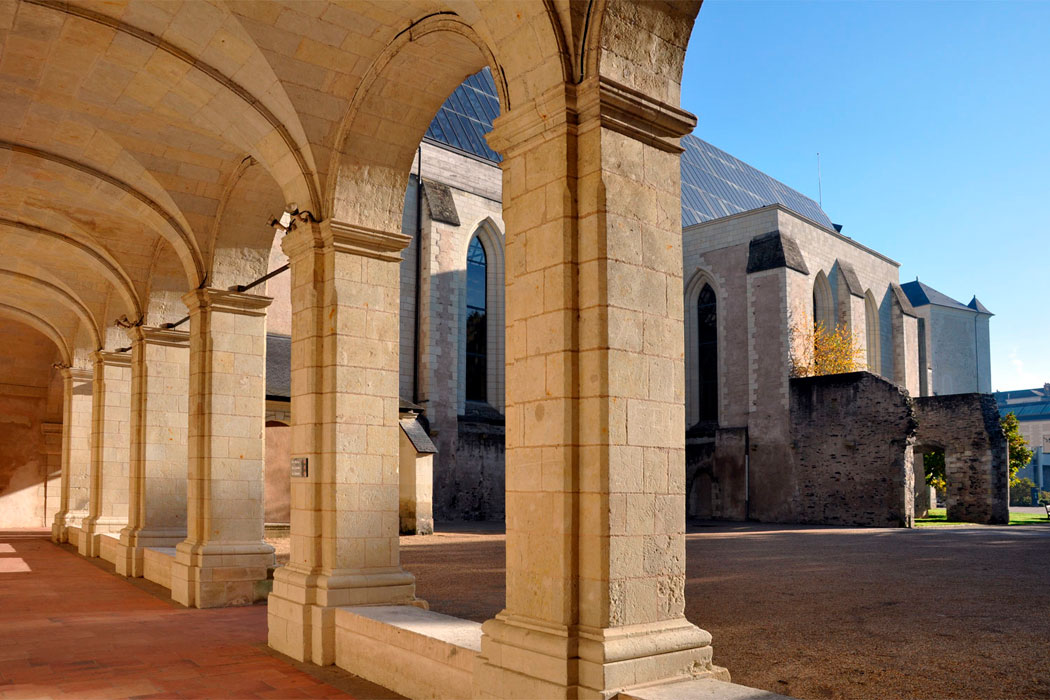
Following the Revolution, in 1791 the site passed into public hands. The church, built in the 13th century and later modified, is partially preserved. After the departure of the religious community, it was used for military purposes. At the beginning of the 19th century, the vaults collapsed and the complex was largely abandoned; although it was already regarded as a historic monument at that time, it was not until the late 20th century that it was archaeologically studied. It was subsequently restored and adapted to house the Galerie David d’Angers, inaugurated in 1984.
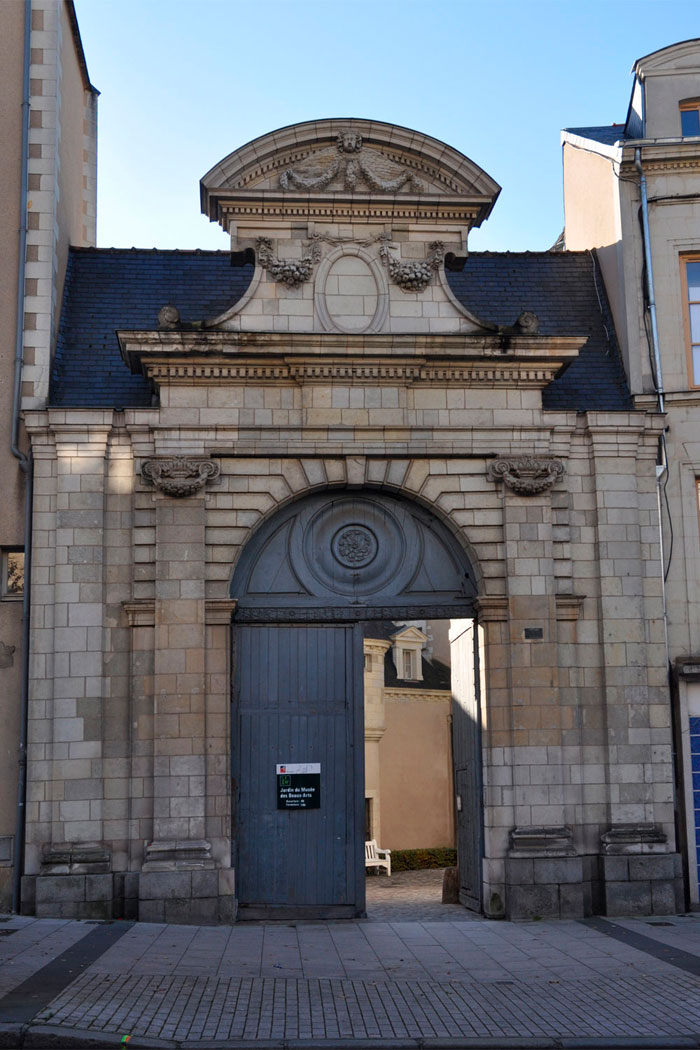
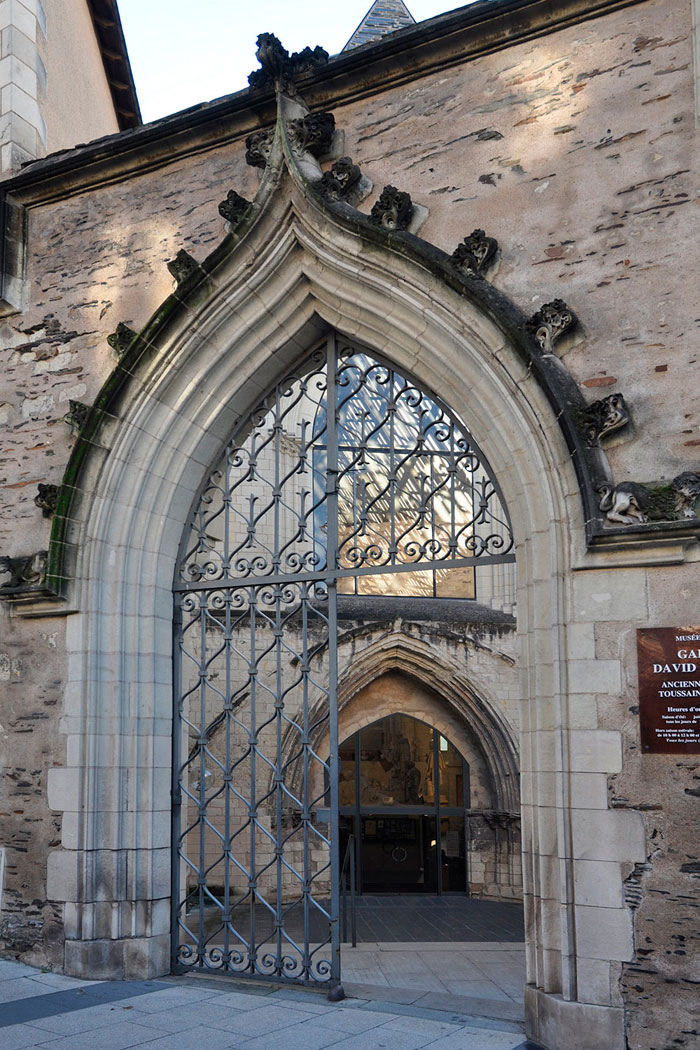
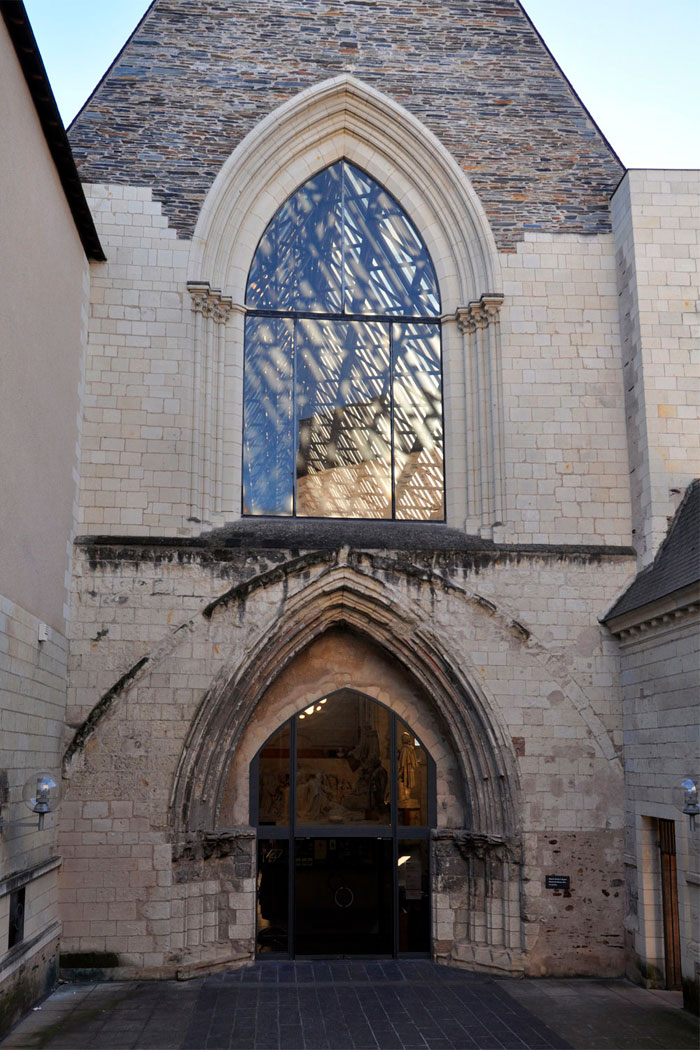
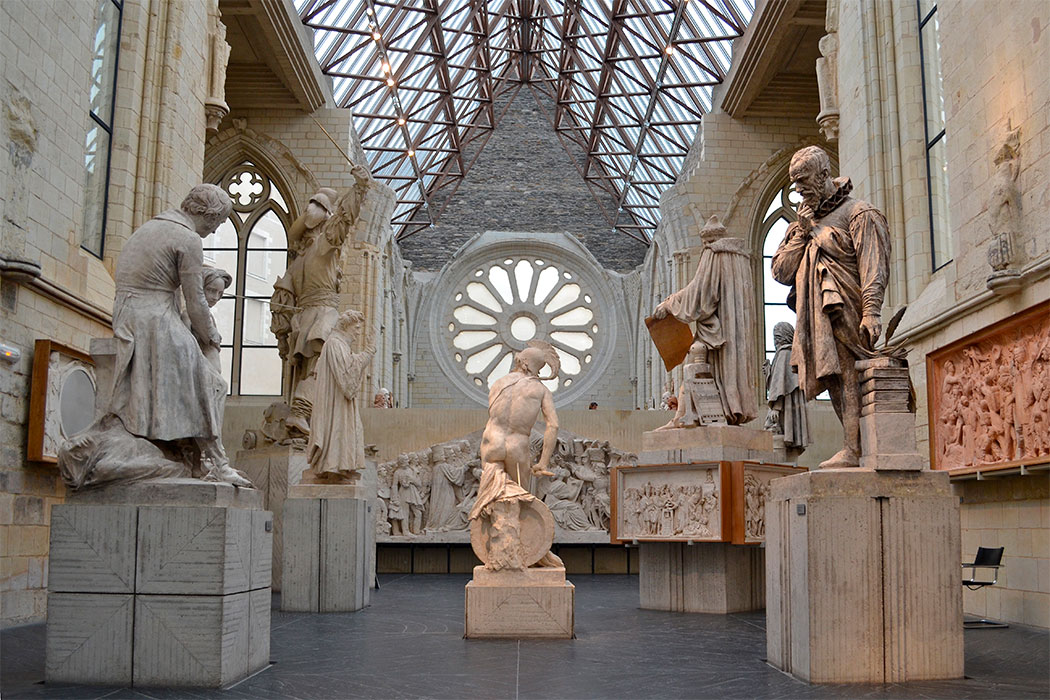
Galerie David d’Angers
Photo by Selbymay, on Wikimedia
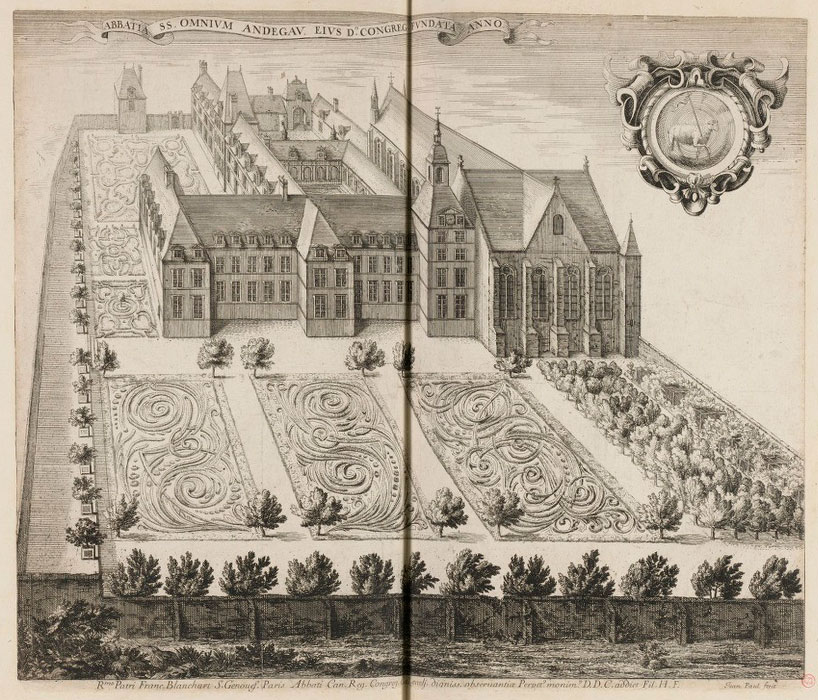
Monasticon Gallicanum
Bibliothèque nationale de France
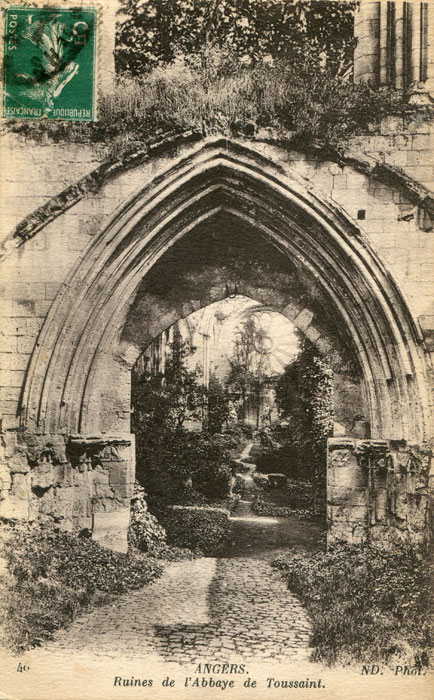
Old postcard, private collection
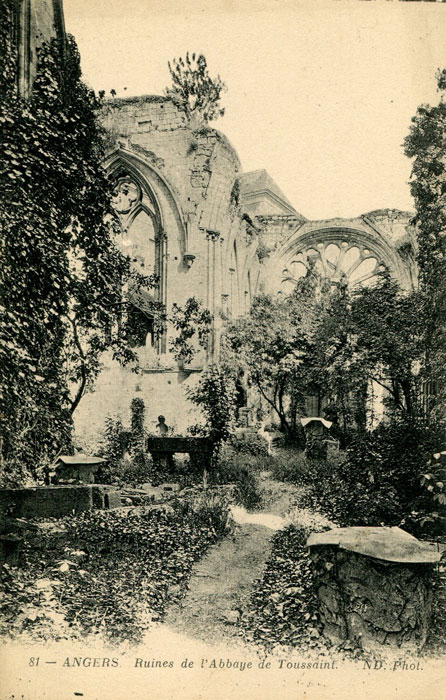
Old postcard, private collection
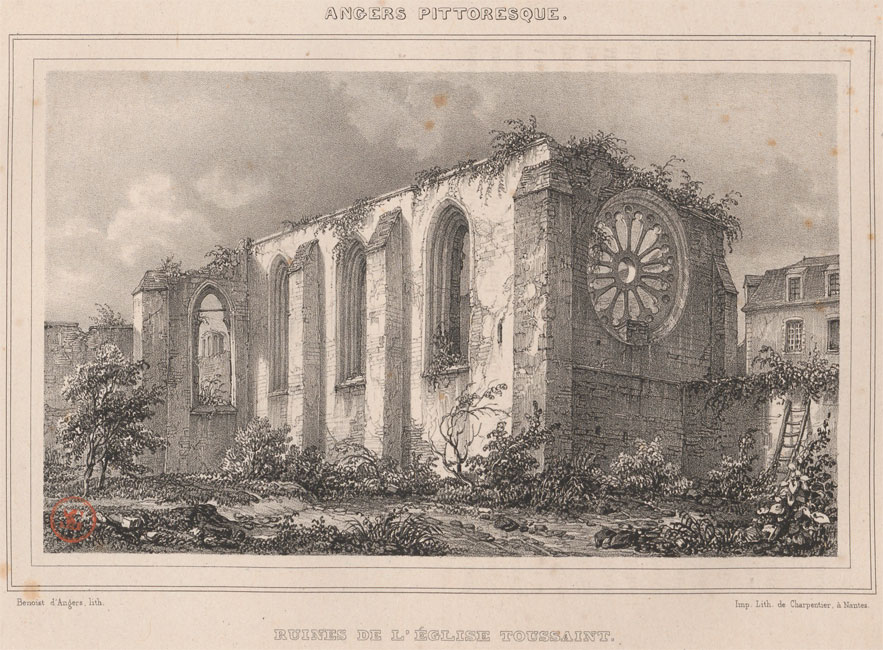
Angers pittoresque (1843)
- ANDRAULT-SCHMITT, Claude (2021). L’abbaye Toussaint d’Angers. Du gothique angevin aux génovéfains. Congrès Archéologique de France, 180ss. Société Française d’Archéologie
- BAUDRILLART, Alfred (1924). Dictionnaire d'histoire et de géographie ecclésiastiques. Vol. 3. París: Letouzey et Ané
- BESSE, Jean-Martial (1920). Abbayes et prieurés de l'ancienne France, vol. 8, Tours. París : Picard
- CHOYER, Abbé (1843). L’église et l’abbaye de Toussaint. Congrès Scientifique de France. Onzième session. París/Angers: Derache
- COMTE, François (1985). L’abbaye Toussaint d’Angers des origines à 1330. Société des Études Angevines
- SAINT-MAUR, Congregació de (1856). Gallia Christiana in provincias ecclesiasticas distributa. Vol. 14. París: Typographia Regia
- TARDIF-DESVAUX (1843). Angers pittoresque. Angers: Cosnier et Lachèse
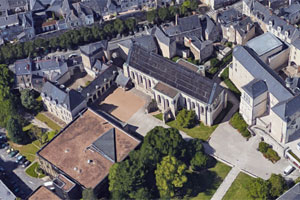
The remains of the former house of regular canons are located in the historic centre of the city of Angers, where Galerie David d’Angers has been established