Priory of Notre-Dame de Cunault
Cunaldus / Conaldum / Cunaud
(Chênehutte-Trèves-Cunault, Maine-et-Loire)
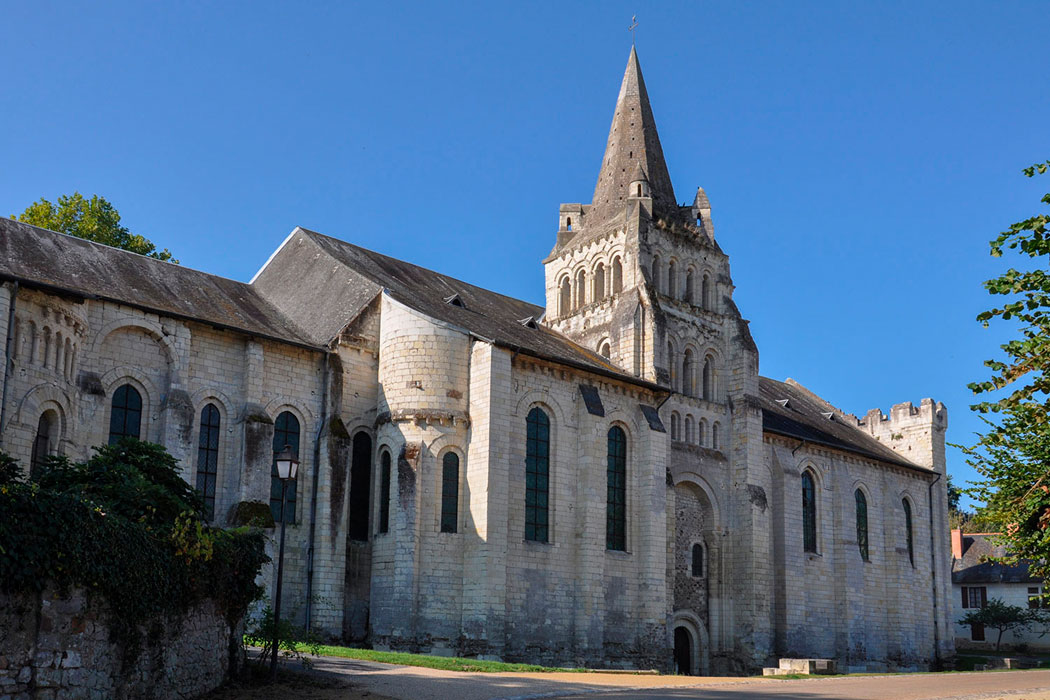
North facade

Cunault was one of the places of refuge for the monks from the Abbey of Noirmoutier (Vendée), who were forced to abandon that site because of Viking incursions. In 836, the community settled at Déas, later known as Saint-Philbert-de-Grand-Lieu (Loire-Atlantique), as it housed the relics of Saint Philibert of Tournus. Déas also failed to provide the desired security, and in 858 the monks moved once again in search of refuge, this time to Cunault.
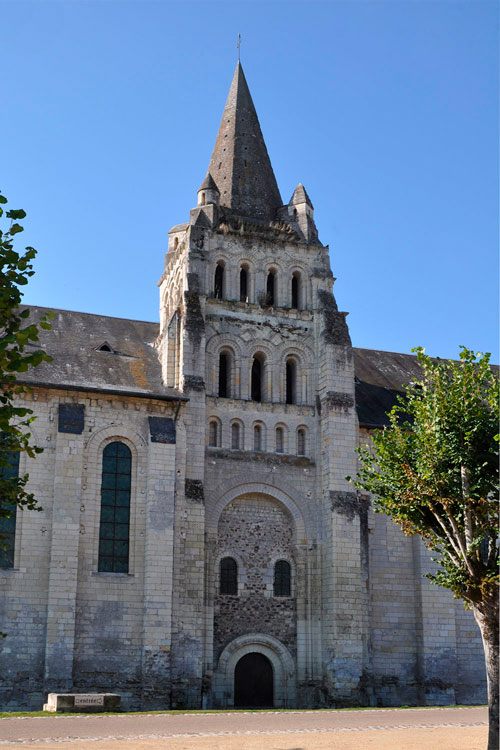
North portal, with the bell tower
Cunault is known from the year 845, when the Carolingian ruler Charles the Bald (823–877) granted the site to Count Vivien of Tours († 851). At that time, it is already described as a monasteriolum and noted for housing the relics of Saint Maxenceul, regarded as a disciple of Saint Martin of Tours (c. 316–397). Shortly afterwards, in that same year, the count granted Cunault to the abbot of Déas, and in 858 this place received the community from that monastery.
In 862, the monks from Noirmoutier were again forced to leave Cunault and move further south, to Messais (Vienne), a place granted to them by Charles the Bald in 854. They subsequently occupied other sites until, in 875, they reached Tournus (Saône-et-Loire) with the relics of Philibert and Maxenceul, where they finally settled. It is nevertheless possible that the community divided into at least two groups, one of which may have remained at Cunault.
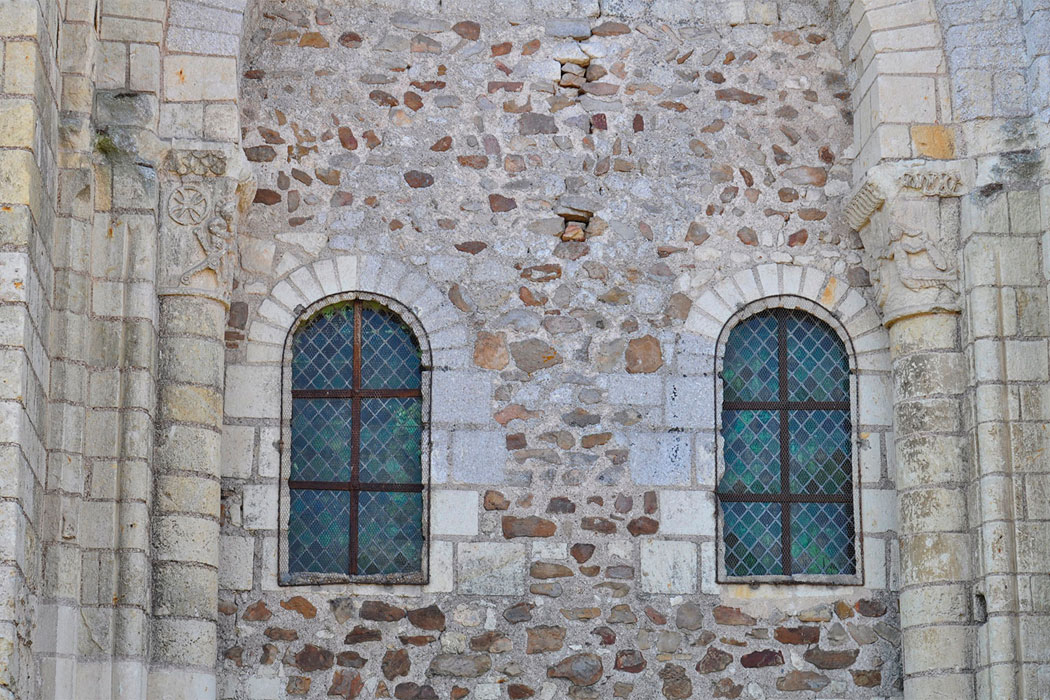
North portal, with remains of the 11th century church
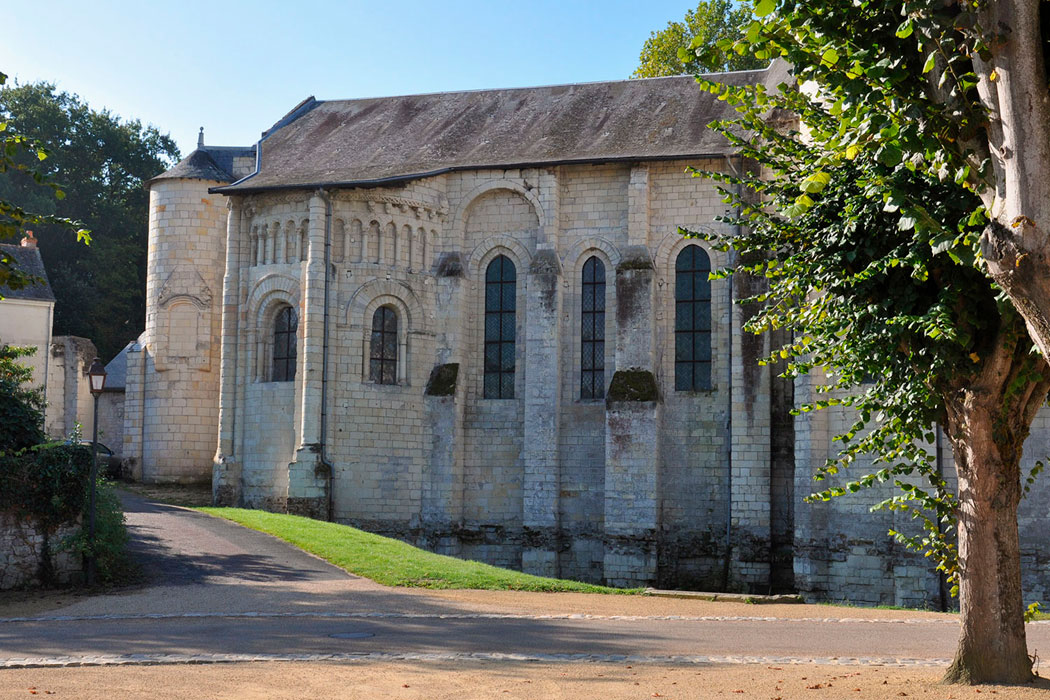
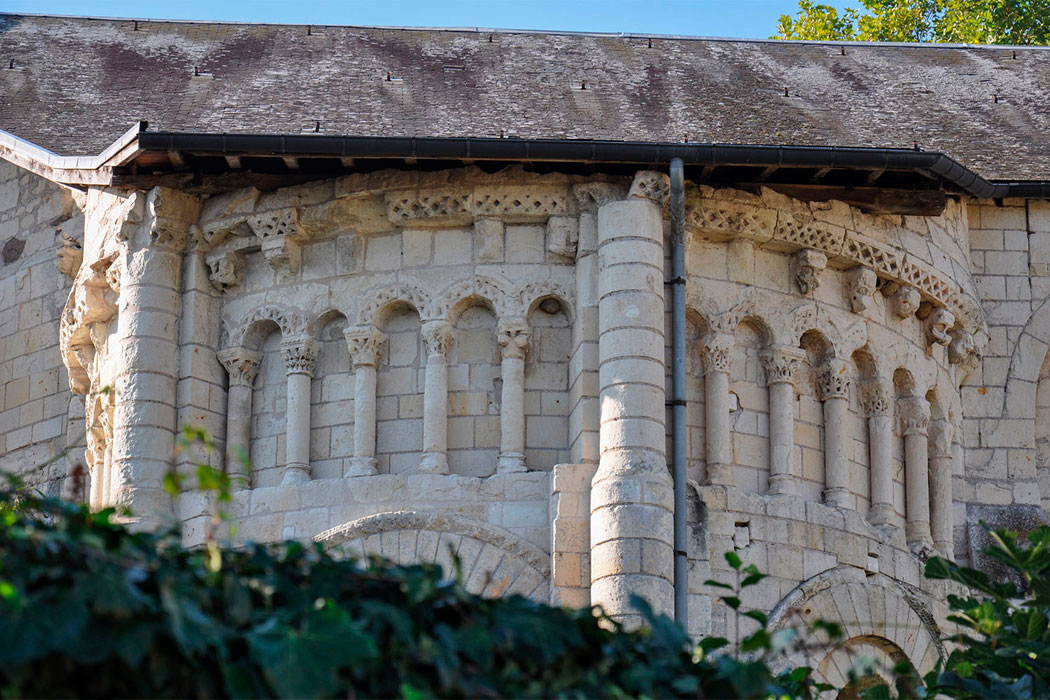
North facade of the apse
In the 10th century, the relics of Maxenceul returned to Cunault and, by the 11th century, as conditions stabilised, the monks gradually recovered their former possessions from Tournus, with the support of the counts of Anjou. By the mid-11th century, a priory of considerable size and prestige had developed. It also benefited from possessing the relics of Saint Maxenceul, together with others attributed to the Virgin Mary, which attracted strong popular devotion. This situation continued until the Hundred Years’ War and the establishment of the commendatory regime in the mid-15th century.
The priory also suffered, probably indirectly, from the effects of the Wars of Religion, which left it in decline until its suppression in 1741. During the second half of the 18th century, the church was divided into two parts, leaving the chancel unused. After the Revolution, the nave was restored for parish use, while the chancel remained in private hands and in ruins. In the first half of the 19th century, its value as a historic monument was recognised and the entire building was protected, leading to its restoration. The church of Cunault is essentially a 12th-century construction, made possible by the priory’s strong economic position, supported by donations and, above all, by popular devotion to Marian relics.
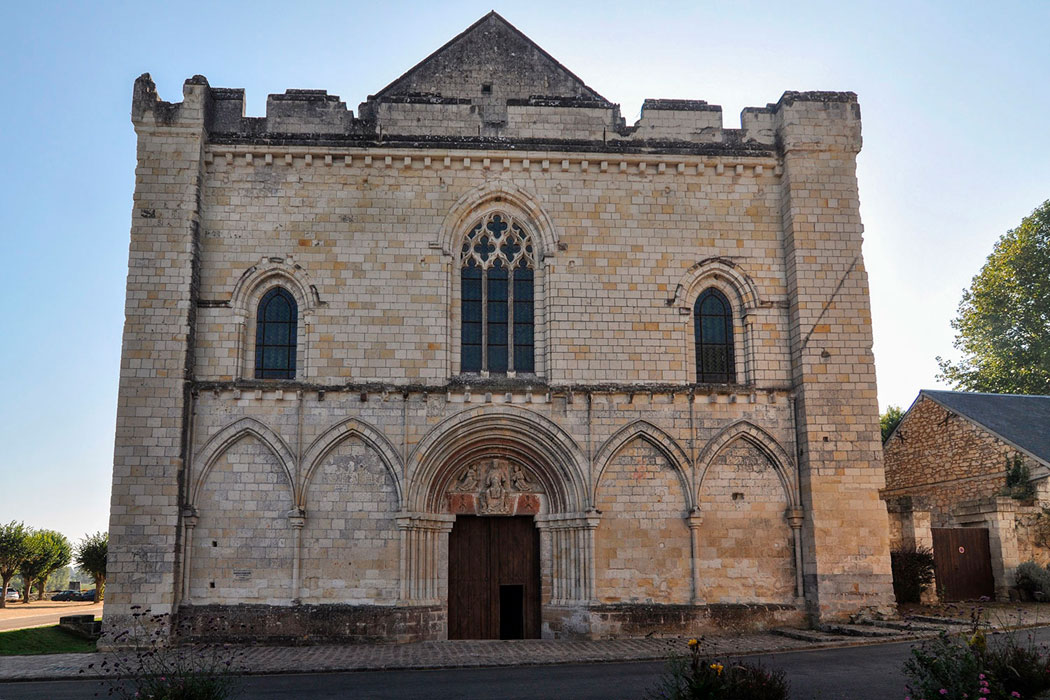
West facade
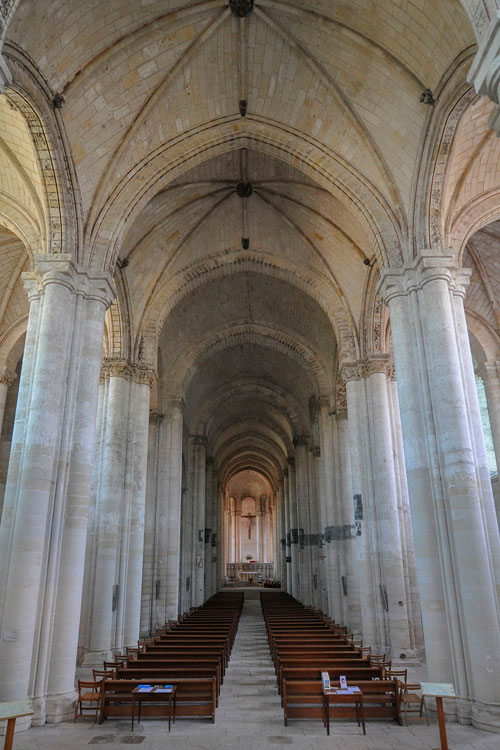
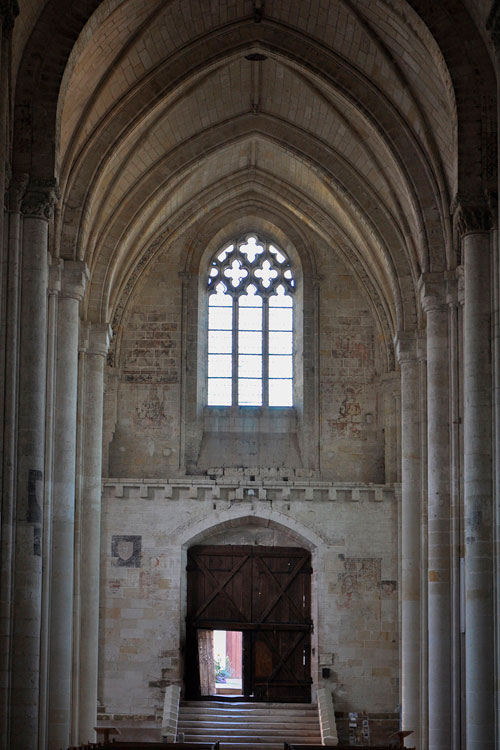
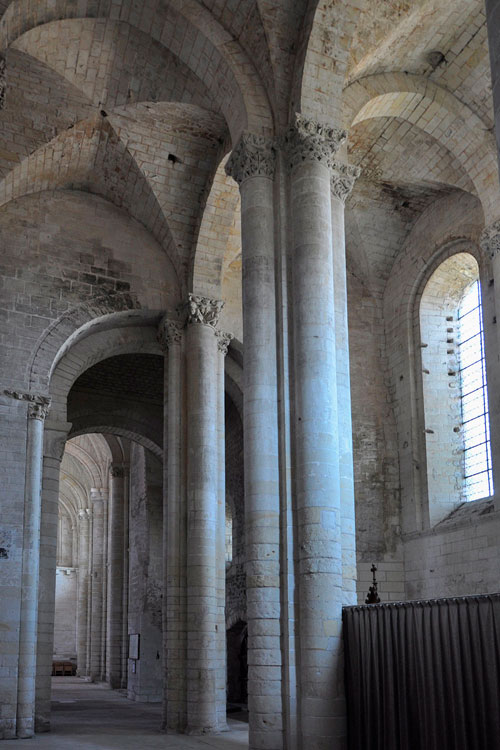
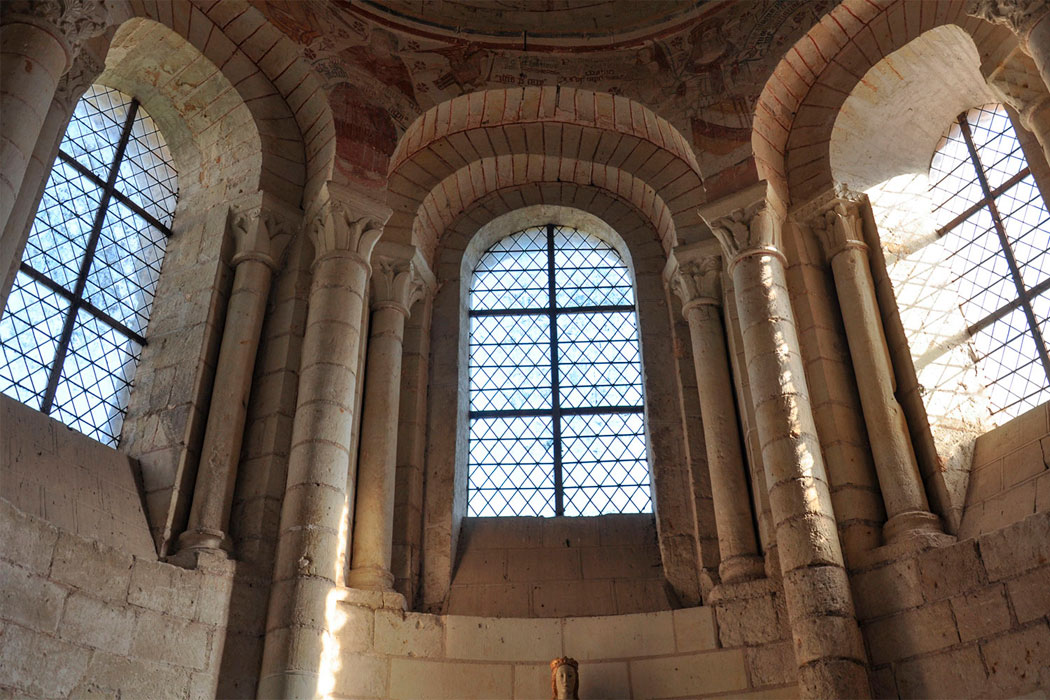
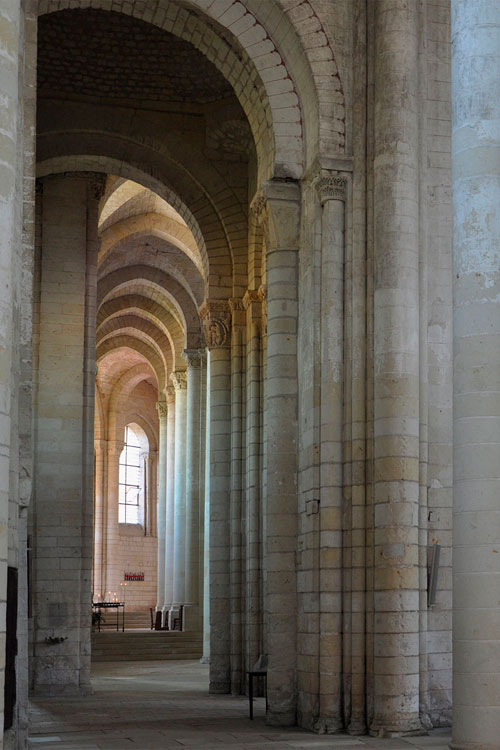
The 11th-century church must have been more modest in scale. On the north side stands a bell tower with a doorway, whose base belongs to that earlier structure. The present building is divided into three aisles of irregular proportions. It consists of eleven bays, leading to a chancel surrounded by an ambulatory that connects with the side aisles. This ambulatory originally had three radiating apses, of which the central one has disappeared. The western bays of the aisles are slightly later, dating from the 13th century, already in the Gothic period. The floor levels vary, a feature also reflected in the height of the aisles, which gradually decrease towards the chancel. The rich sculptural decoration, both inside and outside, is also noteworthy.
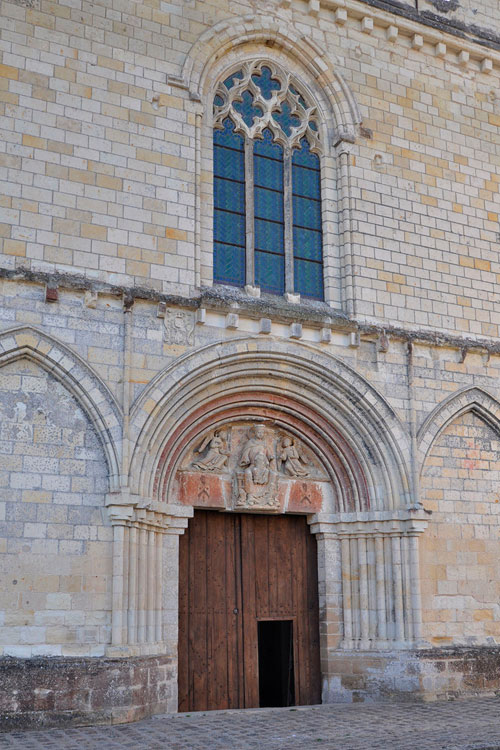
Western portal
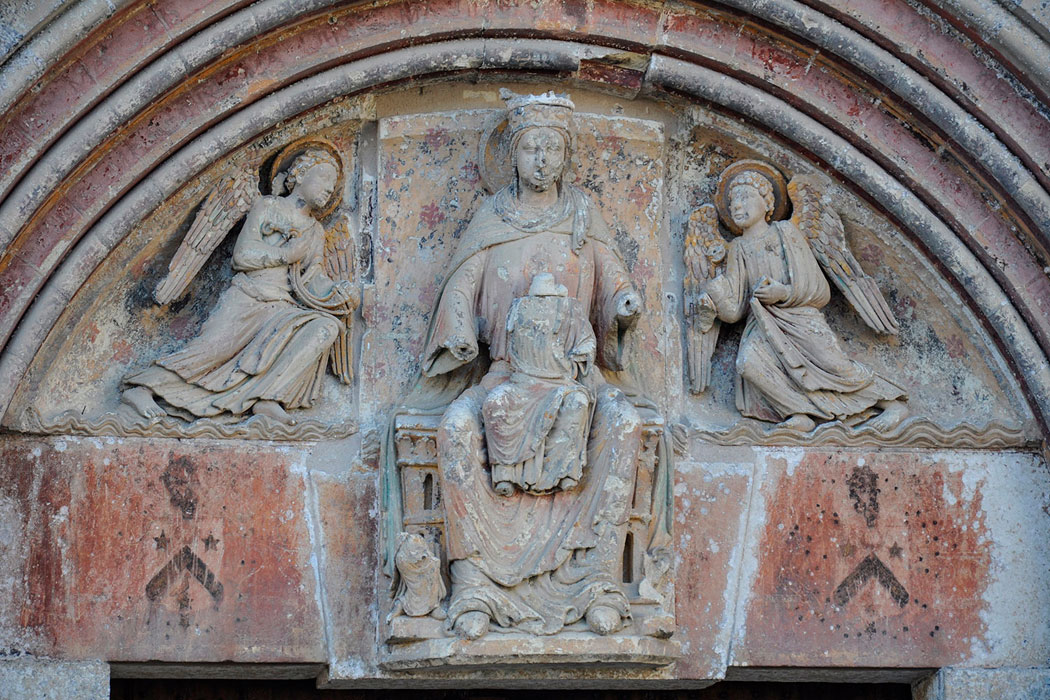
Western portal
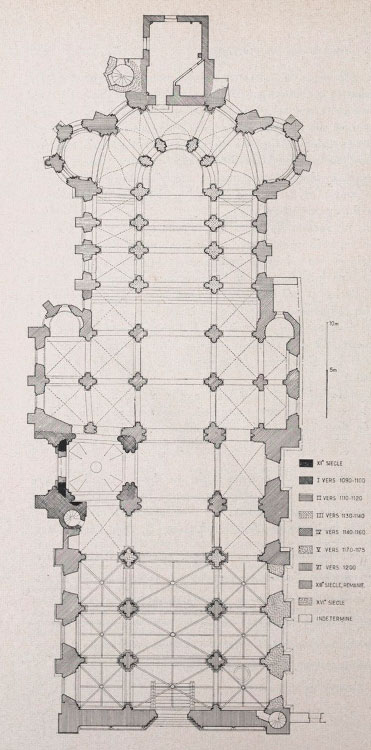
Church floor plan
Published in Notre-Dame de Cunault, les campagnes de construction (1964)
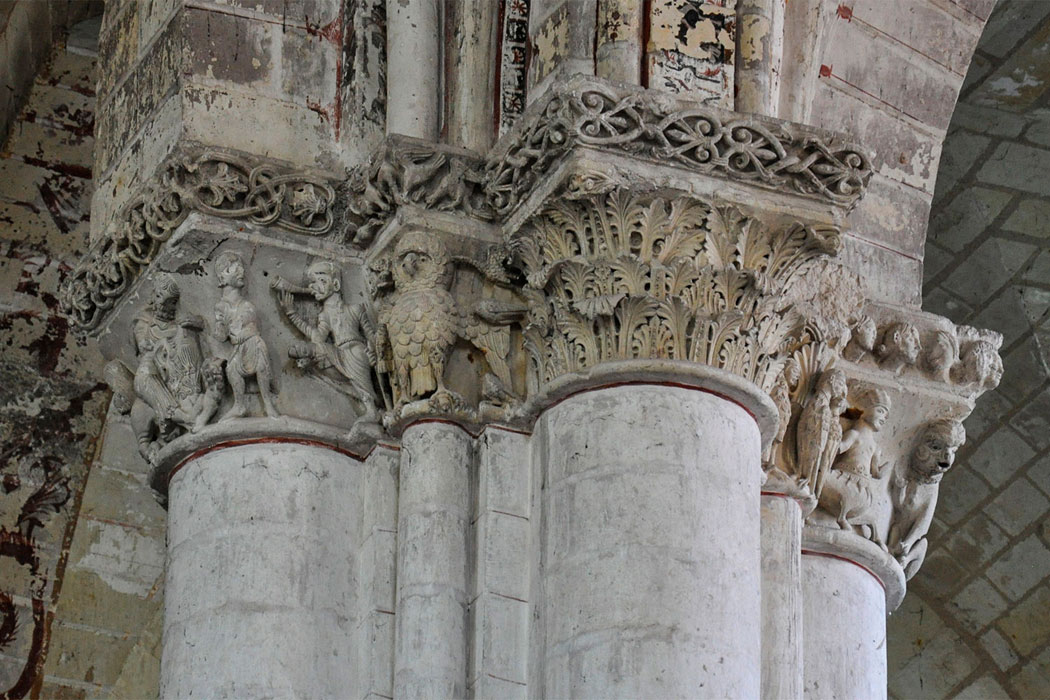
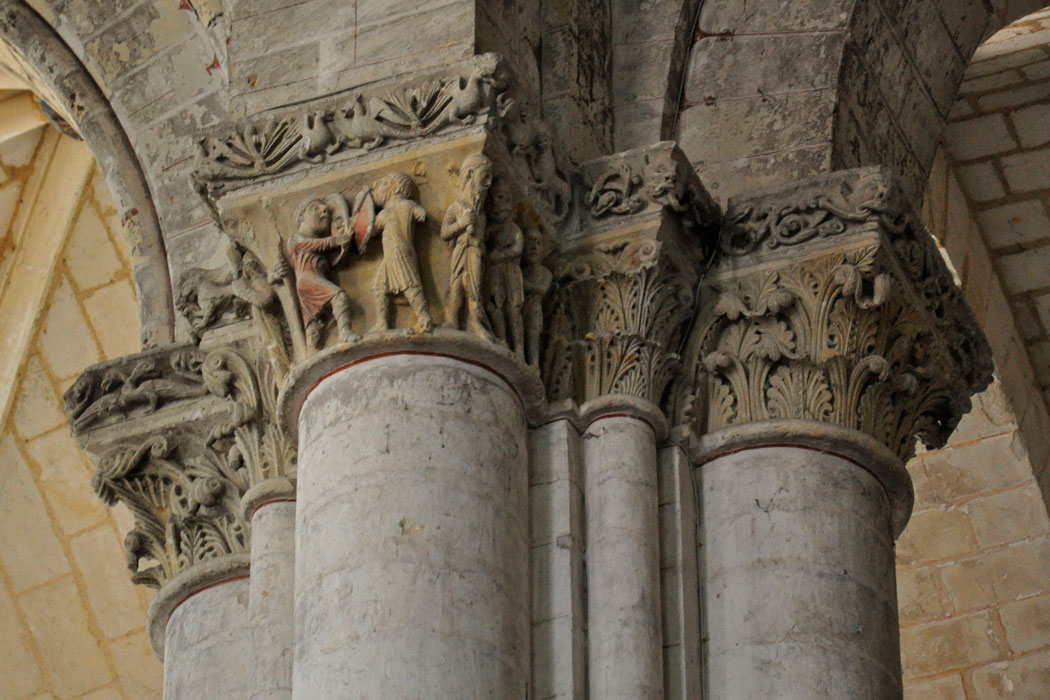
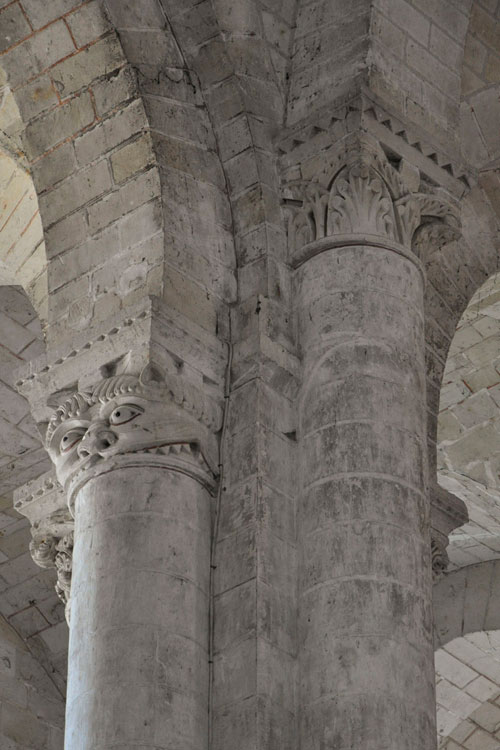
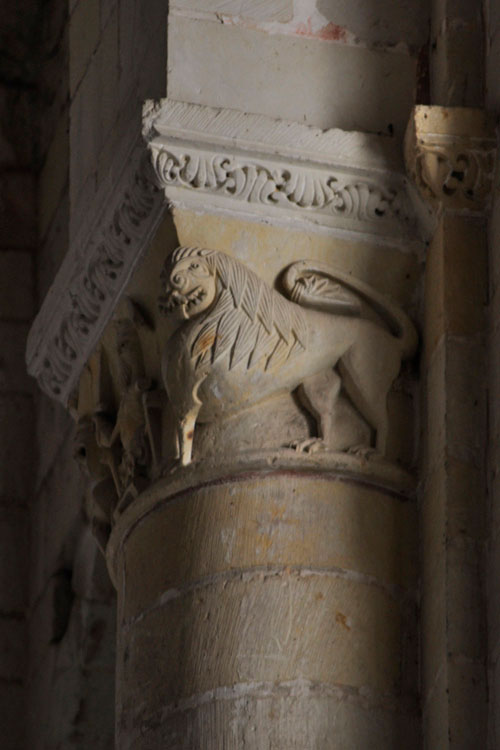
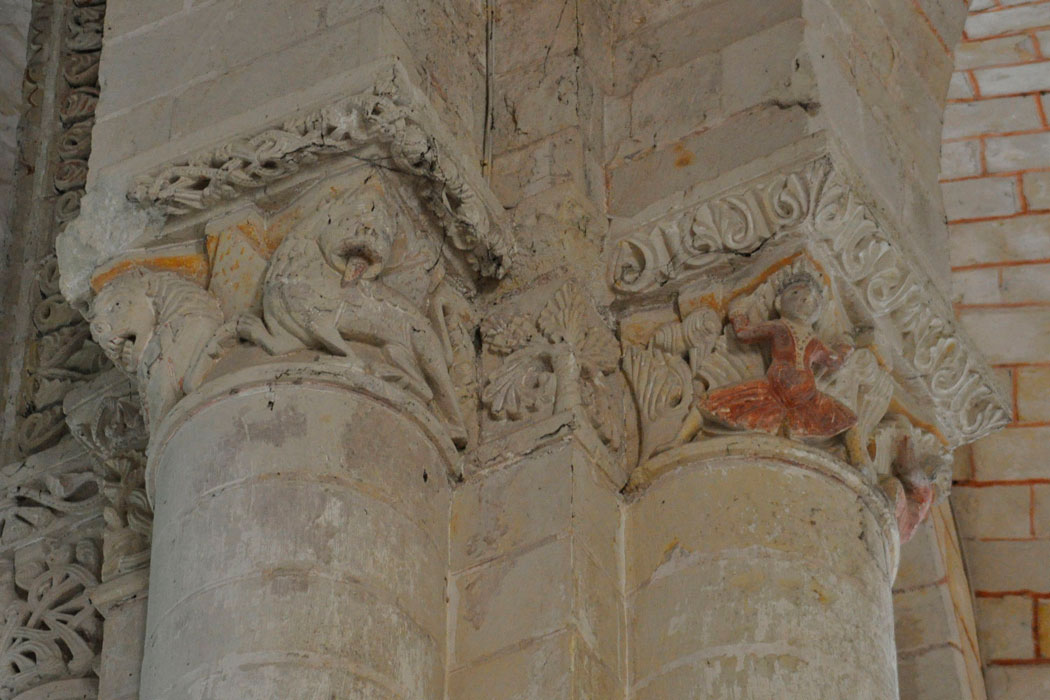
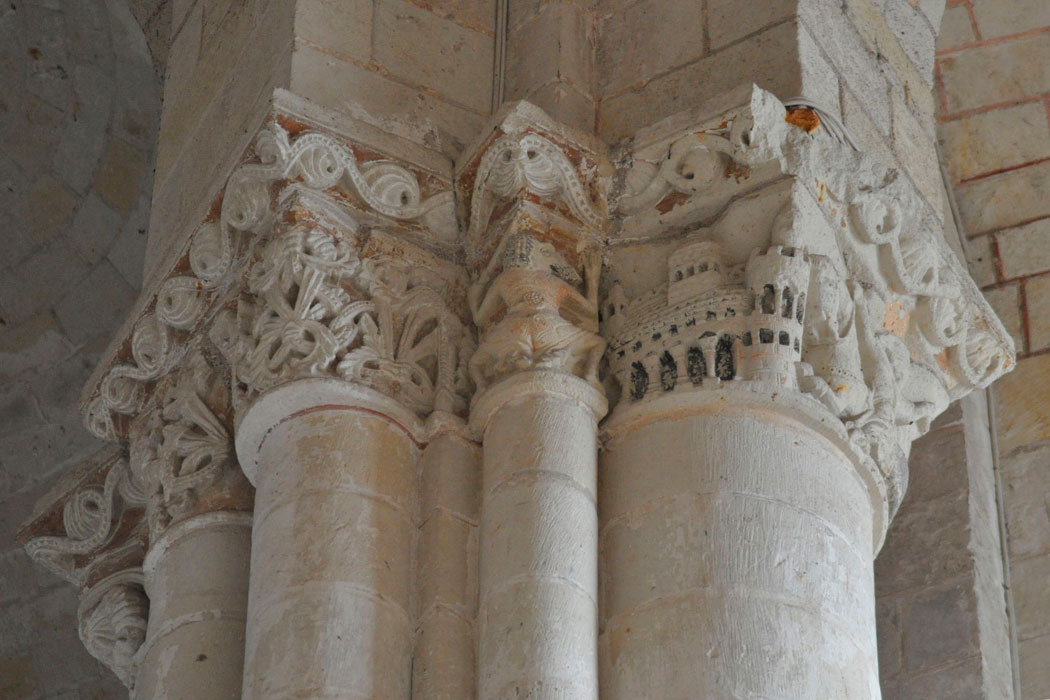
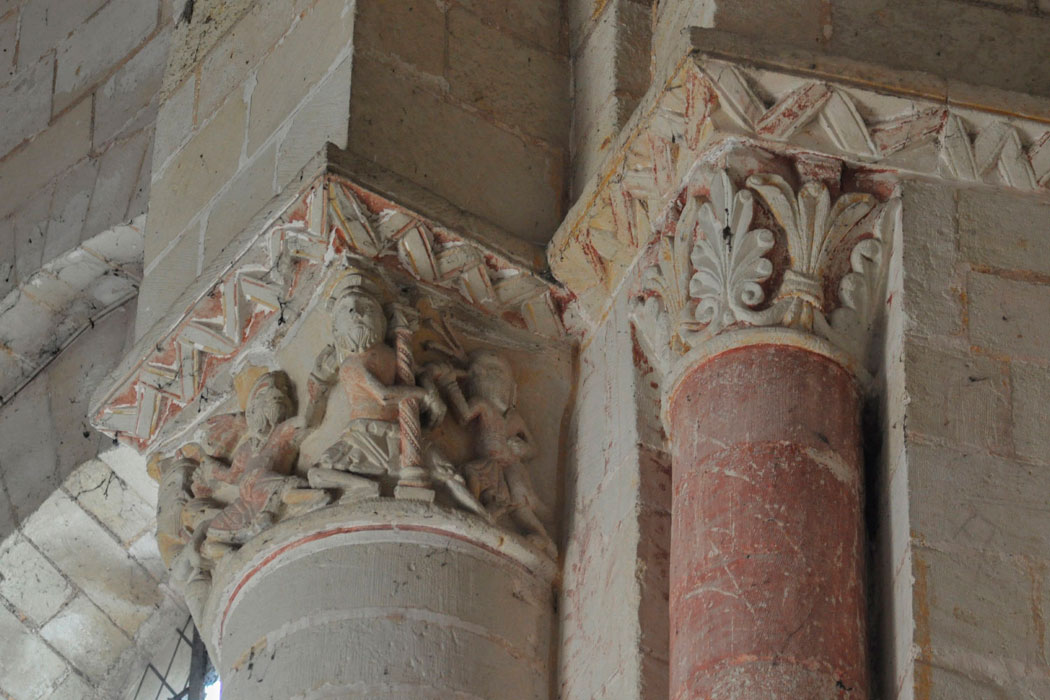
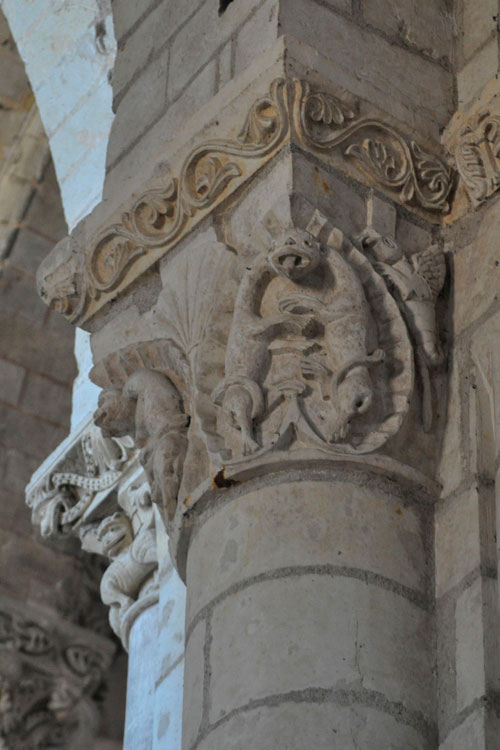
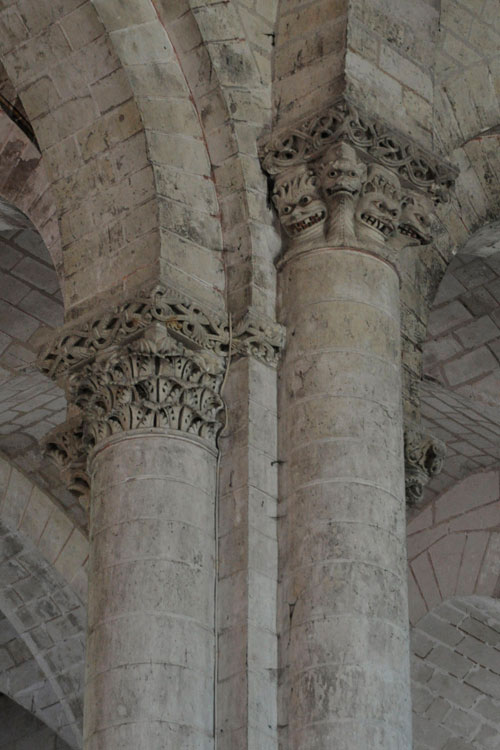
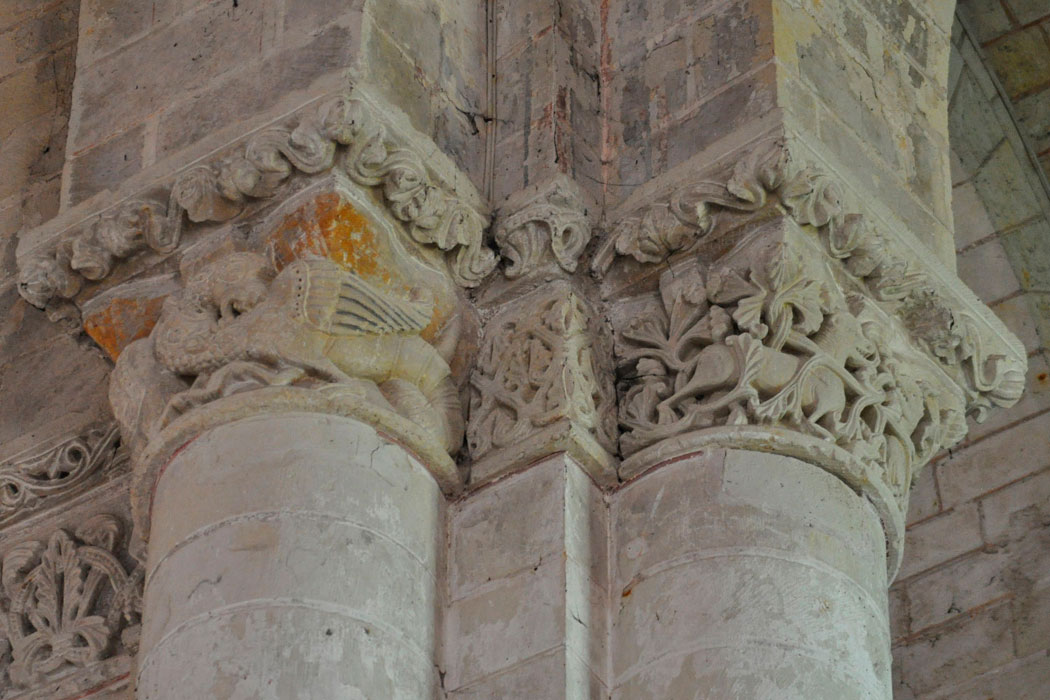
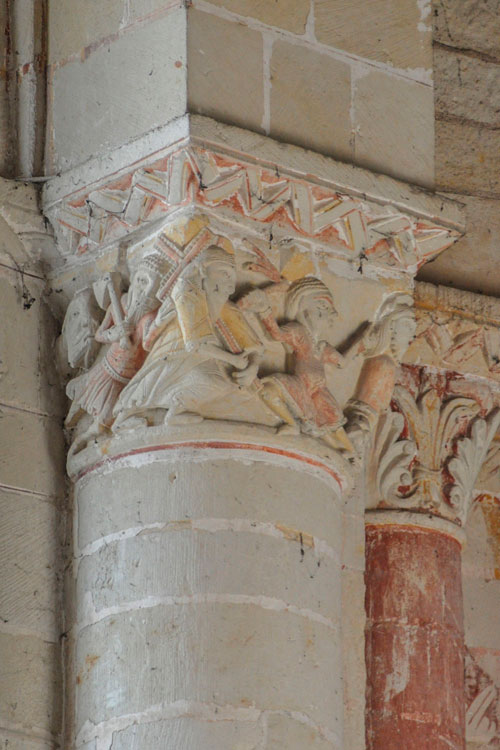
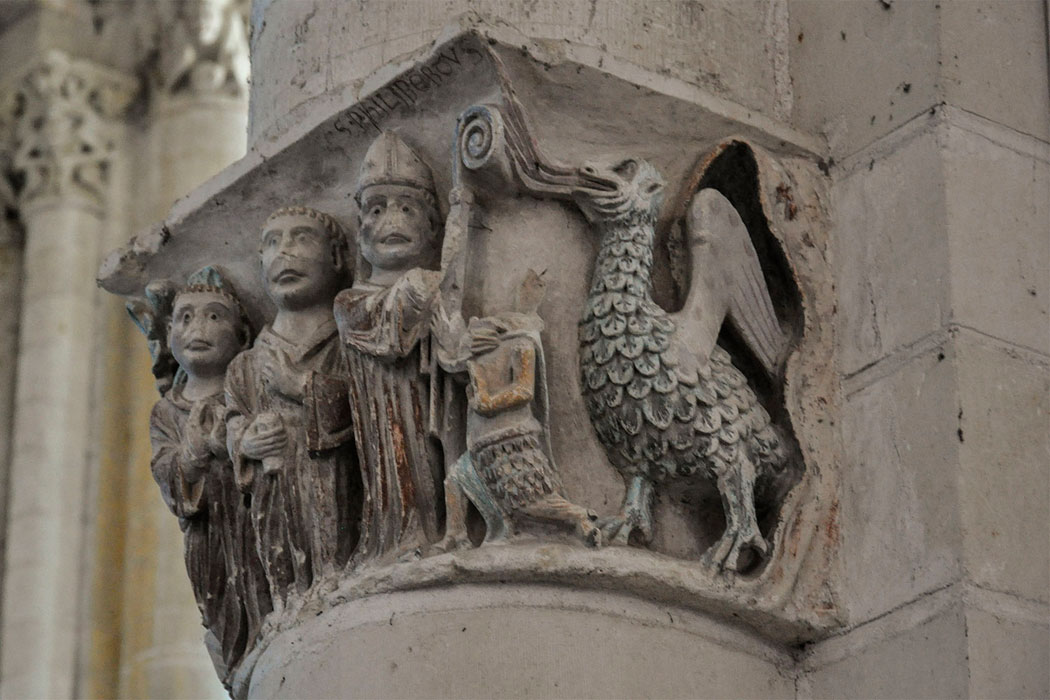
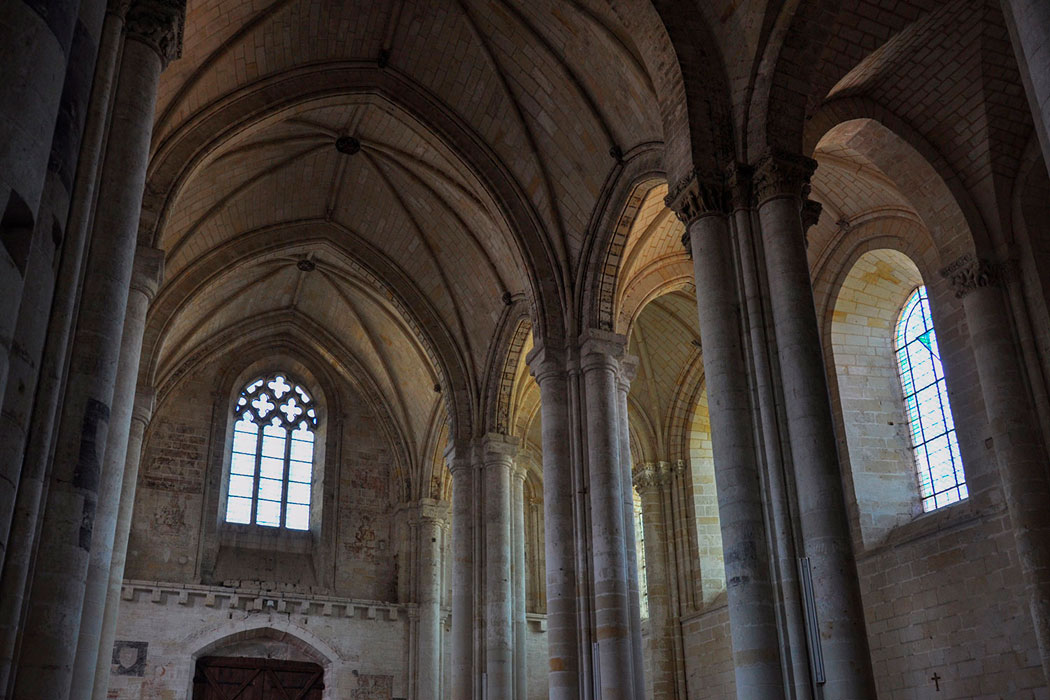
Western sector of the nave (13th century)
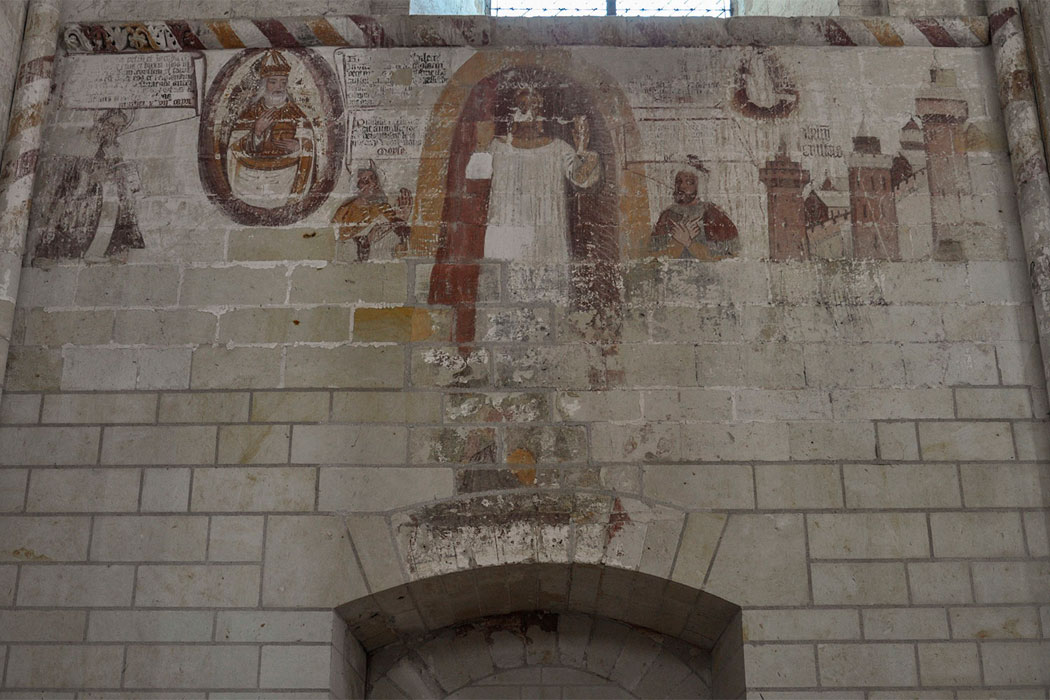
Mural of the Transfiguration (15th century)
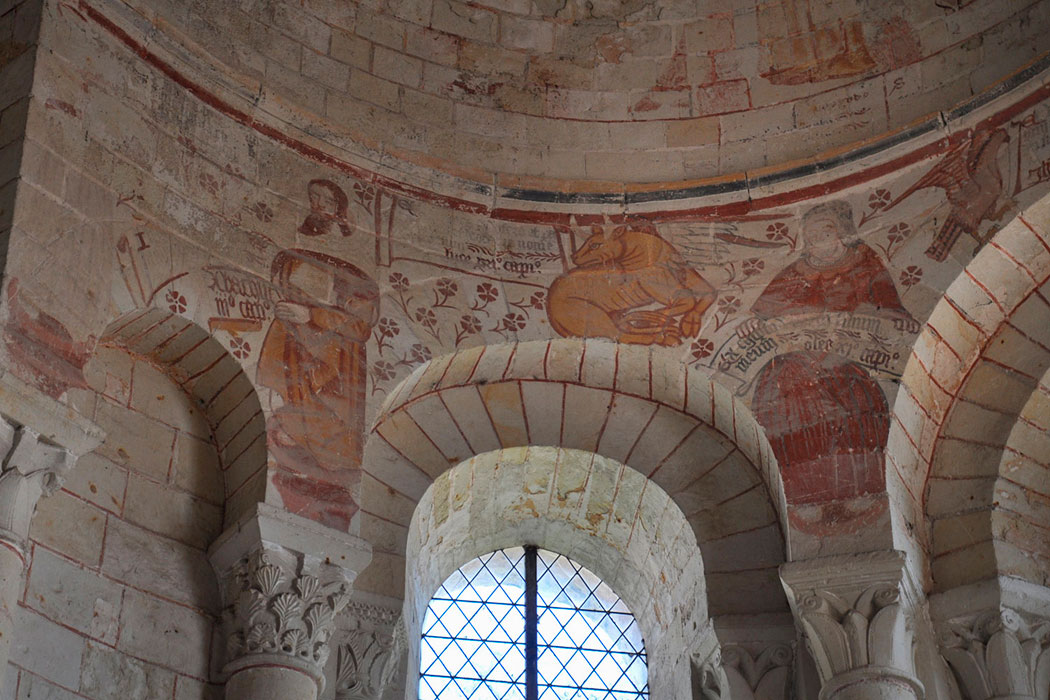
Mural decoration. Prophets
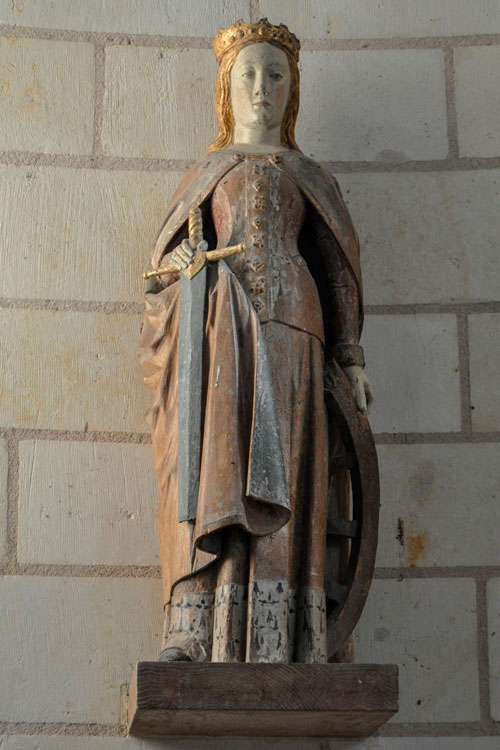
Saint Catherine of Alexandria (15th century)
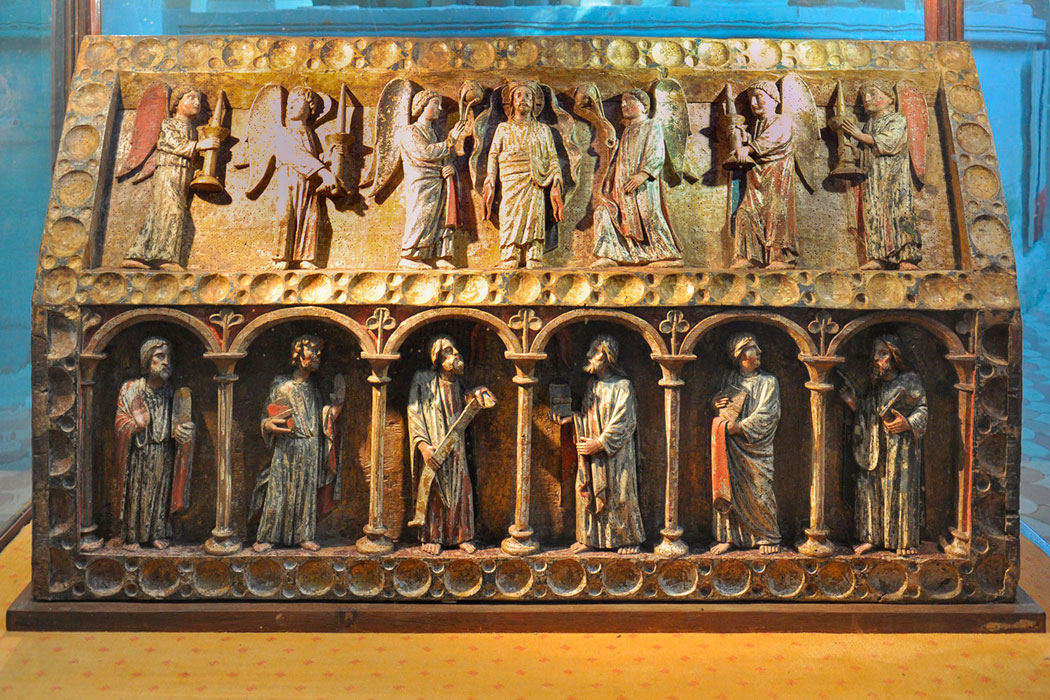
Chasse of Saint Maxenceul (13th century, modified)
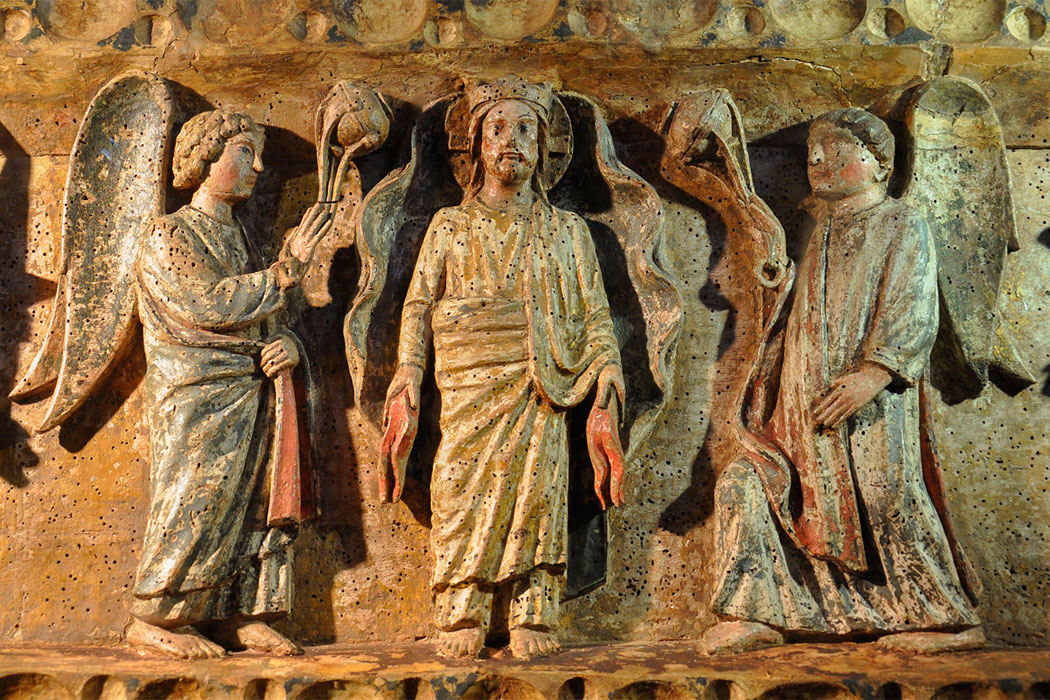
Detail of the casket of Saint Maxenceul
- BAUDRILLART, Alfred (1956). Dictionnaire d'histoire et de géographie ecclésiastiques. Vol. 13. París: Letouzey et Ané
- BESSE, Jean-Martial (1920). Abbayes et prieurés de l'ancienne France, vol. 8, Tours. París : Picard
- BRINCARD, Baronne (1930). Les chapiteaux historiés de l'église de Cunault. Bulletin monumental, 89. Société française d'archéologie. París: Picard
- CARTRON, Isabelle (2010). Les pérégrinations de Saint-Philibert. Presses universitaires de Rennes
- HERBÉCOURT, Pierre (1959). Anjou roman. La nuit des temps. Zodiaque
- MAÎTRE, L. (1898). Cunauld, son prieuré et ses archives. Bibliothèque de l'École des Chartes. Núm, 59. París : Picard
- MALLET, J. (1994). La place de la priorale de Cunault dans l’art local. Saint-Philibert de Tournus. Tournus: Centre International d’Études Romanes
- SALET, Francis (1964). Notre-Dame de Cunault, les campagnes de construction. Congrès archéologique de France, 122 ss. Société française d'archéologie
- UZUREAU, François; ed. (1911). Le monastère de Cunaud (IXe siècle). L'Anjou historique, 12/2. Angers: Siraudeau
- VERGNOLLE, Éliane; i altres (2021). Notre-Dame de Cunault (XIe-XIIIe siècle). Un grand sanctuaire de pèlerinage marial. Congrès Archéologique de France, 180ss. Société Française d’Archéologie
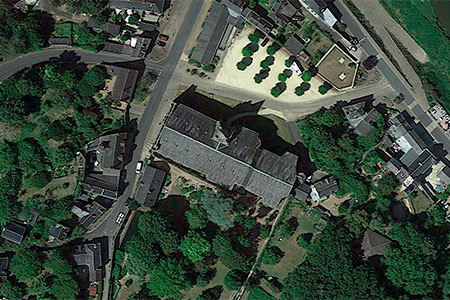
Cunault now forms part of the commune of Chênehutte-Trèves-Cunault, located southeast of Angers, on the banks of the Loire