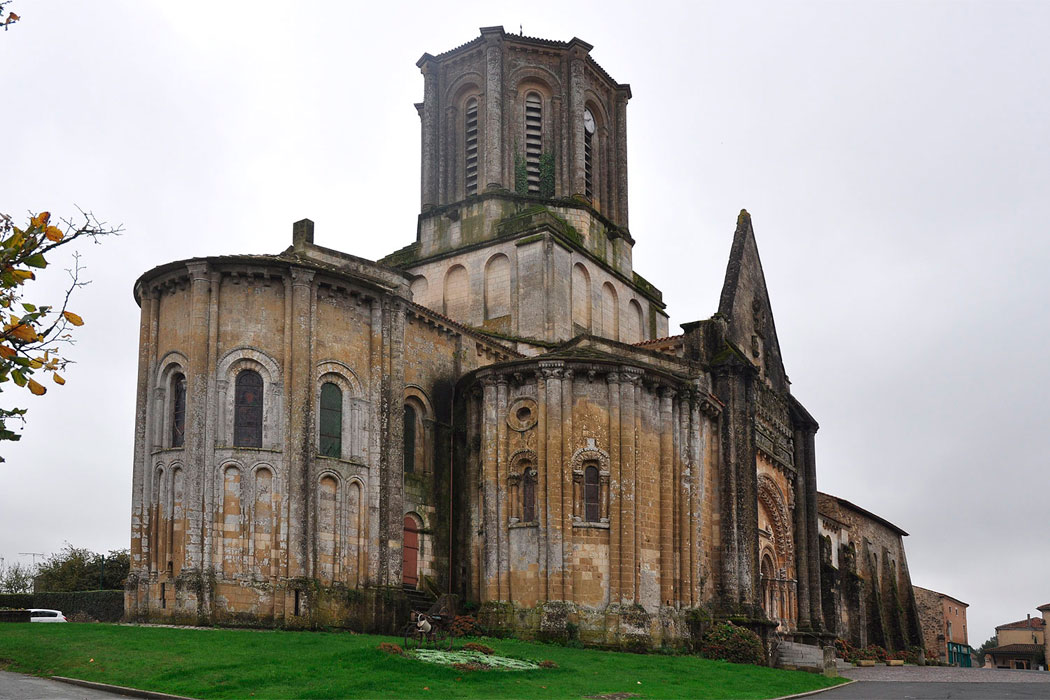

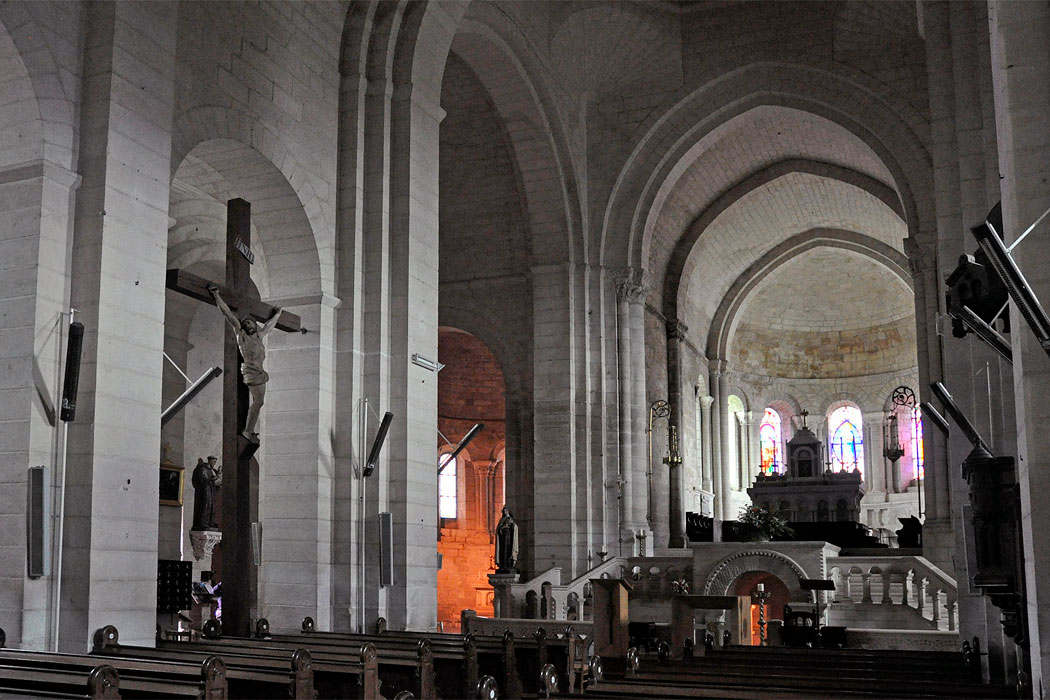
Around the year 1019, the Count of Poitiers William III the Great (c. 969–1030) had a fortress and a church built at Vouvant. Shortly afterwards (1020), he asked Abbot Théodelin of Maillezais (Vendée) to establish a priory there, dedicated to Notre-Dame. The priory church was probably completed by the mid-11th century: it was a large building with three aisles and nine bays.
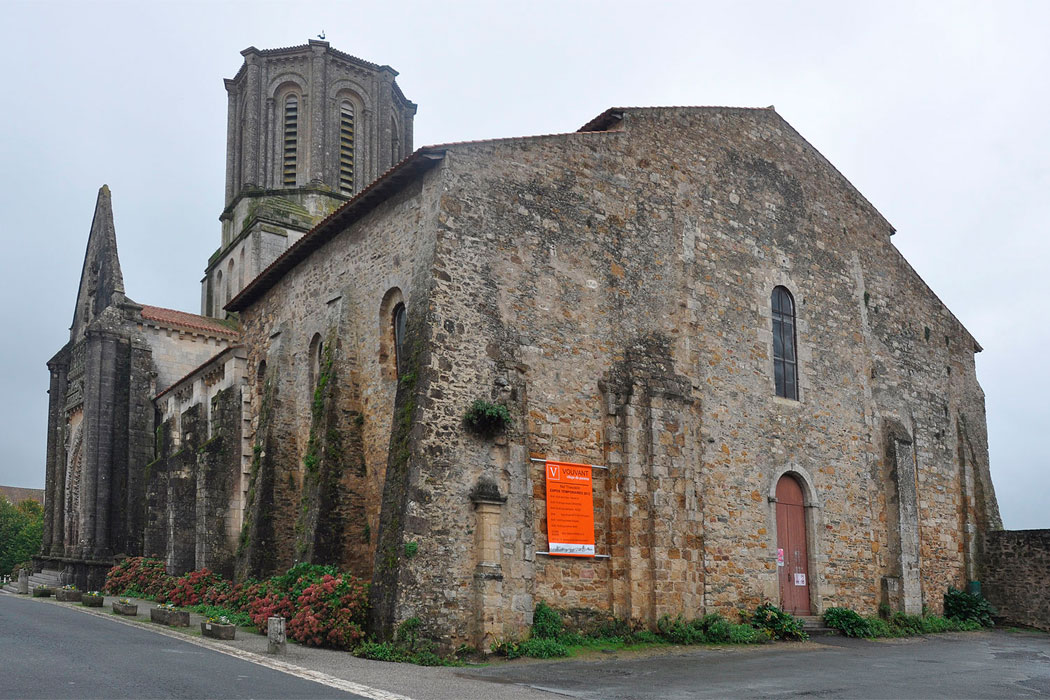
The fortress of Vouvant belonged to Bourgogne de Rancon († 1169) and, upon her marriage to Hugh VIII of Lusignan, it passed into the hands of that lineage. In 1197, the priory is mentioned in a bull of Pope Celestine III confirming the possessions of Maillezais. This territory suffered from the effects of the Hundred Years’ War and, later, in the 16th century, from the Wars of Religion, which also affected this house, especially between 1586 and 1588. It is known that in the 17th century this site belonged to the chapter of the cathedral of Maillezais, which had taken over the former Benedictine monastery. At that time, the church of Vouvant was in a very poor state of preservation.
It should be noted that in 1666 the diocese of Maillezais was transferred to La Rochelle and the monastery which had preceded it was secularised. In the mid-19th century, the church of Vouvant was recognised as a historic monument and restored, allowing worship to be resumed in 1885. The oldest part of the church was not restored until the end of the 20th century.
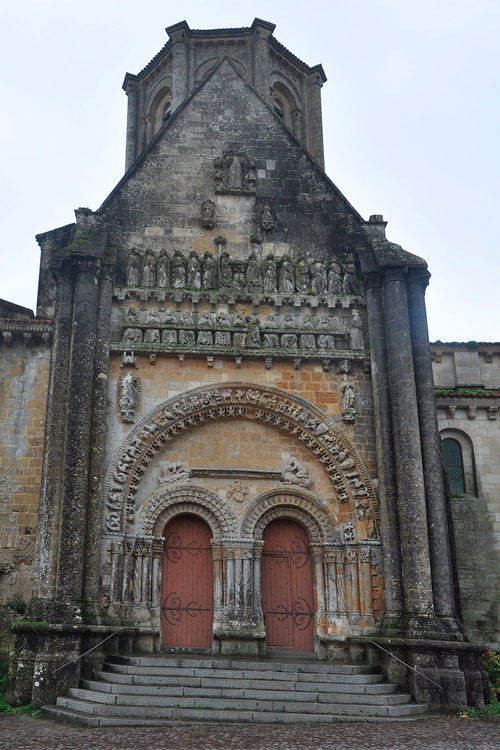
North portal
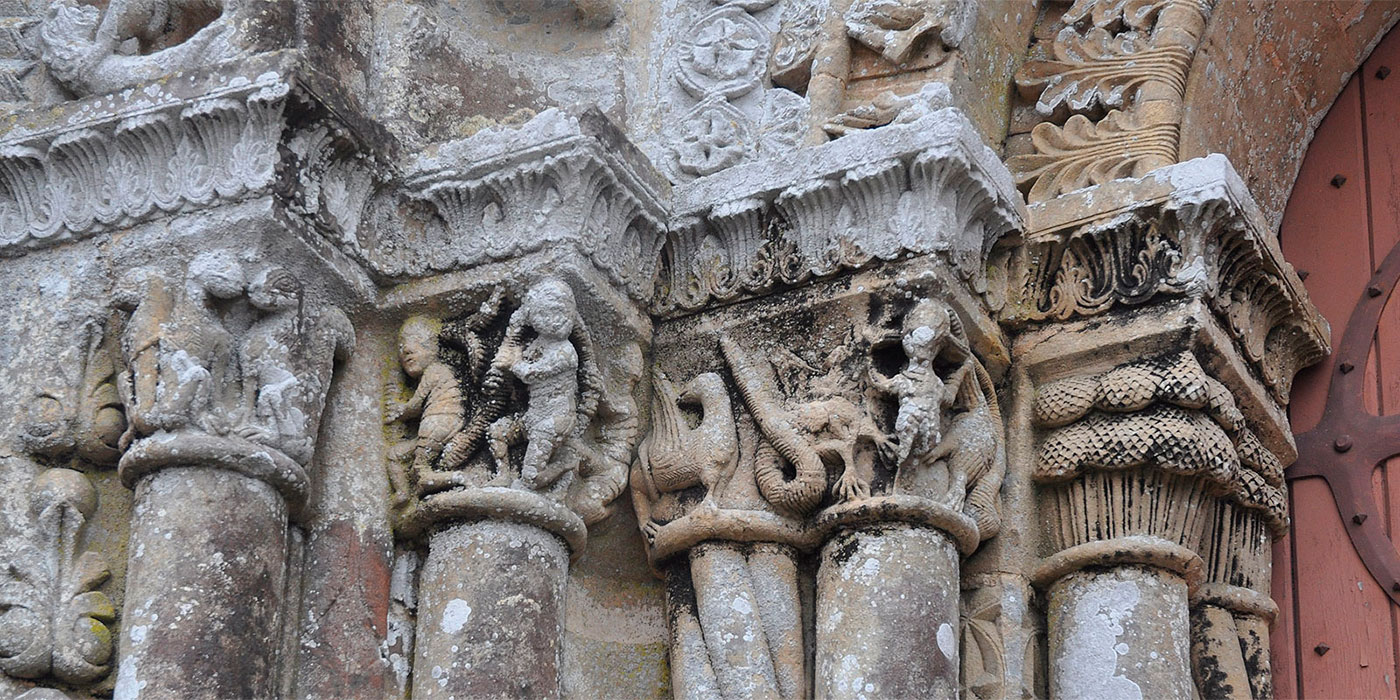
North portal
From the original 11th-century church, three bays of the western part are preserved, probably originally covered with vaults. The first three bays, however, have disappeared. In the 12th century, the chancel and the three eastern bays of the aisles, near the transept, were rebuilt. At the same time, the north façade of the transept was constructed, with a double portal. In the 14th or 15th century, this Romanesque portal was completed with a gable decorated with scenes representing the Last Supper in the lower part and the Ascension in the upper part. The whole complex was restored during the 19th and 20th centuries, including the crypt, which had almost disappeared.
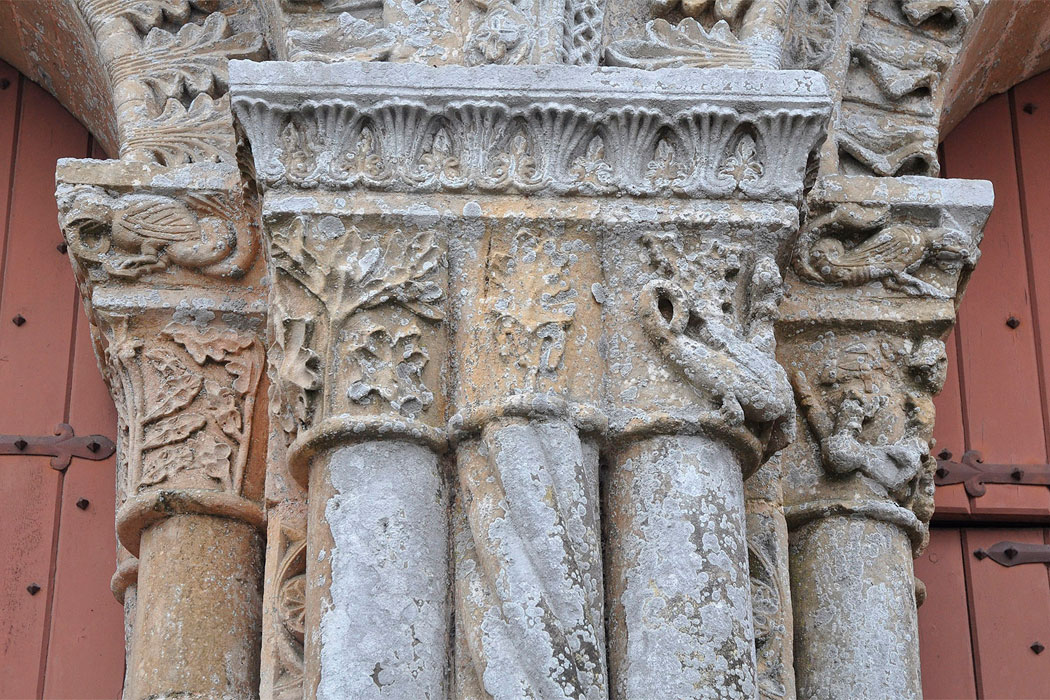
North portal
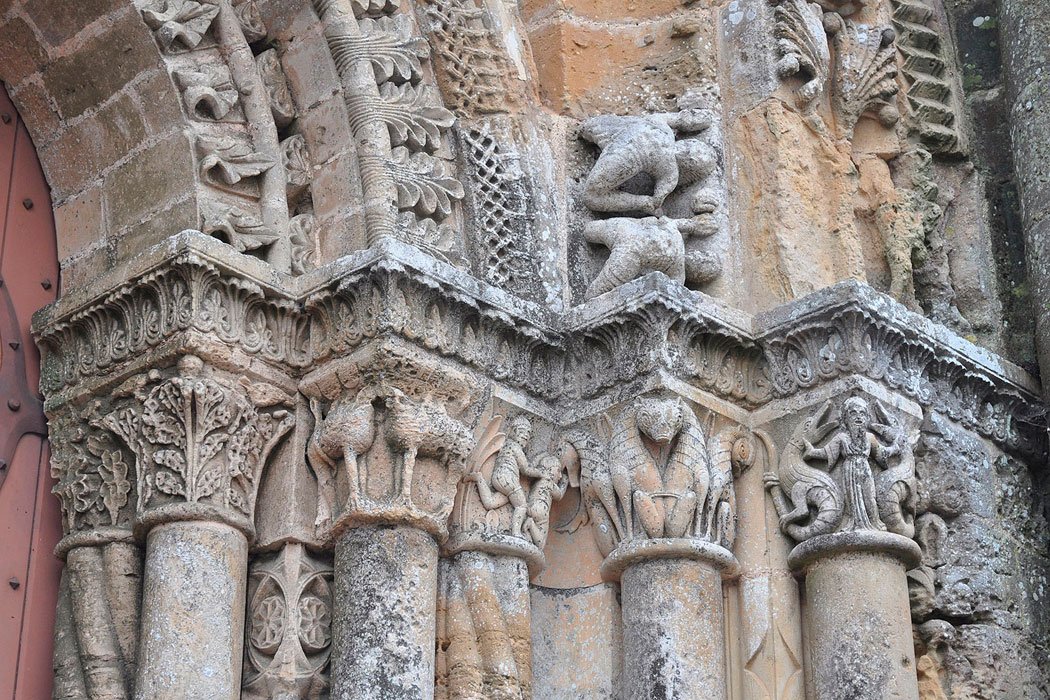
North portal
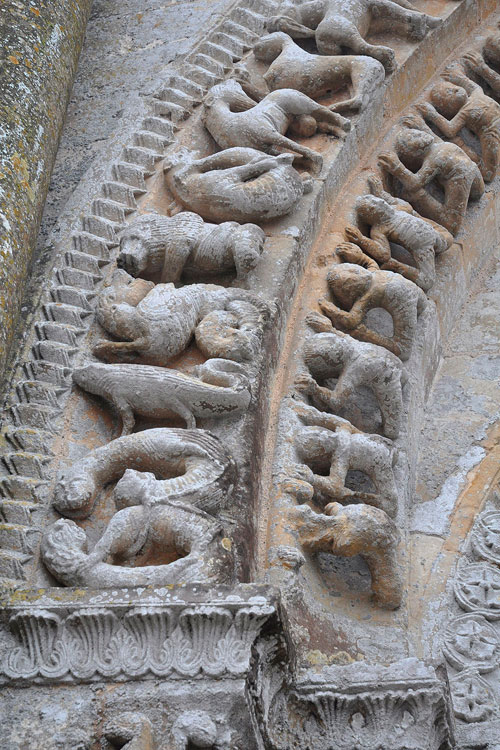
North portal
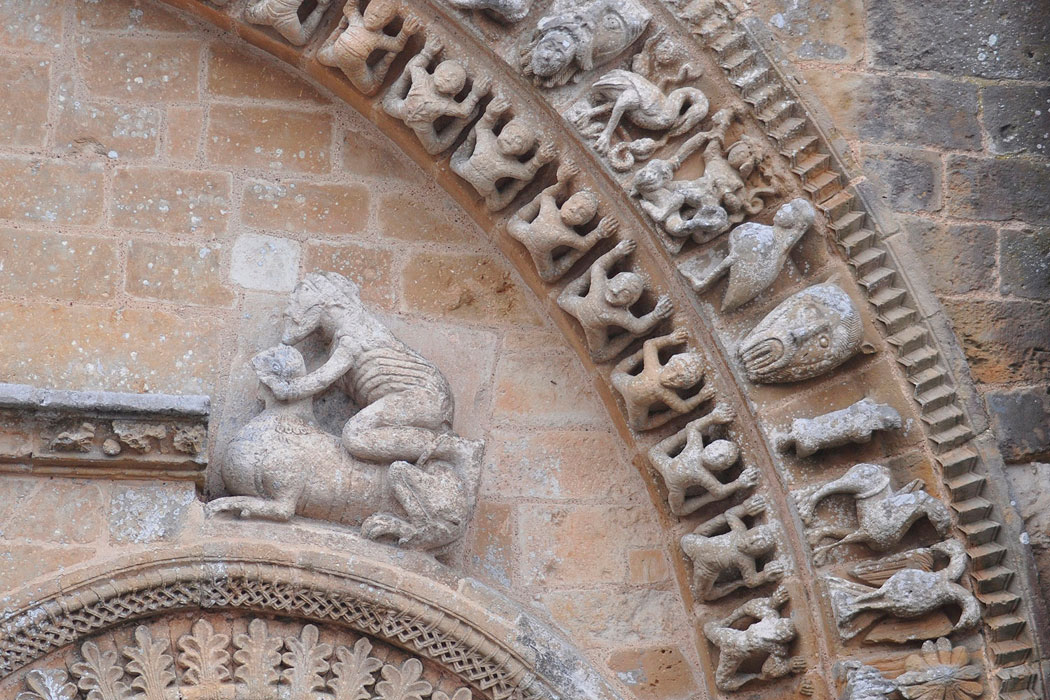
Portal nord
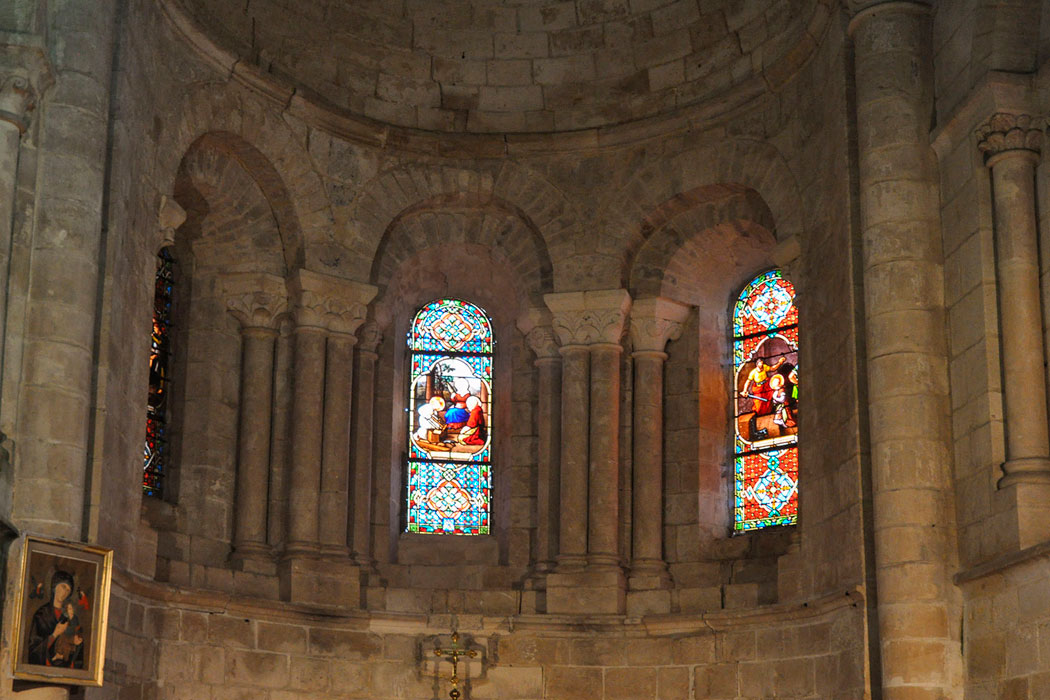
Side apse
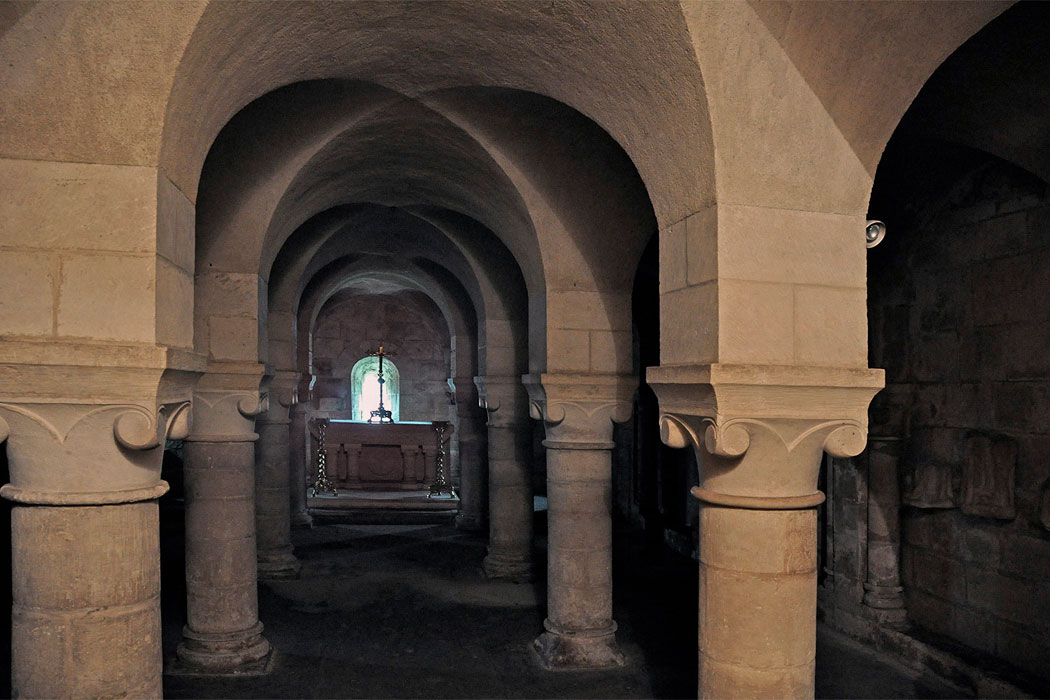
Crypt
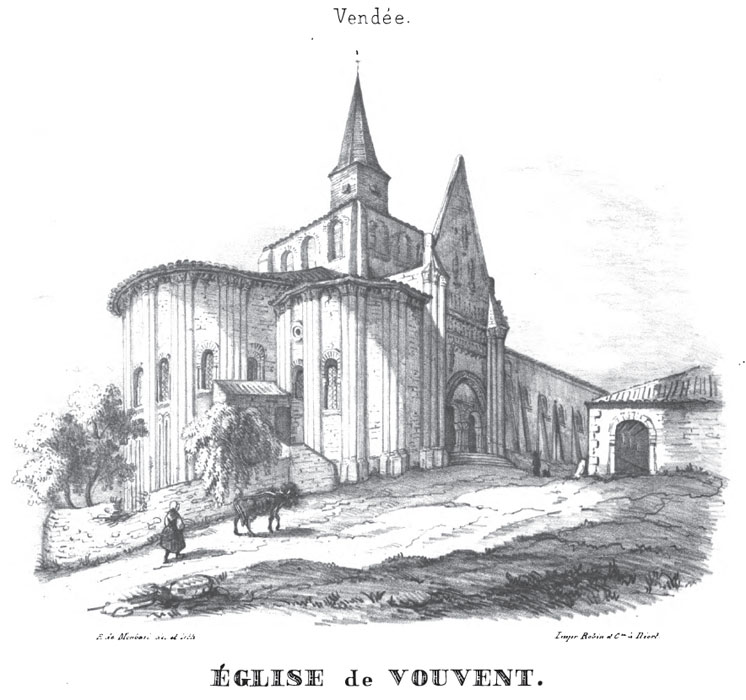
Illustration from Notes et croquis sur la Vendée (1843)
Bibliothèque nationale de France
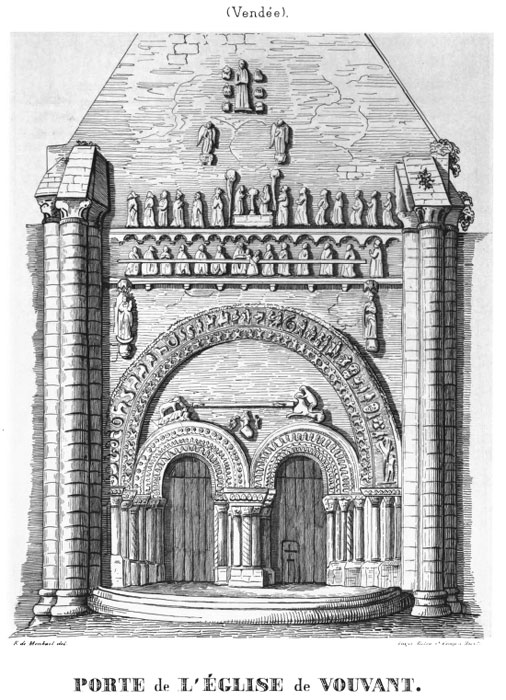
Illustration from Notes et croquis sur la Vendée (1843)
Bibliothèque nationale de France
- BEAUNIER, Dom (1910). Abbayes et prieurés de l'ancienne France. Vol. 3: Auch, Bordeaux. Abbaye de Ligugé
- DILLANGE, Michel (1976). Vendée romane. La nuit des temps, 44. Zodiaque
- LEVESQUE, Richard (s/d). L'église Notre Dame de Vouvant
- MONBAIL, Émilien de (1843). Notes et croquis sur la Vendée. Niort: Robin
- VAN DE MOORTELE, Sylviane (1996). L’église Notre-Dame de Vouvant. Congrés Archéologique de France. Vendée. París
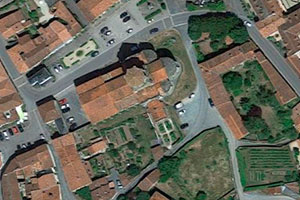
The priory church of Vouvant is located in the commune of the same name, east of La Roche-sur-Yon, on the road to Poitiers