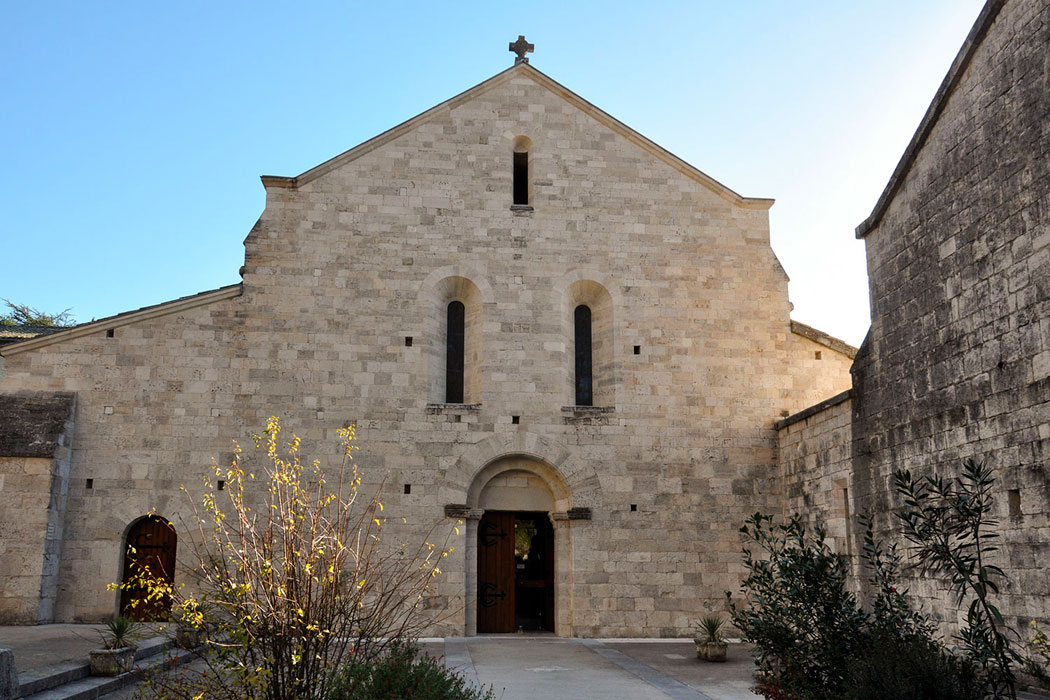

The Cistercian Abbey of Notre-Dame d’Aiguebelle was founded from 1134 at the initiative of Gontard Loup, who provided the necessary land, with the cooperation of the bishop of Tricastin. They requested the arrival of Cistercian monks from the Abbey of Morimond (Haute-Marne). There is also a tradition placing the foundation of Aiguebelle on a site previously occupied by the monastery of Montjoyer, a hypothesis that has been dismissed. Officially, the Cistercian Order dates the foundation to 1137.
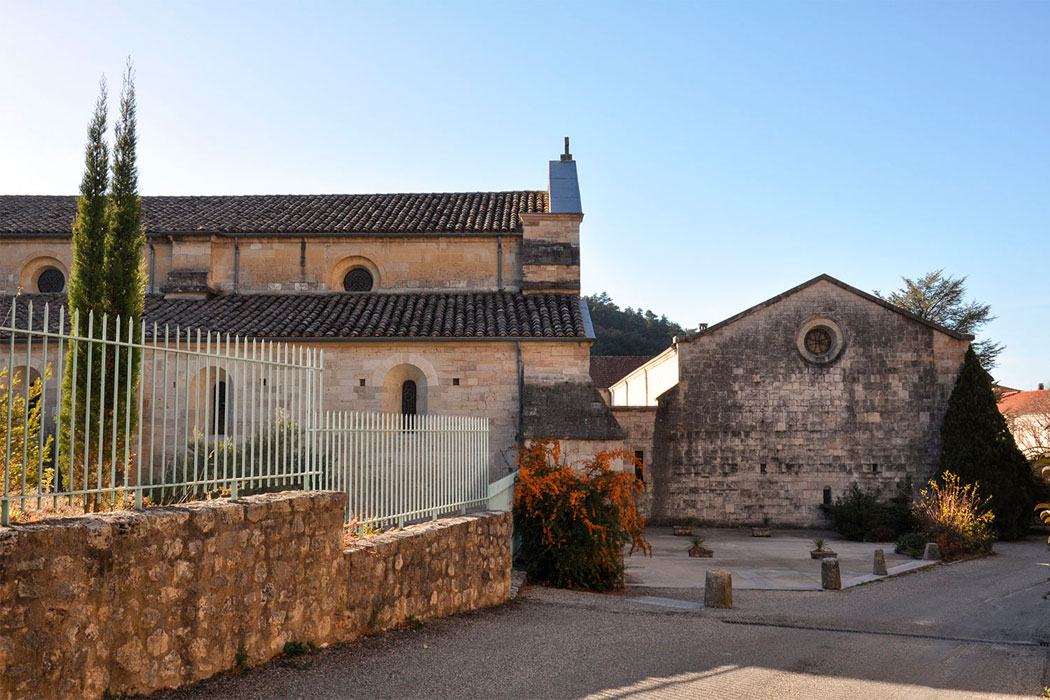
The name of the first, or first abbots of this house is unknown; it is not until 1145 that the first known abbot, Leuzon, is recorded. Confusion has existed between this Abbey of Aiguebelle and that of Bellaigue (Puy-de-Dôme). Likewise, the foundation of the Abbey of Feniers (Cantal) in 1173 has also been wrongly attributed to Bellaigue, although it was in fact a foundation of Aiguebelle. The monastery experienced a period of prosperity, especially under the abbacy of Albéric (1150–1173), during which most of the monastic buildings were erected; it possessed several granges and enjoyed rights of justice.
In the fourteenth century a period of decline began: the community decreased in size, suffered outbreaks of epidemics and, although the impact of the Hundred Years’ War does not appear to have been particularly severe, the number of monks was reduced to only five. In 1413 the Cistercian nunnery of Bouchet was suppressed, and its properties were incorporated into Aiguebelle. The monastery continued to exist during a period of limited activity, about which little information is available, and at the end of the fifteenth century it adopted the regime of commenda.
Affiliation of Aiguebelle
According to Originum Cisterciensium (L. Janauschek, 1877)
Around 1549 an earthquake damaged several parts of the monastery. When the Wars of Religion reached the area in 1574, the Huguenots found a complex partly in ruins, forcing the community to flee and seek refuge elsewhere. As early as 1567, however, restoration work had begun in order to make the monastery habitable again, allowing it to survive until the Revolution. In 1791, still in a process of recovery, the last three monks were forced to leave, and the monastery remained unoccupied until 1810, when it passed into private ownership following an auction.
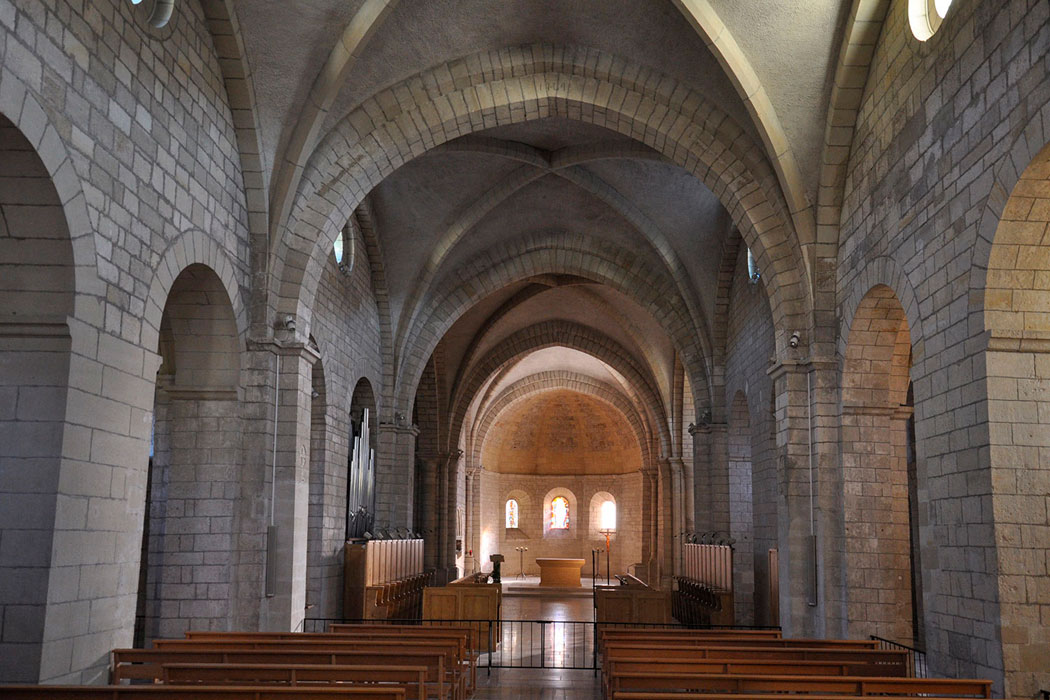
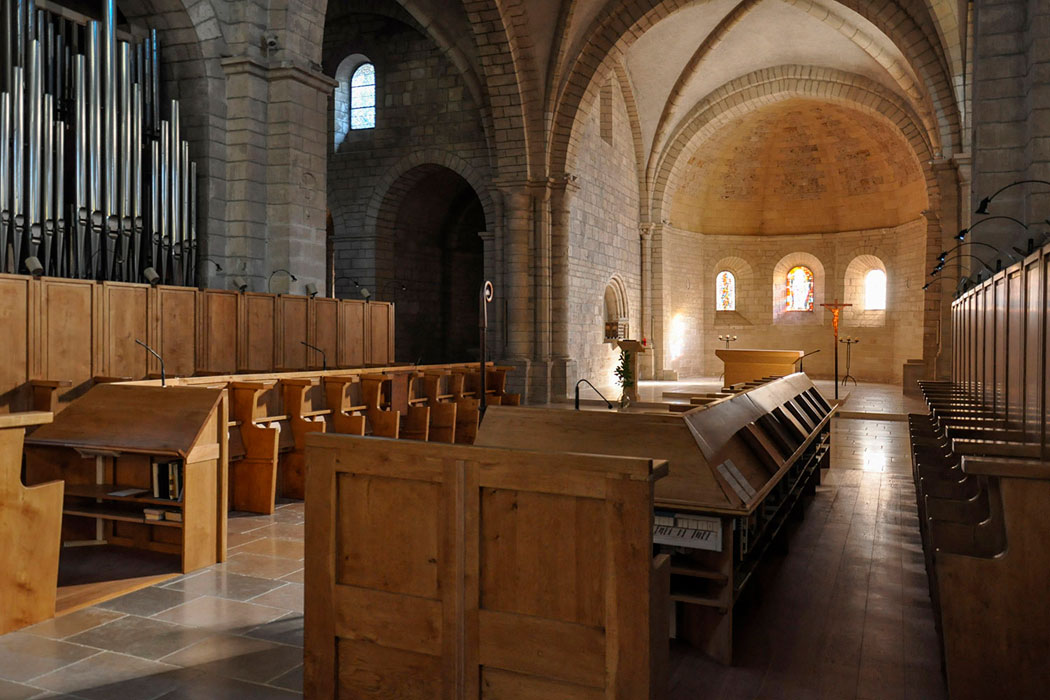
In 1815 Aiguebelle was acquired by the Trappists, and restoration and recovery began the following year. In 1834 Étienne was elected the first abbot of the renewed monastery, which experienced remarkable growth: by 1850 it numbered 233 monks. From Aiguebelle other foundations were established, both in France and abroad. Among the monastic buildings, the church is particularly noteworthy; it preserves its Romanesque structure despite later alterations and restorations. It is a three-aisled building, with a large central nave and a transept; the chancel is formed by a central apse, as wide as the nave, and two pairs of additional apses opening onto the arms of the transept.
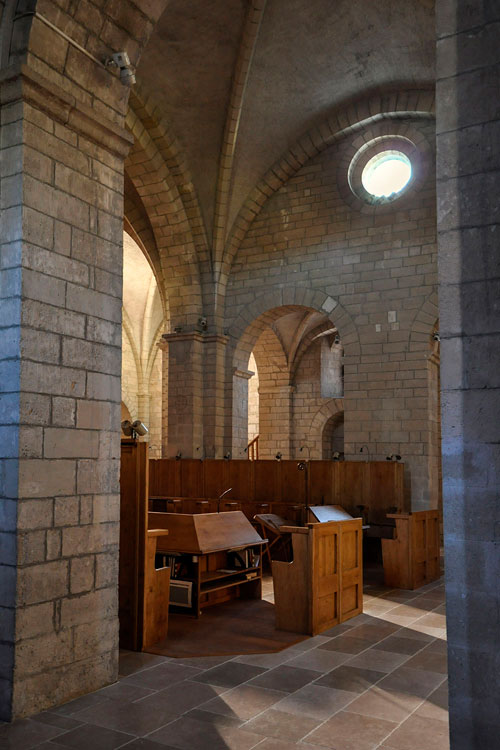
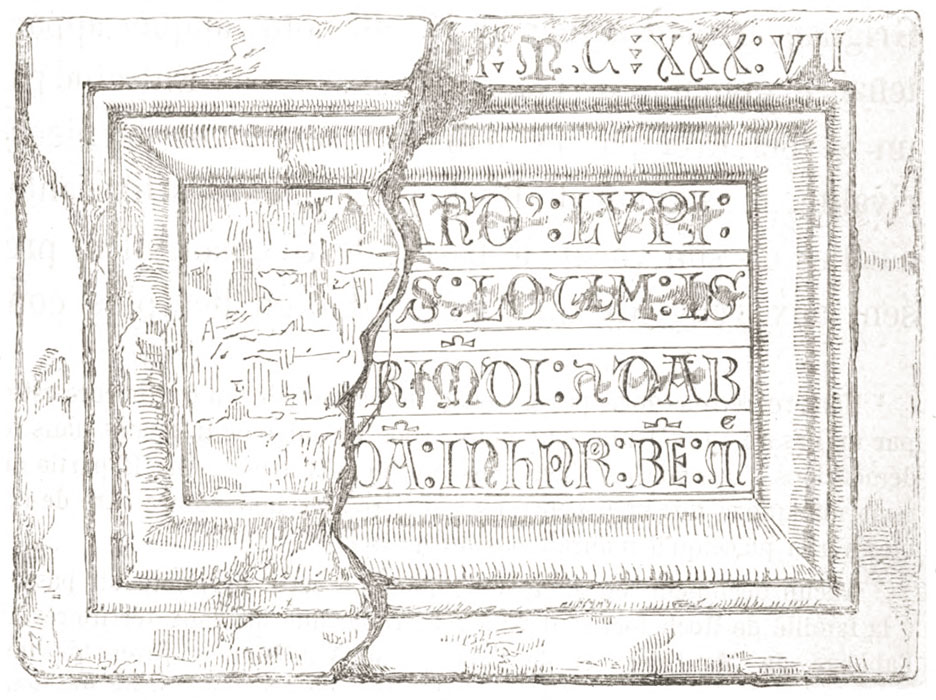
Inscription relating to the foundation, dated 1137
Illustration from Annales de l'Abbaye d'Aiguebelle (1863)
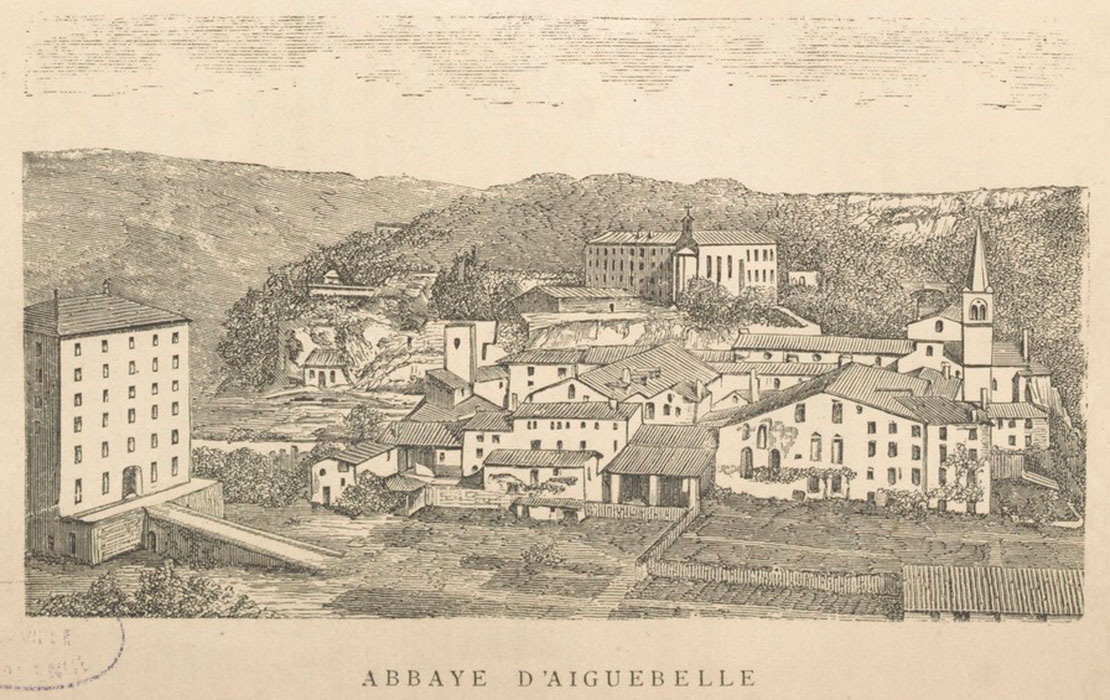
Illustration from L'abbaye d'Aiguebelle (1881)
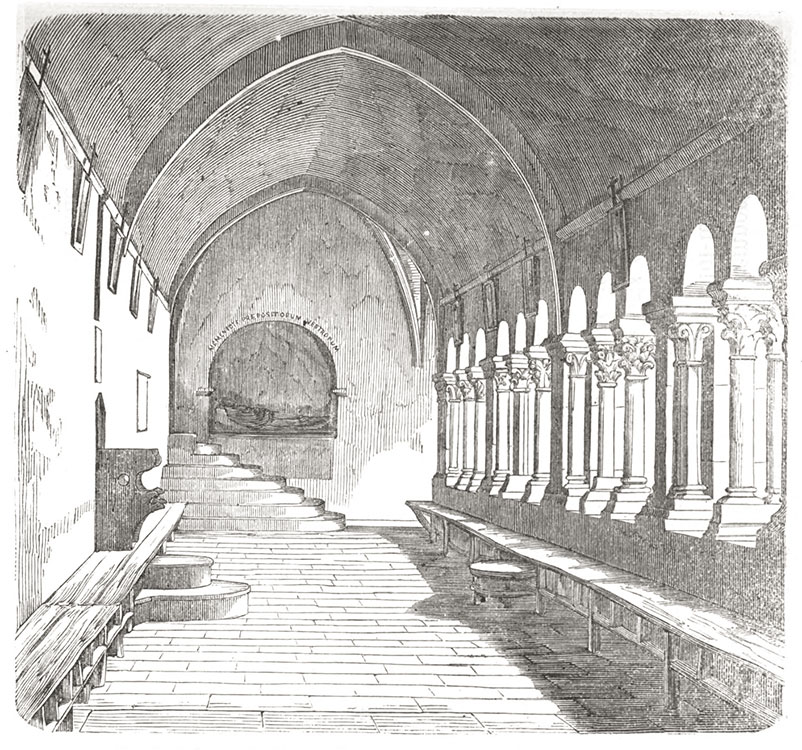
Illustration from Annales de l'Abbaye d'Aiguebelle (1863)
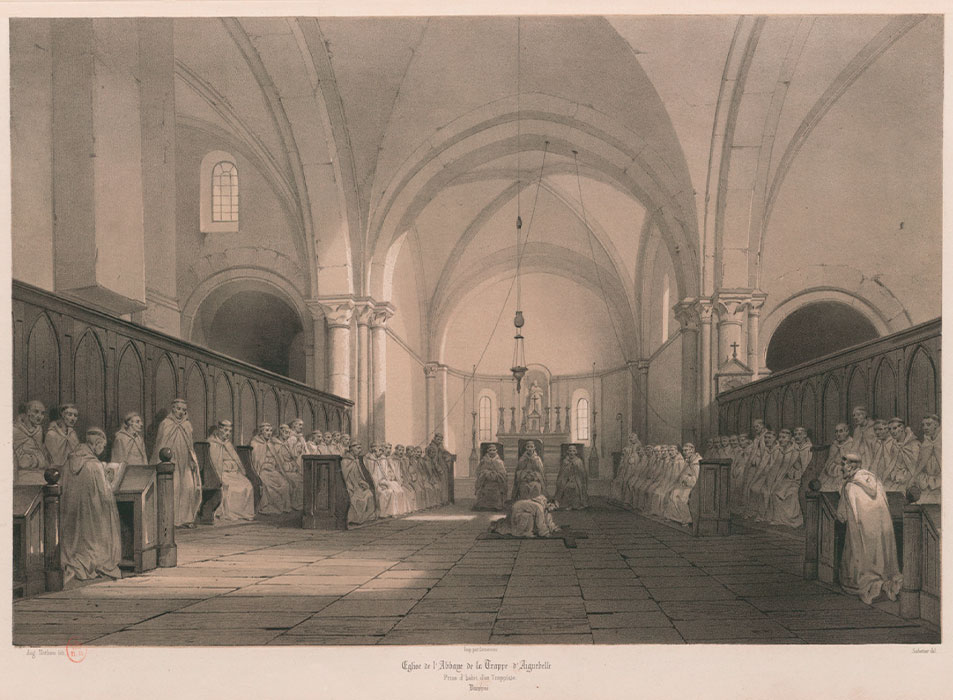
Illustration from Voyages pittoresques et romantiques dans l'ancienne France (1854)
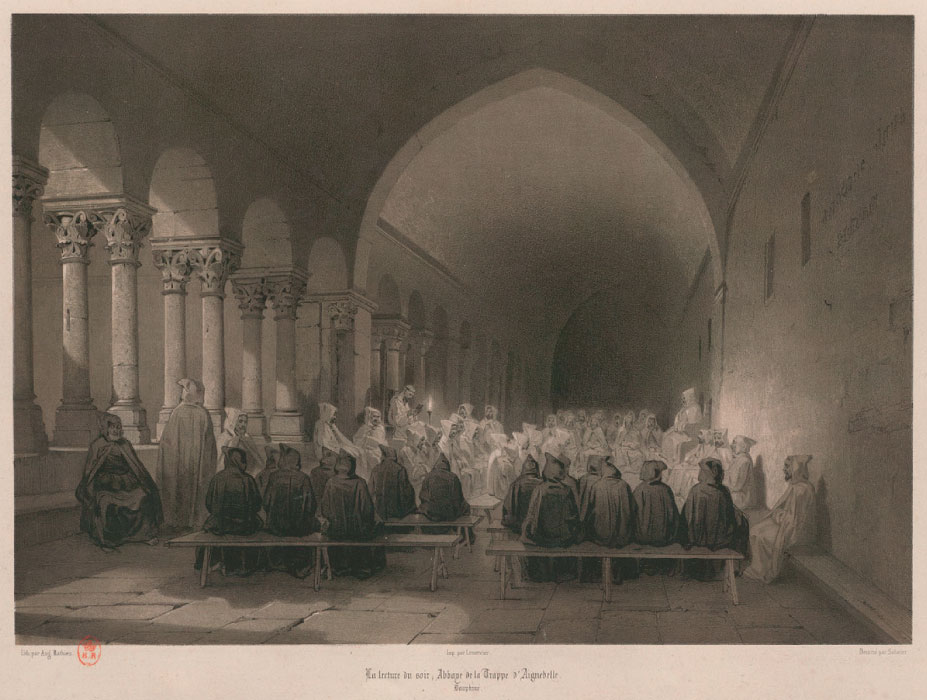
Illustration from Voyages pittoresques et romantiques dans l'ancienne France (1854)
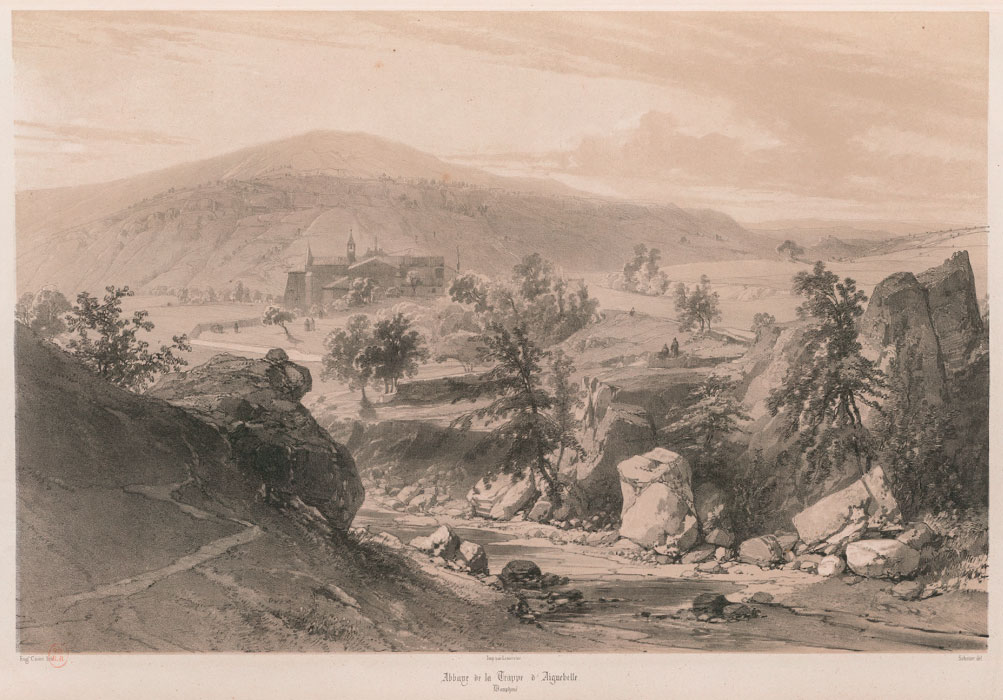
Illustration from Voyages pittoresques et romantiques dans l'ancienne France (1854)
- AUBERT, Marcel (1943). L’architecture cistercienne en France. Vol. I. París: Ed. d’Art
- BAUDRILLART, Alfred (1909). Dictionnaire d'histoire et de géographie ecclésiastiques. Vol. 1. París: Letouzey et Ané
- BESSE, J.-M. (1909). Abbayes et prieurés de l'ancienne France. Vol. 2: Provinces ecclésiastiques d’Aix, d’Arles, Avignon et Embrun. Abbaye de Ligugé
- BOTTINEAU-FUCHS, Yves (2017). L’abbaye Notre-Dame d’Aiguebelle. L’art cistercien réinventé. París: Picard
- BRINGER, Rodolphe (1837). L'abbaye d'Aiguebelle. Le Tricastin, núm. 85
- FILLET, L. (1881). L'abbaye d'Aiguebelle (Drôme). Revue du Dauphiné et du Vivarais, vol. 5. Vienne
- GAILLARDIN, Casimir (1841). Vie du R.P. Dom Étienne fondateur et abbé de la Trappe d'Aiguebelle. París : Vaton
- JANAUSCHEK, Leopoldus (1877). Originum Cisterciensium. Vol. 1. Viena
- LACROIX, André (1877). Arrondissement de Montélimar, vol. 5. Valence: Combier-N.
- NADAL, Joseph Cyprien (1855). Histoire hagiologique ou Vies des Saints et des Bienheureux du Diocèse de Valence. Valence: M. Aurel
- SAINT-MAUR, Congregació de (1715). Gallia Christiana in provincias ecclesiasticas distributa. Vol. 1. París: Coignard
- SÉJALON, Hugues) (1863). Annales de l'Abbaye d'Aiguebelle de l'Ordre de Citeaux, 2 vols. Valence: Céas
- TAYLOR, J.; i altres (1854). Voyages pittoresques et romantiques dans l'ancienne France. Dauphiné. París: Firmin Didot
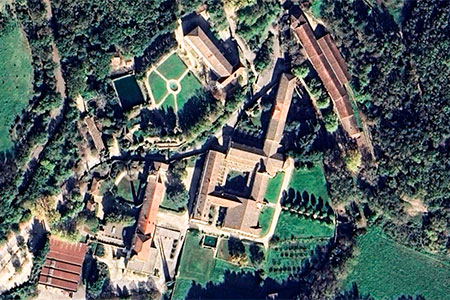
The Abbey of Aiguebelle, still active today, is located in the commune of Montjoyer, in an isolated setting to the south-east of Montélimar