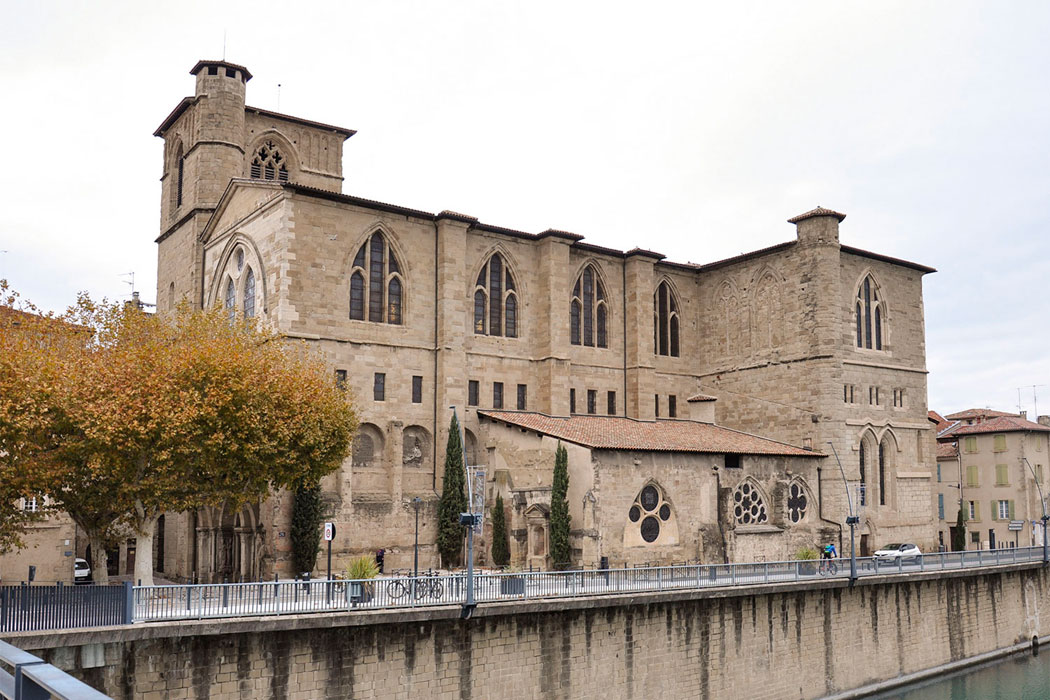


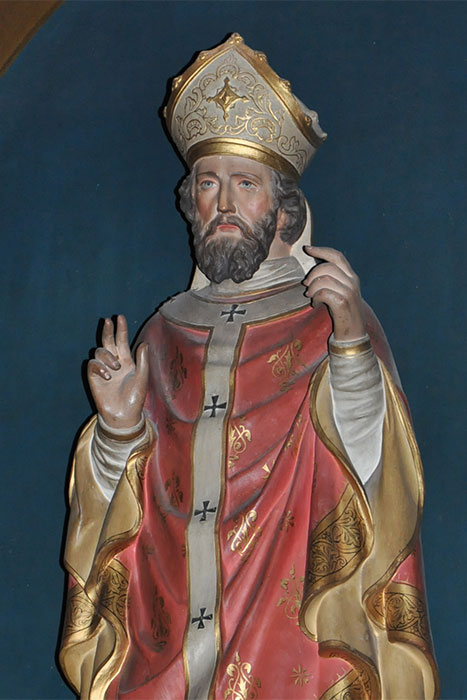
After founding the Abbey of Notre-Dame d’Ambronay (Ain) in 838, Archbishop Barnard of Vienne (c. 778–842) founded this monastery, which he dedicated to Saints Peter and Paul. The founder died at this site, where he was buried and venerated; for this reason, the original dedication was later replaced by that of Saint-Barnard.
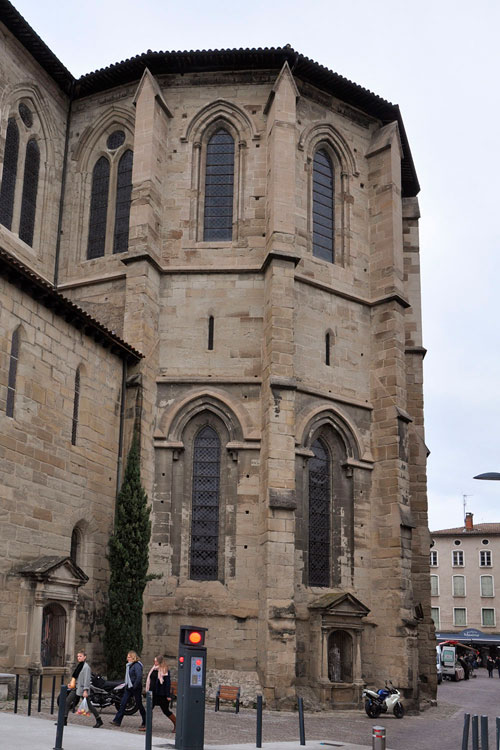
That first monastery had only a short existence: in 860 it was destroyed by the Normans and could not be restored until around 908, when reconstruction began. It was again destroyed around 932, as a result of violent disputes with the Archbishop of Vienne. It was subsequently rebuilt, this time with the establishment of a community of Augustinian canons, who replaced the Benedictines. From then on, the canonry was closely linked to the episcopal see of Vienne.
From 1025 onwards, Léger († 1070) held the office of abbot. He ordered the construction of a bridge over the River Isère, next to the monastery, creating a new crossing that promoted the economic development of both the town and the abbey. The same abbot also oversaw the reconstruction of the church and other monastic buildings. During his abbacy, the site suffered several fires. Later, following a military episode in 1133, Romans and the abbey itself were once again devastated by a major fire, which made it necessary to rebuild the monastery during the 13th century; as a result, only a few elements of the earlier construction have survived.
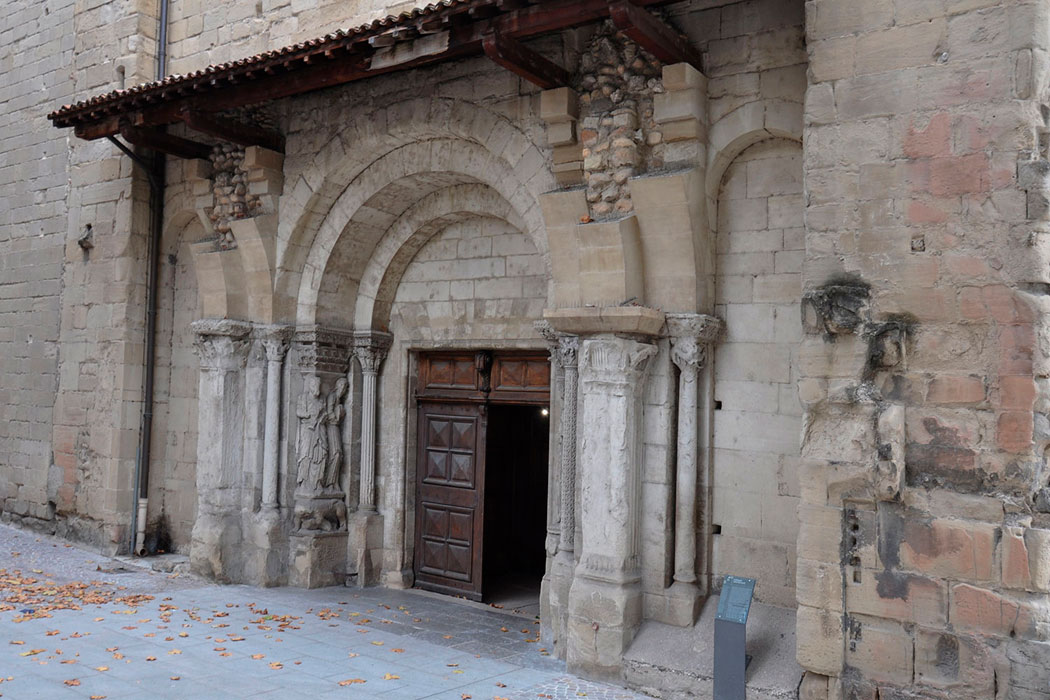
Western portal
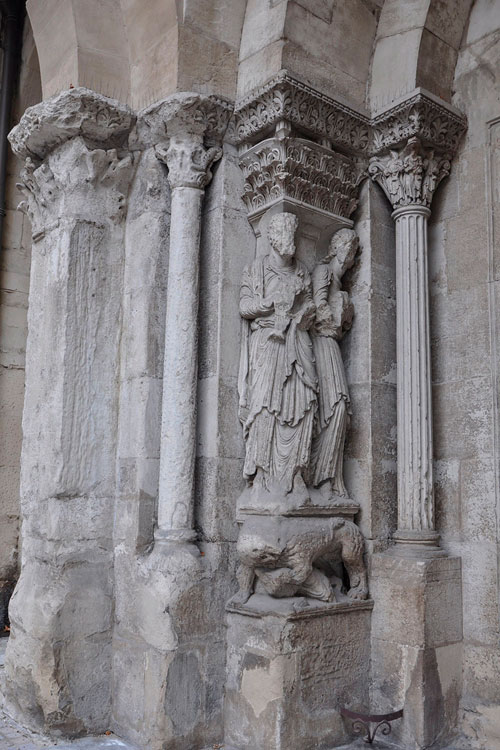
Western portal
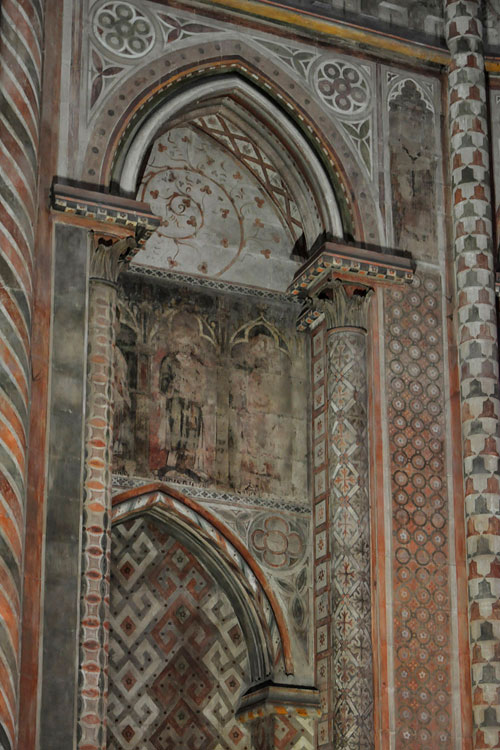
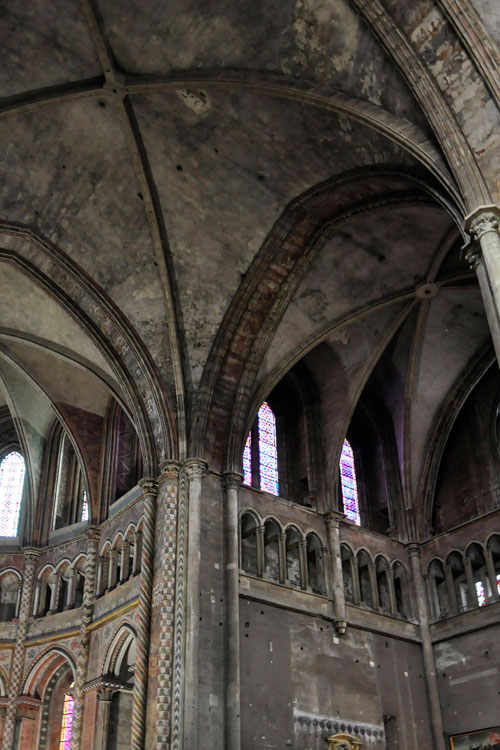
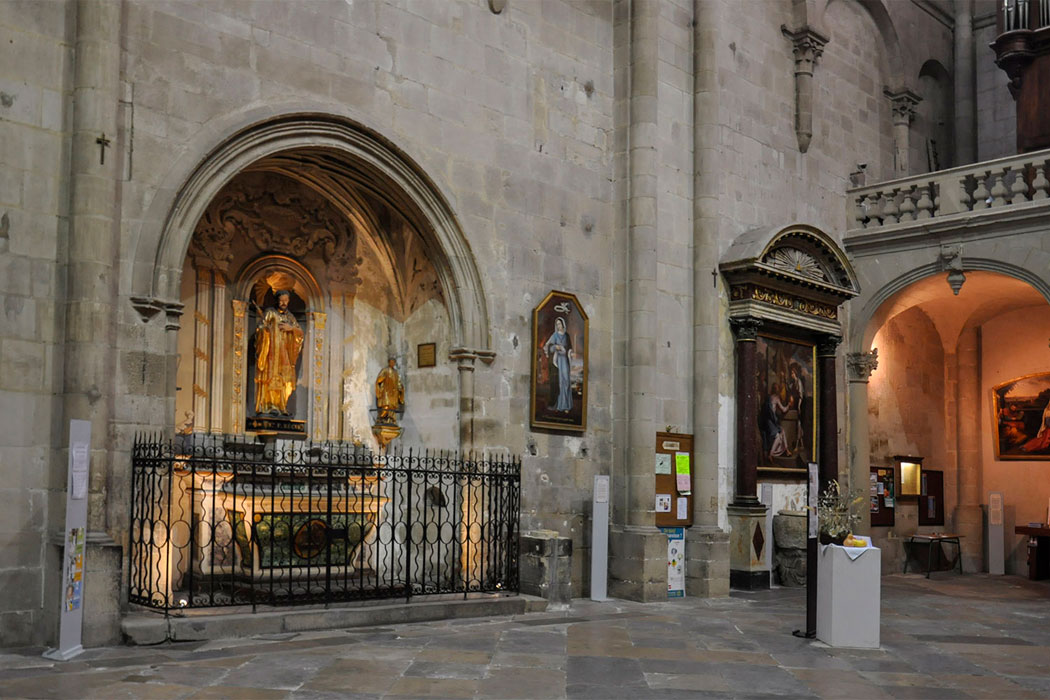
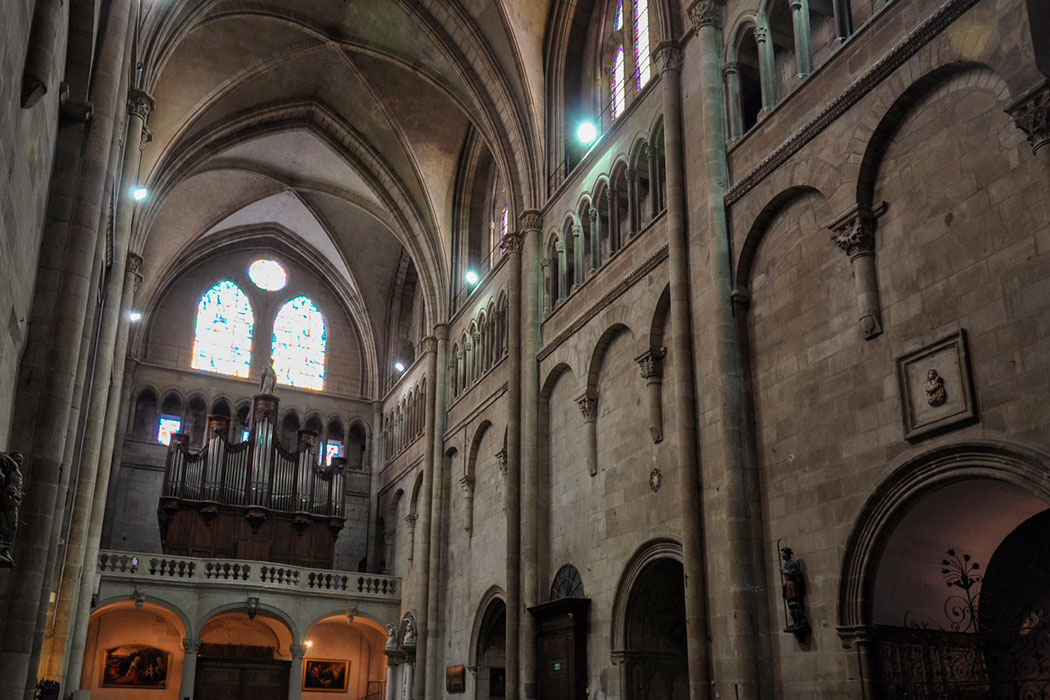
Misfortune returned during the Wars of Religion: in 1562 the church was looted and soon afterwards was again seriously damaged, eventually falling into ruin. This situation required further reconstruction campaigns, which continued well into the 18th century. After the Revolution, in the 19th century, the building was protected and restored, work that continued during the following century. Today, the Romanesque structure of the single nave, dating from the 12th century, is preserved, together with the transept and the chancel, from the 13th century. Significant remains of the western portal, with column statues, are also preserved, as well as several early capitals inside the church.
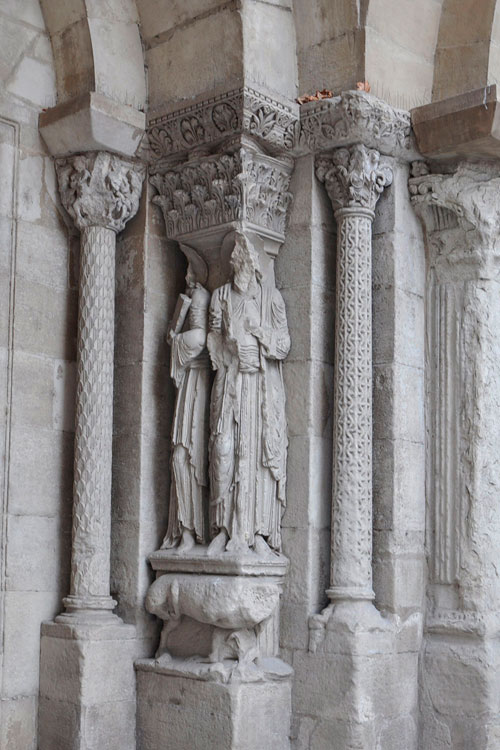
Western portal
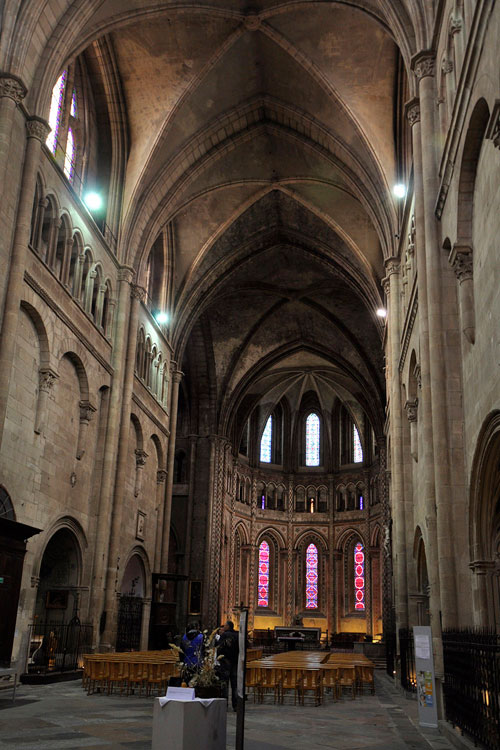
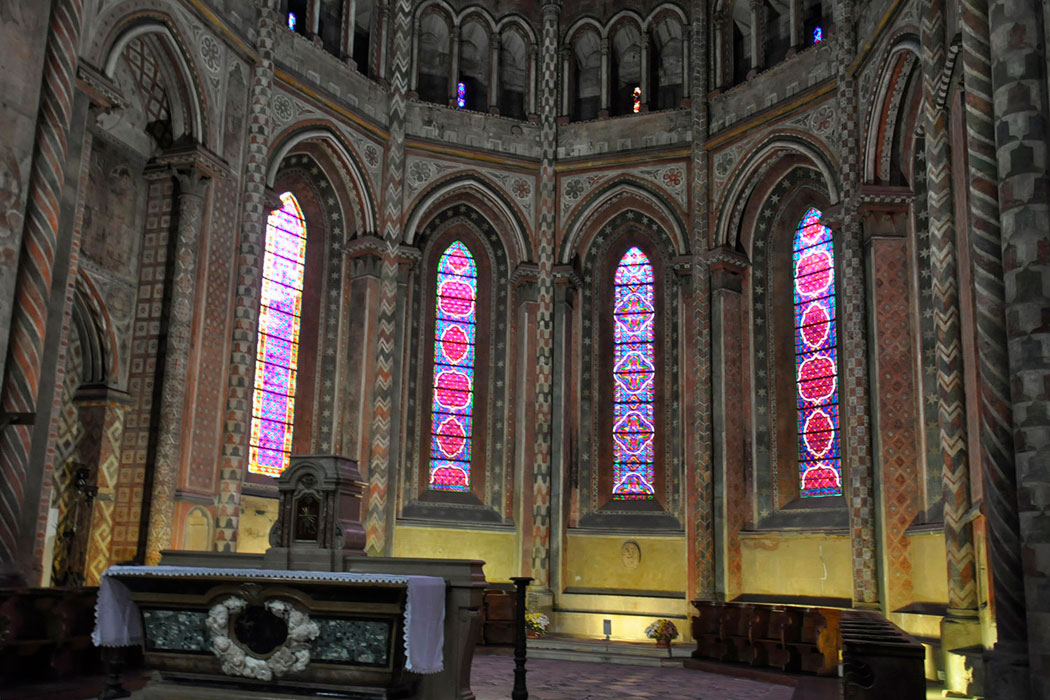
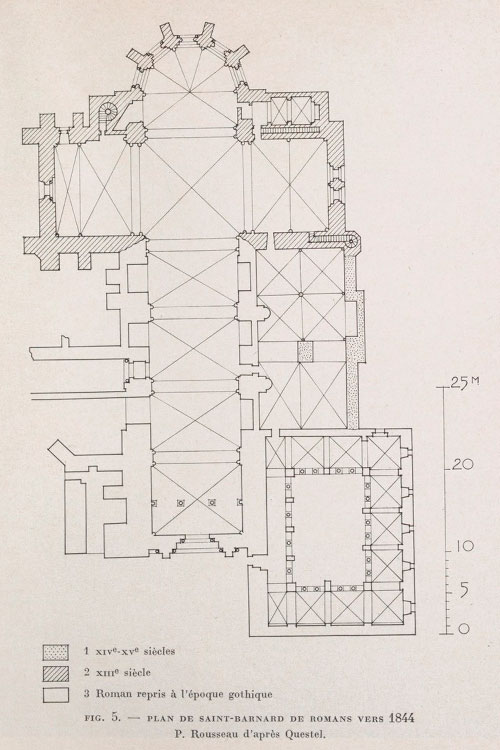
Church floor plan (c. 1844)
Published in Congrès archéologique de France (1974)

Armorial général de France (s. XVIII)
Bibliothèque nationale de France
- BARRUOL, Guy (1992). Dauphiné roman. La Nuit des Temps, 77. Zodiaque
- CHEVALIER, Ulysse (1898). Cartulaire de l'abbaye de Saint-Barnard de Romans, vol. 1. Romans
- COTTINEAU, Laurent-Henri (1939). Répertoire topo-bibliographique des abbayes et prieurés. Vol. 2. Mâcon: Protat
- FONT-RÉAULX, M. de (1925). Romans (Drôme), église Saint-Barnard. Congrès archéologique de France, 86 ss. París: Picard
- GIRAUD, Paul-Émile (1856). Essai historique sur l'abbaye de S. Barnard et sur la ville de Romans, 2 vols. Lyon: Perrin
- JOUVE, Esprit-Gustave (1867). Ville de Romans. Statistique monumentale de la Drôme. Valence: Céas
- NUGUES, A. (1877). Notes sur l'église de Saint-Barnard. Bulletin de la Société d'archéologie et de statistique de la Drôme, vol, 11
- SAINT-MAUR, Congregació de (1865). Gallia Christiana in provincias ecclesiasticas distributa. Vol. 16. París: Firmin Didot
- THIRION, Jacques (1974). L’ancienne collégiale Saint-Barnard de Romans. Congrès archéologique de France, 130 ss. Société française d'archéologie
- THIRION, Jacques (1974). Les sculptures romanes de Saint-Barnard de Romans (Drôme). Comptes rendus des séances de l'Académie des Inscriptions et Belles-Lettres, núm. 118/2
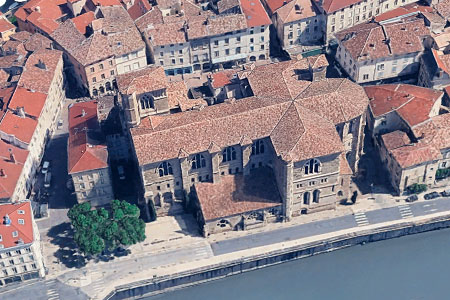
The church stands at the centre of the commune of Romans-sur-Isère, close to the River Isère