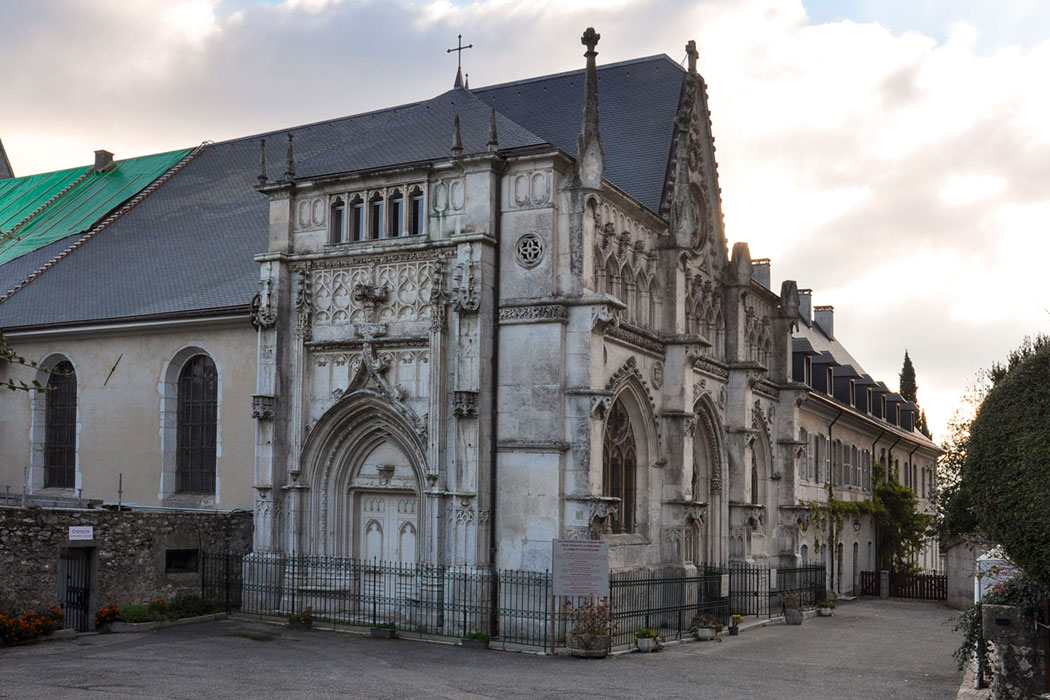

The Cistercian monastery of Hautecombe, founded in the time of Bernard of Clairvaux (1090–1153), had a remarkable history, closely linked to the County of Savoy, but entered into decline from the fifteenth century onwards. It was rebuilt in the nineteenth century, when it was once again occupied by various monastic communities.
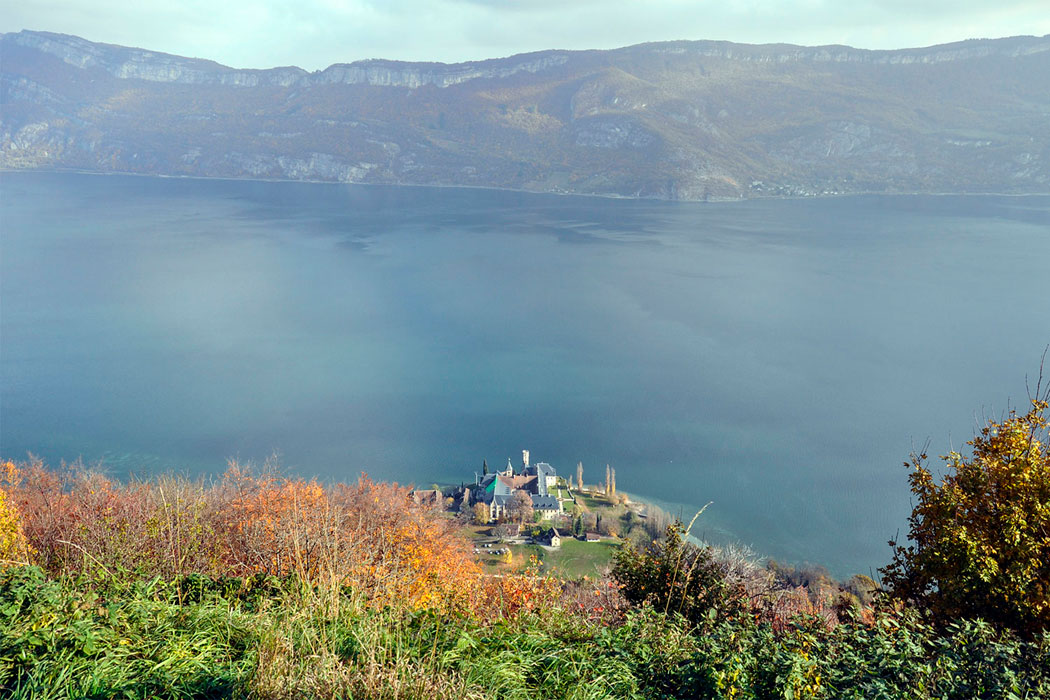
The origin of Hautecombe is connected with the monastery of Notre-Dame d’Aulps (Haute-Savoie), a house that maintained close ties with the abbey of Molesme (Côte-d’Or). At the beginning of the twelfth century, a group of monks from Aulps moved to a site on the eastern shore of Lake Bourget, where they established a priory, or monastery, known as Alta Comba, practising a form of life close to eremitism. Although the settlement may have been earlier, the donation of that territory to the community was confirmed in 1121.
Tradition records the presence there of Bernard of Clairvaux, which is said to have influenced the community by introducing Cistercian practices and ultimately transforming it into a monastery of the Order in 1135. Bernard sent several monks there, among them Vivien, who became the first abbot of the house. In 1139 the community, led by the new abbot Amédée d’Hauterives, moved to a new site on the western shore of Lake Bourget, land granted to them by Amadeus III of Savoy (1095–1148), where they built the new monastery. The house enjoyed a long period of prosperity, thanks above all to the support of the Counts of Savoy, notably Humbert III (1136–1189), son of Amadeus III.
The County of Savoy made it the burial place of many of its members. This flourishing period allowed the abbey to take part in the foundation of other establishments, such as the abbey of Fossanova (Lazio, Italy), with a dependency at Santo Stefano del Bosco (Calabria). It may also have participated in more distant and short-lived foundations, such as Sacaraz (Peloponnese) and Sanctus Angelus in Petra (Constantinople). In 1440 Duke Amadeus VIII of Savoy (1383–1451), elected pope (antipope) under the name Felix V, granted the title of abbot to Pierre Bolomier, a court official, thus inaugurating the system of commendatory abbots, which harmed the development of the house.
Affiliation of Hautecombe
According to Originum Cisterciensium (L. Janauschek, 1877)
Hautecombe’s decline continued and, by the time of the Revolution, the community numbered only ten monks. Shortly before, it had suffered a military occupation that damaged the buildings. In 1793 the community was dispersed, the site was plundered and eventually sold. It was used for industrial purposes until 1807, which severely damaged the monastery. Reconstruction began in 1824 and, in 1826, a new Cistercian community from Italy arrived; in 1864 it was replaced by another from Sénanque (Vaucluse). In 1922 the monastery was occupied by Benedictines of the Solesmes Congregation until 1987, when they moved to Ganagobie (Alpes-de-Haute-Provence). Since 1992 it has been occupied by a community of Chemin Neuf.
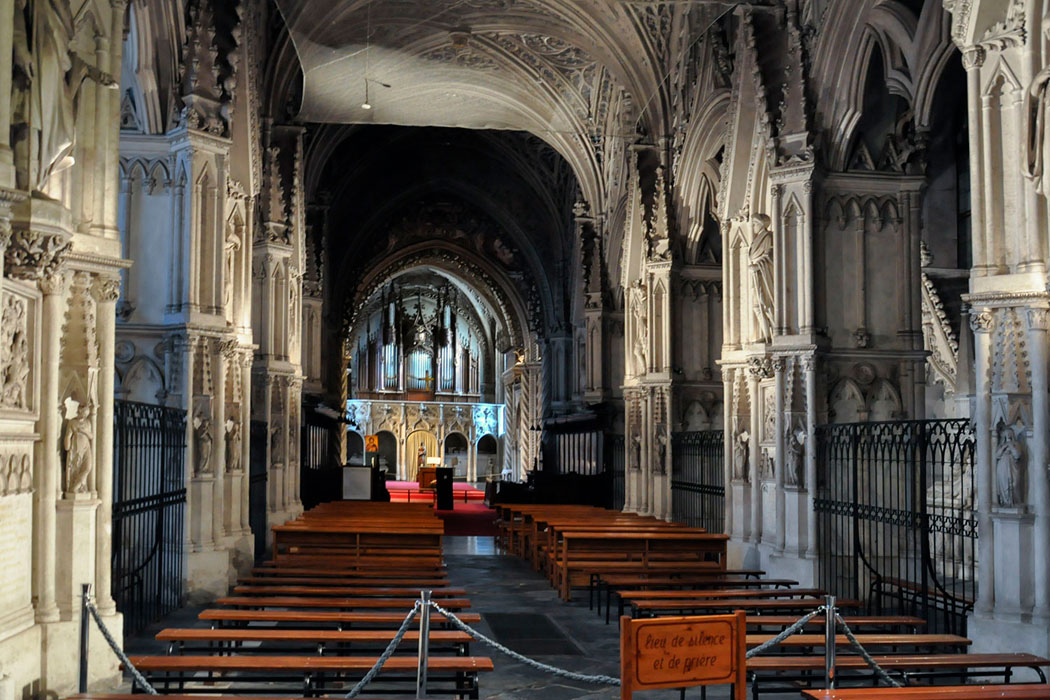
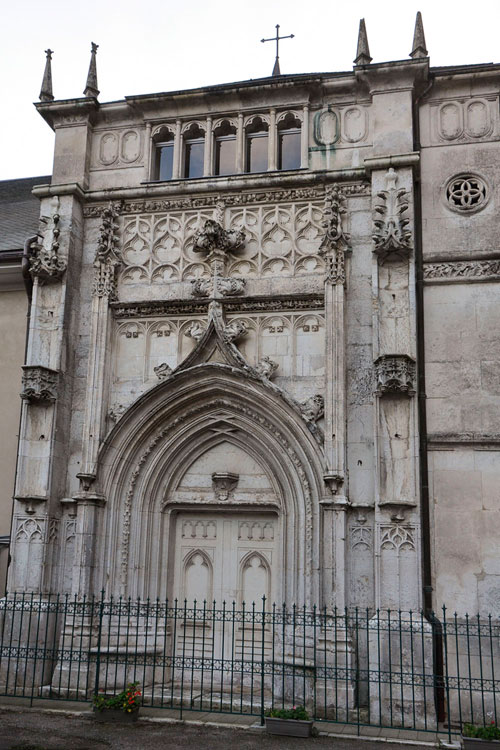
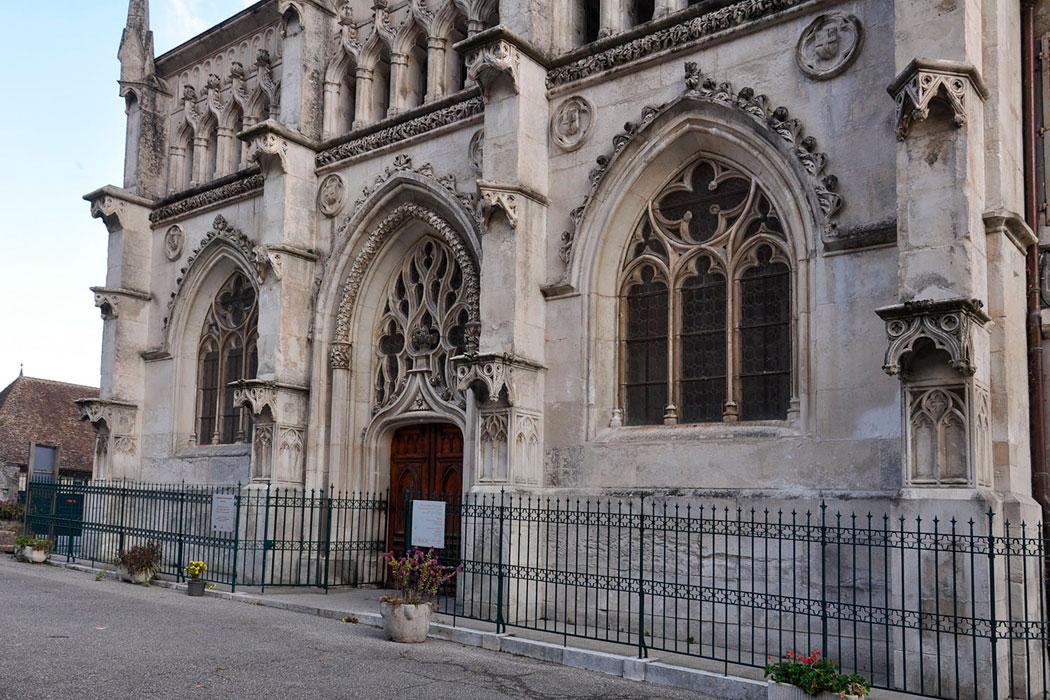
Today a restored monastery can be seen; the church dates from the nineteenth century and is built in Neo-Gothic style. Inside are the tombs of the House of Savoy; almost all of them also date from the nineteenth century, having been rebuilt after their destruction when the church was converted into a porcelain factory. The cloister, rebuilt in the eighteenth century, is also preserved. Older is the grange batelière, a singular structure probably dating from the mid-thirteenth century. This building allowed boats arriving at the monastery to be sheltered and goods to be stored. In the Middle Ages, a canal made it possible to navigate from the Rhône to Lake Bourget and directly to the monastery.
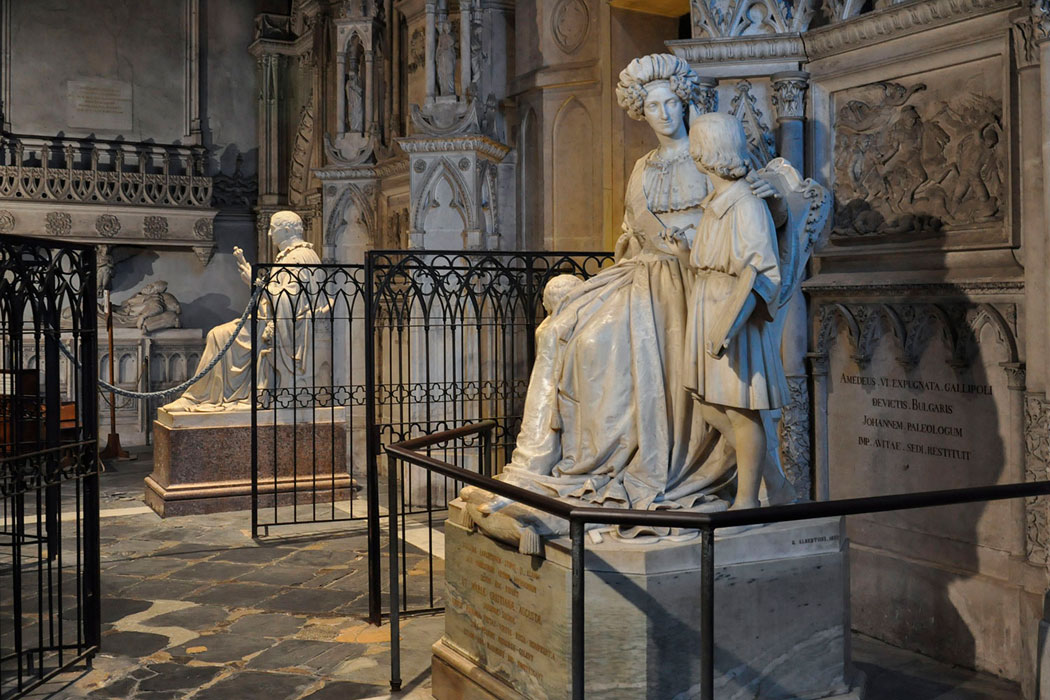
Maria Cristina of Naples and Sicily (19th century)
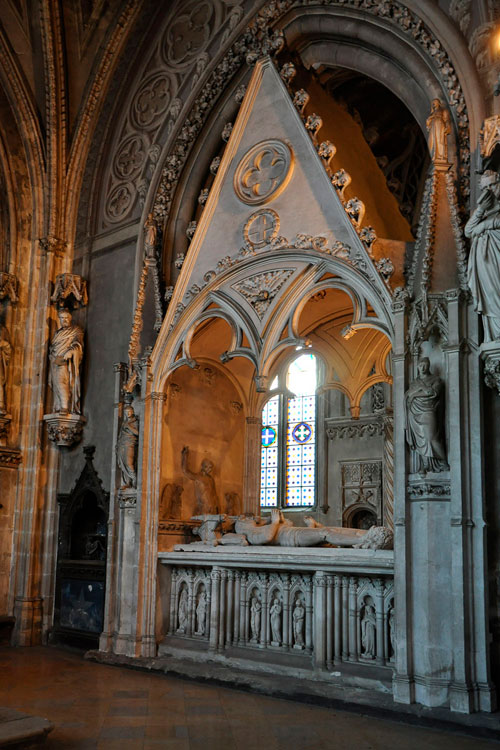
Sepulcher of Aymon of Savoy and Yolande of Montferrat
Reproduction of the 14th century tomb
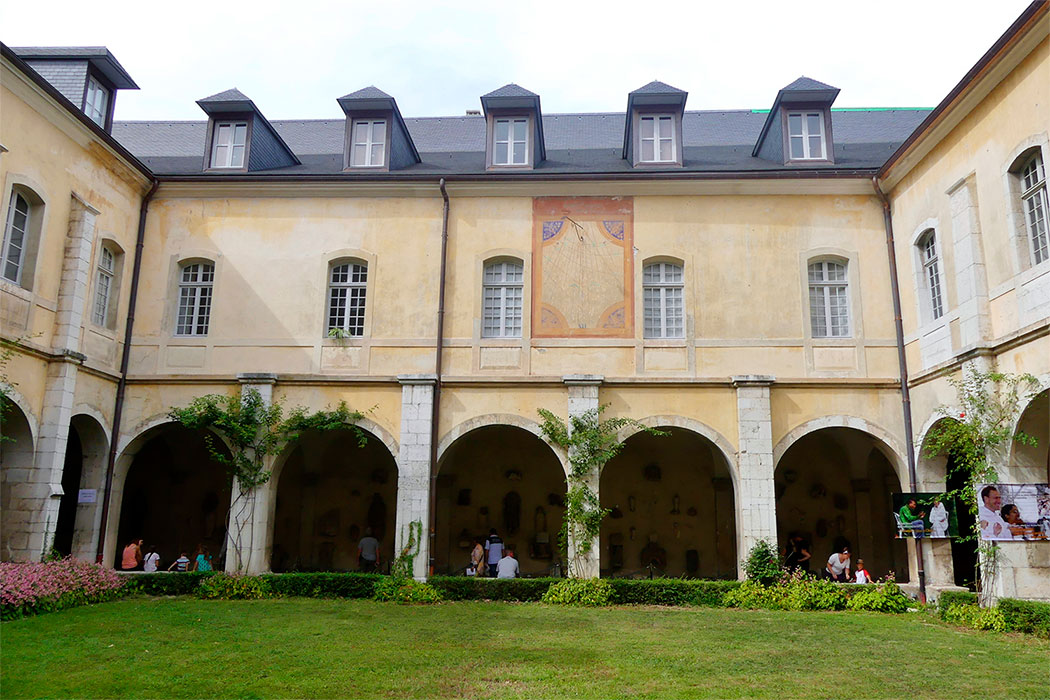
Cloister
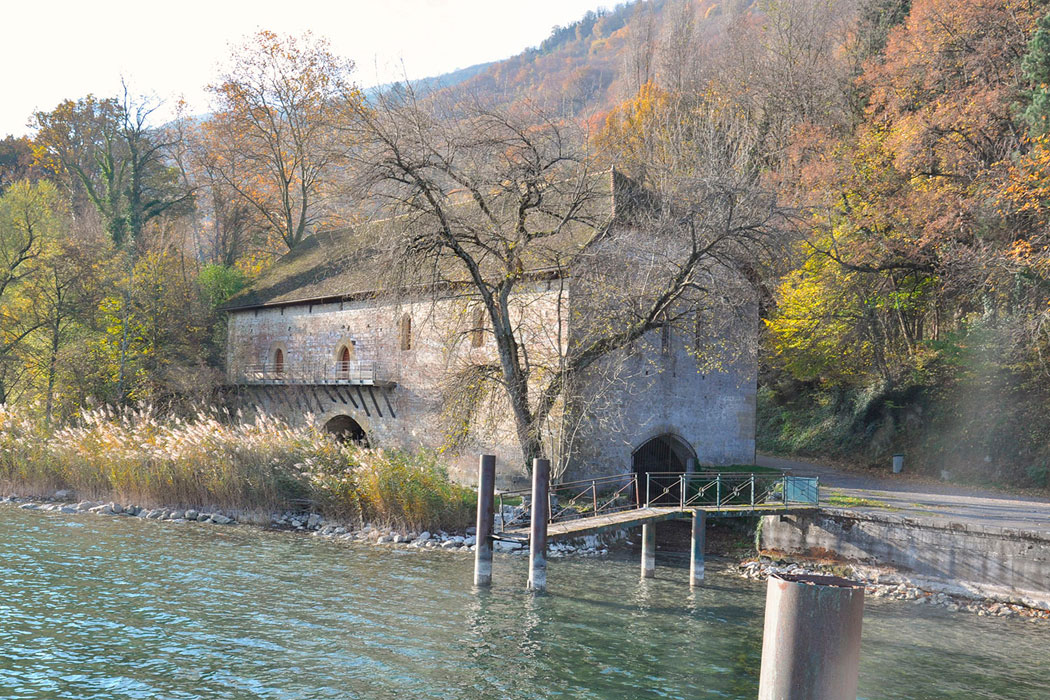
Grange batelière, 13th century
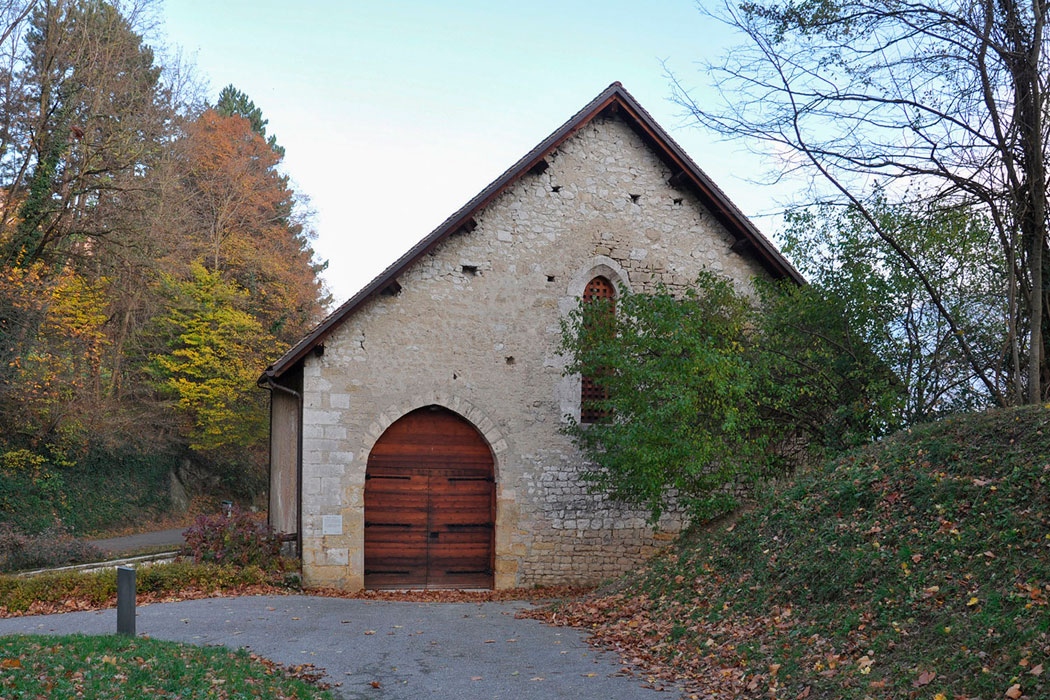
Grange batelière, 13th century
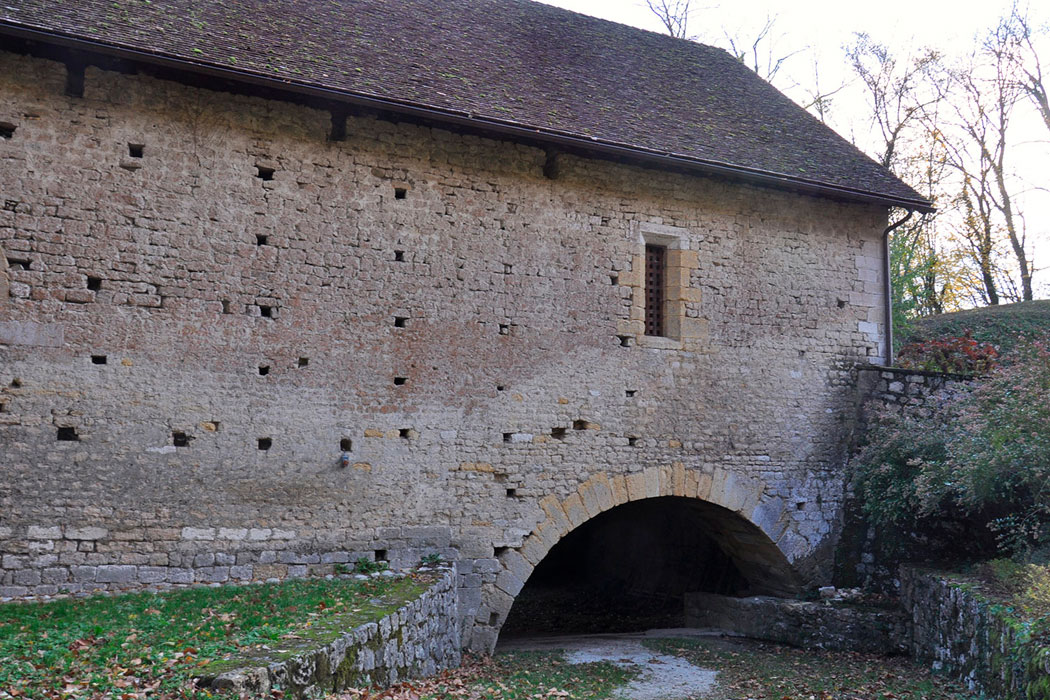
Grange batelière, 13th century
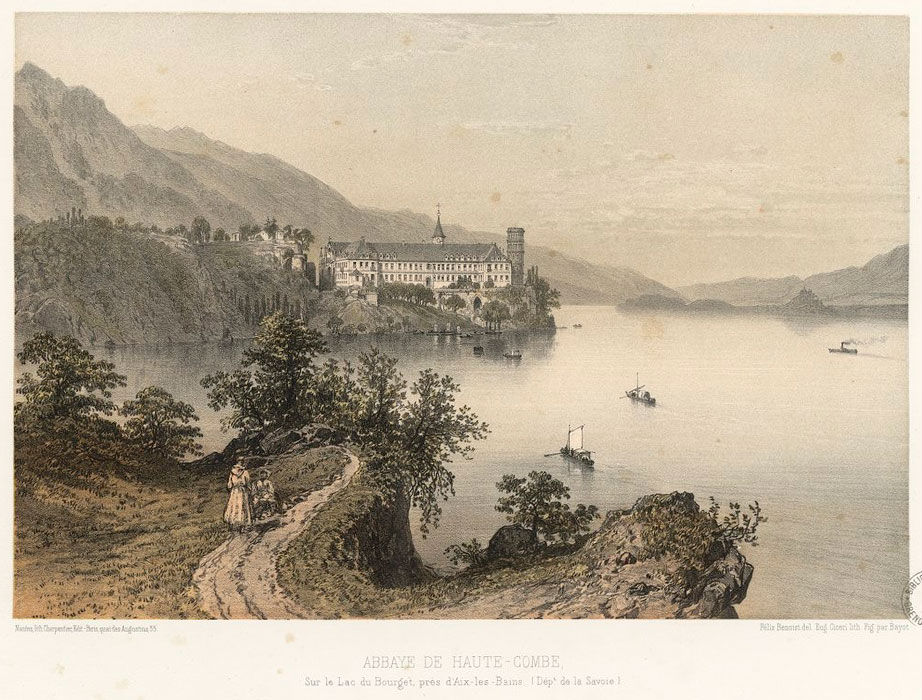
Illustration from Nice et Savoie, sites pittoresques, monuments... (1864)
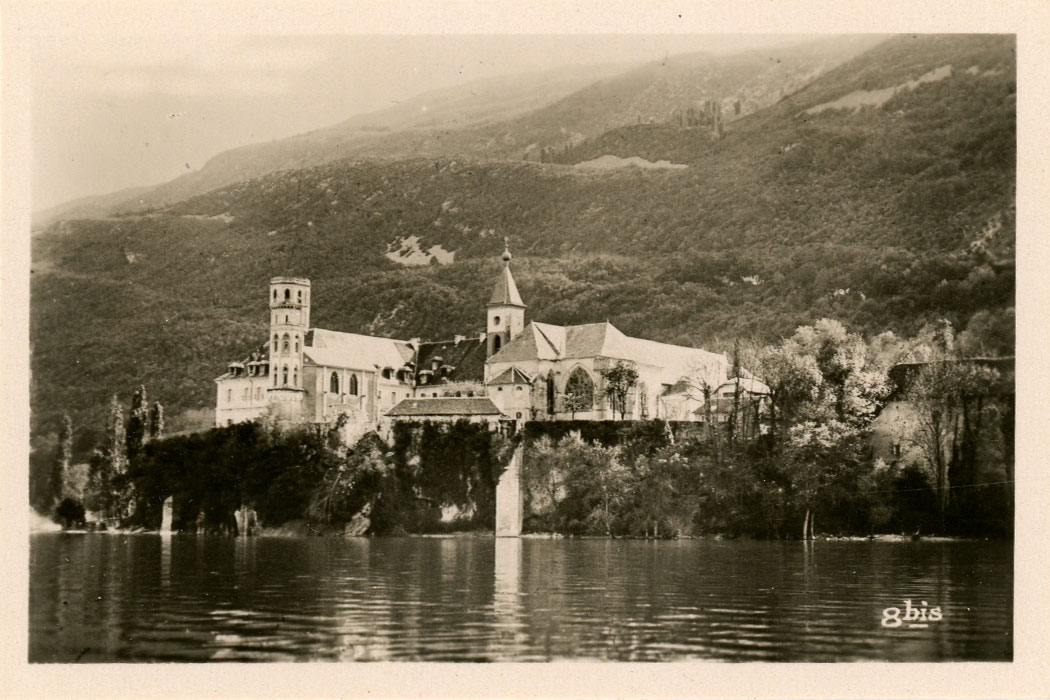
Old postcard, private collection
- AUBERT, R. (1990). Dictionnaire d'histoire et de géographie ecclésiastiques. Vol. 23. París: Letouzey et Ané
- AUBERT. Marcel (1954). La « grange d'eau » d'Hautecombe en Savoie. Bulletin Monumental, vol. 11
- BESSE, J.-M.; i altres (1939). Abbayes et prieurés de l'ancienne France. Vol. 9: Province ecclésiastique de Vienne. Abbaye de Ligugé
- BESSON, Joseph-Antoine (1871). Mémoires pour l'histoire ecclesiastique des dioceses de Geneve, Tarantaise, Aoste et Maurienne. Moûtiers: Cane
- BLANCHARD, Claudius (1874). Histoire de l'abbaye d'Hautecombe en Savoie avec pièces justificatives inédites. Chambéry: Puthod
- CLAIR, Romain (1984). Les origines de l’abbaye d’Hautecombe. Mélanges à la mémoire du père Anselme Dimier
- DESSAIX, Joseph (1864). Nice et Savoie, sites pittoresques, monuments, description et histoire. París: Charpentier
- JACQUEMOUD, Joseph (1843). Description historique de l'abbaye royale d'Hautecombe. Chambéry: Puthod
- JANAUSCHEK, Leopoldus (1877). Originum Cisterciensium. Vol. 1. Viena
- LES PRESSES MONASTIQUES (1971). Abbaye d'Hautecombe. Les Presses Monastiques
- SAINT-MAUR, Congregació de (1865). Gallia Christiana in provincias ecclesiasticas distributa. Vol. 16. París: Firmin Didot
- SOUBIGOU, Gilles; dir. (2015). L'abbaye d'Hautecombe. La passe du vent
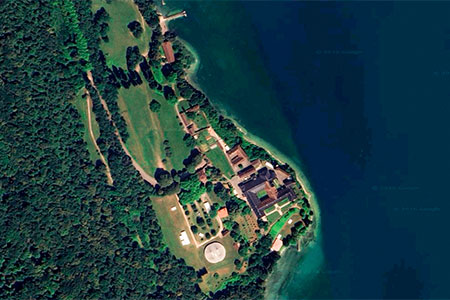
The monastery of Hautecombe stands on the shore of Lake Bourget, north of Chambéry and Aix-les-Bains