Possible monastery of Saint-Pierre d’Extravache
Stratane / Entravachia / Estravache
(Bramans, Savoie)
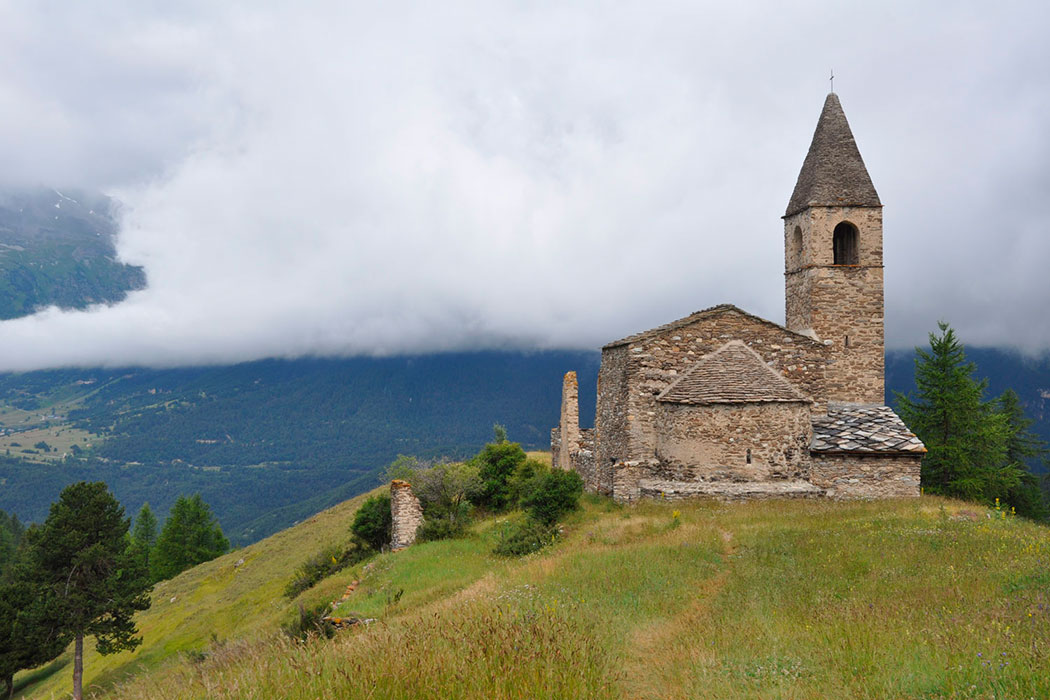


Despite the lack of conclusive documentation, Extravache has been regarded as the possible site of a small monastery in the eighth century, with roots in the early Christian period in Maurienne and a later development as a house of regular canons. Tradition recalls certain episodes of its history, but no firm evidence supports their authenticity. The remains of the church stand in a privileged location, near the Fréjus Tunnel.
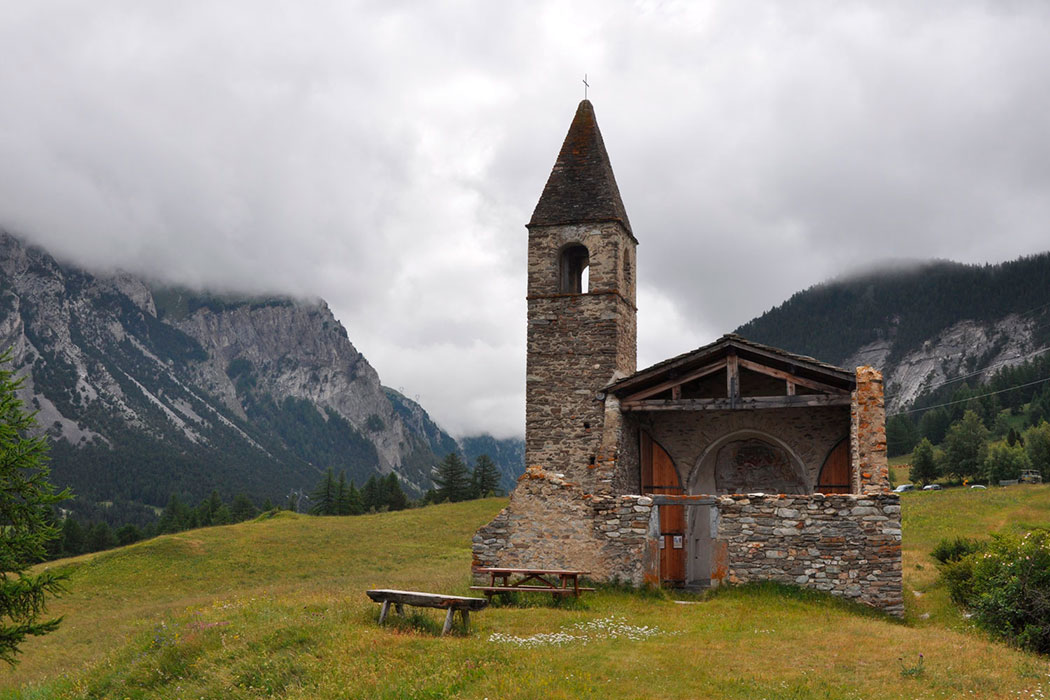
The church of Saint-Pierre d’Extravache occupies an elevated position overlooking a valley that connects with that of the River Arc. Since Antiquity, this territory was crossed by an important route which, via the Mont-Cenis Pass, linked Maurienne with Piedmont (Italy). Extravache has traditionally been attributed a very early origin, even being associated with the passage of the Apostle Saint Peter through this place—an implausible claim. In the absence of firm evidence, it is more likely that the site was occupied by a monastery in the eighth century, which has been linked to that of Novalesa (Piedmont), beyond the Mont-Cenis Pass.
That possible Benedictine establishment probably disappeared during the Saracen incursions into the region in the tenth century. The church of Extravache was rebuilt in the eleventh century, later damaged by fire and restored in the fourteenth century. At the end of that century, Jean d’Echaillon is mentioned as prior of Extravache, probably at a time when it was already functioning as an Augustinian house of regular canons. No further reliable information survives concerning the possible monastic establishment. Although other priors are recorded later, they were most likely simply responsible for the parish. In any case, the existence of a true monastic establishment at this site cannot be regarded as proven.
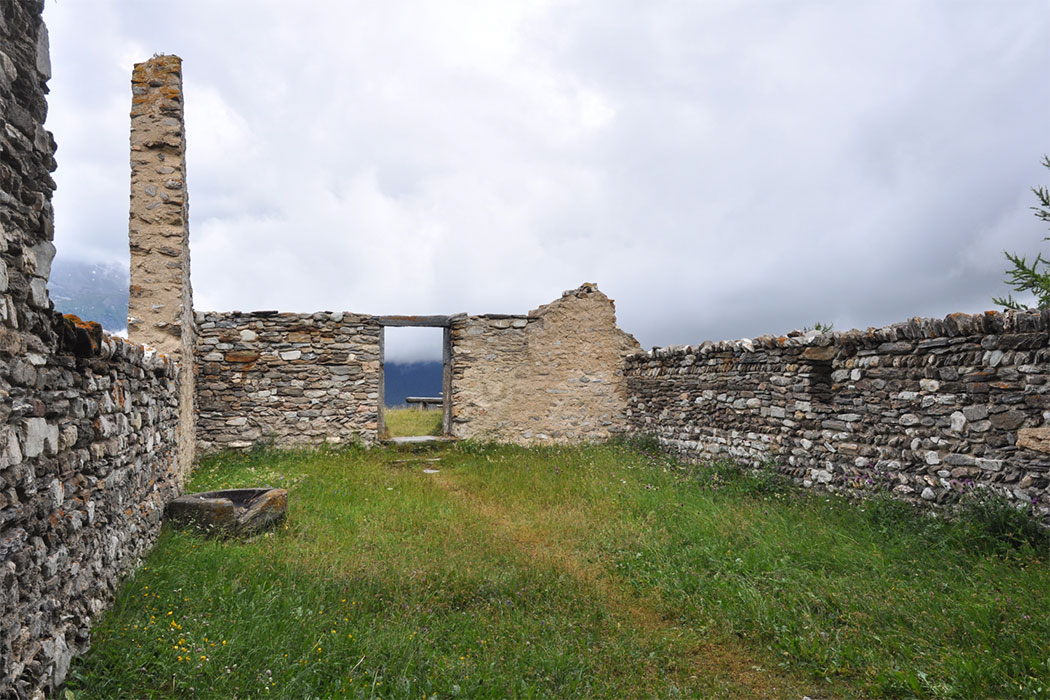
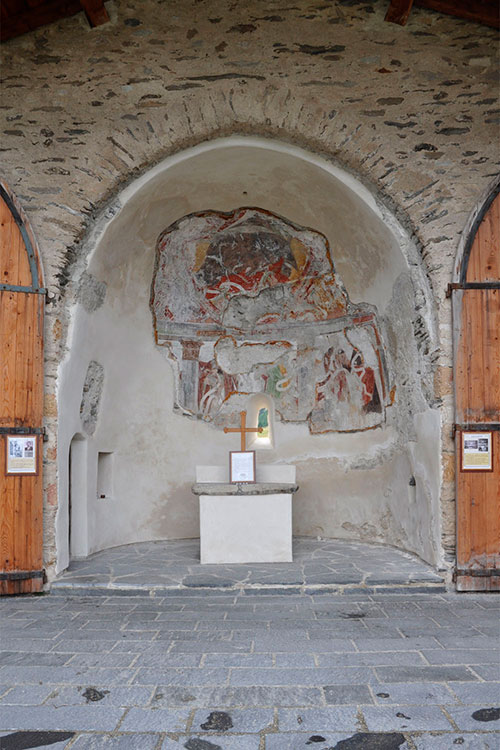
The site suffered a fire in 1803 and was again affected by flames. The church, partially preserved, dates from the eleventh century, with restoration in the fourteenth century. Traces of wall paintings survive in the apse. Although damaged by the fires, these paintings are known thanks to old photographs and the scant remains preserved. Their dating is difficult; they probably belong to different phases of rebuilding. The ruins of Extravache were consolidated in the 1930s.
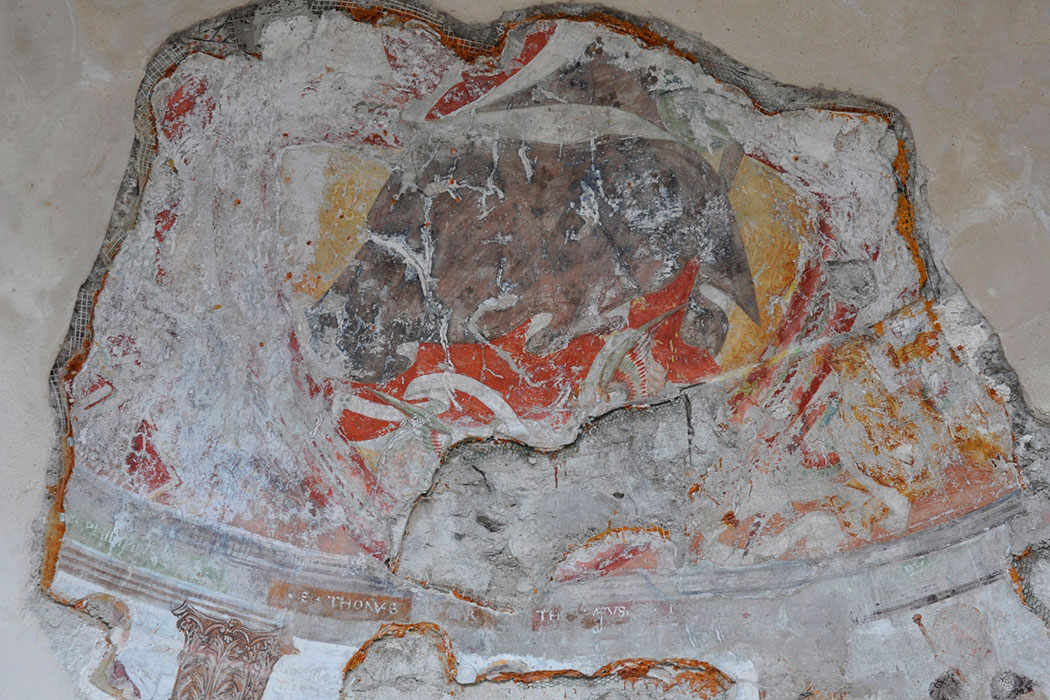
Mural paintings
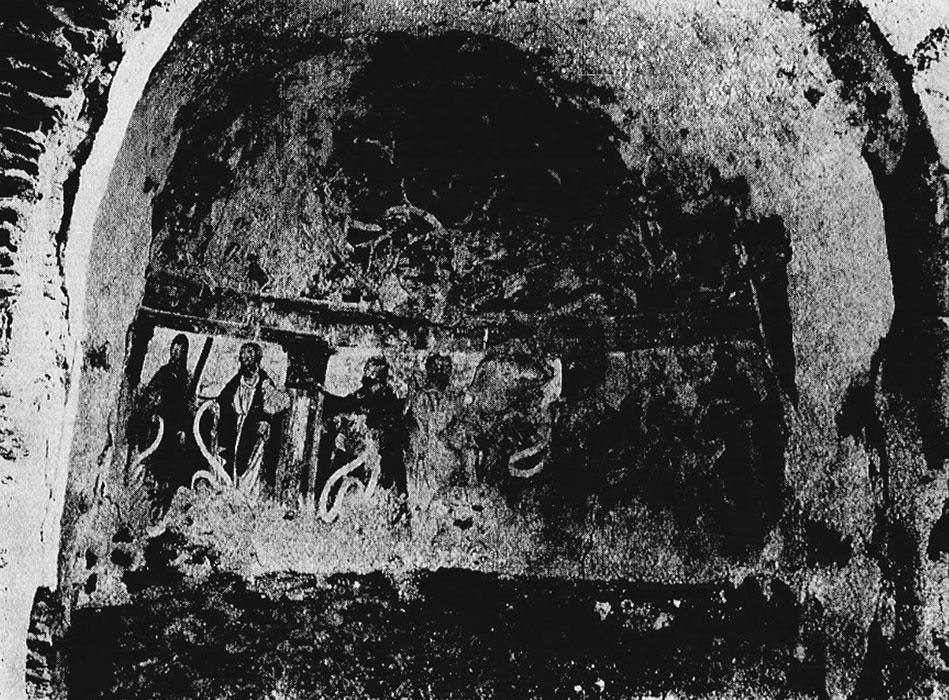
Mural paintings in 1933
Photo by Lavis-Trafford,
Published in Église de Saint-Pierre-d’Extravache
- FAVRE, Joseph (1977). Saint-Pierre d'Extravache, première Chrétienté de Maurienne. Société d'histoire et d'archéologie de Maurienne, vol. XVIII. Saint-Jean-de-Maurienne
- LAVIS-TRAFFORD, A. (1933). Église de Saint-Pierre-d'Extravache. Contribution a son histoire et étude de sa toponymie. Mémoires et documents publiés par la Société savoisienne d'histoire et d'archéologie, vol. LXX
- OURSEL, Raymond (1990). Lyonnais, Dombes, Bugey et Savoie romans. La nuit des temps, 73. Zodiaque
- PAULET, Jacques (1933). Le curieux passé d'une vallée perdue de la Haute-Maurienne. Mémoires et documents publiés par la Société savoisienne d'histoire et d'archéologie, vol. LXX
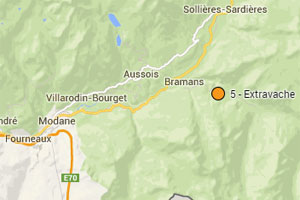
The remains of the church of Extravache are located at Bramans, on an elevated site near the Fréjus Tunnel, between Grenoble and Turin