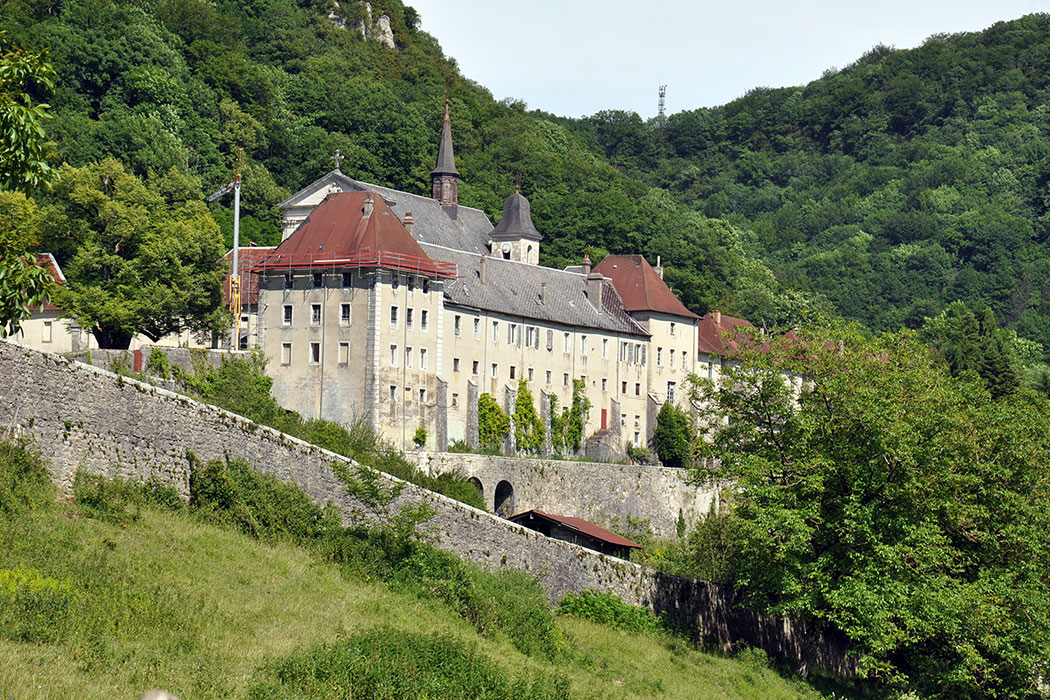

The Charterhouse of Sélignac is located in the valley of the same name, east of Bourg-en-Bresse. Founded in the early thirteenth century from the Charterhouse of Seillon (Ain), it maintained monastic life, with some interruptions, until 2001. It still belongs to the order, which continues to take care of the site.
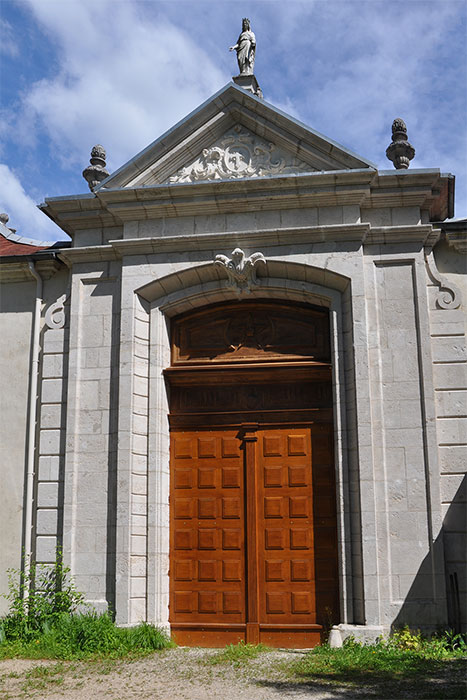
Sélignac was founded at the initiative of Hugh of Coligny († 1205), who made a donation for this purpose in 1201, shortly before leaving to take part in the Fourth Crusade. The lands included in the donation were handed over to the Carthusians of Seillon, a house located near Bourg-en-Bresse, who were responsible for carrying out the foundation. Hugh of Coligny died in 1205 in Macedonia, during the crusade.
The foundation did not take shape until 1211, when the initial donation was completed, giving decisive impetus to the project. Support came notably from Count Étienne II of Burgundy († 1241), who donated his possessions to Sélignac in 1210, and from Guillaume of Coligny, Hugh’s brother, who in 1211 confirmed the original donation and added further property of his own. Additional donations followed in subsequent years. The church and the charterhouse were dedicated to Saint Martin of Tours, which explains the name Val-Saint-Martin, later replaced by that of Sélignac.

Raquelli, 1784
Grande Chartreuse Museum
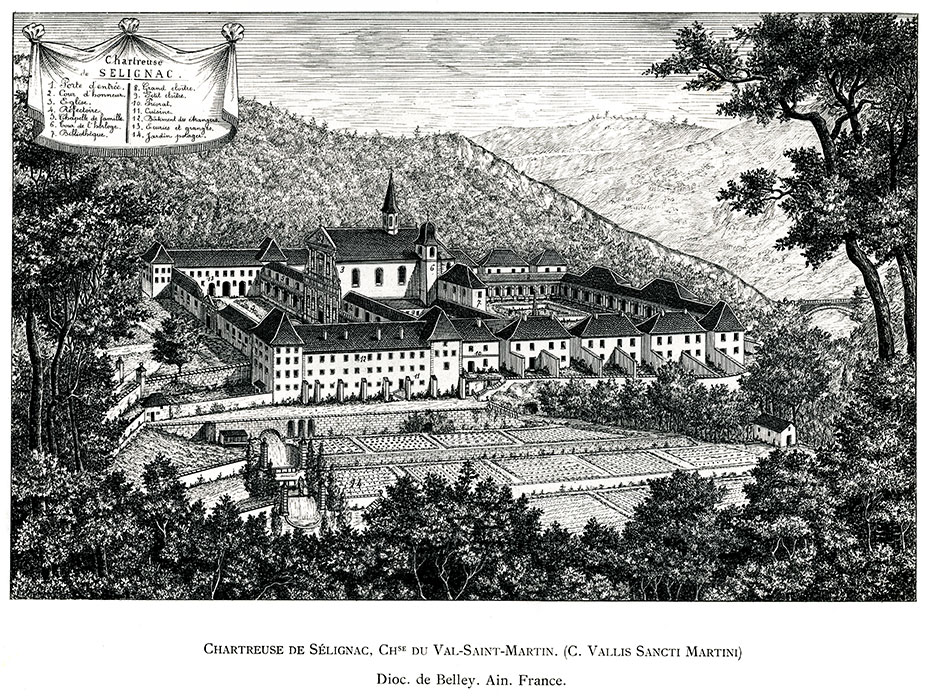
Illustration from Maisons de l'ordre des Chartreux
A papal bull issued by Pope Honorius III in 1225 placed the charterhouse under papal protection. In 1231, Jean I of Chalon († 1267), son of Étienne II, confirmed his father’s donation; Étienne II died in 1241 at the Cistercian abbey of La Charité (Haute-Saône). The first known prior of Sélignac was Ogier (or Otger), recorded in 1212. At the end of the sixteenth century, the site was plundered as a result of warfare. A fire in 1615 plunged it into decline, from which it did not recover until a major rebuilding campaign of the monastic buildings was undertaken, lasting well into the eighteenth century.
The French Revolution led to the suppression of the charterhouse, which was completely abandoned between 1791 and 1792. The property passed into private hands and lost a significant part of its buildings. The Carthusians were able to repurchase the site in 1866 and restore religious life there until they were expelled again at the beginning of the twentieth century. After various uses, including that of a hotel, the Carthusians returned in 1929 and remained until 2001, when monastic life finally came to an end, although the site has continued as a centre of Carthusian spirituality.
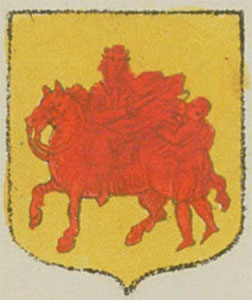
Armorial général de France (18th century)
Bibliothèque nationale de France

Raquelli (18th century)
Brou Monastery
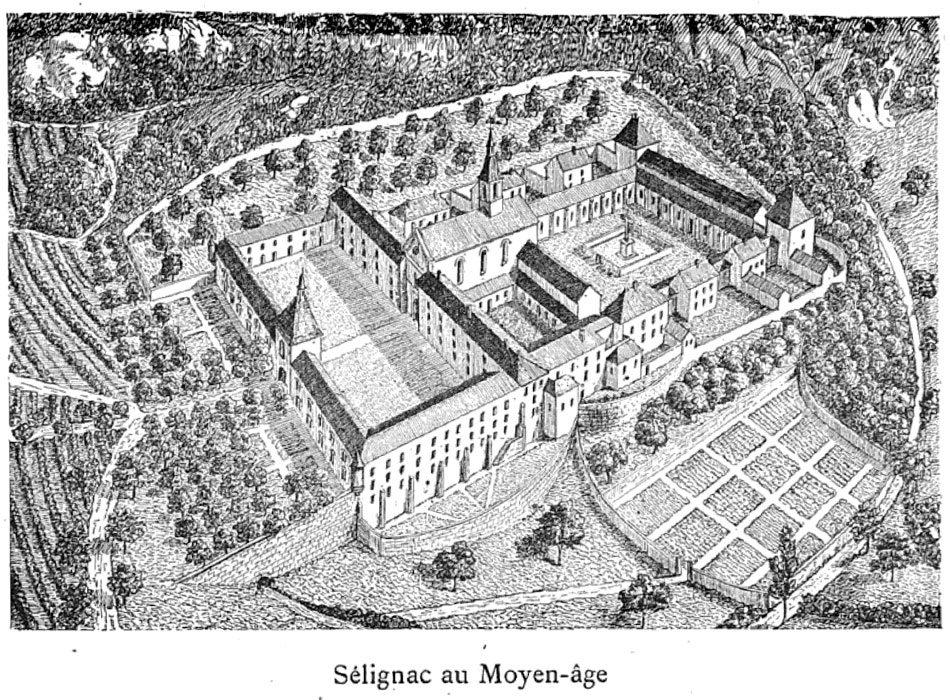
Illustration from Chartreuse et seigneurie du Val-St.-Martin de Sélignac (1884)
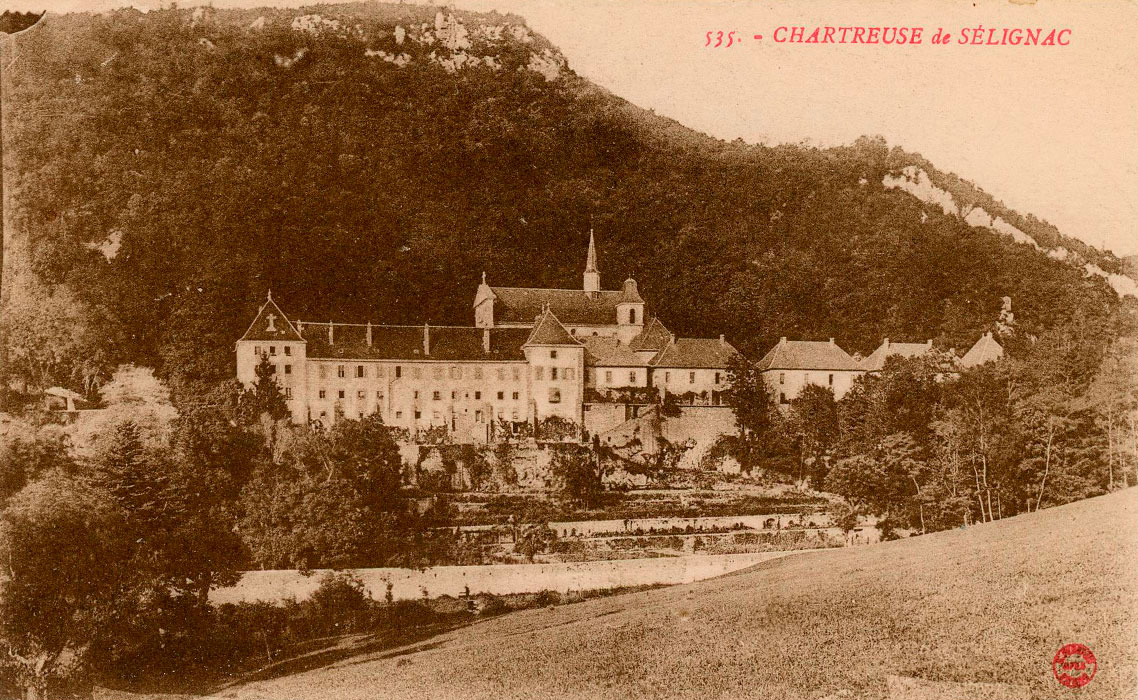
Old postcard, private collection
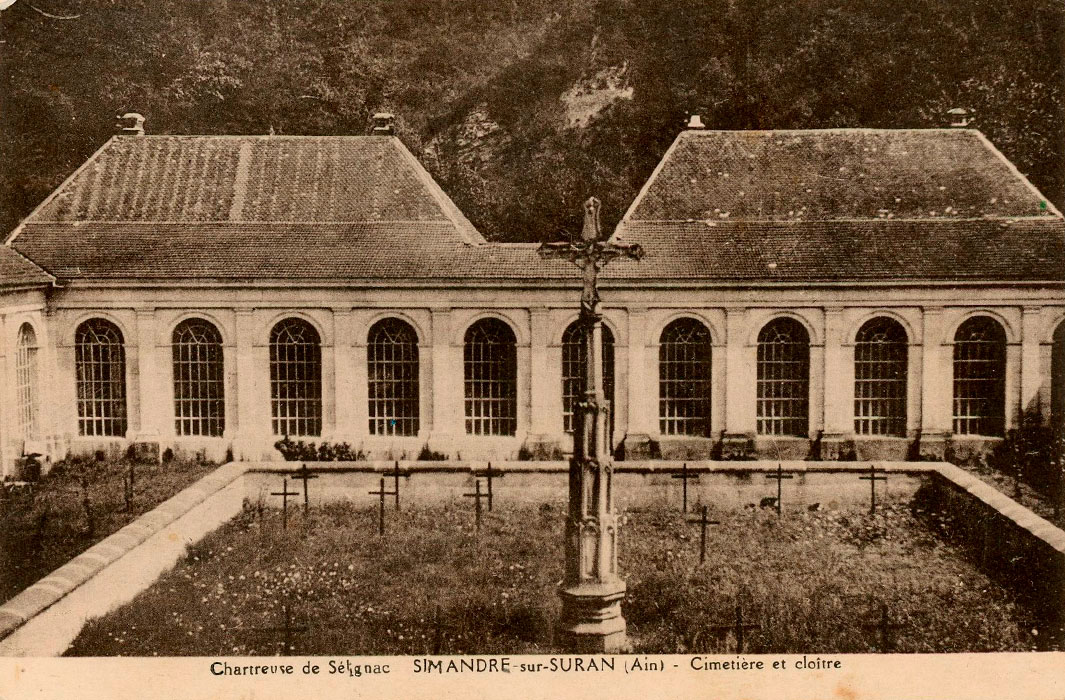
Old postcard, private collection
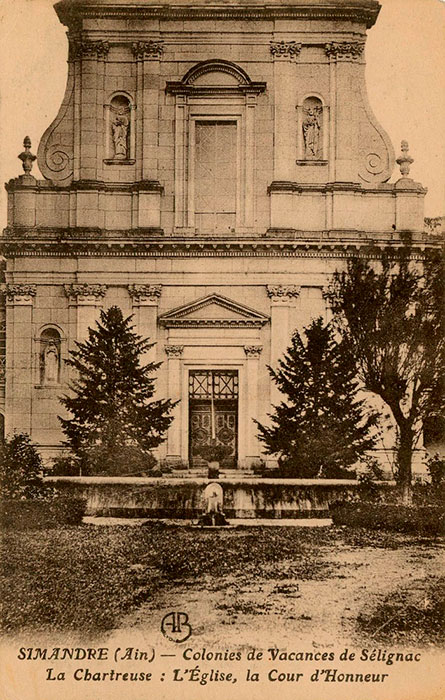
Old postcard, private collection

- ANIEL, Jean-Pierre (1983). Les maisons de chartreux des origines à la chartreuse de Pavie. París: Arts et Métiers Graphiques
- BULLIAT, Ambroise-Marie (1884). Chartreuse et seigneurie du Val-St.-Martin de Sélignac. París: L. Catholique
- CARTOIXA DE PARKMINSTER (1915). Maisons de l'ordre des Chartreux. Vol. II. Chartreuse de Saint-Hughes (Sussex)
- COTTINEAU, Laurent-Henri (1939). Répertoire topo-bibliographique des abbayes et prieurés. Vol. 2. Mâcon: Protat
- GUIGUE, Marie-Claude (1873). Topographie historique du département de l'Ain. Bourg-en-Bresse: Gromier Ainé
- MOULIN, L. (1939). Simandre-sur-Suran. Annales de la Société d'émulation de l'Ain. Bourg
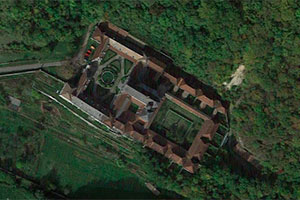
The Charterhouse of Sélignac is located within the municipality of Simandre-sur-Suran (Ain), east of Bourg-en-Bresse