

The Franciscans are thought to have arrived in Lyon in the 13th century; some authors date this event to 1220, with the arrival of friars from the convent of Villefranche-sur-Saône, to the north of the city, thanks to the support of a local lord who is said to have facilitated the first settlement. In 1274, the Second Council of Lyon was held at this site, in which the Franciscan Bonaventure of Bagnoregio (c. 1217–1274) played a prominent role.
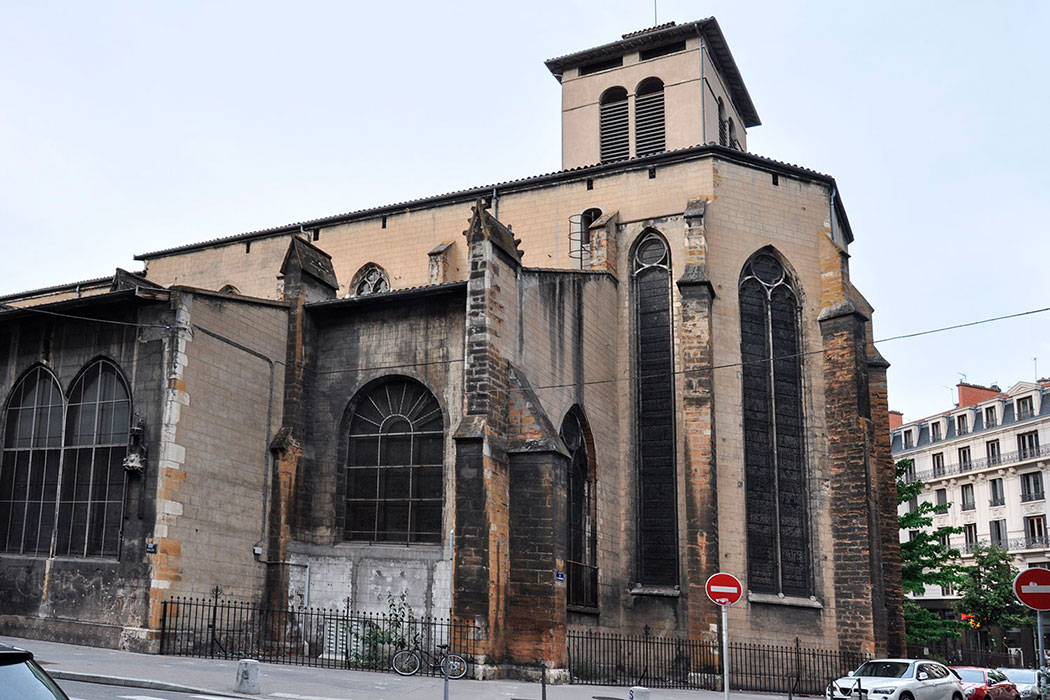
Bonaventure died in this convent during the council; he was buried there and later venerated as a saint. Between 1325 and 1327, a new conventual church dedicated to Saint Francis was built, but in 1484, two years after the canonisation of Saint Bonaventure, this dedication was replaced by the present one. In 1562, during the Wars of Religion, the convent suffered a severe sack, which was repeated at a later date. The Franciscan community remained there until the Revolution: in 1791 the convent was abandoned and later sold. In 1807 the church was restored to worship and is today the only surviving part of the complex.
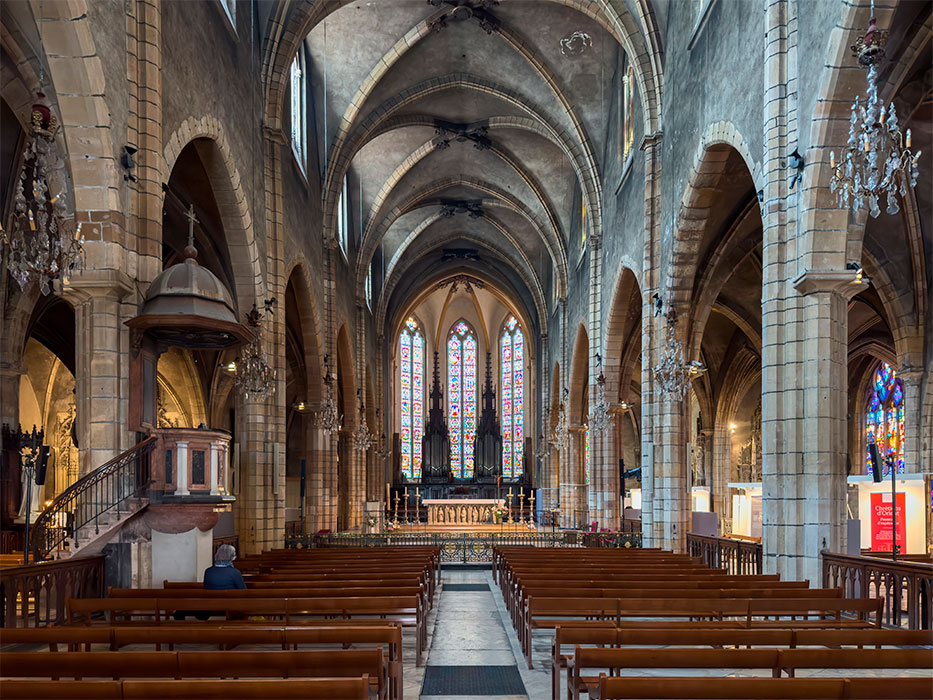
Photo by Kent Wang, on Wikimedia
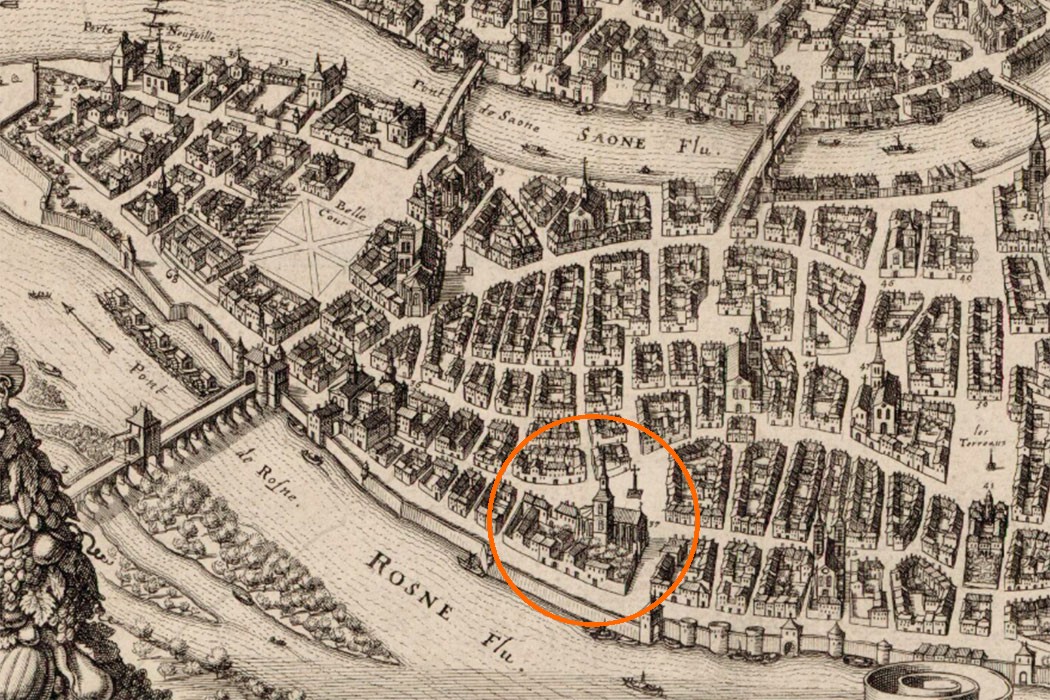
Map of Lyon (17th century)
Bibliothèque nationale de France
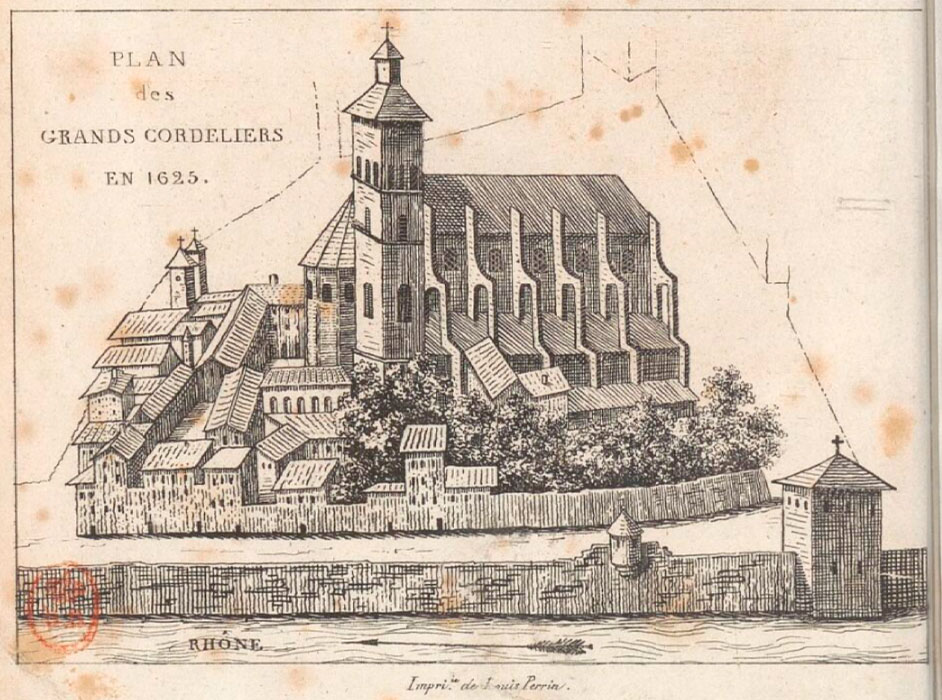
Illustration from Les Grands Cordeliers de Lyon (1835)
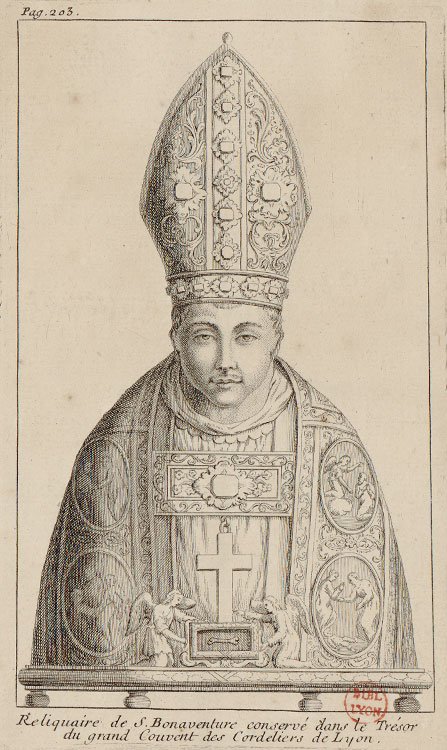
Reliquary of Saint Bonaventure (n.d.)
Bibliothèque municipale de Lyon
- FODÉRÉ, Jacques (1619). Narration historique, et topographique des convens de l'ordre de S. François et monastères S. Claire. Lió: P. Rigaud
- HENRYOT, Fabienne (2017). Les Lyonnais et saint Bonaventure (fin du XVe-XVIIIe siècles). Revue historique, num. 682. Presses Universitaires de France
- MARTIN, Jean-Baptiste i altres (1909). Histoire des églises et chapelles de Lyon. Vol. 2. Lió: Lardanchet
- PAVY, Louis-Antoine (1835). Les Grands cordeliers de Lyon, ou l'Eglise et le couvent de Saint-Bonaventure. Lió: Sauvignet (Lyon)
- REVEYRON, Nicolas (2021). Les couvents des frères mineurs dans la ville médiévale. Les exemples de Lyon et de Vienne. La città medievale è la città dei frati?
- VACHET, Abbé (1895). Les anciens couvents de Lyon. Lió: Vitte
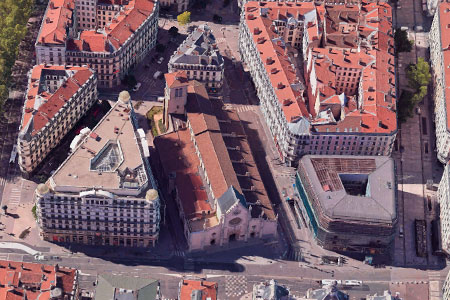
The present church of Saint-Bonaventure is located in the centre of the city of Lyon, between the rivers Saône and Rhône