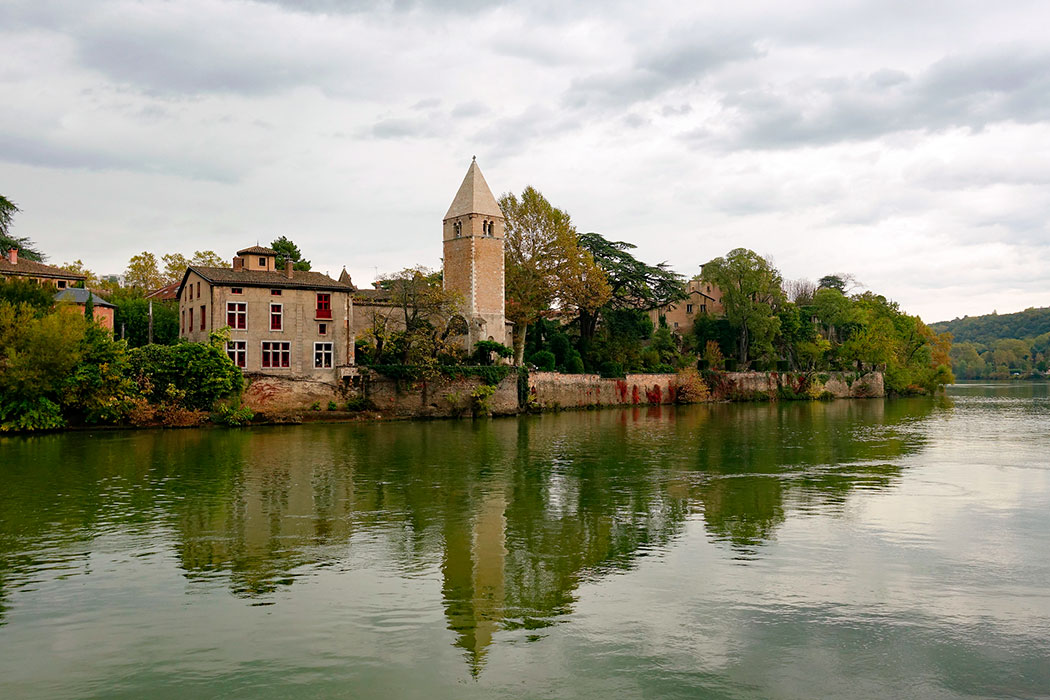
The church of Notre-Dame
Photo by Allie Caulfield, on Flikr

The monastic settlement of l’Île-Barbe has a distinctive character, probably determined by two main factors: on the one hand, its insular nature — as it is located in the middle of the Saône, shortly before its confluence with the Rhône — and, on the other, its antiquity. These circumstances explain why it preserves a physical layout unlike that of most monasteries, with several places of worship scattered across the island, a situation often compared with that of the Abbey of Lérins (Alpes-Maritimes).

Sainte-Anne portal
Beyond traditions that place the arrival of Christianity on the island in apostolic times, the monastery is documented from the early fifth century, when Gregory of Tours records the arrival of a disciple of Saint Martin. The numerous transformations undergone by the site, especially after the Wars of Religion and the Revolution, make it difficult to interpret the various monastic spaces, a task in which archaeology plays a key role.
In its early phase, the monastery may also have had an eremitic aspect, which could explain the presence of several places of worship. Important figures of early monasticism are said to have passed through the site, such as Saint Romanus of Condat († 463), before founding the monastery later known as Saint-Claude (Jura). L’Île-Barbe may also have played a role in the foundation of the monastery of Saint-Maurice d’Agaune (Valais, Switzerland). After the destruction caused by Saracen incursions, the sources become more precise, notably with regard to a restoration promoted by the bishopric of Lyon at the beginning of the ninth century.
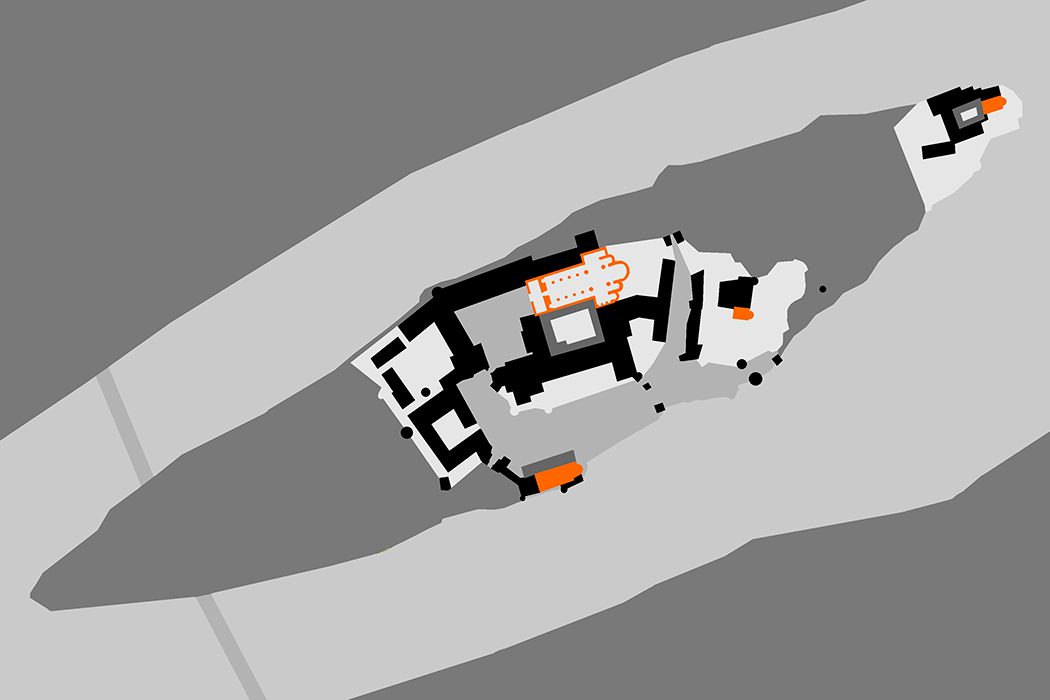
Outline of the island with the monastery structures before their destruction
With the church of Saint-Martin and the three chapels
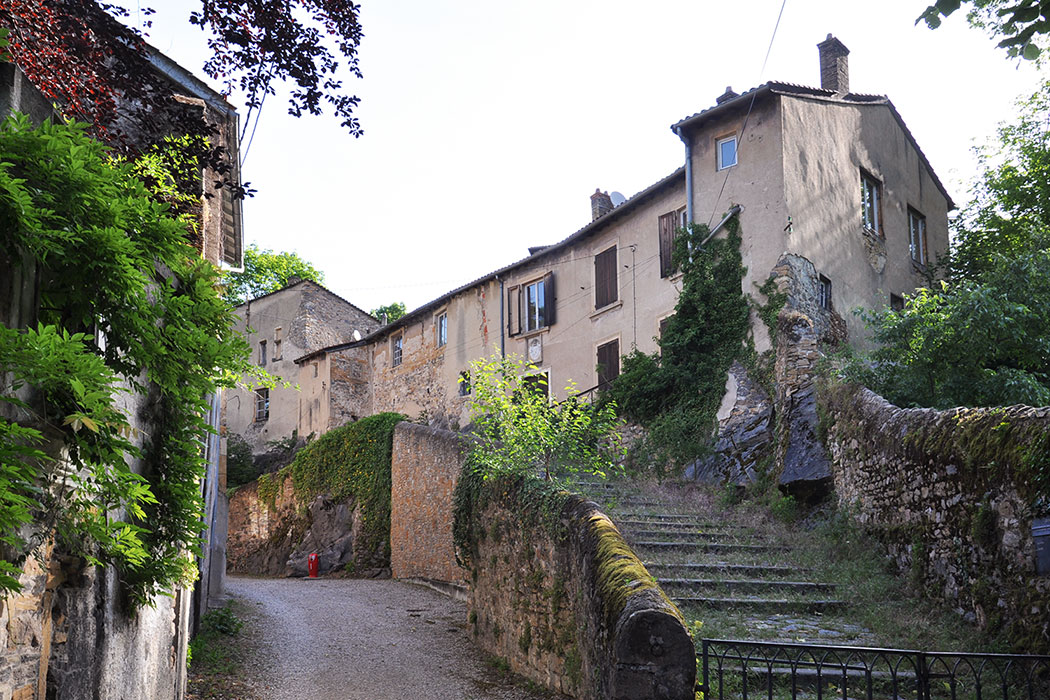
The Châtelard
This restoration was completed with the adoption of the Rule of Saint Benedict, introduced to the island through the intervention of Benedict of Aniane. From that point onwards, the abbey developed and gained considerable importance: during the Middle Ages it came to house a community of around one hundred monks, several churches were built — or rebuilt — some of them with earlier antecedents, and it also possessed a significant number of dependent priories. This period marked the height of its prosperity; thereafter the monastery declined, adopted the commendatory regime in the sixteenth century, and in 1549 was secularized and transformed into a collegiate church.
The final blow came in 1562, when the site was attacked and devastated, resulting in the loss of many structures, including the principal church, Saint-Martin (Saint-Martin-et-Saint-Loup), to which the cloister and chapter house were attached. The destruction of this church required the transfer of the collegiate functions to the church of La Madeleine, until they returned in 1620 to Saint-Martin, rebuilt, of which only one end of the transept has survived.
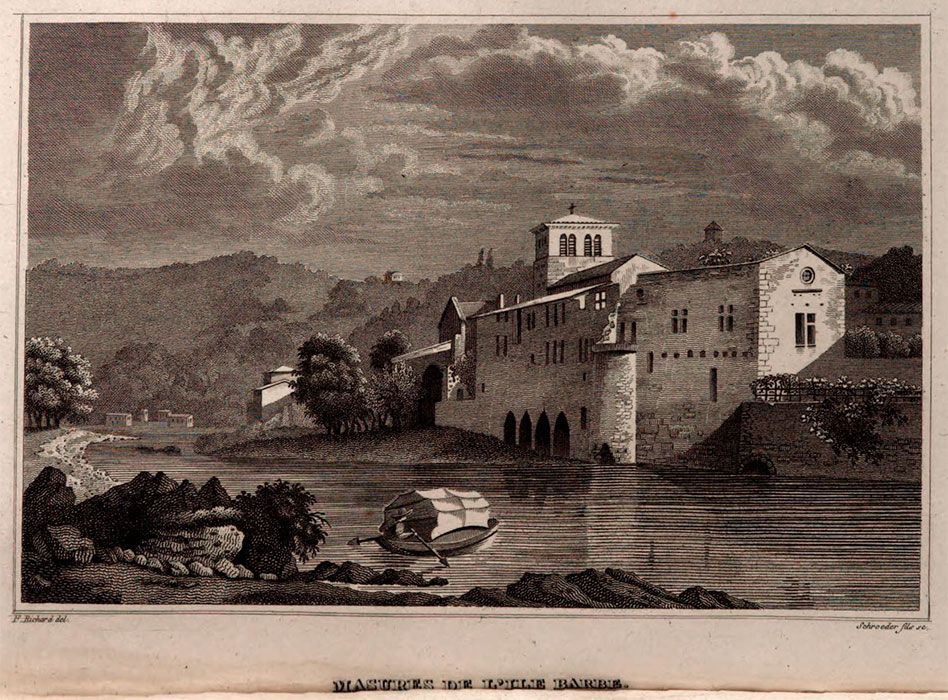
Notre-Dame, south of the complex
Illustration from Histoire de Lyon, depuis sa fondation jusqu’à nos jours (1829)
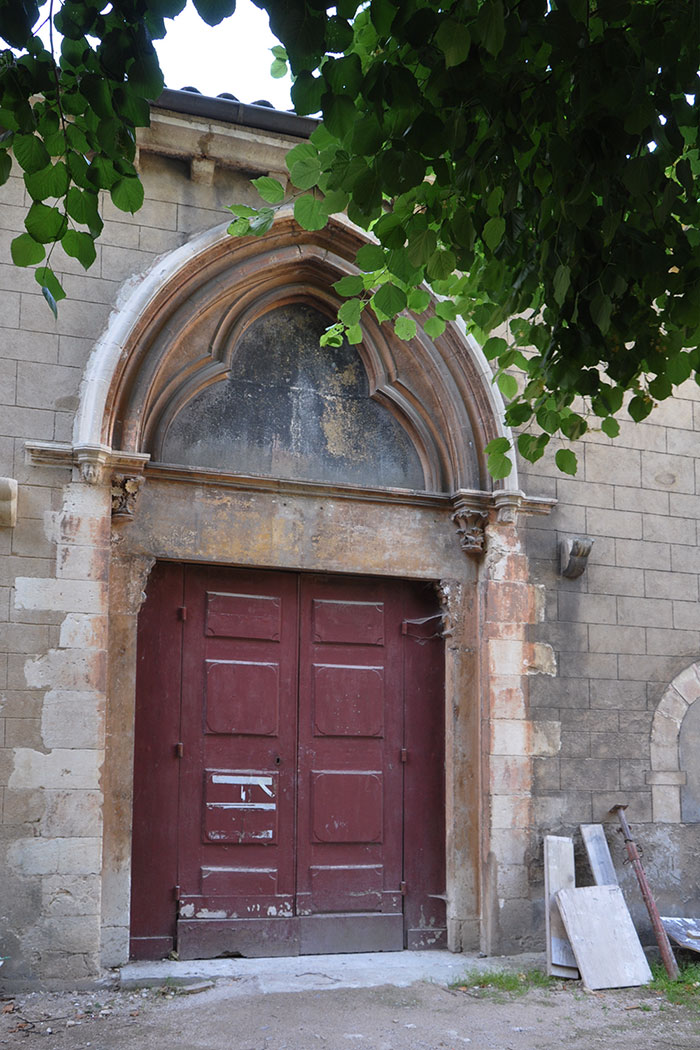
Portal of Notre Dame
The Revolution left the site in private hands and it was converted into several residences. To the east of the church of Saint-Martin stand the small churches of La Madeleine and, further away, that of Saint-André — now Sainte-Anne. On the southern side are the substantial remains of the chapel of Notre-Dame, heavily altered but still preserving its bell tower; it was formerly used by pilgrims. In addition to the places of worship, the auxiliary and defensive buildings should be noted, forming a remarkable architectural complex.
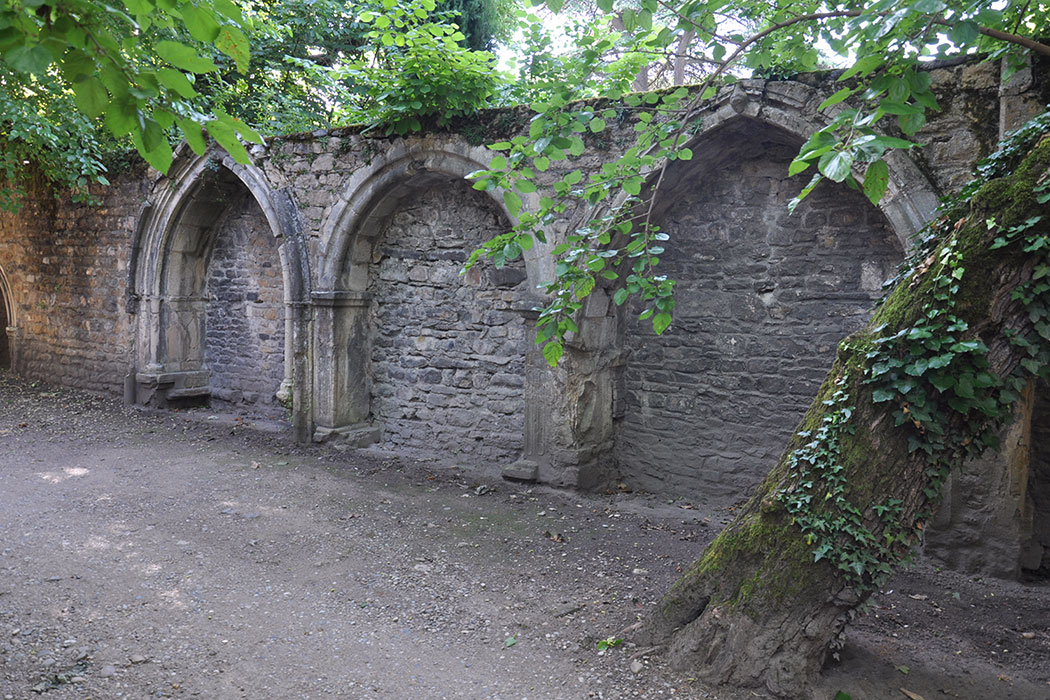
Cloister wall
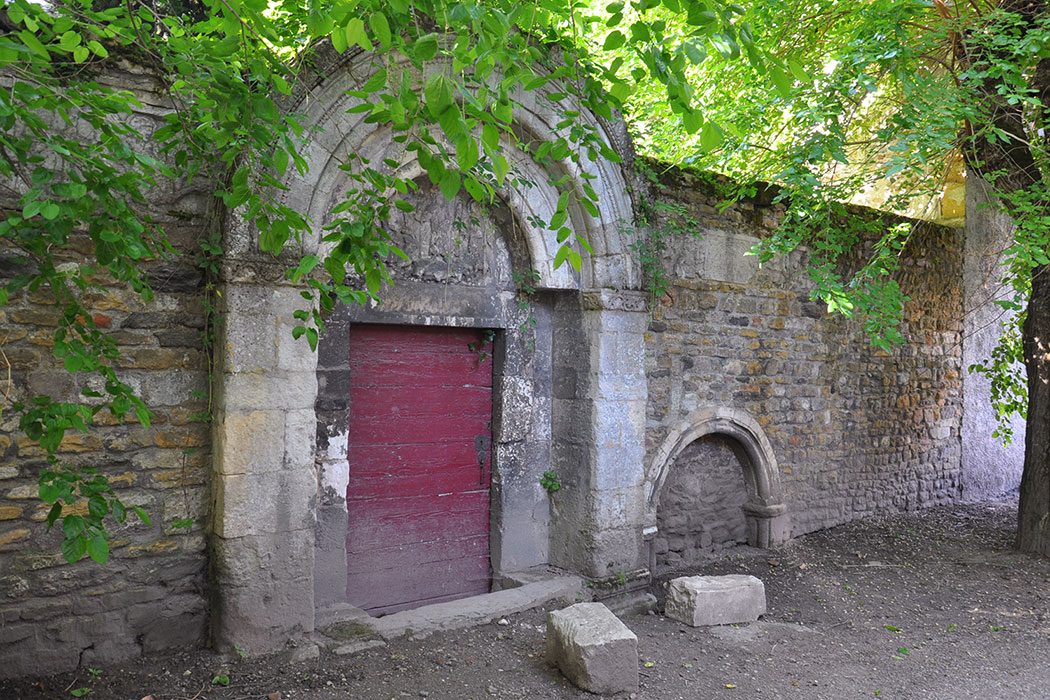
Refectory portal
Refectory portal
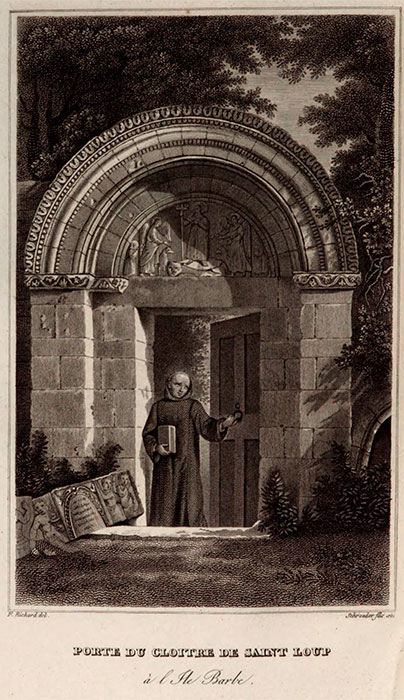
Illustration from Histoire de Lyon, depuis sa fondation jusqu'à nos jours (1829)
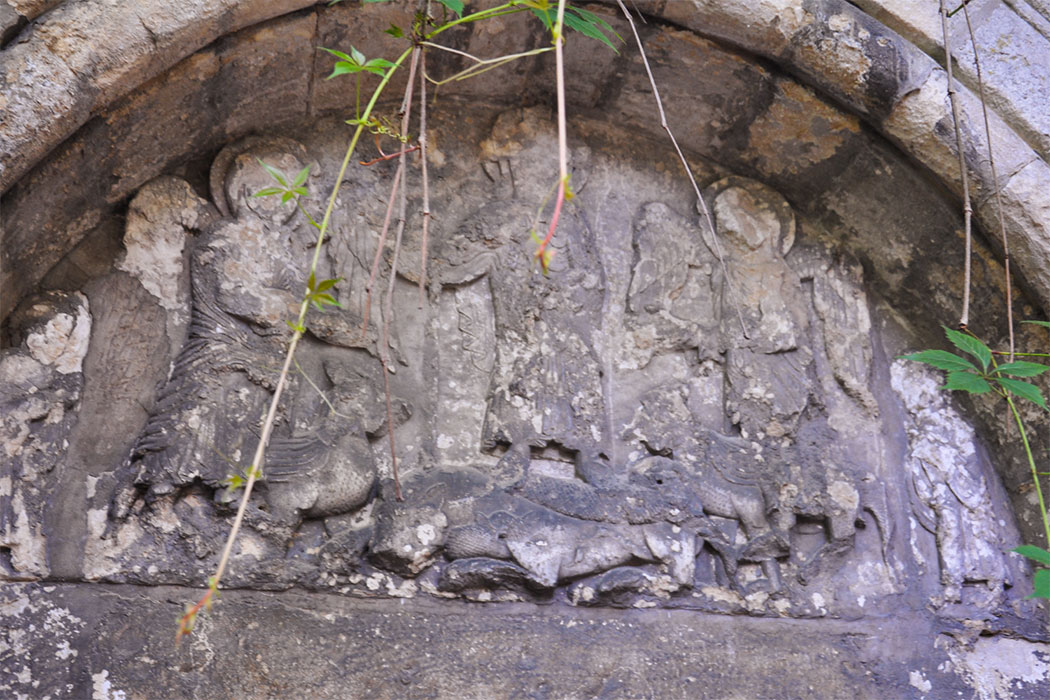
Tympanum of the refectory portal

Roman period relief
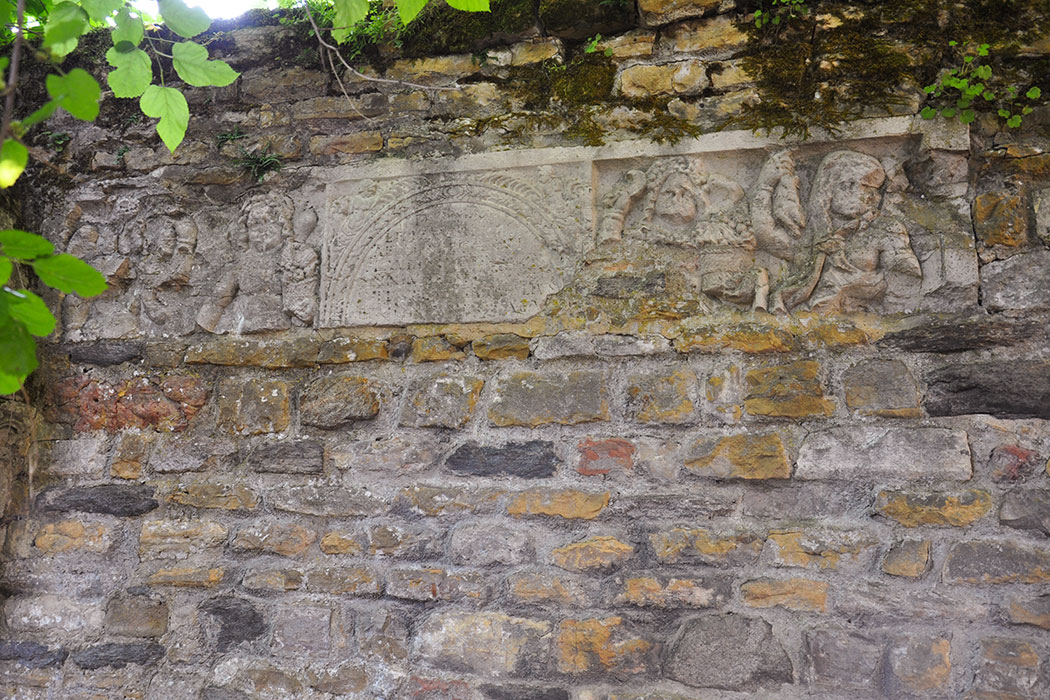
Roman period relief

Vue d'une église à l'Ile Barbe, (unknown author, 17th century)
Bibliothèque nationale de France
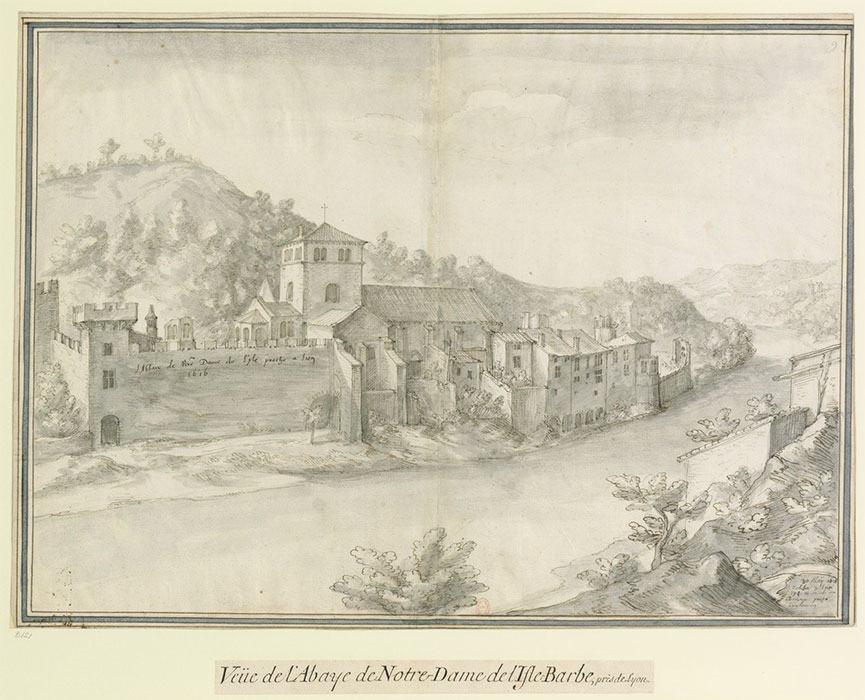
Veüe de l'Abaye de Notre-Dame de l'Isle Barbe
Étienne Martellange (1616-1618)
Bibliothèque nationale de France

Crown of Charlemagne (12th century)
Gadagne Musées, Lyon
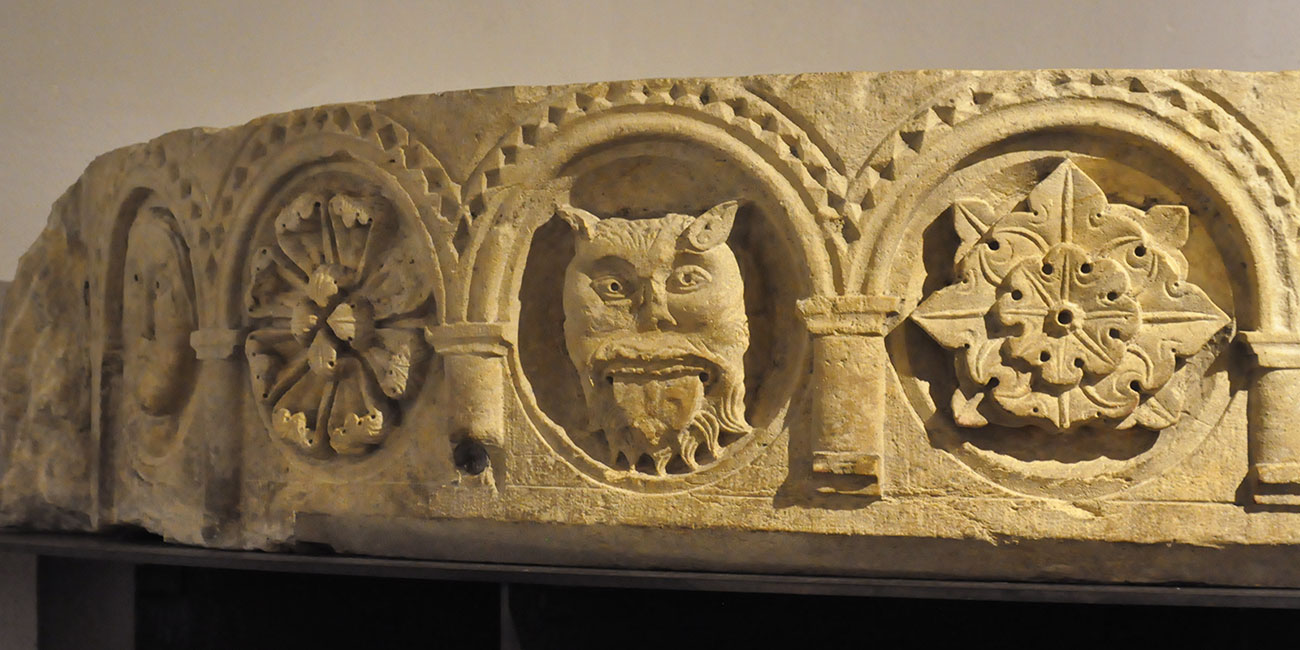
Crown of Charlemagne (12th century)
Gadagne Musées, Lyon
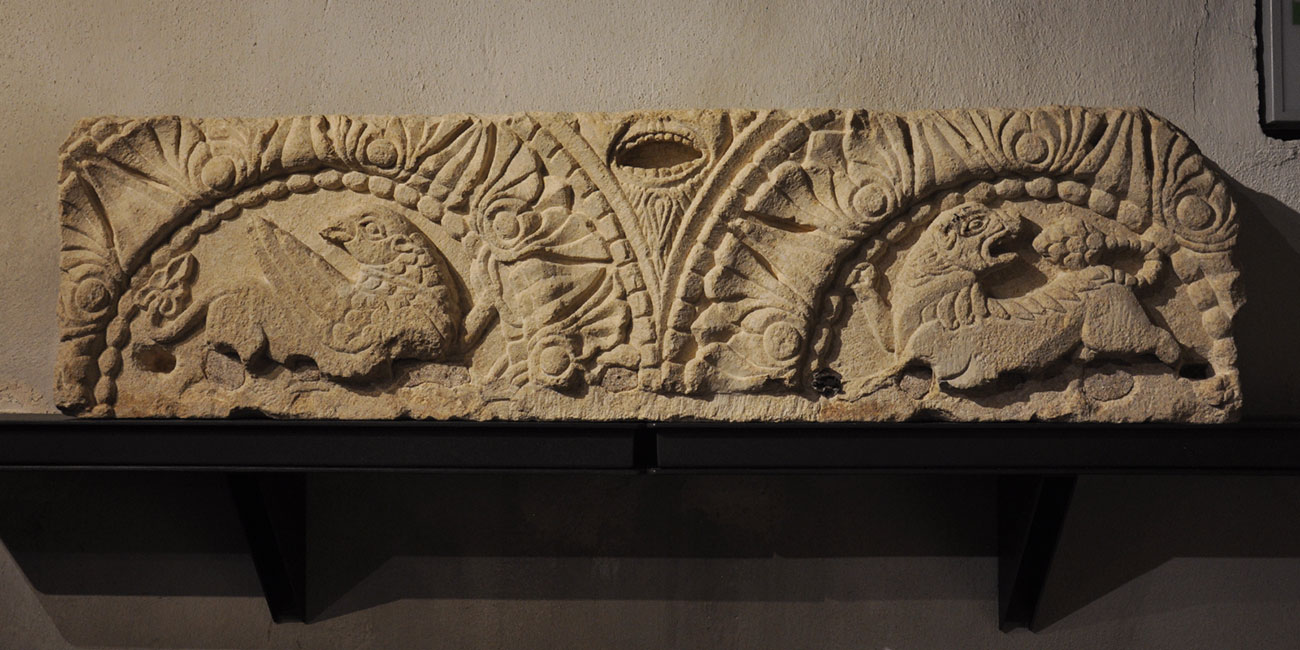
Lintel (11th-12th centuries)
Gadagne Musées, Lyon
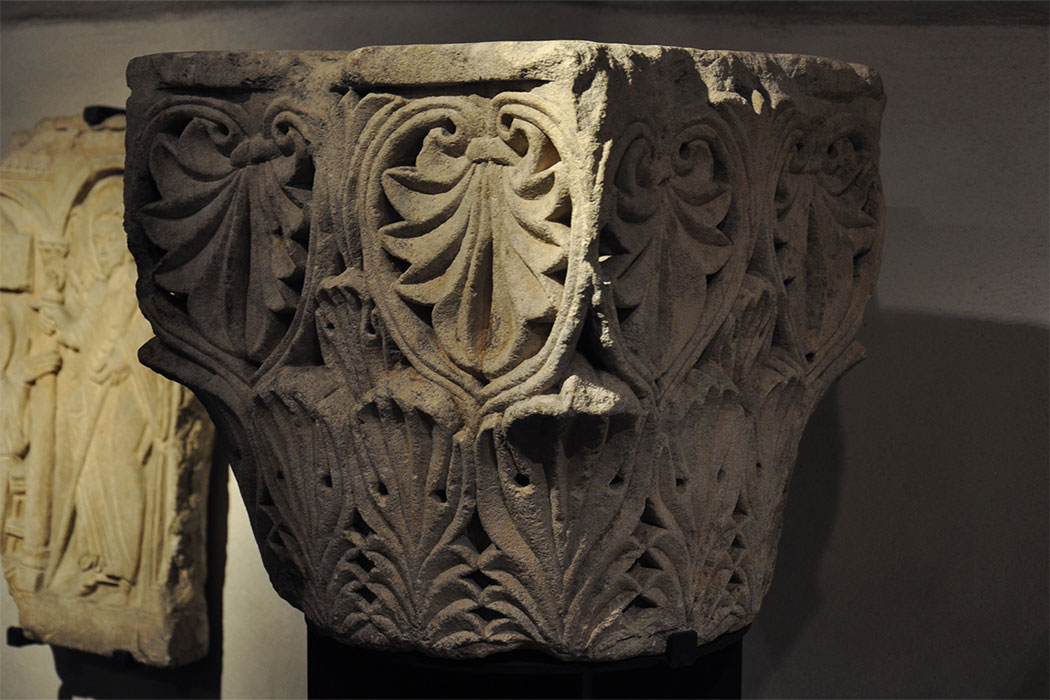
Capital (11th century)
Gadagne Musées, Lyon
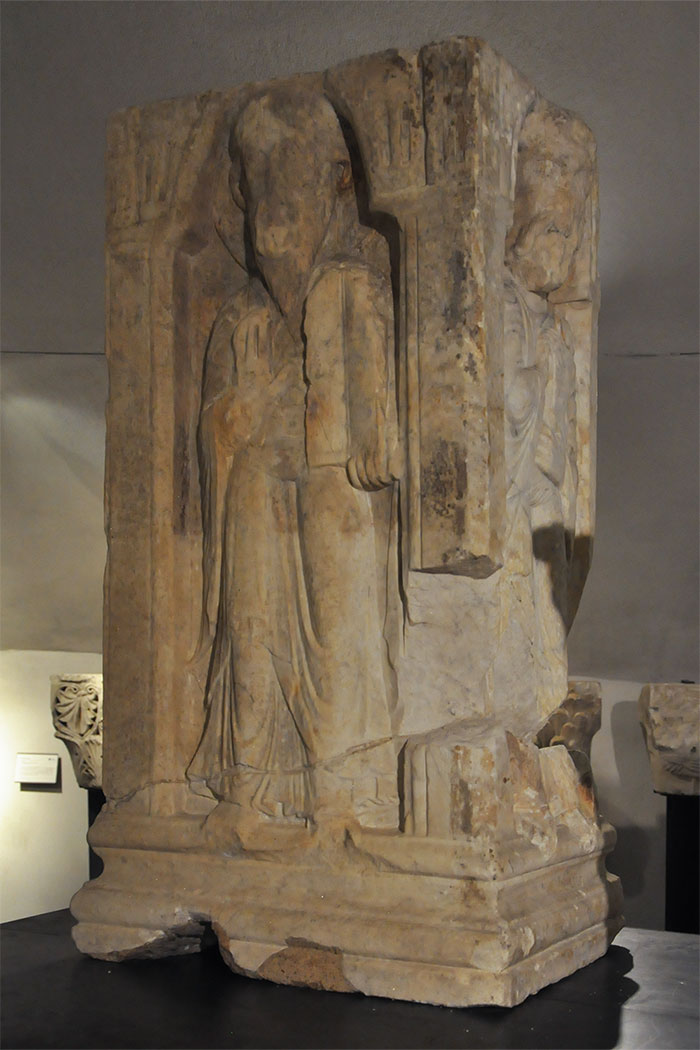
Abraham's Pillar. Abraham (c. 1175)
Gadagne Musées, Lyon
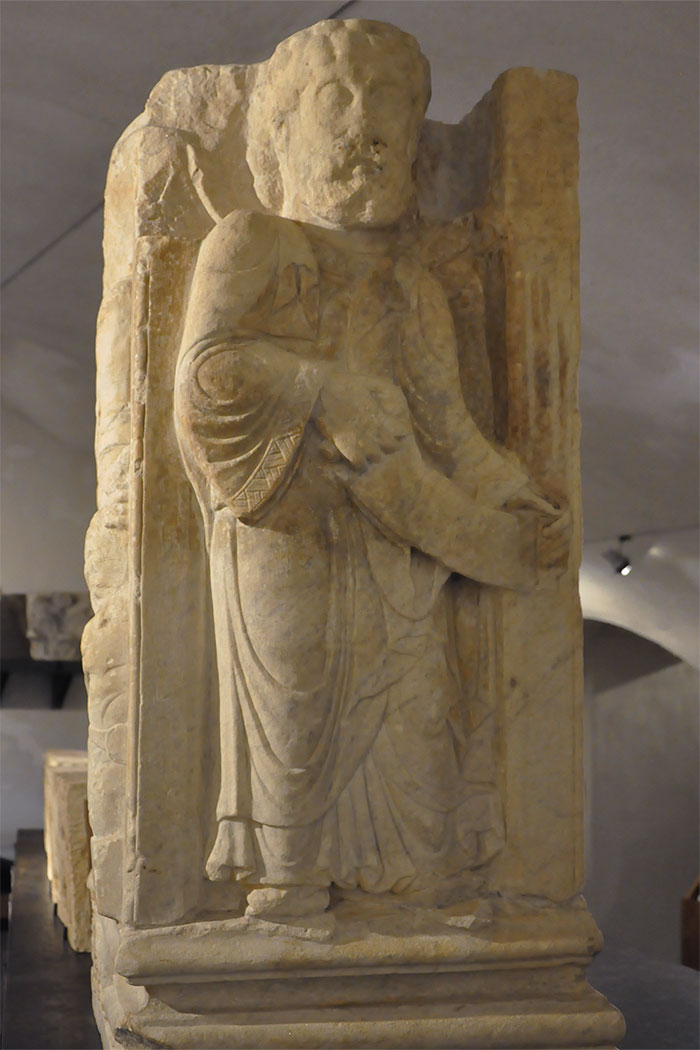
Abraham's Pillar. Moses (c. 1175)
Gadagne Musées, Lyon

Abraham's Pillar. Sacrifice of Isaac (c. 1175)
Gadagne Musées, Lyon
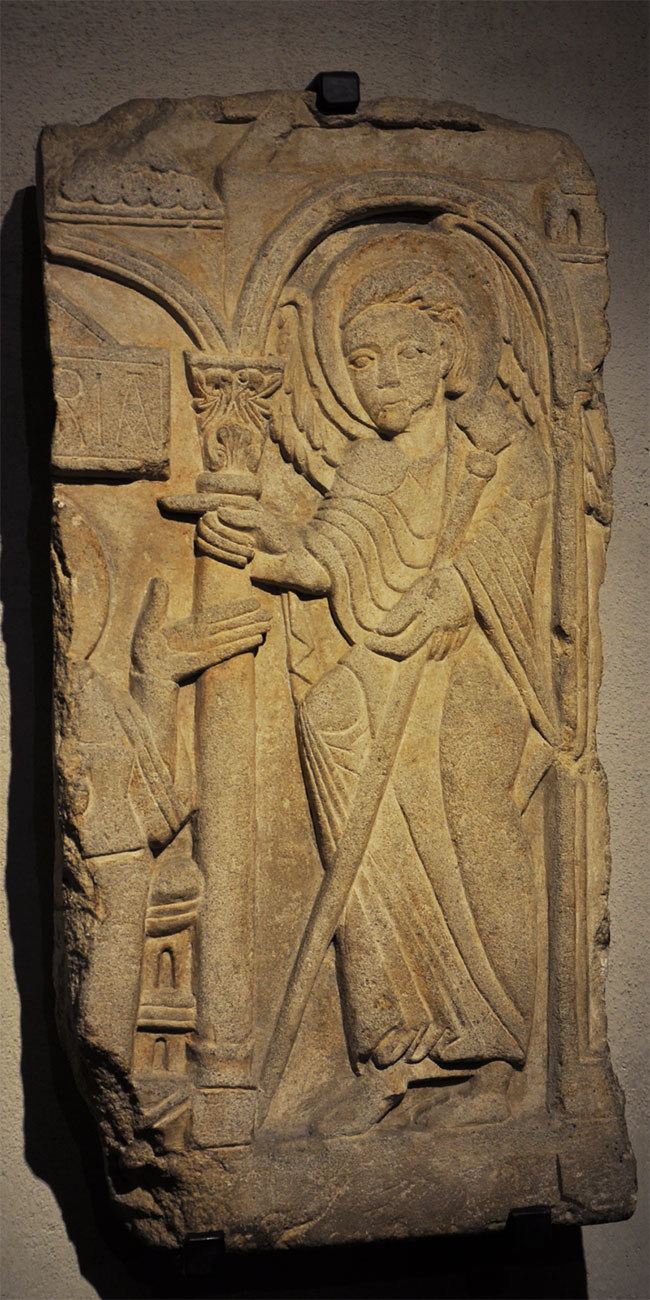
Angel of the Annunciation (11th-12th centuries)
Gadagne Musées, Lyon

Griffin (11th century)
Gadagne Musées, Lyon
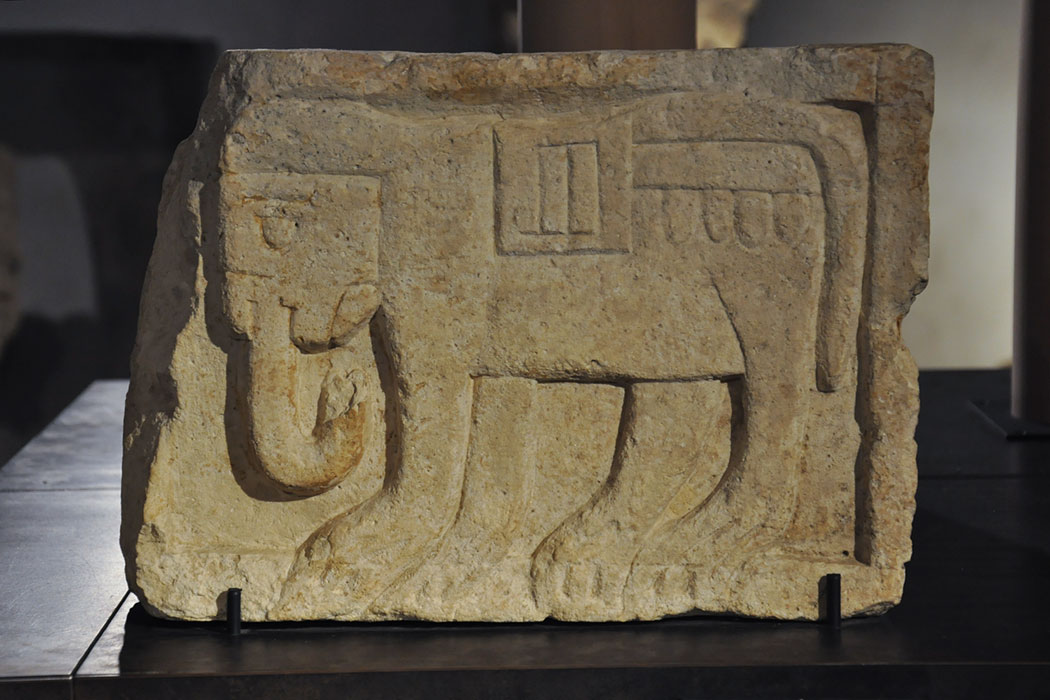
Elephant (11th century)
Gadagne Musées, Lyon
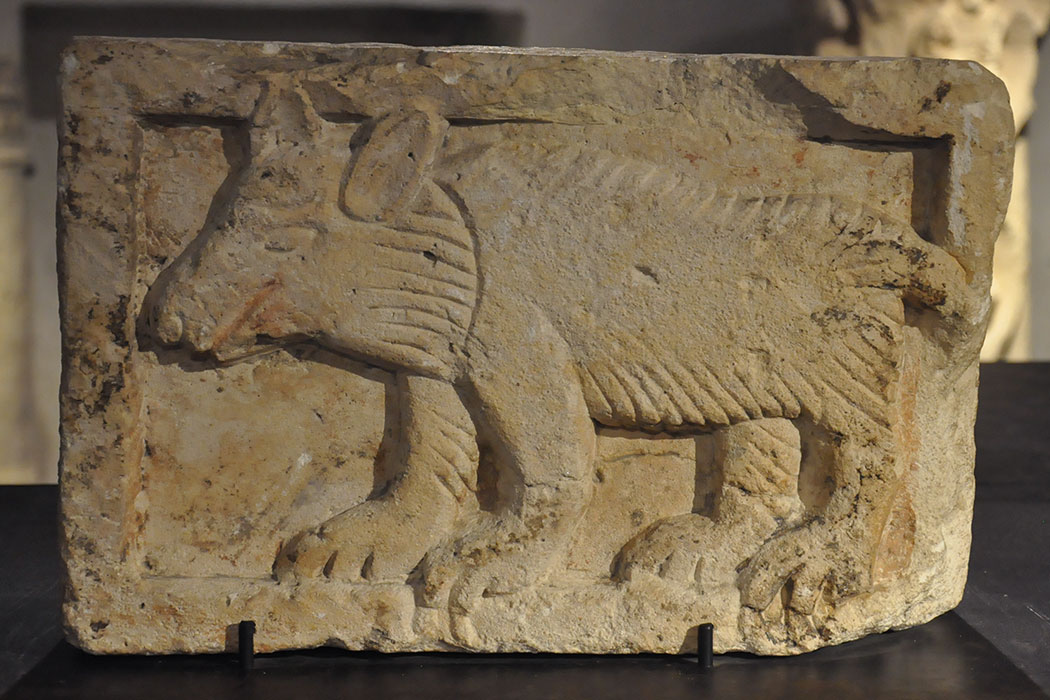
Bear (11th century)
Gadagne Musées, Lyon
- AUBERT, R. (1995). Dictionnaire d'histoire et de géographie ecclésiastiques. Vol. 25. París: Letouzey et Ané
- CLERJON, P. (1829). Histoire de Lyon, depuis sa fondation jusqu'à nos jours. Vol. 2 . Lió: Laurent
- COTTINEAU, Laurent-Henri (1936). Répertoire topo-bibliographique des abbayes et prieurés. Vol. 1. Mâcon: Protat
- DE LA SELLE, Xavier; i altres, dir. (2025). Merveilleux Moyen Âge. L’abbaye de l’Île-Barbe, un voyage aux portes de Lyon. Milano: Silvana Ed.
- FAVREAU, Robert (2005). Un tympan roman à l'Île-Barbe près de Lyon. Comptes rendus des séances de l'Académie des Inscriptions et Belles-Lettres
- GAILLARD, Charlotte (2013). L’ancienne abbaye de l’Île-Barbe (Rhône) à la lumière des nouvelles recherches archéologiques. Architecture, décor, organisation de l'espace. Lió: Alpara
- LE LABOUREUR, Claude (1665). Les masures de l’Abbaye Royale de l’Isle Barbe les Lyon. Lió: Galbit
- NIEPCE, Léopold (1890). L'Ile-Barbe: son ancienne abbaye et le bourg de Saint-Rambert. Lyon: L. Brun
- OURSEL, Raymond (1990). Lyonnais, Dombes, Bugey et Savoie romans. La nuit des temps, 73. Zodiaque
- ROUX, Abbé J. (1844). L’Ile Barbe. Album du Lyonnais. Lió. Boitel
- RUBELLIN, Michel (2003). L’histoire de l’Ile-barbe (Ve-Xe siècle). Église et société chrétienne d'Agobard à Valdès. Lió: Presses Universitaires de Lyon
- SAINT-MAUR, Congregació de (1725). Gallia Christiana in provincias ecclesiasticas distributa. Vol. 4. París: Typographia Regia
- VOISIN, Bruno (2017). L’Île-Barbe aux portes de Lyon. Ed. Poutan
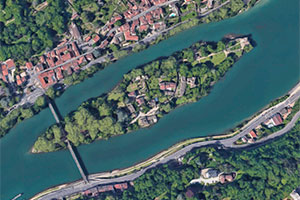
The remains of the monastery of l’Île-Barbe are located on an island in the Saône, to the north of the city of Lyon